-
-
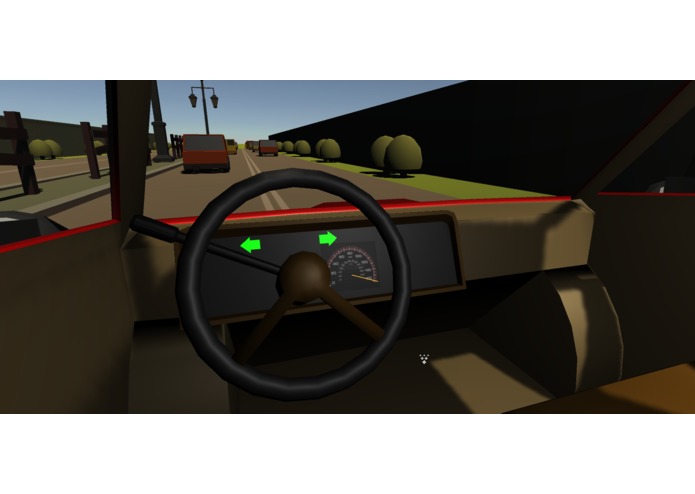
Looking through the windshield of your car.
-
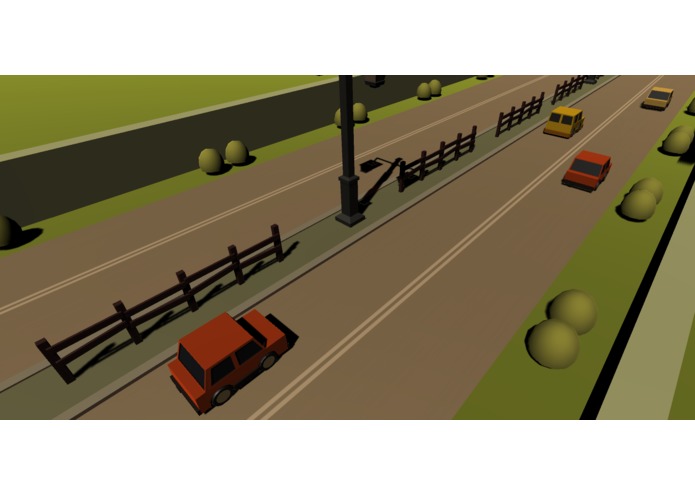
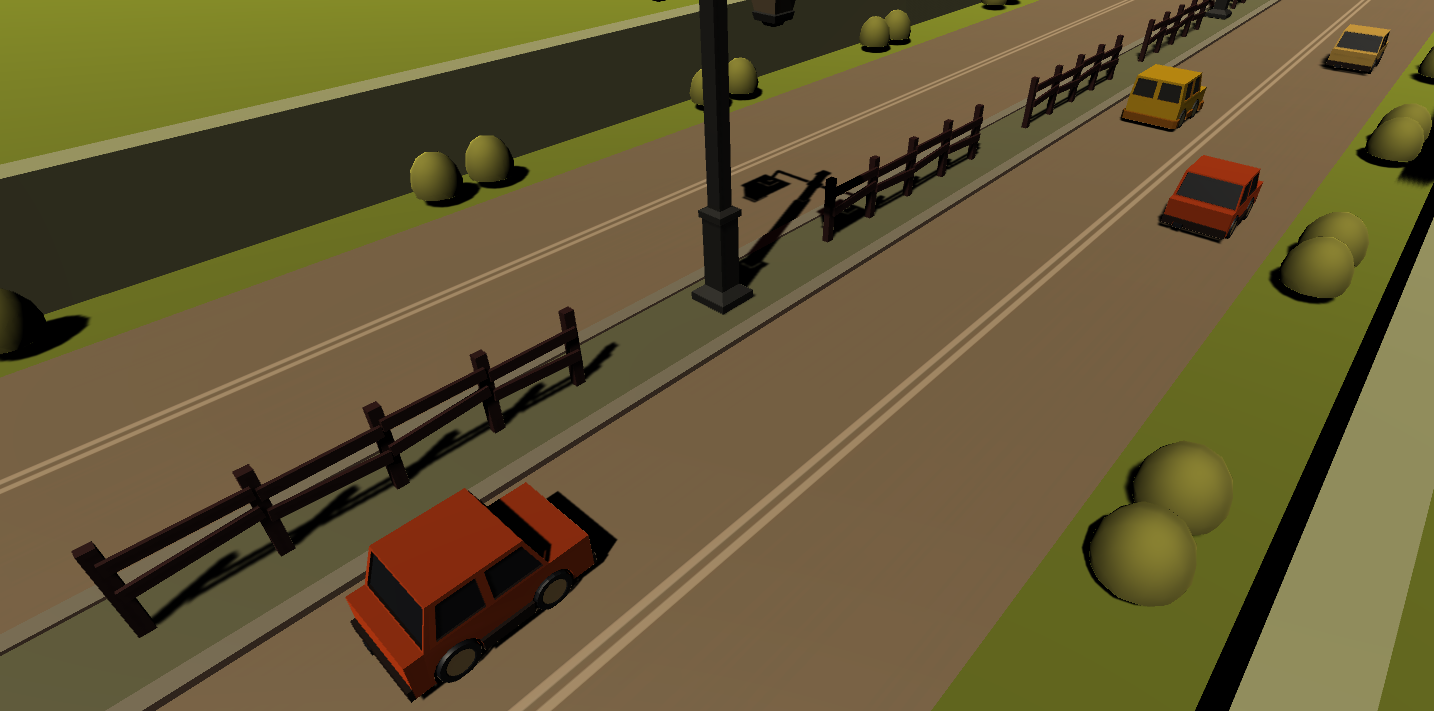
A top-down view of the highway you're driving on.
-
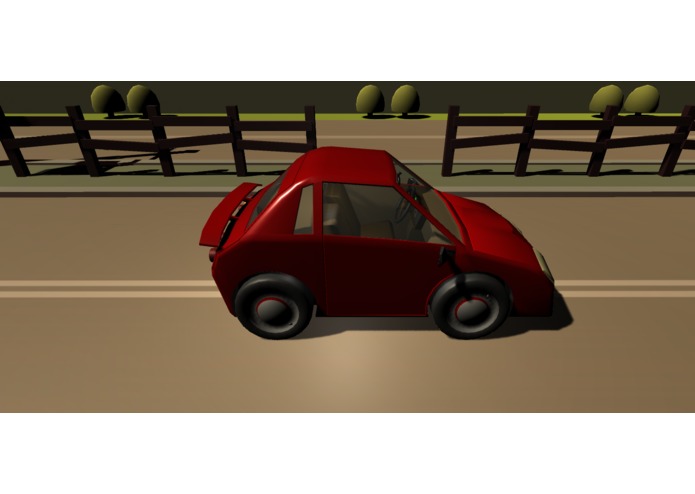
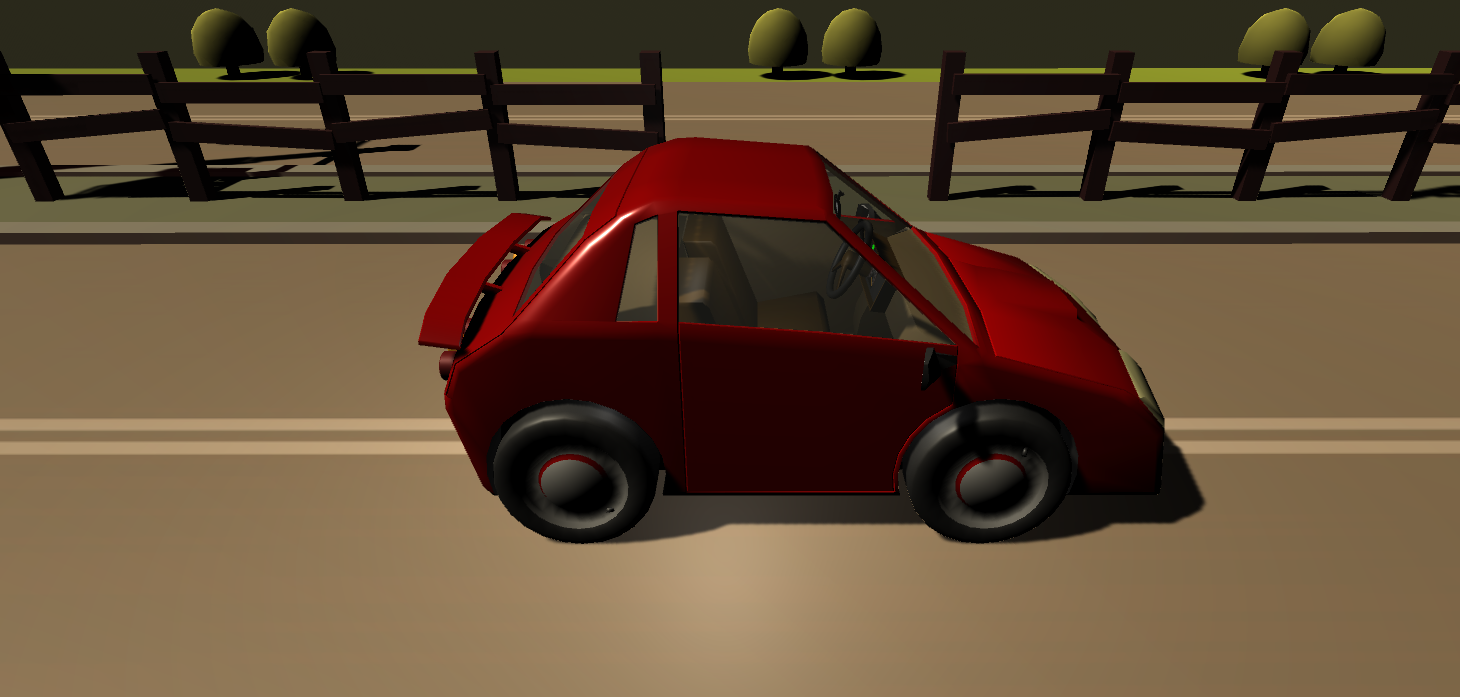
Your faithful steed.
Inspiration
DRIVR (pronounced driver or drive-VR) was inspired by the traumatic memories of early driving lessons. That first spin out of the parking lot. That first lane change. That first highway merge. We decided to build DRIVR to save others from the same stress we once felt.
What is DRIVR?
DRIVR was imagined as a driving simulator platform for new students and instructors alike to come in from anywhere in the world and either learn or teach driving, without the fear of accident or injury. Students would be able to practice dealing with difficult scenarios that, normally, would only be practicable by getting in a car and taking the plunge. Instructors would be able to help a much greater number of students without being locked into a single car or location.
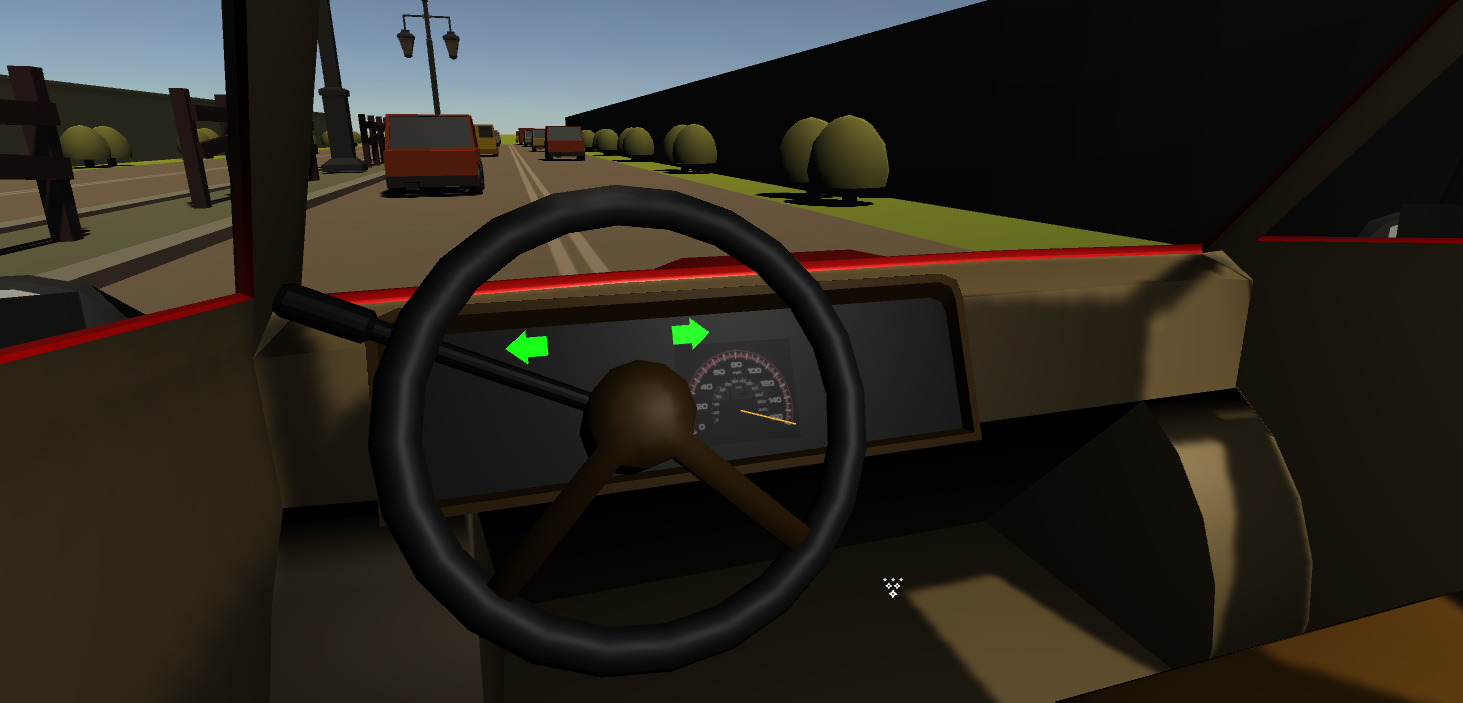
From a technical standpoint, the DRIVR demo is a driving simulation powered by motion controls. Upon putting on the headset, you find yourself sitting at the wheel of a car. Grip the wheel to steer the car, flick the signal lever to activate your turn signals, sit up straight to check the rear-view mirror - it's just like an actual car.
How We Built It
The demo itself is a Unity project (Unity 5.5). We worked in C# for the programming, and in Blender for the modeling work. The car had it's own original script engine that we built off of and upgraded to work with VR and motion controllers.
Challenges We Ran Into
No matter how hard we try to avoid it, every Unity project seems to eventually converge into a non-trivial linear algebra problem. In this case, our task was to create an intuitive way to grip and turn the steering wheel. This ended up eating a lot of time, which was spent doing things like computing projections of direction vectors onto a plane and trying to figure why localEulerAngles weren't doing what we thought they did.
Accomplishments that I'm proud of
We were much more on the ball this time around in terms of planning and estimating workload. As a result we got time to polish the project, add in fun features like the speedometer, and spend time working on misc tasks like this README.
What I learned
This hackathon included a powerpoint/slidedeck and emphasized more on the product and pitch, which wasn't something we were used to. We learned a lot about what constitutes a good and feasible idea, and also gained a good dose of respect for the sheer amount of work to goes into doing all the things that aren't just coding (recording, editing, developing the deck, etc.).
What's next for DRIVR
We don't know if we plan to bring DRIVR to the next step. But from the ground-up, DRIVR was developed as a business and startup proposal, and it's an idea that I genuinely think could have a lot of impact around the world. Hopefully one day we'll see it out there as a proper platform.


Log in or sign up for Devpost to join the conversation.