-
-
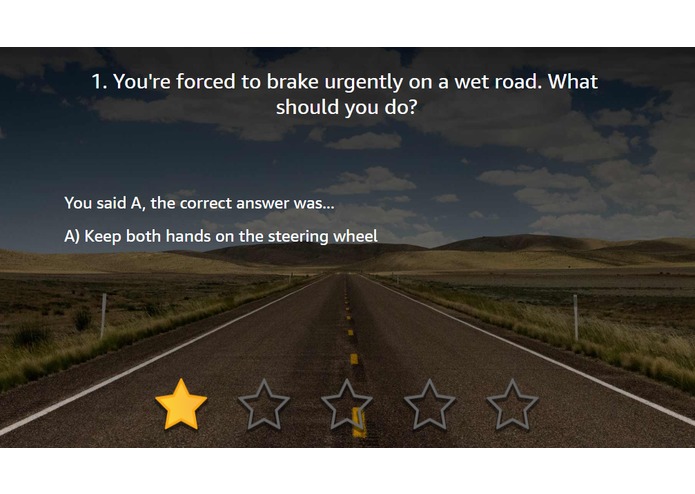
This is the screen displayed when a user answers a question.
-
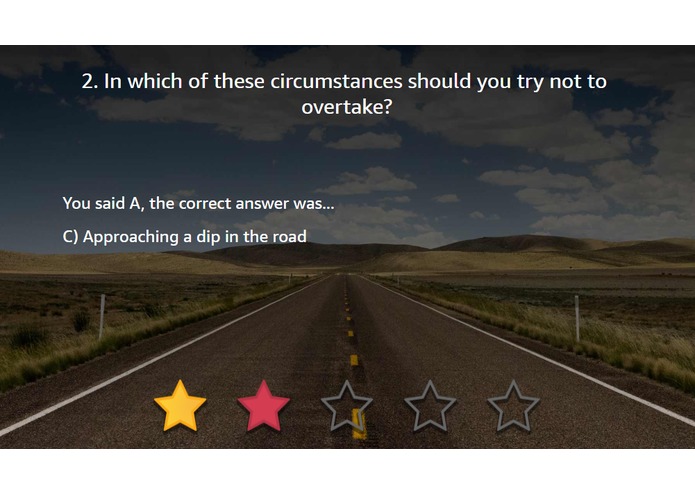
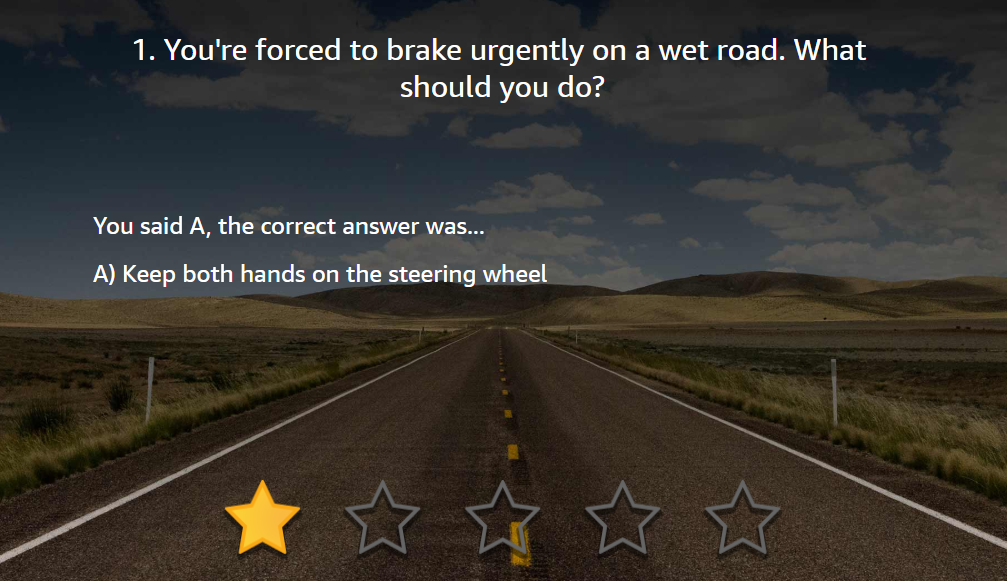
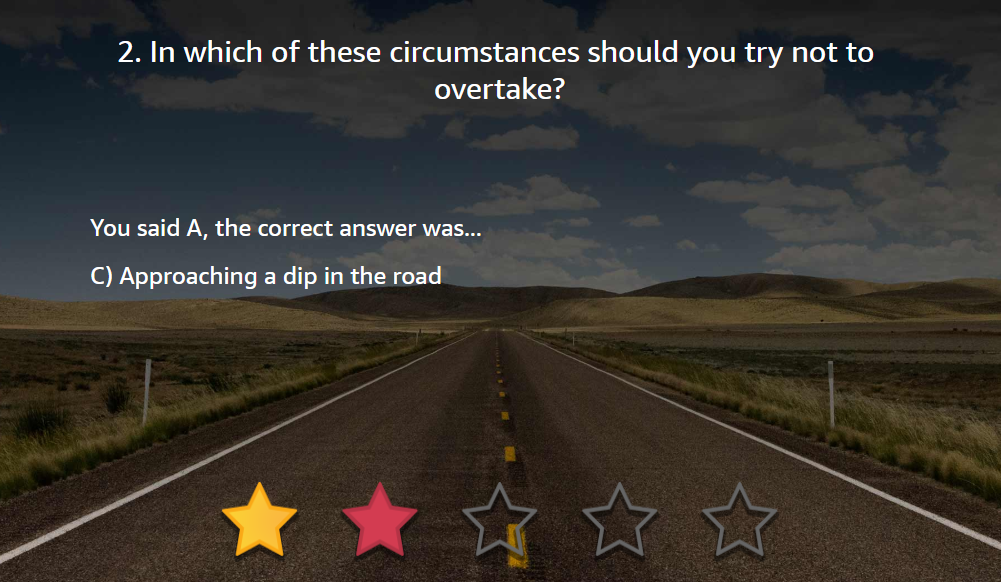
This is the screen displayed when a user answers a question, and gets it incorrect.
-
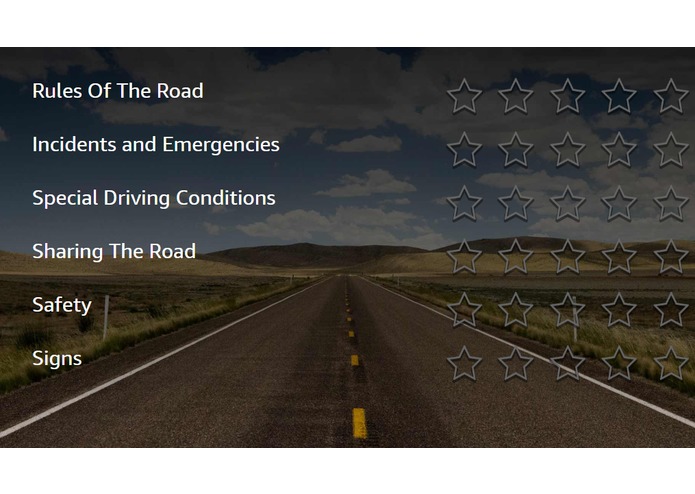
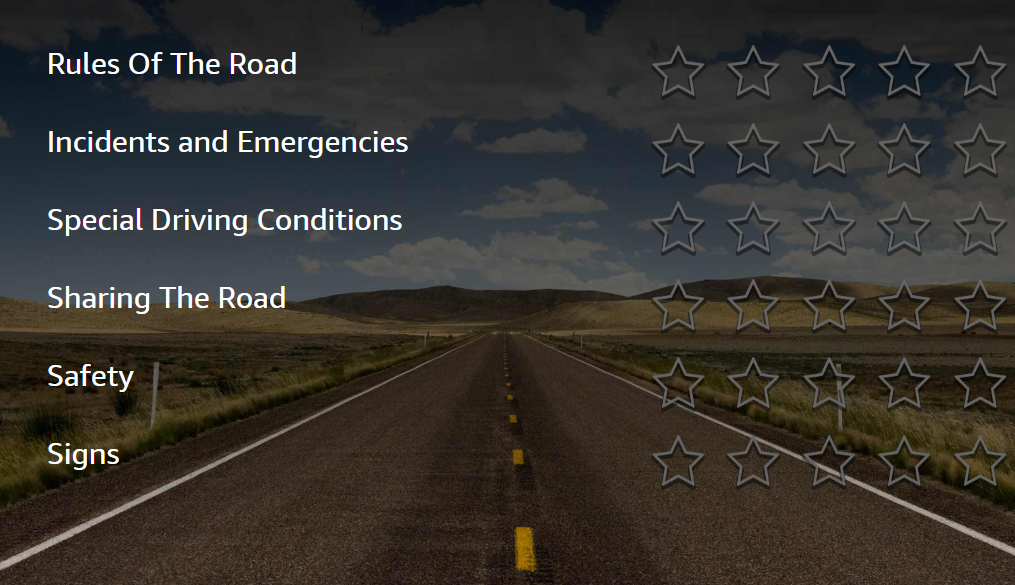
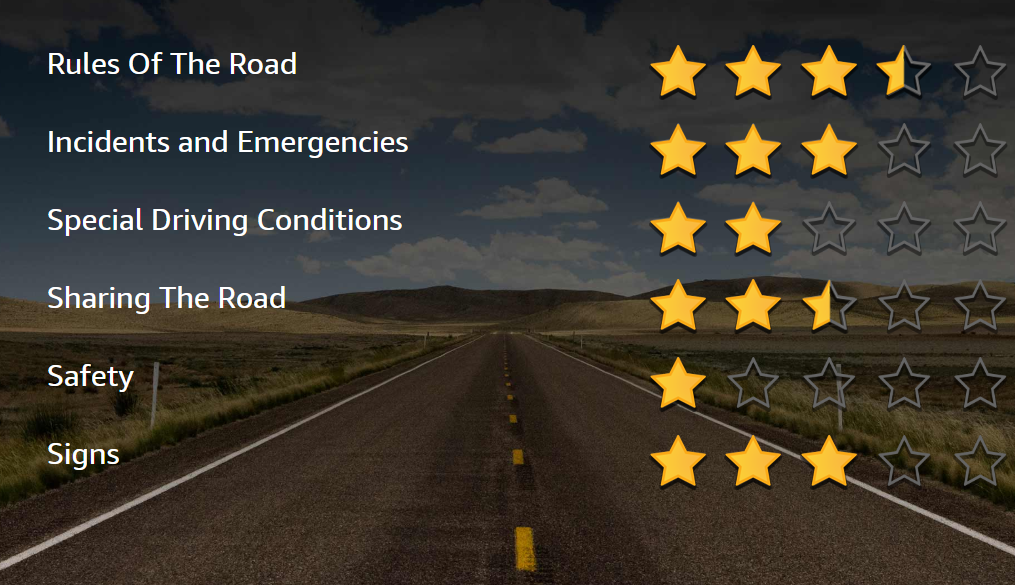
These are the list of categories that the user can choose from, with stars indicating their average score for each category.
-
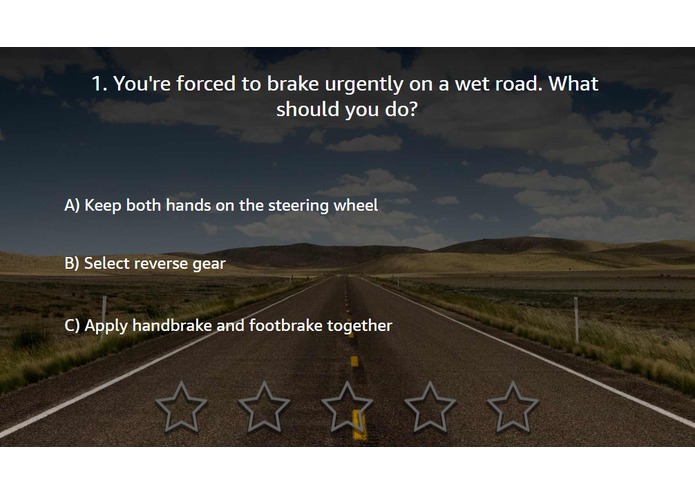
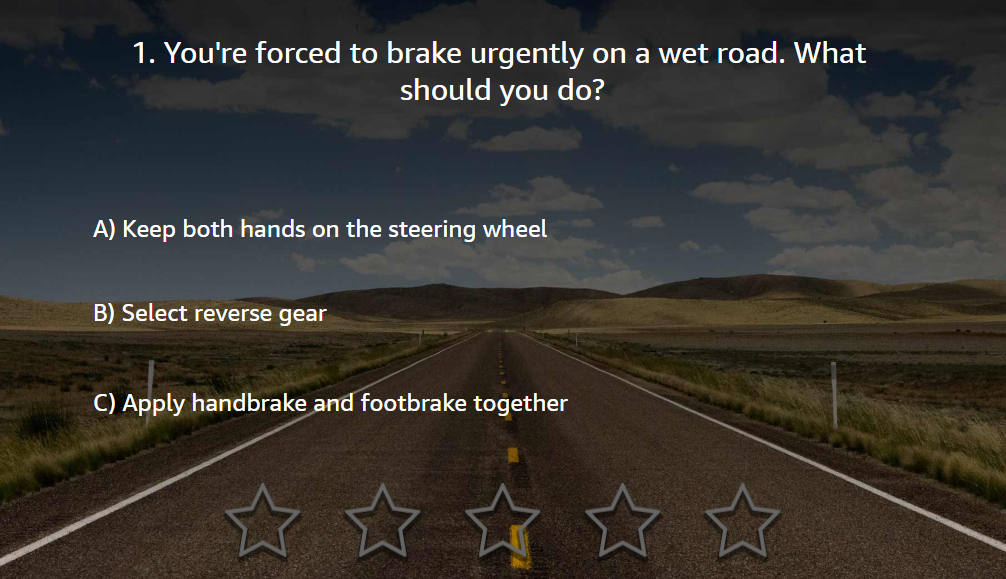
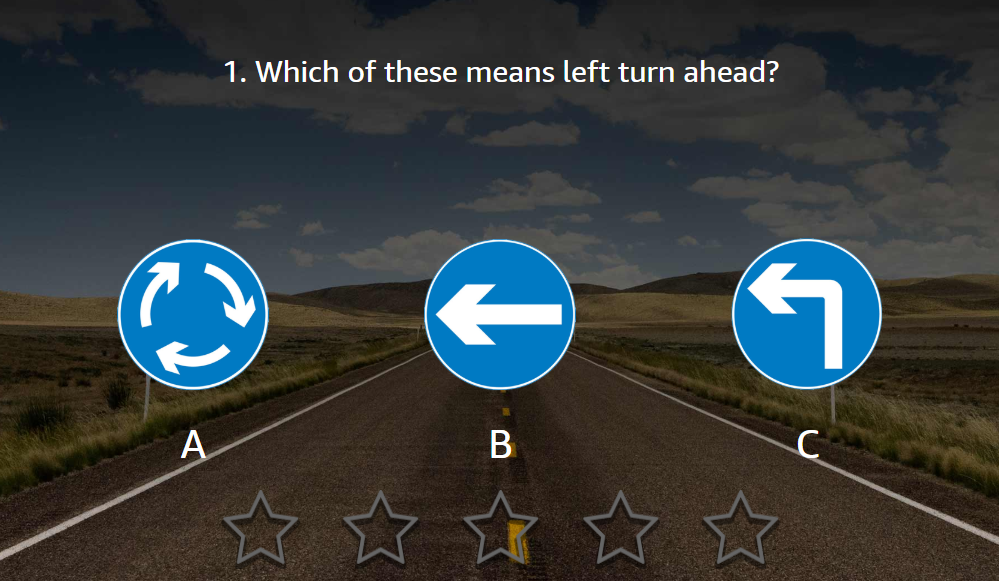
This is the main question screen.
-
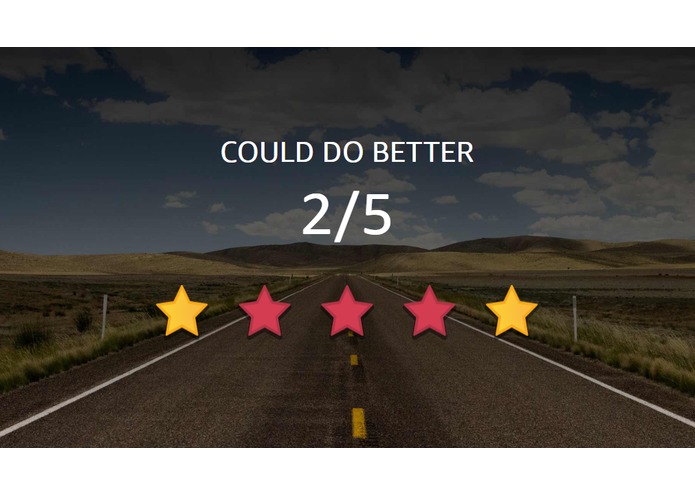
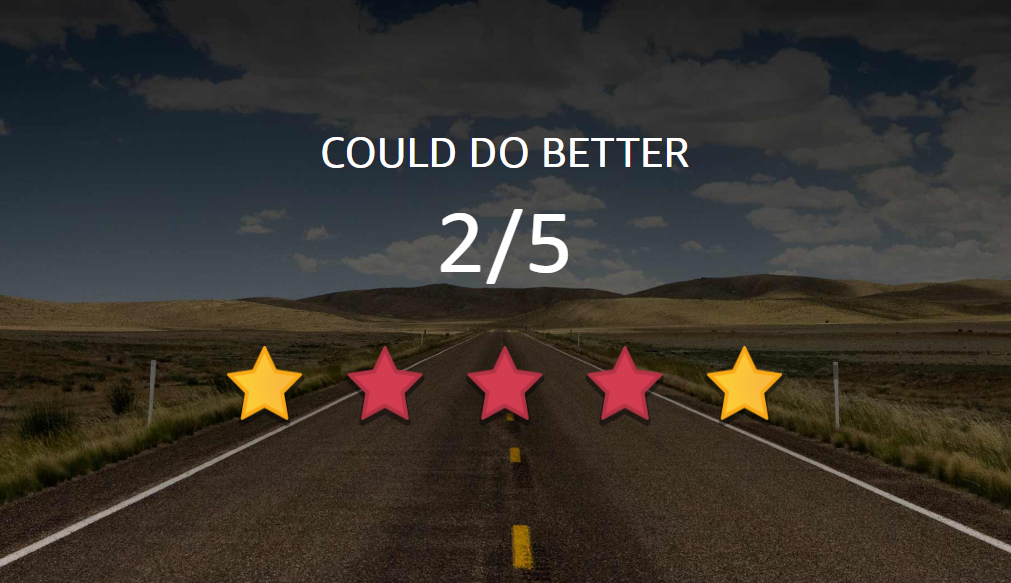
This is the game over screen, displaying the users score out of five
-
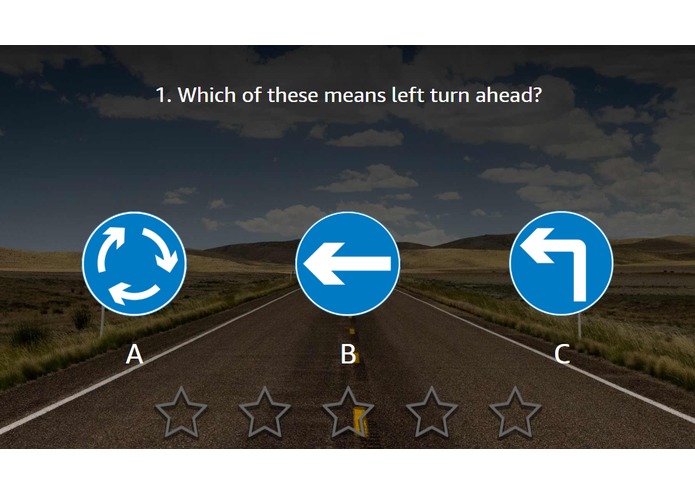
This is a screen for the signs questions.
-
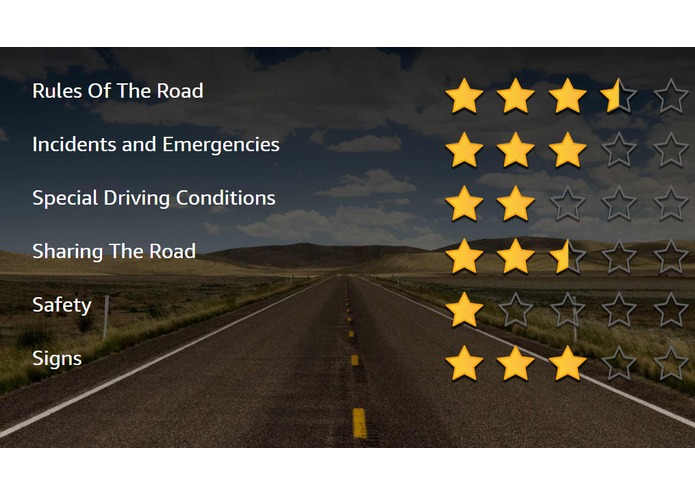
These are categories after they have been played with tracking of the users score.
Inspiration
According to the BBC, the pass rate for driving theory tests in the UK is 45.5%, dropping below 46% for the first time in ten years. The inspiration behind this Alexa skill is to increase that percentage and get more people passing their test first time.
What it does
Driving theory test is designed to help users practise their driving theory knowledge, by taking bite size multiple choice tests to increase their chances of passing first time. Users can choose to take a random quiz to build up a varied amount of knowledge or select specific categorised questions which monitor their progress. Users can answer questions with "A, B or C", or they can tap their answer on the screen.
How I built it
We used the ASK CLI command line package to create the project. Using JavaScript we built the skeleton for the initial skill, so that the user could answer questions with A, B or C. The questions that we used were sourced through a copywriter so that authentic driving theory questions could be practised by the user. We split these questions in to specific categories, so that users could select if they wanted to practise specific question sets. After building the base game, we moved on to visuals. We wanted the skill to have a crisp and professional feel. We implemented a layout which was easy on the eye and yet effective, with a star tracker at the bottom so the user could keep up with the questions they got right and wrong. We translated these designs across multiple platforms, so that they looked good not only on devices such as the Echo Spot, but also they larger devices like the Echo Show and the Amazon Fire TV Stick. Once the design was implemented, we moved on to features such as touch. We created a touch experience that allows users to answer questions with a touch of the screen increasing the multi-modal usability of the skill.
Challenges I ran into
One of the main challenges we ran in to was the paging of the skill. Keeping track of the questions which the user previously answered, and displaying the correct answer of the previous question on the next page proved quite difficult with the user of APL pagers. Another challenge was that of the APL touch-wrappers. We found that if a user touched the screen multiple times, it would register as multiple events. We had to stop this as a user could accidentally touch the screen twice in quick succession, and answer two questions without knowing they did so.
Accomplishments that I'm proud of
Overcoming all the challenges that we faced was an accomplishment that we are immensely proud of. These challenges were quite difficult to face as they were things that we have never experienced before, so to work through them was a great accomplishment. The overall professional nature of the skill is another accomplishment that we are proud of. We designed and implemented a layout which we though looked sleek and professional and researched to find sounds to match the feel. The addition of an intro video, with Alexa talking over it adds to the immersion of the skill. Another accomplishment that we are proud of is the fact that the skill looks great on multiple screen devices. The skill is not only playable on voice only devices, but scales accordingly to different screen devices. We are also pleased that the skill keeps track of the scores that each user gets for the respective category that they have played. This data is saved and is specific to each individual user, meaning that they can focus their attention on categories that they want to improve their star rating on.
What I learned
The building of this skill provided a fantastic learning curve for us. Creating a multi-modal voice first experience, I feel that our skills in developing with APL have greatly improved. The issues that we overcame with things such as APL video, paging and touch-wrappers means that we learned a great deal about how they work and plan to use them a lot more in the future.
What's next for Driving Theory Test
We plan to launch Driving Theory Test in the US skill store with American driving theory questions.
Built With
- apl
- javascript


Log in or sign up for Devpost to join the conversation.