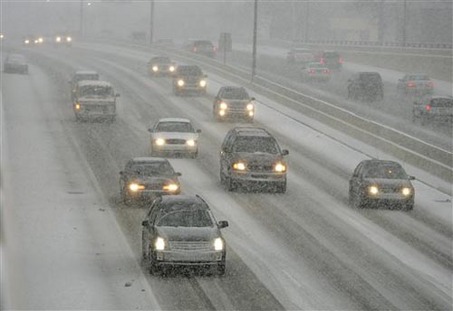
DSRC-based technology can lead to a safety culture on our highways of Drivers Helping Drivers. Should a driver encounter a hazard, other drivers can be informed of the hazard immediately, reducing the risk that any driver in the area will have an accident or close-call. This proposal allows users to broadcast a short, twitter-like message to the vehicles around it. The user would be able to send up to 5 pre-programmed messages at any time, with the touch of a button, or with voice commands. Messages are limited to these five, to prevent superfluous messages. The messages would be:
- Help Needed
- Weather Hazard -- Drive Slowly
- Accident Ahead -- Caution
- Road Hazard Ahead -- Caution
- Disabled Vehicle -- Caution My proposal assumes that all vehicles -- cars, trucks, and buses -- would use a standard DSRC-based protocol to send and receive messages. Presumably, some cars would have this system built-in, and there would be aftermarket options as well. One added feature would be that the broadcast would be shown on the vehicle's rear window, so that the driver immediately behind the vehicle, even if their receiver was off or malfunctioning, would still be able to receive the message. a. Describe the user or users All drivers using the Interstate and US Highway System. b. Explain the Concept’s value to the user and society as a whole The system would alert nearby drivers when conditions are less than favorable. This would create a greater safety culture on the interstates and highways. It is often the lead driver who sights the hazard, but has no way of informing following drivers that there is a hazard. In many cases during a hazard situation, the following drivers are moving at the posted speed limit, unaware there is a problem ahead. This results in a rear-end collision or a close-call when their vehicle can not stop in time. c. Describe the conditions under which the Concept is useful The concept would be useful and prevent accidents and close-calls during periods of low visibility, in poor weather, on icy roadways, and when road hazards are sighted. The system would be particularly useful in winter weather. With this system, drivers can help other drivers remember to drive with regard to the conditions, instead of relying only on police presence to encourage safer speeds. Should one's own vehicle become disabled or be unable to operate at full speed, the system provides more information to surrounding drivers than a simple four-way flasher can provide. If help is needed, nearby drivers can respond. d. Describe how the Concept operates, including its interdependencies with its functional environment, such as: transportation infrastructure (traffic signals, dynamic message signs, management centers, etc.) non-transportation infrastructure (for example, cell phone systems) vehicles (for example, on-board sensing equipment) persons other than the user that may interact with the Concept. One of the five preset messages is sent from an in-dash or aftermarket sending unit. This message is broadcast so that nearby vehicles and message signs can receive and show the message immediately. The message is also shown on the rear window of the vehicle sending the message. Management centers could also pick up and compile messages for data analysis purposes. Some states may choose to dispatch emergency personnel based on message broadcasts. e. Explain how the Concept relies on the unique characteristics of DSRC, or enhances the use or usefulness of other DSRC devices, services, products, applications or solutions. This system relies on DSRC protocols. f. Describe the ways in which the Concept is innovative: how it differs from past and current practices, technologies, approaches, etc. No current technology performs this function. As a driver, I can notify police about a hazardous situation via cell phone, or use OnStar to report an emergency, but I can not notify nearby drivers of an upcoming hazard. Whereas police or OnStar notification is only for the most serious emergencies, the DSRC-based system described here is used for both serious issues and less serious, but potentially hazardous, issues. 2. Explain the process by which the Concept would be implemented and widely adopted. Discuss any other risks, costs or challenges in making the utilization and/or adoption of the Concept widespread, and how they could be overcome. Over time, it would be likely that car audio systems or in-dash panels such as the Ford Sync system would accommodate these DSRC-based functions. Public education, and commitments from automobile manufacturers, the insurance industry, and government would be keys to the success of this proposal. The rear-window broadcast of sent messages would move the system forward more quickly, as every car would not have to have a working receiver in order to receive some benefits from the DSRC-based system. Appropriate technology will have to be developed and refined for this purpose. Since some automakers have used Head-Up-Display to present messages to a driver on their inside windshield, perhaps that technology could be modified to project a message to other drivers using a rear-window projector. This proposal does not use cell-phone or smartphone apps because navigating through a cell-phone based application could potentially be hazardous for the driver.

Log in or sign up for Devpost to join the conversation.