Inspiration
DriverDNA started as a way to stop bouncing between VBOX, MoTeC, AiM, Bosch, sim tools and spreadsheets, and instead get one clear story of how a driver is actually creating lap time.
What it does
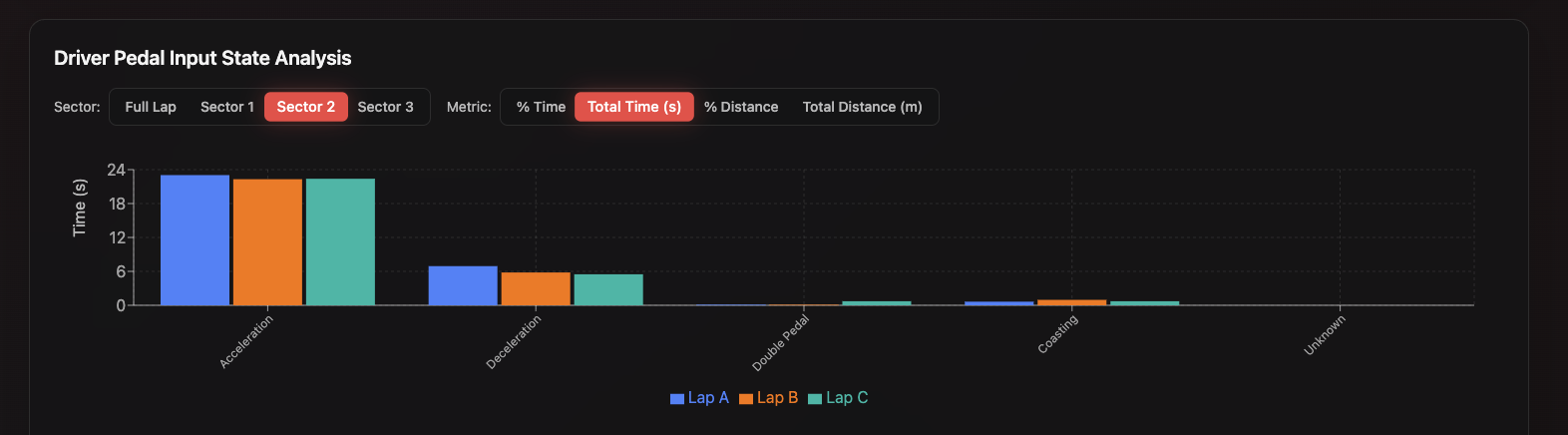
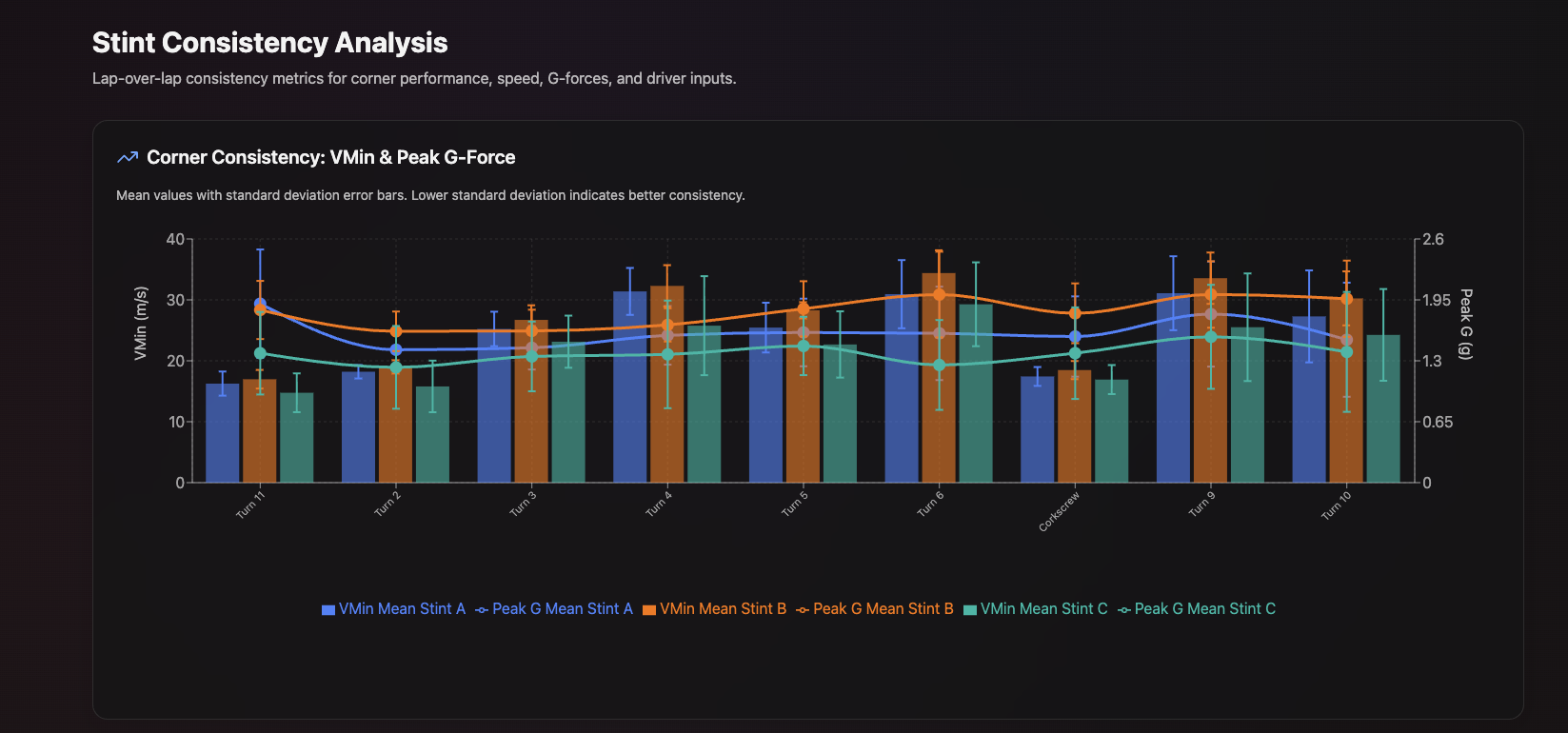
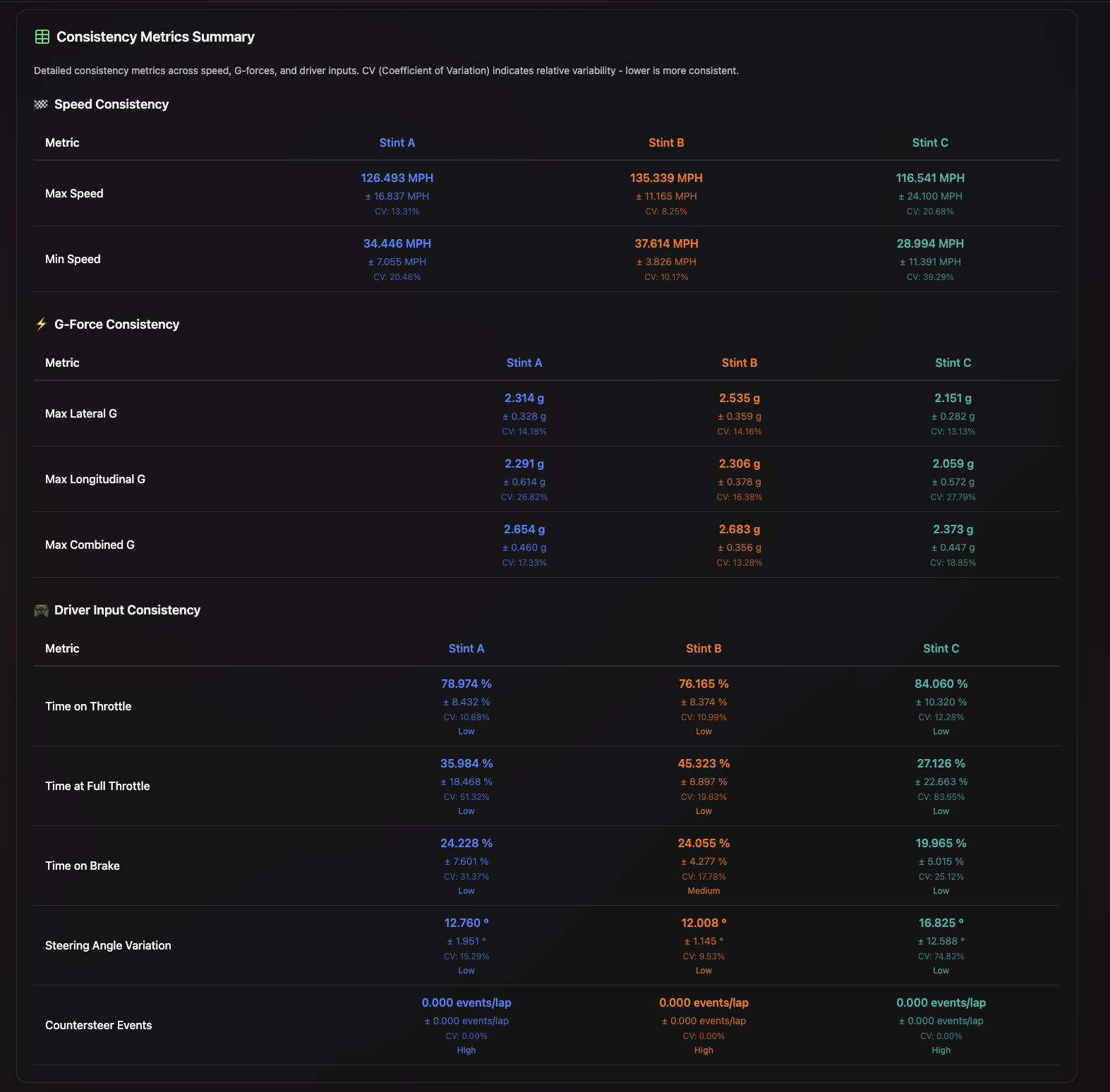
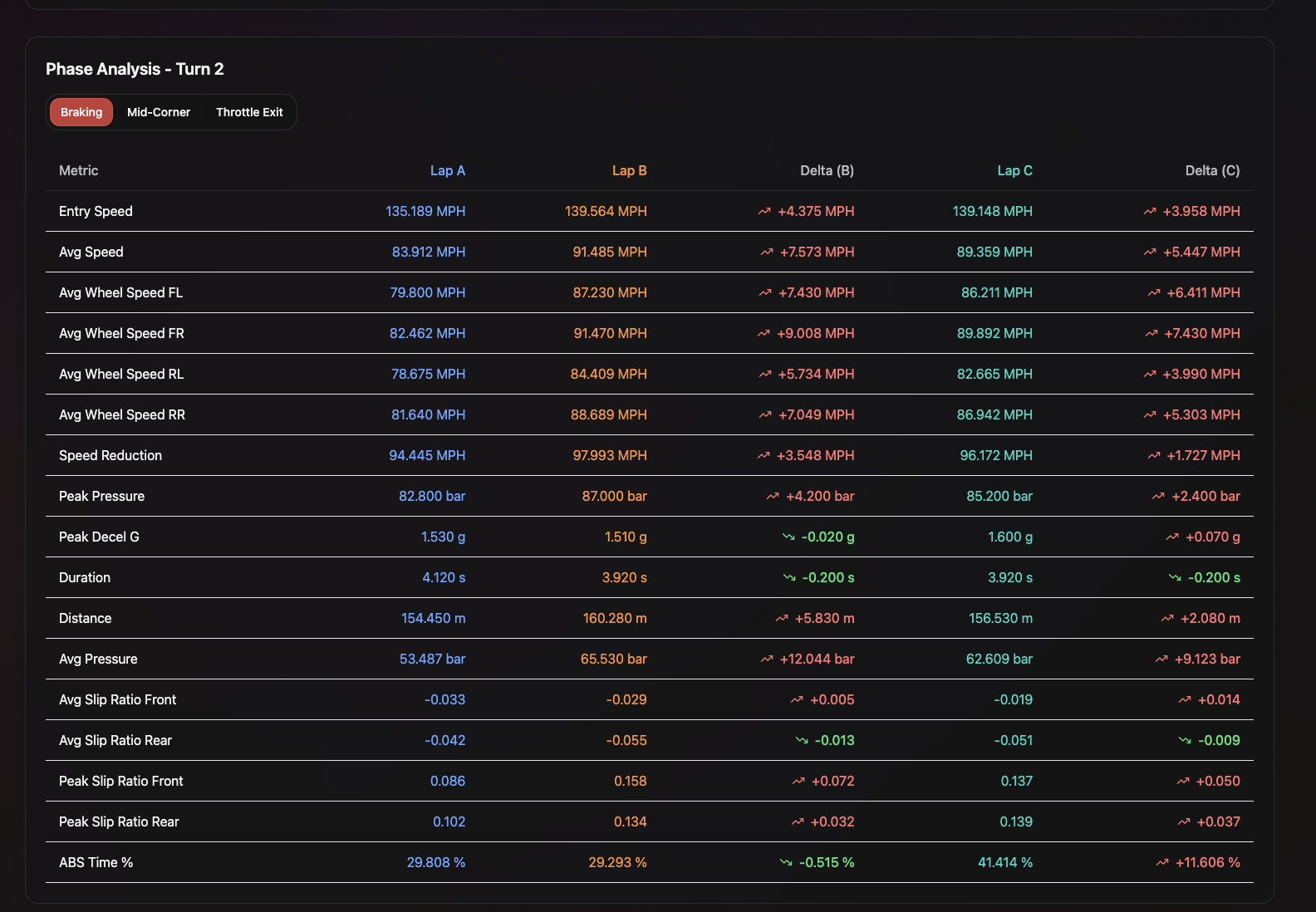
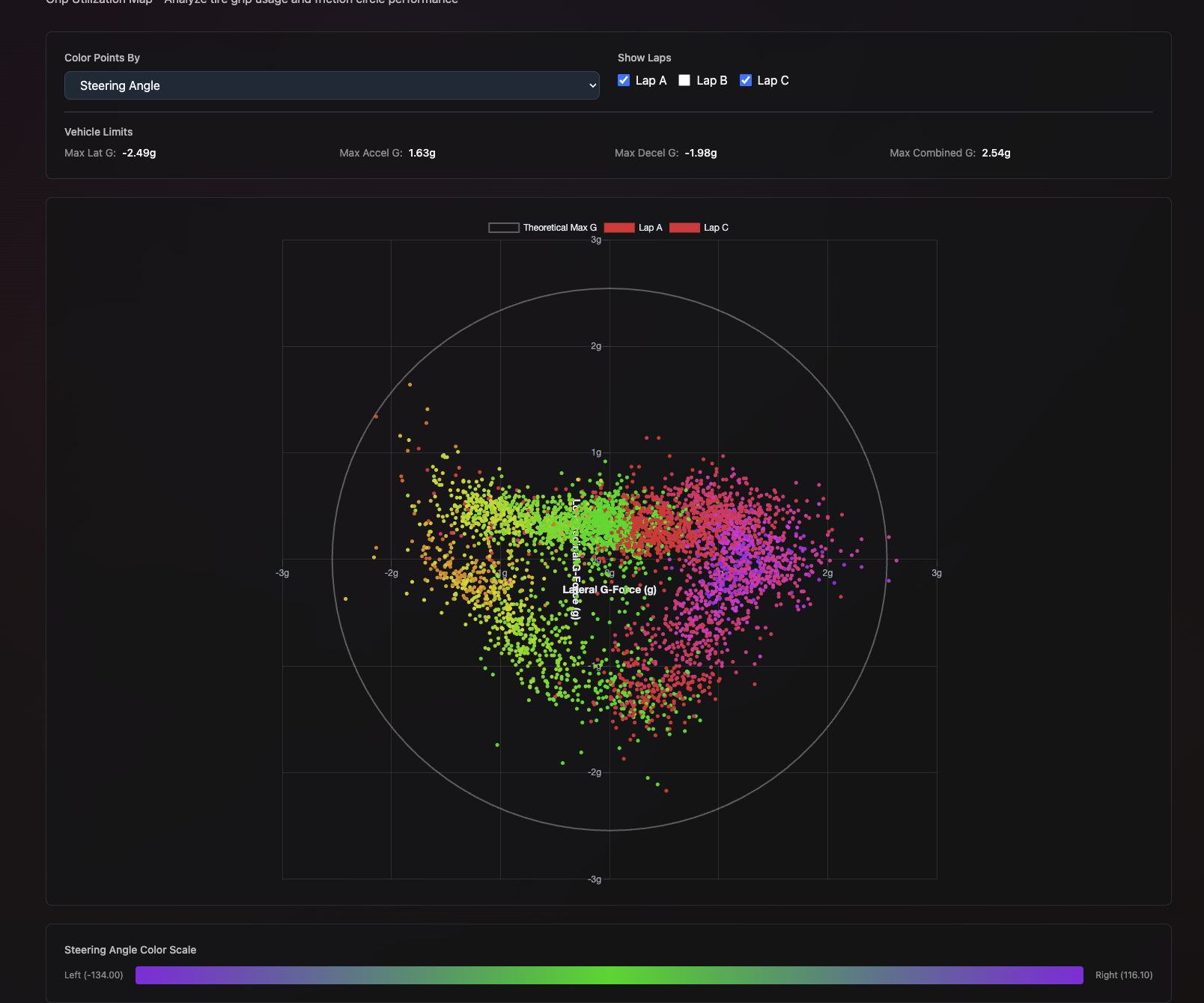
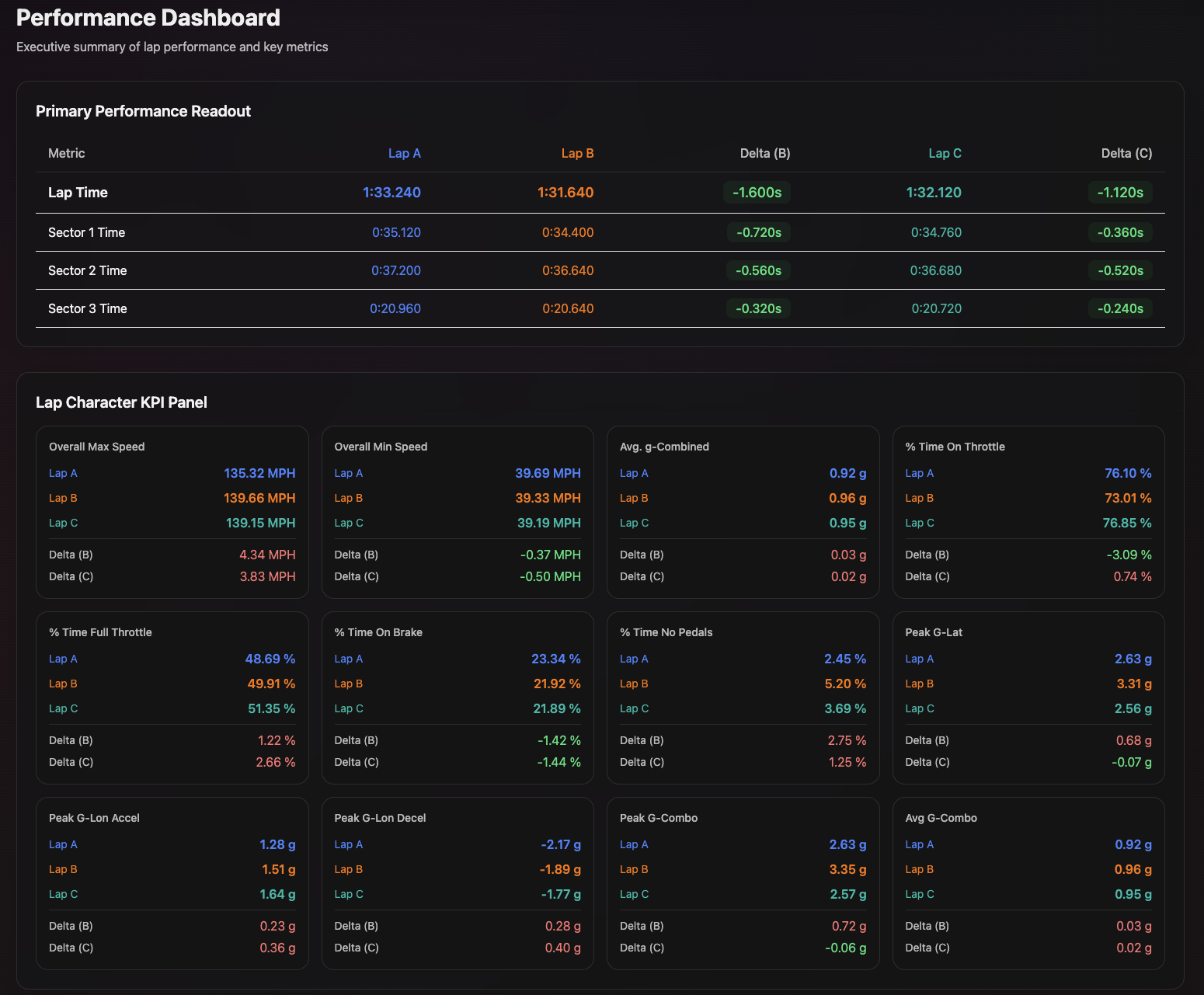
DriverDNA ingests telemetry from real cars and sims, normalizes it, and auto-builds a stint-level report that scores every corner, sector, straight, and lap. It surfaces braking, mid-corner, and exit execution plus advanced signals like workload, grip use, chassis stability, and tire behavior so you can see each driver’s “performance fingerprint.”
How we built it
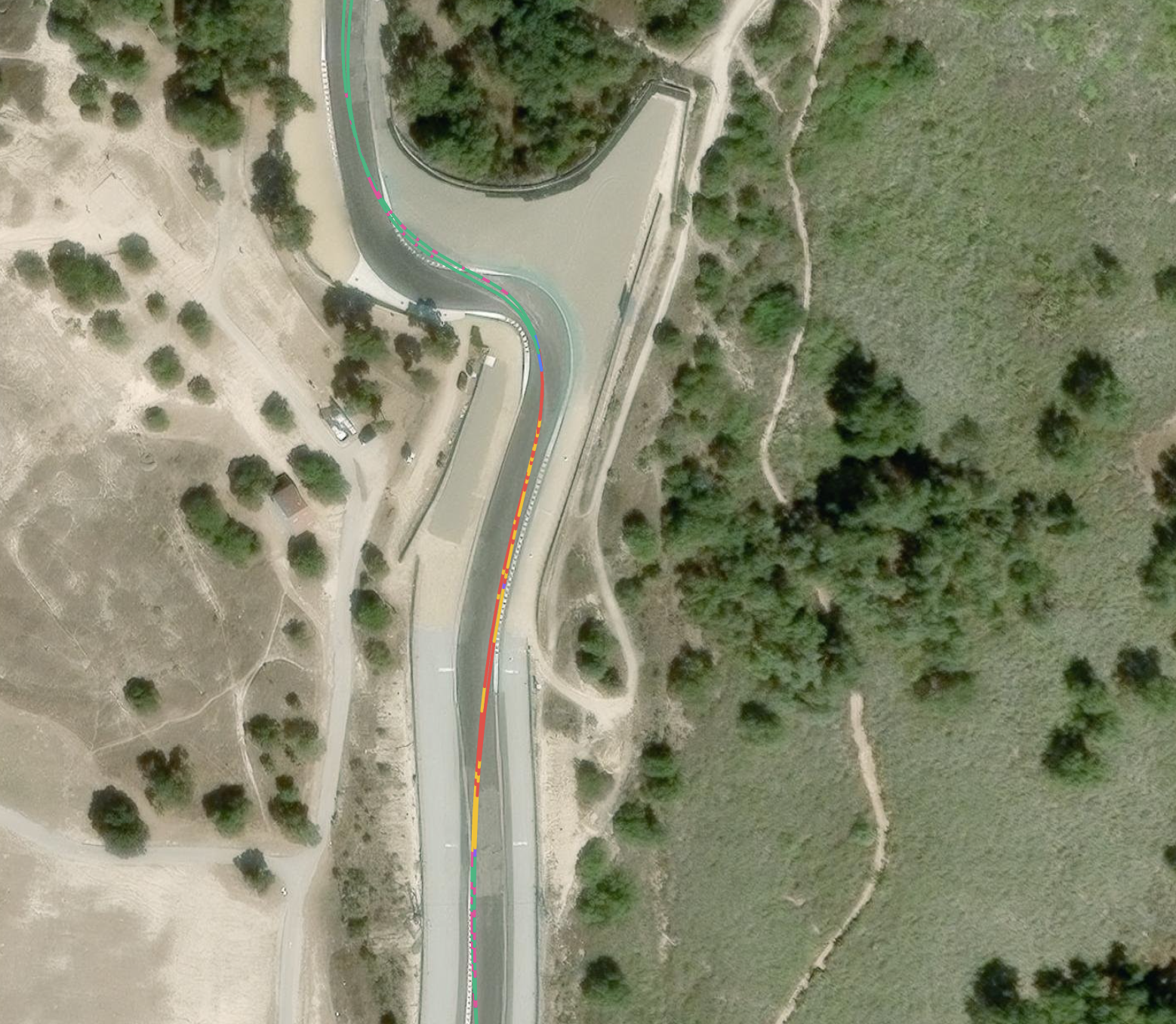
Under the hood is a parser layer for CSV/log exports from major data systems, a normalization engine that aligns channels, units, and laps, and a segmentation pipeline that tags corners, sectors, and stints from distance and GPS. On top of that, a physics- and statistics-based analysis layer computes metrics like brake efficiency, combined‑G utilization, tire temps, and driver workload, which are rendered into a structured narrative report in a single UI.
Challenges we ran into
Each logger names and scales channels differently, so building robust mapping and unit handling across systems was a major challenge. Handling incomplete or noisy data (missing pressures, inconsistent GPS, uneven sampling) while still producing trustworthy braking, grip, and workload metrics required a lot of validation and confidence scoring.
Accomplishments that we're proud of
DriverDNA can take a messy test log and return a coherent, corner‑by‑corner breakdown of how the car, tires, and driver are working together, without manual spreadsheet gymnastics. It also goes beyond basic overlays by quantifying driver effort, stability, and tire utilization, turning what used to be “feel” into numbers teams can act on. Instead of needing multiple tools to view and analyze data, a single flow and tool is now possible.
What we learned
Automatic insights only matter if they read like a coach’s notes, not a wall of plots, so presentation and wording are as important as the math underneath. Good telemetry analysis is limited more by data quality, channel mapping, and context than by algorithms, so investing in those foundations pays off everywhere.
What’s next for DriverDNA
Next steps include multi-driver comparison and clustering (to spot “driver archetypes”), live links to biometrics, and richer weekend views that tie runs, conditions, and setup changes into one timeline. Longer term, DriverDNA will generate auto-written debriefs and shareable reports so teams can go from raw logs to race-weekend decisions in minutes.


Log in or sign up for Devpost to join the conversation.