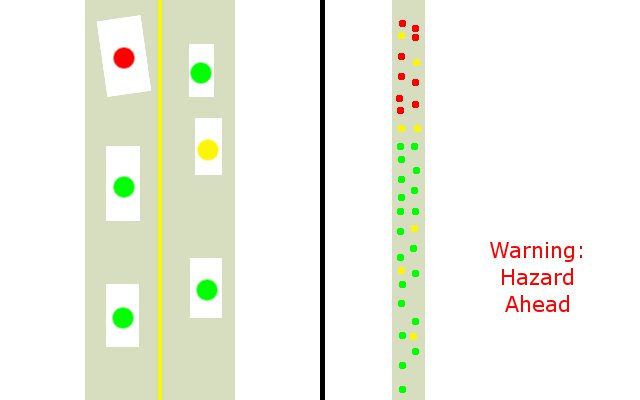
Cars can communicate a driving score to other nearby vehicles using DSRC to alert them of distracted or unsafe driving. Sensors in the vehicle could record driving speed, movement of the steering wheel, lateral motion of the car, frequency and degree of braking, how closely the vehicle follows other vehicles, or other data to determine an overall score for how safe the driver is driving. This score would then be broadcast to nearby vehicles and/or receivers along the road.Drivers of nearby cars would then be alerted when a car near them has a low score. Dynamic signs along the road could also indicate when a particular section of the road has recently been associated with driving indicative of a hazard. This data might also be transmitted to a regional traffic data system via cell phone towers to help drivers determine the best route to their destinations. Motivating participationDrivers may be hesitant to have their driving history recorded and scored. Drivers could be motivated to participate by wanting to know how those around them are scoring. Hazardous drivers also likely assume they drive more safely than they do. Auto insurance discounts could be available if driving behavior is found to be safer. Depending on driver sentiment, high participation rates might also be aided by enacting regulations that prohibit law enforcement vehicles from using the data for traffic stops or other uses. Market research might also reveal that driver participation would increase if there were assurances that all data was erased after 30 minutes or some other interval.If the system is integrated with road receivers or a regional traffic information system, participation could be considered a philanthropic act and entail the resulting motivations.Improving driving behaviorsKnowledge that this system is in place and that a continuous scoring of driving behavior is occurring, could decrease distracted driving and increase safe behaviors. Understanding that surrounding drivers may be alerted to their poor driving could do the same. Exceptionally high scores could also be alerted creating a reward incentive for better driving. The system could also alert the driver to their own unsafe behavior and suggest a rest stop if the data suggest the driver is sleepy or intoxicated. Integration of the system with GPS and mapping data could allow directions to a suitable place to park. Preventing the system from becoming a distractionSeveral options exist to prevent the information this system provides from becoming a distraction in itself, if testing suggests it could. Drivers could only interact with the system via short audio alerts. The system could itself track whether it is a distraction by measuring driving performance after information is presented. If a distraction is detected, the system could reduce the amount of information presented either by turning off any visual presentation of data or reducing audio information to a simple alert tone or small red light on the dash. The system could also alert the driver of their own poor performance. Eliminating unhelpful alarms The system could utilize a rolling average to determine what driving scores are below normal. If everyone is driving poorly, the software could reduce the driving score that triggers an alert for a particular vehicle with instead having some general unobtrusive indicator of unsafe driving. If multiple days of data are available, the system could adjust the scoring algorithm to reduce the weight of certain poor driving practices that are ubiquitous. In this case the system could offer a weekly or monthly reminder that these common behaviors are dangerous perhaps with use of humor.
Driver Performace Alert System
Updates

Leave feedback in the comments!
Log in or sign up for Devpost to join the conversation.