-
-
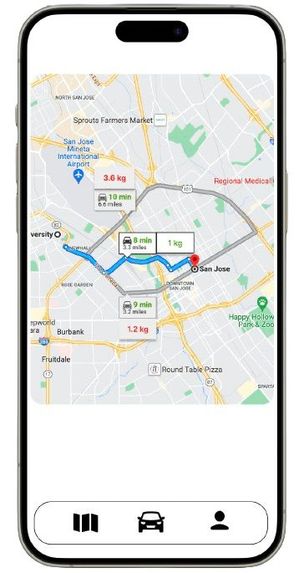
This map shows 3 routes, among which most carbon efficient route is seen.

Inspiration
Our product is rooted in a deep concern for our environment. Motivated by a growing awareness of the dire consequences of carbon emissions, we sought to harness technology to empower individuals and businesses to make a positive impact. The emotional connection to the environment is woven into the fabric of DriveGreen, echoing the collective responsibility we bear for the well-being of our planet. It's a heartfelt endeavour that goes beyond technological innovation, aiming to evoke a sense of duty and stewardship, where each eco-friendly route becomes a small yet meaningful step towards a greener, more sustainable future, with the promise of a thriving environment for generations to come.
What it does
DriveGreen is a revolutionary platform designed to promote eco-friendly and sustainable driving practices. The core functionality of DriveGreen revolves around optimizing routes for users by suggesting the shortest and most environmentally conscious paths from source to destination. The platform calculates and monitors the carbon emissions of each trip, providing real-time feedback to drivers. This solution incorporates a responsibility and rewards system, giving users the choice to either be rewarded for their sustainable choices or contribute to environmental conservation by planting a sapling. DriveGreen not only seeks to optimize travel efficiency but also endeavors to cultivate a sense of environmental responsibility, making every journey a meaningful step towards a greener, more sustainable future.
How we built it
The primary data input for this product is sourced from the INRIX /findroute API, allowing us to discover and compute various routes and identify the most eco-friendly option—specifically, the route with the least distance, resulting in minimal carbon emissions. Our frontend development leverages Figma, providing a seamless user interface. For the backend, Node.js serves as the foundational technology, ensuring robust functionality. MongoDB is employed as our database management system, facilitating efficient data storage and retrieval. To bring this product to life and make it accessible to users, we have chosen AWS as our host server, ensuring reliability and scalability in our service delivery.
Challenges we ran into
- We faced challenges in determining effective methods to encourage people to adopt and use our product.
- We currently lack direct access to readily available carbon emission data. Our strategy involves relying on third-party APIs to gather all the necessary emission-related information.
Accomplishments that we're proud of
- We successfully delivered the product in line with our expectations.
- One of our main key accomplishments is its contribution to addressing environmental challenges, marking a significant achievement for our team.
- A cost efficient tool.
What we learned
- Displaying multiple routes on a Flutter UI and enabling the most carbon efficient route.
- Strategizing for a real-world problem, and finalizing the strategy, implementation, and storage aspects.
What's next for DriveGreen - A minimal Carbon Drive!
Increased Environmental Awareness: As awareness of environmental issues continues to rise, more individuals and companies are likely to prioritize eco-friendly practices. DriveGreen taps into this trend by providing a tangible way for users to contribute to environmental conservation through responsible driving.
Regulatory Support and Incentives: Governments and regulatory bodies worldwide are increasingly implementing policies to reduce carbon emissions. Your product could align with future regulations, potentially leading to incentives or partnerships with regulatory bodies supporting sustainable transportation.
Expansion of Electric Vehicles (EVs): With the growing adoption of electric vehicles, the carbon footprint of transportation is decreasing. DriveGreen can evolve to integrate with the increasing use of EVs, providing additional data and incentives for users adopting cleaner modes of transportation.
Corporate Sustainability Programs: Businesses are integrating sustainability into their corporate values. DriveGreen could partner with corporations as part of their sustainability initiatives, providing a platform for employees to contribute to environmental conservation.
Technological Advancements: Future advancements in technology, such as improved data analytics and machine learning, could enhance DriveGreen's capabilities. This may result in more accurate carbon emission calculations and personalized recommendations for users.
Collaborations with Ride-Sharing Services: Collaborations with ride-sharing services or integration into their platforms could broaden the impact of DriveGreen. It could become a standard feature, encouraging responsible driving across a larger user base.
Global Expansion: DriveGreen has the potential to expand globally, adapting its features to different regions and cultures. This could involve partnerships with international environmental organizations and the customization of rewards based on local preferences.
Partnerships with Automakers: Collaborating with automakers could lead to the integration of DriveGreen features directly into vehicle systems. This would provide real-time feedback to drivers and potentially influence the design of future eco-friendly vehicles.
Data for Research and Advocacy: The data collected by DriveGreen on driving behaviors and carbon emissions can be valuable for research on transportation patterns and environmental impact. This information can be used for advocacy, influencing urban planning and policy decisions.
Education and Awareness Campaigns: DriveGreen can play a role in educational initiatives, raising awareness about the environmental impact of transportation. This could involve partnerships with schools, universities, and environmental organizations to promote sustainable practices.
Sellable Aspects
Environmental Conscious Consumers: Selling Point: Position your product as a choice for environmentally conscious individuals who want to reduce their carbon footprint. Target Market: Eco-friendly consumers, climate-conscious individuals, and those who prioritize sustainable living.
Fleet Management Companies: Selling Point: Offer a solution to companies with vehicle fleets that want to monitor and reduce their overall carbon emissions. Target Market: Logistics companies, delivery services, transportation businesses.
Ride-Sharing Services: Selling Point: Attract ride-sharing companies looking to differentiate themselves by offering environmentally friendly transportation options. Target Market: Ride-sharing platforms, taxi companies, and transportation network companies.
Car Manufacturers: Selling Point: Partner with car manufacturers to integrate your carbon reduction system into their vehicles, enhancing the marketability of their cars. Target Market: Automotive manufacturers and electric vehicle companies.
Sustainability Programs: Selling Point: Appeal to organizations and municipalities running sustainability programs that want to encourage green practices among residents. Target Market: Local governments, environmental organizations, corporate sustainability initiatives.
Insurance Companies: Selling Point: Collaborate with insurance providers to offer discounts or incentives to customers using your product, promoting safer and environmentally friendly driving. Target Market: Auto insurance companies interested in promoting responsible driving.
Technology Enthusiasts: Selling Point: Market to individuals who embrace innovative technologies that contribute to a sustainable lifestyle. Target Market: Tech-savvy consumers, early adopters, and those interested in smart and eco-friendly solutions.
Corporate Social Responsibility (CSR) Programs: Selling Point: Position your product as part of corporate CSR initiatives, helping companies meet environmental sustainability goals. Target Market: Businesses with strong CSR commitments.


Log in or sign up for Devpost to join the conversation.