-
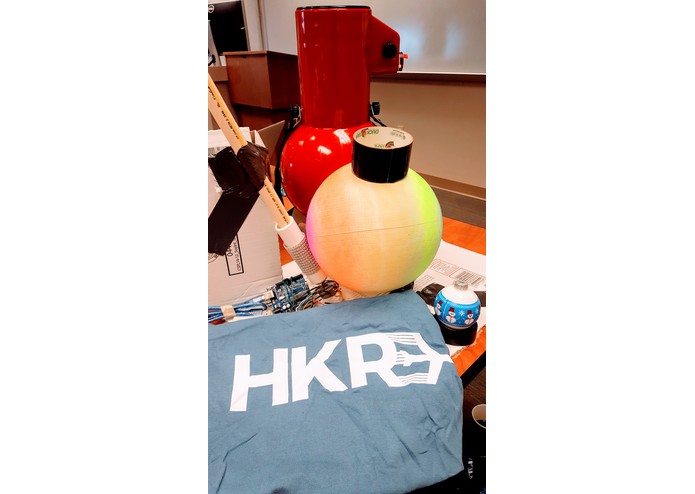
Astroscan telescope and telescope proxies at HackRiddle 2017
-
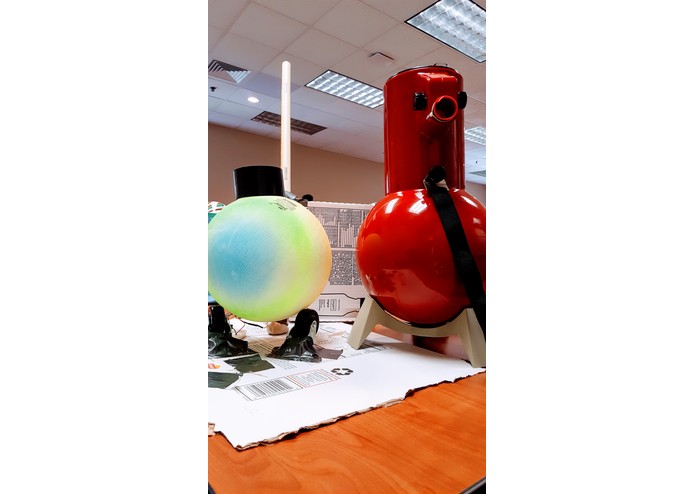
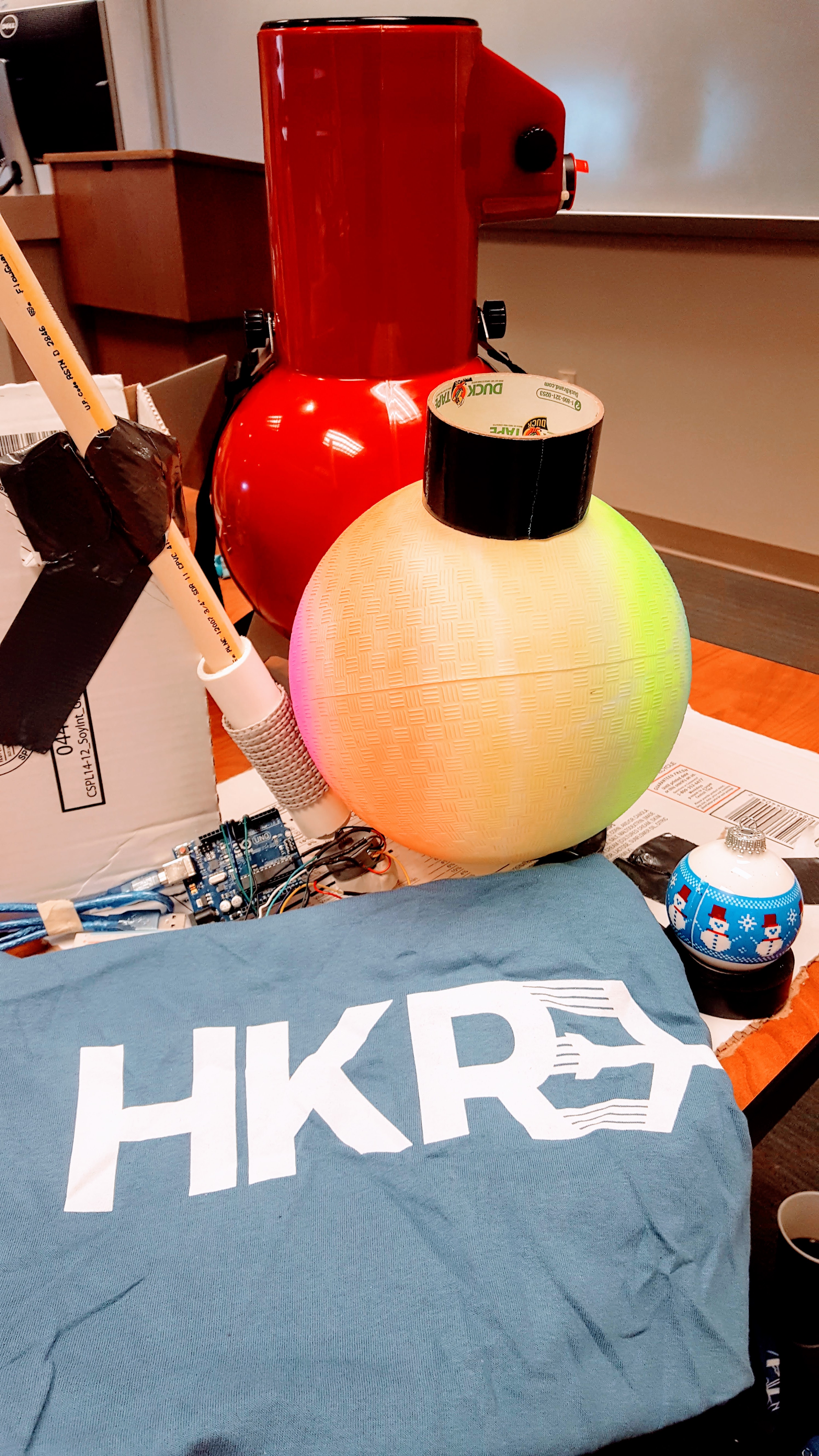
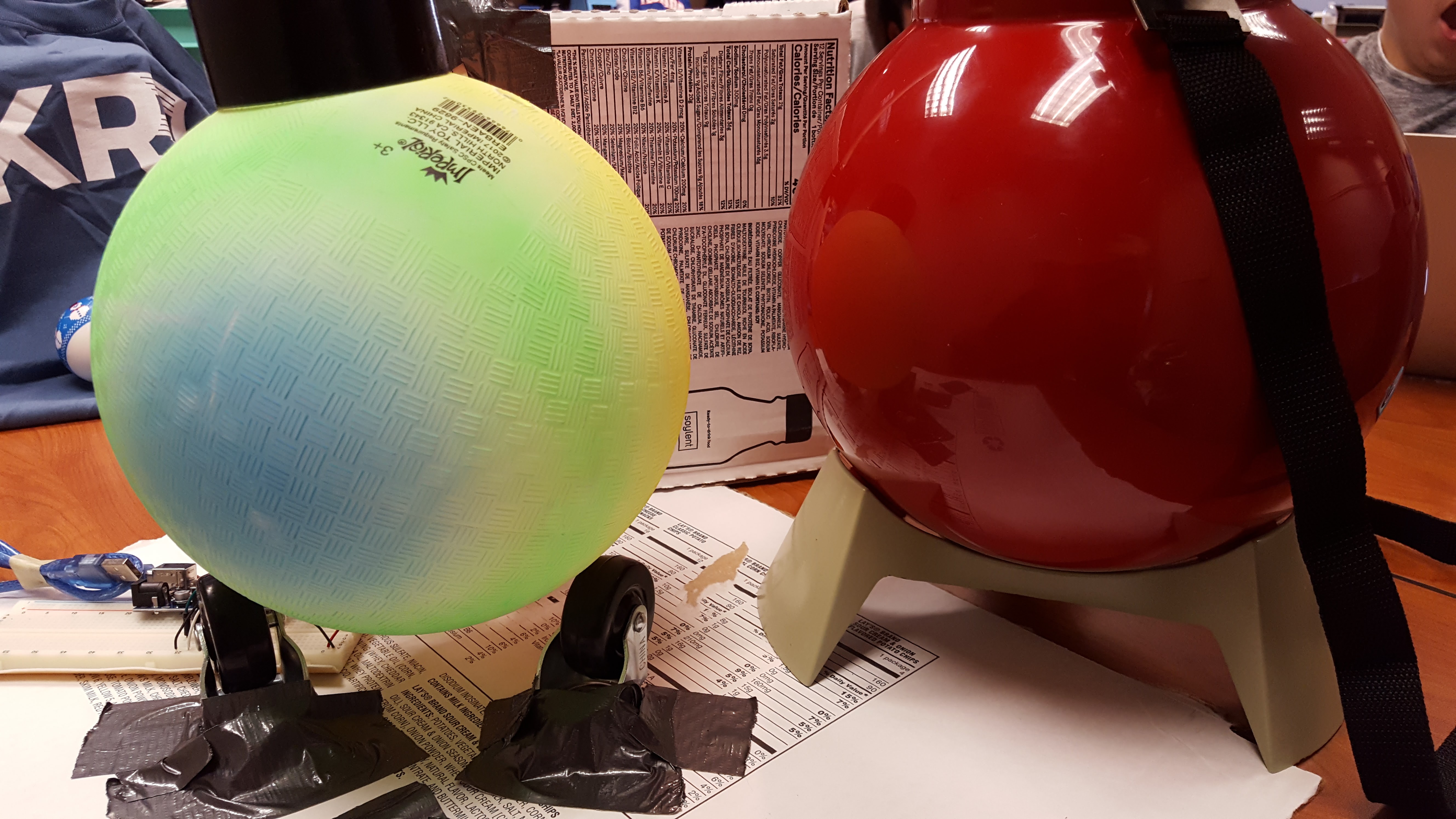
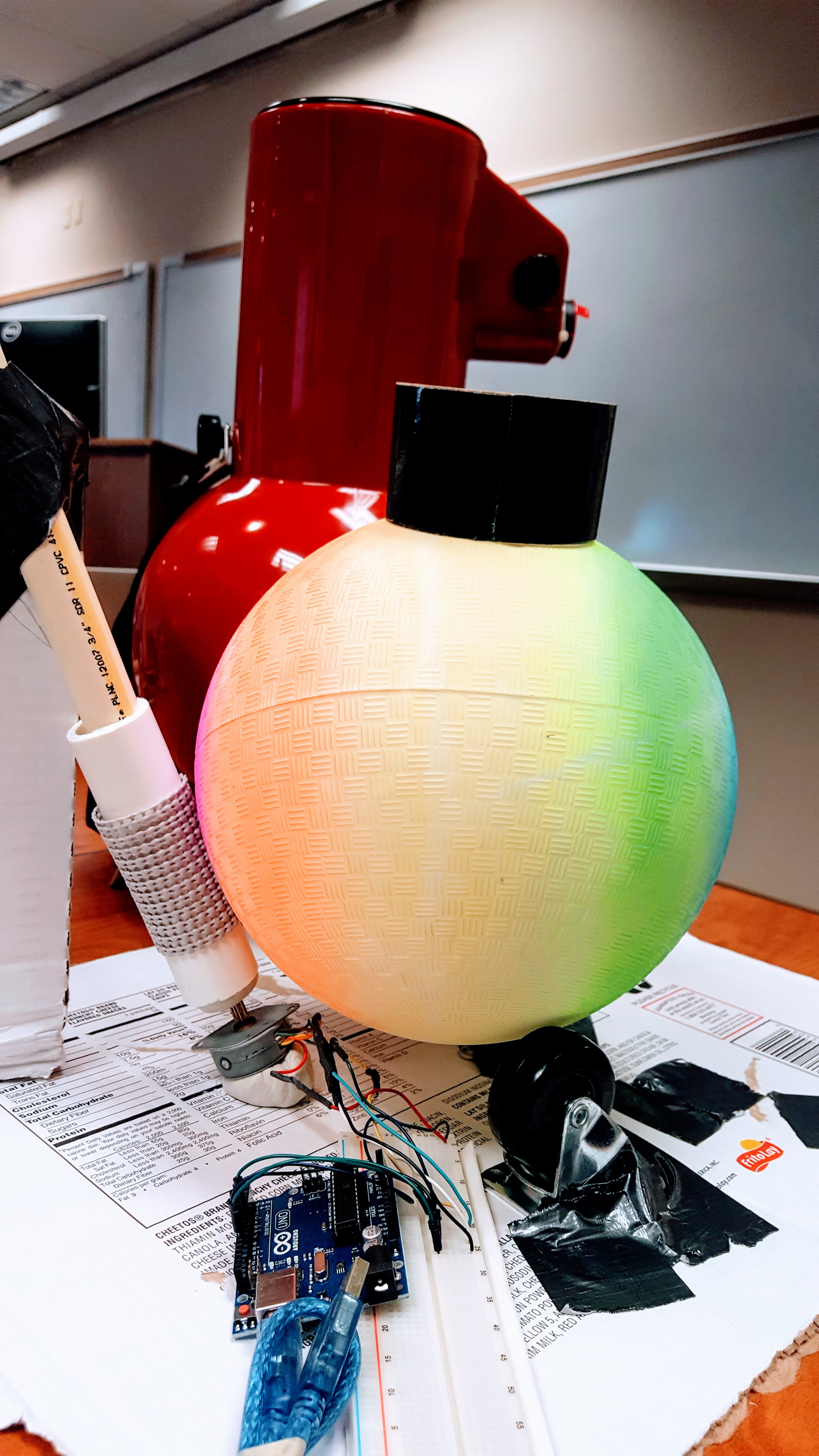
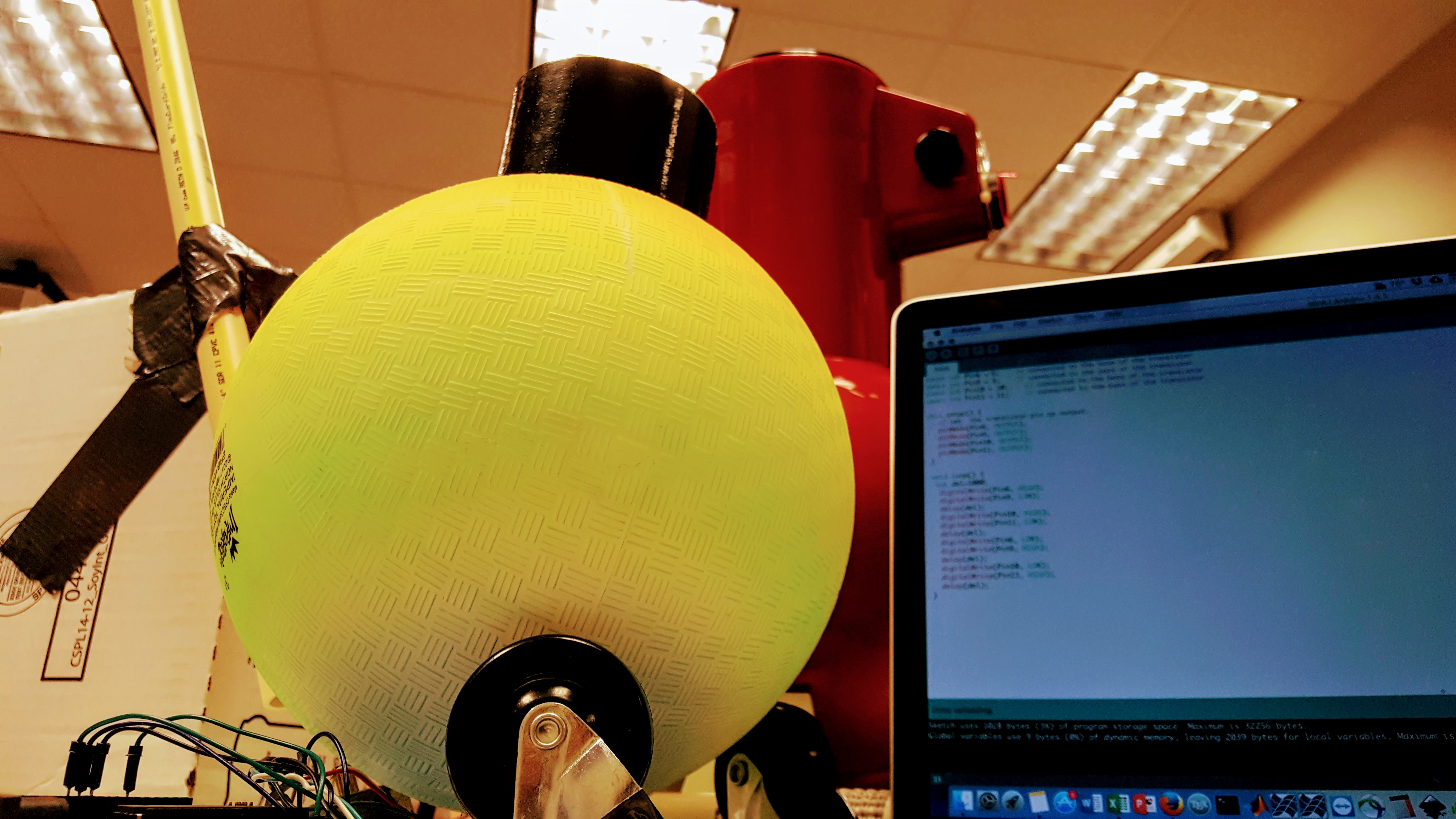
Trackball telescope proxy and original Astroscan telescope
-
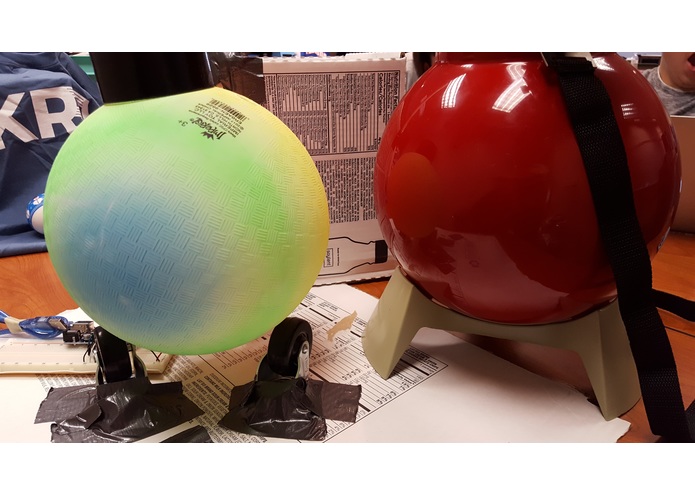
The telescope mounts
-
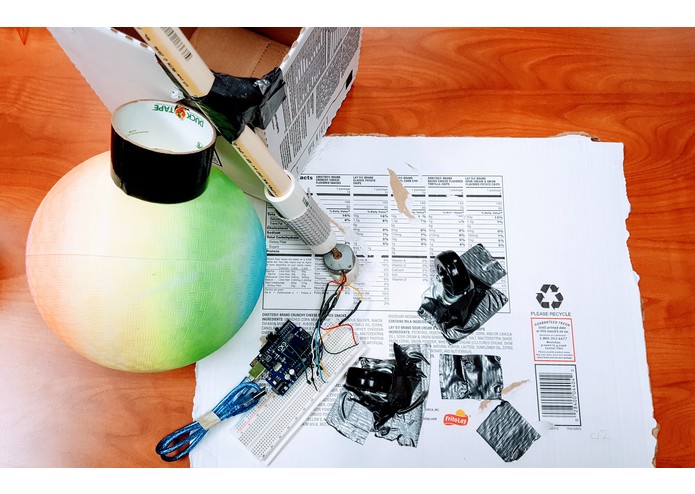
The trackball proxy
-
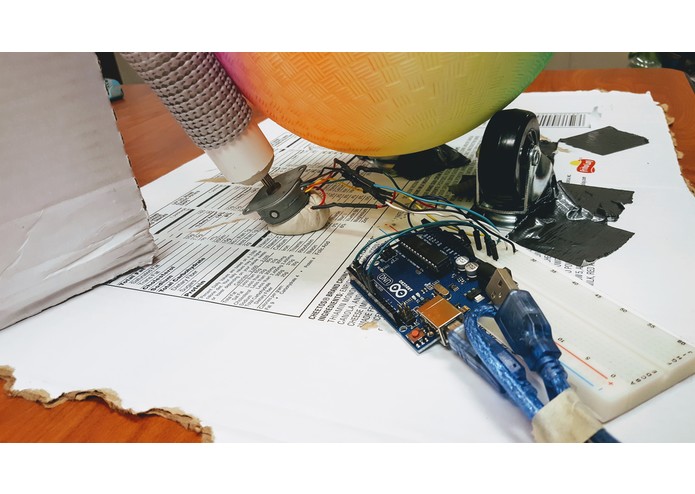
The trackball proxy mount and stepper motor
-
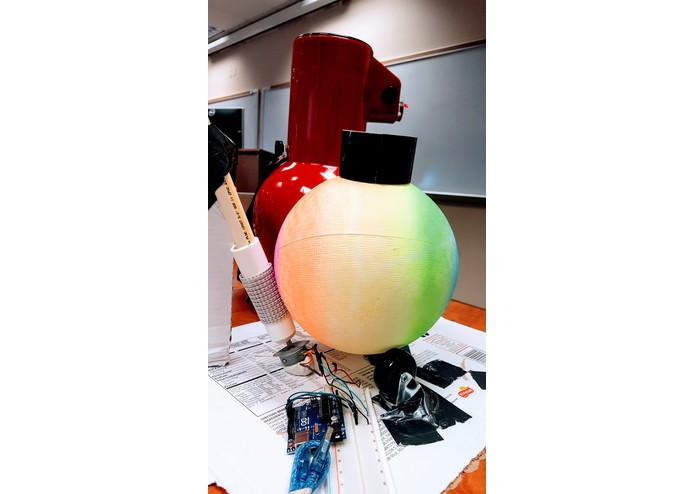
Trackball telescope electronics
-
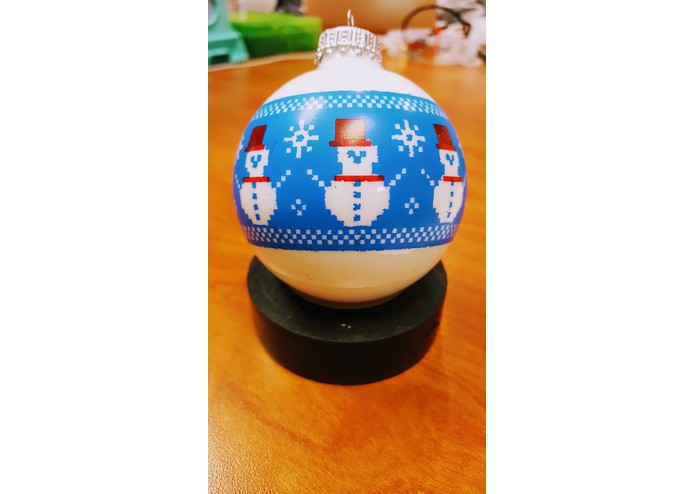
Mini muse: ornament has trackball shape and cool pixelated snowmen
-
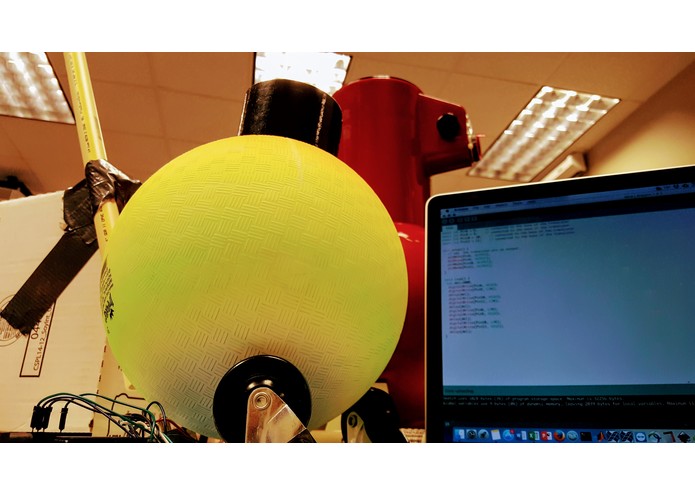
Welcome to the world of computer assisted telescopes
-
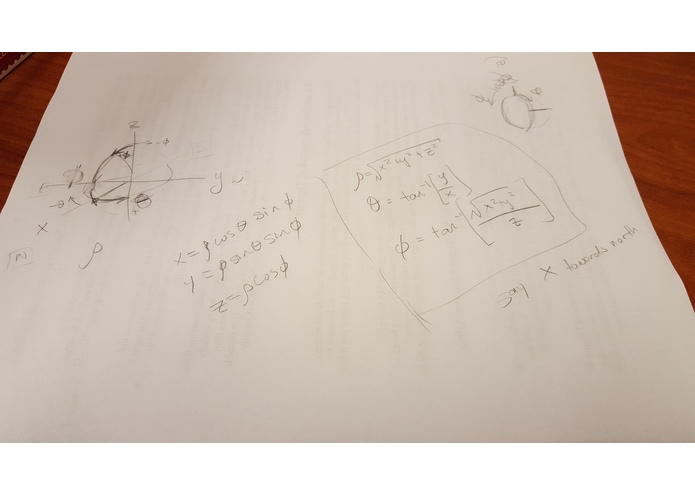
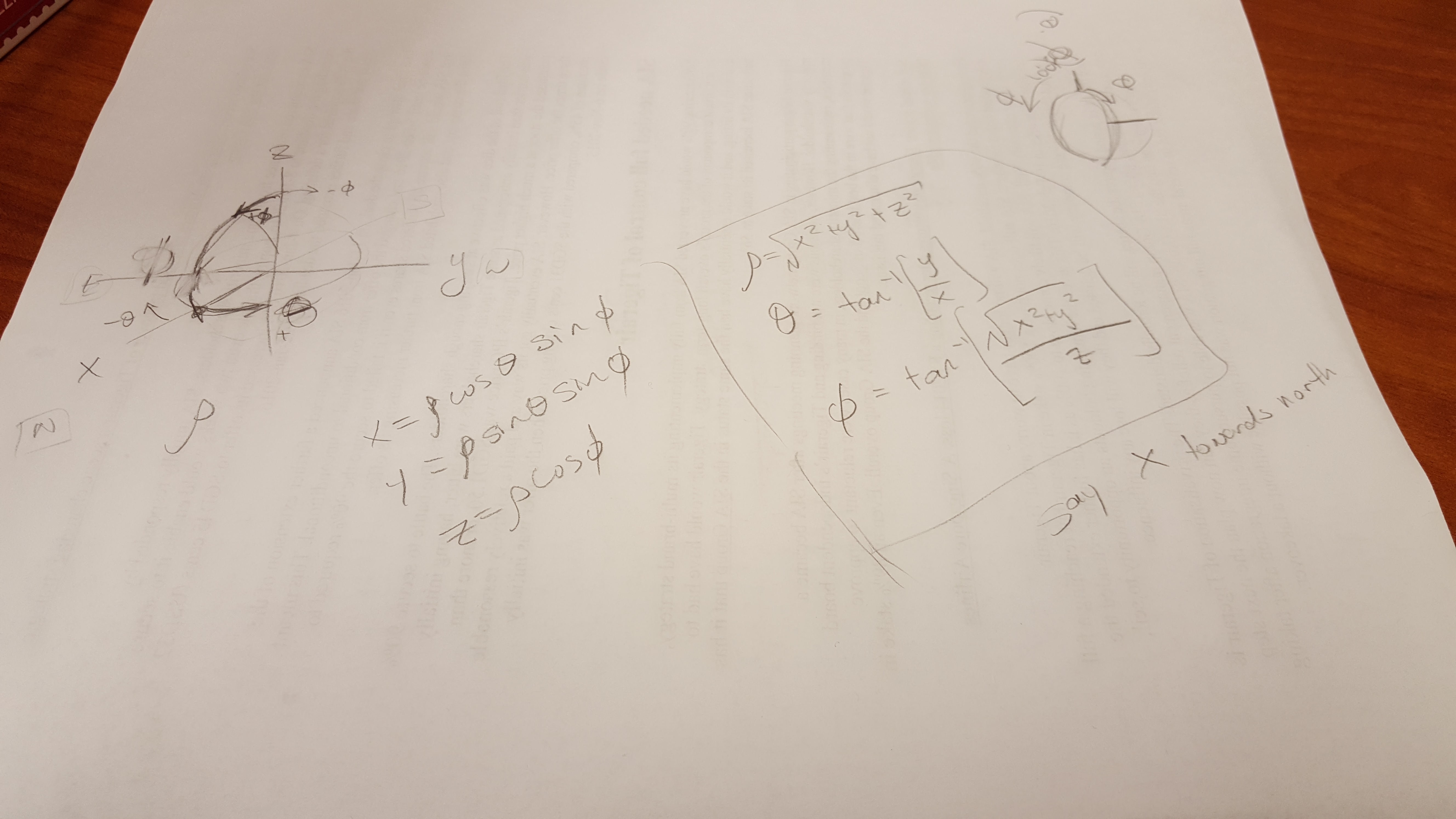
Don't be afraid, here is some spherical math
-
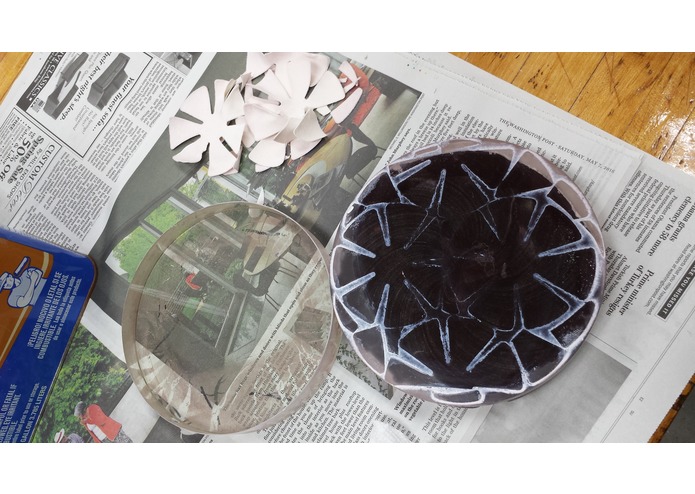
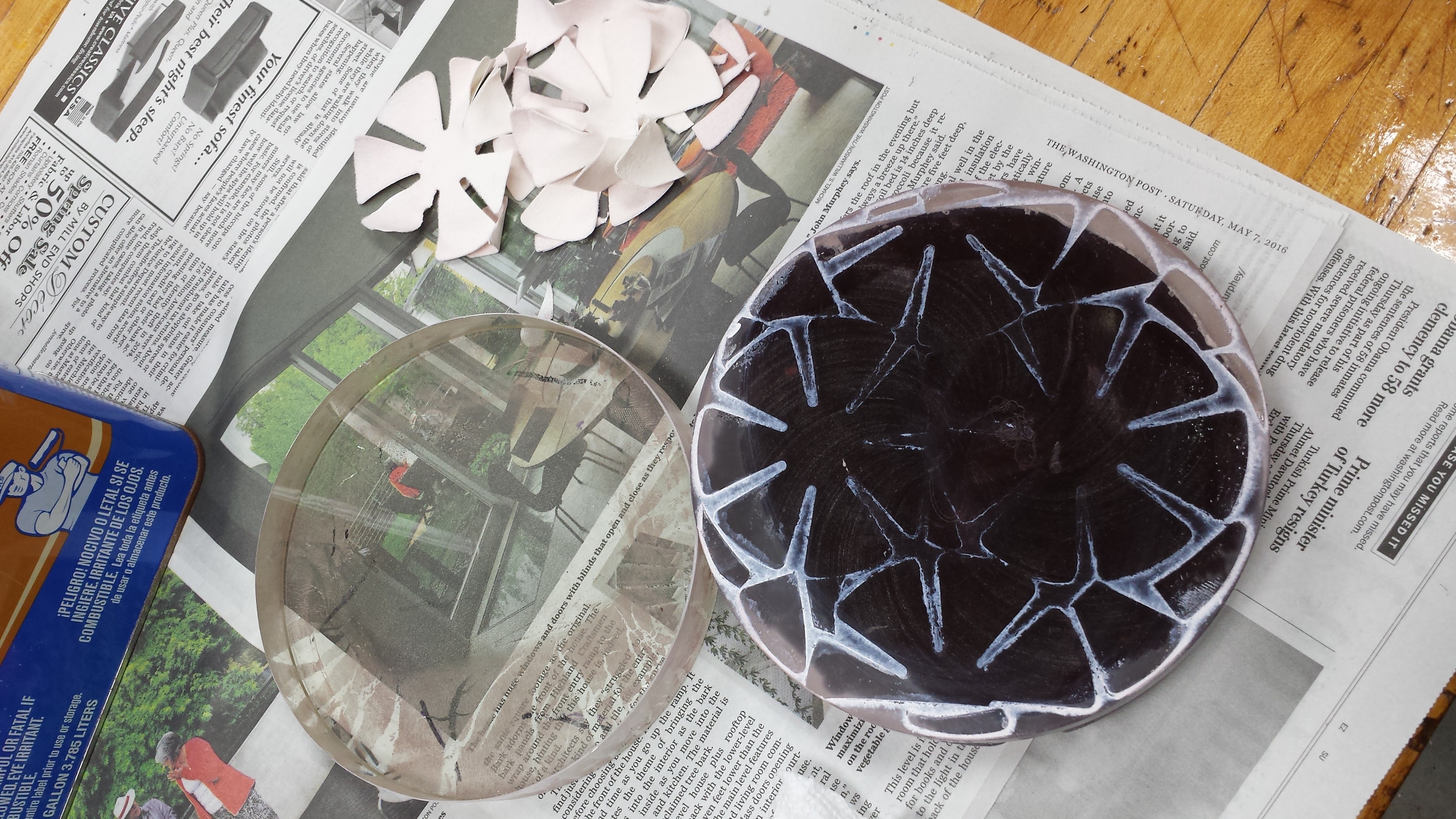
The original hand ground telescope mirror and convex blank with optical grade polishing pad marks


Inspiration
In 2014, Christina started hand grinding her own 6" telescope mirror for a reflecting telescope. It was an affordable way to obtain an almost perfectly parabolic telescope mirror. The normal box and long tube Dobsonian housing were too boring for a one of a kind hand ground telescope mirror. She decided to model her telescope housing after the Astroscan telescope popular at the end of the 20th century. Its distinctive shape and red color were very attractive. It is also incredibly intuitive to use (just push the big hole in the telescope so it points at what you want to look at) and the round spherical bottom was begging for electronic controls.
At the HackRiddle opening ceremony, there was an opportunity to choose teams and when Tyler and Jacob mentioned wanting to possibly create a mobile application, it seemed like to perfect opportunity to join forces and explore creating our own mobile app controlled telescope.
What it does
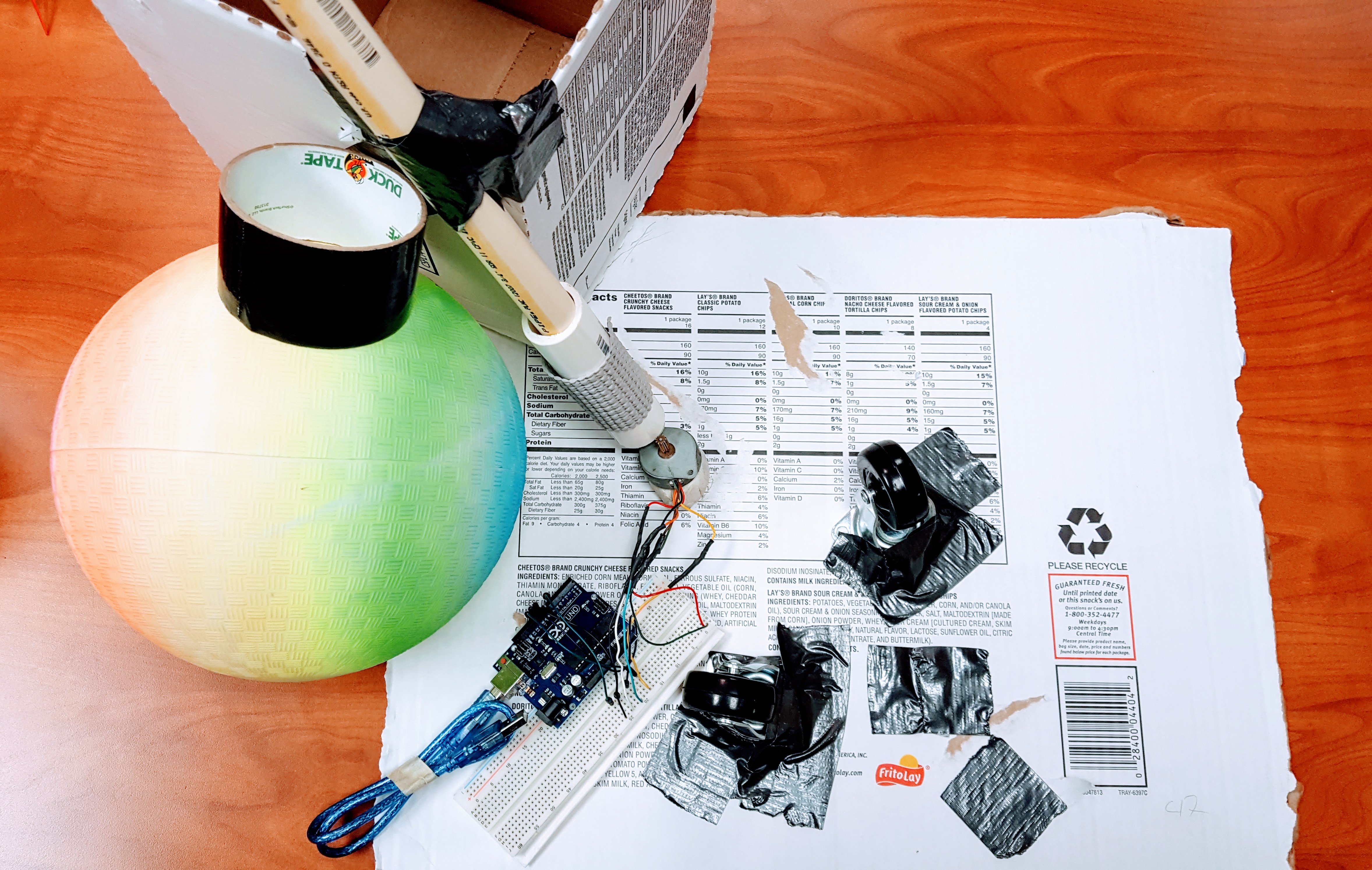
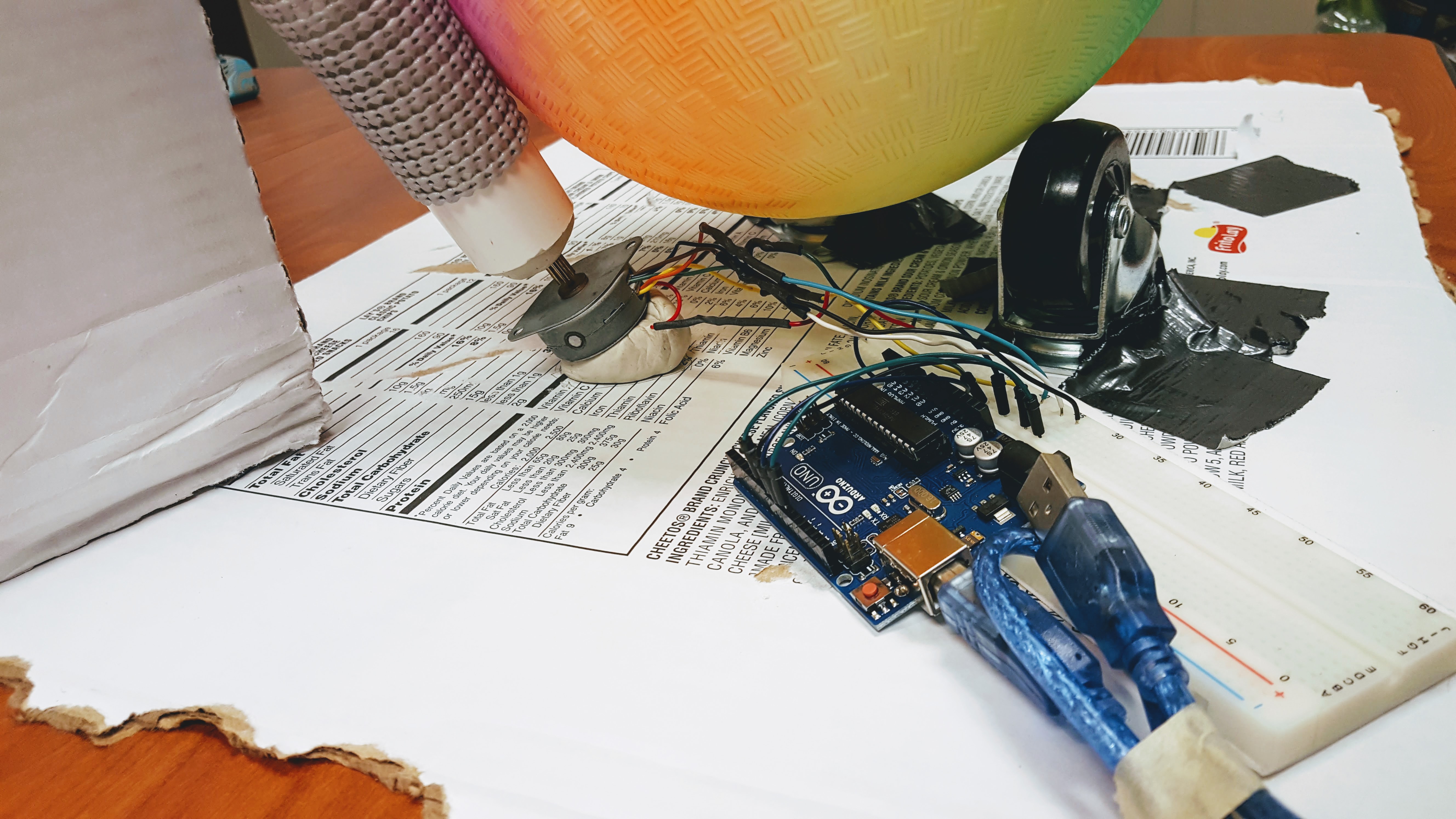
The mount currently consists of one stepper motor and two supporting wheels, making a tripoint mount. The stepper motor spins the spherical telescope bottom of the telescope body so the main telescope opening stays pointed at the same patch of sky at all times as the Earth spins.
How I built it
A proof of concept model of a drive motor enabled trackball telescope was built. The spherical base of the telescope body was modeled with a rubber ball. The telescope's secondary mirror "spider holder" cylinder is modeled with a roll of black duct tape placed on top of the ball. The ball is resting on three points of contact, two wheels and one PVC roller attached to a hybrid stepper motor. The motor is controlled by an Arduino Uno. We use an Arduino 101 to get accelerometer data, and then attach that to the telescope to track where the telescope is pointing and its position. We have real-time access to 3-axis location information for the telescope to be used to aim and position the telescope precisely.
Challenges I ran into
Stepper motors. All stepper motors provided by the venue to use were seized, but being new to electronics hardware, our team did not know that the motors could not be used. We spent many hours (upwards of 6 hours) trying to troubleshoot code and wiring problems where there were none. Luckily, one working motor was ultimately found at the bottom of a box of hardware Christina had forgotten she had. Needed to find a fuse for multimeter on a Saturday afternoon, eek!
Accomplishments that I'm proud of
Learning how to move stepper motors without a drive board; succeeding in using a motor to move the telescope proxy. Remembering spherical coordinates and using them properly. Having fully functional Arduino which can make calculations based on its accelerometer data.
What I learned
Improvising gears are virtually impossible. If you do not have them when working with a motor, you should stop working until you get gears because it is pretty much impossible to find non-deforming workarounds.
What's next for Drive Motor for Equatorial Mount Trackball Telescope
Coat hand ground telescope mirror with aluminum. Fabricate a permanent mounting system, probably with wood. Explore loading star databases onto a mini computer controller (Raspberry Pi, Arduino, etc) and connect the controller to a touchscreen. Attach position sensors to telescope (in addition to the accelerometer data) which will enable the user to see on the screen what is being viewed through the telescope. Buy more powerful motors which can overcome the friction associated with the weight of the telescope. Instead of one equatorial axis drive motor, mount two motors so the sphere can be moved in both azimuthal and declination. These motors and the star database will allow auto slewing of the telescope to whichever part of the sky is desired. Build a mobile phone application which will allow control of the telescope (using above mentioned more powerful motors) without using a hardwired screen.


Log in or sign up for Devpost to join the conversation.