-
-
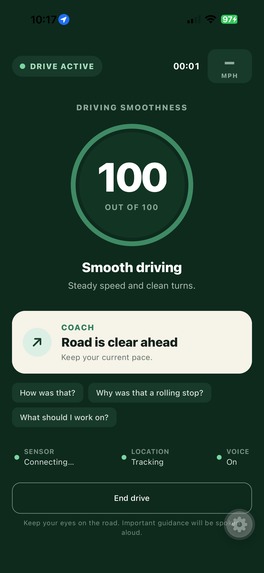
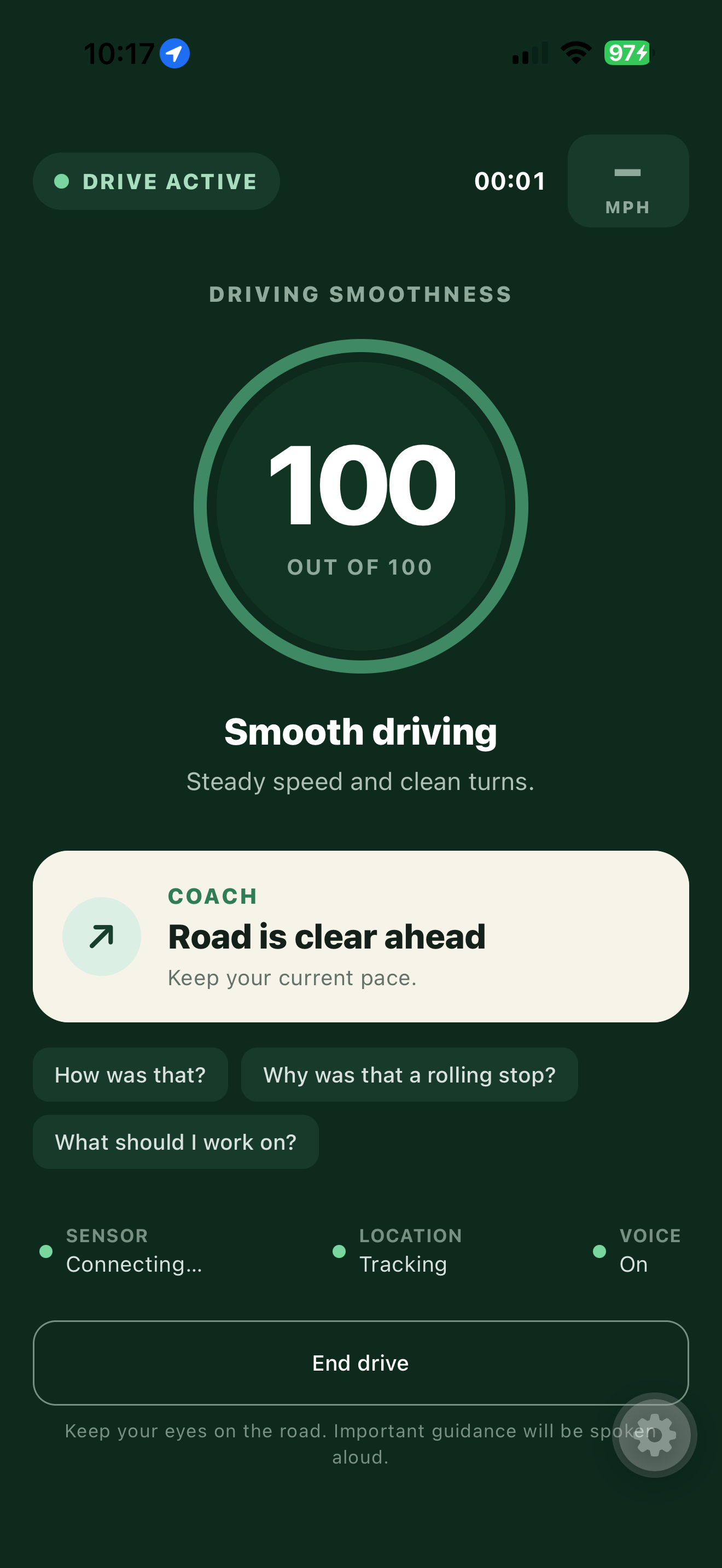
Drive Mode
-
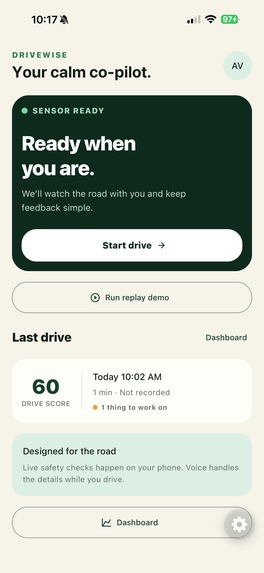
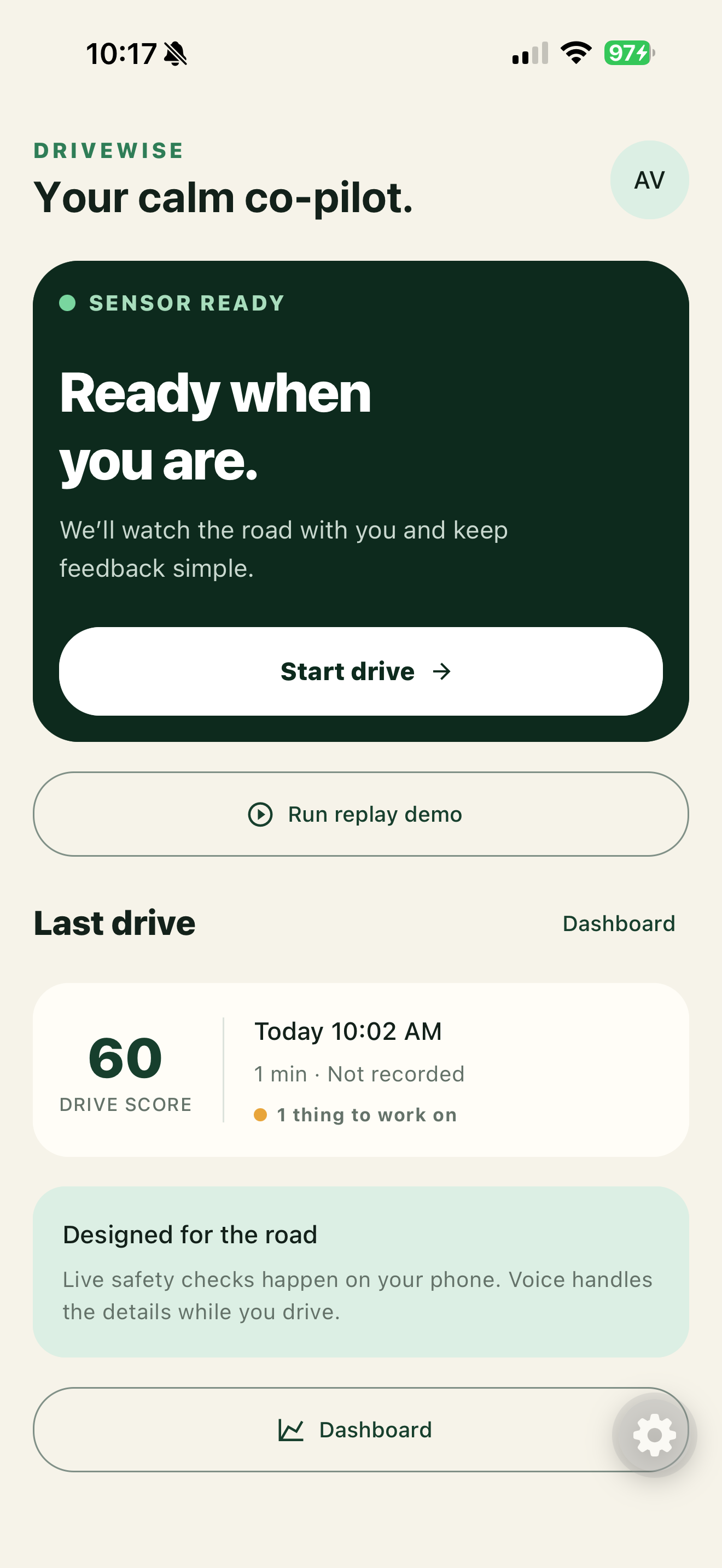
Home page
-
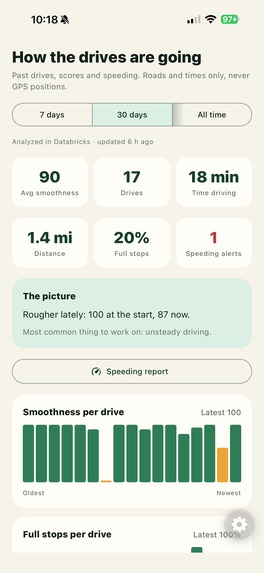
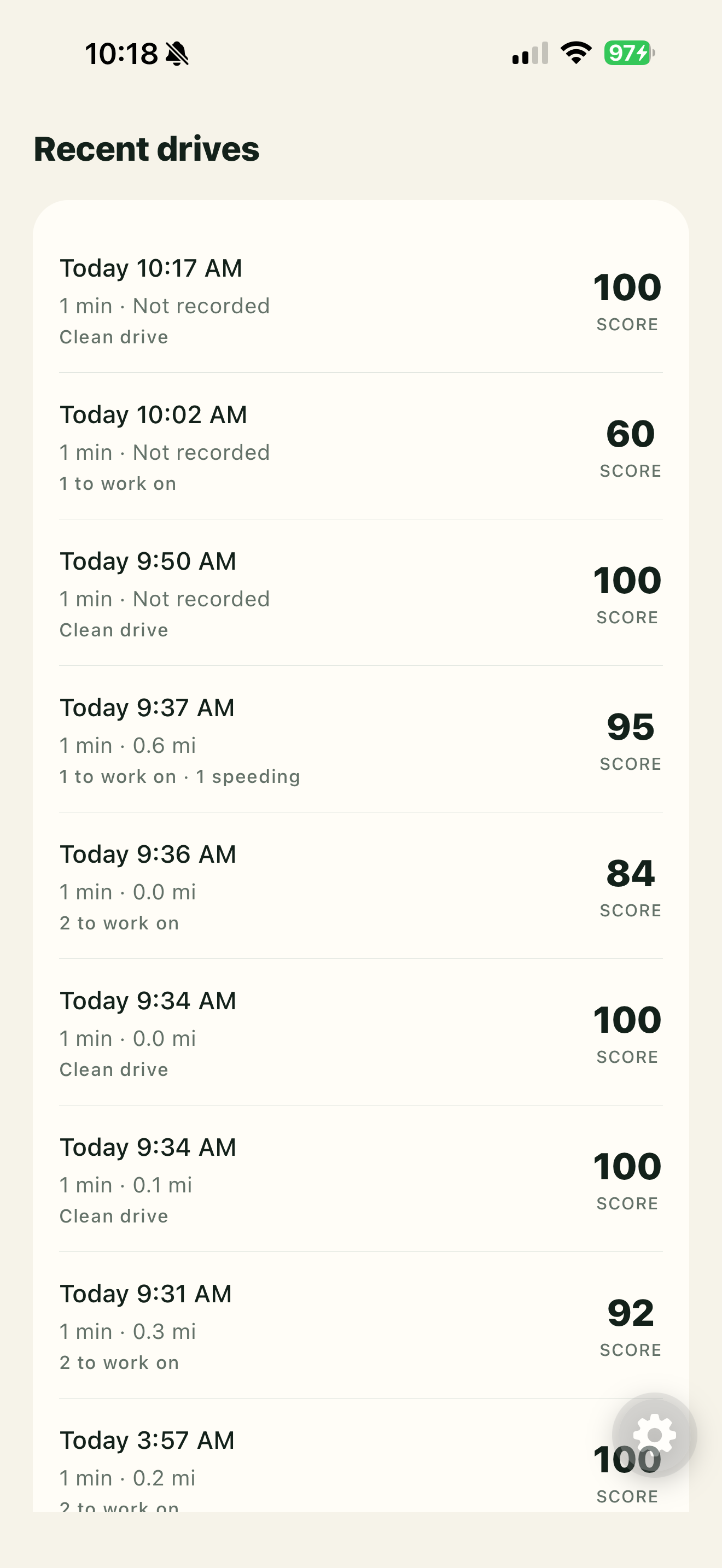
Post Drive Metrics
-
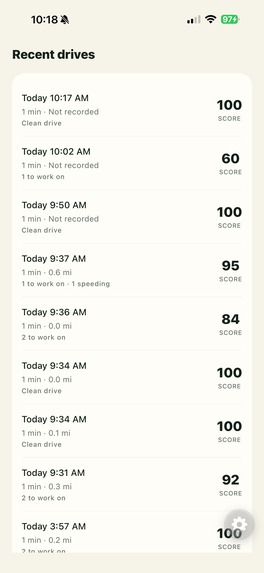
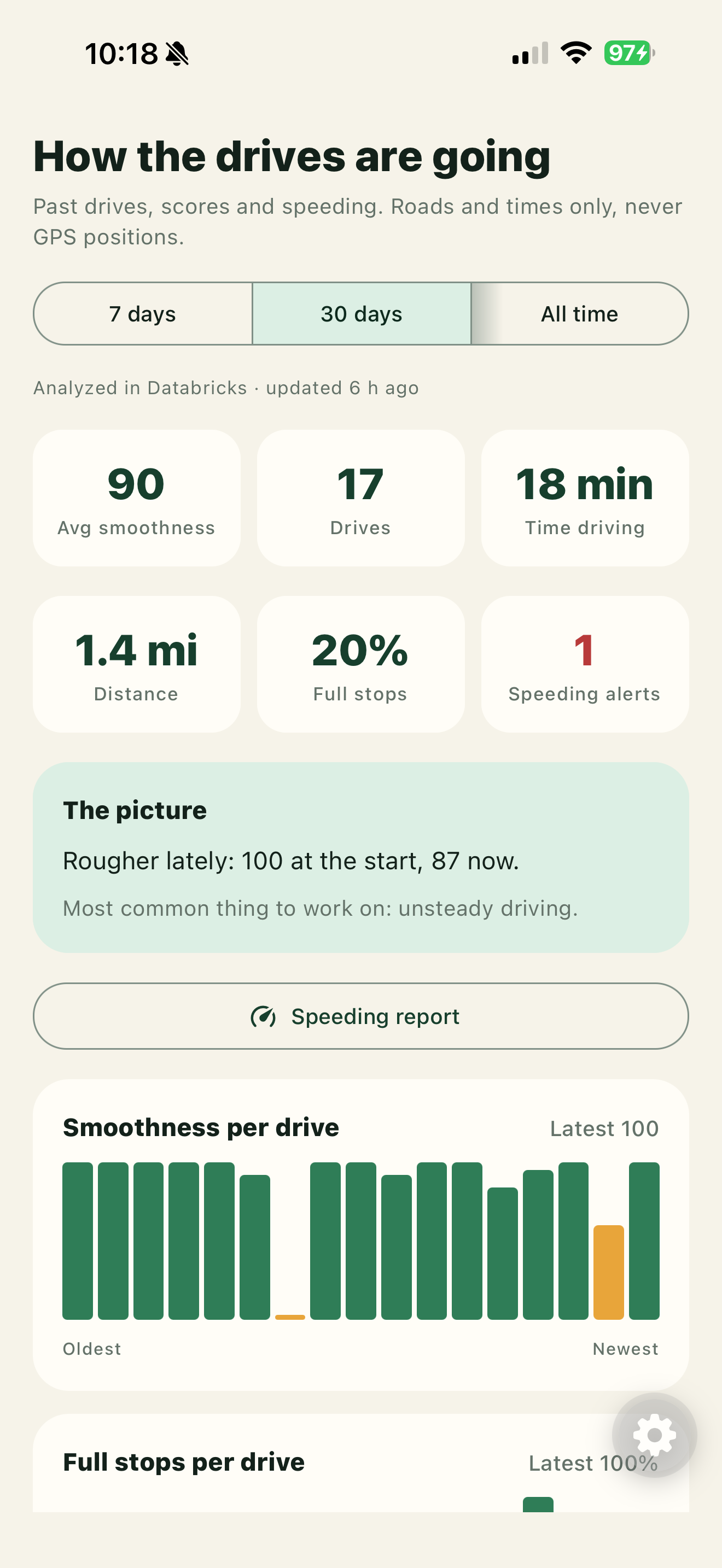
More Metrics
Inspiration
Teen drivers have almost three times the fatal crash rate of adults per mile driven (CDC). Inexperience is the root cause, and nobody is coaching new drivers in the moment or helping parents see their progress.
What it does
Drive Assist is a dash-mounted SensorTile.box sensor plus a phone app that acts as a live voice coach. It flags firm braking, sudden acceleration, sharp corners, unsteady driving, speeding, and missed stop signs and traffic lights as they happen. After each drive, a dashboard shows past drives, score trends, and a speeding report.
How we built it
- Sensor: the SensorTile streams accelerometer and gyroscope data at 120 Hz over Bluetooth to a React Native app.
- On the phone: a pure-TypeScript pipeline calibrates to the vehicle frame and runs heuristics for each event. Alerts are pre-generated ElevenLabs voice clips, so they work offline with no delay.
- Map layer: GPS plus OpenStreetMap data gives stop signs, lights, highway ramps and speed limits.
- Cloud: a FastAPI service stores each trip in Databricks (Delta tables, trends, risky locations). Drive events plus map context are sent to Gemini for a short, personal coaching line. Databricks also feeds the dashboard.
Challenges we ran into
- Decoding the sensor's raw Bluetooth stream, which has no timestamps, and keeping two data streams in sync.
- Tuning the heuristics: noise, road vibration and tilting the board caused false alerts until we added filtering and guards.
- Keeping real-time alerts independent of the cloud, since Databricks queries can take seconds.
Accomplishments that we're proud of
A full pipeline working end to end: from raw sensor signal to a spoken alert in real time on the phone, then to Databricks and back as personalized Gemini coaching and a live dashboard.
What we learned
Safety-critical detection belongs on the edge, while learning belongs in the cloud. Heuristics need real-world tuning, and map context makes AI coaching far more useful.
What's next for Drive Assist
Collect more sensor data and use Databricks as our data warehouse to train better ML models that offer more advanced detection and better accuracy.
Built With
- databricks
- elevenlabs
- gemini
- python
- react-native

Log in or sign up for Devpost to join the conversation.