-
-
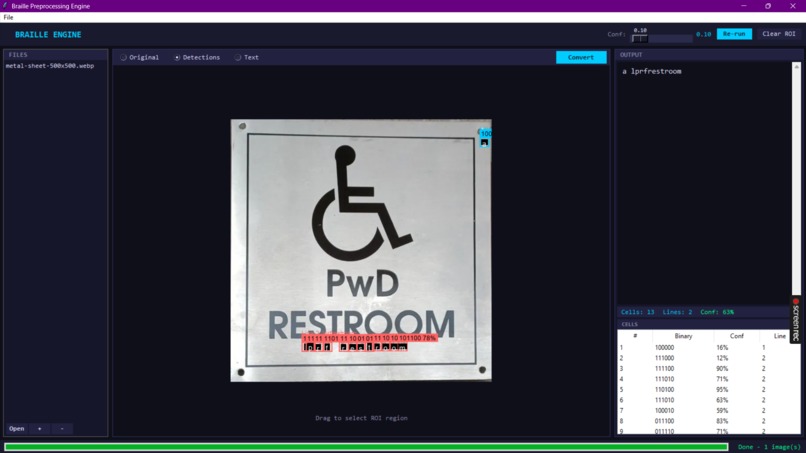
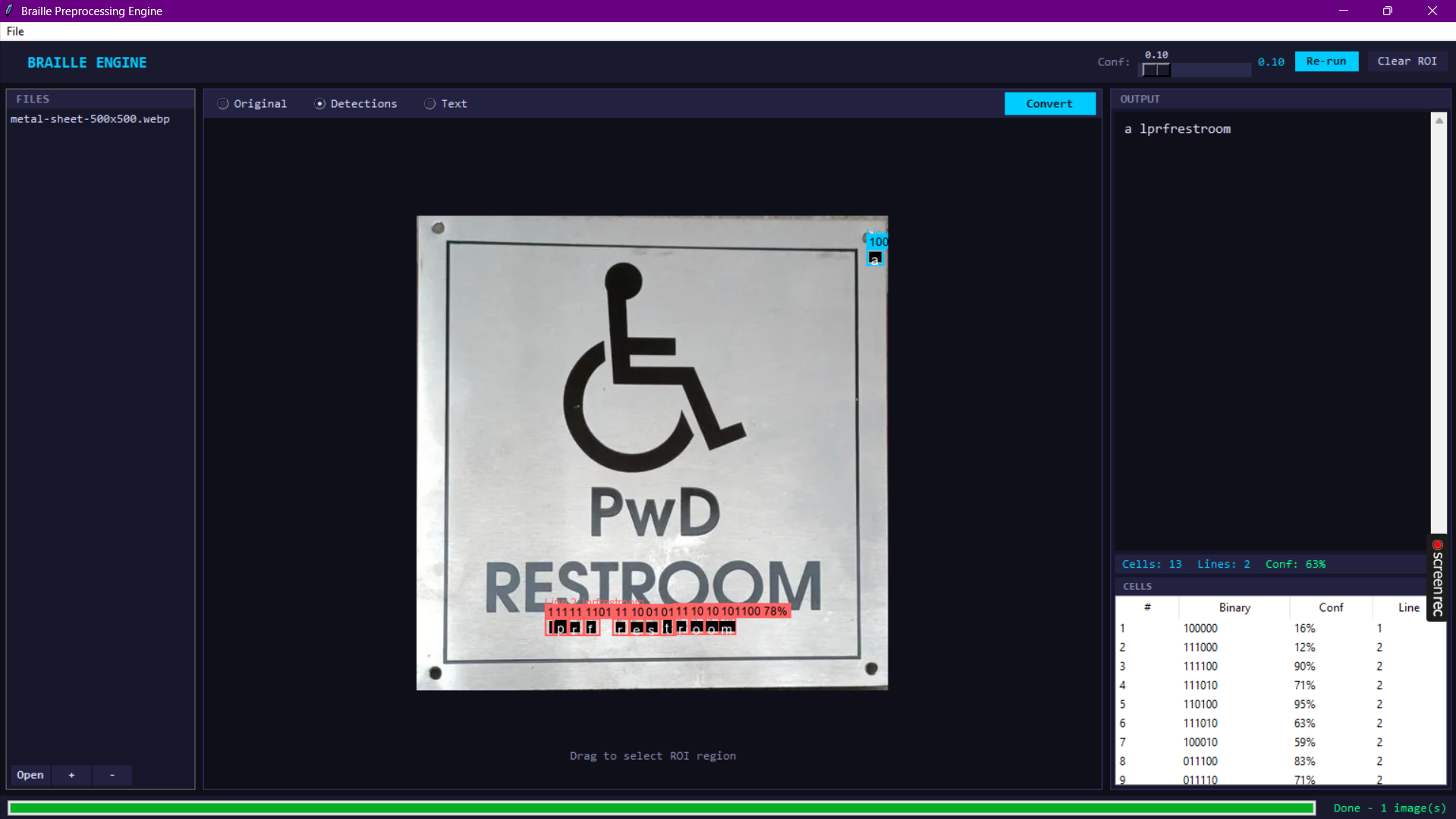
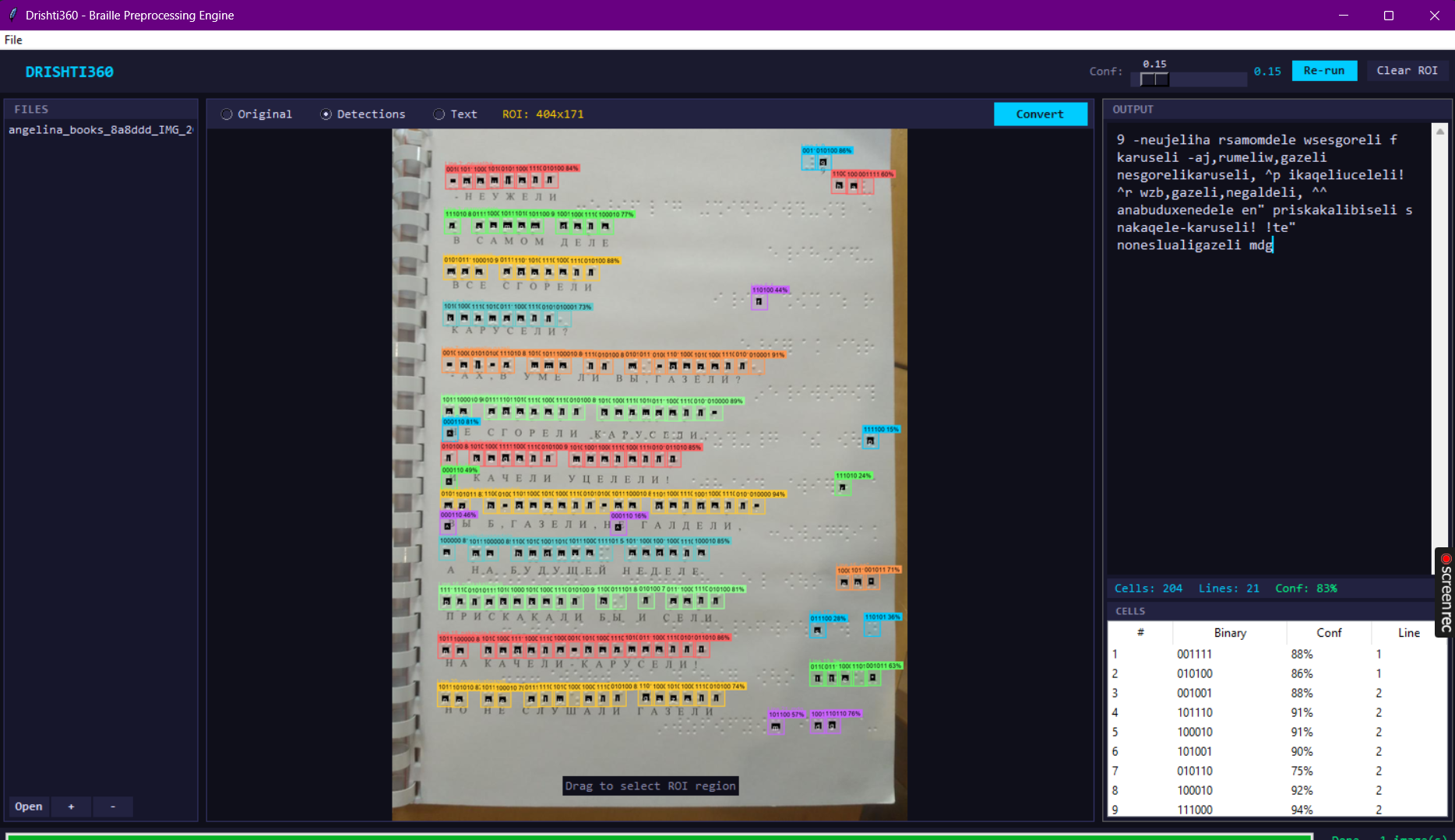
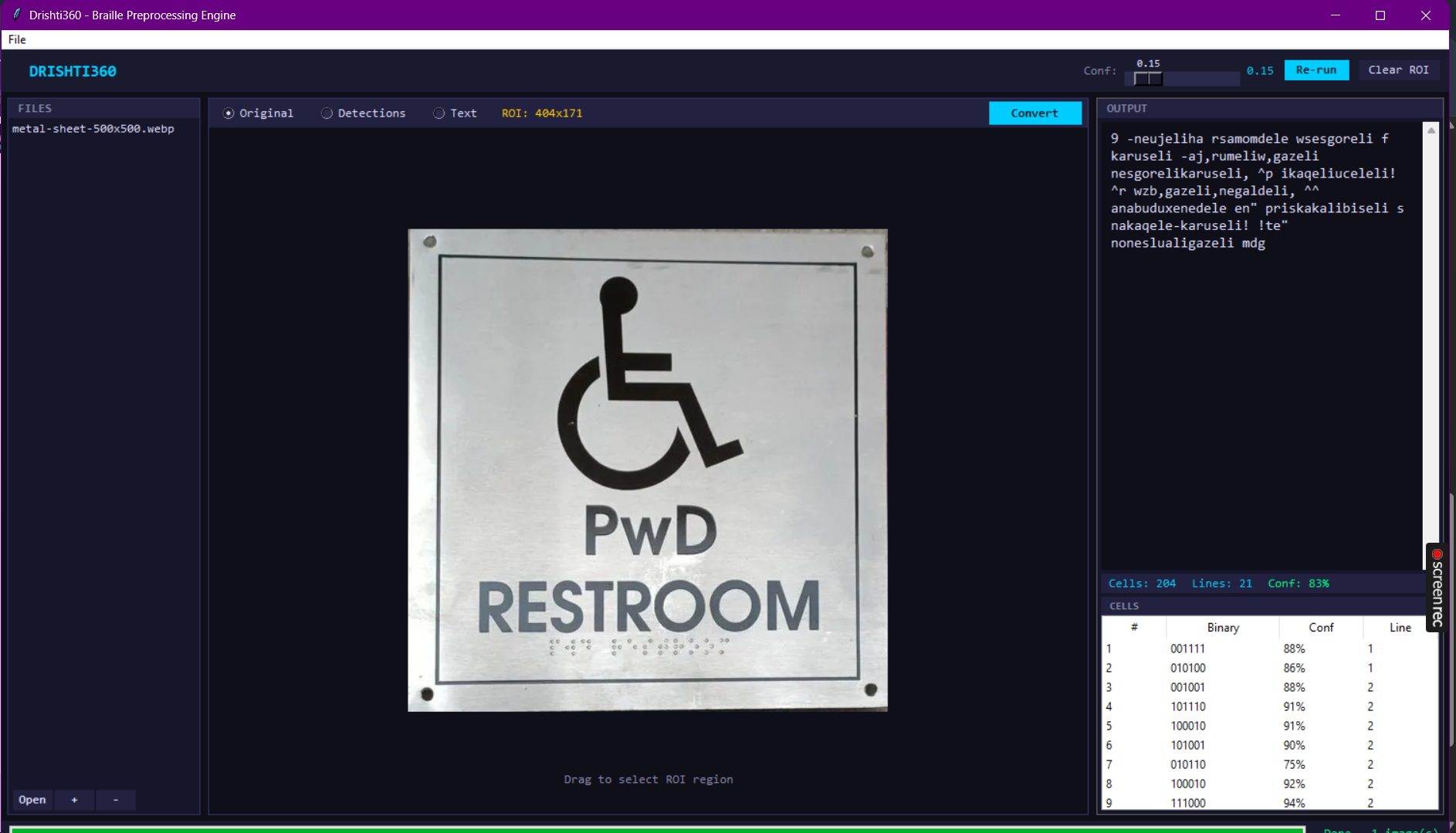
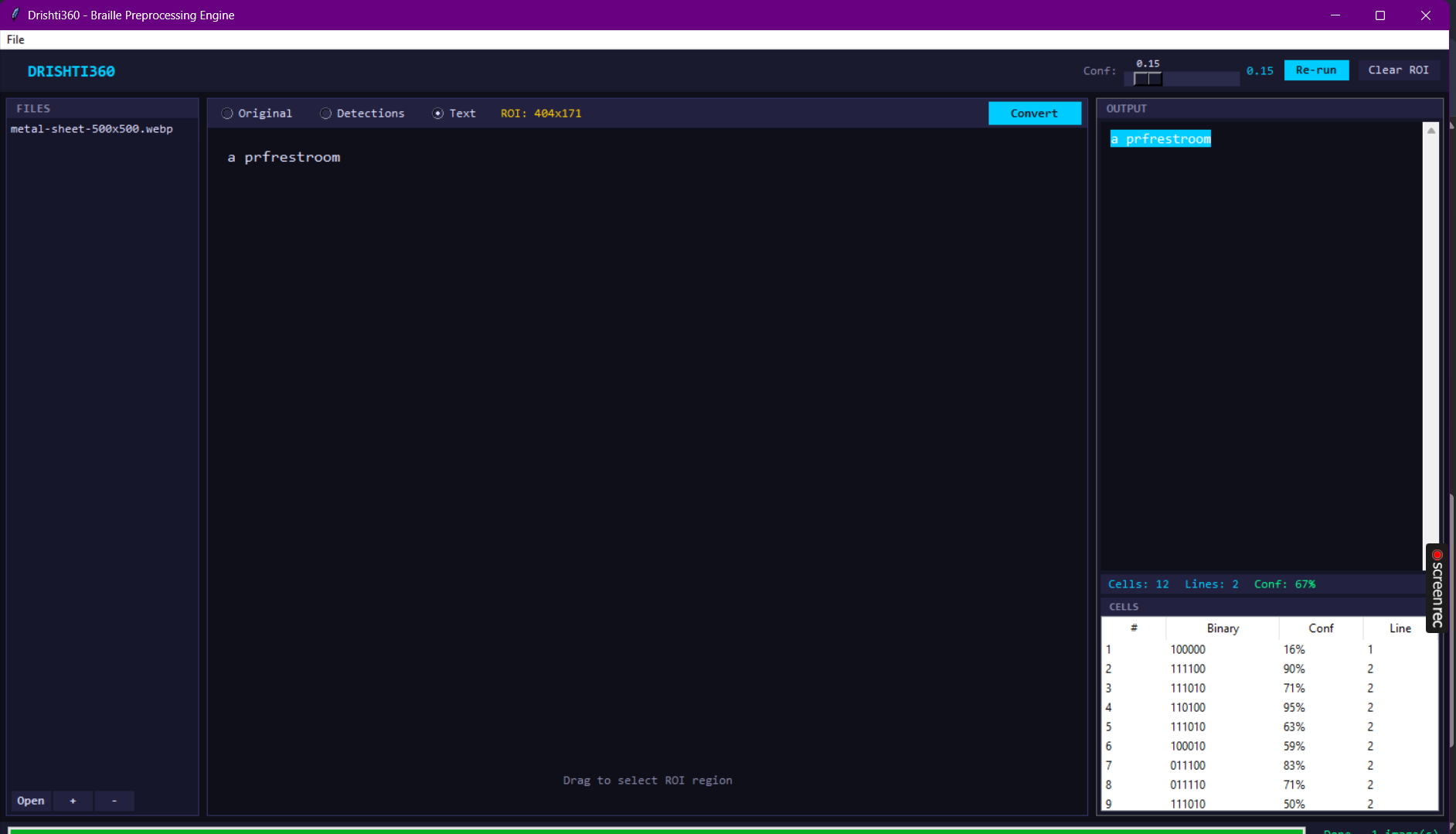
test with real world sign boards
-
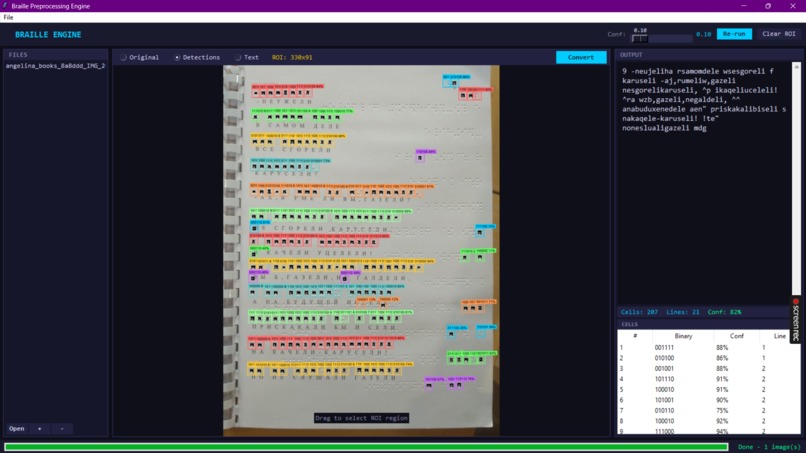
recognized text
-
-
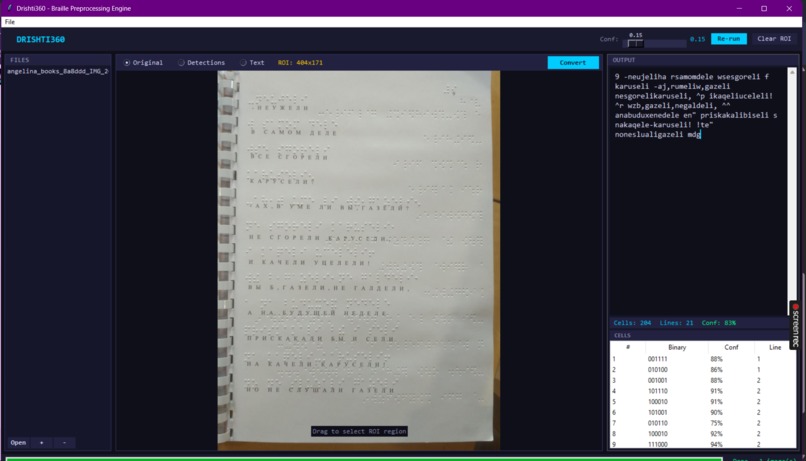
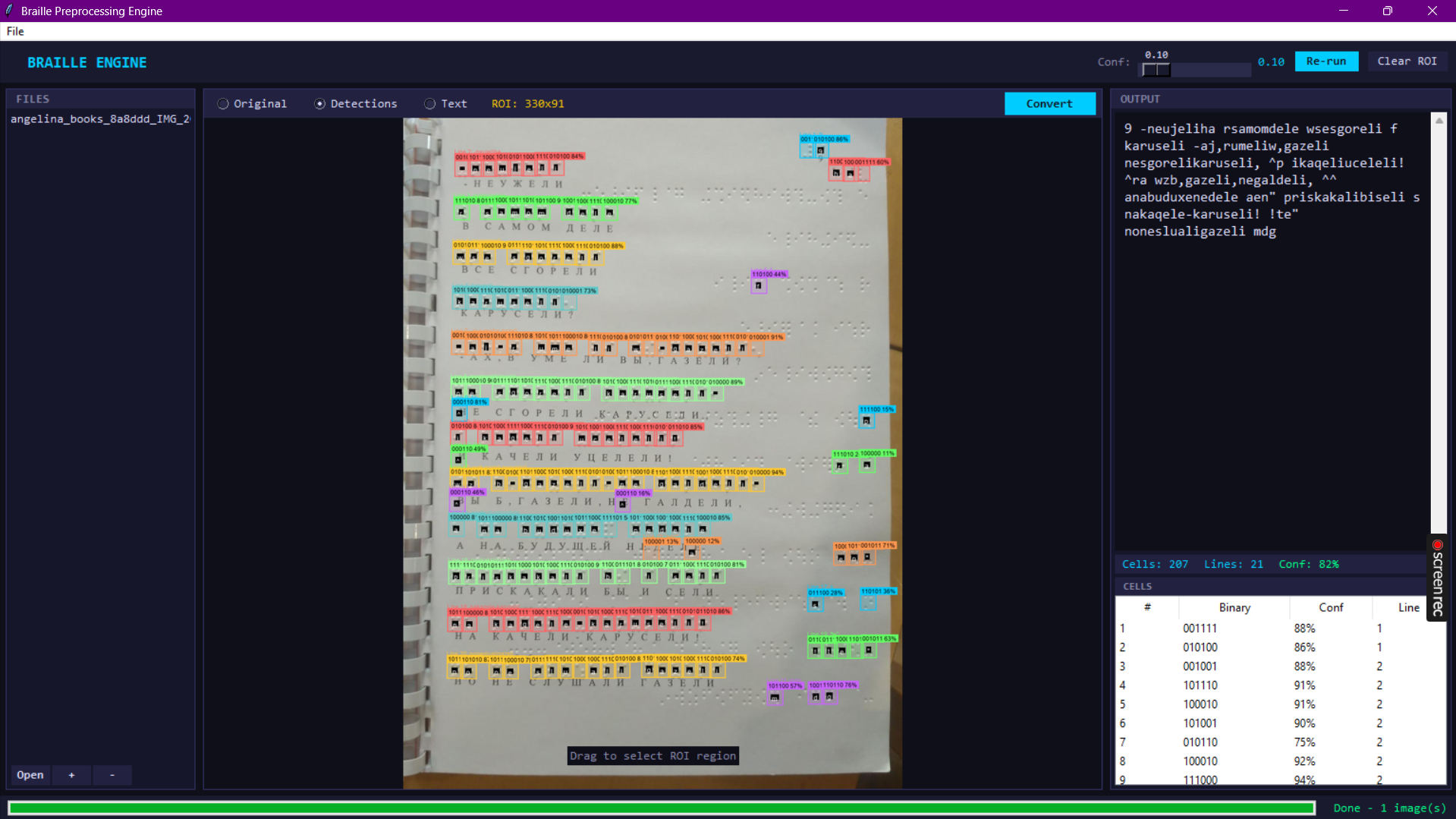
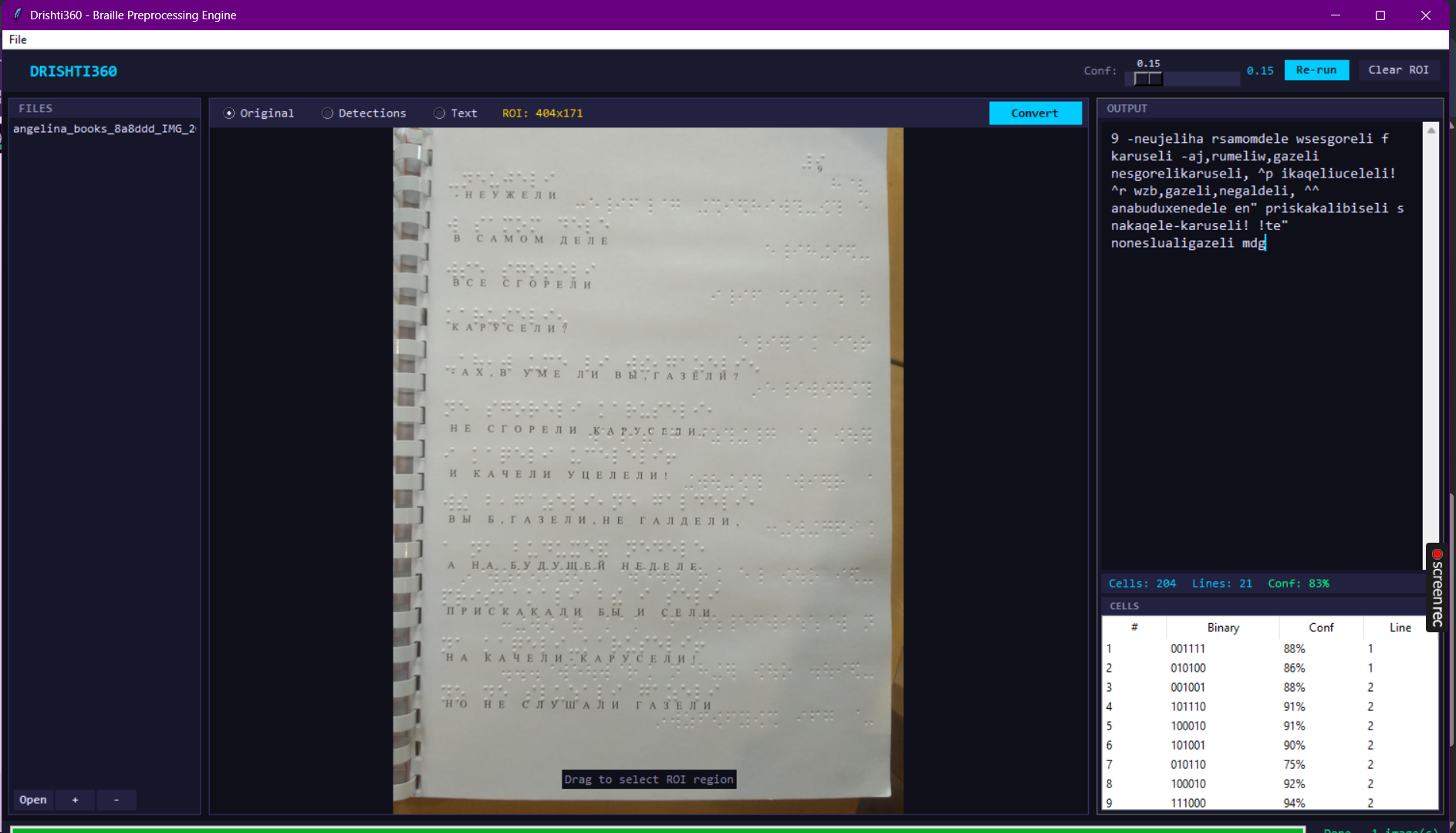
dataset of written
-
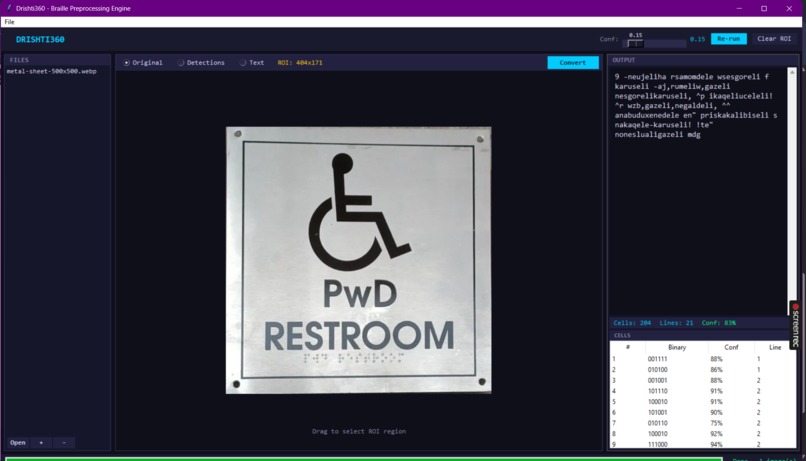
signboard
-
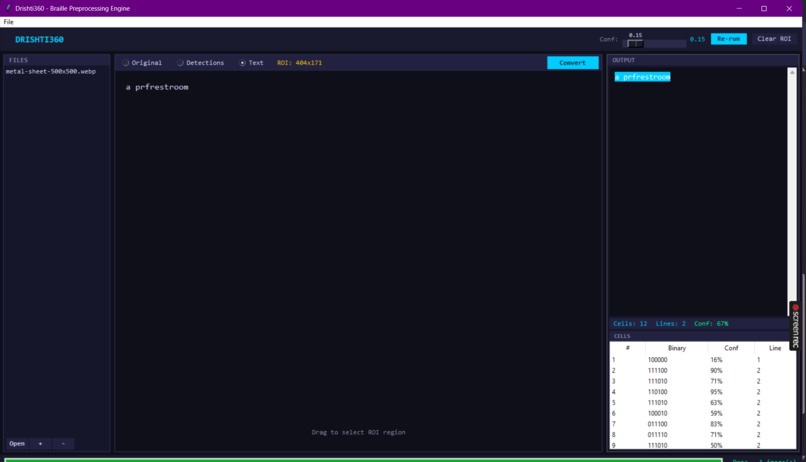
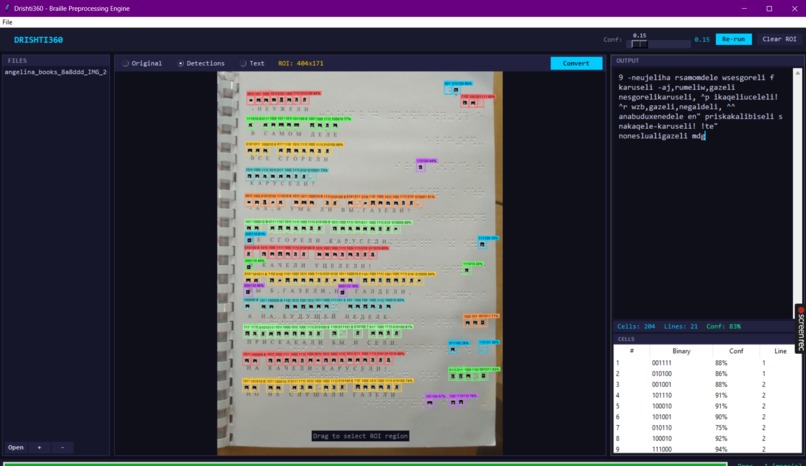
textouputwindow
Inspiration
Millions of visually impaired individuals rely on Braille for reading, yet accessing printed Braille content often requires specialized devices or manual transcription. We wanted to create an AI-powered solution that can instantly recognize Braille from real-world images and convert it into readable text, making information more accessible to everyone. Drishti360 was inspired by the vision of bridging the communication gap between Braille users and non-Braille readers through computer vision and deep learning.
What it does
Drishti360 is an end-to-end Braille-to-English translation system that detects physical Braille cells from images and converts them into readable text in real time.
Key capabilities:
- Detects Braille cells on books, labels, signs, packaging, and documents.
- Uses YOLOv8-based object detection to identify all 64 possible 6-dot Braille patterns.
- Applies multi-pass image preprocessing for challenging lighting conditions.
- Automatically groups detected cells into lines and paragraphs.
- Decodes Braille into English text with support for number and capitalization modes.
- Provides an interactive GUI with ROI selection, confidence control, detection visualization, and TXT/PDF export.
- Works on both CPU and GPU environments.
How we built it
- Trained and optimized a YOLOv8-m model on multiple Braille datasets containing both document and real-world scene images.
- Developed a multi-pass preprocessing engine using OpenCV to improve detection under varying lighting and contrast conditions.
- Implemented box normalization and deduplication algorithms to improve alignment and eliminate duplicate detections.
- Built a Braille decoding engine that translates binary dot patterns into English characters while handling Braille control symbols.
- Created a complete Python desktop application using Tkinter for image loading, ROI selection, visualization, and export.
- Integrated the entire pipeline into a seamless workflow from image input to text output.
Challenges we ran into
- Detecting tiny Braille dots under poor lighting and noisy backgrounds.
- Handling curved surfaces and perspective distortions in real-world images.
- Eliminating duplicate detections caused by overlapping bounding boxes.
- Maintaining correct reading order across multiple lines and paragraphs.
- Decoding Braille control symbols such as number and capitalization indicators accurately.
- Balancing model accuracy with real-time performance on CPU devices.
Accomplishments that we're proud of
- Successfully built a complete Braille reading pipeline from detection to translation.
- Achieved robust detection across multiple datasets and diverse environments.
- Added innovative features beyond the original model, including preprocessing optimization, ROI selection, box normalization, and intelligent line grouping.
- Created a user-friendly interface that requires no technical expertise.
- Enabled export of translated content into accessible formats.
- Designed a scalable architecture that can be extended to mobile and assistive technologies.
What we learned
- Real-world accessibility problems require more than just accurate AI models; usability and workflow matter equally.
- Image preprocessing can significantly improve object detection performance.
- Braille decoding involves contextual state management, not just symbol translation.
- Dataset diversity is critical for building robust computer vision systems.
- Accessibility-focused AI can create meaningful social impact when combined with practical user experiences.
What's next for Drishti360
- Real-time camera-based Braille reading for smartphones.
- Offline mobile deployment using quantized YOLOv8n models.
- Text-to-Speech integration for instant audio feedback.
- Support for Hindi, Tamil, Bengali, and multilingual Braille systems.
- 8-dot Computer Braille recognition.
- Cloud-based API for integration with assistive applications.
- Smart wearable support for visually impaired users.
- Generative AI-powered explanations and summarization of detected content.
- Continuous learning pipeline with user-contributed Braille datasets.
Drishti360's vision: Transform any Braille text in the physical world into instantly accessible digital information, empowering inclusive communication through AI.


Log in or sign up for Devpost to join the conversation.