-
-
-
Home section
-
-
-
-
Agent
Inspiration
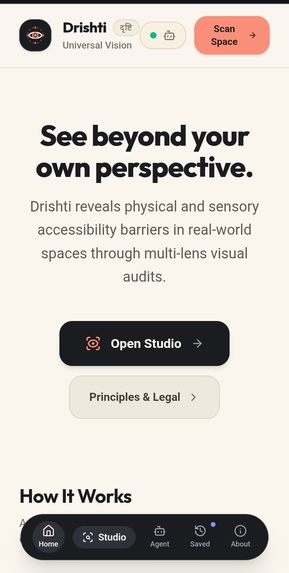
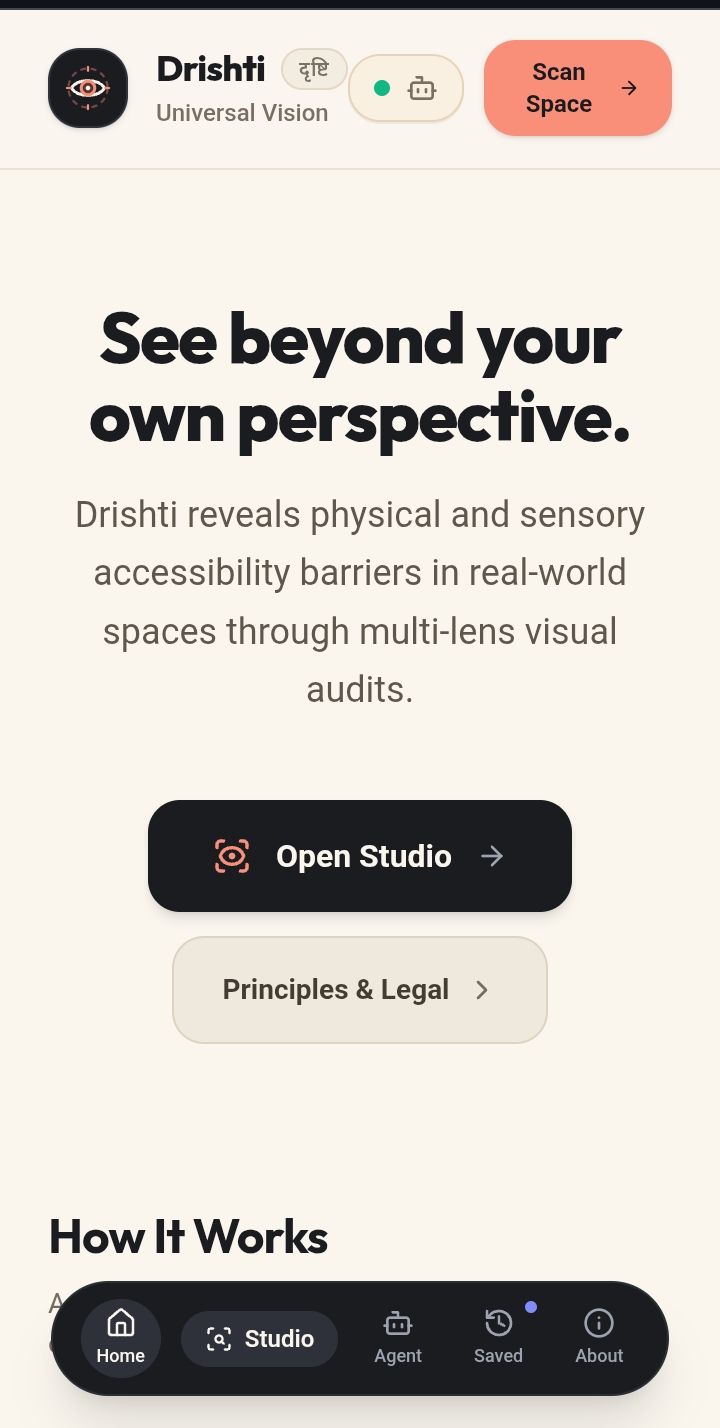
Accessibility should not depend on whether someone can see, read, or interpret digital and physical environments easily. I was inspired by the idea of creating a universal AI lens that can turn visual information into useful, understandable guidance. Drishti was built to make technology and the world around us more accessible through AI-powered vision and narration.
What it does
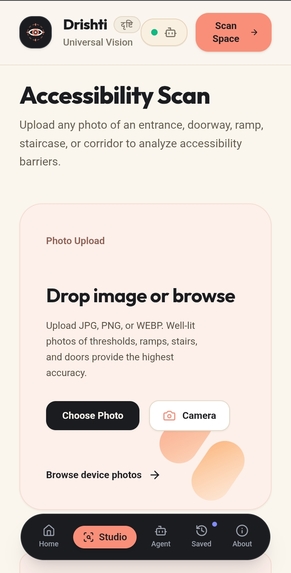
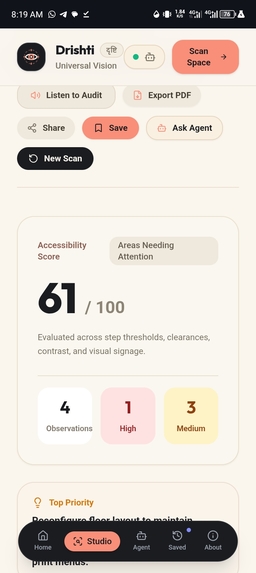
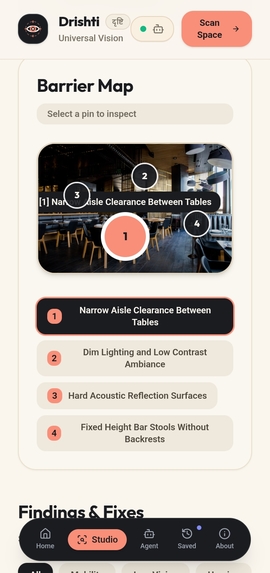
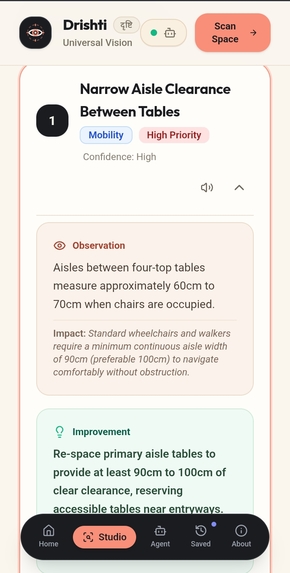
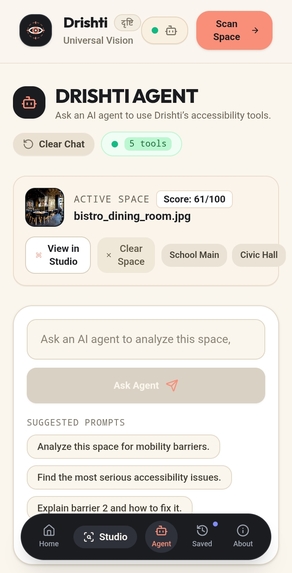
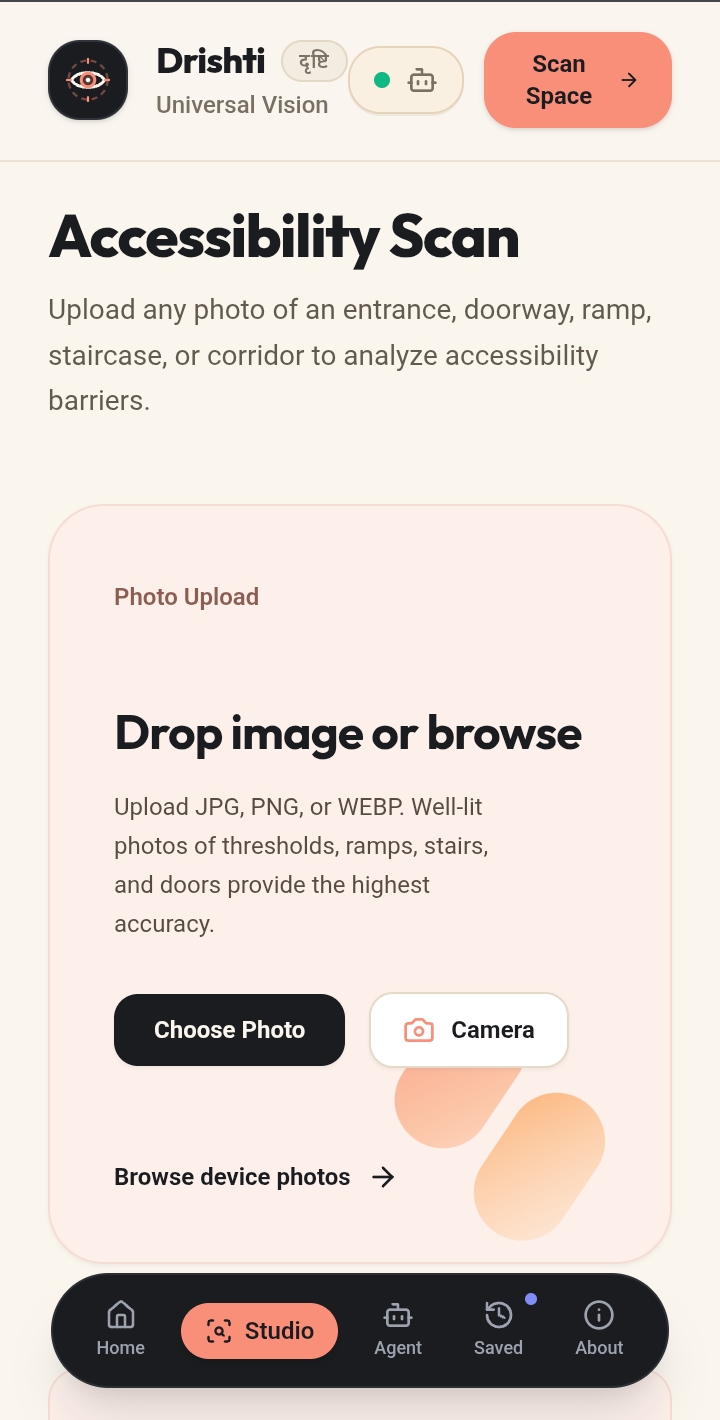
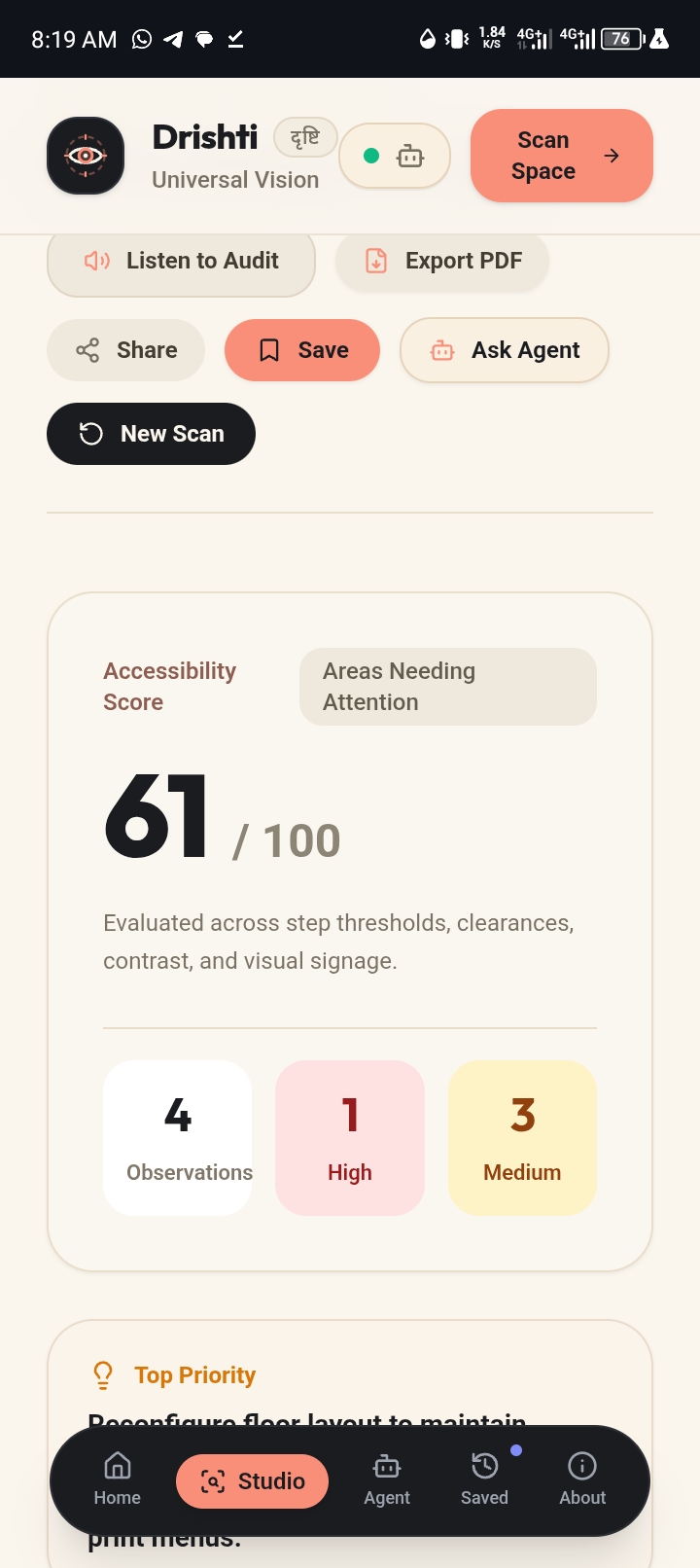
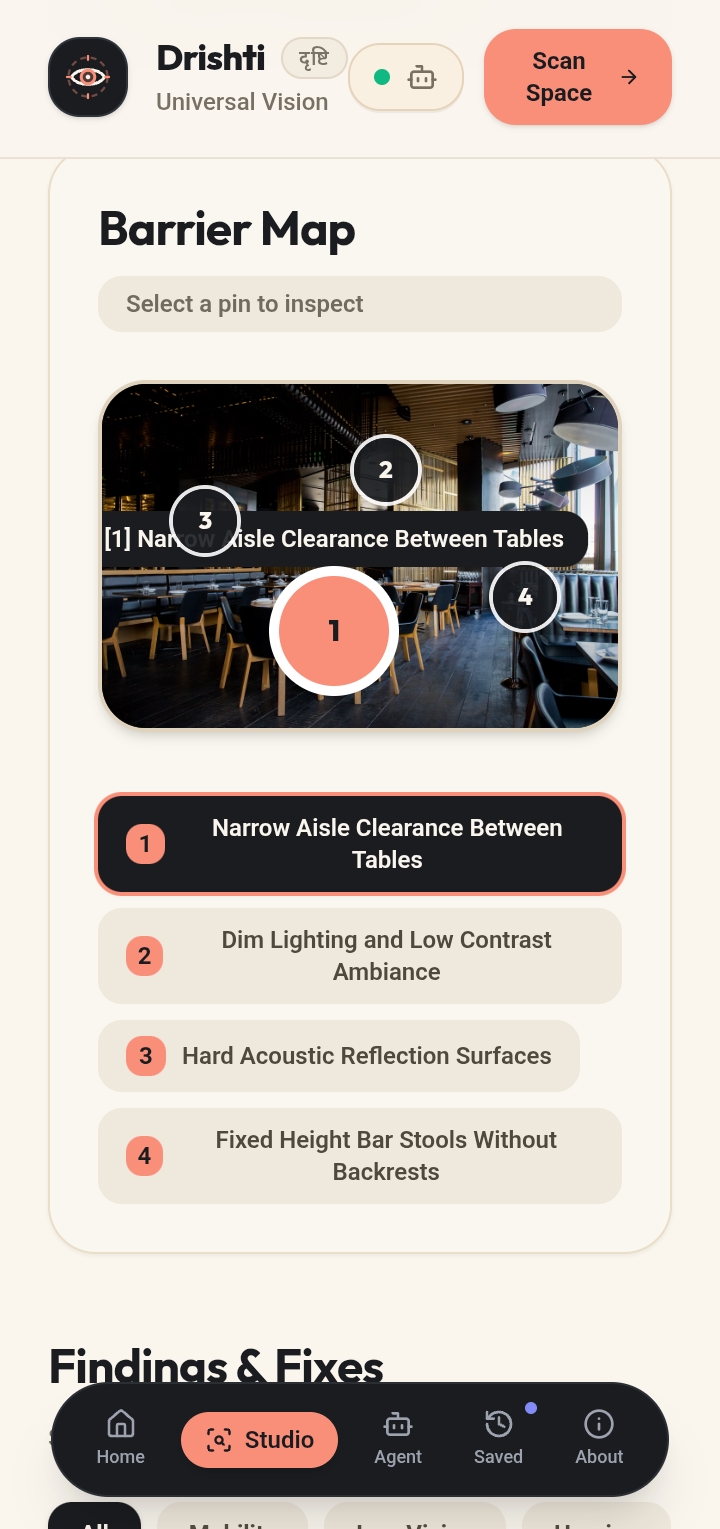
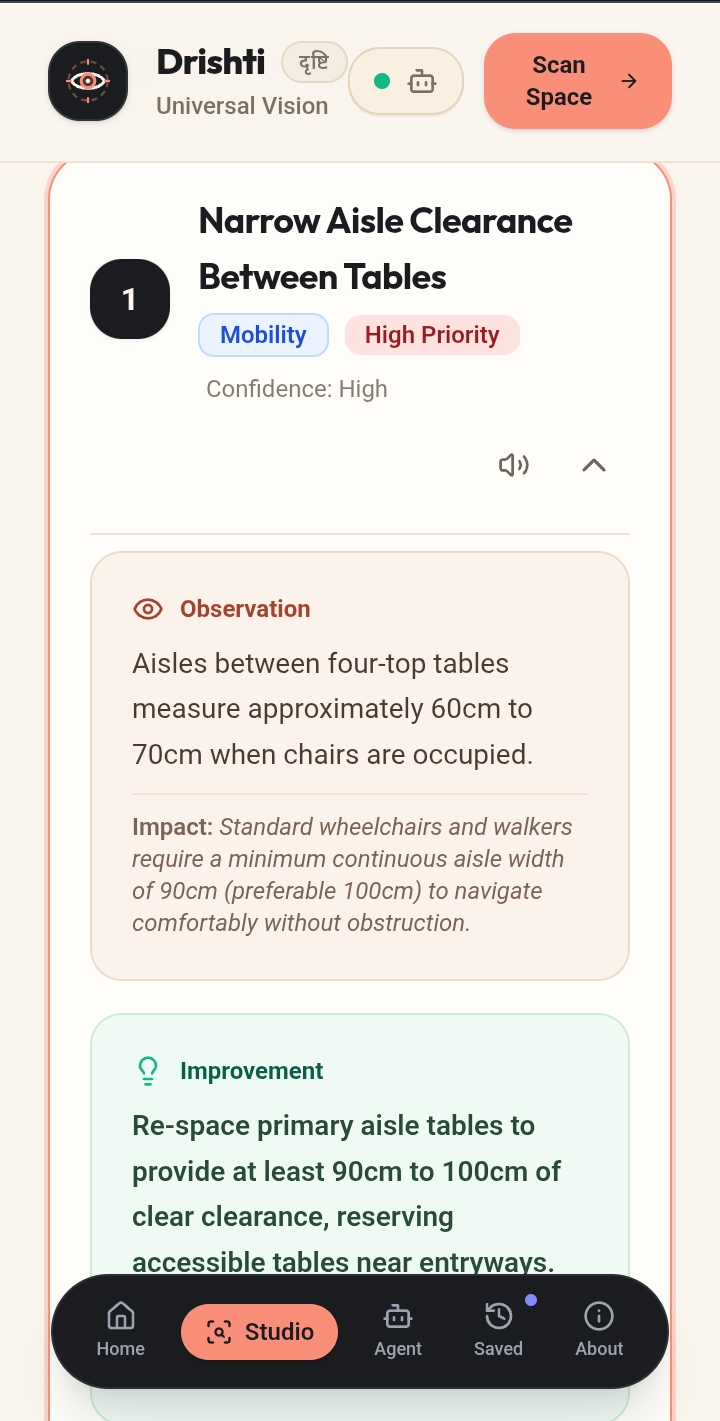
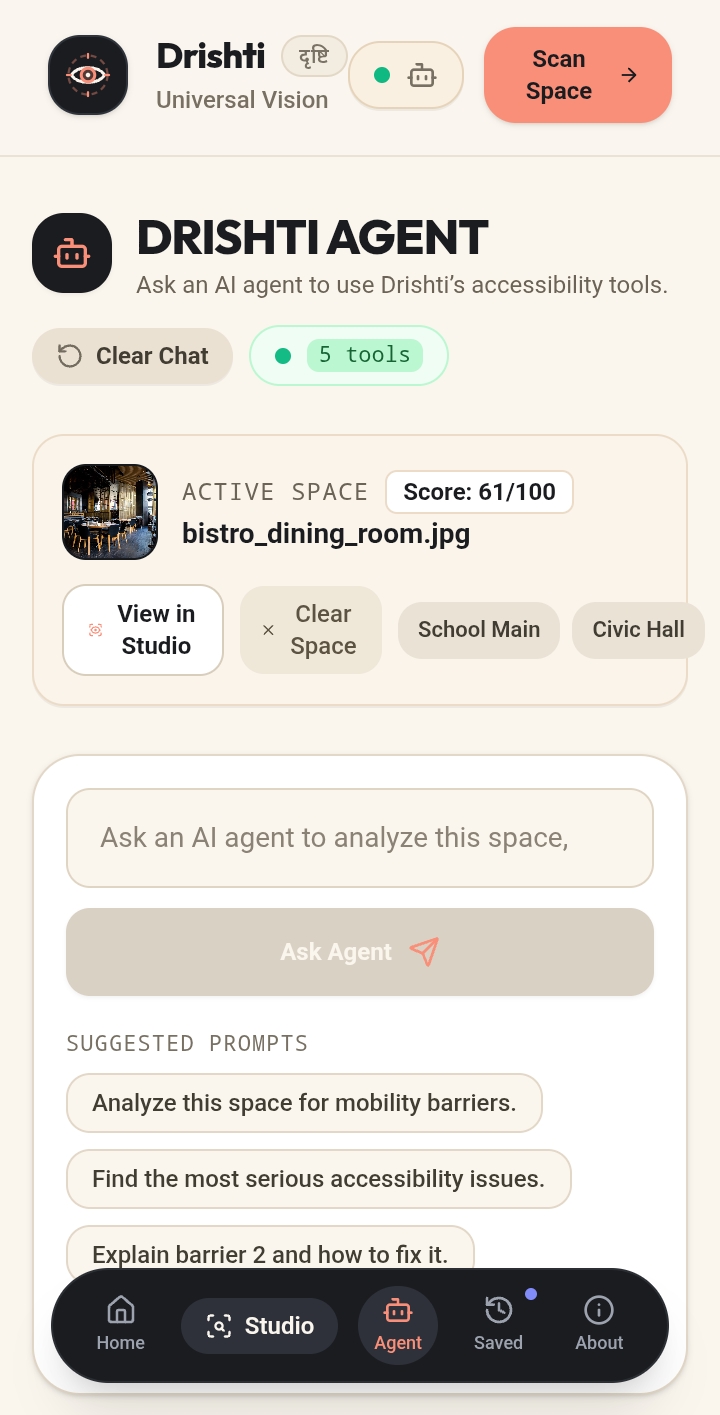
Drishti is an AI-powered accessibility lens that analyzes visual environments and explains what it sees in a clear, useful way. It can identify objects, describe scenes, extract relevant information, and provide accessibility-focused insights. With WebMCP, Drishti can also expose its accessibility capabilities as tools that AI agents can discover and use, allowing agents to request visual analysis, accessibility summaries, barrier details, recommendations, and reports.
How we built it
Drishti was built with React, TypeScript, Tailwind CSS, and the Google GenAI SDK. Gemini vision models power the visual analysis, while the Web Speech API provides voice narration. We added WebMCP tool registration so supported AI agents can interact with Drishti's accessibility capabilities programmatically. The interface remains usable normally even when WebMCP is unavailable.
Challenges we ran into
One of my biggest challenges was designing AI-powered accessibility features that are genuinely useful rather than simply generating descriptions. We had to consider clarity, uncertainty, and how information should be presented to someone who may depend on the output. Integrating WebMCP also required us to think about how existing application functionality could be exposed as agent-accessible tools without compromising the normal user experience.
Accomplishments that we're proud of
I'm proud of turning an accessibility concept into a working product that combines computer vision, narration, and agent interoperability. Adding WebMCP makes Drishti more than an accessibility interface. Its capabilities can become part of larger agent workflows, giving AI agents a structured way to access visual accessibility information.
What we learned
I learned that accessibility is not only about adding assistive features. It is about designing information around the needs of the person using it. We also learned how emerging web standards such as WebMCP can make web applications more useful to AI agents by exposing meaningful capabilities as structured tools rather than relying only on traditional interfaces.
What's next for Drishti
I want to expand Drishti beyond individual visual analysis into a more complete accessibility assistant. Next, i plan to improve real-time scene understanding, add more accessibility-specific detection, support richer agent workflows through WebMCP, improve multilingual narration, and explore integrations that allow Drishti to assist users across more environments and devices.
Built With
- aiagents
- computervision
- googlegemini
- googlegenaisdk
- javascript
- react
- tailwindcss
- typescript
- vercel
- webapi
- webmcp

Log in or sign up for Devpost to join the conversation.