-
-
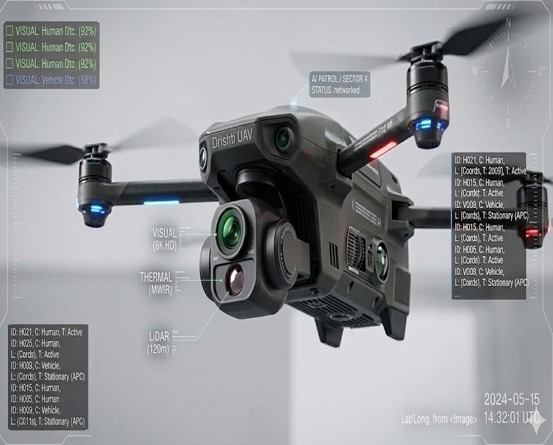
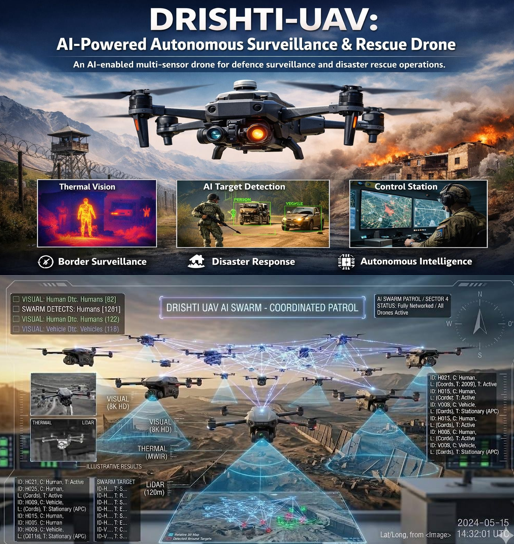
Model Image
-
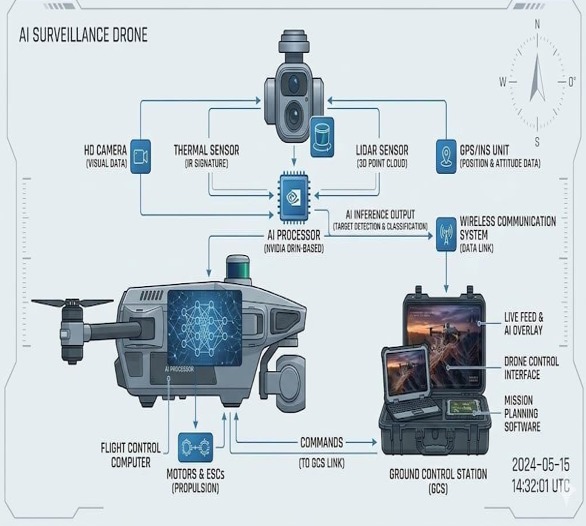
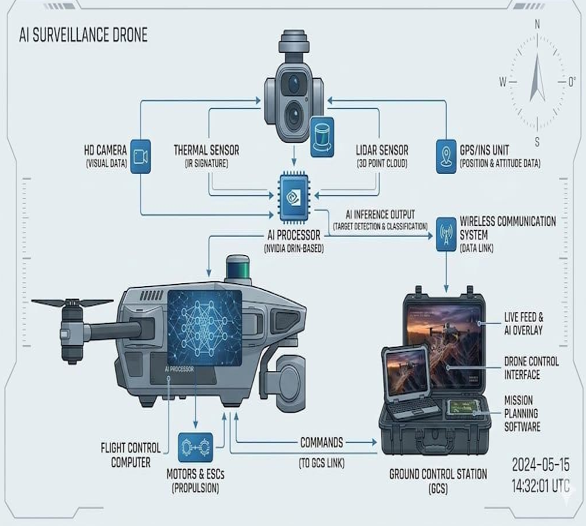
System Architecture Diagram
-
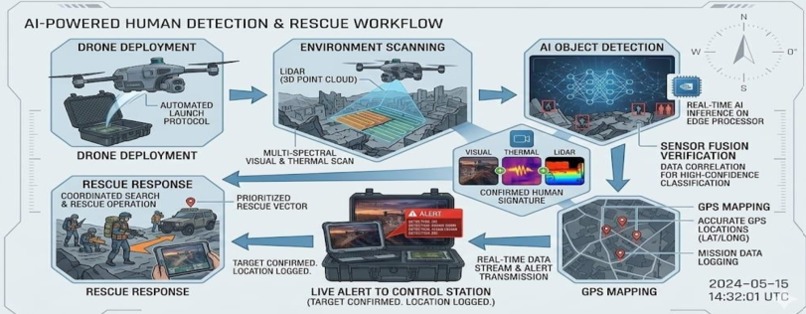
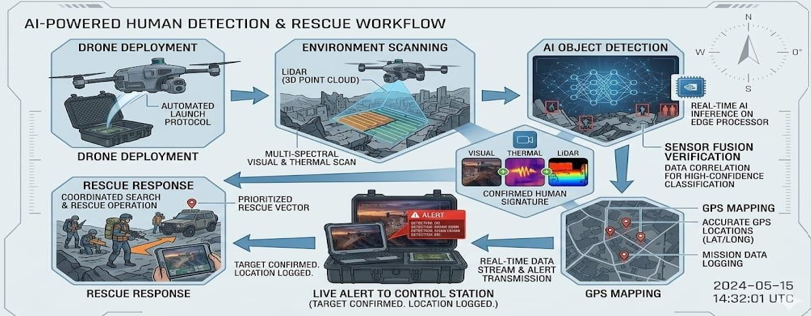
Methodology Diagram
-
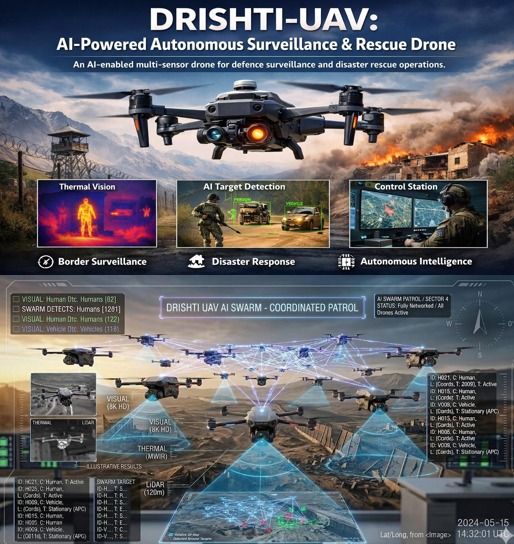
Motivation And Need
-
Future Scope
-
AI Detection Example
-
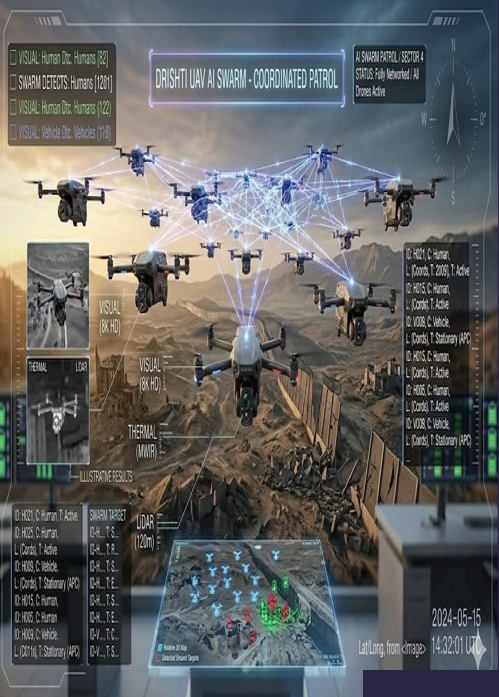
Prototype Simulation
Inspiration
Project Story – DRISHTI AI UAV
Inspiration
The idea for DRISHTI came from real events that showed how critical timely information is during rescue and defense operations. One of the incidents that deeply inspired us was the landslide that occurred in Wayanad, where many people lost their lives. Rescue teams struggled to quickly locate victims because of the lack of proper surveillance and real-time information about the affected areas. Watching such incidents made us realize how important aerial monitoring systems can be during disasters.
Another inspiration came from reading about the Kargil war. Many soldiers risked their lives while rescuing wounded teammates without having clear information about enemy positions or the surrounding terrain. Situations like these show how dangerous it can be when there is limited visibility and lack of intelligence on the ground.
These incidents motivated us to think about how technology, especially drones and artificial intelligence, could assist in improving surveillance and helping rescue teams make faster and safer decisions.
About the Project
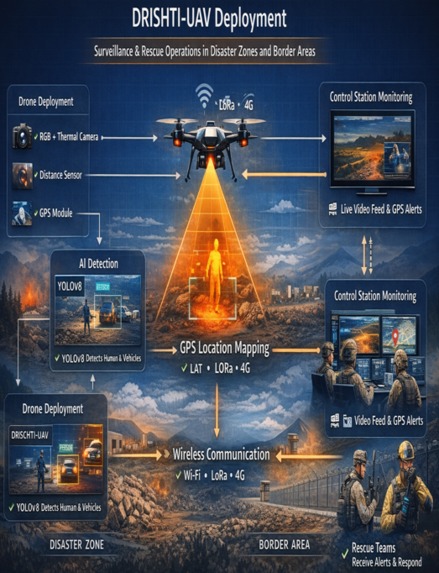
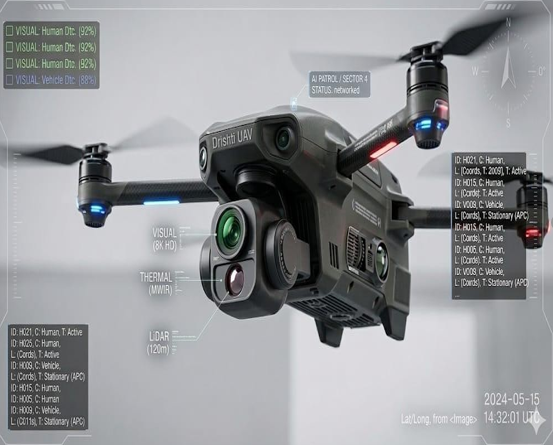
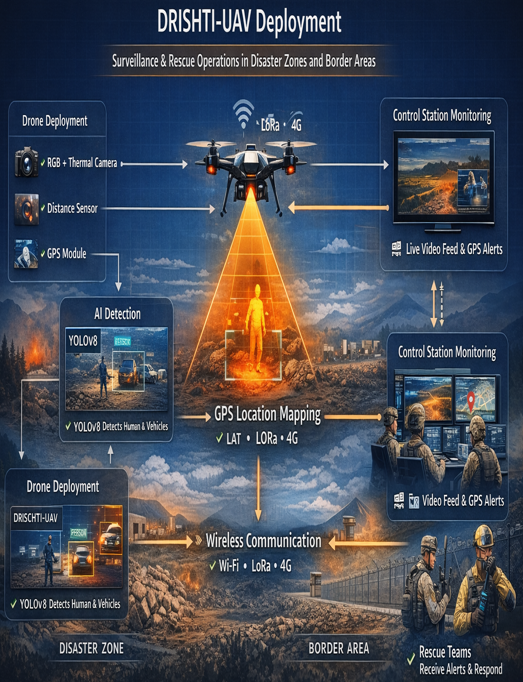
DRISHTI is an AI-powered UAV designed to assist in search-and-rescue operations and surveillance. The drone uses computer vision and sensors to detect humans, vehicles, and potential threats from the air. By providing real-time visual information, the system can help authorities and rescue teams quickly locate people in need of help and understand the situation on the ground.
How We Built It
To develop DRISHTI, we combined both hardware and software technologies. The drone is equipped with cameras and sensors to capture environmental data. On the software side, we used computer vision techniques and AI-based detection models to identify humans and objects in real time.
We worked with tools such as Python, computer vision libraries, and AI model training platforms to design the detection system. The goal was to create a system that could analyze images captured by the drone and quickly highlight important information for operators.
What We Learned
Working on this project helped us understand how artificial intelligence can be integrated with real-world hardware systems like drones. We learned about computer vision, object detection, and the challenges of processing visual data in real time. It also helped us understand the importance of designing technology that can support people during emergencies.
Challenges We Faced
One of the major challenges was ensuring that the detection system works reliably in different environments such as low light, crowded areas, or uneven terrain. Another challenge was optimizing the AI model so that it can run efficiently on limited computing hardware available on a drone.
Future Scope
In the future, DRISHTI can be improved with better autonomous navigation, longer flight time, and stronger AI models for more accurate detection. With further development, such systems could support disaster response teams, border security forces, and emergency services by providing faster and safer situational awareness.
Through DRISHTI, we aim to demonstrate how AI-powered aerial systems can contribute to saving lives and improving safety during critical situations.
What's next for DRISHTI-UAV
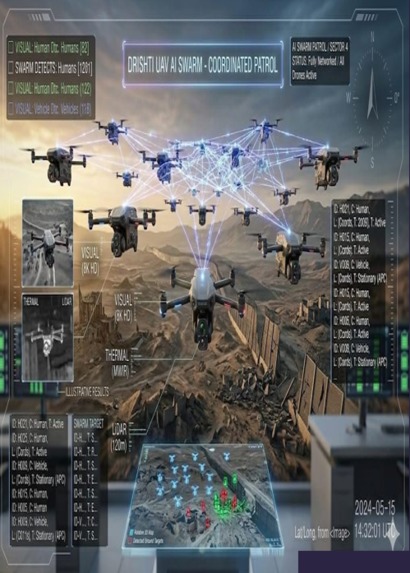
In the future, we plan to expand DRISHTI into a swarm-based drone system where multiple UAVs can work together during search and rescue missions. Instead of relying on a single drone, a group of coordinated drones could scan large disaster zones simultaneously, share information with each other, and quickly locate victims. This would significantly reduce search time and help rescue teams respond faster in critical situations.
Built With
- autonomous
- c++
- computer-vision-(opencv)
- gps-module
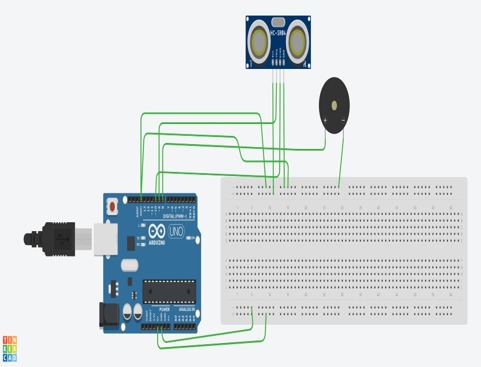
- lidar-/-ultrasonic-sensors
- raspberry-pi-/-nvidia-jetson-nano
- rgb-camera
- sensor-fusion
- slam-navigation
- thermal-camera
- uav
- yolov8

Log in or sign up for Devpost to join the conversation.