-
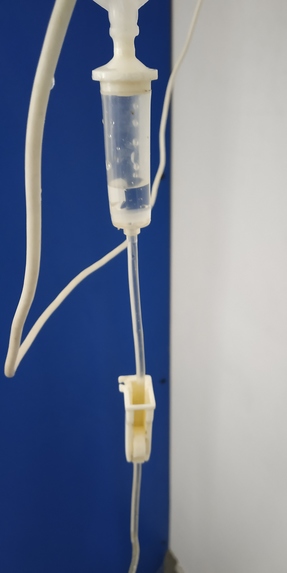
Glucose Level Indication
-
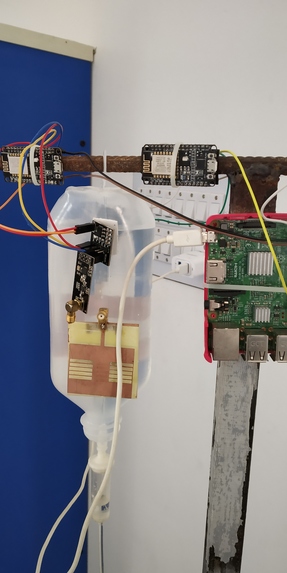
Connection
-
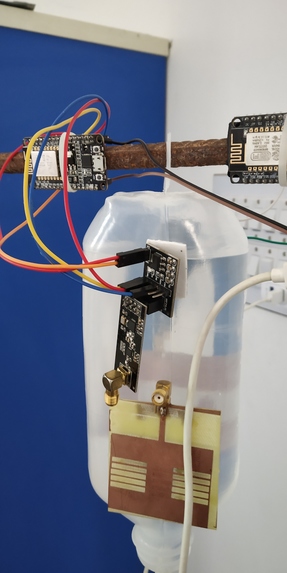
Set
-
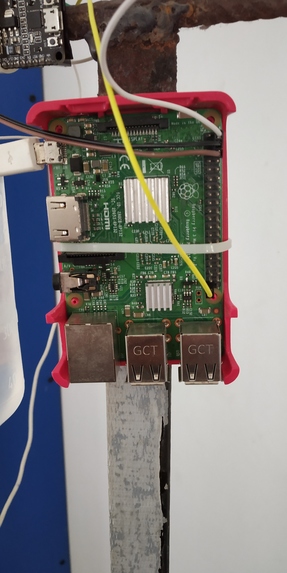

A Smart Multichannel coordinated medical Intravenous Drip infusion Monitoring System using RF signals
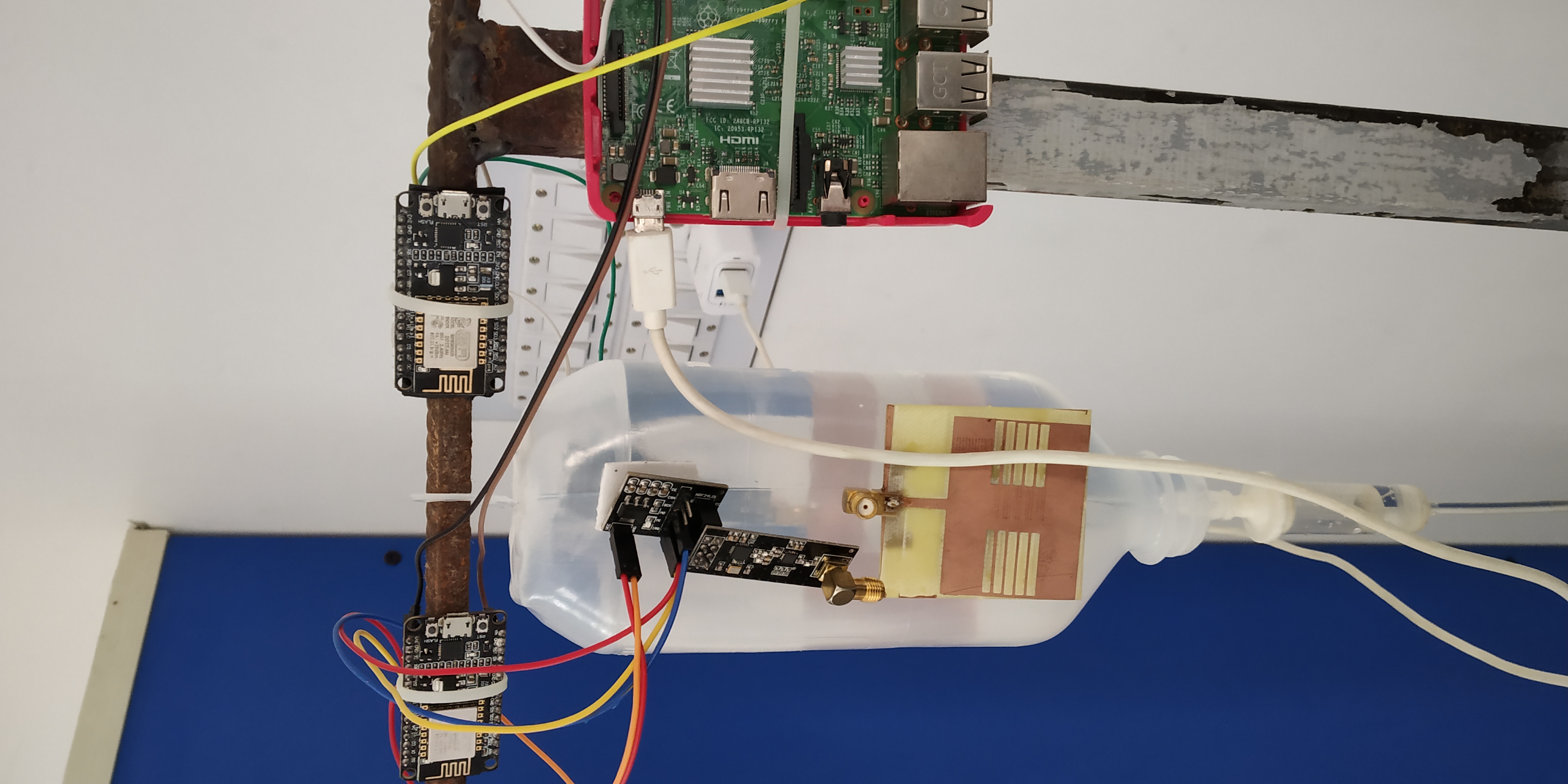
Drips infusion solutions are frequently used in hospitals and care facilities. Modern infusion pumps are very accurate, but they are expensive and are sometimes difficult for the staff to operate. Therefore, the drip infusion method is more generally used than an infusion pump. The various control systems that have been developed to facilitate automated monitoring and flow regulation of intravenous infusion lines on in-hospital patients. In this innovation a device is constructed which contains an externally fitted unit in the drip bottle which measures the level of fluid easily by varying fluid density and volume of fluid in the drip bottle. This information from RF transreciever will be stored in IoT Cloud with wireless sensor networks that is beneficial, especially when administering the condition of a greater number of patients and their resulting data storage are taken into account. Considering the case of patients fed with Intravenous fluids in Intensive Care Unit (ICU), it is essential to administer the flow rate and fluid level of gravity fed bottles in real-time, either by an attendant or duty nurse allotted to that bed. Manual negligence in such a scenario may lead to the death of patient, in the worst case. The proposed system can also be used to track the status anywhere wirelessly by Wi-Fi and Cellular systems. Thus, possible danger to the patient such as blood loss, back flow of blood due to negligence of nursing can be overcome by monitoring to fluid level and flow-rate.
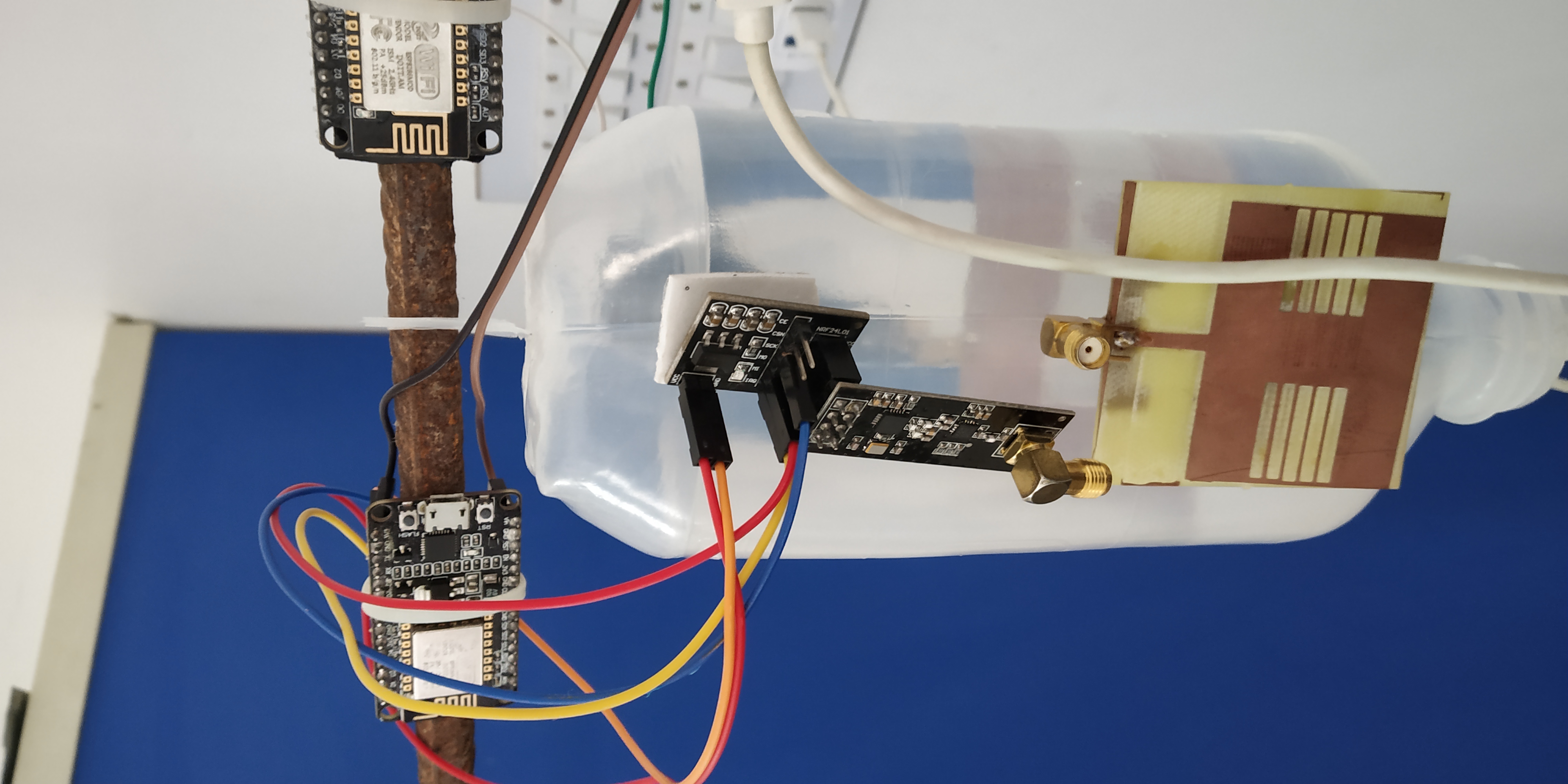
At present, in hospital, the monitoring of drop process still is in the state of labor management, even have now medical personnel or patient by the mode of height of liquid level in the control point drop bottle, the drop process to be monitored, uses also very inconvenient. Because the patient is many, every day, patients in an endless stream came the asynchronism that the hanging point in transfusion room or ward drips, start and end time during transfusion is variant, speed in infusion process is also different, this just needs the constantly height of the interior liquid of point of fixation drop bottle of nursing staff or patient, causes unnecessary anxiety and flurried. A. Design of metamaterial antenna for 2.4 GHz The successful application of microwaves is directly associated with the dielectric properties of the materials. An accurate measurement and working knowledge of these properties are key factors in better understanding the interaction of microwaves with Intravenous Drip infusion Monitoring. To measure the levels of Intravenous Drip infusion, a metamaterial antenna was designed in order to transmit and receive 2.4GHz signals. The dimensions for the front view of the metamaterial antenna consists of a=30 mm, b=40 m, c=27 mm, d=20 mm, e=18 mm, f=8.50 mm, g=24 mm, h=30 mm, i=7 mm, j=24 mm, k=2 mm, l=20 mm, m=3.20 mm, n=3.60 mm. The substrate is made up of FR4 Epoxy substrate material with permittivity ε=4.4, loss tangent tan δ=0.02, height of the substrate h=1.6 mm. The substrate is covered with the double side copper cladding with electrical conductivity of 5.8e+007 with a thickness of t=0.035 mm. In the front side of the antenna the fundamental rectangular patch antenna is provided with the complementary split ring resonator (CSRR) metamaterial structure along the sides of the micro patch line feeding element. SRRs are compact resonating elements gives a high-quality factor at microwave frequencies and commonly used as a metamaterial periodic structure, CSRR loaded metamaterials can be used to improve the isolation between array of antennas and helps to achieve better impedance matching. On the application of electric field in perpendicular direction to the surface of the ring the current induced in the split ring resonator thereby negative permittivity (ε r ) may be reflected. The CSRR are a class of these metamaterials tends to show negative permittivity, upon electromagnetic wave intervention parallel to its axis. This rare property of CSRR is used to modify the performance of antenna, such as gain and bandwidth enhancement and size reduction. The back side of the proposed antenna consists of the modified split ring resonator structure which helps in achieving good refection coefficient that is the return loss improvement is achieved due to the metamaterial structure of the ground region of the proposed antenna. The resonant frequency (f r ) of the antenna is controlled by the dimension and position of the complementary split ring resonators at the front side and the metamaterial structure back side of the antenna. The proposed antenna is excited by 50 ohms of impedance micro strip line inset feed since it provides better impedance matching and the dimensions of micro strip line feed is 18 mm length and 2 mm width. B. Dielectric properties of glucose aqueous solutions at 2450 MHz Amongst other characteristics, dielectric properties of Intravenous Drip infusion components must be considered in developing such formulations. These properties are defined in terms of dielectric constant (ε') and loss factor (ε") and Penetration depth (D p ) which shows how far a wave will penetrate before it is reduced to 1/e of its intensity at the surface. Dielectric properties at 2.45 GHz were measured by using the cavity perturbation technique, requiring a dielectric analyzer, a PC, resonant cavity made of copper (i.e. = 90mm; h = 45mm; TM010 simplistic mode), and heating/cooling unit. The system was calibrated with distilled water, a liquid of known dielectric properties. The sample was confined in a 10 µl borosilicate glass sample holder. The circulating fluid, ethylene glycol, transferred heat from coils attached to the external walls of the resonant cavity, thus maintaining the temperature of the cavity and sample at the deserved level. Dielectric measurements of all glucose solutions were performed at the specific temperatures discussed. The accuracy for temperature measurement was ±0.1°C. The following equations were used to calculate ε' and ε"
Where: V S and V O are the volume of the sample and the cavity, respectively; f O and f S are resonant frequency of the empty and sample loaded cavity respectively; Q O and Q S are the quality factors of the empty and sample loaded cavity respectively. Penetration depth is an effective and convenient measure to compare the relative microwave absorbing characteristics of materials and to relate the dielectric properties and geometry to microwave heating. Penetration depth for a material was calculated as
Where, D P is the penetration depth (cm), and λ 0 is the wavelength in free space (12.237cm at 2450 MHz). C. Overall drip infusion monitoring system The system consists of three copper foil electrodes. Electrodes 1, 2 and 3, respectively, are wrapped around the infusion supply PVC tube from the solution bag, an antenna that is placed near the drip chamber, the drip chamber and the infusion PVC tube from the drip chamber. The system consists of three electrodes, low-pass filters, 100 k-ohm resistors, impedance converters, non-inverting amplifiers, envelope detection circuits, and a microcomputer. The 30 kHz square- wave microcomputer output is converted to a sine wave by a low pass filter, and is connected to electrode 1. A capacity-coupled 30 kHz sine wave signal is therefore conducted to electrodes 2 and 3 and their 100 k-ohm resistors. Electrode 2 outputs a 30 kHz voltage, as modulated by the C2 capacitor change due to each infusion fluid drop. When the drip infusion fluid becomes free-flow, electrode 3 outputs a 30 kHz voltage. These signals, which indicate each drop, and free-flow, are demodulated by envelope detection circuits.
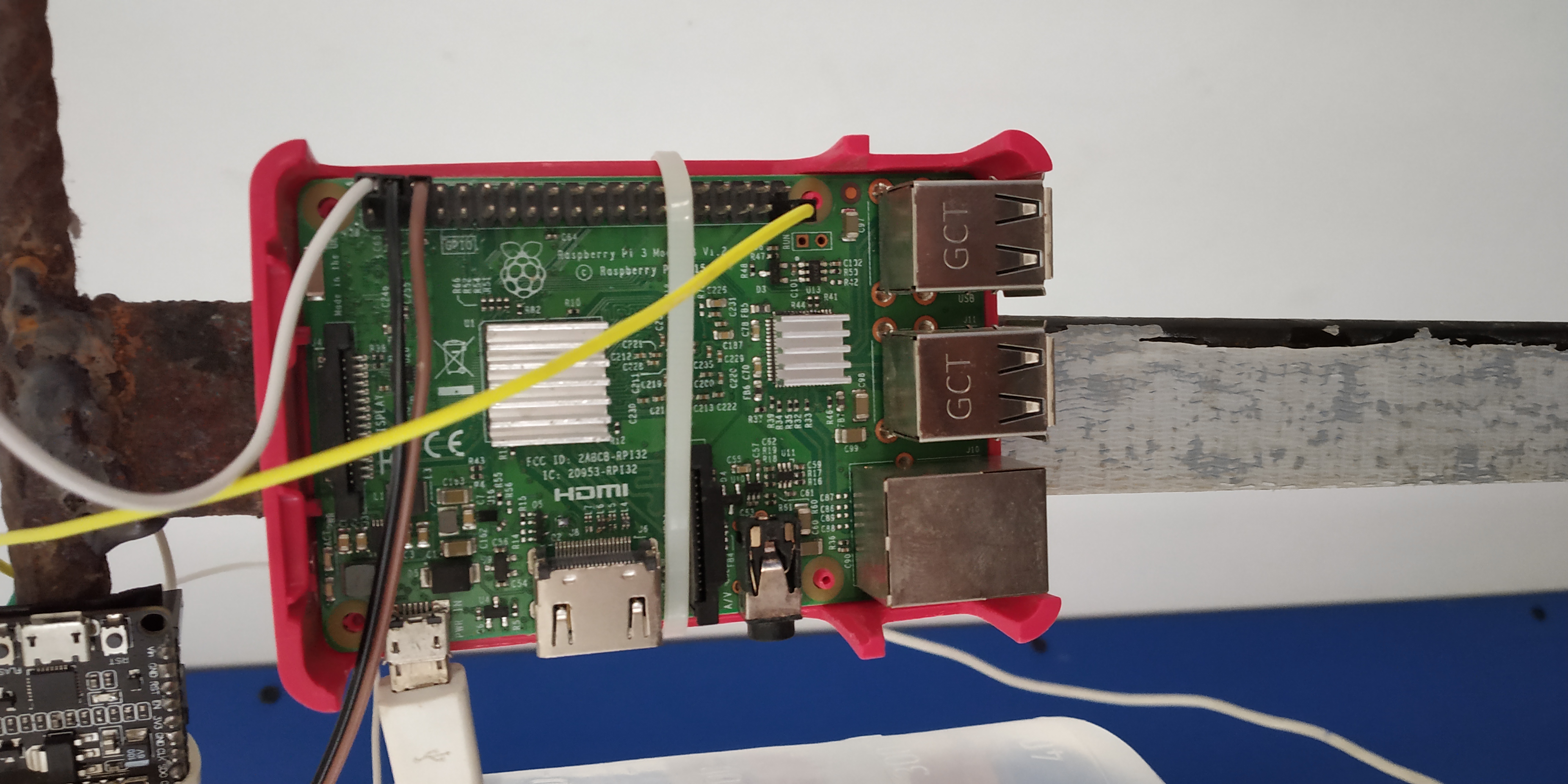
The microcomputer detects whether the infusion fluid is dripping or is in free-flow. The microcomputer detects each drop, and then calculates the time interval between two successive drops and the equivalent number of drops per minute, which is drops/minute. When the infusion fluid drip is free-flow, then the microcomputer alerts the hospital nurse or care facility's staff, via a low power personal handy phone system. Metamaterial antenna which is designed the frequency of 2.4 GHz transmits an electromagnetic wave to the IV bag. The quantity of glucose solution inside the IV bag can be determined by the dielectric properties of the solution. The metamaterial antenna also receives the signal which is reflected diffracted and scattered from the amount of glucose solution present. This received signal is sent to a micro-computer which is actually a raspberry Pi module will be able to estimate the quantity of glucose solution inside the IV bag by the loss of electromagnetic signal that is transmitted. Also the flow rate is determined by the electrode is also send to a micro-computer which actually detects the flow of of glucose solution. So depending upon the flow rate as well as the received electromagnetic signal the amount of solution that remains in a IV bag is estimated. This is estimated signal can be converted to a percentage ratio and transmitted to a cloud through and nodemcu module. This can be made visible to any humans through their smartphone. When the glucose solution reaches the threshold level a warning message can be sent to the nearby nurses in order to change the IV bags. Continuous warning signals and alerts can be send to the patience as well as to the doctors once it reach below the threshold level.
Built With
- communication
- innovation
- iot
- machine-learning
- sensor
- wireless

Log in or sign up for Devpost to join the conversation.