Inspiration
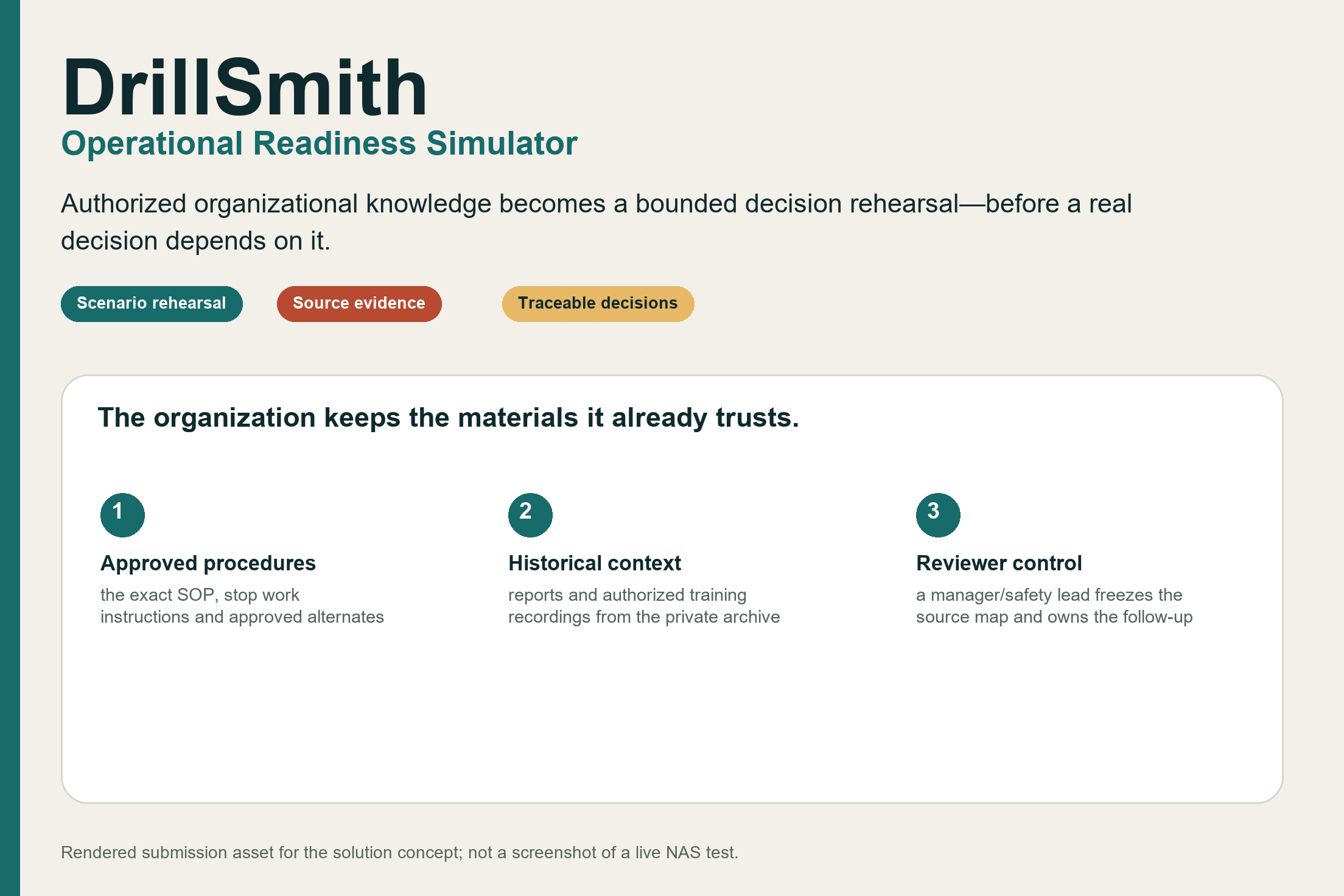
Most workplace teams can retrieve their operating procedures, but they cannot always use them under pressure. A binder on a NAS, a scanned incident report or an onboarding recording does not prove a person knows what to do when a real decision appears. DrillSmith was inspired by the gap between stored knowledge and performed knowledge: the system should test the person and surface the organization’s incomplete instructions at the same time.
What it does
DriillSmith is designed to turn authorized internal procedures and training recordings on an AI NAS into bounded, source-backed decision rehearsals. A trainer or manager chooses the role, scenario and approved source map. The participant answers one decision at a time, explains their reasoning and receives feedback tied to exact source passages. The final packet separates:
- decisions the participant could not justify;
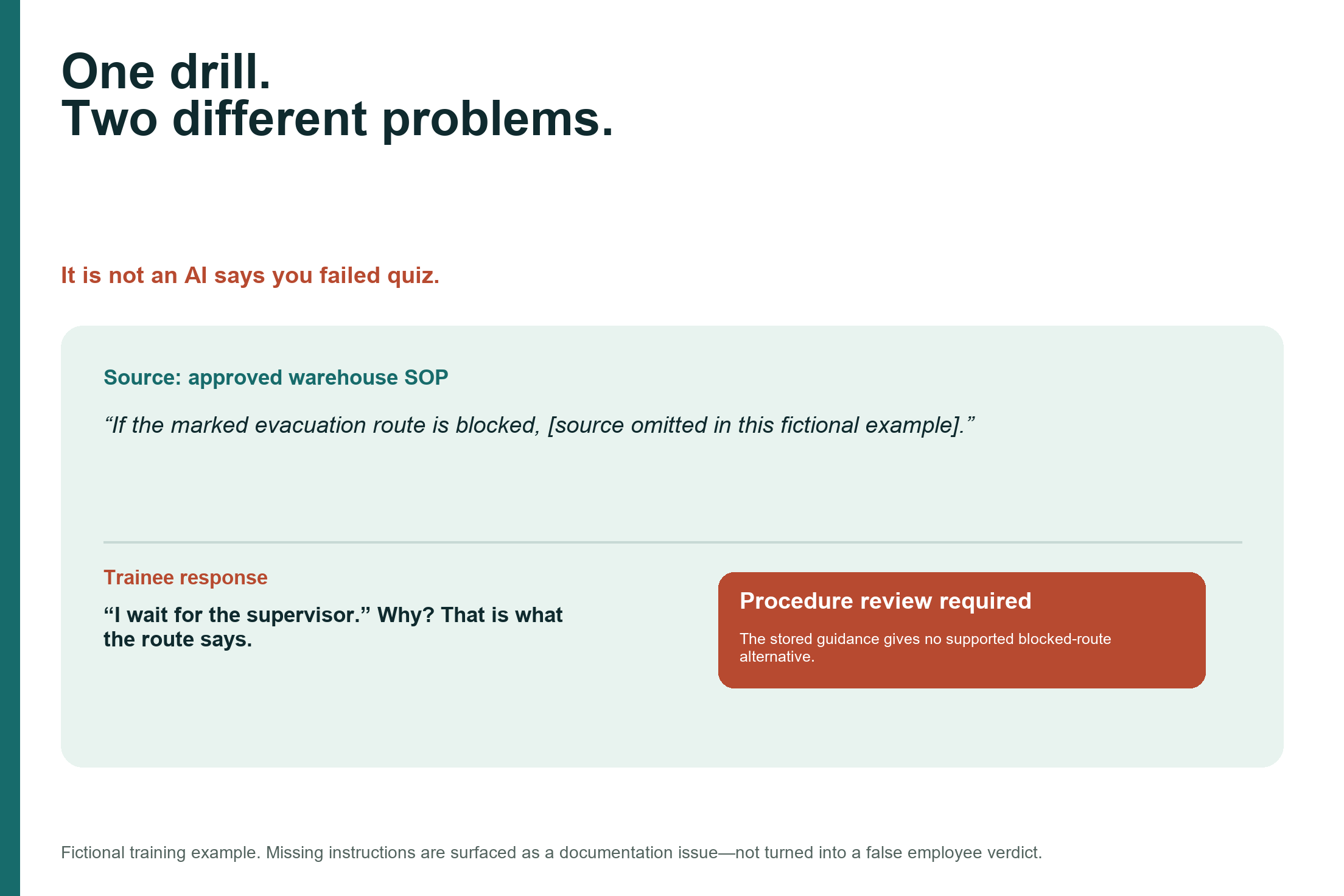
- instructions that are missing, ambiguous or contradictory;
- unsupported or uncertain conclusions;
- review items for the responsible human safety officer.
DrillSmith is not an emergency service, certification, legal-compliance program or replacement for qualified safety judgment.
How it was built
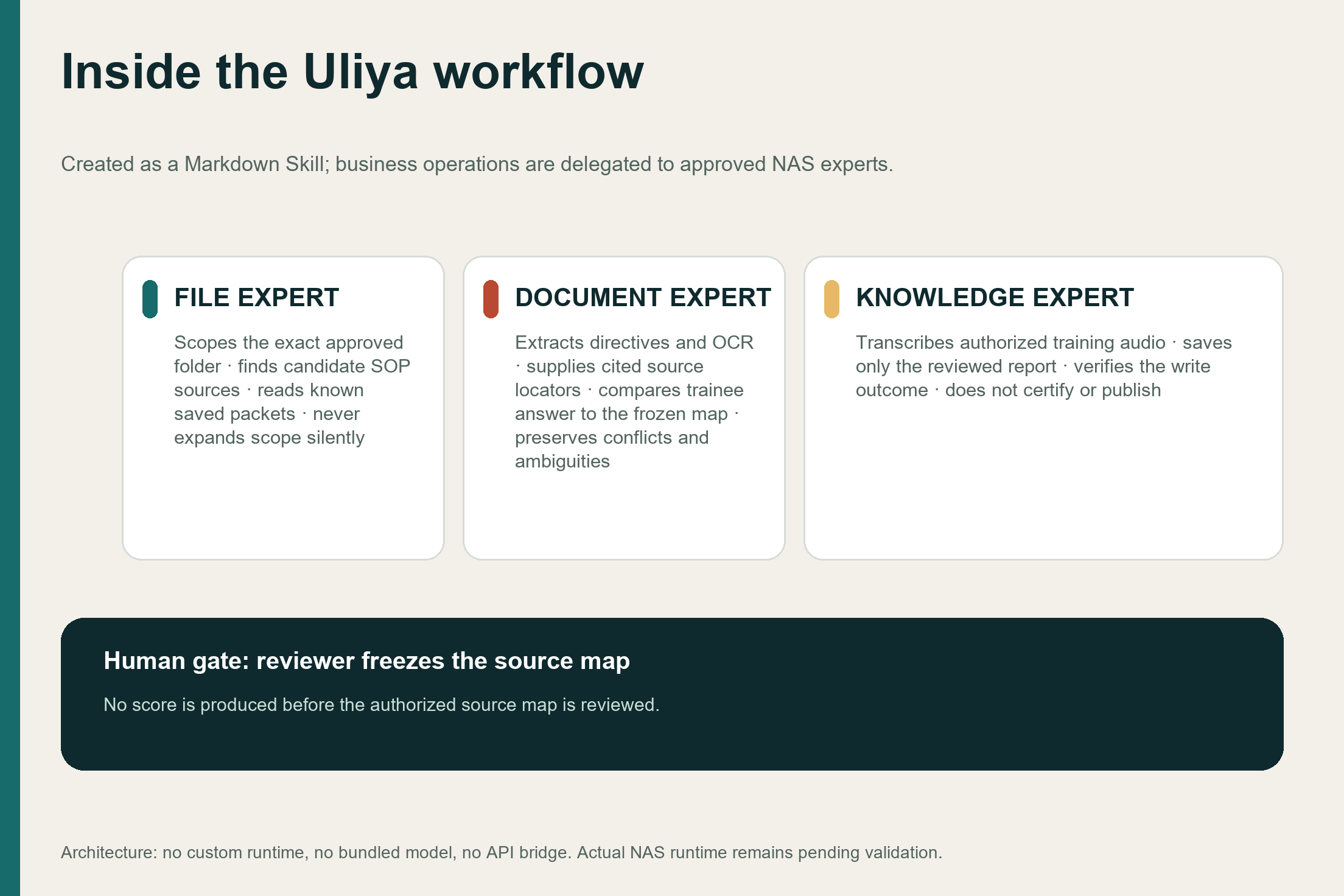
The project follows the Uliya Skill model and delegates NAS work to registered file, document and knowledge experts. File search and known-path reading scope the exercise, document extraction/QA locates source-supported expectations, transcription handles authorized training audio and the approved review packet is saved after human confirmation.
The trainer reviews a checkpoint map before any scoring begins. During the exercise, each response is checked against the frozen map rather than allowing the model to invent a “correct” answer. Missing or contradictory material becomes a procedure-review finding. No custom runtime, database, web application, biometric matching, background monitoring or external API is embedded.
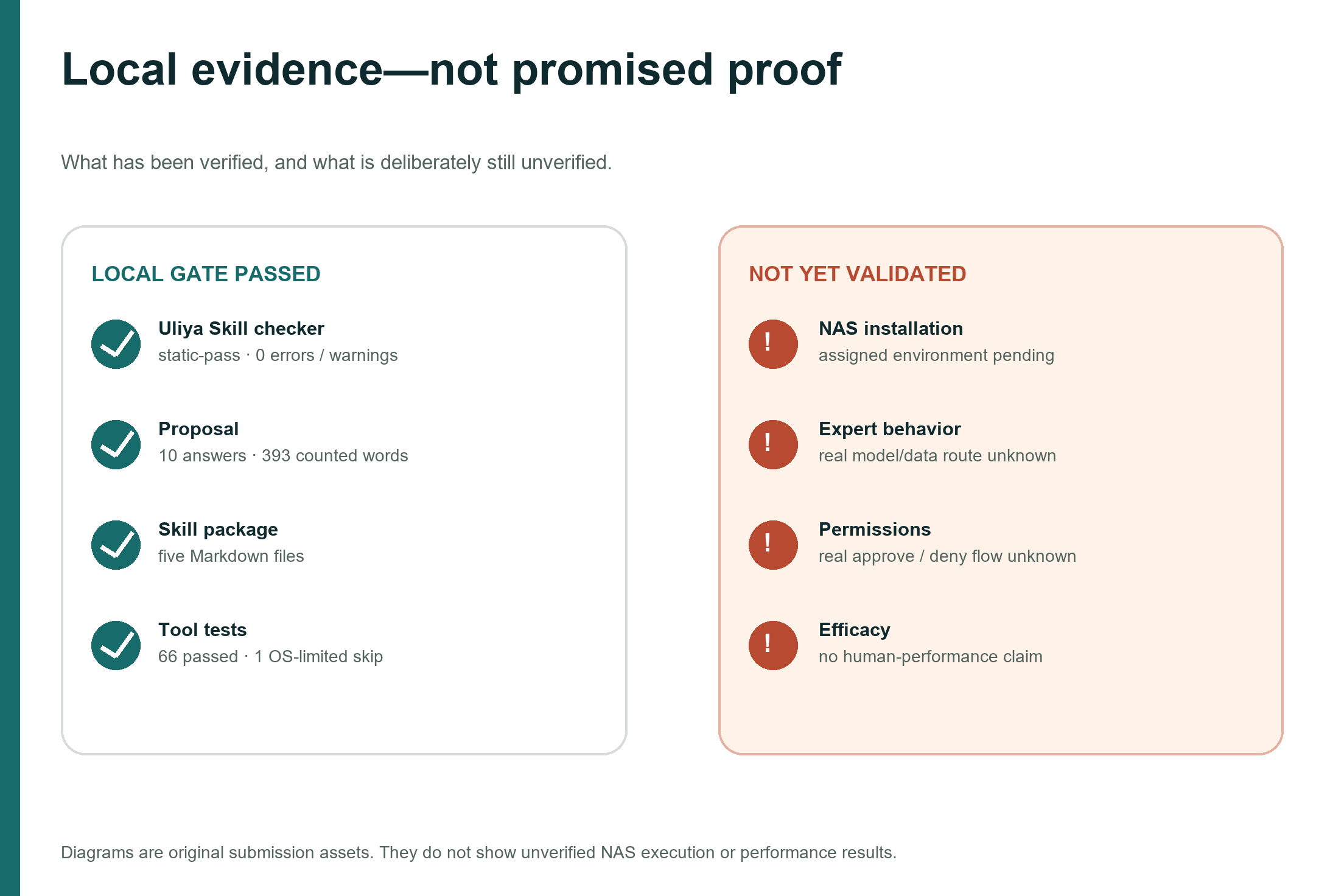
Local Markdown structure, package integrity and the official development-time Skill checker were used before submission. NAS installation, expert output quality, approvals and end-to-end behavior remain pending validation on the assigned finalist hardware.
Challenges
The hardest problem was resisting the temptation to make an authoritative quiz from a policy document. Policies are documents of record, not necessarily workable instructions: they can conflict, omit conditions or say nothing about the situation presented. The workflow therefore requires a human reviewer, preserves ambiguity and refuses scoring where the stored source cannot justify an answer.
Another challenge was keeping the interaction useful inside a Markdown-orchestrated Skill. The design keeps one bounded scenario active, one question at a time and separates participant-knowledge gaps from organization-documentation gaps.
What was learned
The NAS is valuable because organizational knowledge can live beside the people expected to use it. A private, authorized archive can provide both context and persistence that generic public tools do not have. At the same time, NAS storage does not by itself prove local inference or guaranteed accuracy. The project therefore treats inferencing routes, permissions, approvals and runtime evidence as things to verify—not market.
AI assistance helped with research, authoring, local packaging and review; the final product claims only what the stored sources and recorded validation support.
Next steps
Finalist validation would exercise complete procedures, approved alternatives and intentionally incomplete instructions on the assigned NAS. The target is no unsupported scoring, clear procedure-gap reporting and an artifact a responsible reviewer can actually use.
