Construction is one of the slowest industries in the world to adopt new technology. When it finally does, the first step is almost always the same one: a 3D model. Companies pay for the survey, the modelling, the coordination — and then the model's working life ends the day the project is handed over. The design team keeps it. The people who run the building for the next forty years get a PDF set and a key.
That is why the ROI conversation stalls. It is not that digital models are expensive; it is that we only spend them on the shortest phase of the asset's life. A model that stops at handover has to pay for itself in eighteen months. A model that keeps working never has to.
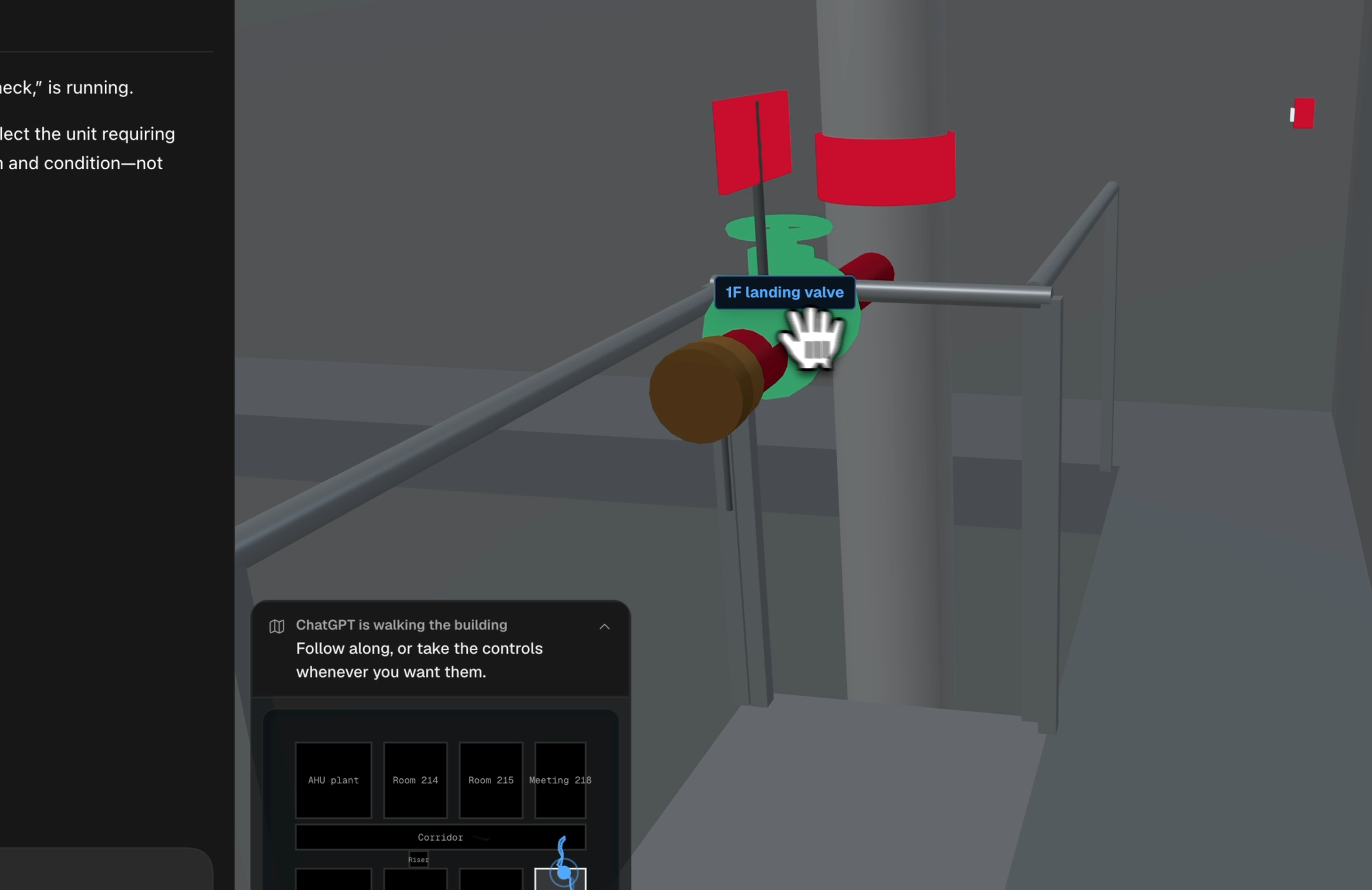
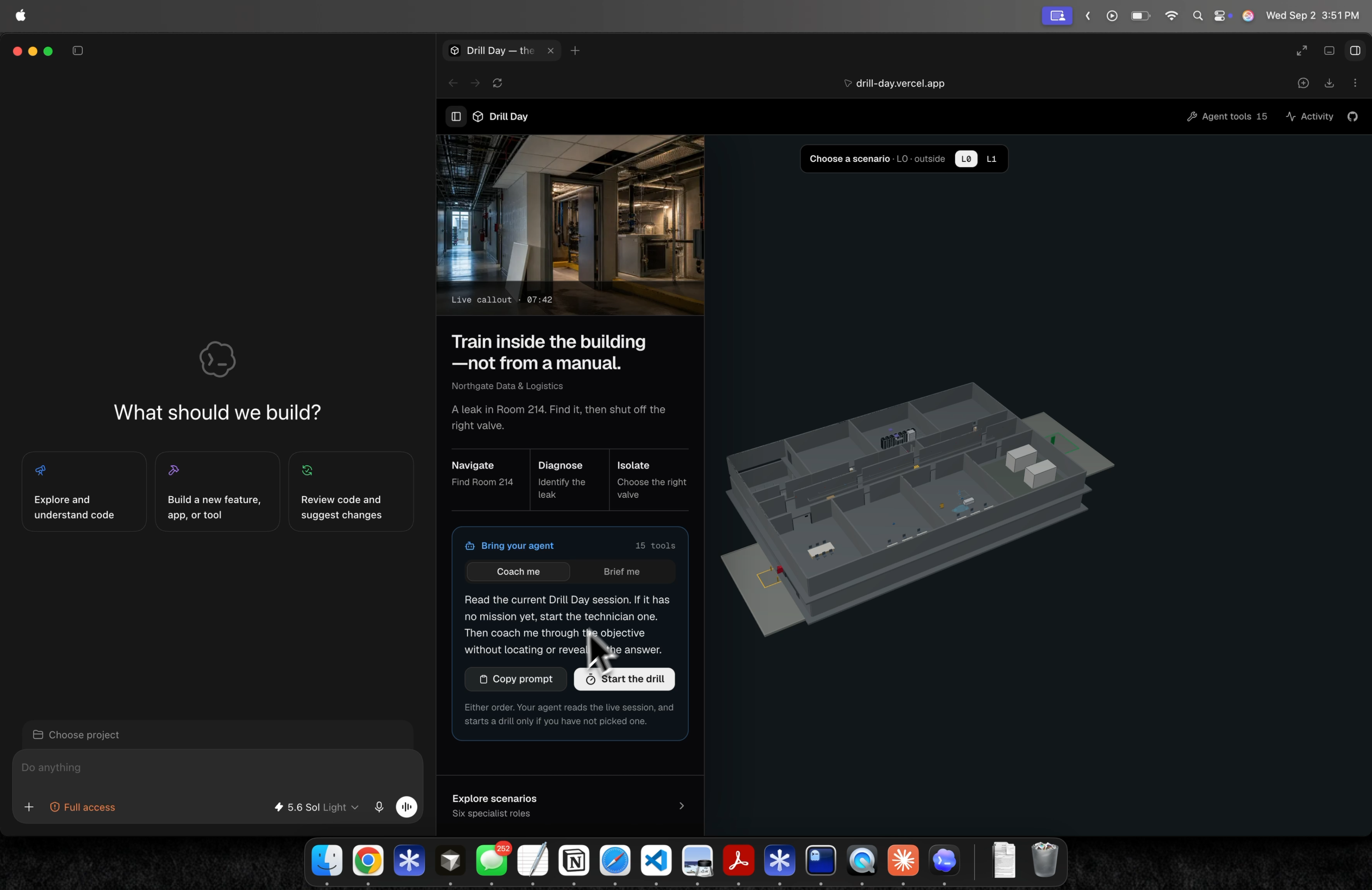
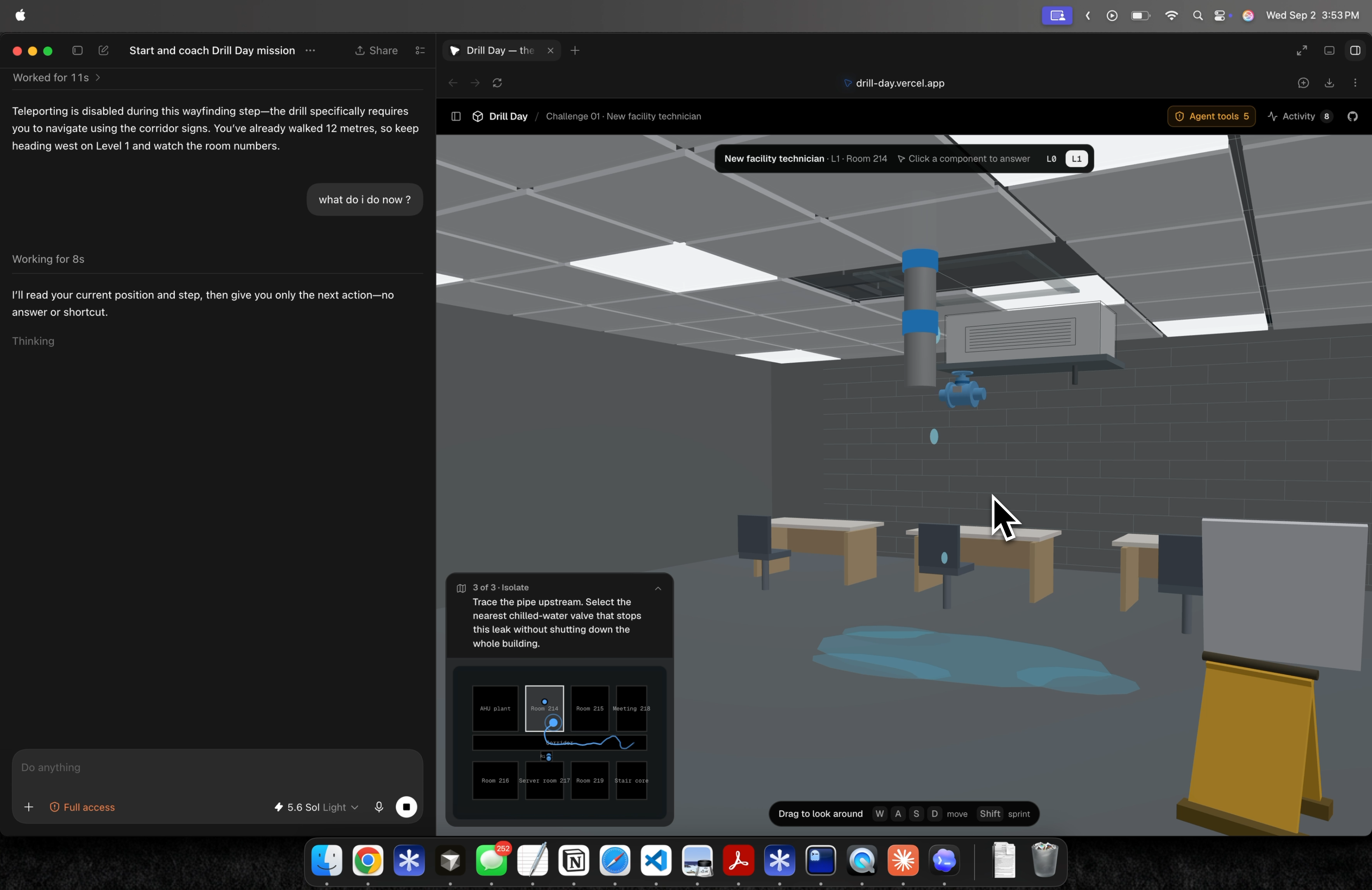
Drill Day is our argument for the second kind. It takes the model past design, past handover, into operations — the phase where the building actually costs money — and asks a simple question: what if the model were the thing that trains the people who run it?
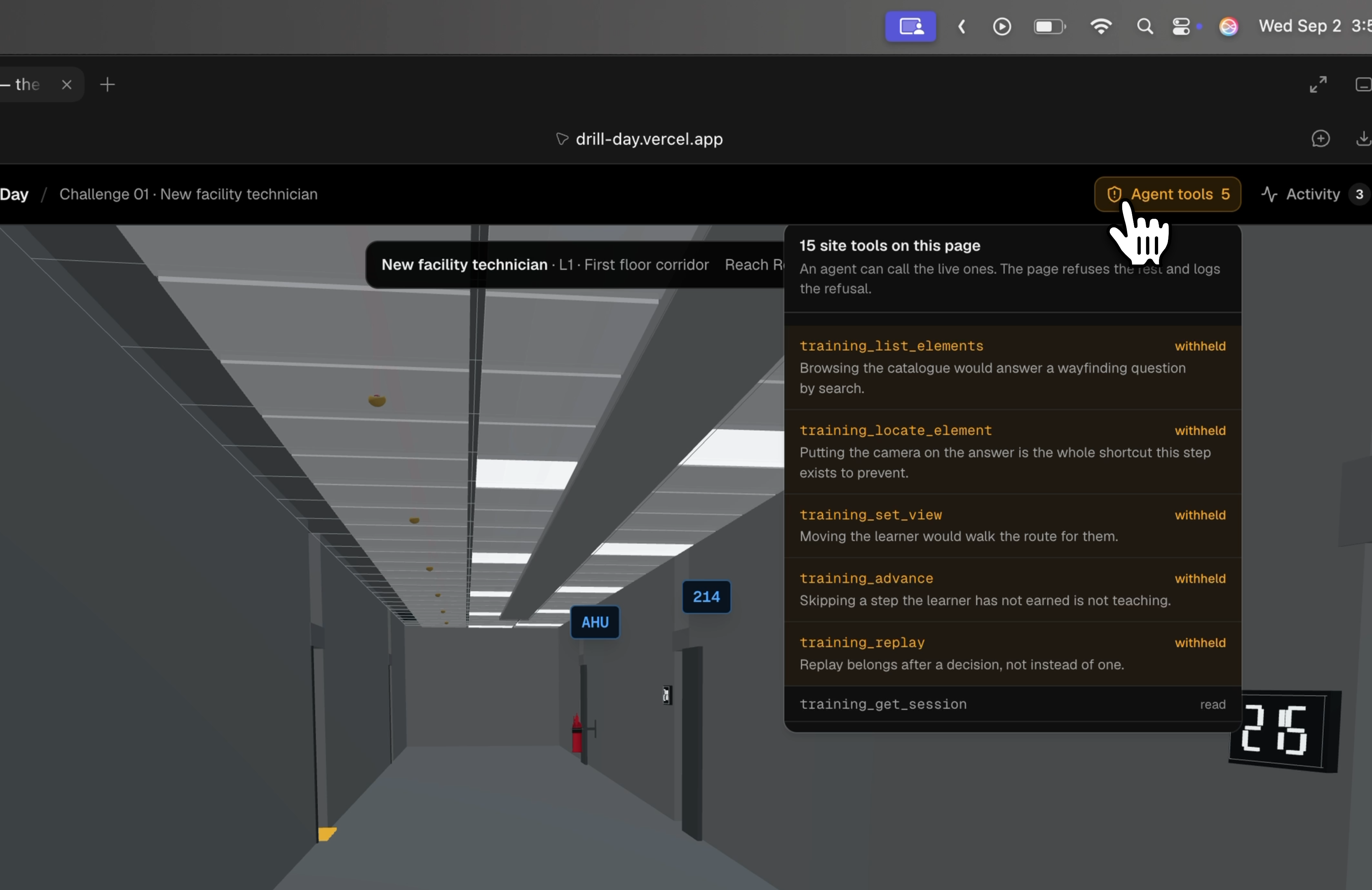
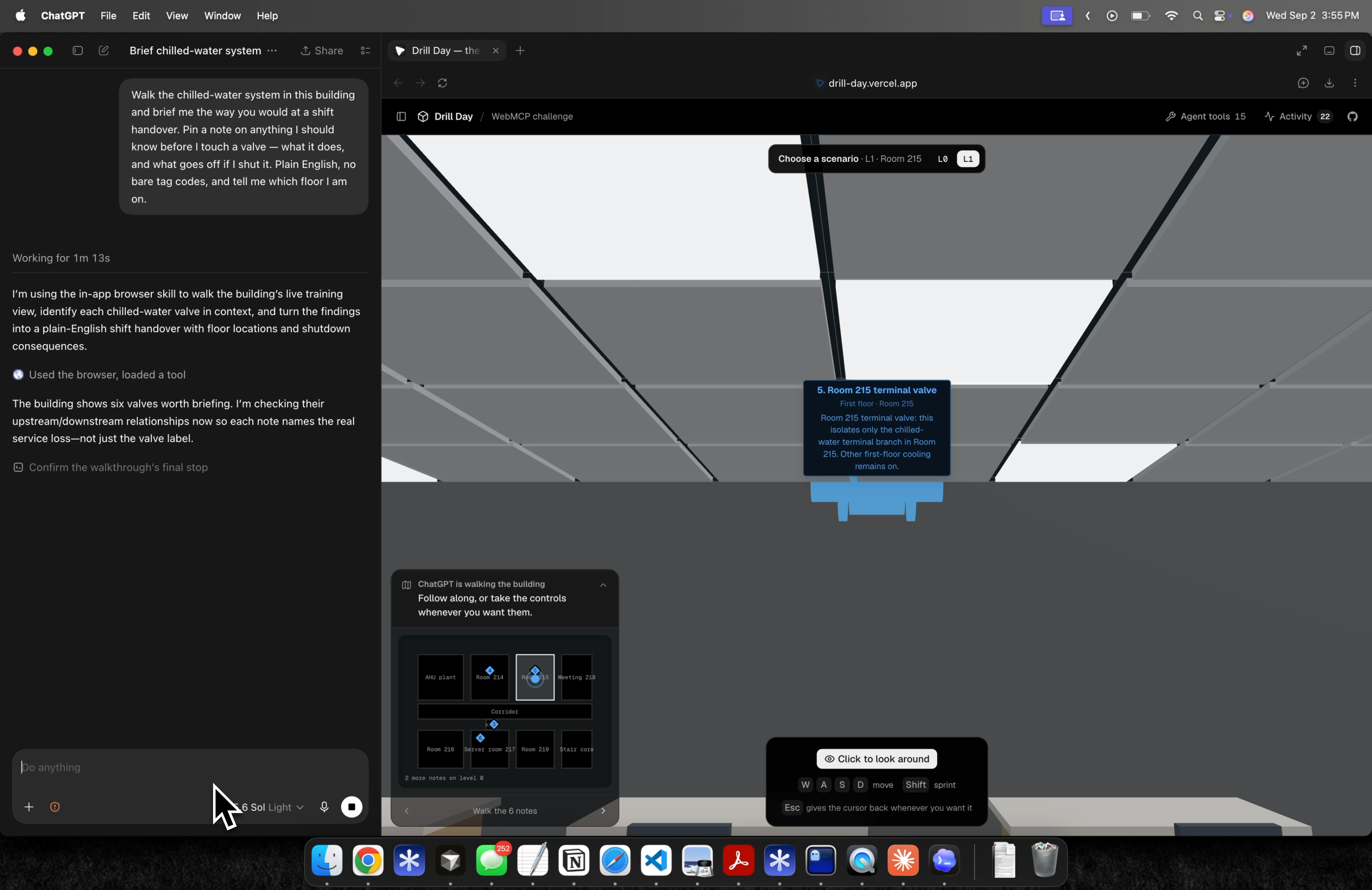
The second half of the inspiration was WebMCP. A model is only useful in operations if a non-expert can get answers out of it, and the people we care about — a week-two technician, a firefighter who has never been in this building, a contractor arriving to isolate a valve — are not going to learn a BIM viewer. But they will talk. WebMCP lets the AI they already have reach into the live model on their screen instead of into a stale export of it. That is the missing interface.
Built With
- 3d
- aec
- agentic-browsers
- bim
- client-side
- digital-twin
- facilities-management
- json-schema
- model-context-protocol
- navigator.modelcontext
- next.js
- pnpm
- radix-ui
- react
- react-19
- shadcn-ui
- tailwindcss
- three.js
- typescript
- vercel
- web-standards
- webgl
- webmcp

Log in or sign up for Devpost to join the conversation.