Inspiration
The idea for DriftSense was born from my fascination with how cultural passions shape personal identity, sparked by the Qloo Global Hackathon 2025. I was intrigued by Qloo’s Taste AI™ API, which offers deep insights into consumer preferences across domains like music and fashion, all while prioritizing privacy. The challenge to integrate this with a large language model (LLM) like Gemini inspired me to create a simple, personalized fashion recommendation system, starting with a user’s love for an artist like Taylor Swift.
What I Learned
I gained hands-on experience with integrating Qloo’s API with Gemini, learning how to extract cultural tags (e.g., "Pop," "Romantic" for Taylor Swift) and transform them into actionable fashion insights. Working with FastAPI and Next.js taught me to build a scalable backend and a responsive frontend, emphasizing clean API design and real-time data flow. I also learned to manage the nuances of unstructured data and streamline the recommendation pipeline under a tight deadline.
How I Built It
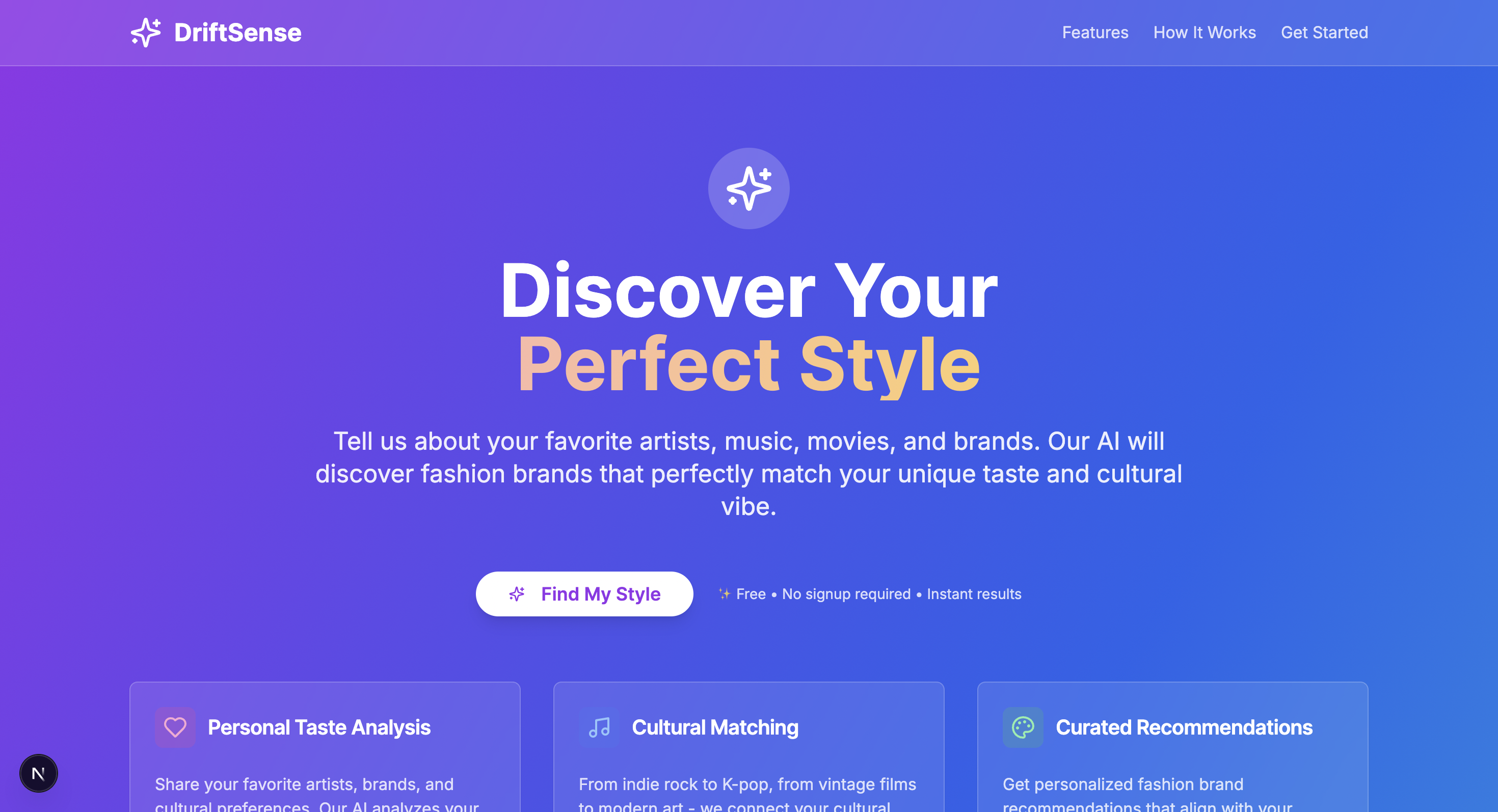
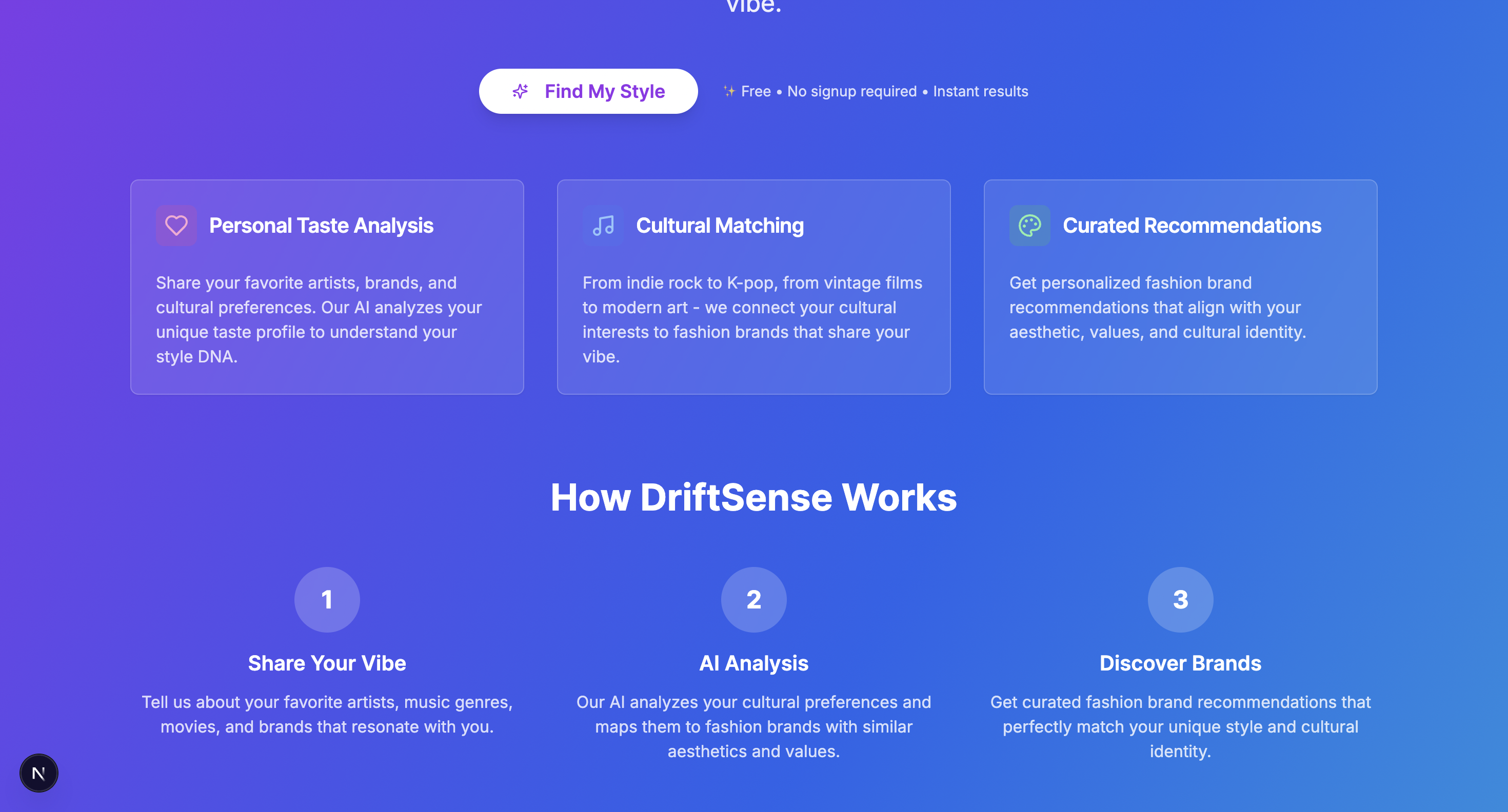
DriftSense is a chat-based fashion recommender built with Gemini, FastAPI, and Next.js. The process included:
- Setup: Configured a FastAPI backend to handle API requests, integrated Gemini for natural language processing, and set up Next.js for a sleek frontend.
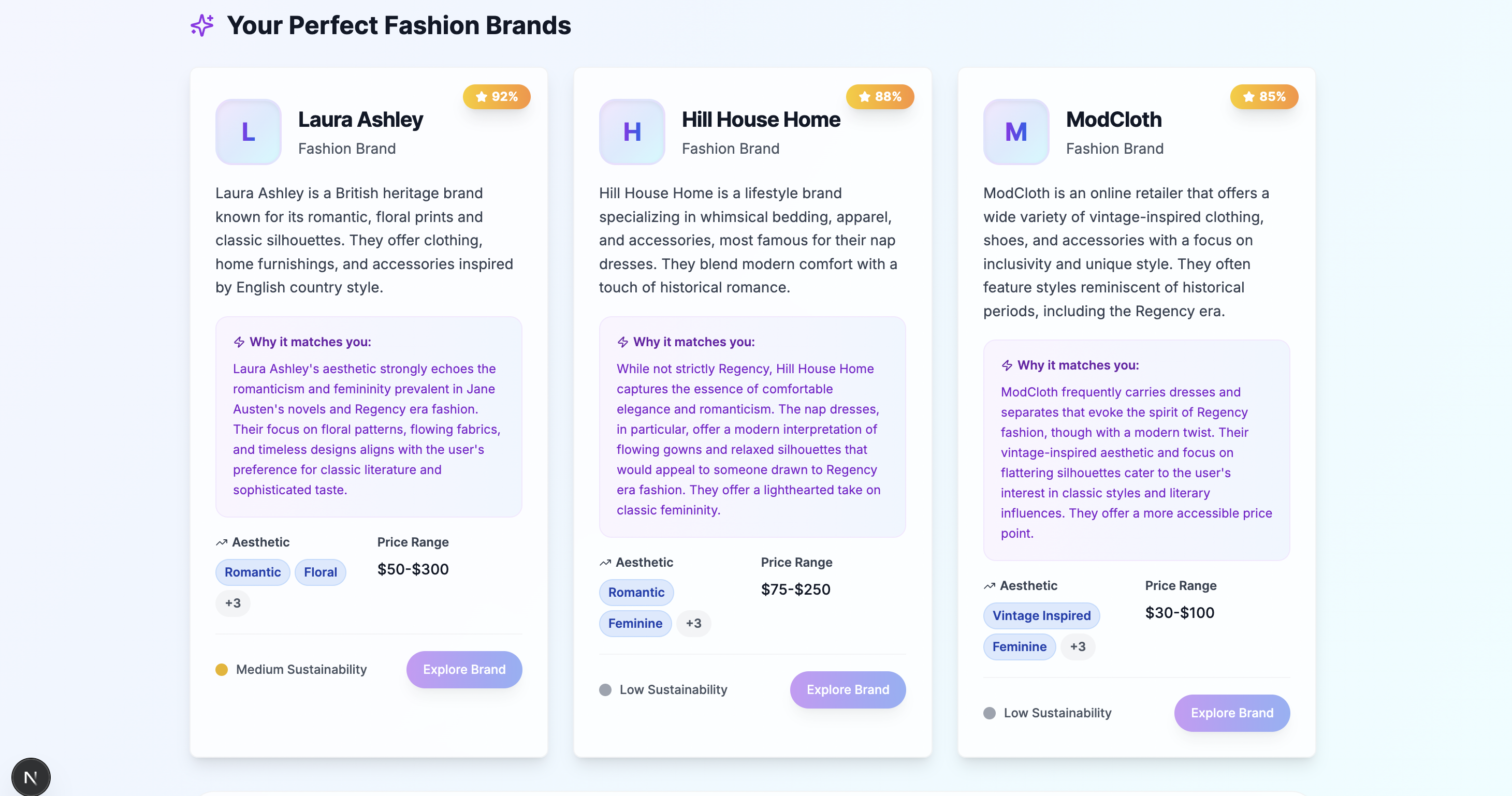
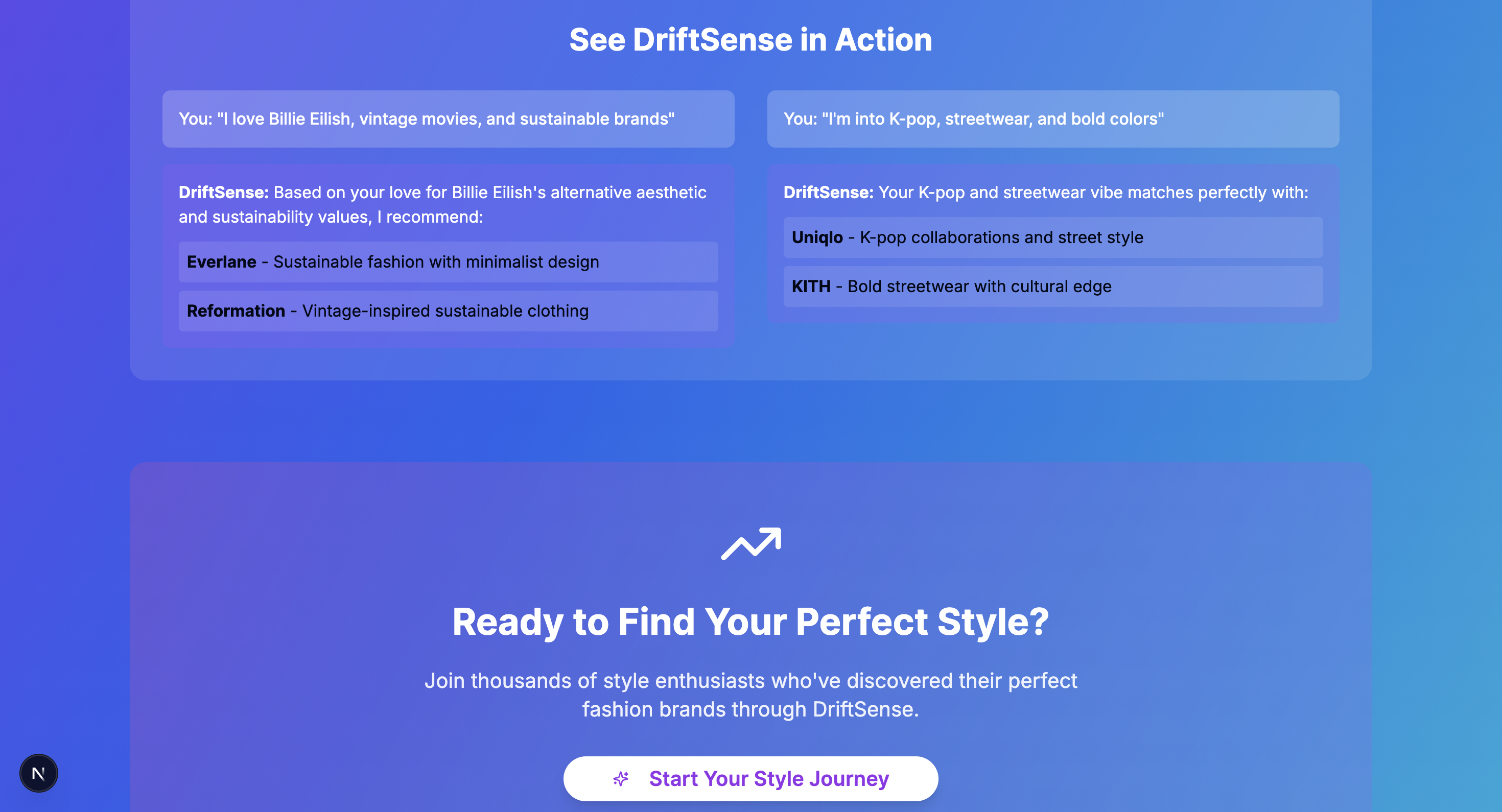
- Pipeline: Users type input (e.g., “I love Taylor Swift”), Gemini extracts the entity (Taylor Swift), Qloo’s API pulls relevant tags, and the refined data is fed back to Gemini to generate fashion brand recommendations (e.g., Reformation, ASOS).
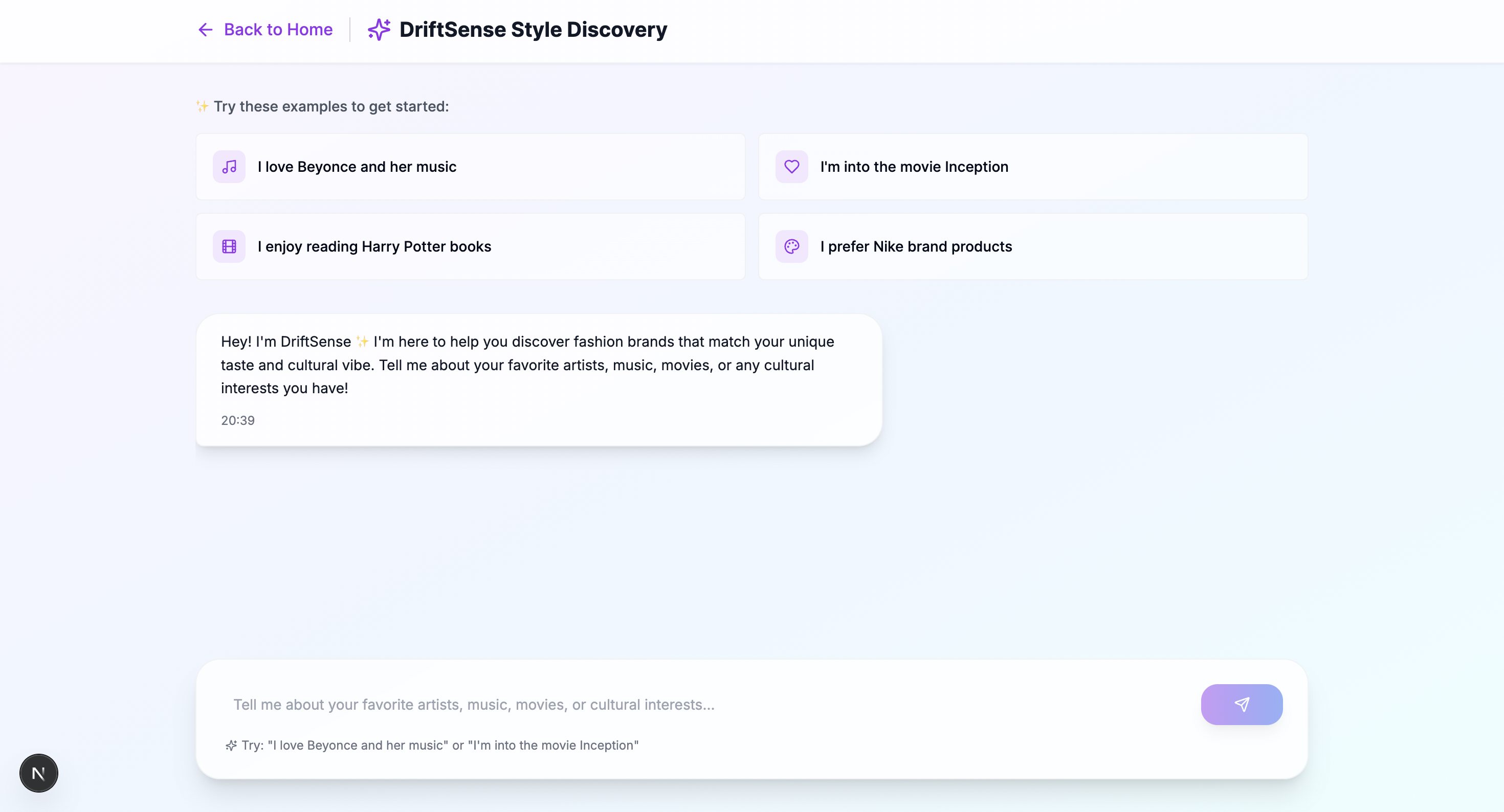
- Features: Added a simple chat interface where users input preferences, receive recommendations, and can explore brands with mock links.
- UI: Developed a minimal Next.js frontend with a text input field and dynamic recommendation display, ensuring a smooth user experience.
The workflow can be modeled as: [ \text{Recommendation} = f(\text{User Input} \rightarrow \text{Gemini Entity Extraction} \rightarrow \text{Qloo Tags} \rightarrow \text{Gemini Recommendation}) ] where ( f ) represents the sequential data processing.
Challenges Faced
The main challenge was handling Qloo’s unstructured data, which required careful tag extraction and mapping to fashion brands—often a manual process initially. Integrating Gemini with Qloo’s API posed latency issues, plus the issue with Gemini free tokens which I mitigated by optimizing API calls.
Accomplishments I'm proud of
I'm thrilled with how far DriftSense has come! Building a chat-based fashion recommender that turns a simple input like "I love Taylor Swift" into tailored brand suggestions—using Qloo's cultural data and Gemini's insights—feels like a real win. Mastering the integration of FastAPI and Next.js to create a seamless backend and frontend was a challenge I nailed, especially under the Qloo Global Hackathon 2025 deadline. Seeing the system pull tags like "Pop" and "Romantic" to recommend brands like Reformation and ASOS in real-time is a testament to the power of combining APIs and AI. It’s been a journey of turning a passion for personalization into something tangible, and I’m proud of the clean, user-friendly result.
What's Next for DriftSense
Looking ahead, I want to enhance DriftSense by adding interactive features—like letting users refine recommendations with preferences (e.g., "casual" or "sustainable")—to make it even more personal. Expanding the dataset to include more cultural influences beyond music could open up new style avenues. I’m also considering a mobile-friendly version to reach more users on the go. The goal is to keep evolving it into a go-to tool for style discovery, maybe even exploring gamification to keep users engaged as they explore their fashion identit
Built With
- fastapi
- gemini
- javascript
- nextjs
- python
- qloo
- vercel

Log in or sign up for Devpost to join the conversation.