-
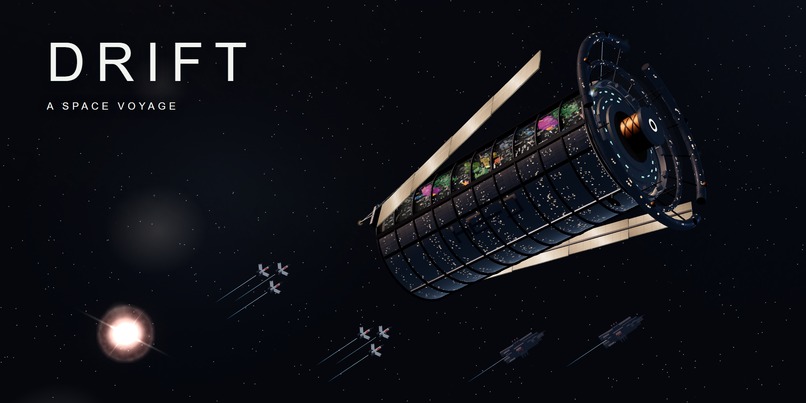
Drift, a space voyage
-
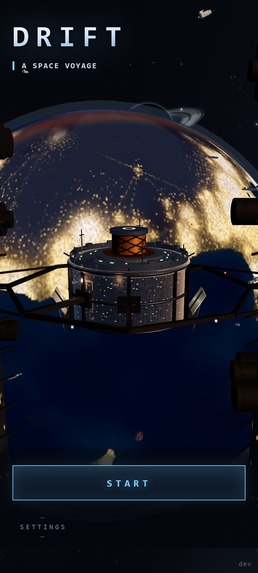
A humble beginning
-
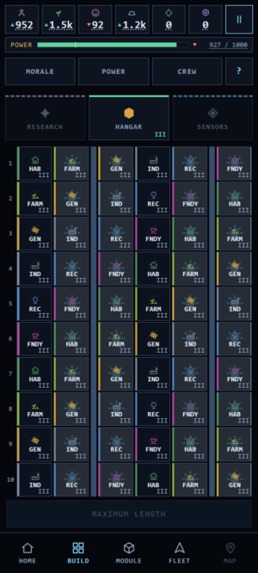
Build the plots
-
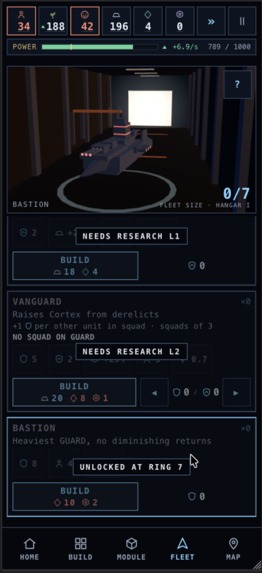
Command the Fleet
-
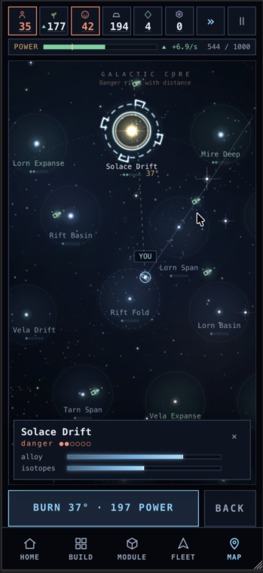
Explore the Galaxy
-
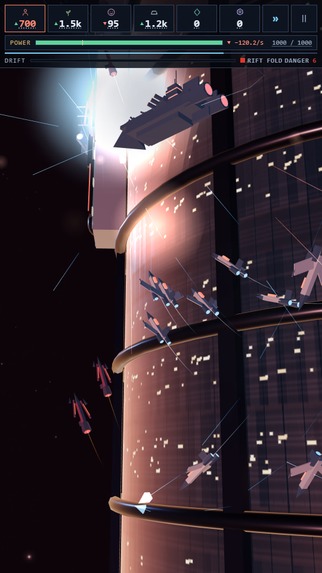
Defend the Colony
-
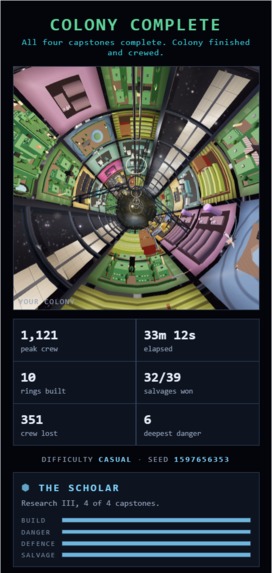
Finish your Journey
Inspiration
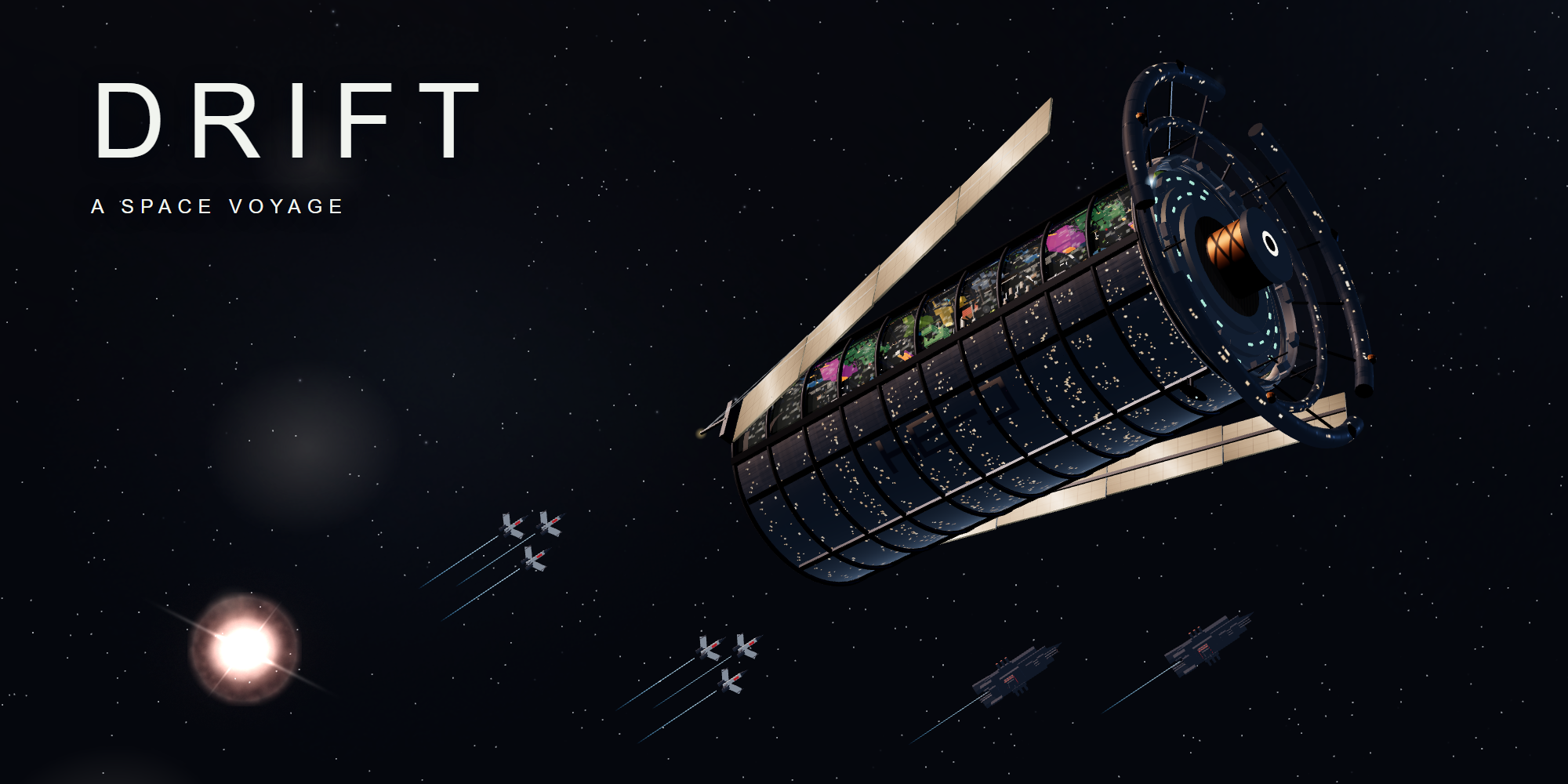
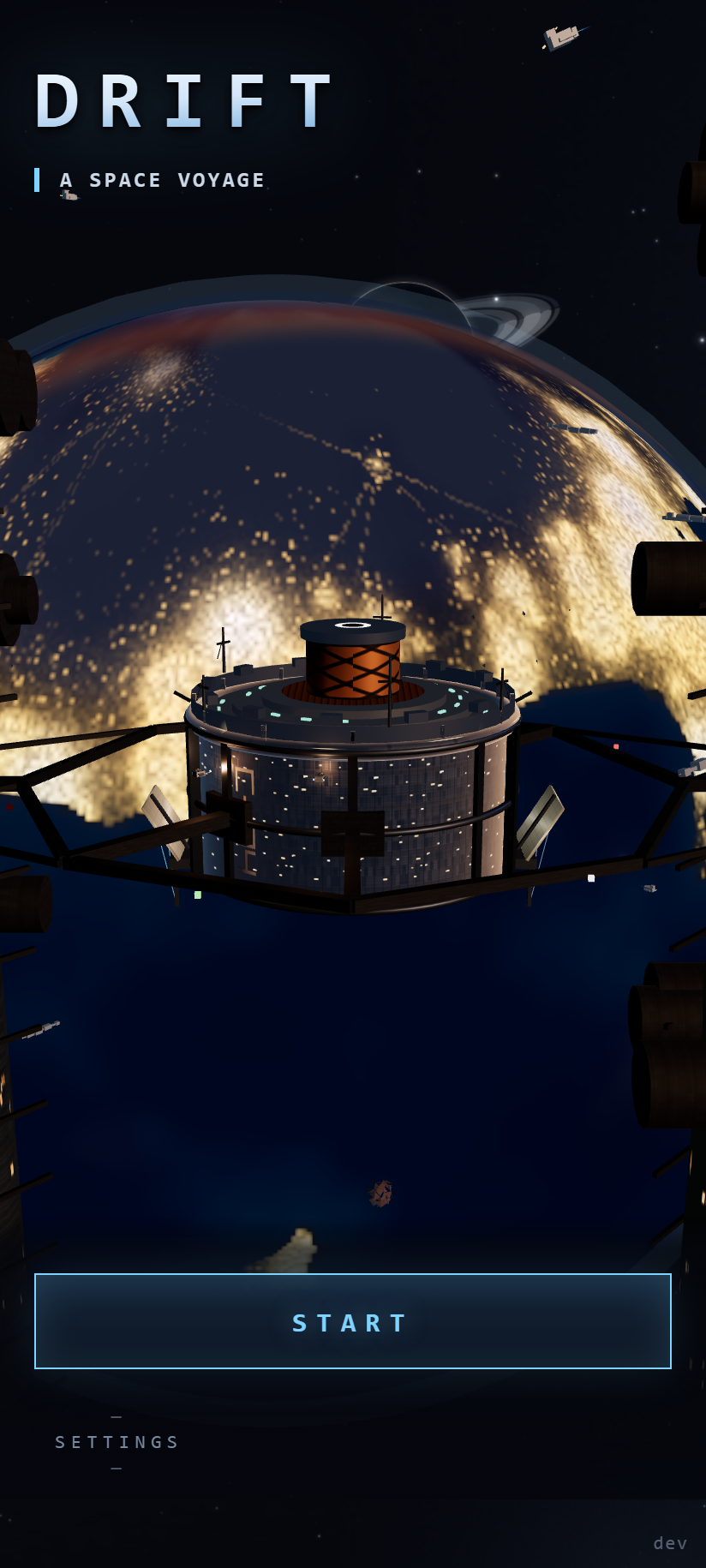
A management game that fits in one hand and one sitting. The picture that stuck was an O'Neill cylinder, a spinning drum with farms and towns curving up over your head. Then: what if it wasn't finished yet, and the star it orbits was dying? You build while running.
What it does
DRIFT is a portrait, single-player colony sim that runs in a phone browser with no internet and no downloaded assets.
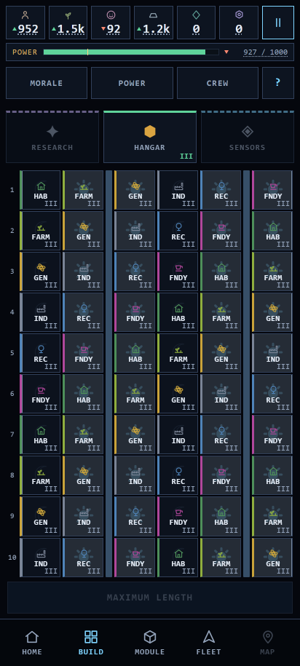
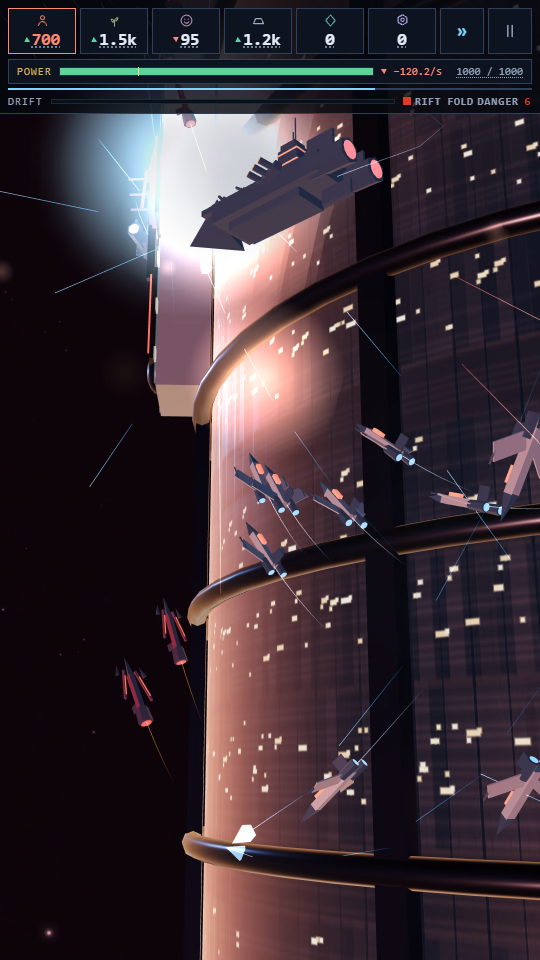
You steer a half-built colony away from a dying star. Tap a plot to build, hold it to see what it affects, extend the hull ring by ring, and grow a crew from a few dozen toward a thousand. Light is the core mechanic: two window strips run the length of the drum, so farms want the sun, generators take the dark, and every building has an opinion about its neighbours.
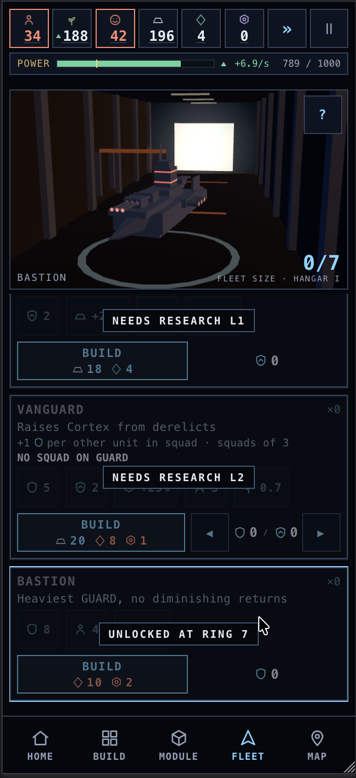
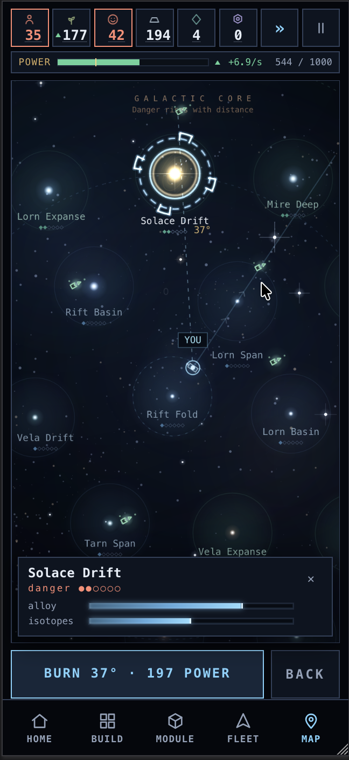
Between builds you plot a heading on a star chart where danger rises with distance from home, send escorted squads to salvage wrecks, and keep guard ships back for raids that play out live around the hull. Nothing is instant, and time keeps moving while you decide.
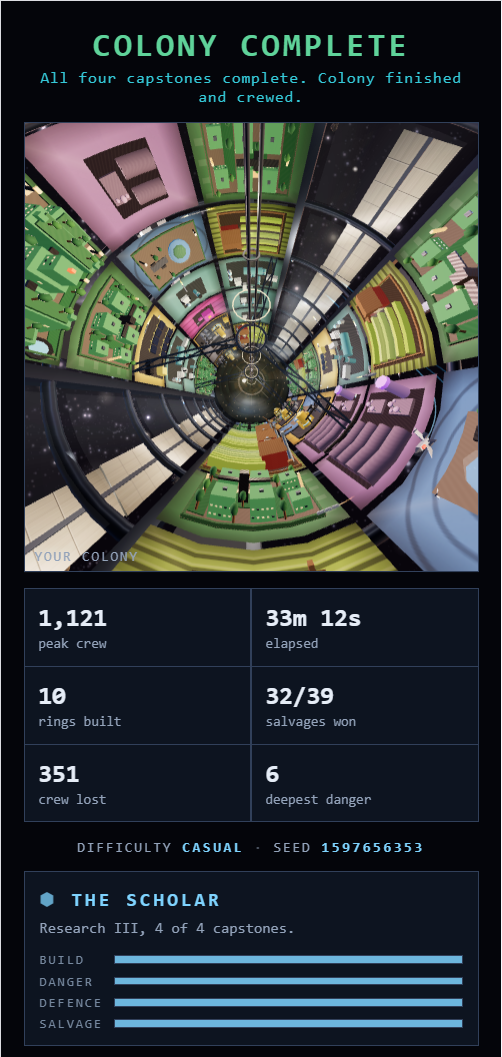
You win with 1,000 crew and four capstone projects. You lose below twelve crew. Three difficulties, a tutorial that teaches by doing, and a run of about thirty minutes.
How we built it
Vanilla JavaScript and Three.js. Every texture, mesh, painting and sound is generated in code at load, so the game is one readable HTML file plus the library: 2.95 MB, fully offline.
The code is split into numbered layers that may only import downward, and nothing below the rendering layer may touch the DOM, the clock or Math.random. That lets the whole economy run headless in Node: hundreds of bot runs after every balance change, and a headless browser driving the real game with real taps. Every decision went into a running build log as it was made, including the ones we later reversed.
Challenges we ran into
- Making every system pull on the others. Each system balanced fine alone and meant nothing together: the first fleet moved the win rate by roughly zero. What connected them was treating crew as both the goal and the currency. Crew eats food from sunlit farms, draws power from the dark, grows on the morale of its neighbours, and is what expeditions spend and raids kill. Once power became the skill gate and every building had an opinion about its neighbours, placement and defence started to matter.
- Making the UI usable on a phone-width screen. Every screen wanted more room than a 384-pixel-wide portrait frame has. One shared resource header, a star card you summon by tapping instead of a permanent panel, banners instead of full-screen popups after the first one, and a flat BUILD grid as the real management surface, with 3D as the place you watch the consequences.
- Phones lie differently than desktops. Taps that worked on a desktop did nothing on a touchscreen, and one shader broke only on a Galaxy S24. Test on the device early.
Accomplishments that we're proud of
- A full 3D colony sim, inside and out, in a single offline file.
- The interior view: you stand on the ground and the land curves up and over you through a 120-degree lens.
- A hull that tells the truth. Windows light with crew, the hangar grows with the fleet, the far cap fills with a town, and a power failure makes the whole drum stutter.
- Raids as live battles, with capital ships that hold station and turrets that track.
- Gates that catch what no screenshot can, like a button that paints perfectly and cannot be tapped.
What we learned
- Measure before tuning. Almost every obvious fix moved nothing.
- Bots are blind to anything no bot does. Playtesters find in ten minutes what a day of reasoning misses.
- Write down every decision that looks like a bug but isn't, or the next session will fix it.
- Constraints are a design tool. No assets and no network pushed us into procedural everything, and the game is smaller for it.
What's next for DRIFT
- More play-testing on mid-range phones.
- A real difficulty curve for the safe playstyles, which still win too easily.
- Policies and factions that shape morale, more modules and colony sizes, and a story where the deep-space link opens trade and war with AI colonies.


Log in or sign up for Devpost to join the conversation.