What is Drift Ink?
Drift Ink is a hypothetical, speculative design concept — an imaginary tool built to ask a serious question: What if your body could tell you something your brain has always ignored?
It's a wearable tattoo system that visualizes your vestibular sense — the internal balance system that keeps you upright, oriented, and moving through space — in real time, through color-shifting ink embedded in your skin.
This is not a product you can buy. It's a vision of where body-computing could go.
The Problem We're Solving
Your vestibular system is running right now. It tracks every tilt of your head, every micro-shift in your posture, every acceleration your body makes through space. It processes six simultaneous data streams at all times:
\( \text{DOF} = {a_x, a_y, a_z, \omega_x, \omega_y, \omega_z} \)
And yet — you have no idea what it's telling you.
In a world full of heart rate monitors, sleep trackers, and step counters, the sense that literally keeps you alive and balanced has received almost zero design attention. We can visualize our heart. We can track our sleep. But we cannot see our balance.
That gap is both strange and consequential. Vestibular dysfunction affects millions — through vertigo, chronic dizziness, neurological conditions, and aging. Physical therapists work with balance disorders every day using tools that are clinical, cold, and disconnected from lived experience.
Who This Is For
- People living with vestibular disorders — vertigo, chronic dizziness, labyrinthitis — who have no way to perceive or communicate what their body is doing
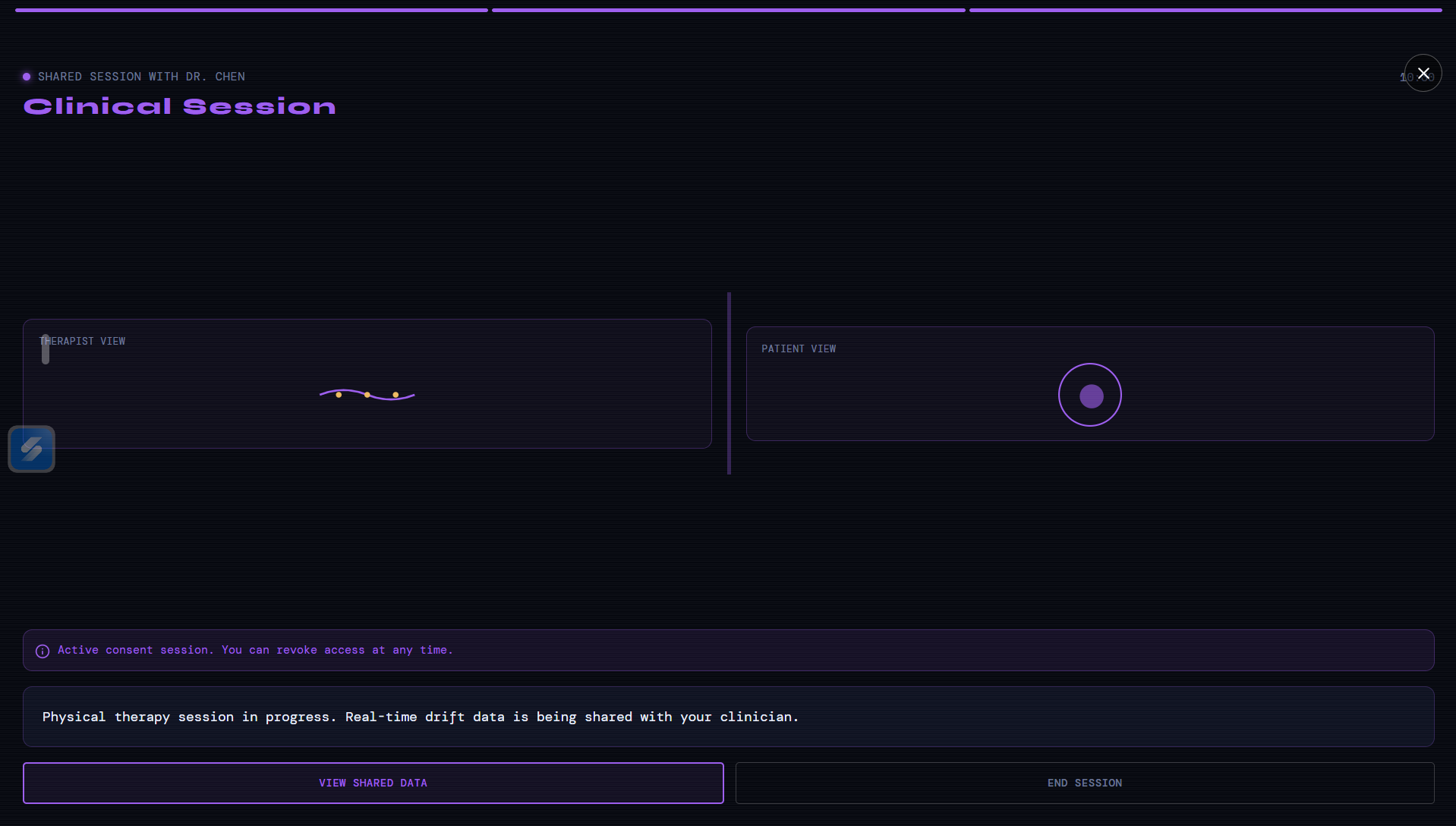
- Physical therapists and clinicians who work with balance patients and need richer real-time data
- Anyone curious about their own body — the quantified-self community that has never had a tool for this particular sense
- Designers and researchers thinking about the future of human-computer interfaces beyond screens
How We're Solving It
We designed a three-layer information system to translate raw vestibular data into something a human can actually use — without being overwhelmed.
The core idea: not everything needs to be a number.
$$\text{Cognitive Load} = \frac{\text{Information Density}}{\text{Contextual Relevance} \times \text{User Intent}}$$
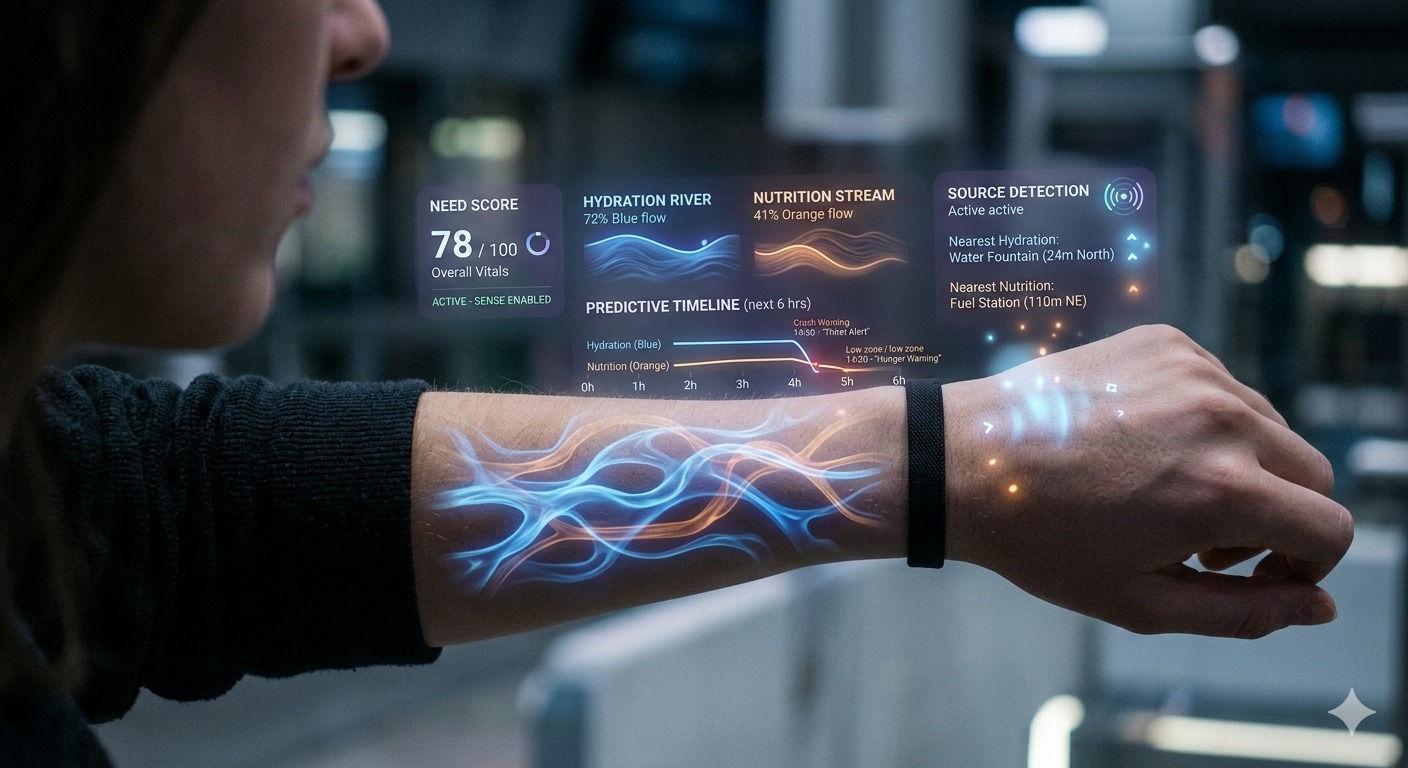
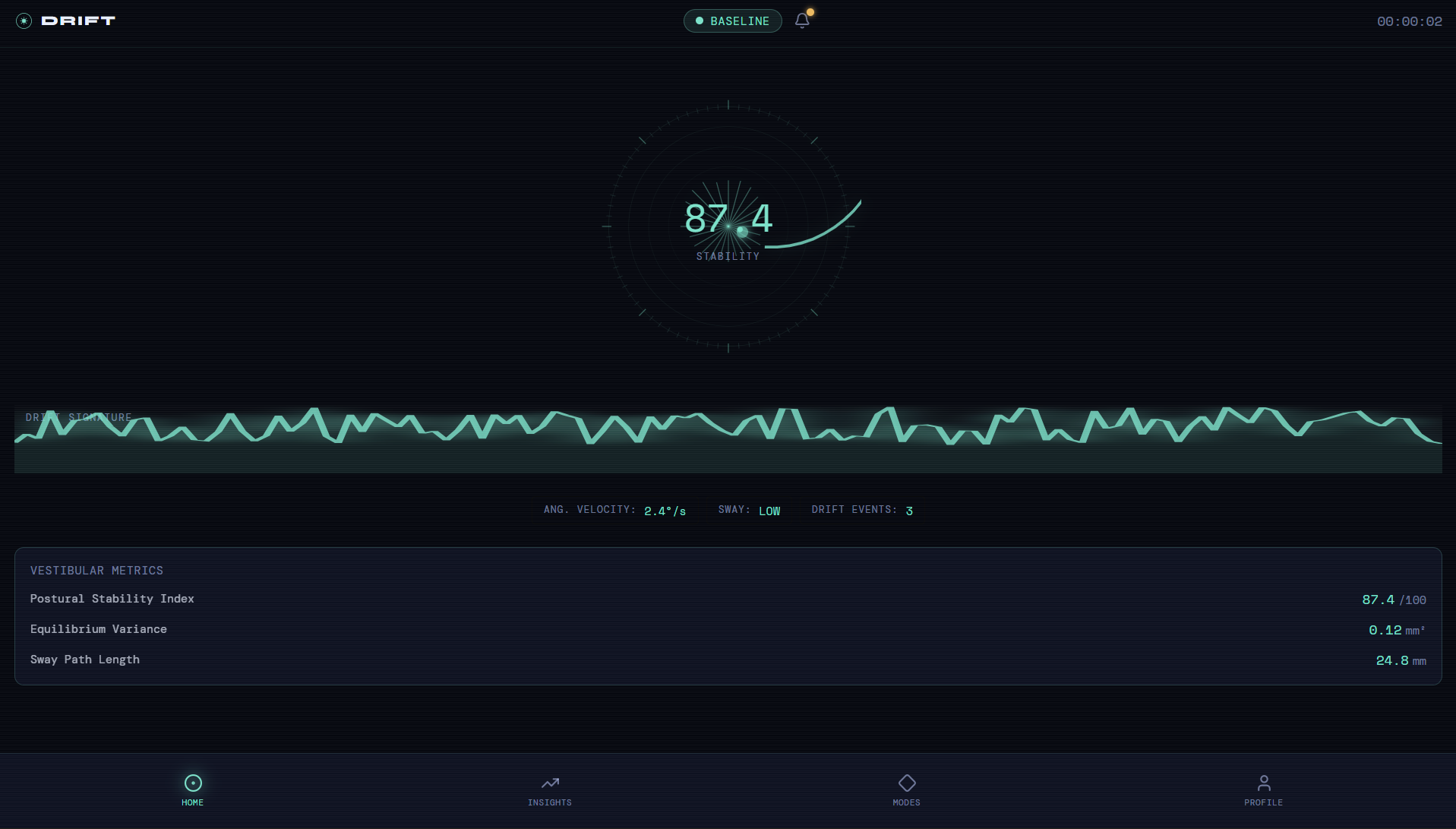
Layer 1 — The Tattoo (always on) Color only. A 0.3-second glance tells you your current drift state. No screen. No notification. Just ink responding to your body.
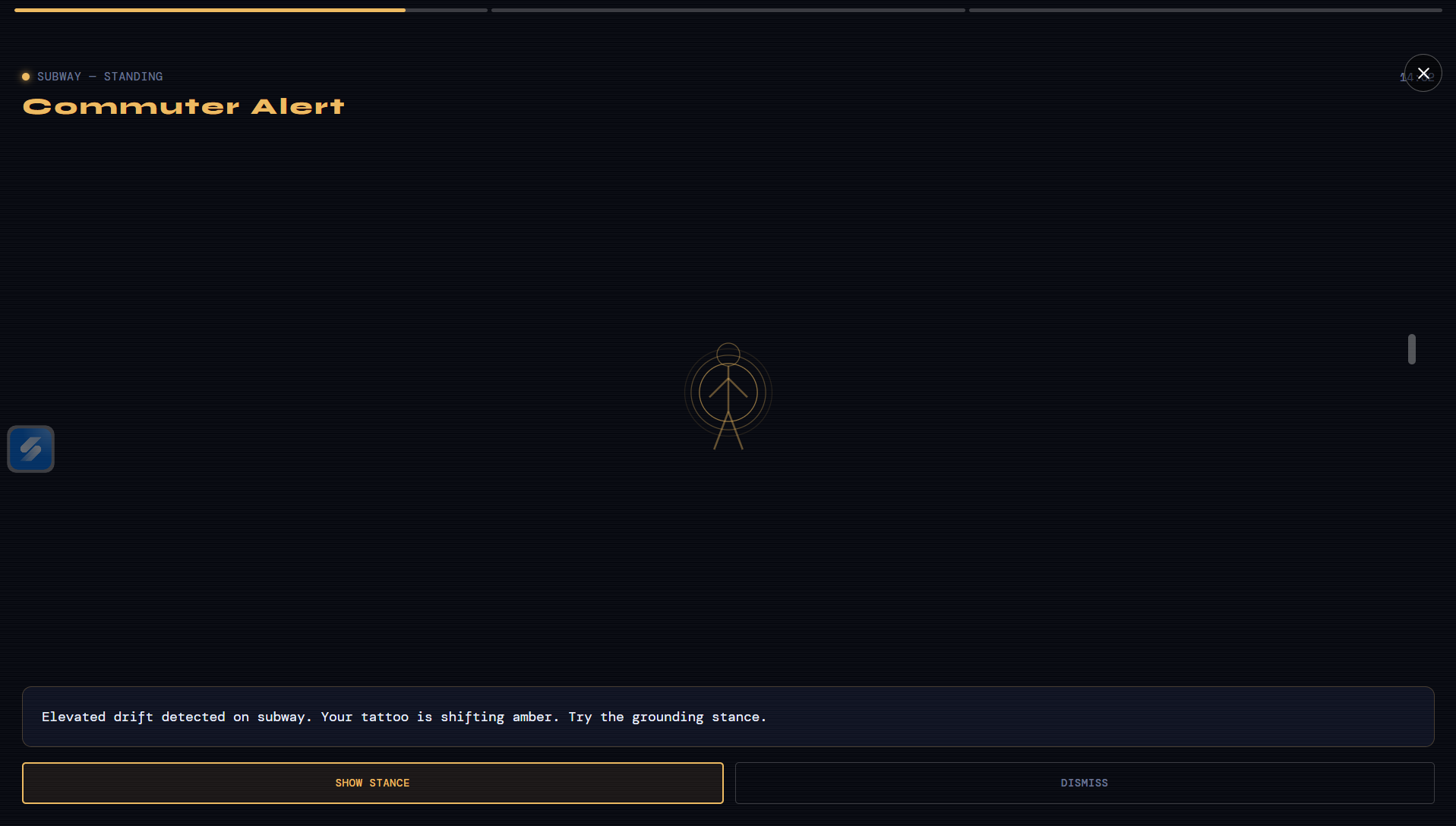
Layer 2 — Notification (need to know) Triggered only when something crosses a meaningful threshold — a significant vestibular shift, a balance anomaly, something worth your attention.
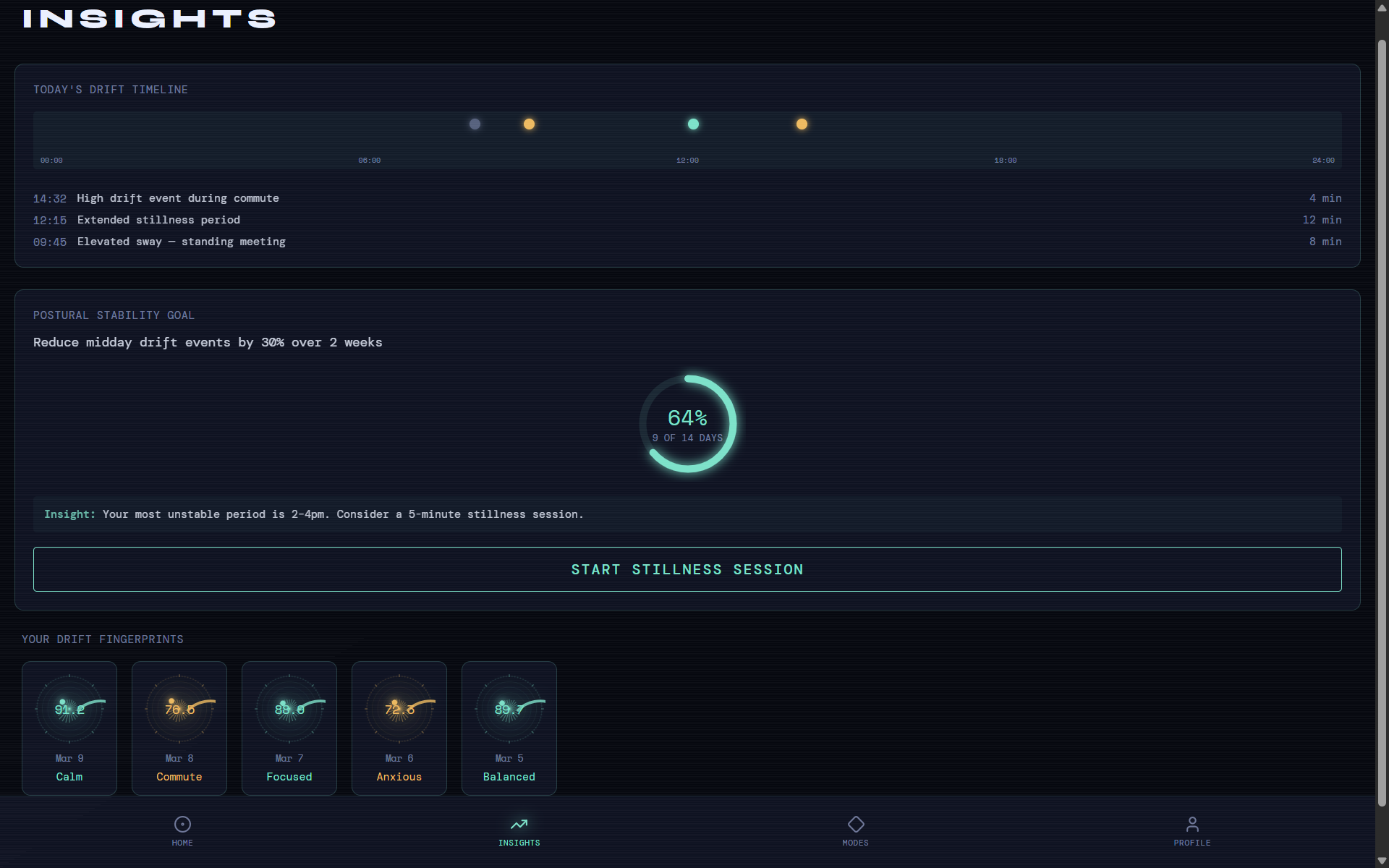
Layer 3 — Dashboard (on demand) Full data, full history, full clinical detail. Opened intentionally. Never pushed.
The logic: give the body the ambient signal, give the mind the option to go deeper.
Unusual Features We Designed
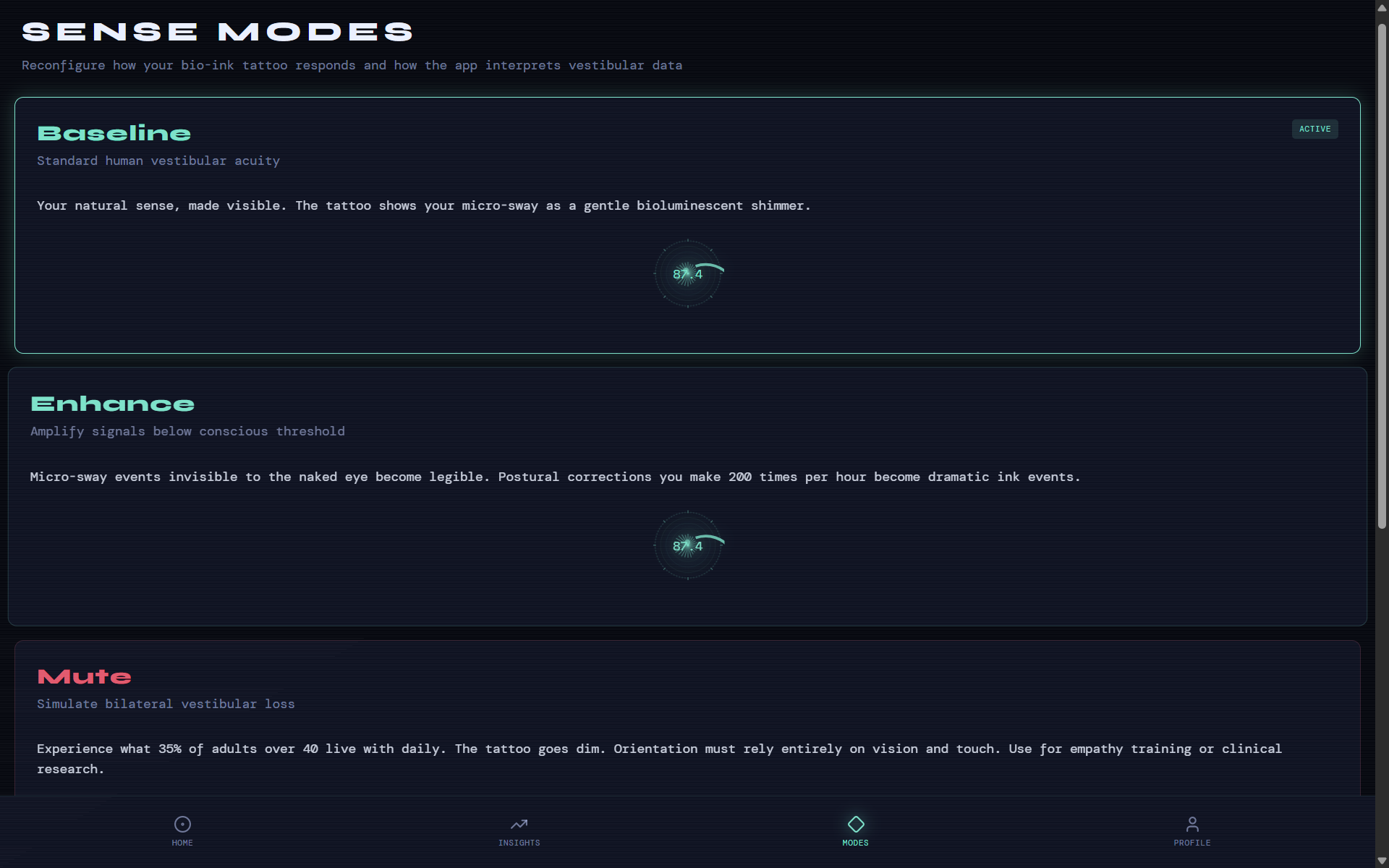
Avian Mode — Pigeons can sense magnetic fields and orient themselves using spatial perception humans don't have. We designed a mode that maps your vestibular data to a bird's spatial acuity — letting you experience balance awareness at a higher resolution than evolution gave you. It raises a genuinely strange question: what does it mean to feel a sense you were never built to have?
Mute Mode — A 10-minute simulation of vestibular loss. Designed not for fun, but for empathy. For a partner, a clinician, a skeptic — to understand what it actually feels like when that system fails. Hard limits: auto-disables after 10 minutes, blocked if movement above walking speed is detected, requires consent before every use.
The Core Tension We Wrestled With
A tattoo is permanent. Technology is not.
This created real design conflict. How do you build a system where the primary interface can't be updated, swapped, or returned?
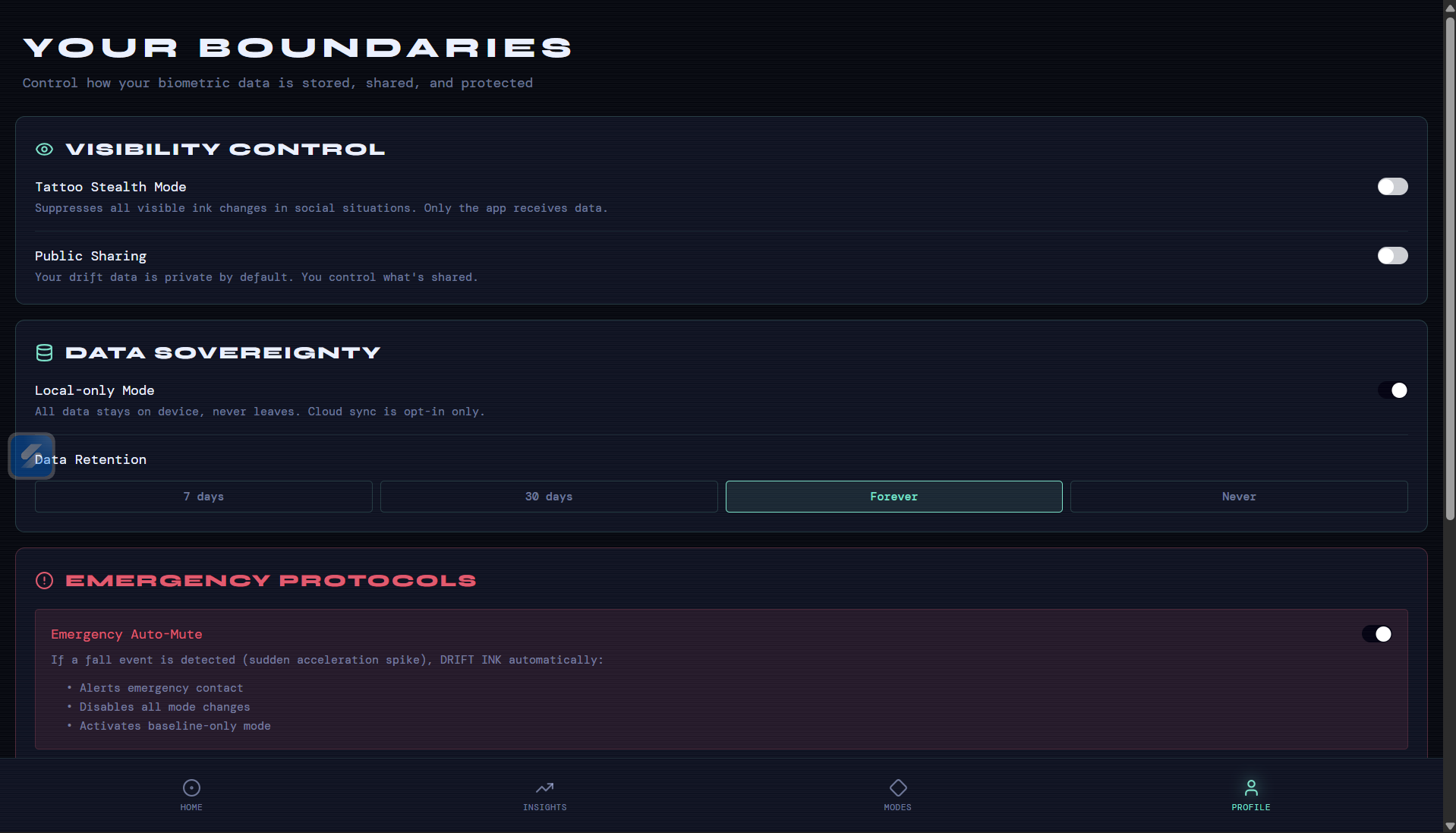
Our answer: separate the hardware from the meaning. The sensor array in the tattoo is fixed. But what that data means — how it's expressed, what thresholds matter, what colors map to what states — is entirely configurable through the app. The ink is hardware. The interpretation is software.
We set out to design without screens — but our prototype is a screen. We named this tension directly: Drift Ink is a bridge product. The app exists because today's world requires it. But every decision inside the app is designed to make the app need itself less over time.
What We Actually Built
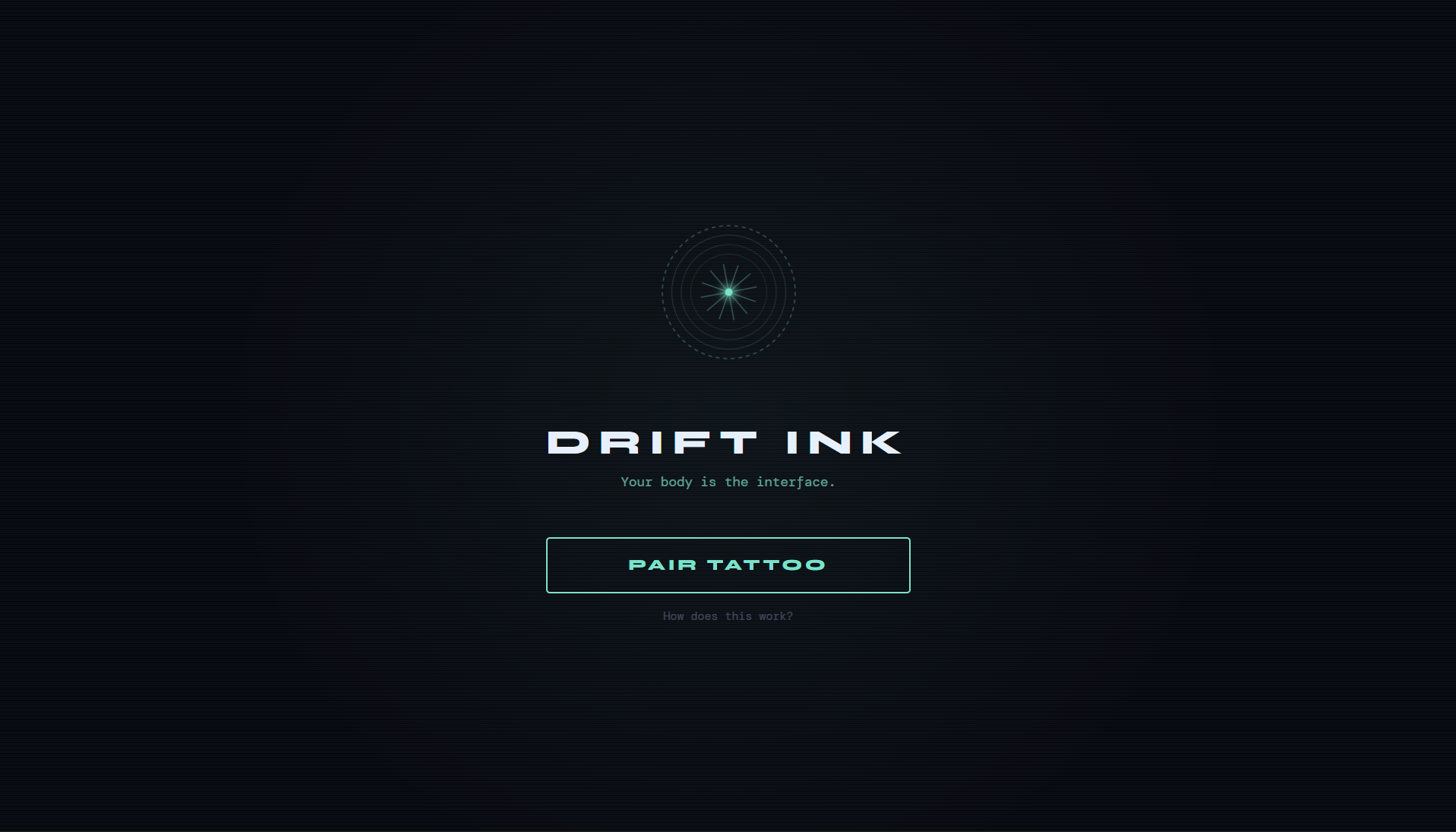
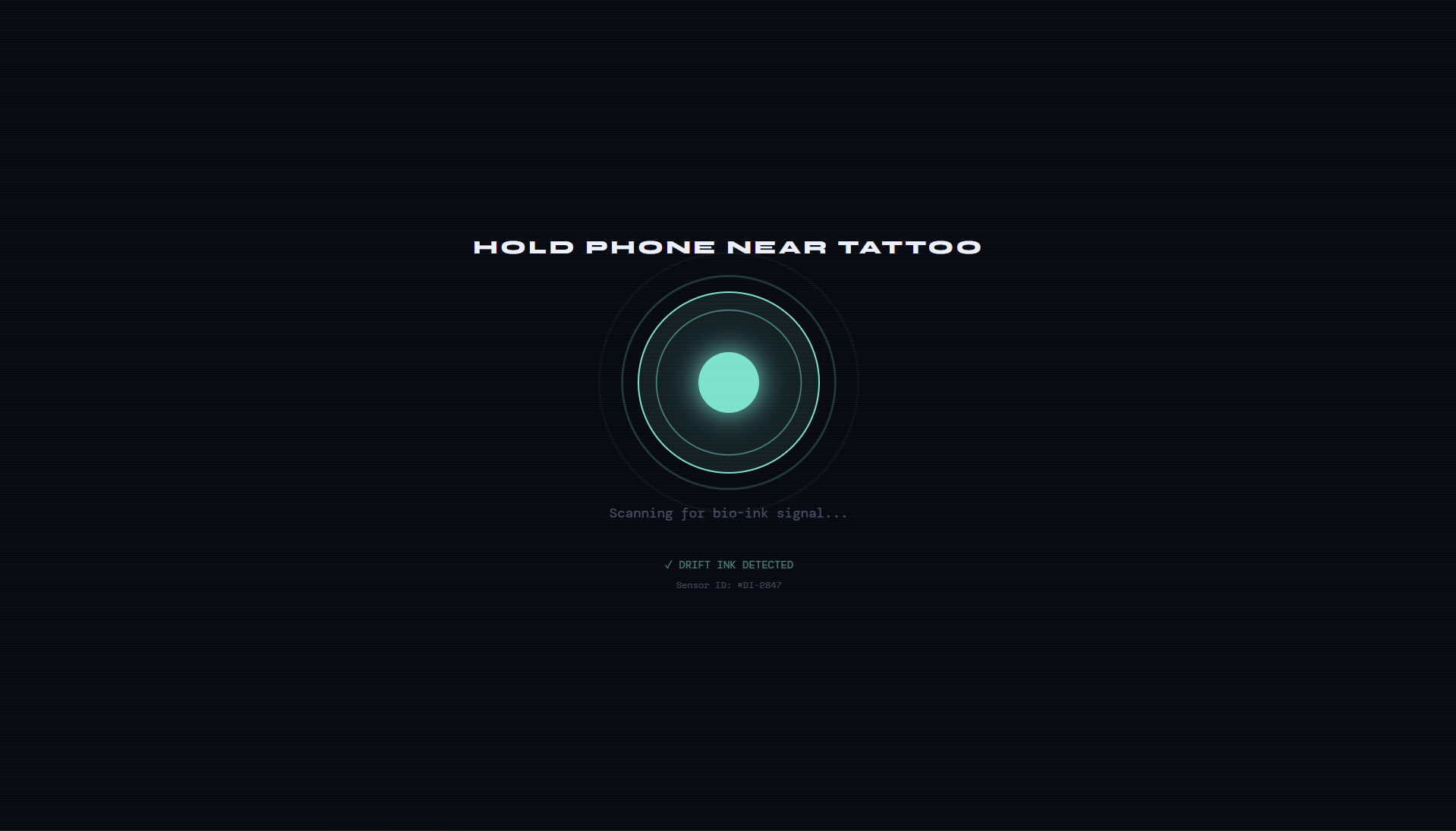
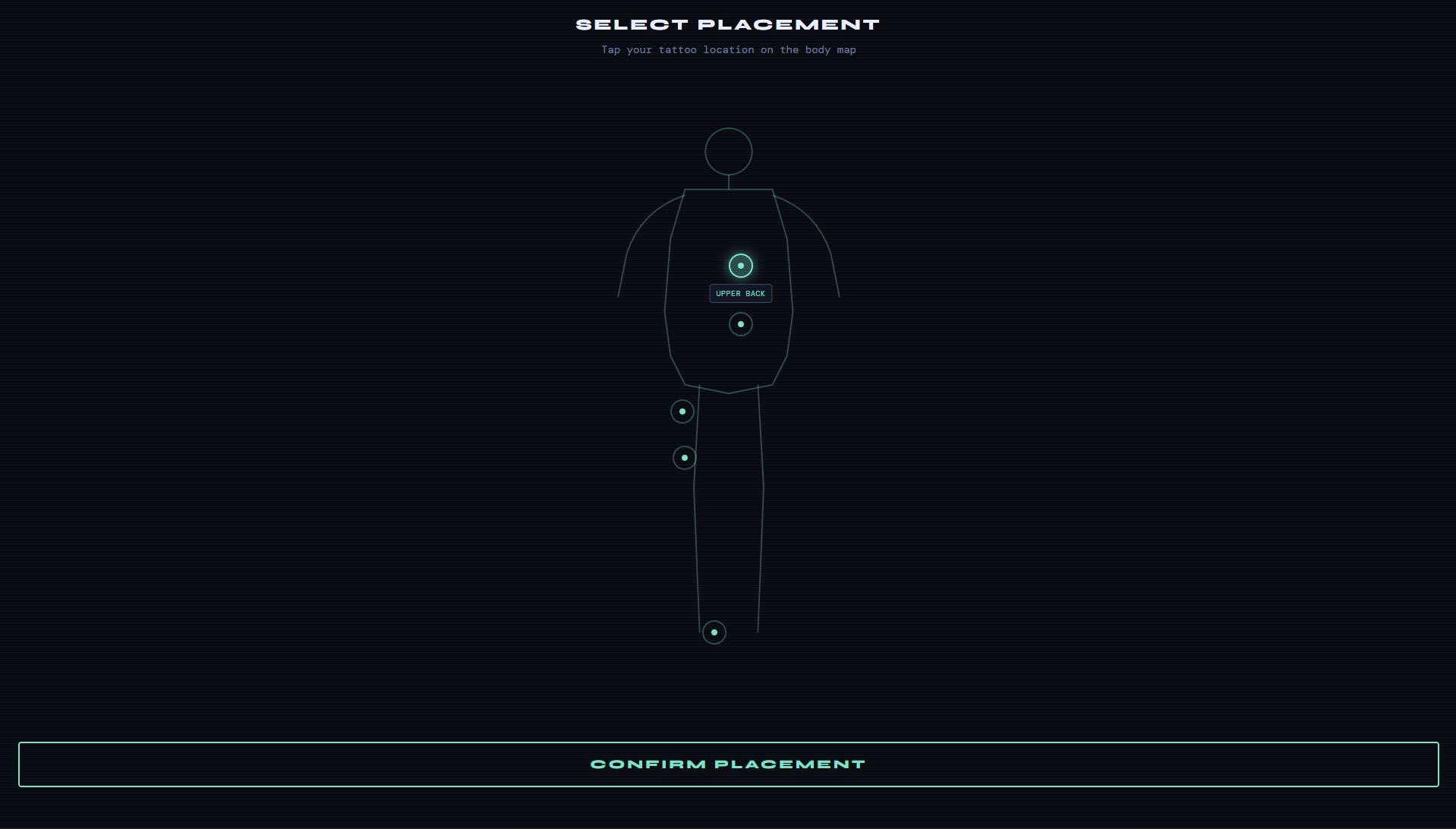
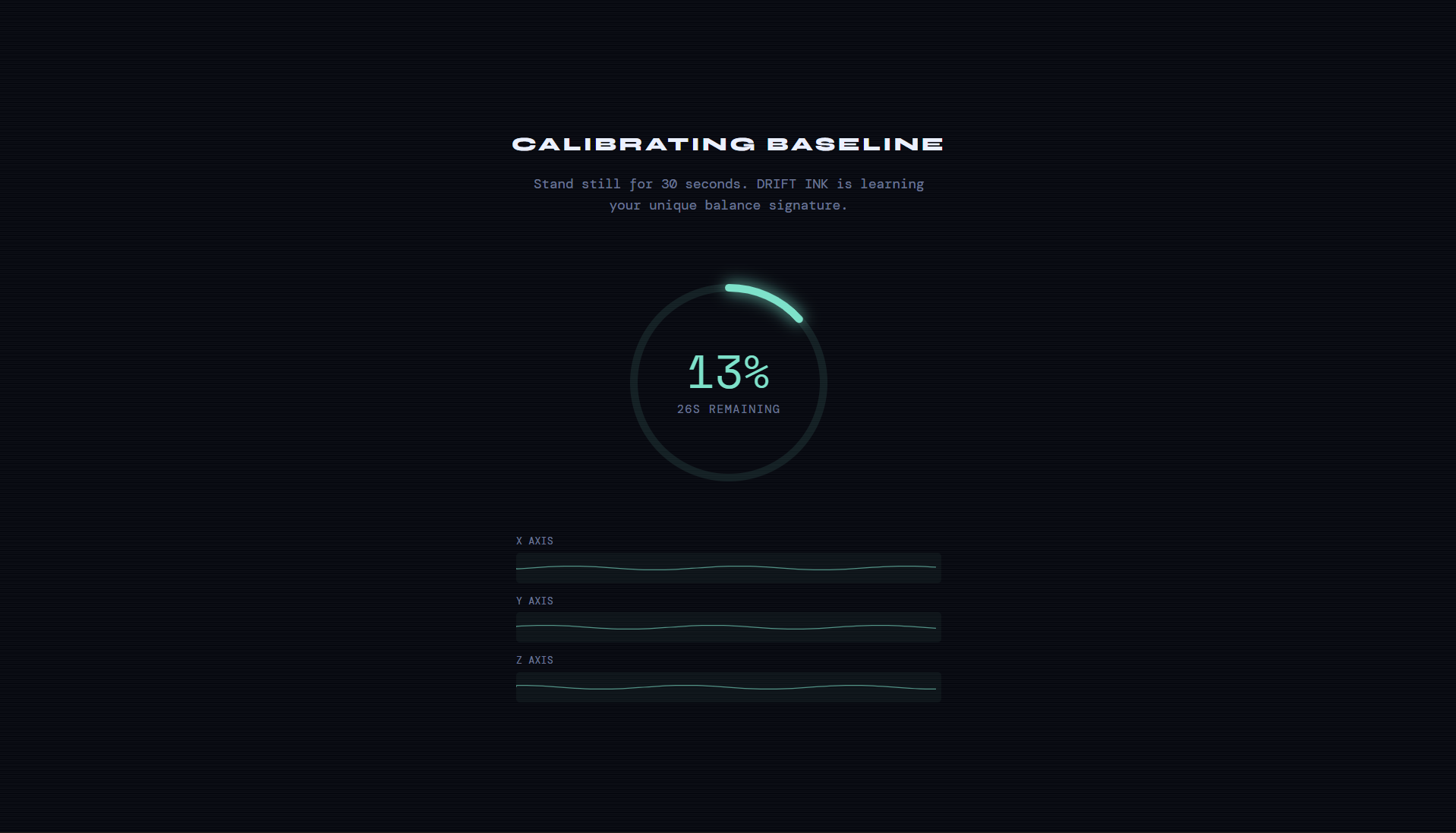
- An interactive web prototype with real-time canvas animations simulating live vestibular data
- Device orientation API integration — on a supported mobile device, tilting your phone actually moves the visualization. It's not fake.
- An presentation deck with a full design system
- A demo and tattoo visualizations rendered on skin
What This Project Argues
Drift Ink isn't just a product concept. It's a position.
The body is an interface. The next decade of computing isn't about better screens — it's about better skin.
The vestibular sense is invisible because no one has designed it to be otherwise. Not because it has to be. There are dozens of human sensing systems operating right now with zero design attention on them. That feels like the next frontier.
$$\lim_{\text{UI} \to 0} \text{Friction}(\text{body, environment}) = 0$$
The long vision: a world where your drift state is read directly by your environment. Your chair adjusts. Your car waits. Your home responds. No screen. No notification. No interface at all.
The body has always known. Now, so do you.
Built With
- figma


Log in or sign up for Devpost to join the conversation.