-
-
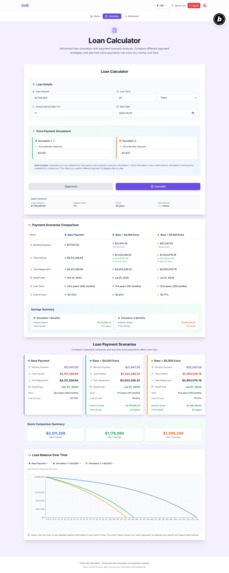
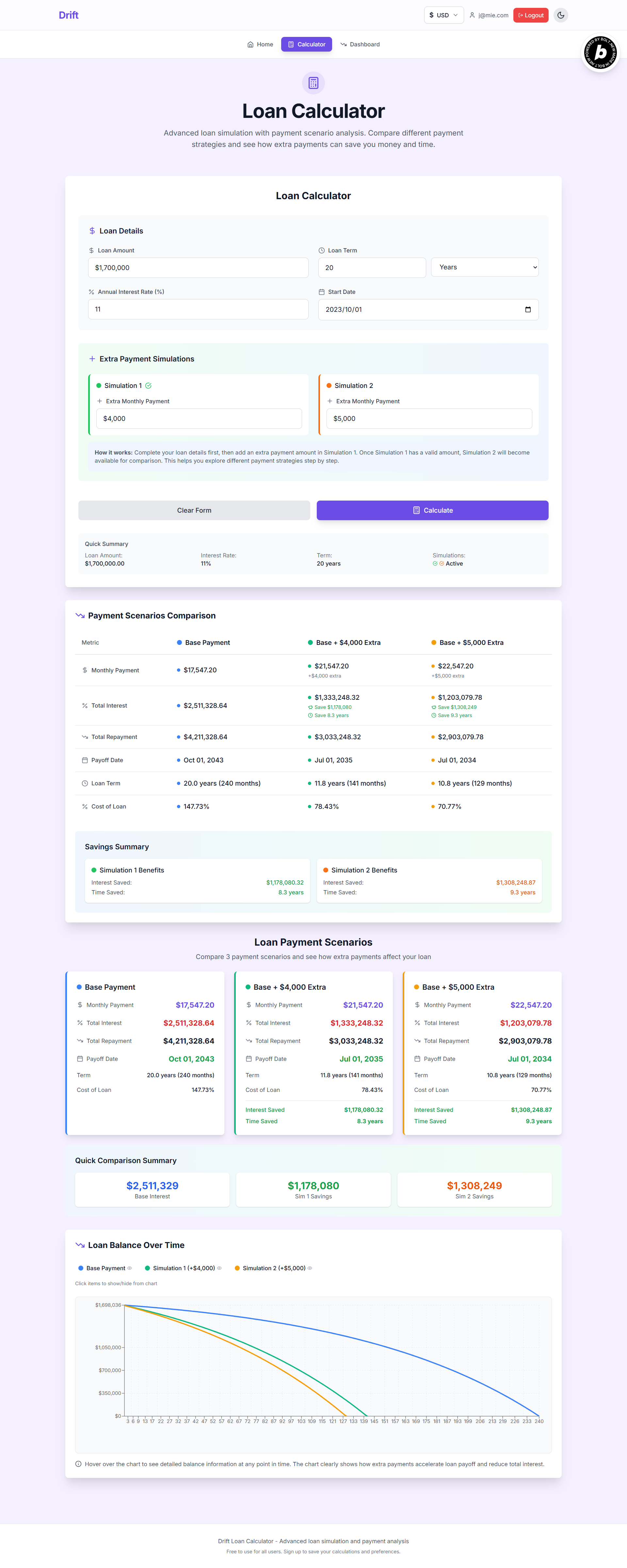
Standard Loan calculator with with static simulations. Not flexible
-
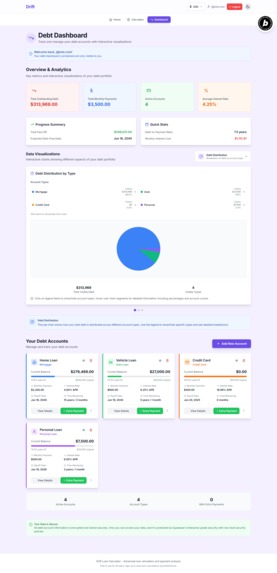
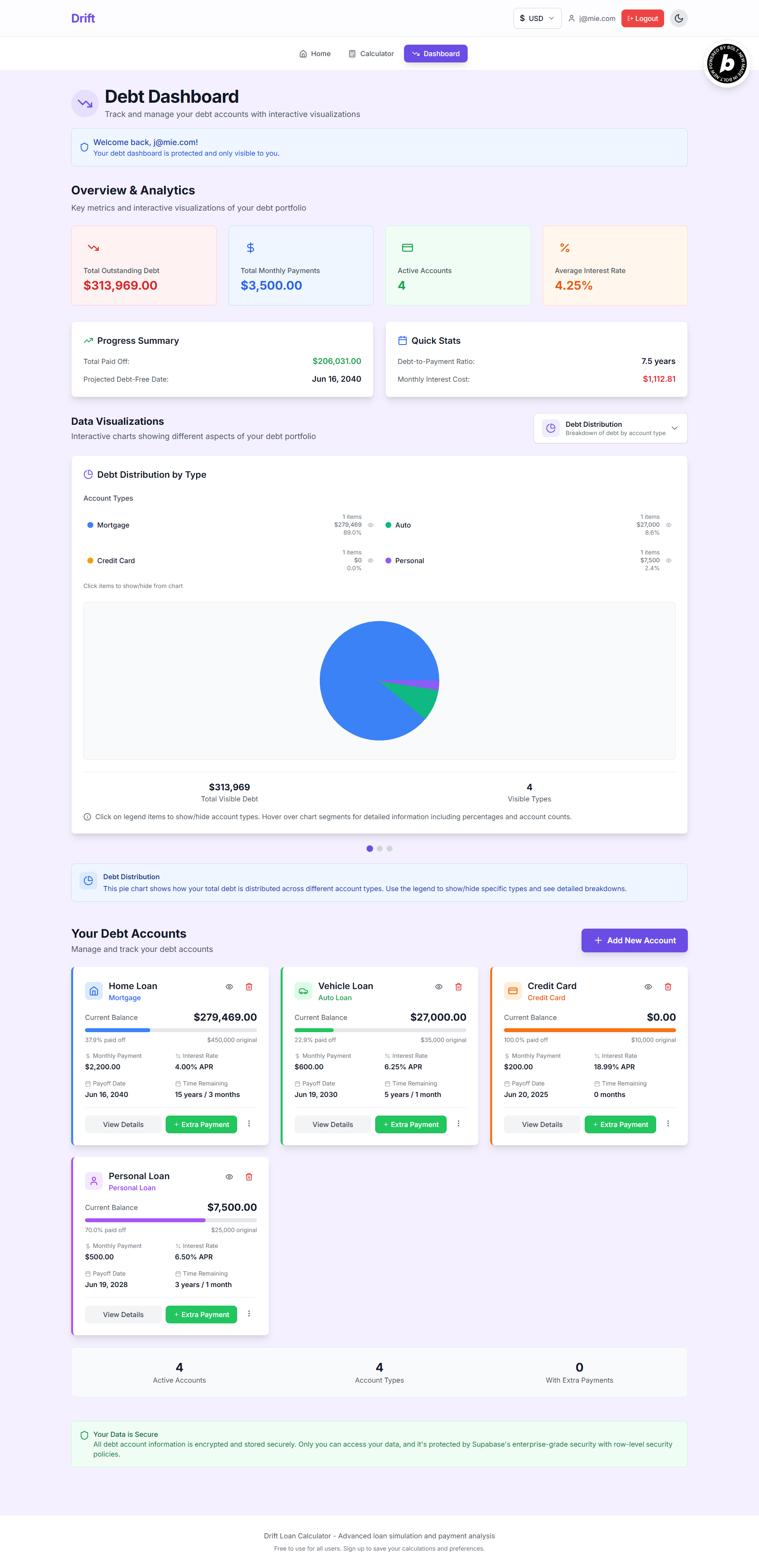
Det Dashboard, showing all debt accounts wiht payment info and visulizations
-
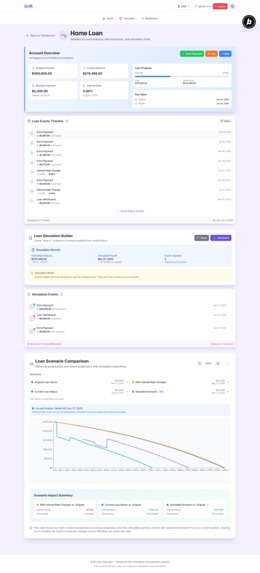
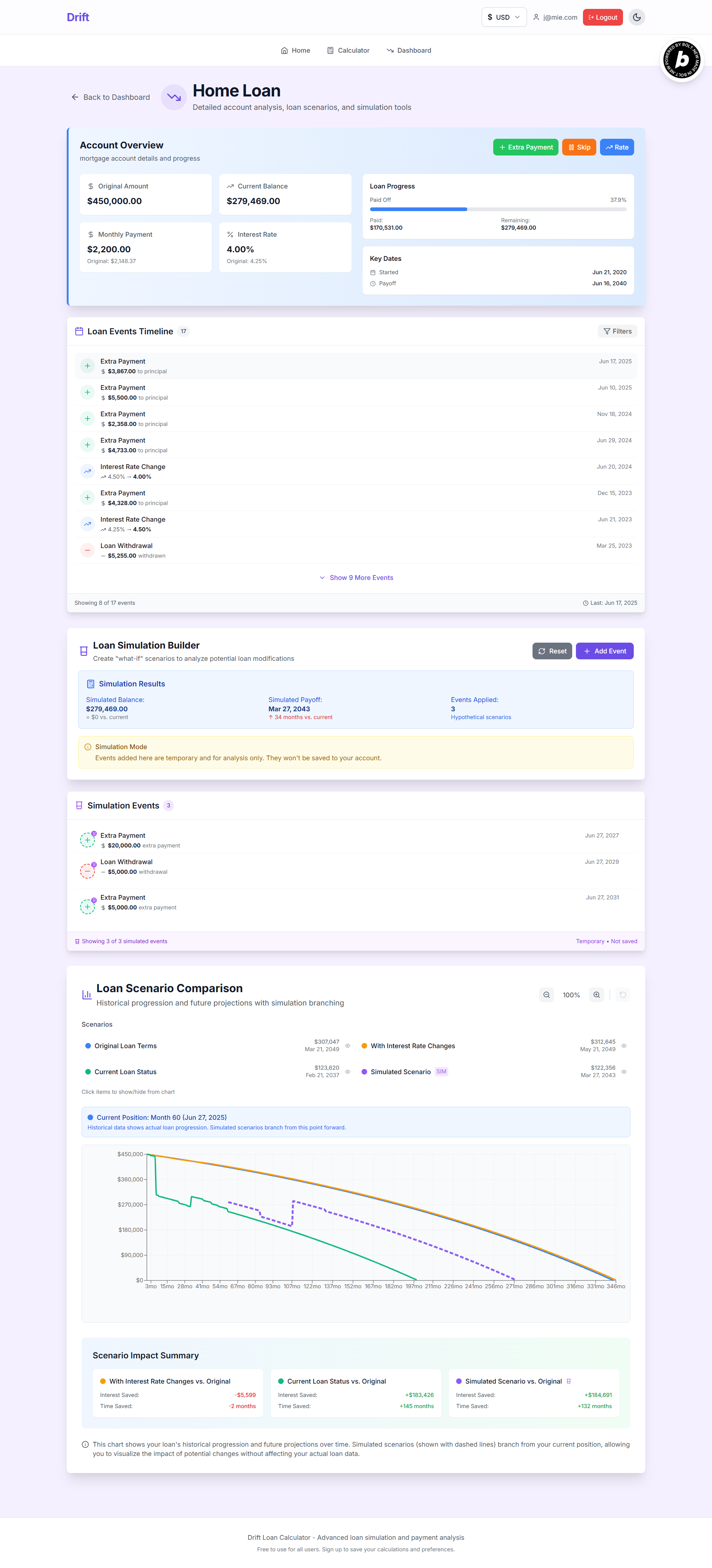
Debt Account; showing all logged events as well as visulizations comparing the original debt to the actual current state.
-
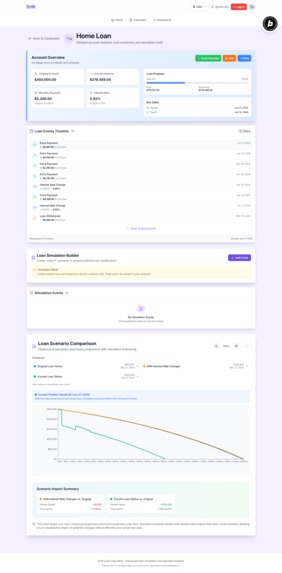
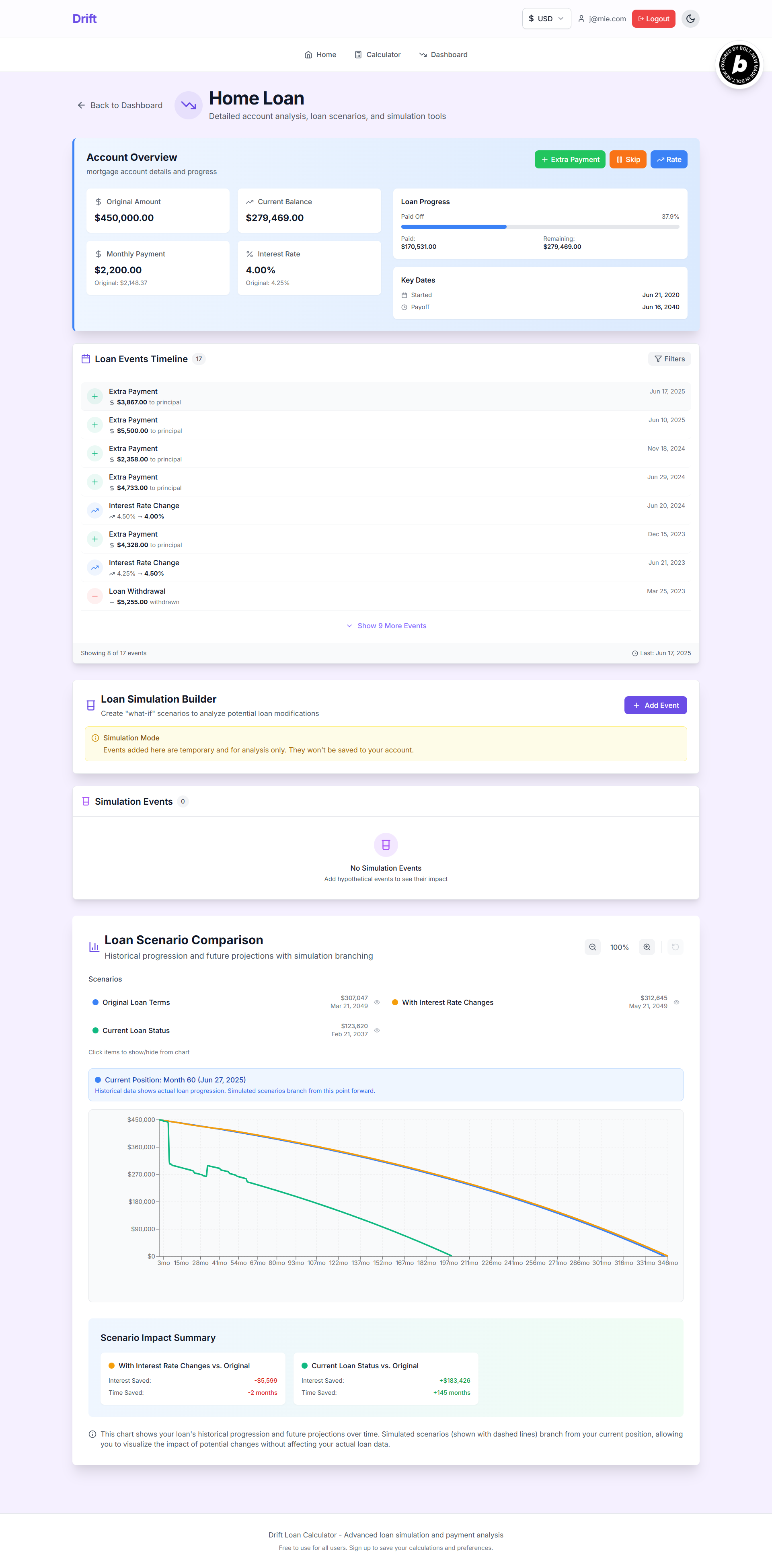
Show additional loan simulation of furture events, as well as visulation of current state vs simulation
💡 Inspiration
I was "inspired" (read: deeply annoyed) by the bond calculators I used when my wife and I bought our house. Those tools serve exactly one purpose: to show a simple burndown at today’s interest rate. But that’s not how my bond was going to behave. In reality, I added money regularly, withdrew from the bond when I needed to, and the interest rate changed from time-to-time. How did that affect my loan term or monthly payments? The tools couldn’t tell me. I needed something visual, grounded, and responsive to real life.
🚀 What it does
Drift is a finance productivity app that helps you simulate and track how your debt changes over time. You can:
- Model a loan and see how monthly payments evolve
- Record changes like extra payments, skipped months, or rate adjustments
- Run “what if” simulations to test different strategies — what if the interest rate jumps by 0.25%, or worse, 2.5%?
The goal is to make debt more visible, less abstract, and easier to manage.
🔧 How I built it
I leaned heavily into the AI-led approach—letting Bolt write most of the code while I focused on shaping the goals and behavior of the app. That’s the whole point of Bolt, after all.
The built-in documentation helped integrate tools like Supabase quickly. I also experimented with being intentionally vague in prompts to see how the AI interpreted high-level goals—and honestly, it worked. One early result was so spot-on, it changed how I thought about presenting Drift entirely. From that point on, the process felt more like creative collaboration than pure coding.
🧱 Challenges I ran into
Most of the challenges weren’t with the app idea itself—but with giving up control.
- As an engineer, it was hard not to jump in and restructure the code. Letting go of that instinct was necessary to move fast.
- Getting the AI to design UI the way I wanted took patience—sometimes it would add fields I didn’t ask for or ignore layout intent. I had to learn to prompt more precisely, and the Enhance Prompt feature helped a lot.
- Finally, figuring out how to model debt changes in a way that’s both accurate and intuitive was trickier than expected. Real-world debt is messy, but the UI still needs to feel smooth and approachable.
🏆 Accomplishments I’m proud of
- I shipped a working loan calculator prototype without getting bogged down in polish or tech debt.
- I gave AI more control than I normally would—and it actually helped accelerate the work.
- Simulations feel responsive and give useful feedback with minimal input.
- I finally got this idea off the ground. When the hackathon launched, I knew it was the push I needed—and I didn’t waste it.
🧠 What I learned
- Clarity of intent beats overly detailed specs—especially with AI.
- Debt is messy, but visualization brings clarity. People don’t need perfect models; they need to see what’s going on.
- You can ship real value without perfect code. Momentum matters more than maintainability in the early stages.
🔮 What’s next for Drift
- AI-generated repayment strategies tailored to your actual loan behavior
- Track changes to the prime interest rate and link them to flexible-rate debt accounts
- Enable a “Partner Mode” so you can share accounts with a spouse or business partner
- Long term: explore bank integrations for live debt syncing
Built With
- react
- react-charts
- react-router
- superbase
- tailwindcss
- vite

Log in or sign up for Devpost to join the conversation.