-
-
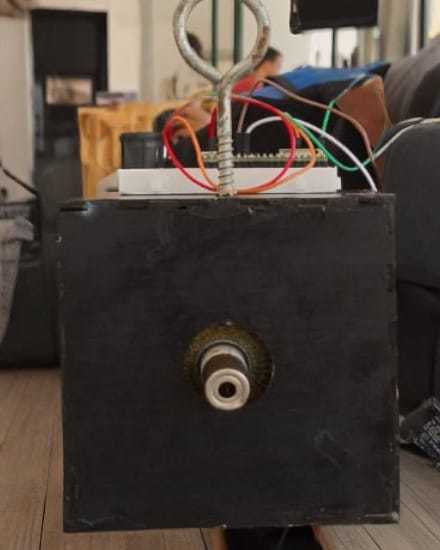
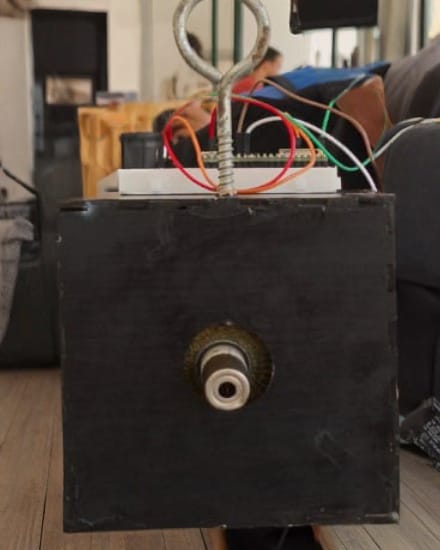
Porject hardware
When we look at asteroids like Impactor-2025, we see two stories: a potential global threat, but also an opportunity to learn, prepare, and even unlock resources that could one day support life beyond Earth. The Destructive Resonance Generator (DRG) is our team’s contribution to this challenge—a tool designed not only to simulate impact risks, but also to help us understand the hidden makeup of asteroids, the Moon, and other small bodies in space.
The idea is rooted in something simple: every material has a natural vibration, a frequency that makes it “sing.” DRG sends out safe waves—electromagnetic, ultrasonic, or sound—and listens to the echoes. With advanced AI and machine learning, it can translate these vibrations into meaningful insights: What is this rock made of? Is it metallic, stony, or icy? What lies beneath the surface? And how would it react if it collided with Earth?
By combining NASA’s NEO data (asteroid size, orbit, velocity) with USGS geological datasets (topography, seismic activity, tsunami zones), DRG builds simulations that go beyond abstract numbers. Users can interact with dynamic 2D and 3D visualizations, exploring what would happen if an asteroid were to strike a specific region: the size of the crater, the spread of seismic waves, the risk of tsunamis, or the impact of atmospheric changes. And in true Space Apps spirit, it’s not just for scientists—anyone can test “what-if” scenarios, try deflection strategies, or see how changing velocity by even a fraction could save lives.
What makes DRG powerful is its balance of rigor and accessibility. On one hand, it uses real physics—Fourier transforms, crater-scaling relationships, and impact energy equations. On the other, it simplifies complexity into clear, interactive visuals supported by tooltips and storytelling elements that guide users step by step. This makes it both a decision-support system for policymakers and an educational platform for the public.
Technically, DRG is compact (<1 kg), low power (<5 W), and even CubeSat-ready. It leverages Python for data processing, machine learning for classification and prediction, and web-based visualization tools for accessibility. It’s designed to be flexible—whether deployed in space to scout resources, or used on Earth to simulate asteroid impact scenarios and engage global audiences in planetary defense.
At its heart, DRG is about turning data into understanding. It’s about making sure that when the next Impactor-2025 comes our way, we’re not just tracking its orbit—we’re ready, informed, and able to act. By merging physics, AI, and human-centered design, DRG transforms the daunting challenge of asteroid impacts into something people can see, explore, and ultimately help solve.


Log in or sign up for Devpost to join the conversation.