-
-
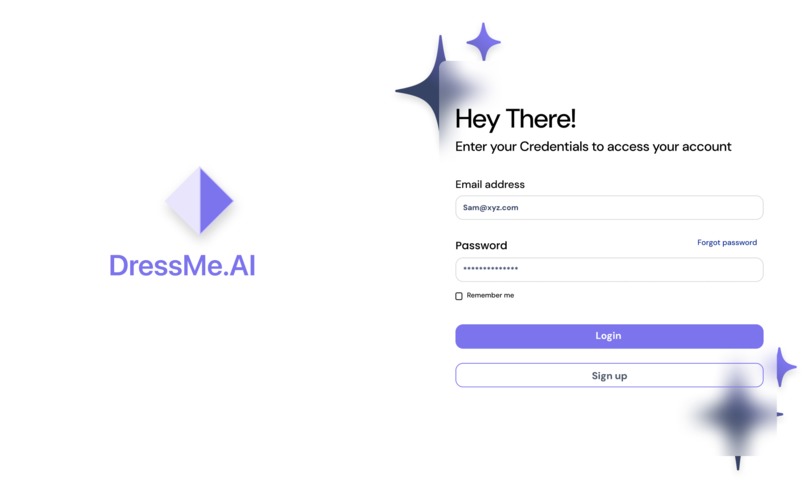
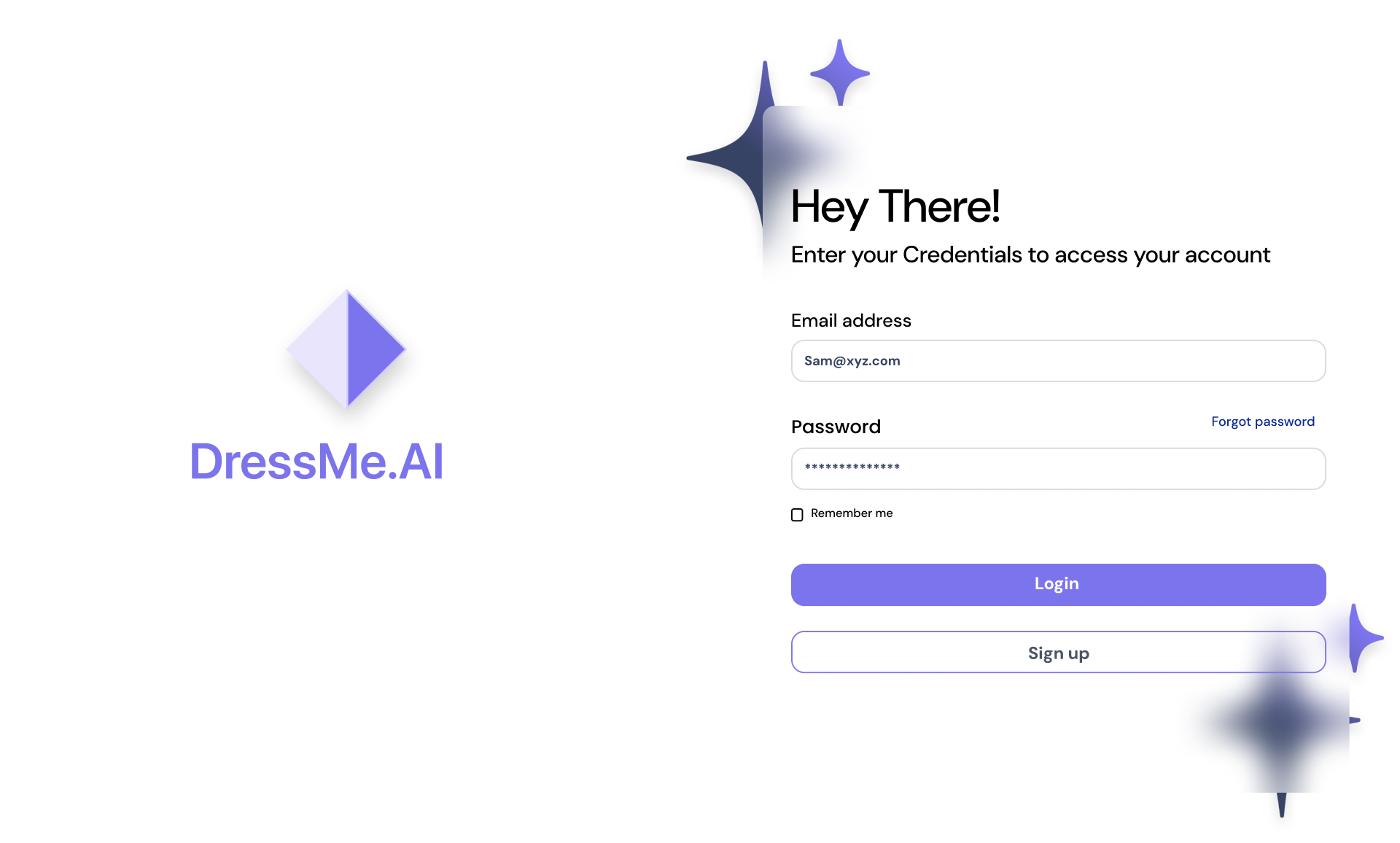
Login Page
-
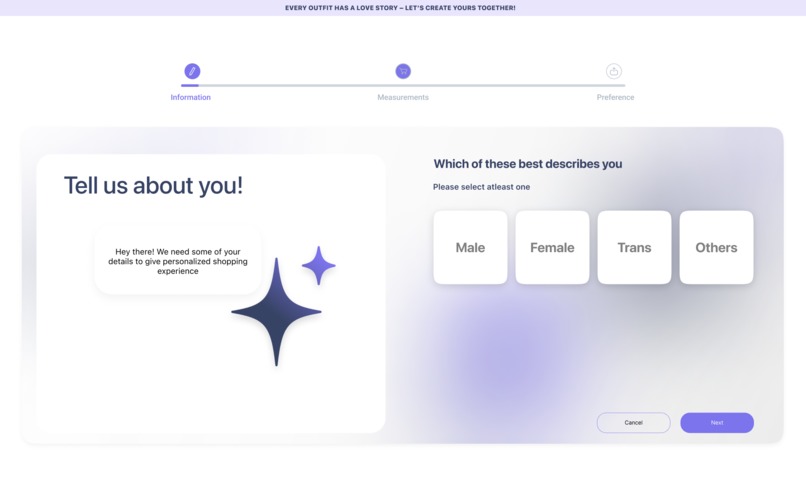
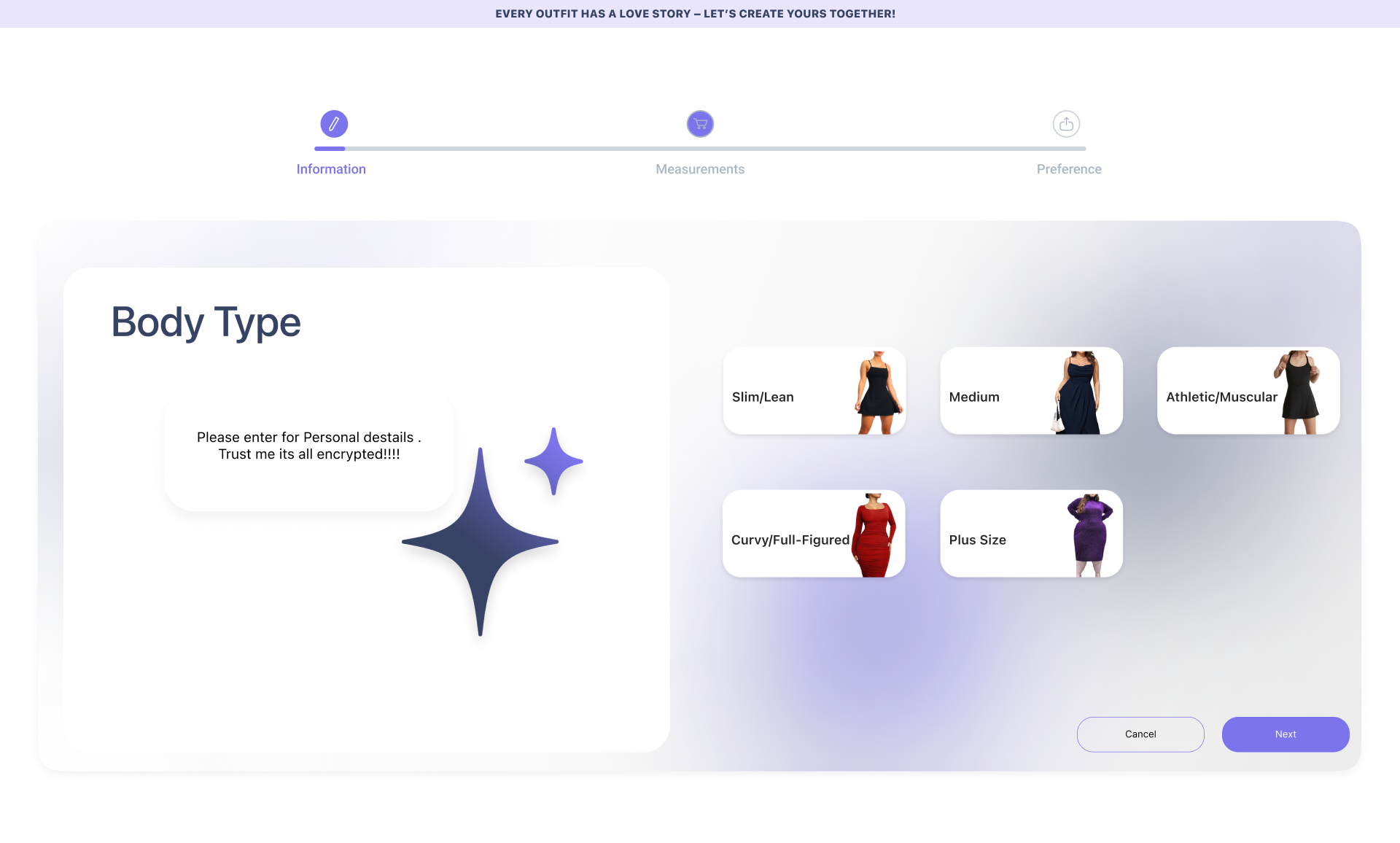
Preference Page 1
-
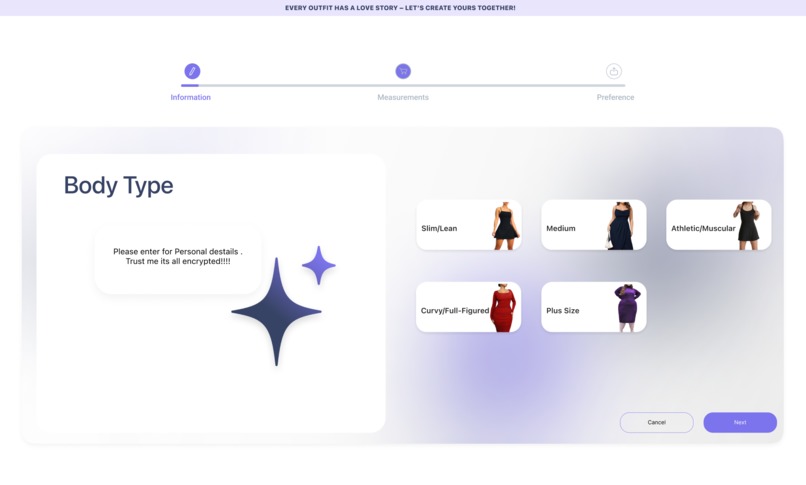
Preference Page 3
-
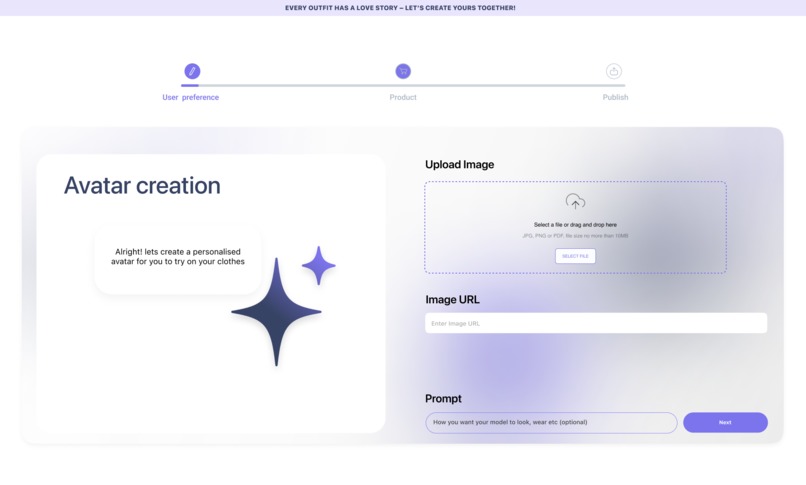
Preference Page 5
-
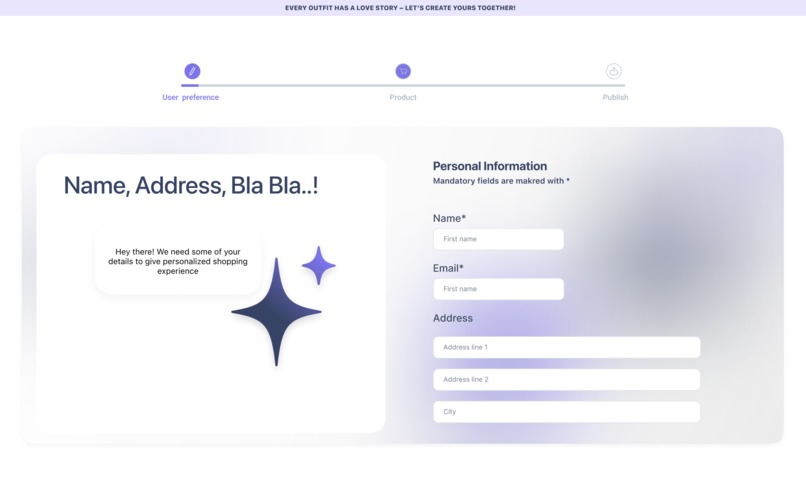
Preference Page 2
-
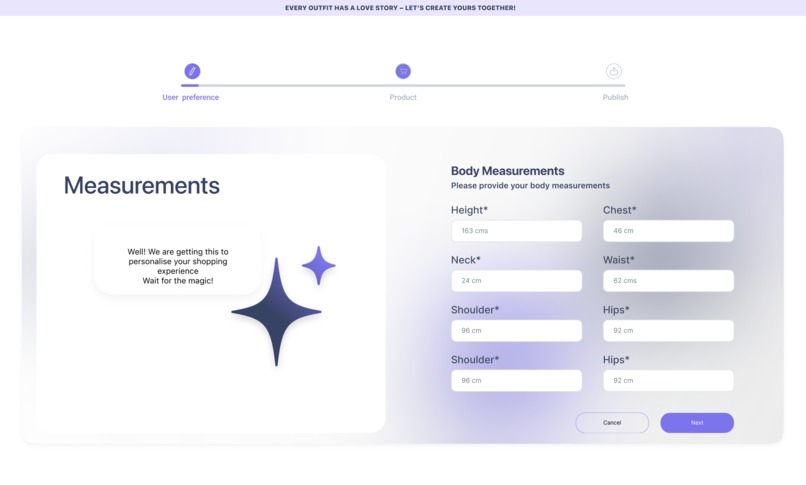
Preference Page 4



Inspiration
The inspiration behind DressMe.ai stems from a common challenge faced by online shoppers: uncertainty about how clothing will fit without trying it on. This often leads to hesitation in purchasing decisions, dissatisfaction due to ill-fitting items, and increased return rates, which are costly for both consumers and retailers. We envisioned a solution that leverages advanced technologies to bridge the gap between physical and online shopping experiences, providing users with a personalized, interactive, and confidence-boosting platform. What It Does
What it does
DressMe.ai is an innovative platform that revolutionizes the online clothing shopping experience by allowing users to virtually try on clothes and assess fit before making a purchase. It utilizes cutting-edge technologies to:
•    Create Personalized 3D Avatars: Users upload 2D images of themselves, which are transformed into detailed 3D models using Neural Radiance Fields (NeRF) and Local Radiance Fields (LERF).
•    Provide Realistic Virtual Try-Ons: Users can see how garments fit and drape on their 3D avatars from all angles, thanks to high-fidelity rendering.
•    Offer AI-Driven Recommendations: An AI-powered virtual shopping assistant, built with Large Language Models (LLaMA/GPT), provides personalized size and style suggestions.
•    Generate Customized Visualizations: Using Stable Diffusion, the platform produces photorealistic images of users wearing different outfits, including various colors and patterns.
How we built it
We wrote a python script that demonstrates proof of concept functionality for the UX our designer created. Figma Prototype to explain the concept and interaction flow
Challenges we ran into
We could not access any online retailer's data, so that made coding the proof of concept hard.
Accomplishments that we're proud of
Figuring out how to use the OpenAI API!
What we learned
Using OpenAI, different applications of Python, taking user input with Python
What's next for DressMe.ai
Connecting the UI shown in the video with the AI (being able to pass the user’s input on the website to ChatGPT) Returning the links to the user so they are actually visible. We get them printed in the terminal after running our program, but we need them available to the user. We also need a way to access Zara’s database. We coded a program that extracts images from a JSON string, but we don’t have JSON data from the Zara websites. We don’t have permission to access that.
Design-wise: • Augmented Reality (AR) Integration: Incorporate AR features to allow users to see virtual clothing overlaid on themselves in real-time using their device cameras. • Expand Retail Partnerships: Collaborate with more brands and retailers to offer a broader range of clothing options and exclusive virtual try-on experiences. • Enhance AI Capabilities: Continuously update our AI assistant with the latest advancements in LLMs for even more personalized and intuitive interactions. • User Community Features: Develop social features that enable users to share their virtual outfits, receive feedback, and engage with a community of shoppers. • Global Market Expansion: Localize the platform to cater to international markets by supporting multiple languages and accommodating regional sizing standards.
Built With
- openai
- python


Log in or sign up for Devpost to join the conversation.