-
-
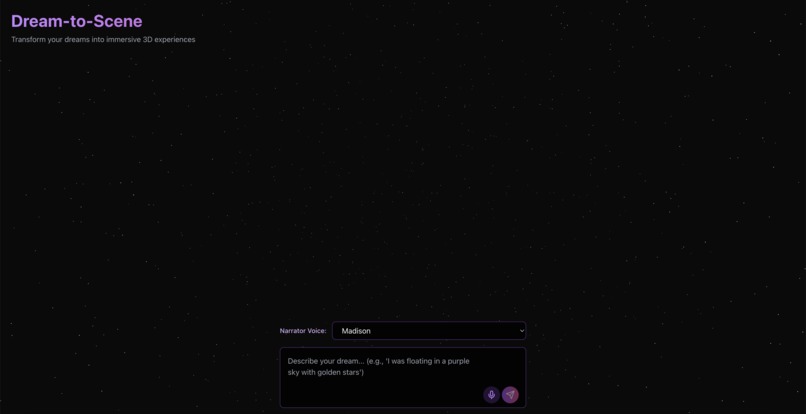
Start Page
-
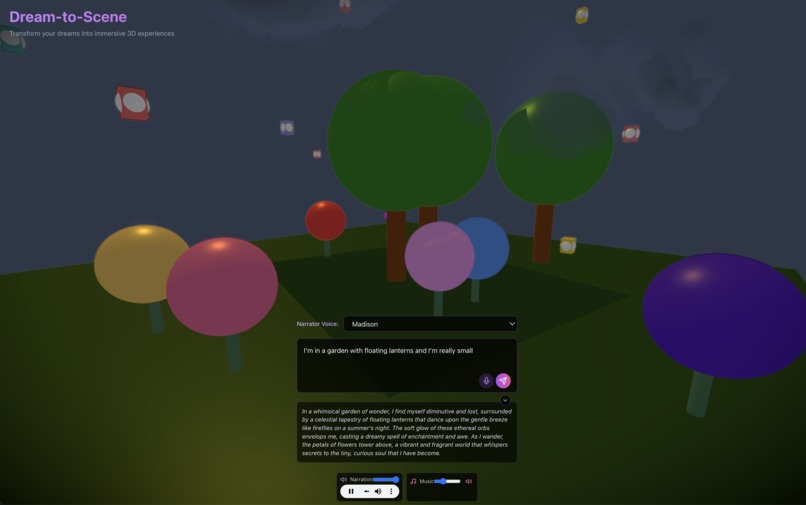
Dream generation
-
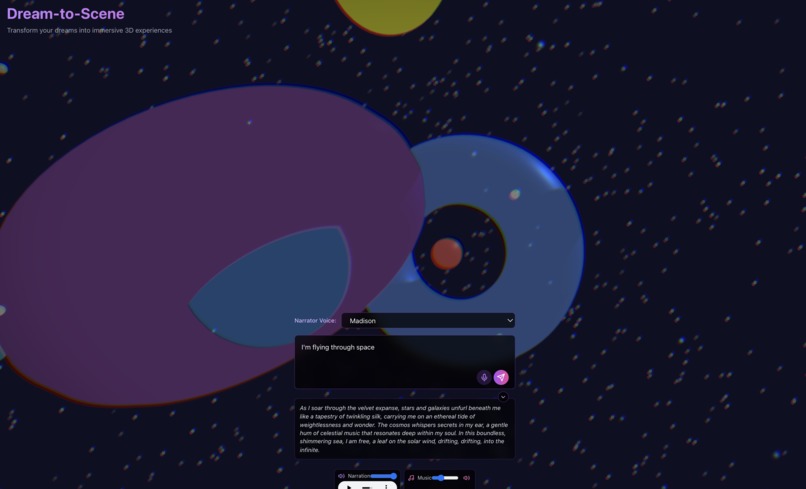
More dream generation
-
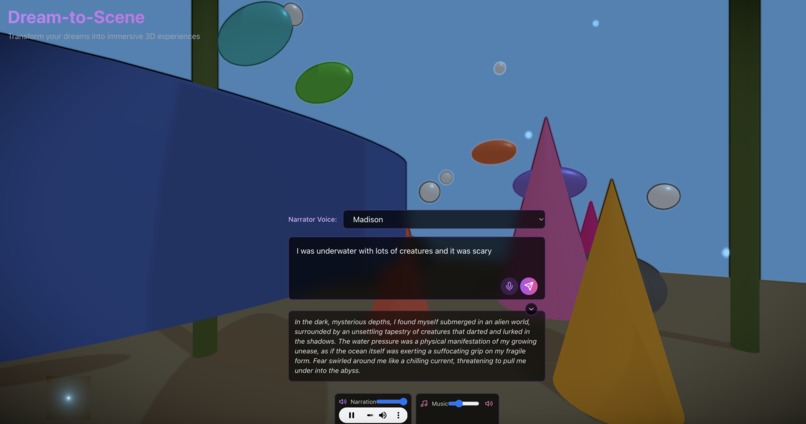
More dream generation
Inspiration
Have you ever woken up from a dream and wished you could step back inside it? Dreams often vanish the moment we open our eyes - vivid, emotional, but impossible to revisit. We wanted to capture that fleeting magic and turn it into something we could see and share.
DreamtoScene began as an exploration of how AI could translate the language of imagination into tangible 3D worlds. The idea was simple: type your dream, and watch it come alive.
What it does
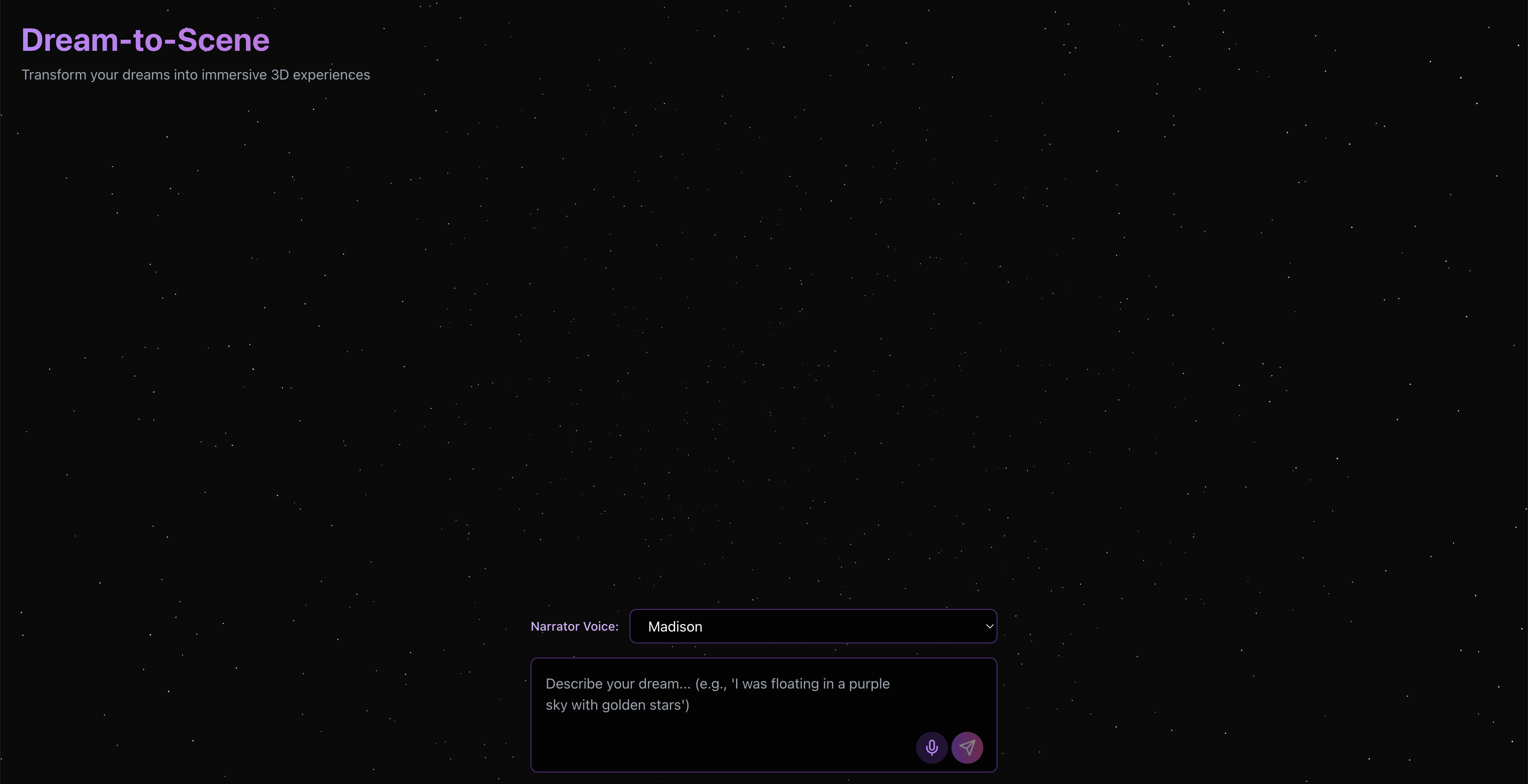
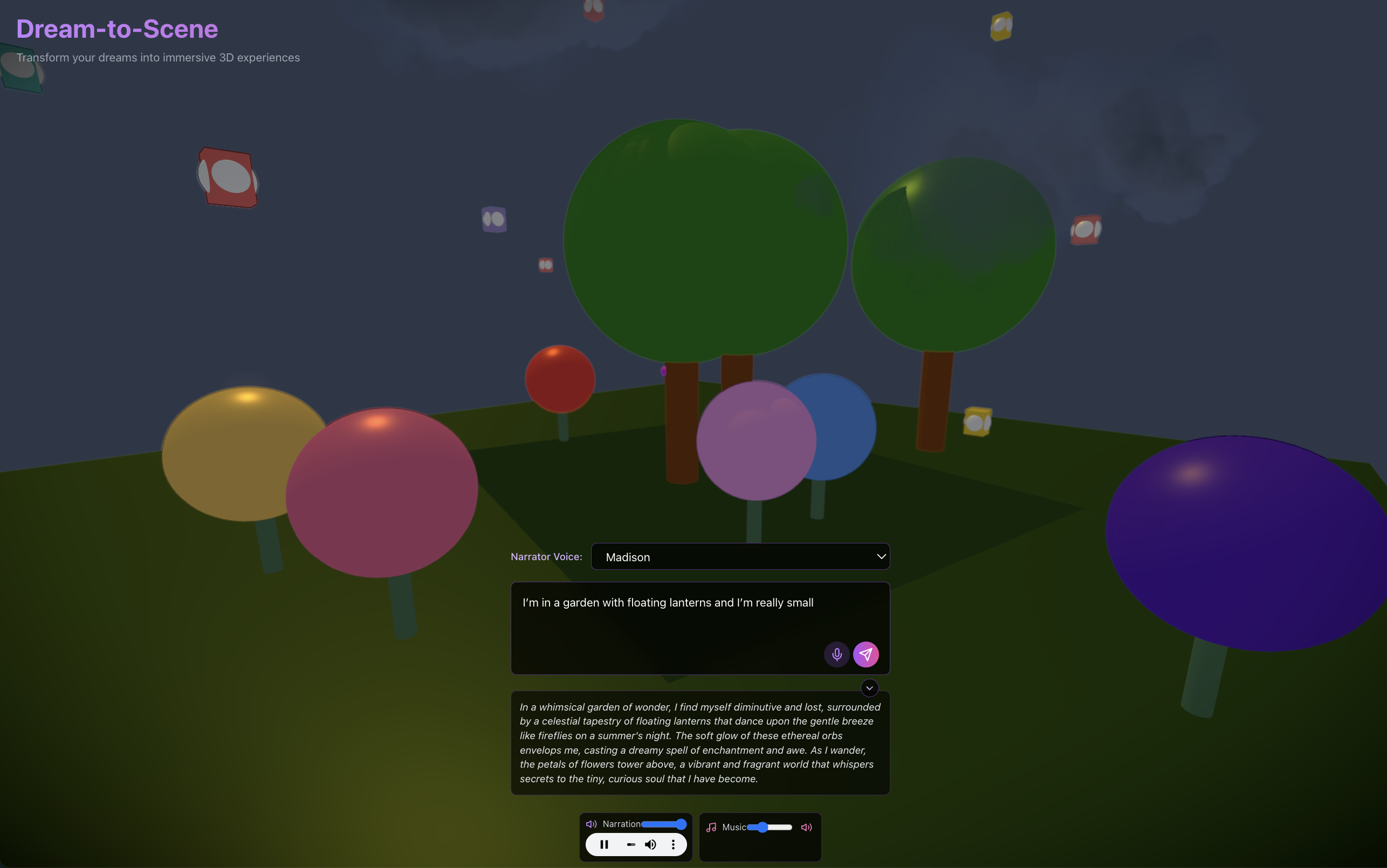
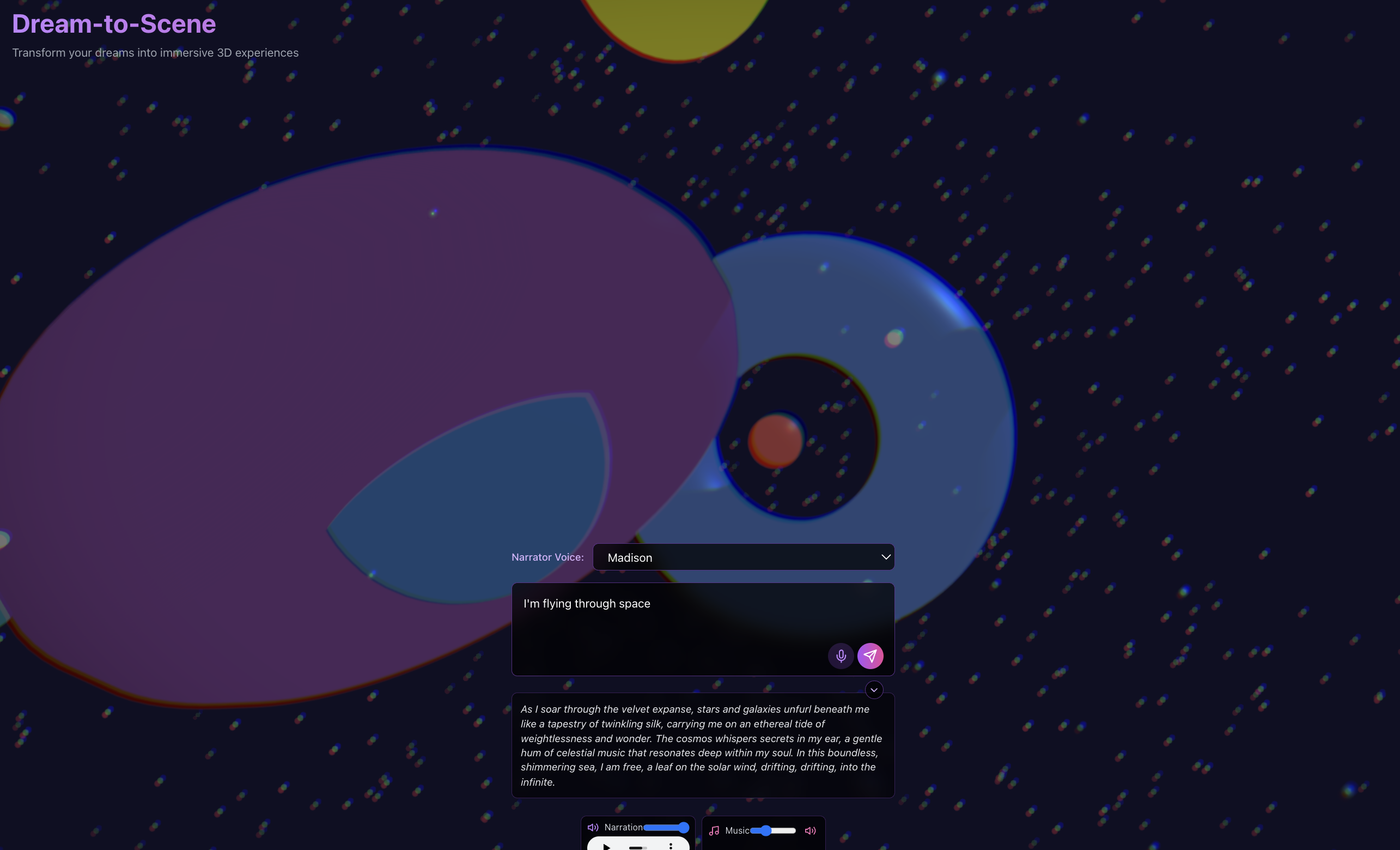
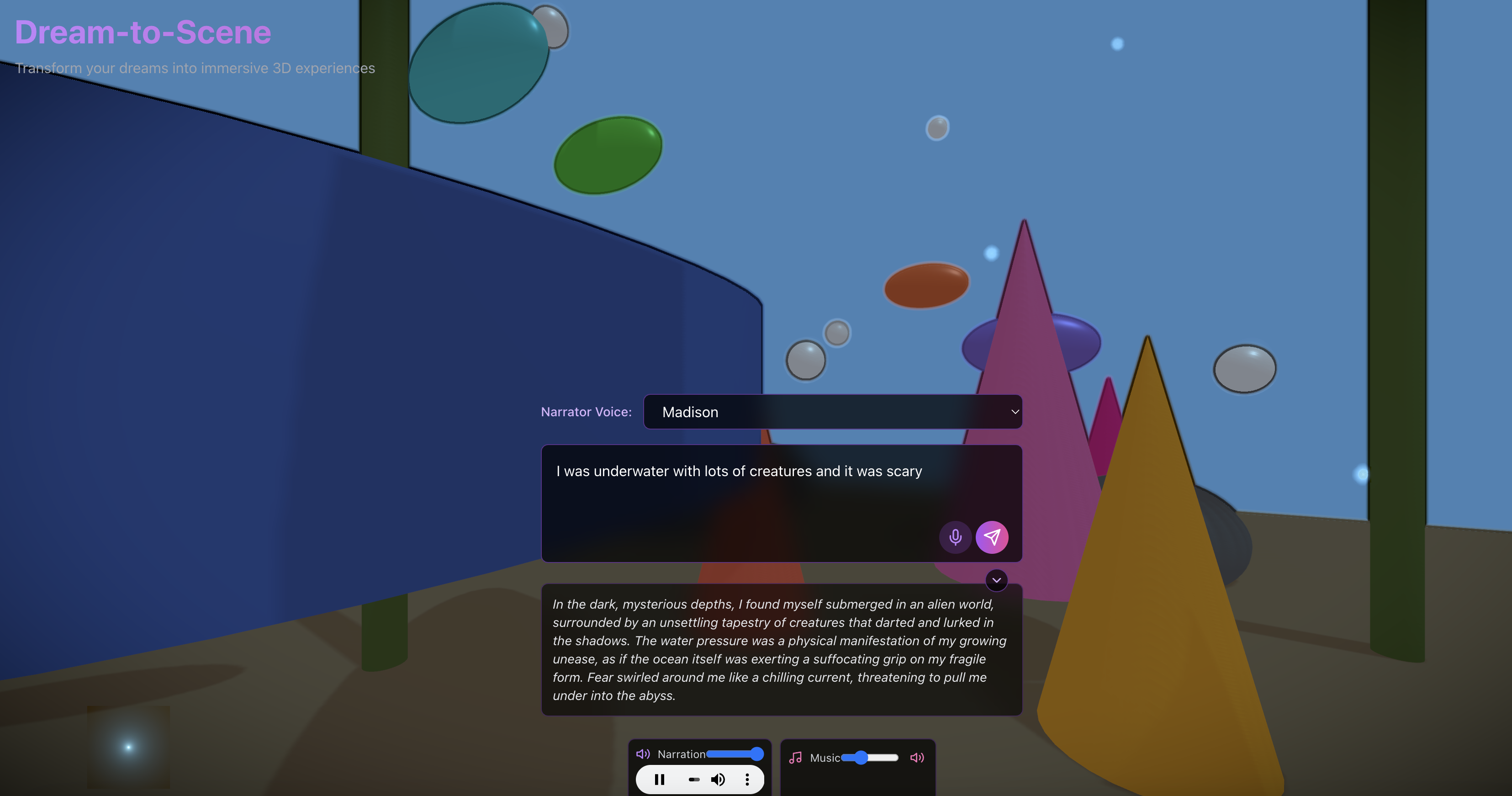
DreamtoScene takes a short dream description - like “I was walking through a garden filled with floating lanterns” - and transforms it into a living, explorable world. The system interprets the text for mood, colors, and objects, then renders a matching 3D or AR scene. In a few seconds, your words become a visual experience - serene gardens, glowing underwater caves, or vast glassy planets drifting in space.
How we built it
1.  Reka AI or Groq LLM interprets the dream text (created via text or voice using Deepgram speech-to-text transcription) and extracts semantic tags: mood, environment type, key objects, and style cues.
2.  Backend (Flask) converts those tags into a scene specification.
3.  Three.js renders an immersive 3D environment with particle systems, dynamic lighting, and post-processing effects.
4.  Fish Audio generates narrative voiceovers with selectable voice options (including ours: Madison and Lauren).
Challenges we ran into
Our biggest challenge was developing accurate scene classification for abstract dream descriptions. We had to carefully structure and chain LLM calls to extract meaningful visual cues from text.
Accomplishments that we're proud of
We successfully developed specialized dream scene generators that create tailored 3D environments for specific dream types. By combining visual elements with synchronized audio narration, we've created a multi-sensory dream experience that engages users on multiple levels. Our AI pipeline quickly interprets abstract dream descriptions and transforms them into concrete visual scenes, while our voice input system allows for natural interaction.
What we learned
Through this project, we learned to use large language models to generate structured scene descriptions that translate directly into 3D environments. We learned about balacning visual fidelity with rendering performance in Three.js, particularly when managing particles, lighting, and post-processing effects. All together, the helped us learn to coordinate AI, graphics, audio, and UI design into a cohesive product.
What's next for DreamtoScene
More objects to create more kinds of dreams - potentially generating objects with language models instead of just calling them. The more variety the better!


Log in or sign up for Devpost to join the conversation.