Inspiration
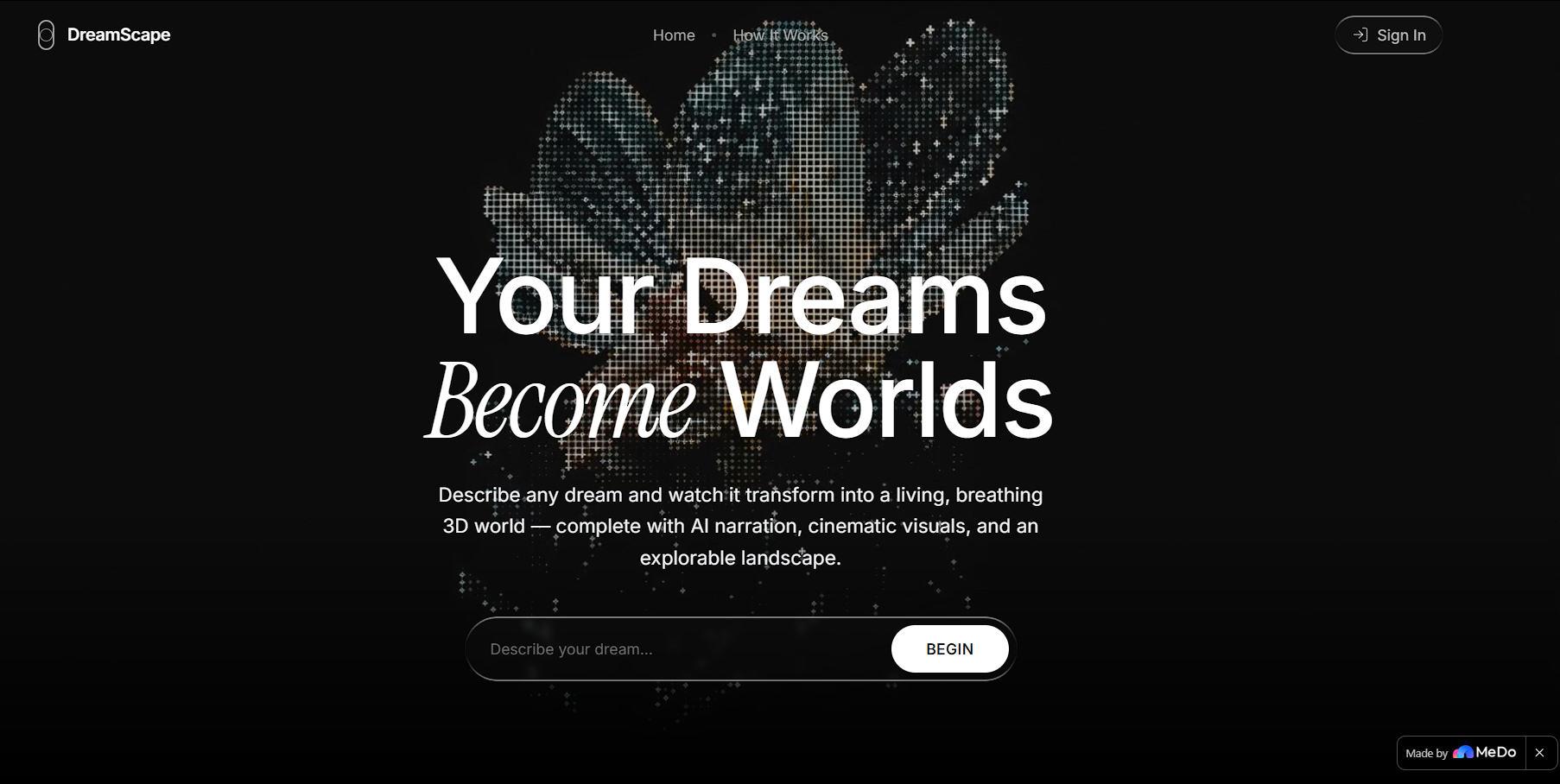
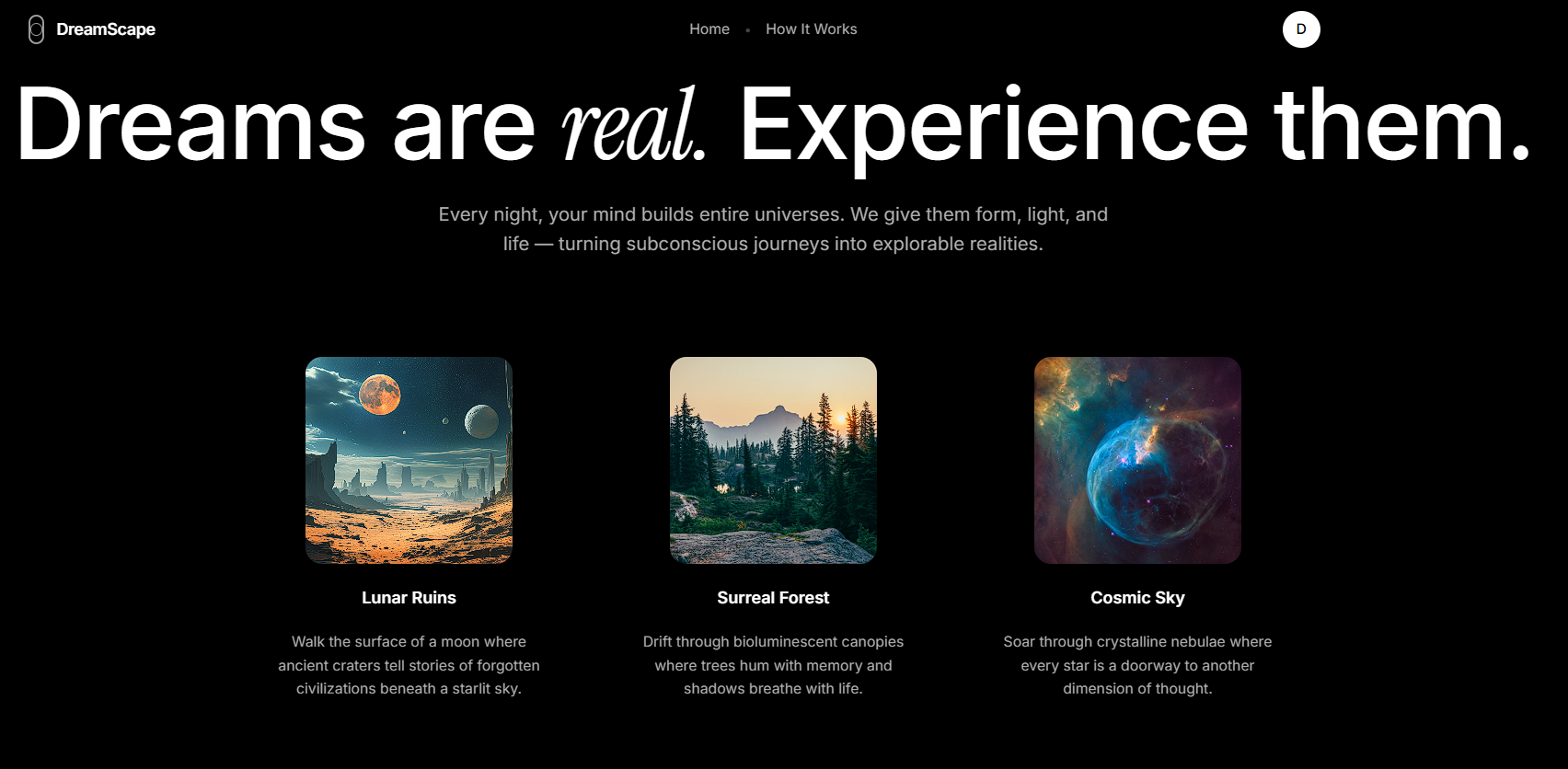
Everyone dreams — vivid, strange, beautiful, sometimes terrifying. But dreams fade the moment we wake up. We asked ourselves: What if you could step back into your dream? What if AI could not only remember it, but rebuild it as a living, explorable world?
DreamScape was born from that idea — a platform that bridges imagination and reality by transforming dreams into immersive cinematic experiences users can relive, explore, and share with others.
What We Learned
Generative AI Workflows
We learned how to orchestrate multiple AI systems into a single seamless pipeline, including dream analysis, image generation, cinematic video creation, and narration synthesis. This taught us the importance of:
- Robust error handling
- Async task orchestration
- Progress tracking
- Graceful degradation
3D on the Web
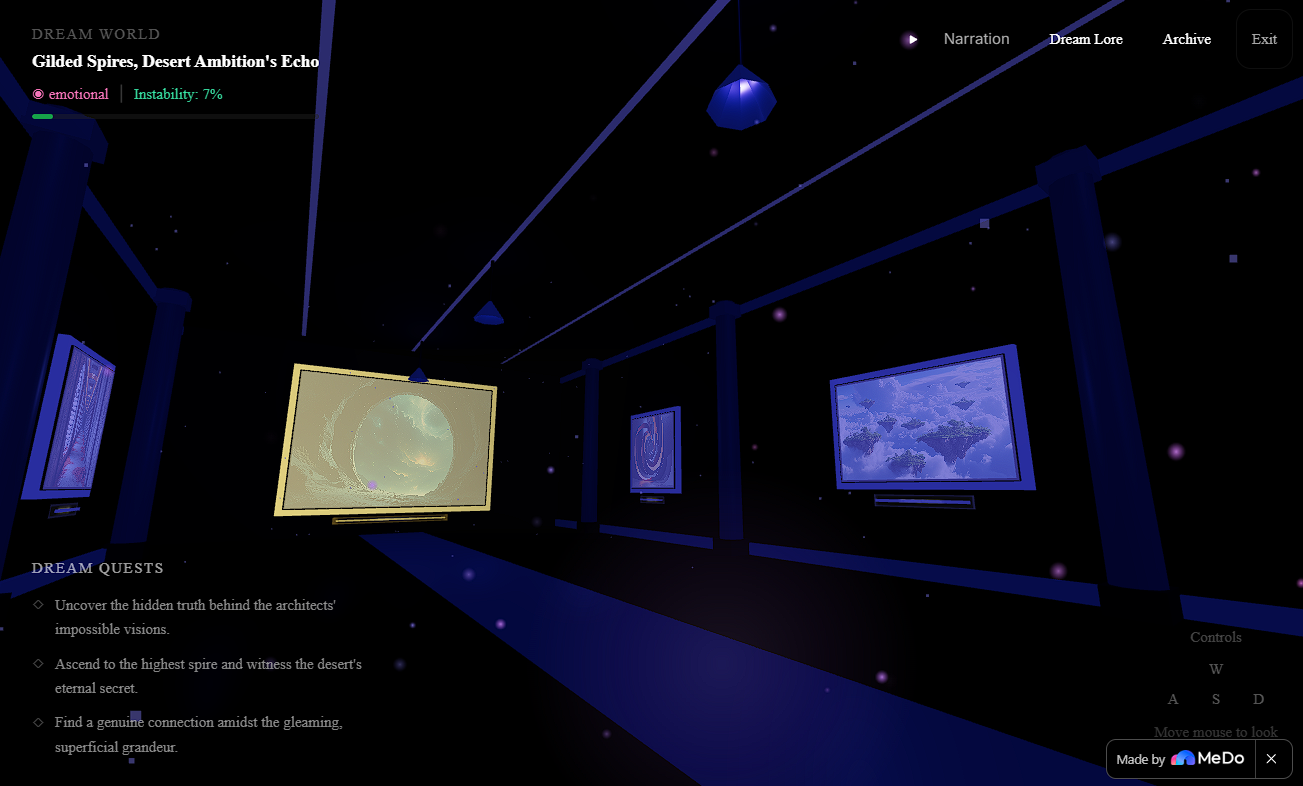
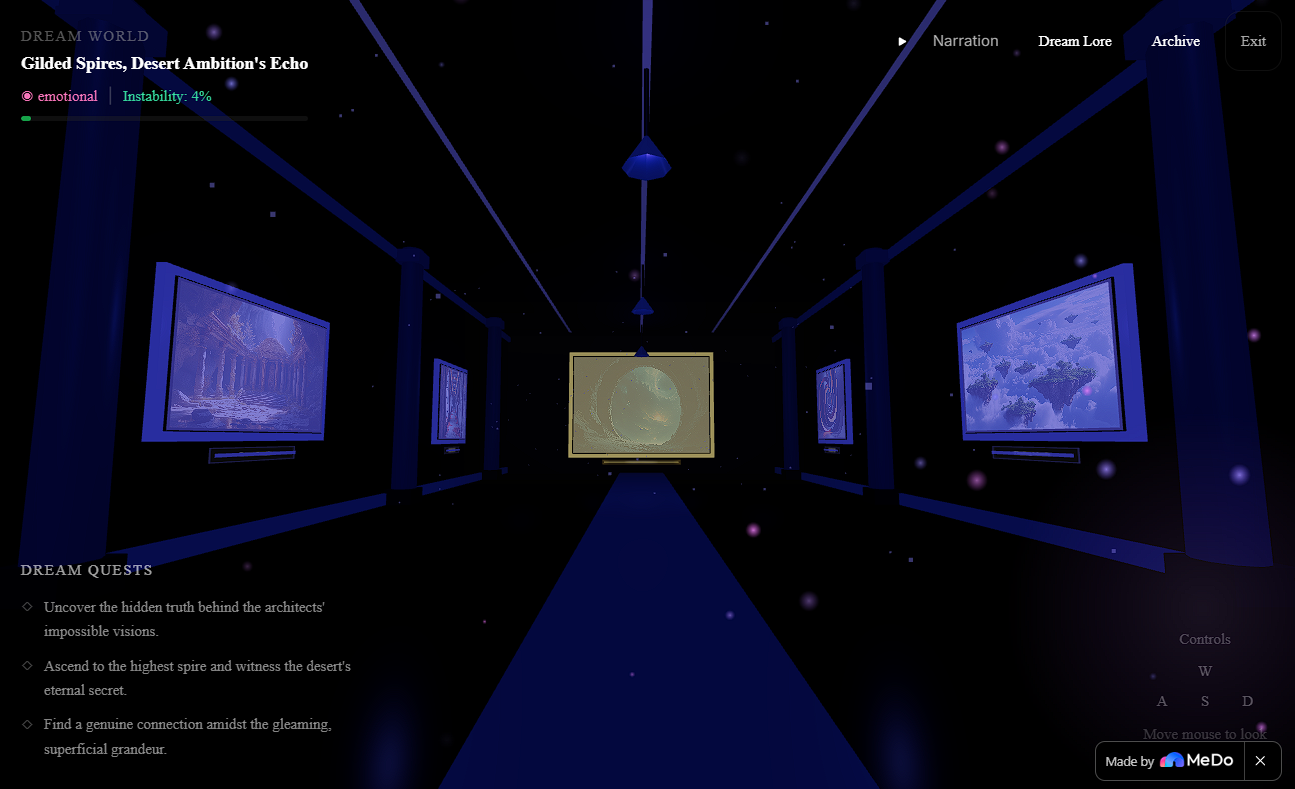
Building a cinematic 3D dream museum using React Three Fiber pushed us to deeply understand:
- WebGL rendering optimization
- Scene graph management
- Dynamic lighting systems
- Browser performance balancing
User-Centric Authentication
Implementing secure authentication with per-user dream isolation reinforced the importance of:
- Clean backend architecture
- Secure session handling
- Row Level Security (RLS)
- Scalable user data separation
Full-Stack AI Integration
Connecting a modern frontend with Supabase, PostgreSQL, Edge Functions, and external AI APIs gave us hands-on experience building a truly AI-native full-stack application.
How We Built It
Frontend
- React
- TypeScript
- Vite
- Tailwind CSS
- Shadcn UI
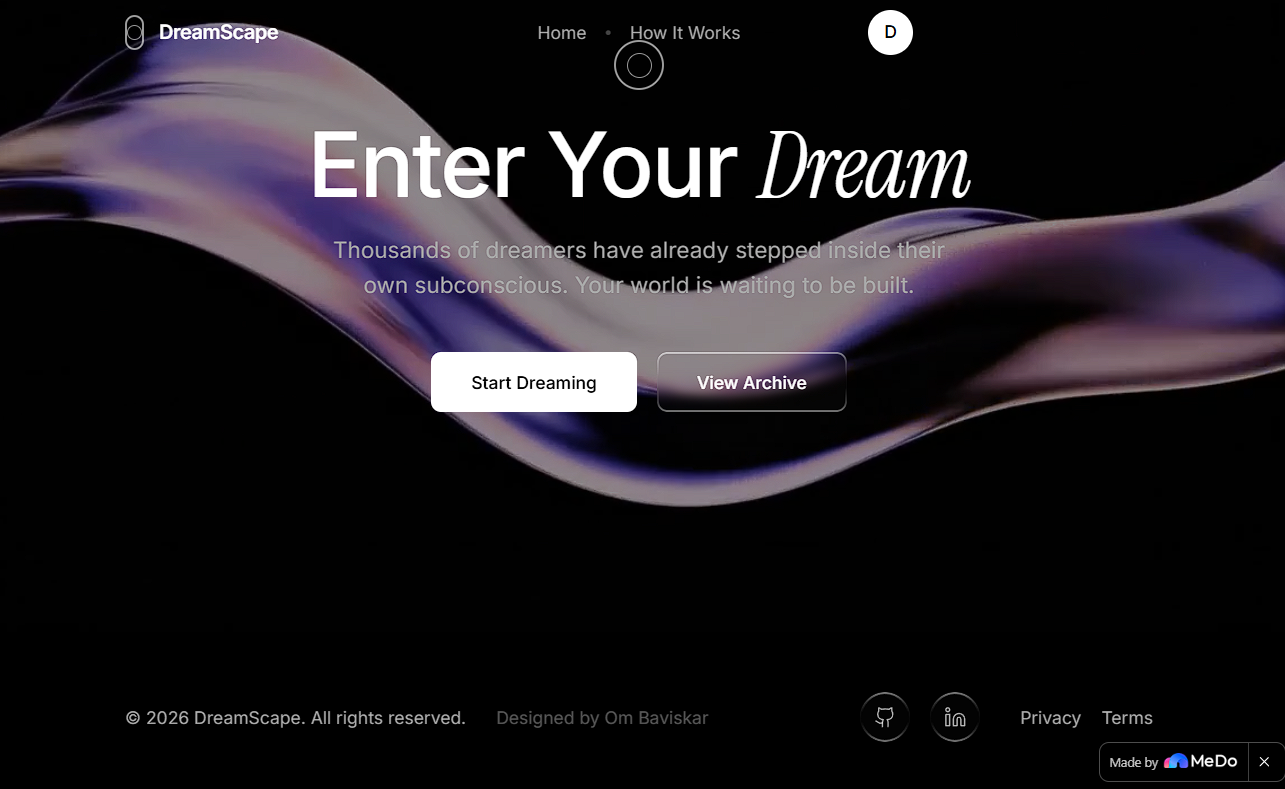
We designed a dark, cinematic interface that feels like entering another dimension.
3D Experience
Using React Three Fiber and Drei, we created:
- Interactive dream museums
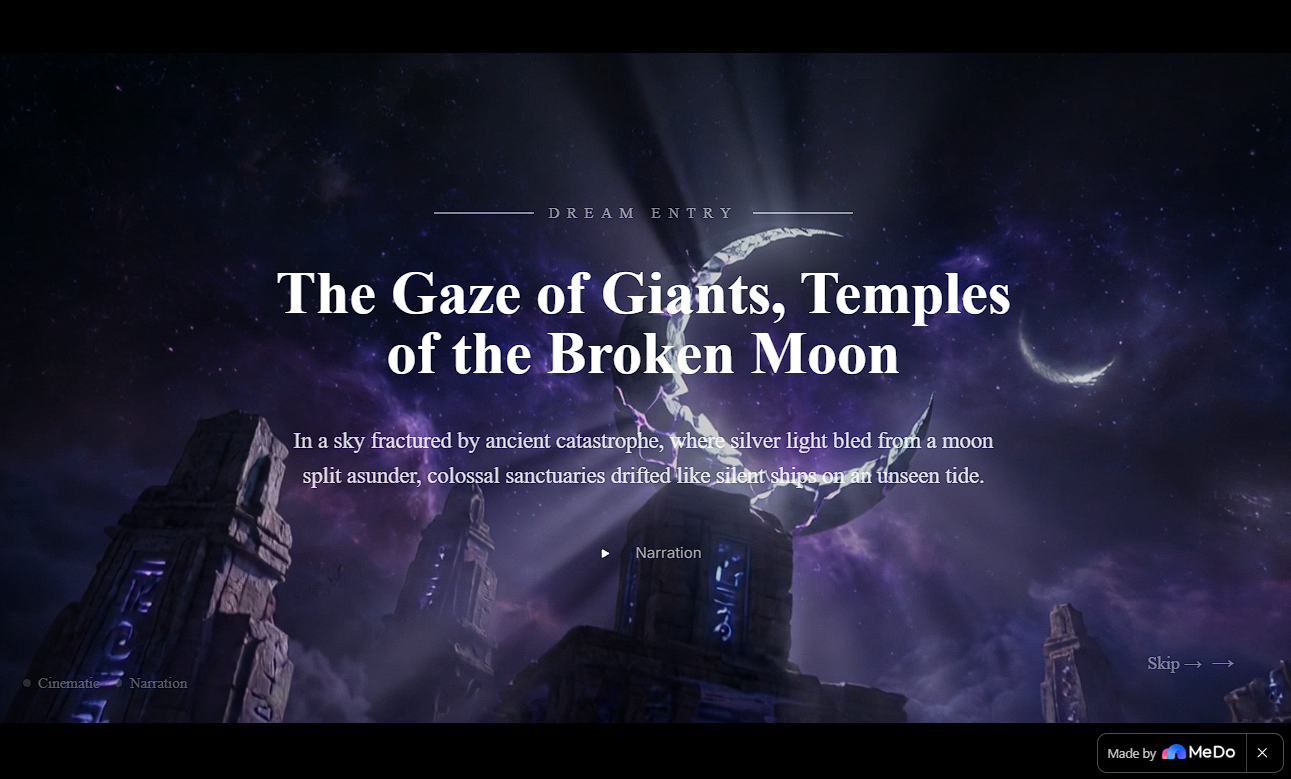
- Cinematic intro sequences
- Dynamic camera rigs
- Immersive gallery-style dream exploration
Backend
We used Supabase for:
- PostgreSQL database storage
- Authentication
- Edge Functions
- Secure Row Level Security (RLS)
AI Pipeline
The DreamScape AI pipeline combines multiple AI systems:
Dream Input
   ↓
Gemini 2.5 Flash → Dream Analysis
   ↓
AI Image Generation → Dream Concept Art
   ↓
Kling Omni → Cinematic Video Intro
   ↓
Text-to-Speech → AI Dream Narration
   ↓
Interactive 3D Dream Museum
AI Services Used
- Gemini 2.5 Flash → Symbolic lore, emotional analysis, quest generation
- AI Image Generation → Dream visuals and environments
- Kling Omni → Cinematic animated intros
- Text-to-Speech AI → Immersive dream narration
Database Design
We implemented a secure multi-user architecture using:
- PostgreSQL
- Supabase Auth
- Row Level Security Policies
Each dream is securely scoped to its authenticated user, ensuring complete privacy and isolation.
Challenges We Faced
AI Pipeline Orchestration
Coordinating asynchronous AI tasks such as:
- Image generation
- Video generation
- Narration synthesis
required advanced state management and timeout handling.
3D Museum Performance
Balancing cinematic quality with browser performance forced us to optimize:
- Lighting systems
- Geometry complexity
- Texture loading strategies
Authentication UX
We focused heavily on creating a seamless login experience supporting:
- Email/password authentication
- Social login providers
- Stable navbar rendering without layout shifting
Data Isolation & Security
Ensuring users could only access their own dream archives required careful:
- RLS policy design
- Query filtering
- Backend validation
Vision
DreamScape transforms dreams into living worlds. By combining AI, cinematic storytelling, and immersive 3D experiences, we are building a future where imagination is no longer temporary — it becomes explorable, shareable, and unforgettable.
Built With
- auth
- drei
- edge-functions
- image-generation
- kling-omni-video
- react
- row-level-security)-framer-motion-(animations-and-transitions)-ai-services:-gemini-2.5-flash
- tailwind
- three.js
- typescript
- vite


Log in or sign up for Devpost to join the conversation.