Inspiration
In the early 2010s, the endeavor to "read minds" by generating images of what a person was viewing through EEG scans was predominantly spearheaded by convolutional neural networks and other foundational computer vision techniques. Although promising, these methods faced significant challenges in accurately decoding and replicating intricate visuals. However, with the recent rise of transformer-based models and sophisticated neural architectures, many of these initial challenges have been overcome. Armed with these advanced tools, we recognized a chance to revisit and rejuvenate this field. Beyond the technological intrigue, there's a profound purpose: by converting the dreams of dementia patients into visual narratives, we aspire to make substantial advances in decoding the mysteries of Alzheimer's and associated cognitive disorders.
What it does
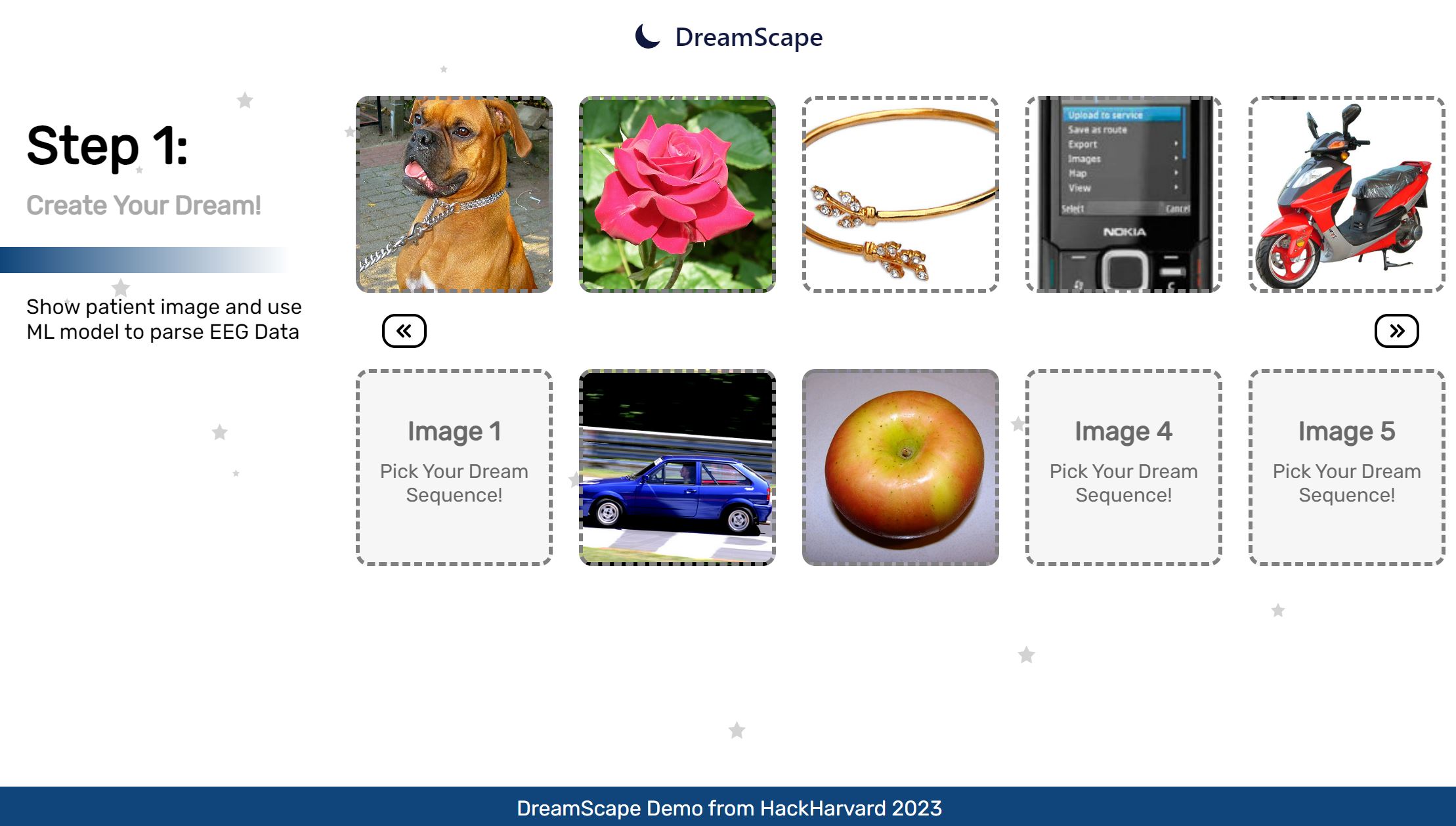
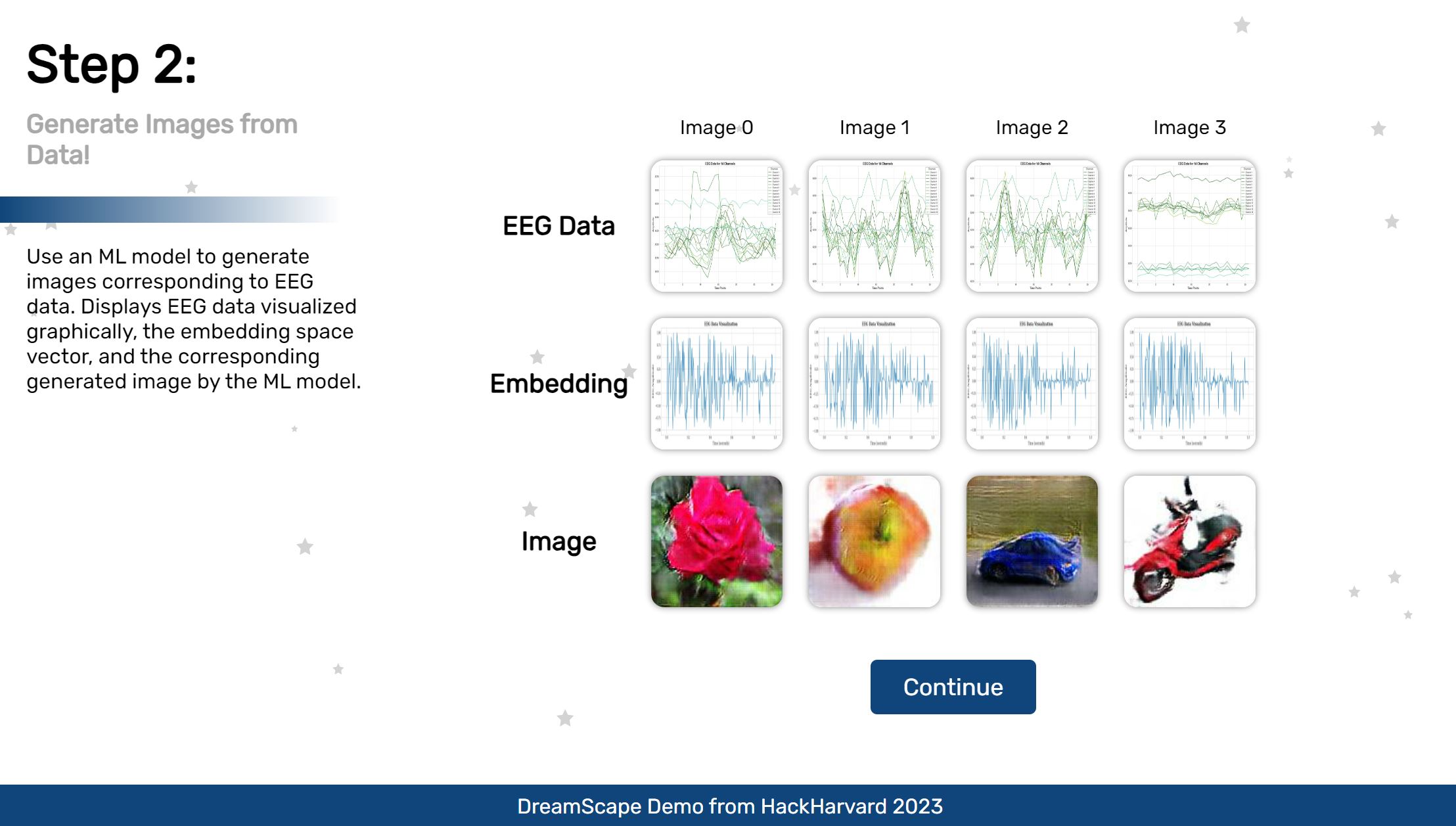
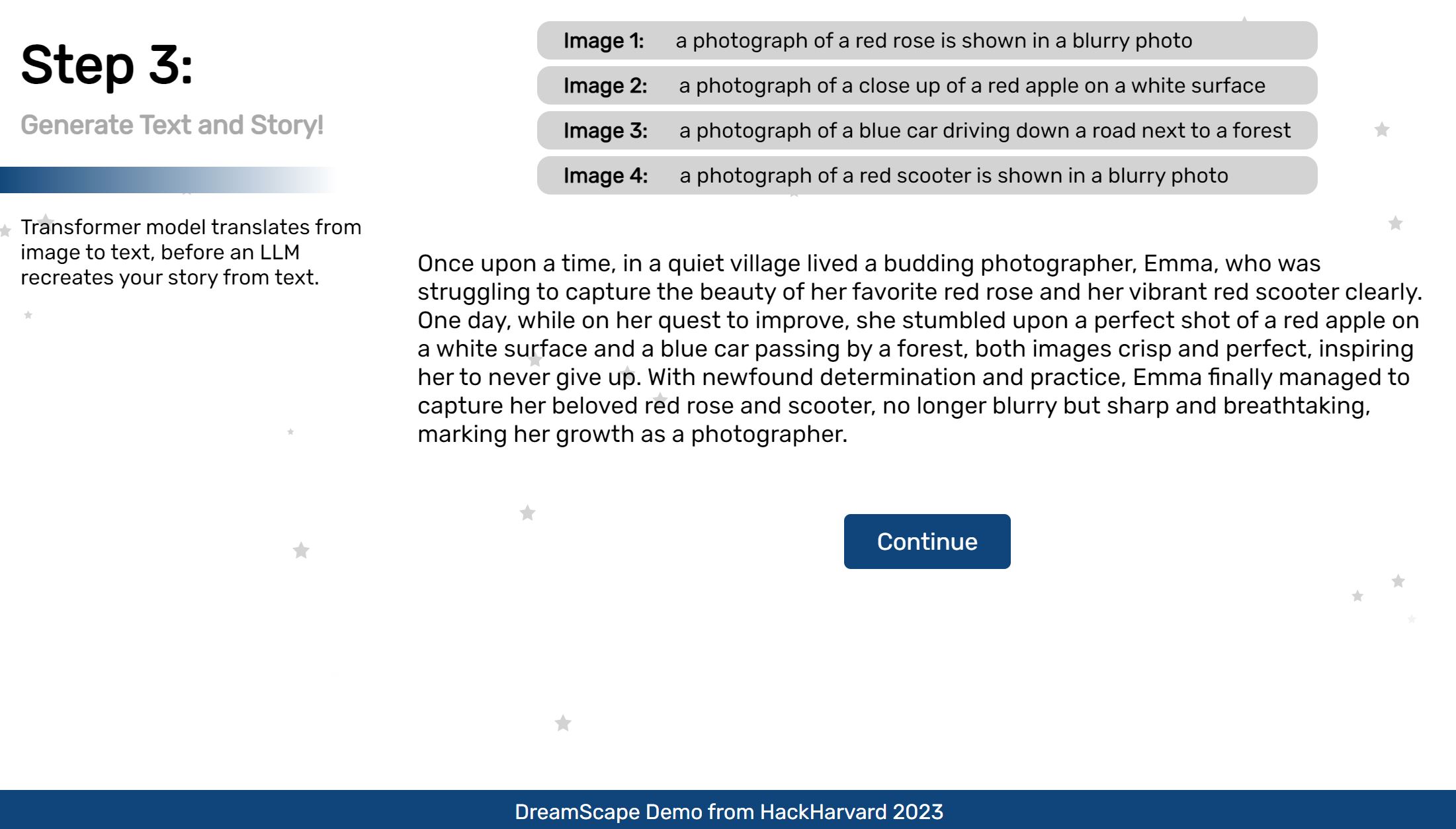
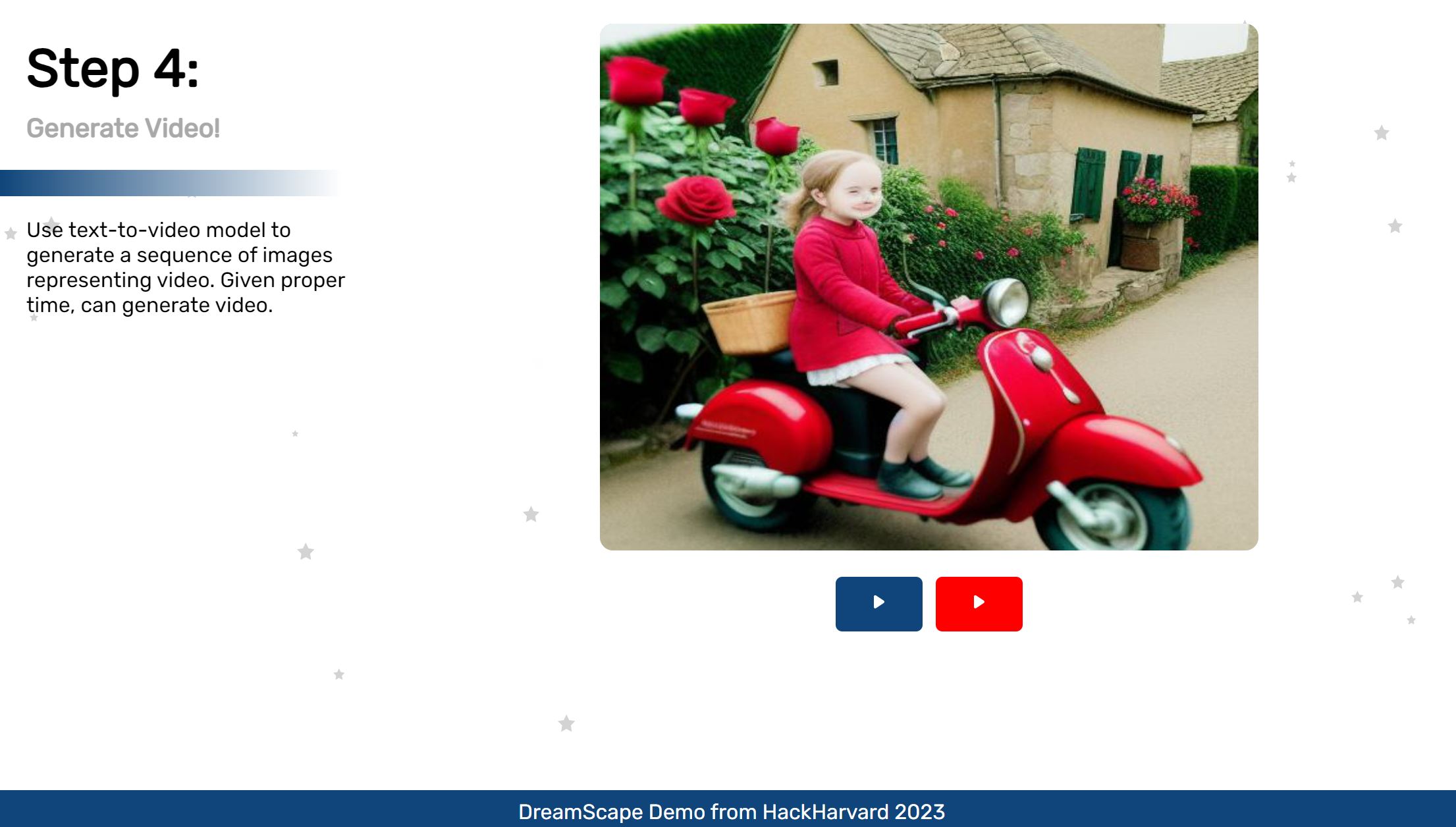
DreamScape represents a sophisticated blend of neurology and AI. The process begins with high-resolution EEG scans that record the intricate brainwave patterns exhibited during dreams. These patterns are subsequently inputted into a deep learning model, specially trained using convolutional layers, which translates the EEG signals into basic images and relevant textual descriptions. To mold this data into a cohesive narrative, we deploy advanced natural language processing models, particularly transformer architectures from the GPT series. The final phase involves the generation of a detailed visual portrayal using Generative Adversarial Networks (GANs), crafting lifelike scenes inspired by the earlier narrative outputs.
How we built it
The EEG data are sourced from reputable research journals. Our machine learning foundation leverages TensorFlow and Hugging Face's Transformers library, chosen for their synergy with intricate neural architectures. Additionally, OpenAI's GPT API bolsters our narrative generation process, with its pre-trained models minimizing our training overhead. For the visual narrative, ensuring continuous and coherent visual output, we employ a modified version of stable diffusion techniques. This guarantees visuals that flow seamlessly, much like a dream. Our web application interface, tailored for both researchers and end-users, utilizes the capabilities of Next.js and React for dynamic UI components and Flask as a nimble backend server for data processing and model interactions.
Challenges we ran into
Refining the EEG-informed machine learning model to align with our requirements proved challenging. Conventional EEG interpretation models typically generate static visuals. Dreams, by their very nature, are kinetic, prompting us to curate animations capturing this dynamism. This demanded extensive recalibrations of our GANs, ensuring not just the precision of the generated images but also the seamless transitions between scenes. Additionally, ensuring the robustness and reliability of our system while handling diverse and sometimes ambiguous dream data presented a complex hurdle.
Accomplishments that we're proud of
The seamless integration of neurology with state-of-the-art AI in our DreamScape pipeline symbolizes more than just a technological achievement; it represents a bridge between two disciplines that, when combined, offer boundless possibilities. Our solution casts a revelatory light on a previously obscured facet of Alzheimer's research. By crafting and presenting visual narratives that vividly depict the dreams of dementia patients, we not only break new ground in the realm of cognitive study but also offer a deeply human insight into the inner worlds of those affected by dementia.
What we learned
Navigating the intricate maze of neural designs and EEG interpretation was an enlightening experience in itself, but our journey with DreamScape imparted lessons that extended far beyond the realm of technicalities. We realized that innovation is often born at the confluence of seemingly disparate disciplines. Melding neurology with AI demanded more than just technical prowess; it required patience and a commitment to understand the intricacies of both domains. This experience underscored the significance of interdisciplinary collaboration and illuminated the importance of looking beyond one's field to find holistic solutions to complex problems.
What's next for DreamScape
Our roadmap for DreamScape is expansive. On the technical side, we are exploring ways to reduce processing times. Additionally, we plan to incorporate more sophisticated generative AI models to enhance visual quality. A proposed feature would utilize transformer models to scan and interpret related literature as well, thus enriching visual narratives. But our vision goes beyond current capabilities: we are researching the feasibility of brain-computer interfaces that could, in theory, allow us to feed visual narratives directly back into the brain, fostering novel therapeutic techniques.


Log in or sign up for Devpost to join the conversation.