-
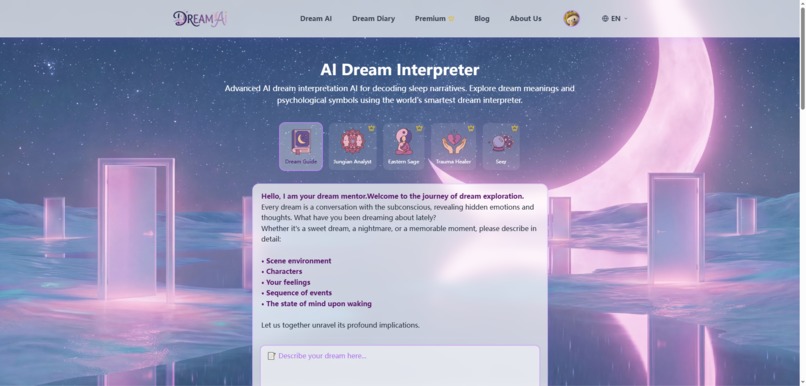
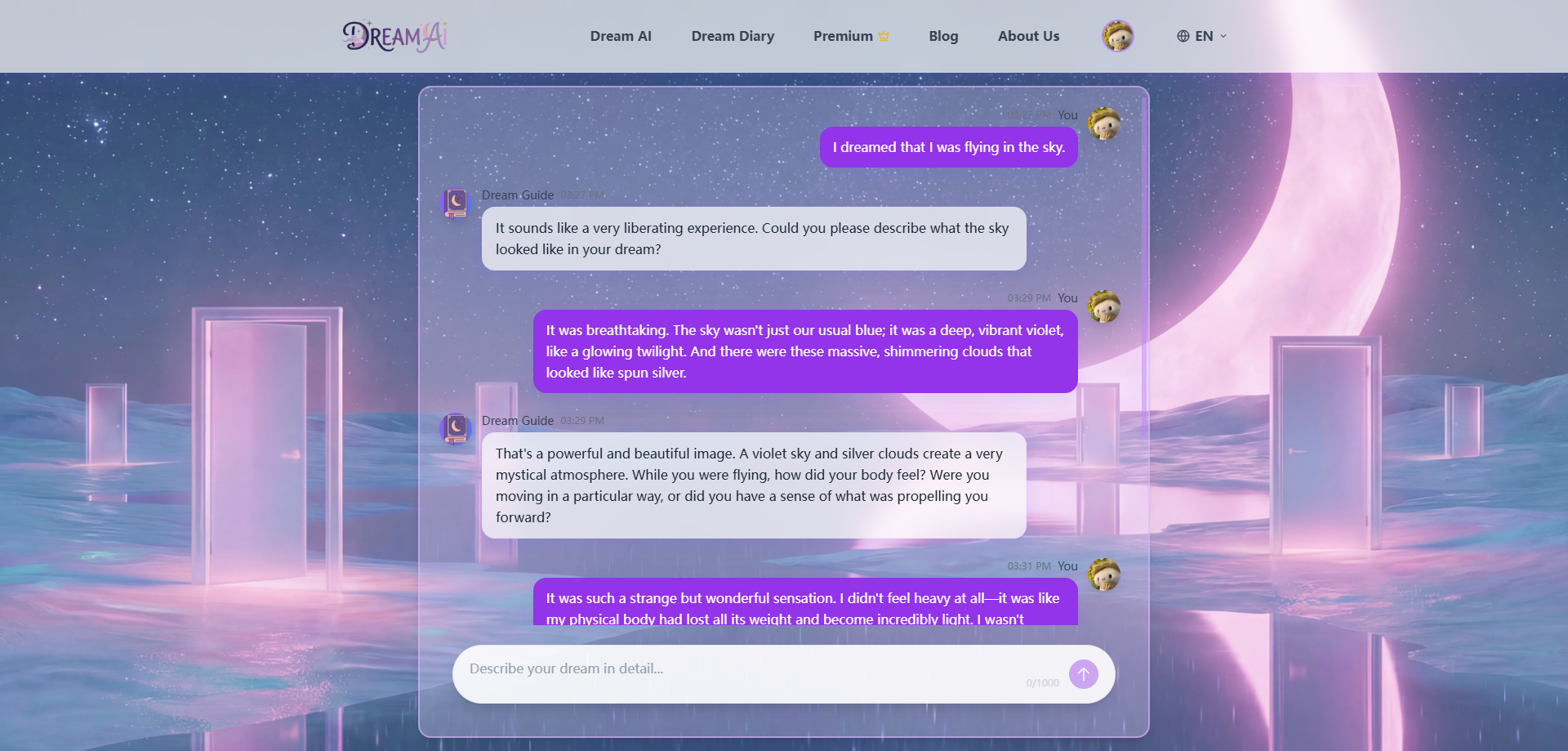
Meet your Dream Guide. Start your journey by describing the scene, characters, and emotions of your dream in a safe, guided space.
-
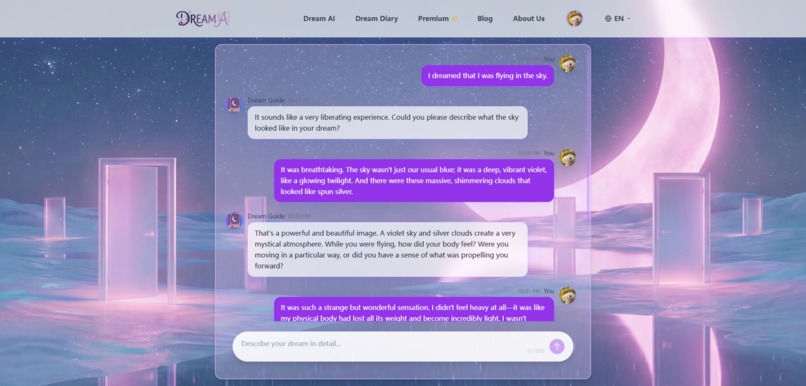
Interactive AI Chat. Have a deep, ongoing conversation with your chosen AI mentor to unpack every detail of your subconscious mind.
-
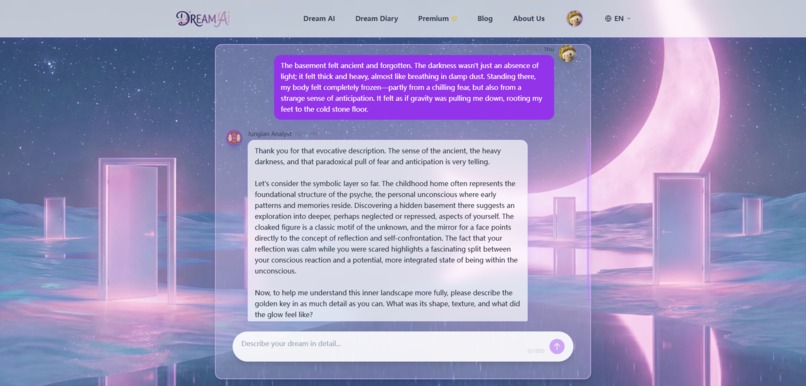
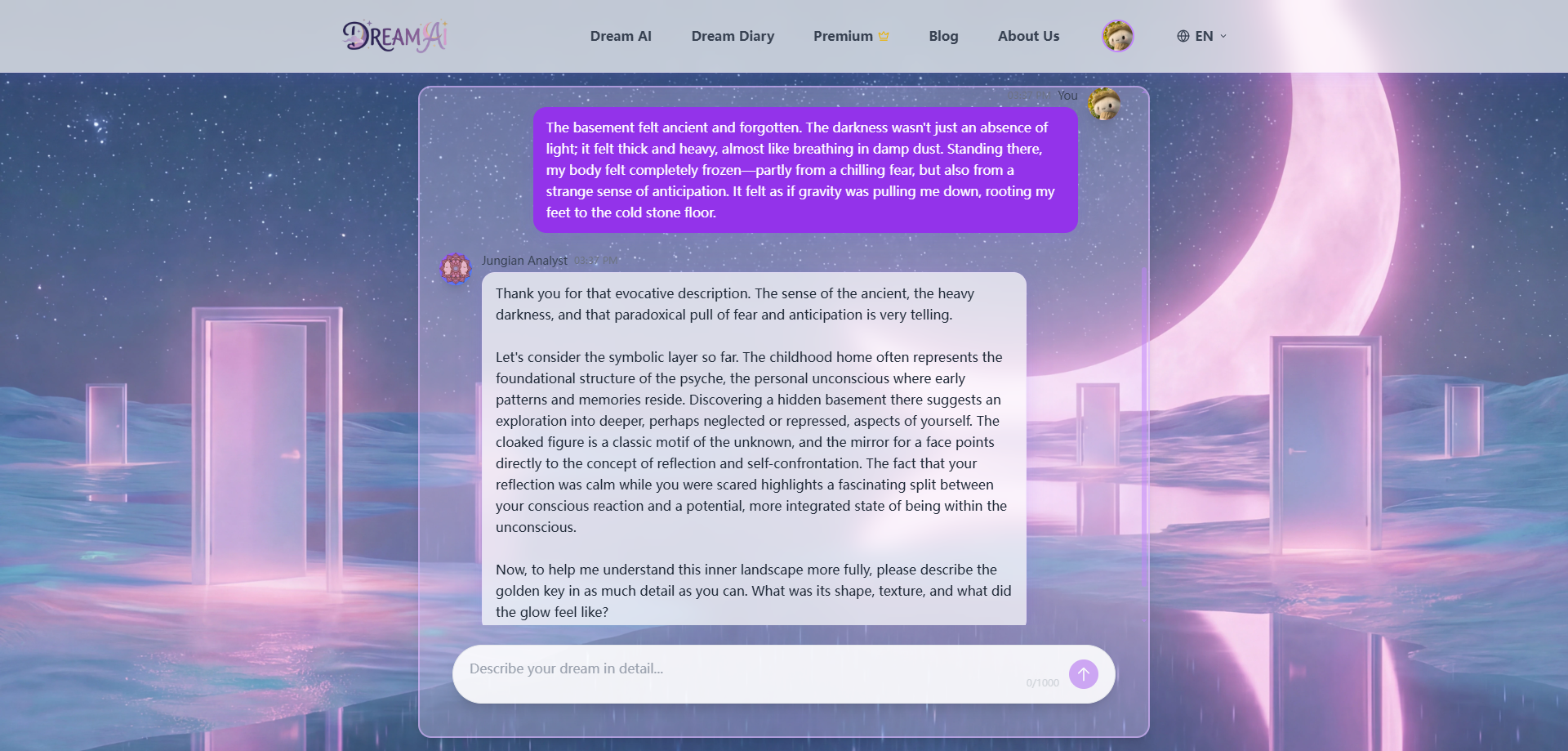
Consult the Jungian Analyst. Dive deep into archetypes, the collective unconscious, and hidden shadows to uncover your true Self.
-
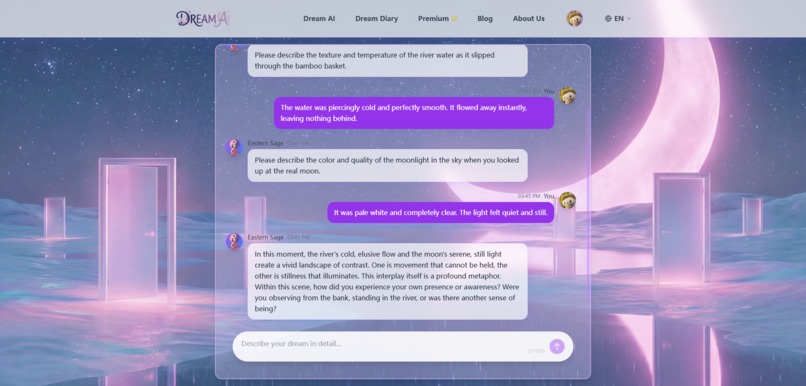
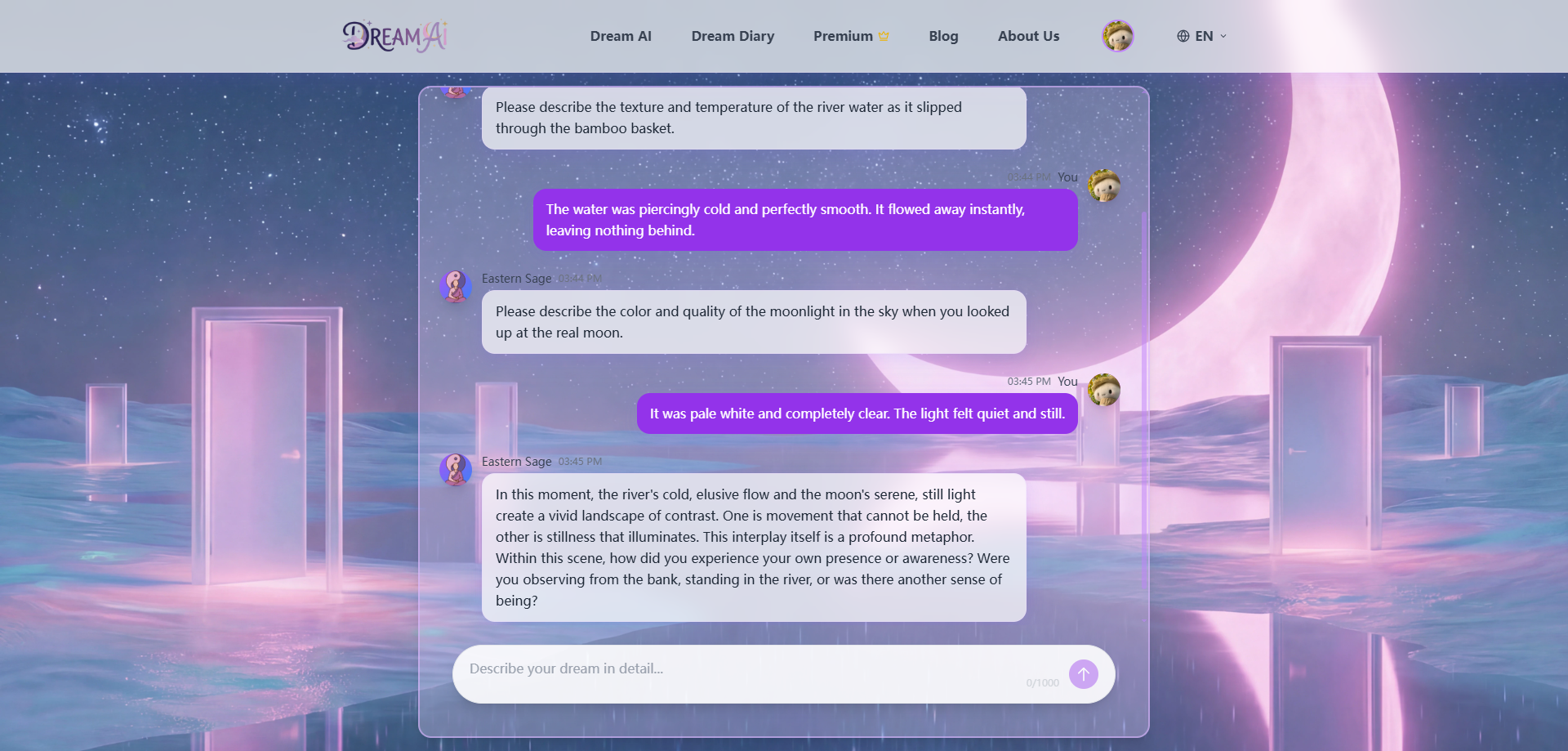
Seek wisdom from the Eastern Sage. Reflect on karma, yin-yang balance, and inner attachments to find spiritual awakening.
-
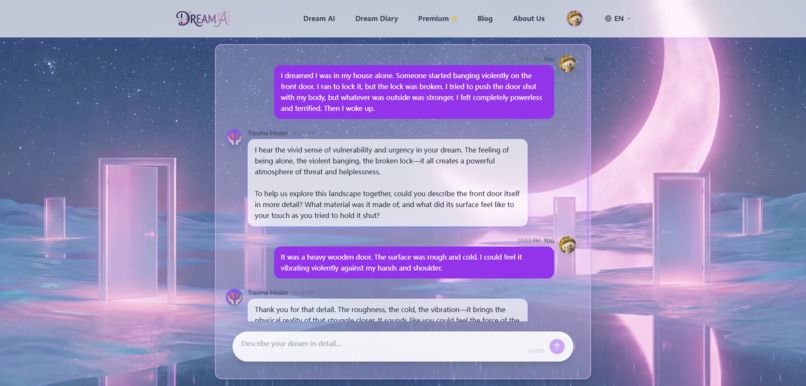
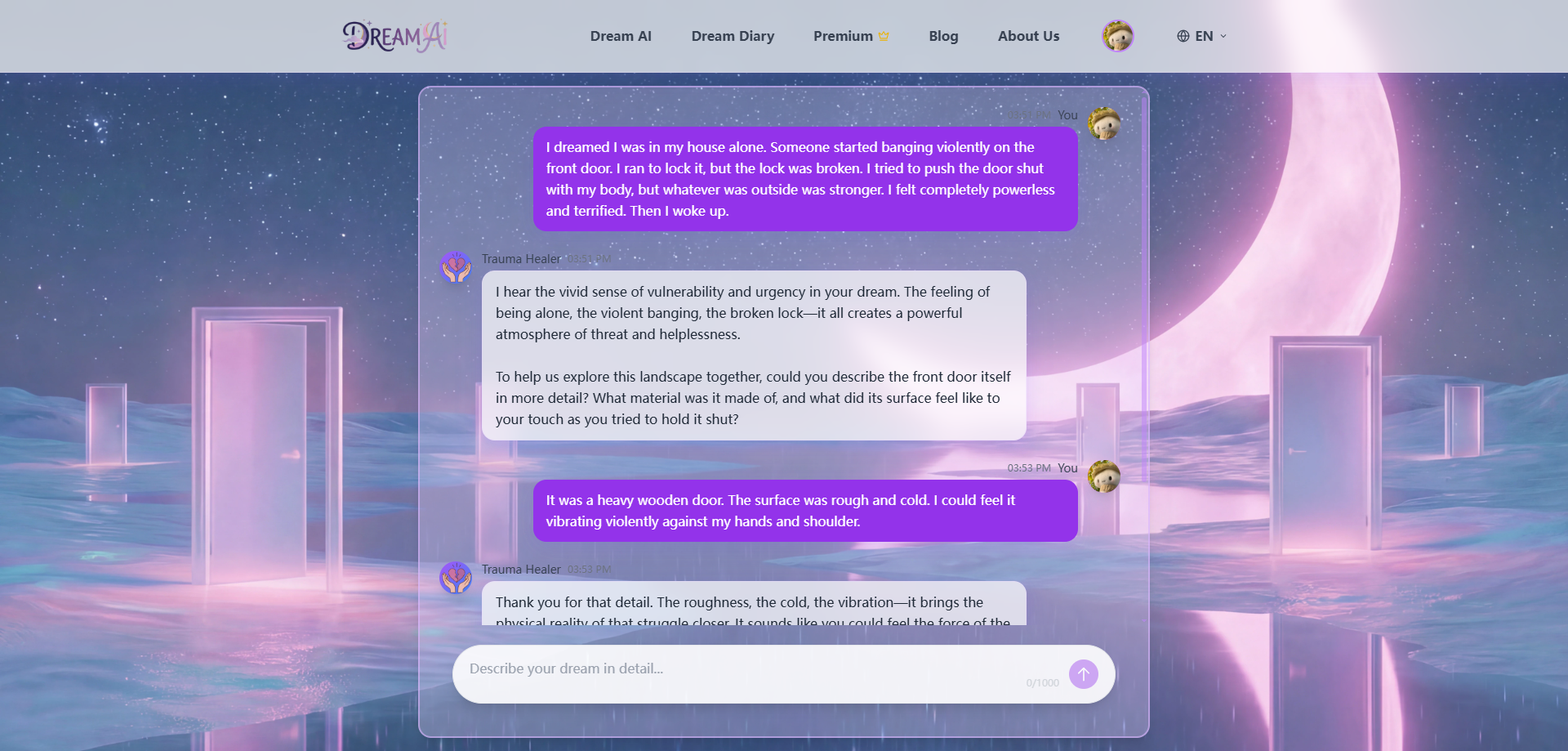
Talk to the Trauma Healer. A warm, non-judgmental space to gently explore the roots of fear and process emotional nightmares safely.
-
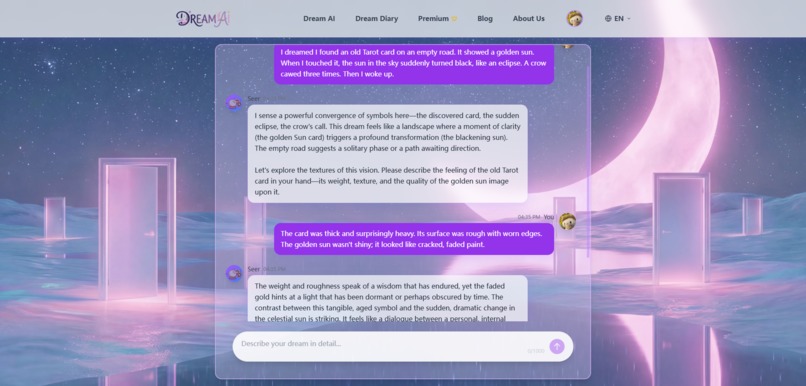
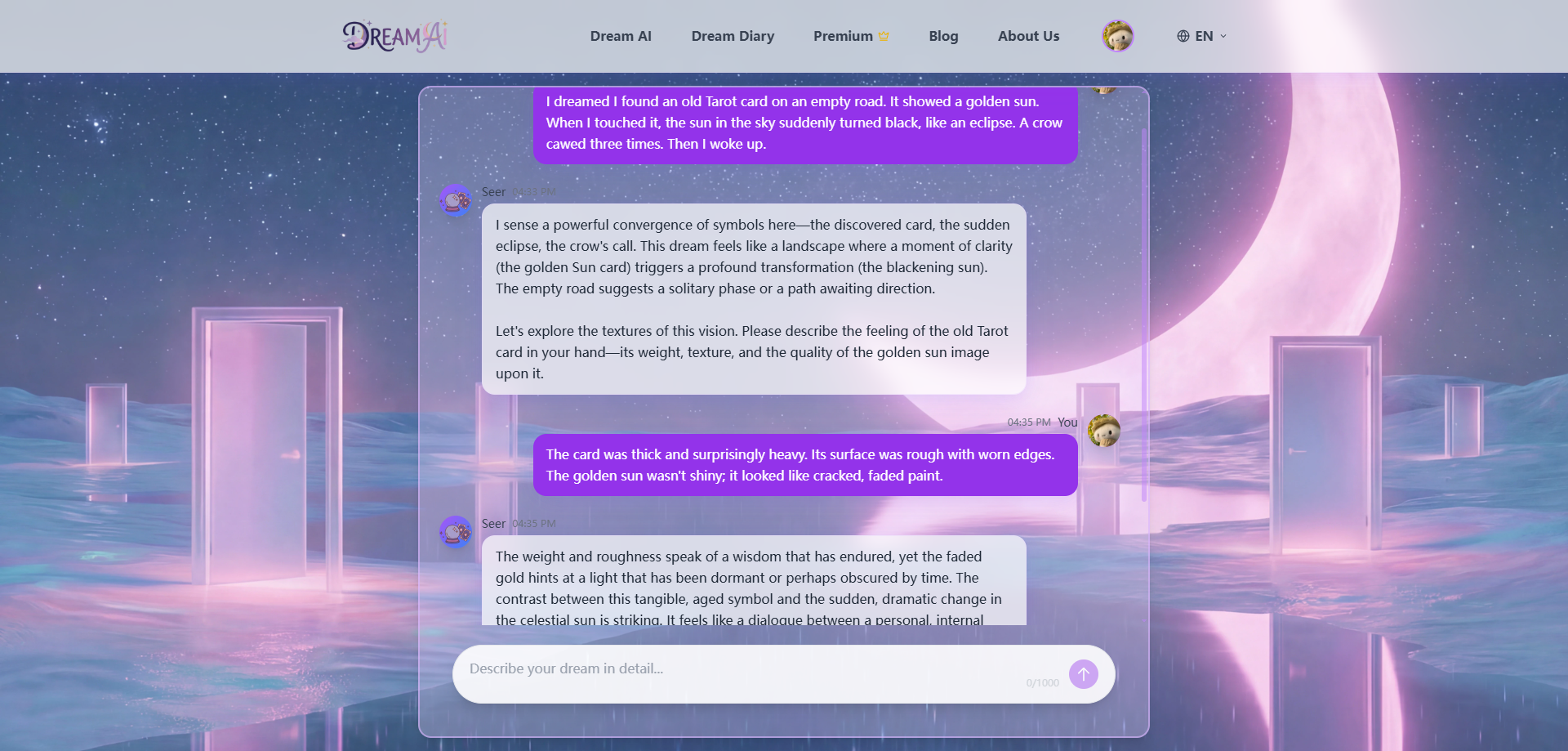
Unveil destiny with the Seer. Decode mystical symbols, celestial patterns, and universe omens hidden within your midnight visions.
Inspiration
Have you ever woken up from a vivid dream, Googled its meaning, and found a generic, one-size-fits-all answer? I always found that frustrating. Dreams are highly personal, deeply tied to our daily emotions, and impossible to decipher with a static dictionary. I wanted to build a digital sanctuary where people could explore their subconscious safely. The inspiration for DreamsAI came from the idea that a dream isn't just a symbol to be translated, but a conversation waiting to happen.
What it does
DreamsAI is an interactive, AI-powered dream interpretation platform. Instead of giving you a rigid definition, it uses conversational AI to gently guide you through recalling your dream—asking about the environment, your feelings, and the sequence of events.
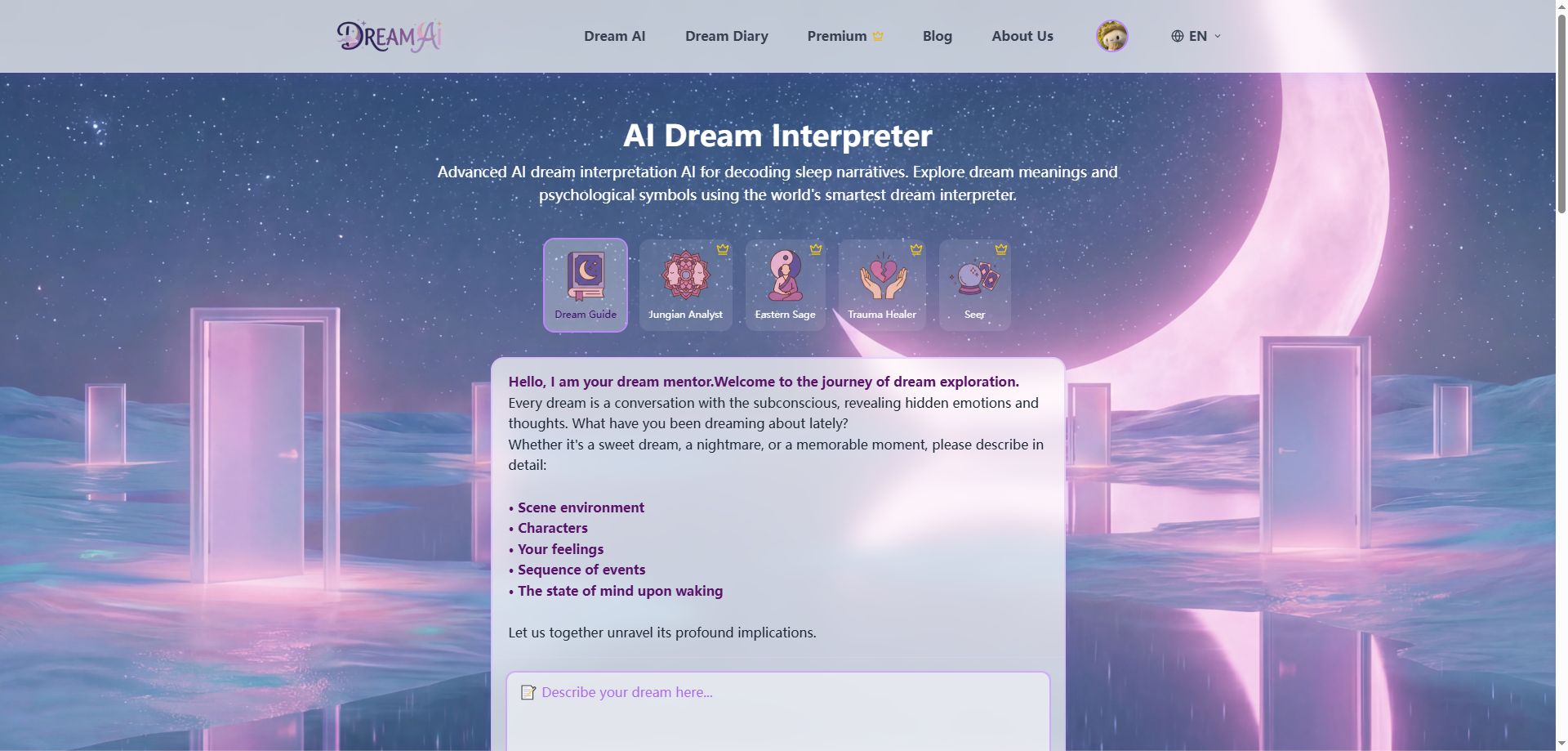
Once the context is established, the platform offers analysis through 5 unique AI Mentors, each with a distinct perspective:
Dream Guide: Offers general, guided exploration.
Jungian Analyst: Dives deep into psychological archetypes and the collective unconscious.
Eastern Sage: Reflects on karma, balance, and philosophical wisdom.
Trauma Healer: Provides a safe, warm space to process emotional nightmares.
Seer: Explores mystical omens, astrology, and destiny.
Beyond the live chat, DreamsAI features a built-in Dream Diary where users can safely log and reflect on their past entries, making it easy to track recurring themes and emotional patterns over time.
How I built it
I designed the core experience around a text-based conversational interface. The backend relies on advanced Large Language Models (LLMs) with highly customized system prompts. I spent a significant amount of time "prompt engineering" to ensure each of the 5 mentors maintains a distinct tone, vocabulary, and analytical framework. The frontend is built to be minimalist and cozy, ensuring the user feels safe and relaxed while typing out their most personal midnight thoughts.
Challenges I ran into
The biggest technical and design challenge was tuning the AI personas for text-based chat. Initially, the AI's responses read too much like a clinical, robotic text message. It took numerous iterations to craft prompts that made the "Trauma Healer" read as genuinely empathetic and non-judgmental through text alone, while keeping the "Eastern Sage" philosophical without being overly cryptic. Managing the context window so the AI remembers the intricate details of the user's dream throughout a long chat session was also a hurdle.
Accomplishments that I'm proud of
I am incredibly proud of the multi-perspective architecture. Being able to feed the same dream narrative into 5 completely different psychological and mystical lenses gives users a profound "Aha!" moment. I'm also thrilled to have the Dream Diary fully functional, giving users a private space for long-term reflection.
What I learned
I learned that building AI for mental wellness and self-reflection requires a delicate touch. It's not just about parsing data; it's about crafting an empathetic text experience. I also deepened my understanding of Jungian psychology and various dream analysis frameworks while designing the mentor personas.
What's next for DreamsAI
The next step is to introduce AI image generation directly into the platform. I want to allow users to generate visual representations of their dream scenes based on their text logs, helping them physically see the surreal landscapes or characters they encountered in their sleep!


Log in or sign up for Devpost to join the conversation.