-
-
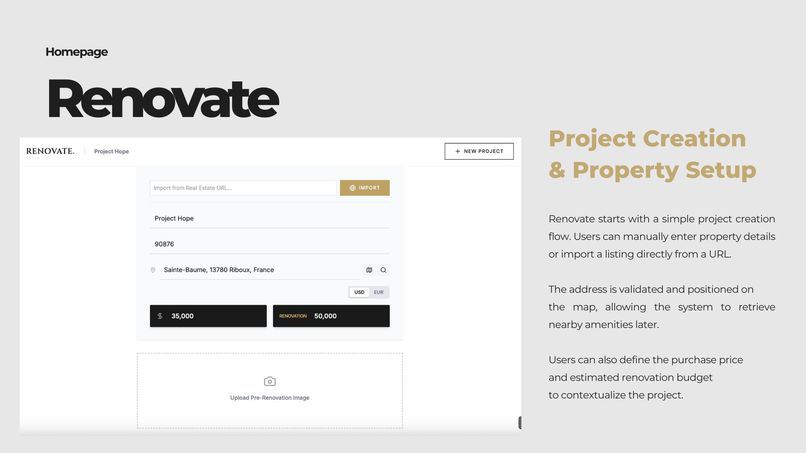
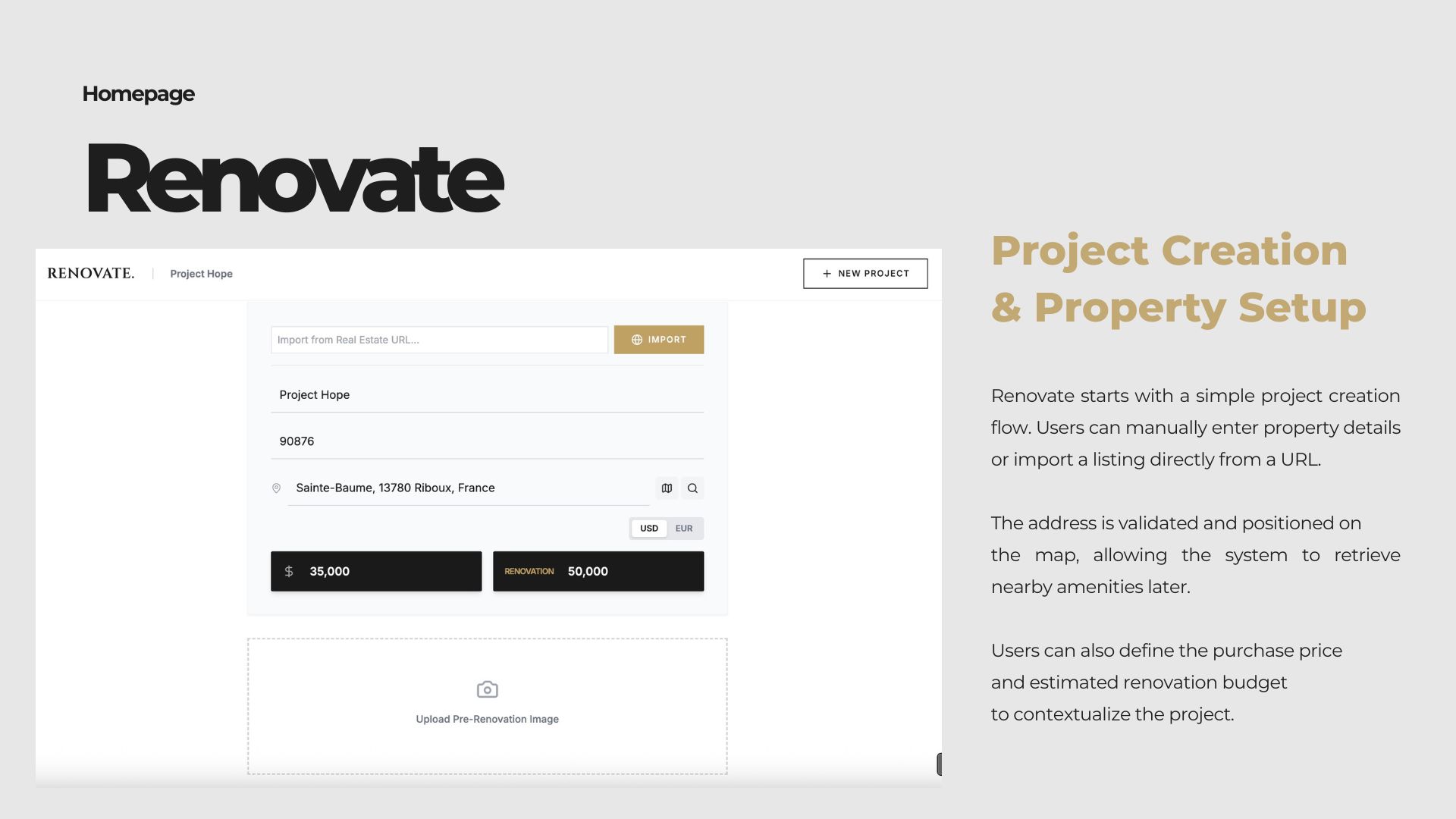
Project Creation
-
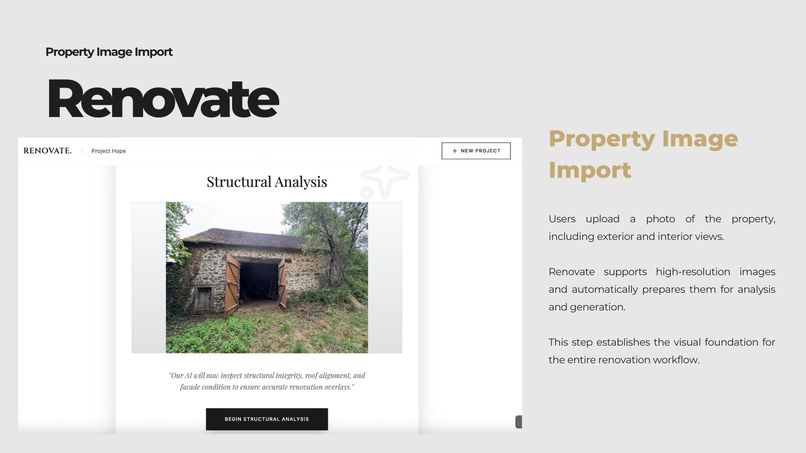
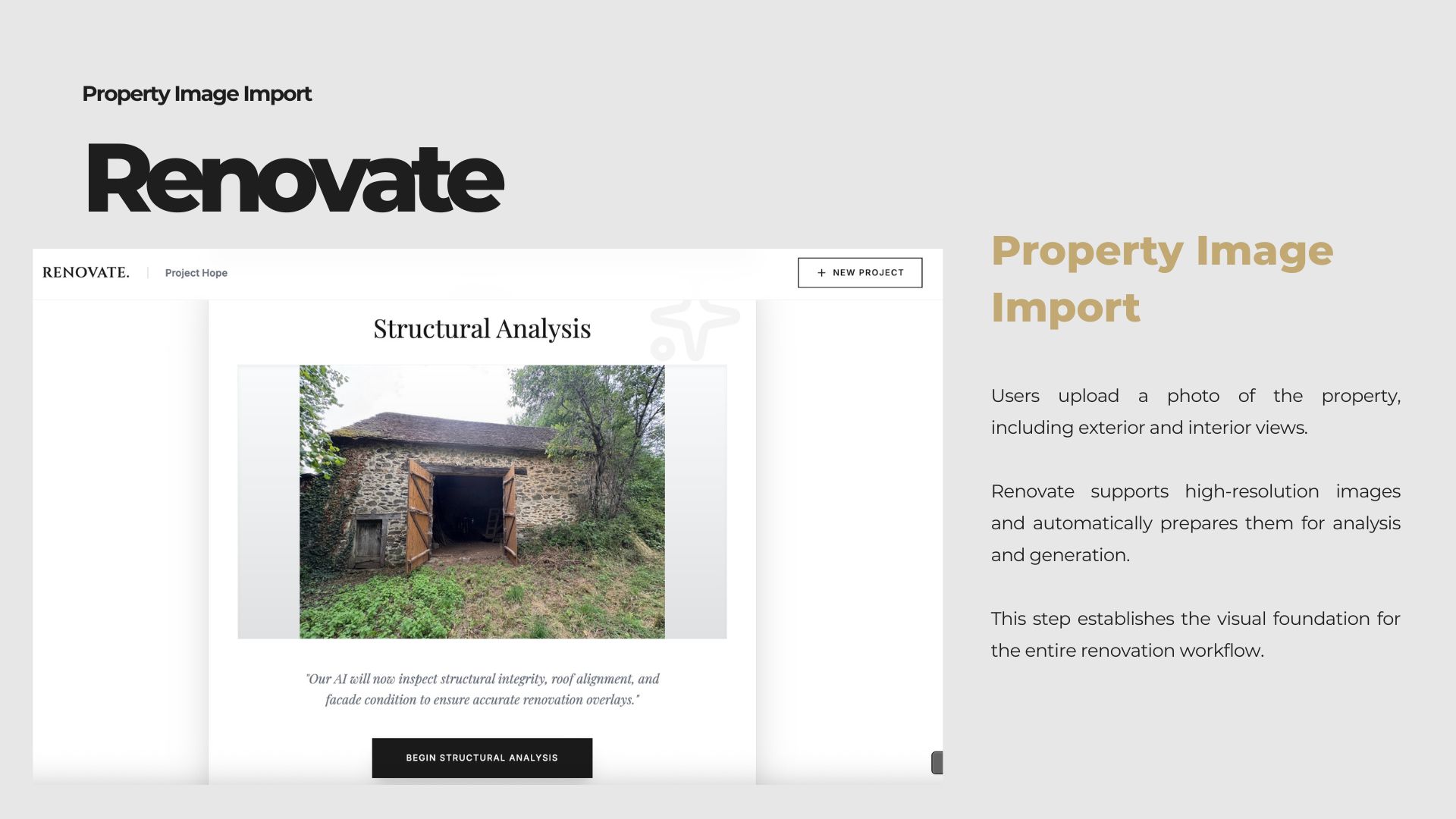
Uploading Media
-
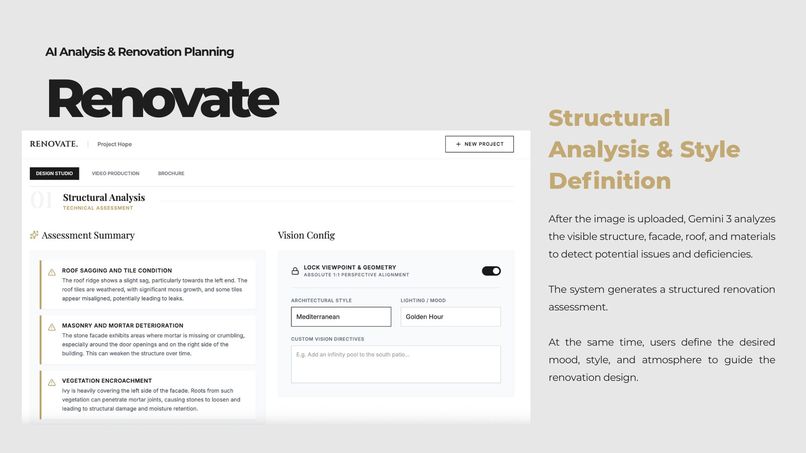
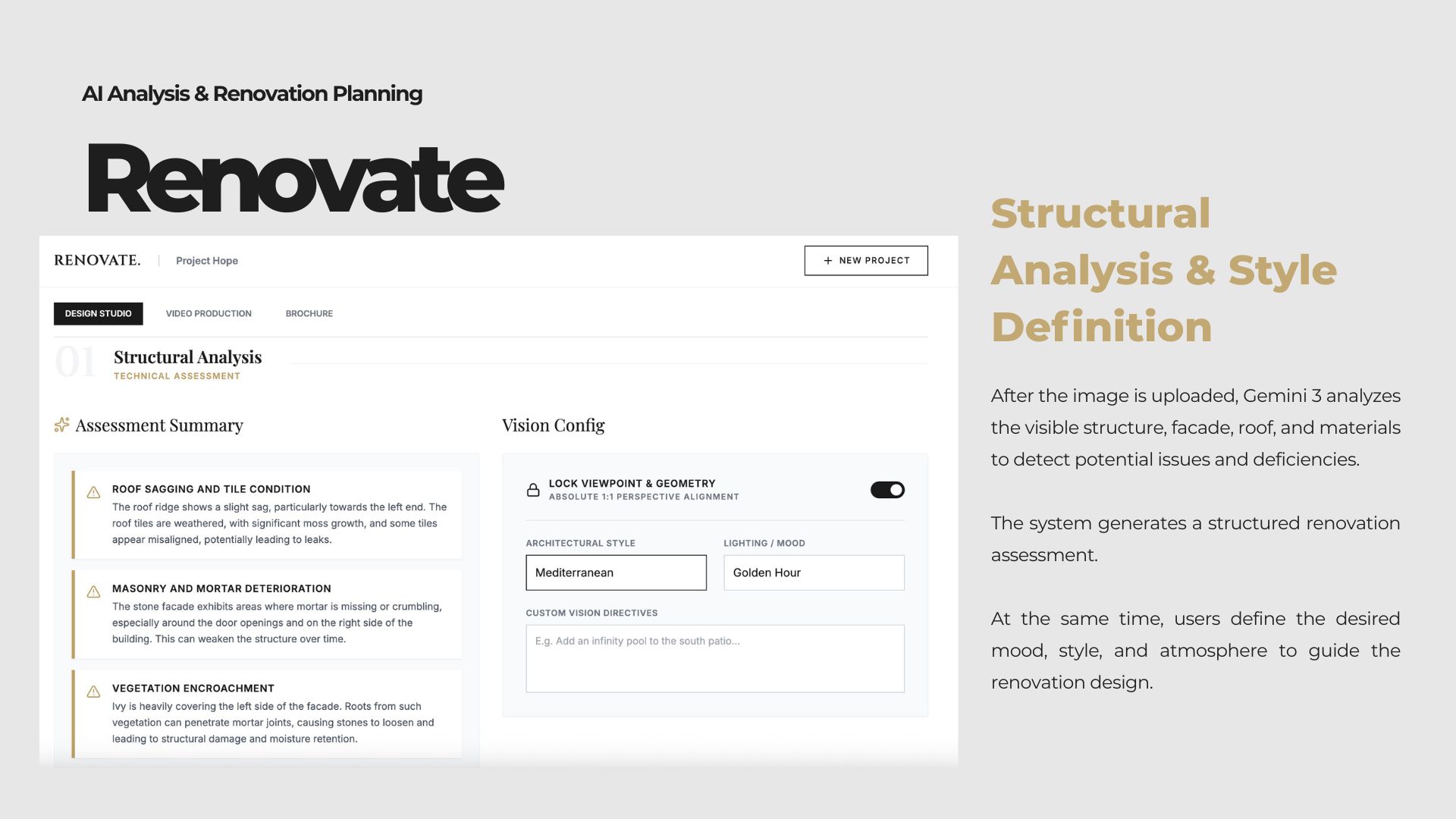
Structural Analysis
-
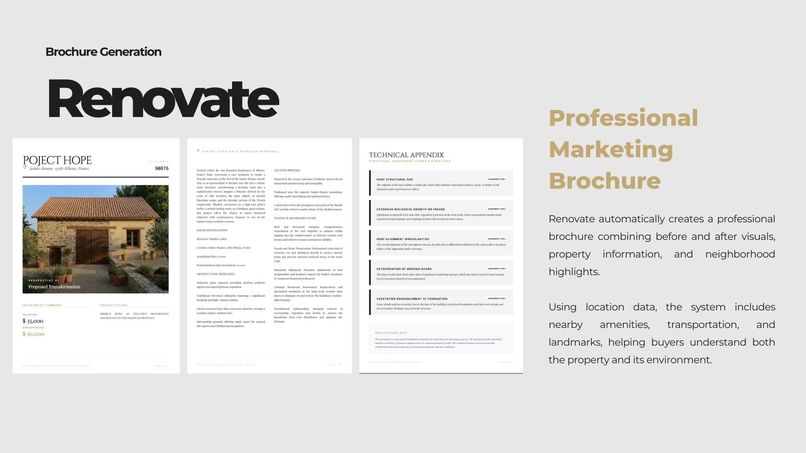
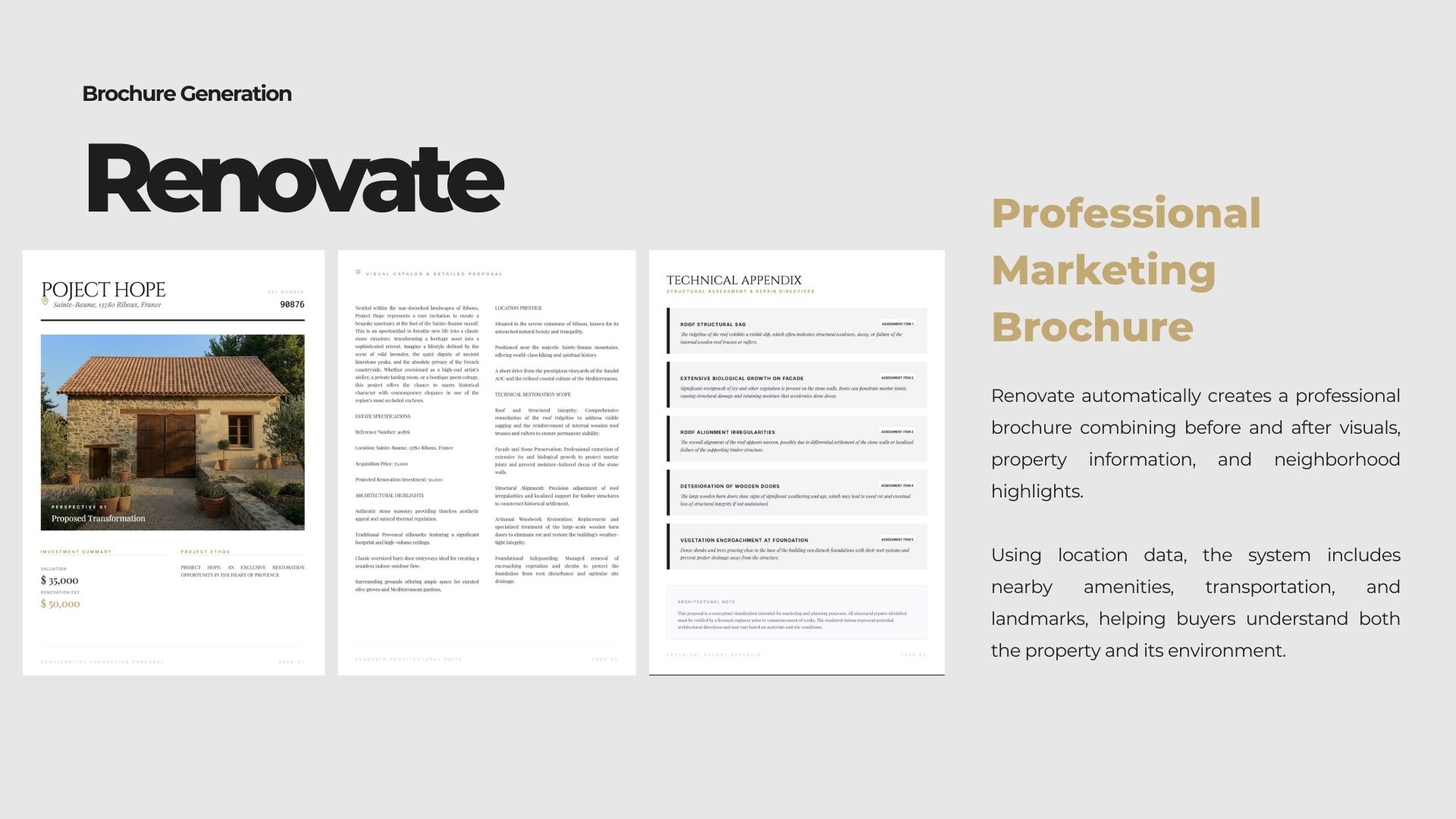
Brochure Generation
-
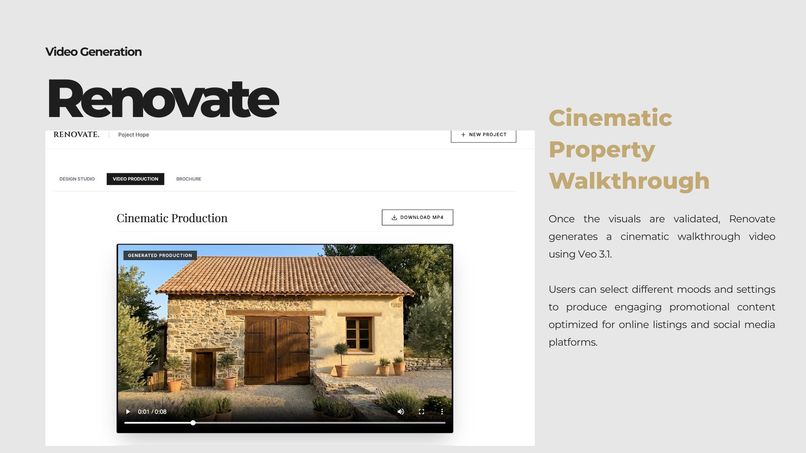
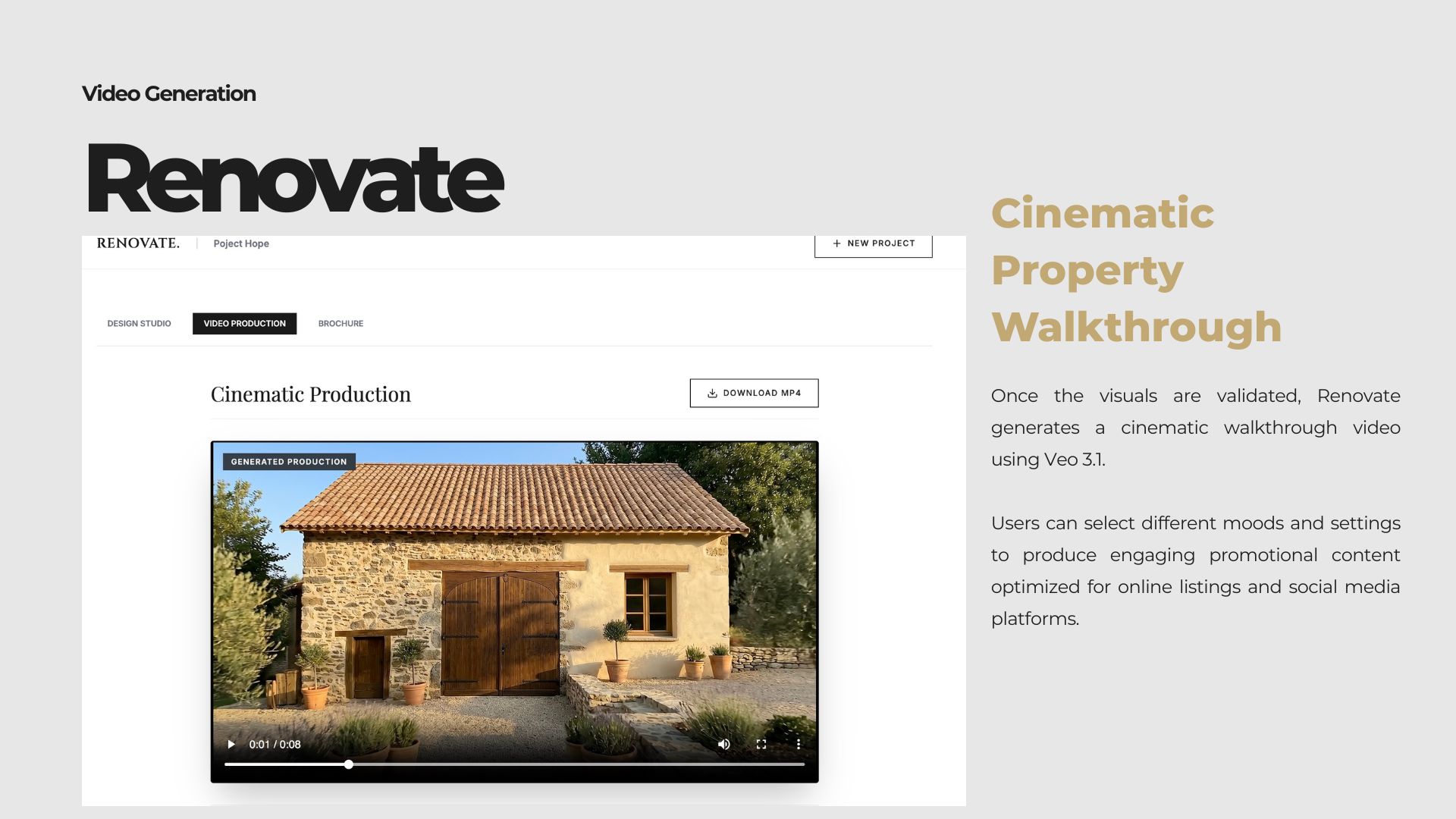
Video Generation & Refinement
-
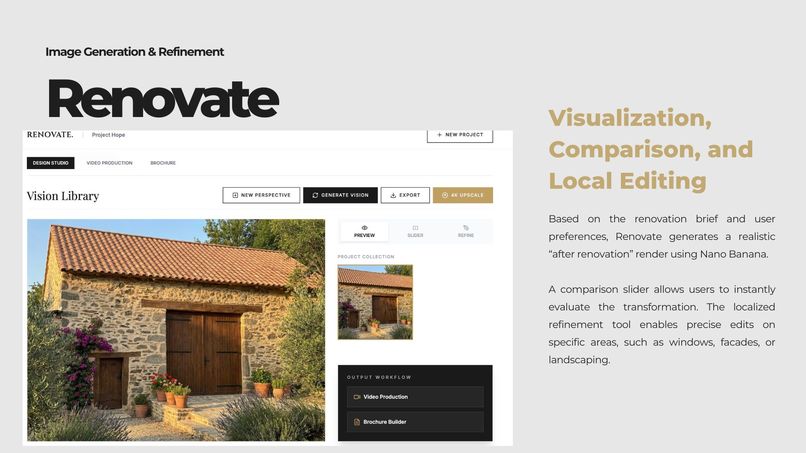
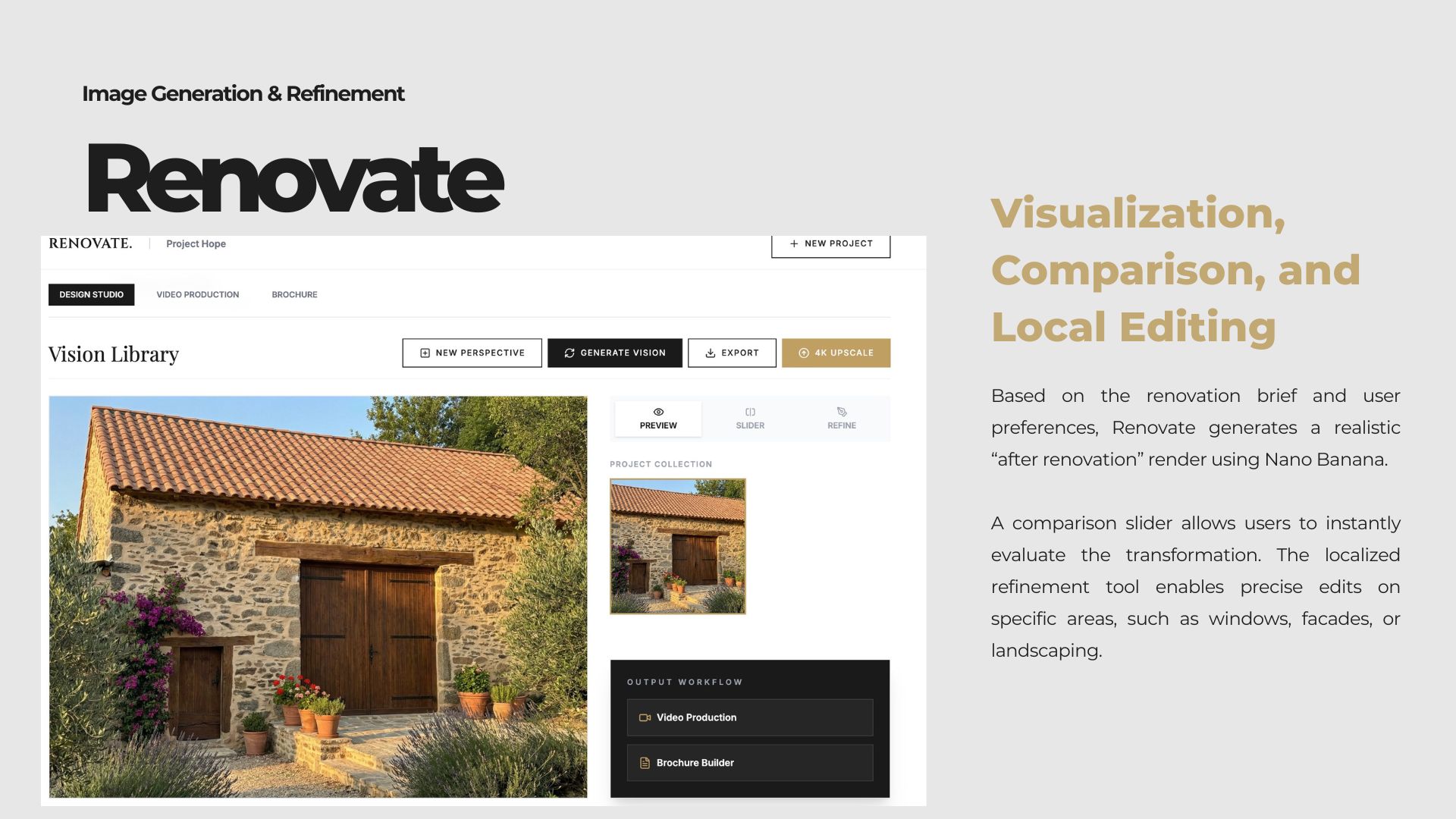
Image Generation & Refinement
Inspiration
The idea for Renovate started while walking through the old streets of Beirut, Lebanon.
Among the busy roads and modern buildings, there are many abandoned and aging structures where time has clearly left its mark. Cracked walls, damaged roofs, and faded facades often hide what these buildings could become. Instead of seeing opportunity, most people only see problems.
Standing in front of these buildings, I could clearly see their potential.
This is not unique to Beirut. Across Europe and many parts of the world, a large percentage of residential buildings are aging or underutilized, waiting for renovation and reinvestment. However, these properties often struggle to attract buyers because it is difficult to imagine their future.
I realized that the biggest barrier is not always cost or location : it is visualization.
Renovate was created to help people see beyond damage and decay, and instead visualize what a space can become. The goal is to use AI to bring forgotten spaces back to life digitally and support better investment and renovation decisions.
What It Does
Renovate is an end-to-end AI renovation and marketing copilot.
Users can:
- Create a project using a property listing URL or manual input
- Validate addresses using Google’s Address Validation API
- Upload photos of existing properties
- Automatically analyze visible renovation issues using Gemini 3
- Generate structured renovation reports with priorities
- Create photorealistic “after” renovation renders using Nano Banana
- Edit specific areas of images using localized patch editing
- Generate cinematic walkthrough videos using Veo 3.1
- Automatically generate marketing brochures with before/after visuals and neighborhood highlights
All of these steps are integrated into a single, easy-to-use workflow.
How I Built It
Renovate was built as a multi-stage AI pipeline where Gemini 3 serves as the central reasoning engine.
First, I implemented project creation and address validation using Google’s APIs to ensure reliable location data.
Next, I used Gemini’s multimodal capabilities to analyze uploaded images and detect visible structural and renovation issues. These results are converted into structured assessments with confidence levels.
Based on this analysis and user preferences, Gemini generates a renovation brief and optimized rendering prompts. These prompts are sent to Nano Banana to produce high-quality visualizations while preserving the original structure.
I then integrated localized patch editing to allow users to refine specific areas without regenerating the entire image.
For video generation, Gemini produces a storyboard and camera plan, which is used with the Veo 3.1 API to create walkthrough videos.
Finally, I combined Google Maps and Places data with Gemini-generated text to produce complete marketing brochures hightlitghing near landmarks using the project location.
Challenges I Faced
One of the biggest challenges was maintaining visual and logical consistency across different AI outputs. Small changes in prompts or inputs could lead to unexpected variations, which required extensive testing and refinement.
Another challenge was ensuring that image-based damage detection remained responsible and transparent. Since visual analysis cannot replace professional inspections, I designed the system to include confidence indicators and disclaimers.
Integrating multiple APIs into a stable and responsive workflow was also technically demanding, especially as a solo developer working within a limited timeframe.
Additionally, managing data storage, project persistence, and preparing for future user accounts required careful system design.
What I Learned
Coming from an engineering background, this project pushed me beyond traditional problem-solving.
I learned how to design multi-stage AI reasoning pipelines, integrate multimodal AI systems, and apply prompt engineering at scale. I also gained experience in building full-stack applications that combine cloud services, AI models, and user-friendly interfaces.
Experimenting with consistency, prompt structure, and workflow design taught me how important system-level thinking is when working with generative models.
Most importantly, I learned how to transform a technical prototype into a practical, user-focused product.
What’s Next
In future versions of Renovate, I plan to add:
- Cost estimation and contractor matching
- Region-specific renovation and building code guidance
- User accounts and long-term project management
- Integration with major real estate platforms
The long-term vision is to make Renovate a universal AI platform for property transformation and marketing.
Built With
- Google AI Studio
- Gemini 3 API
- Nano Banana Image Generation API
- Veo 3.1 Video Generation API
- Google Address Validation API
- Google Maps & Places API
- JavaScript / TypeScript
- React / Next.js
- Node.js
- REST APIs
- Cloud Storage
- Supabase / Firebase
Built With
- gemini
- gemini-api
- gemini-tool-calling:google-maps-tool
- gemini-tool-calling:google-search-tool
- google-ai-studio
- html-2-canvas
- jspdf
- lucidereact
- nanobanana
- react
- typescript
- veo3.1
- vite

Log in or sign up for Devpost to join the conversation.