-
-

Landing Page View in Light theme
-
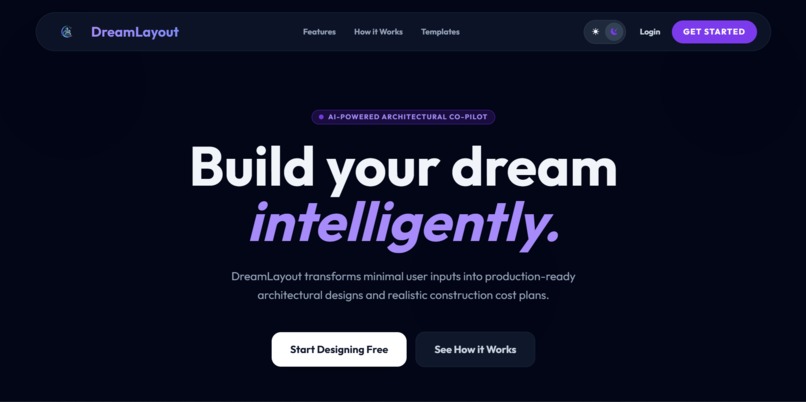
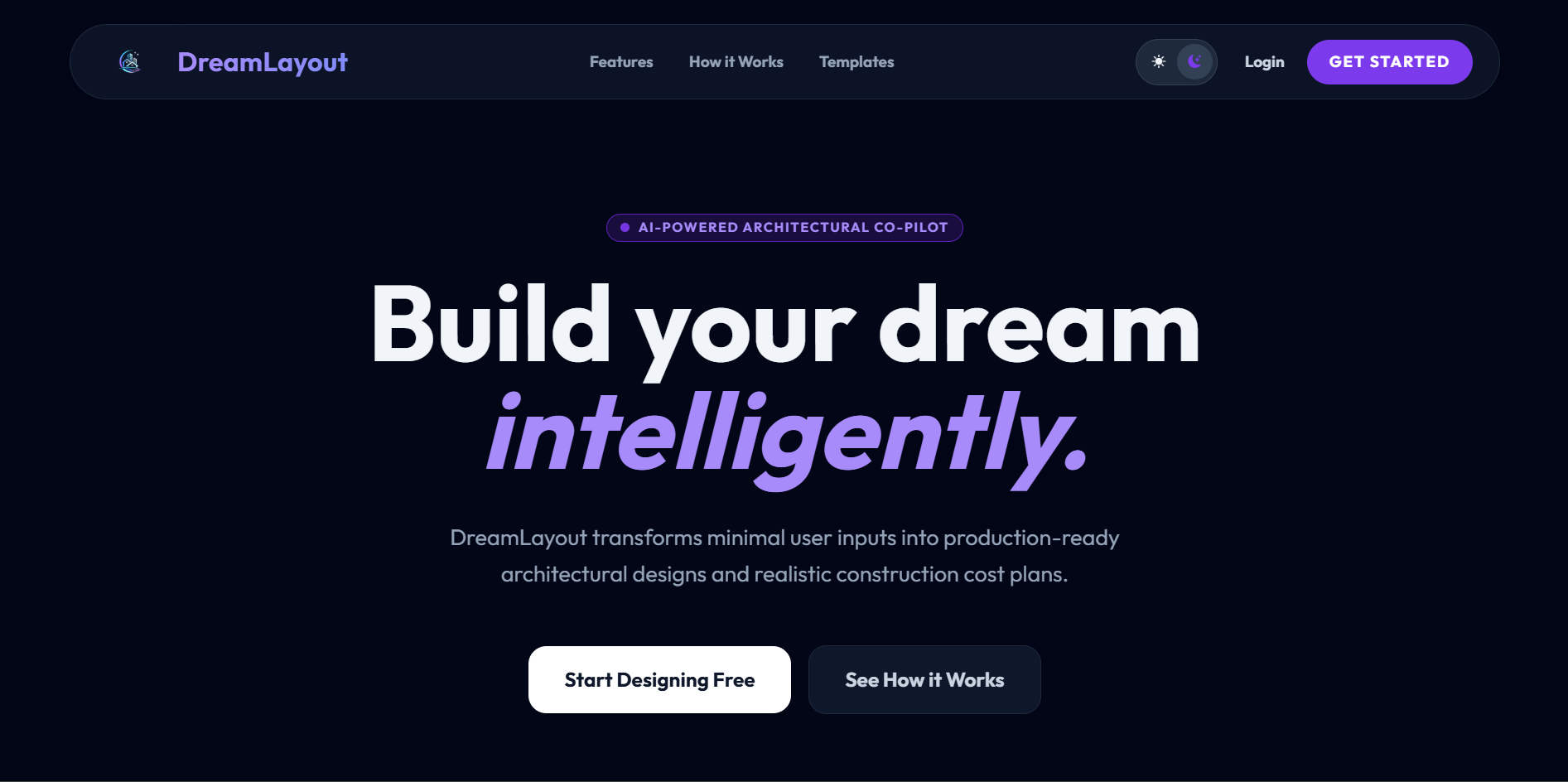
Landing Page View in Dark theme
-
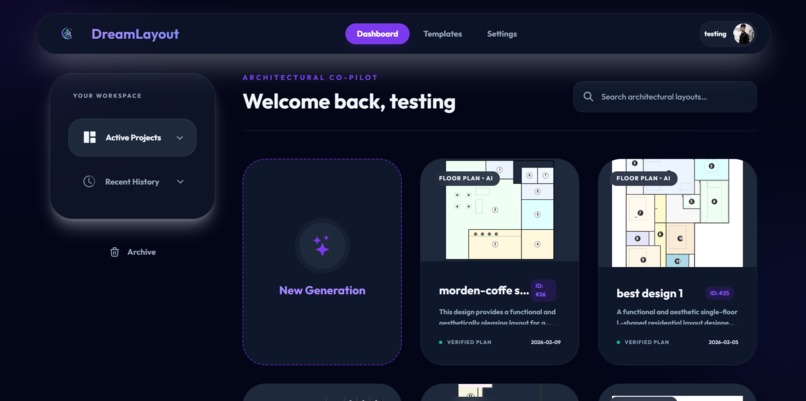
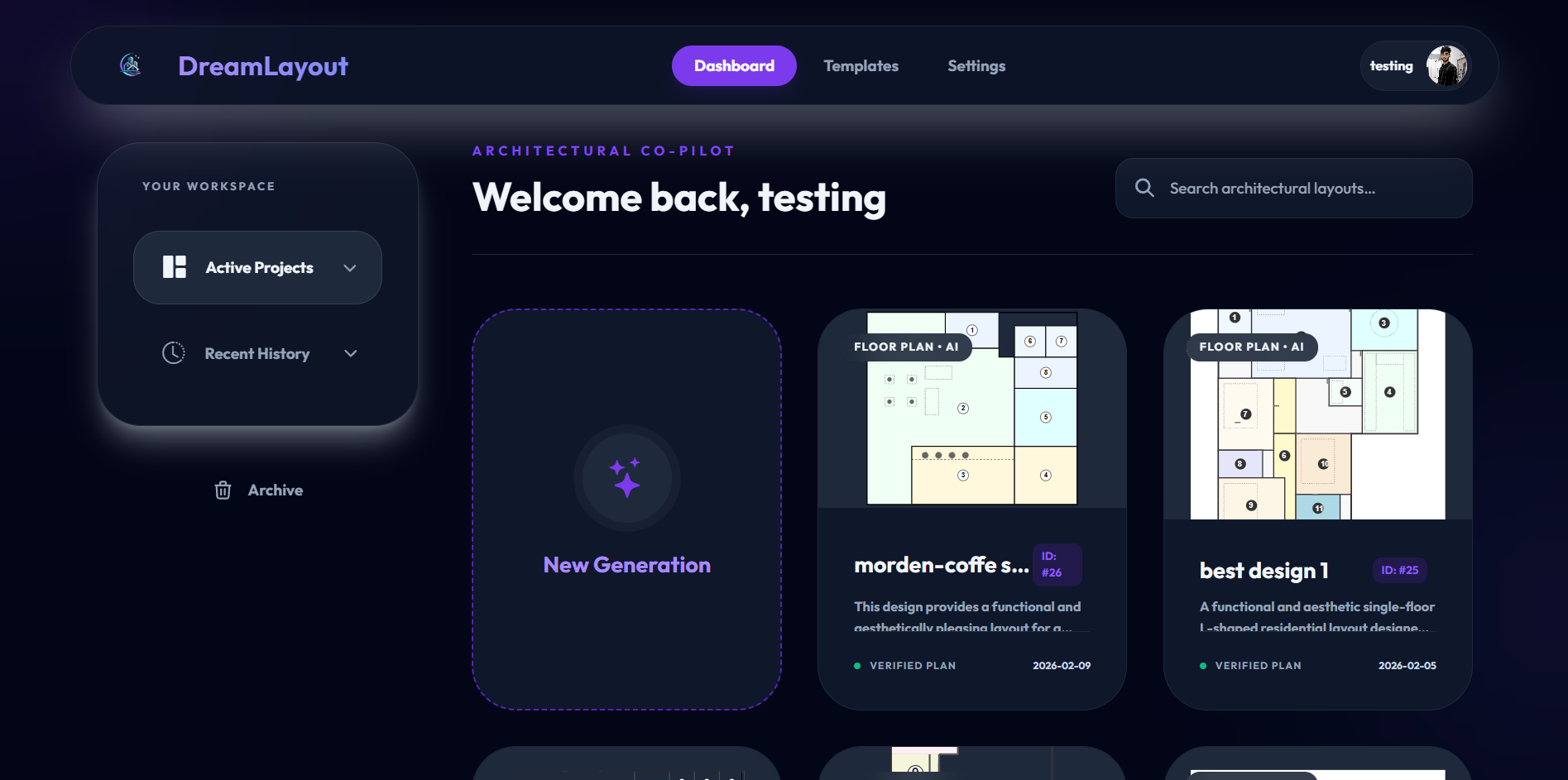
Dashboard Page View in Dark theme
-
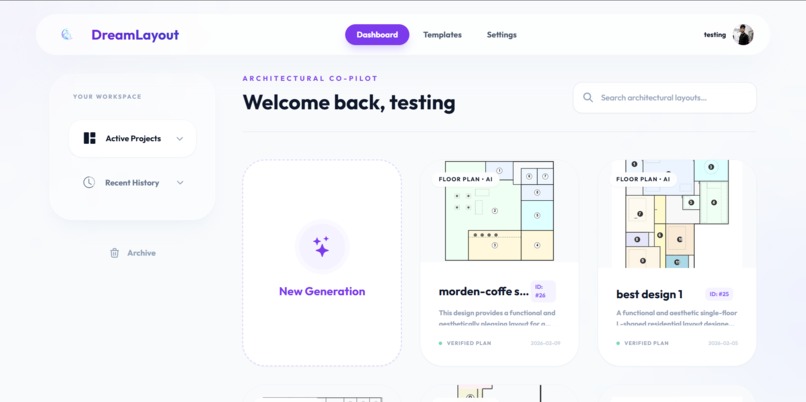
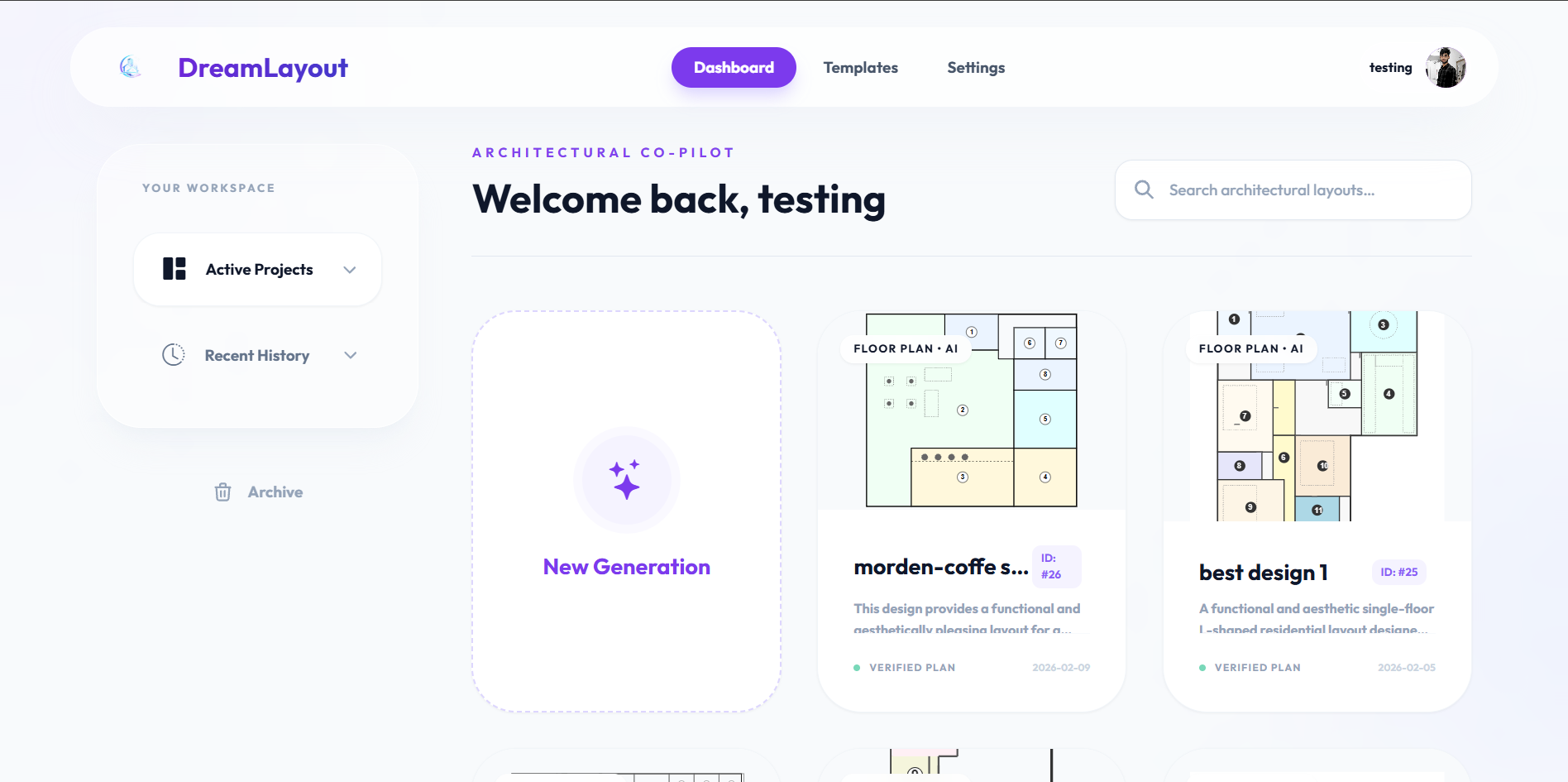
Dashboard Page View in Light theme

Inspiration
The journey of DreamLayout began with a simple observation: the barrier between a creative vision for a space and a professional architectural blueprint is too high. Traditional CAD software is complex, and hiring an architect for every initial idea is costly. We wanted to build a tool that democratizes architectural design—an intelligent companion that listens to your abstract ideas, understands your site's unique geometry, and delivers production-ready plans in seconds.
What it does
DreamLayout is a premium AI-powered platform that transforms hand-drawn site outlines and text descriptions into high-fidelity, scalable SVG floor plans.
- Intelligent Sketching: Users can draw their site's shape on a digital canvas.
- Architectural Brain: Powered by Gemini 2.5 Flash, it doesn’t just draw rooms; it provides a professional Design Philosophy, explaining why certain rooms are placed for optimal flow and light.
- SVG Blueprints: Outputs clean, numbered, and professional vector graphics.
- Vector Intelligence: Uses FAISS to index user profiles and design preferences for personalized experiences.
How we built it
We architected DreamLayout using a modern, high-performance tech stack:
- Backend: Built with FastAPI for ultra-fast asynchronous API handling.
- AI Core: Integrated Gemini 2.5 Flash via LangChain (LCEL) to orchestrate complex architectural reasoning.
- Vector Search: Employed FAISS (Facebook AI Similarity Search) for indexing user profiles. We utilize the $L_2$ Euclidean distance for similarity matching:
$$d(x, y) = \sqrt{\sum_{i=1}^n (x_i - y_i)^2}$$ - Geometry Processing: The system calculates site areas and rectifies rough user sketches into orthogonal shapes. For area validation, we apply the Shoelace formula:
$$Area = \frac{1}{2} \left| \sum_{i=1}^{n-1} x_i y_{i+1} + x_n y_1 - \sum_{i=1}^{n-1} x_{i+1} y_i - x_1 y_n \right|$$ - UI/UX: Crafted with Tailwind CSS and Jinja2 to provide a premium, “dark-mode first” aesthetic with micro-animations.
- Storage: Cloudinary for lightning-fast SVG delivery and SQLite for relational data persistence.
Challenges we ran into
- Geometry Rectification: Converting messy user-drawn coordinates from the HTML5 Canvas into clean architectural polygons was challenging. We solved this using LLM-based geometric normalization prompts that interpret intent over raw pixels.
- SVG Standardization: Ensuring generated SVGs rendered perfectly across devices required strict normalization, including XML namespaces and precise viewBox handling.
- Context-Aware Design: Balancing user preferences with architectural best practices required fine-tuning LangChain prompts to prioritize structural logic.
Accomplishments that we're proud of
- Instant Blueprints: Reduced the time from idea to layout from hours to seconds.
- AI Design Philosophy: The AI acts as a consultant, providing a clear design rationale alongside visuals.
- Vector Search Integration: Successfully implemented FAISS for personalized design experiences.
What we learned
- Prompt Engineering for SVG: Gemini excels at generating structured graphic code when given strict geometric constraints.
- Asynchronous Workflows: Mastering FastAPI async handling to keep the UI responsive during heavy AI processing.
- Human-Centric Design: Translating complex architectural logic into an intuitive, user-friendly dashboard.
What's next for DreamLayout
- 3D Exploration: Integrating Three.js to enable walk-through 3D experiences.
- Material & Cost Estimation: Adding intelligence to estimate construction costs using local material pricing.
- Collaborative Workspace: Enabling real-time collaboration between homeowners and professional architects.
Built With
- cloudinary
- faiss
- fastapi
- flash
- gemini
- html5
- javascript
- jinja
- langchain
- python
- sqlite
- tailwind
- vanilla


Log in or sign up for Devpost to join the conversation.