-
-
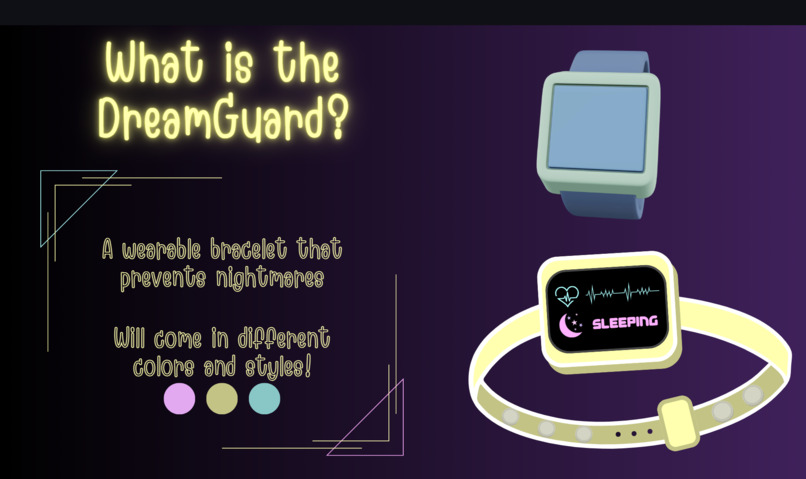
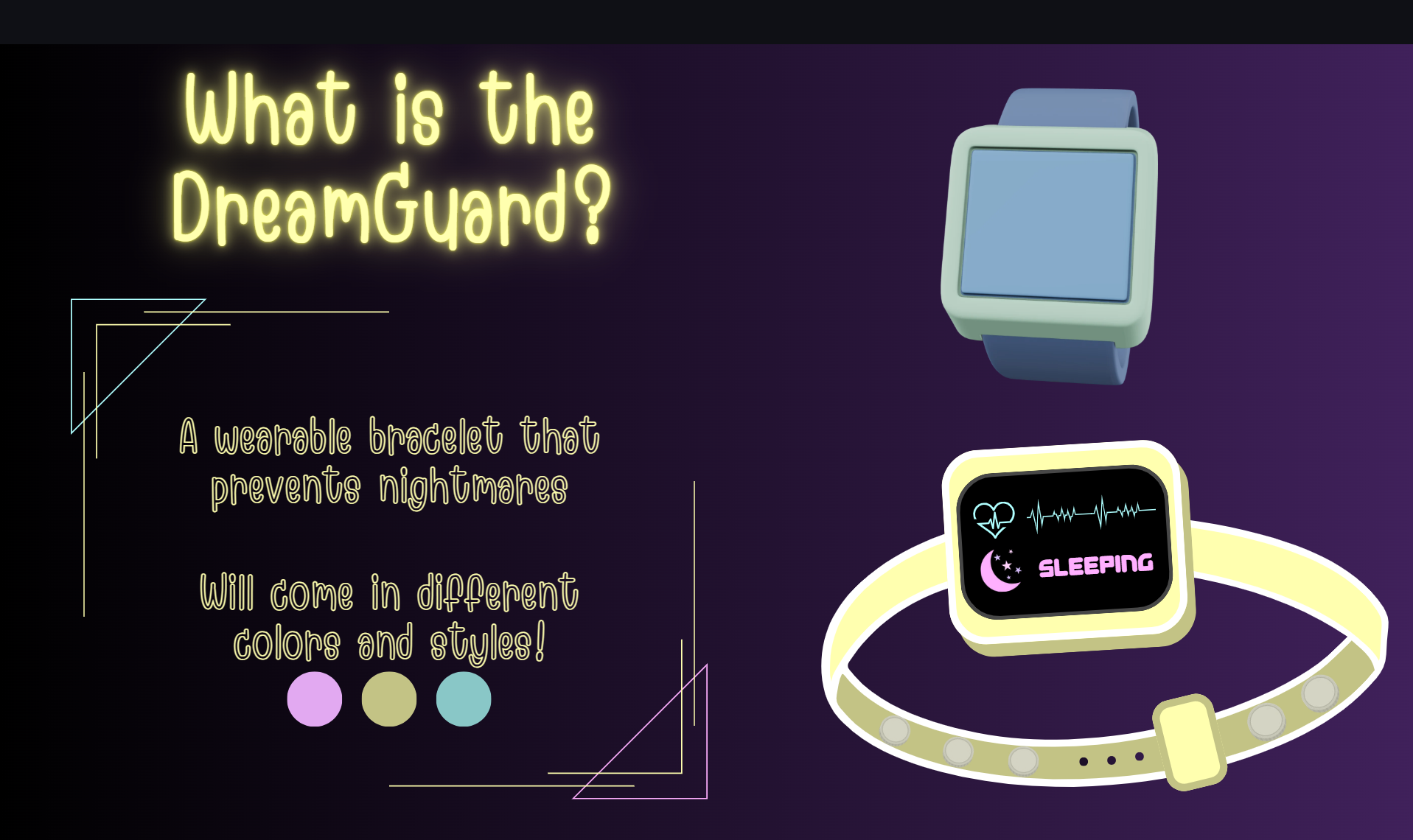
What is the DreamGuard?
-
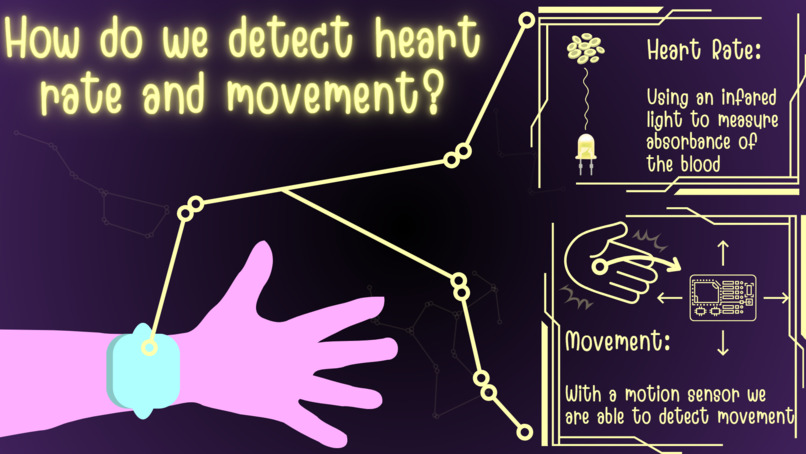
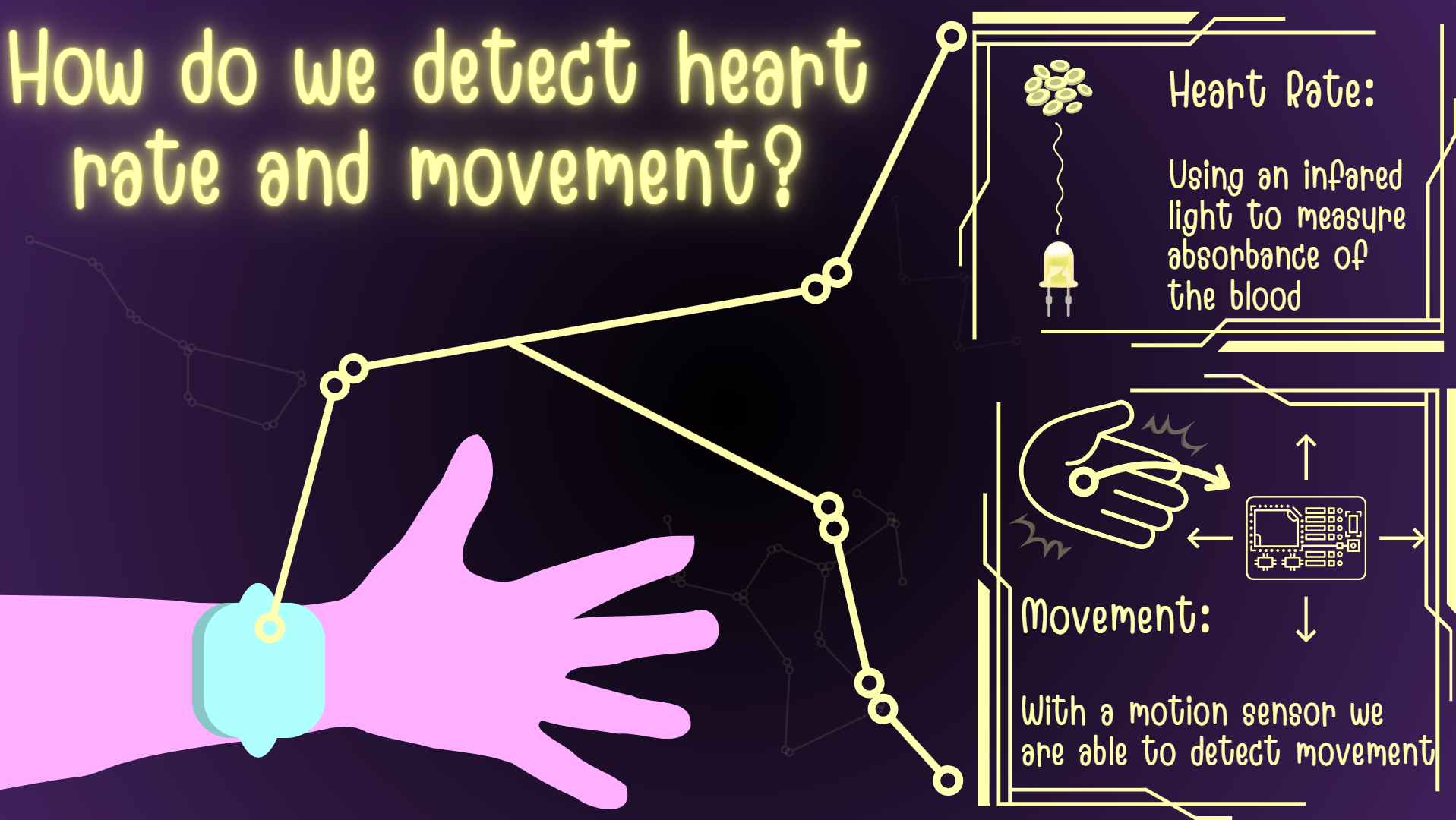
How do we detect heart rate and movement?
-
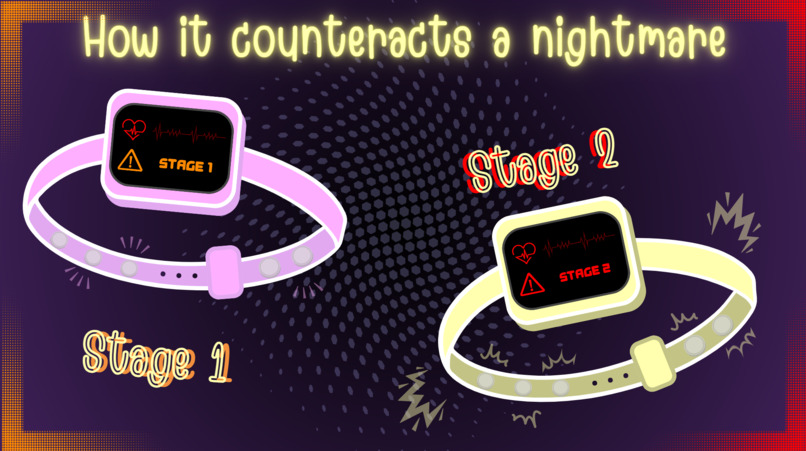
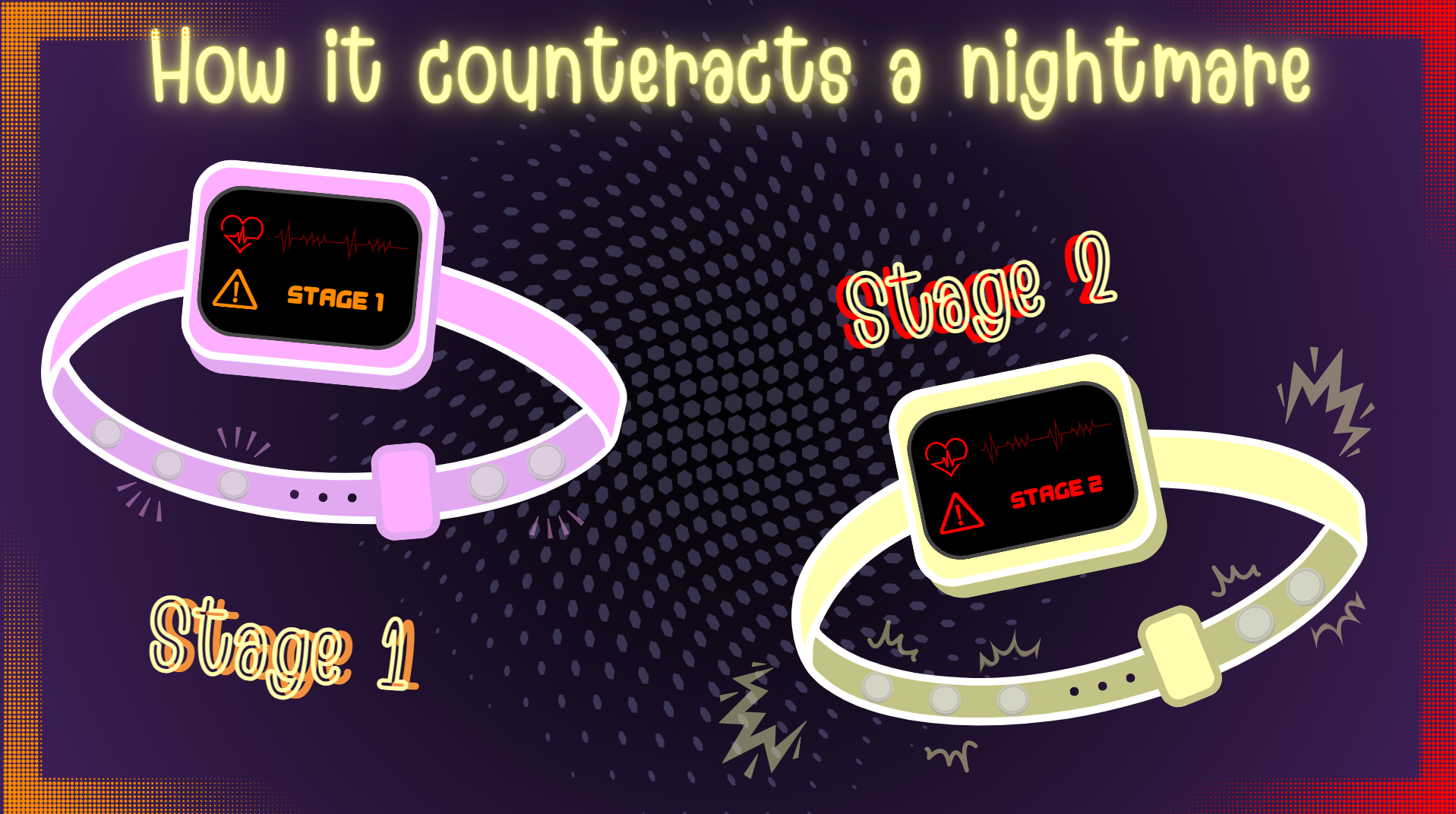
How it counteracts a nightmare
-
DreamGuard
Inspiration
A lot of sexual assault survivors have trauma induced nightmares where they are forced to relieve the worst experience of their life over and over. As someone who knows people who suffer from this, I found it really discouraging that the only solution being offered was by just going to therapy, so we made the Dream Guard as a practical alternative if survivors don't have access or are afraid of going to therapy
What it does
When you're experience a nightmare, your heart rate and match or exceed your resting heart rate. The Dream Guard detects heart rate and motion while you're sleeping, if it detects elevated vials, the coin motors in the bracelet vibrate your arm just enough to kick you out of the nightmare but not fully wake you up.
How we built it
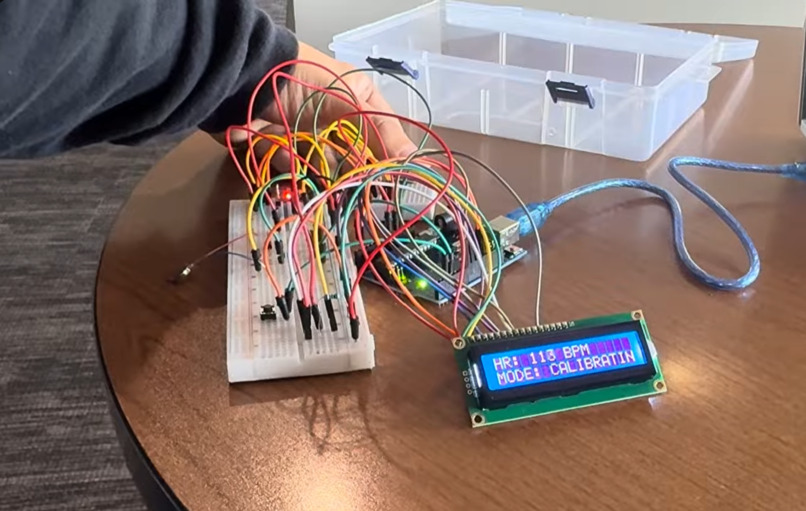
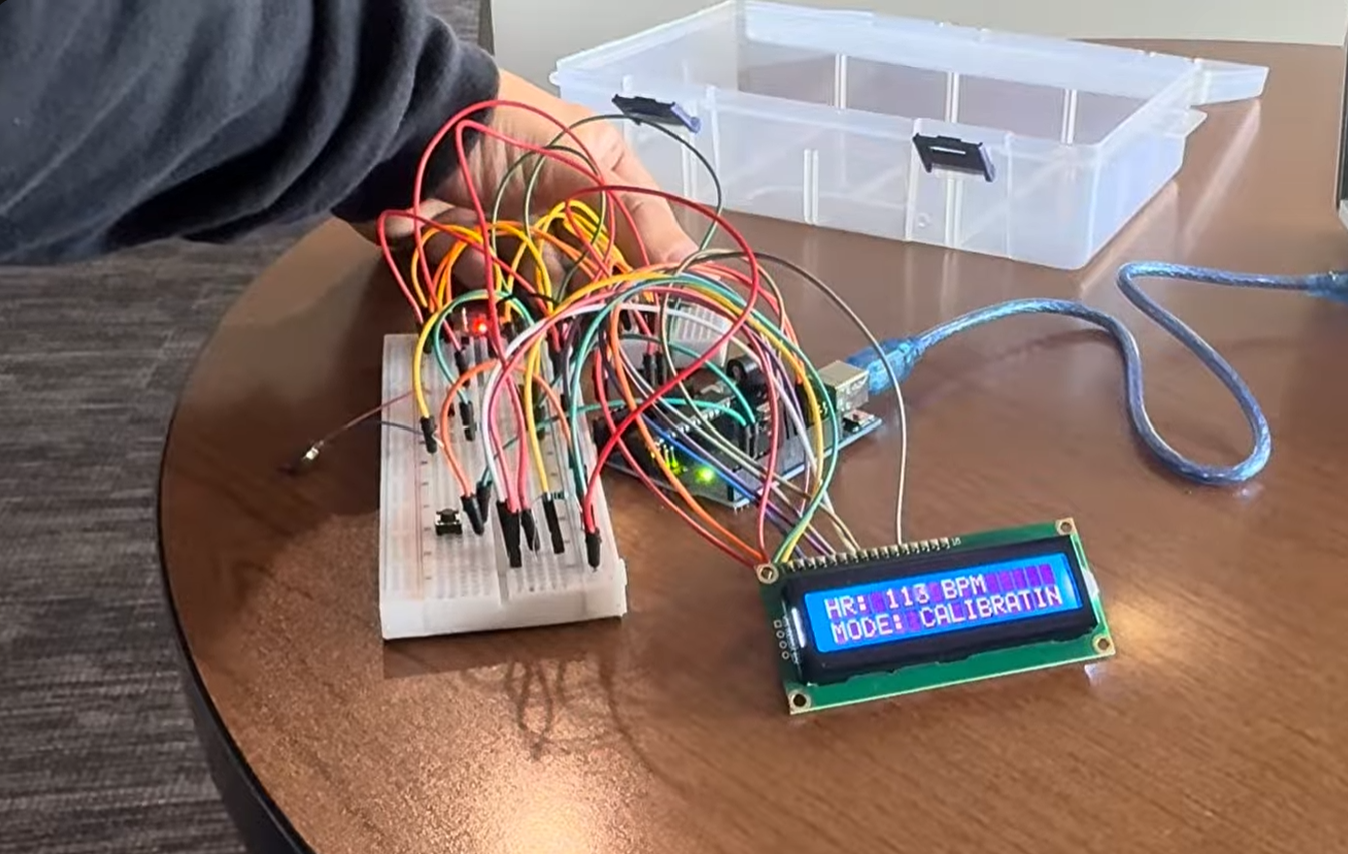
We used a Arduino Uno R3 microcontroller to power and record data from a MPU-6050 and a MAX30102 Heart rate sensor, where the current heart rate and detection mode of DreamGuard is displayed on a LCD screen. Depending on if certain thresholds are met from the readings of the MPU and MAX30102, either stage 1 will go off with a mild vibration to kick you out of a nightmare or stage 2 will go off, which is more intense and goes off if there is sustained abnormal readings after a cooldown period.
Challenges we ran into
Some challenges were that to ignore the various possibilities that can occur from users that need this product. For example, while sleeping it is perfectly fine to have small jerks of movement, which is where we needed to somehow incorporate sustained movement of about 3 seconds, where 3 seconds of sustained movement during sleep is abnormal. Another challenge was that due to time and qualification constraints, our team was not able to solder our MAX30102 sensor, which brought great challenges regarding sensor detection and consistent readings.
Accomplishments that we're proud of
To combat our challenges, we were able to implement a rolling-window movement detection, where if for any three seconds if the movement threshold is met, it triggers stage 1 or 2 depending on if it is after the cooldown period. We also incorporated extensive measures as to make sure that 1 small reading out of the 3 seconds does not ruin the condition, as at least 56/60 samples during the 3 second period must be above the threshold to trigger the stages. In solving our soldering problem, we used a rubber band to create tension in fastening the MAX30102 sensor onto the pin, making it give much more consistent sensor detection and readings.
What we learned
For 2 of us this was our first hackathon, we hadn't built any major projects before. We learned how working in a real engineering team looked like, everyone had their distinct roles, goals and deadlines. We also learned a lot about troubleshooting hardware and code.
What's next for Dream Guard
Right now the Dream Guard is just a protype to show how a nightmare interrupting device would work, there's not enough research as of now to definitively prove that it could work, but there are some research that has soon that vibrations do help prevent nightmares for veterans with PTSD
The next steps for the Dream Guard would be to make it into an actual bracelet with better algorithms for detecting nightmares and actually seeing if it helps survivors.


Log in or sign up for Devpost to join the conversation.