-
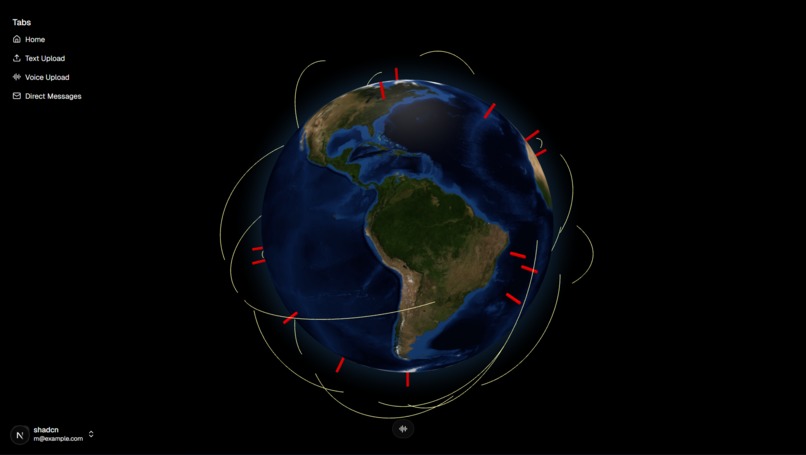
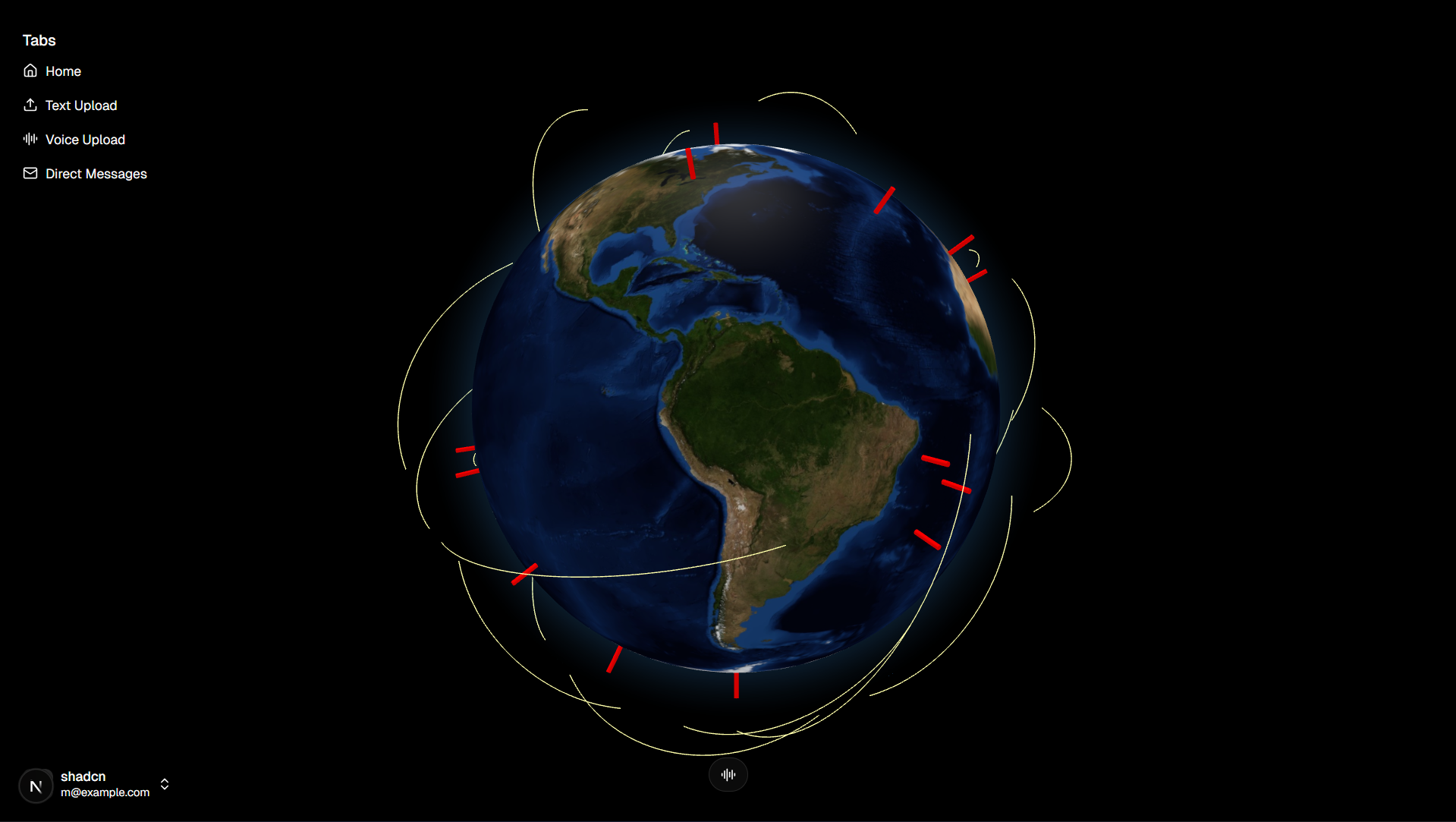
main dashboard
-
-
-
Inspiration
Dreams are strange. They’re vivid, emotional, symbolic, and often impossible to fully capture with words. Yet, they tell us so much about what we feel, fear, and hope for. We wanted to build a way for people not just to record dreams, but to understand them and to see how their subconscious connects with others around the world.
That’s why we built Dreamerz, a platform that explores the collective unconscious and transforms dream narratives into meaningful, shareable insights.
What it does
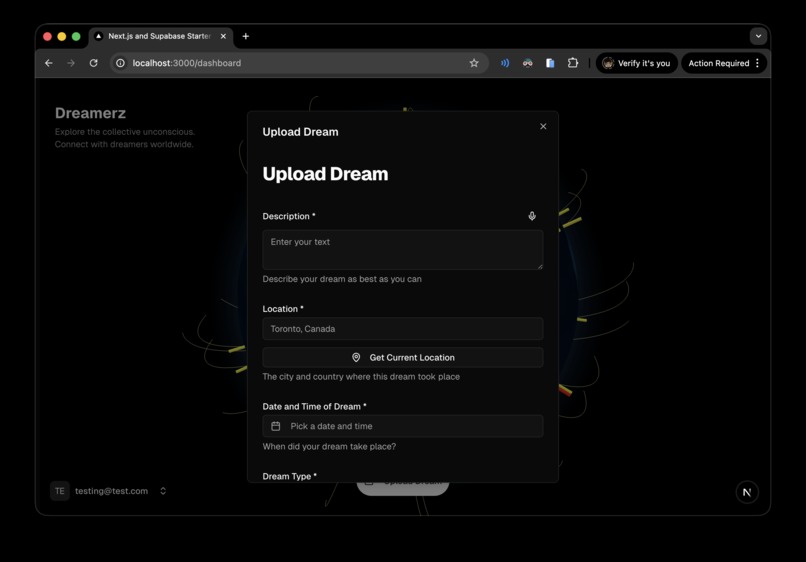
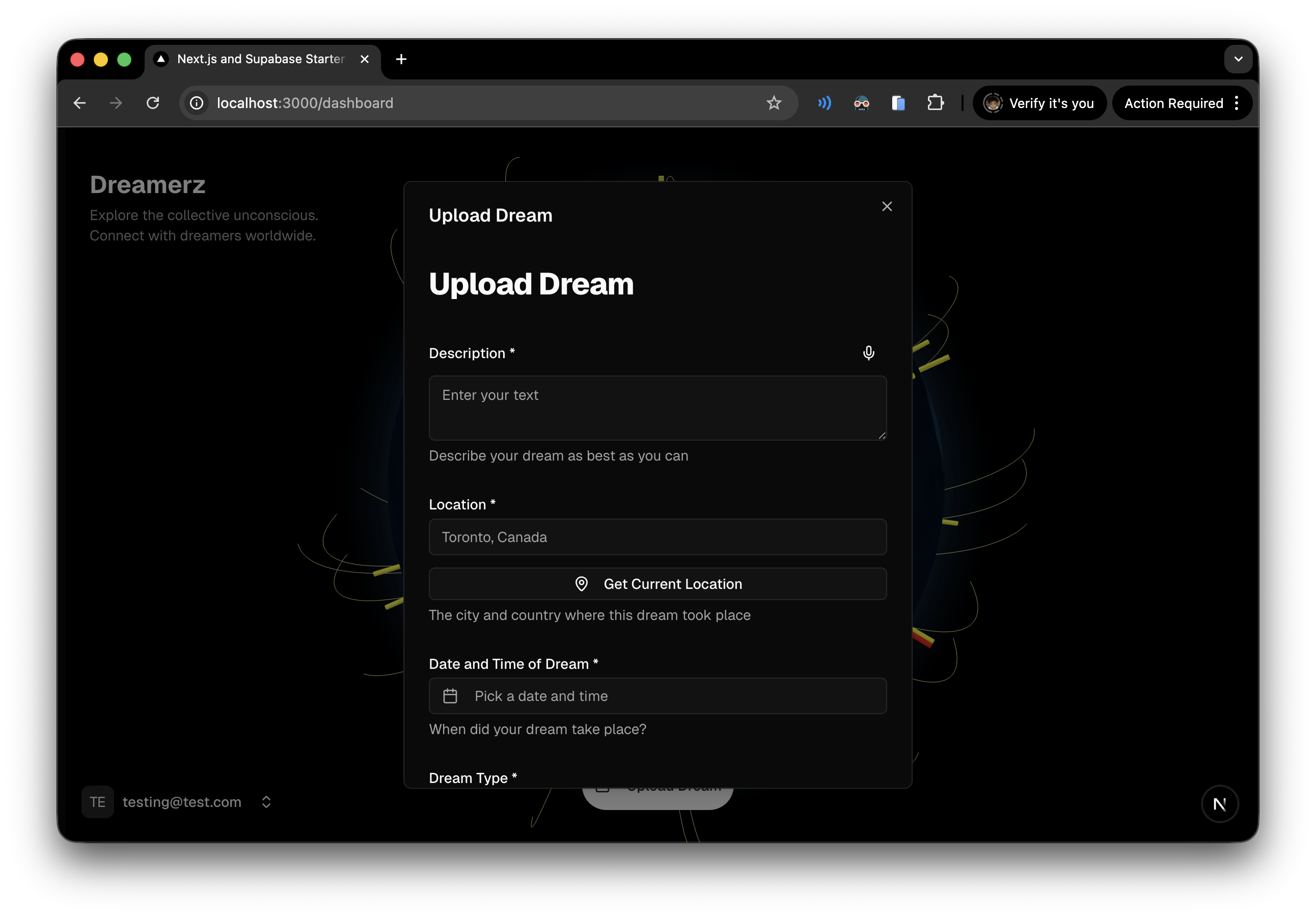
Dreamerz is a global dream-sharing platform that bridges abstract dream stories with structured emotional data. Users can speak or type out their dreams, which are then:
- Analyzed by AI to extract keywords, themes, emotions, and locations
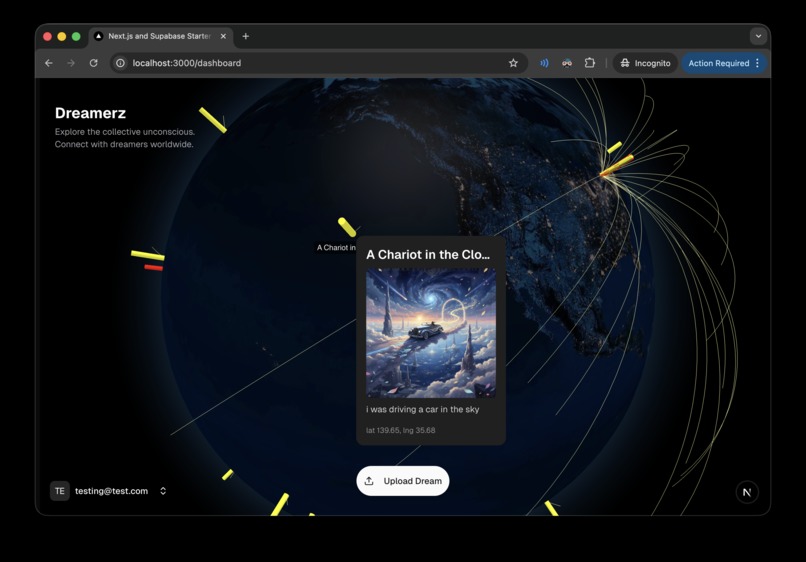
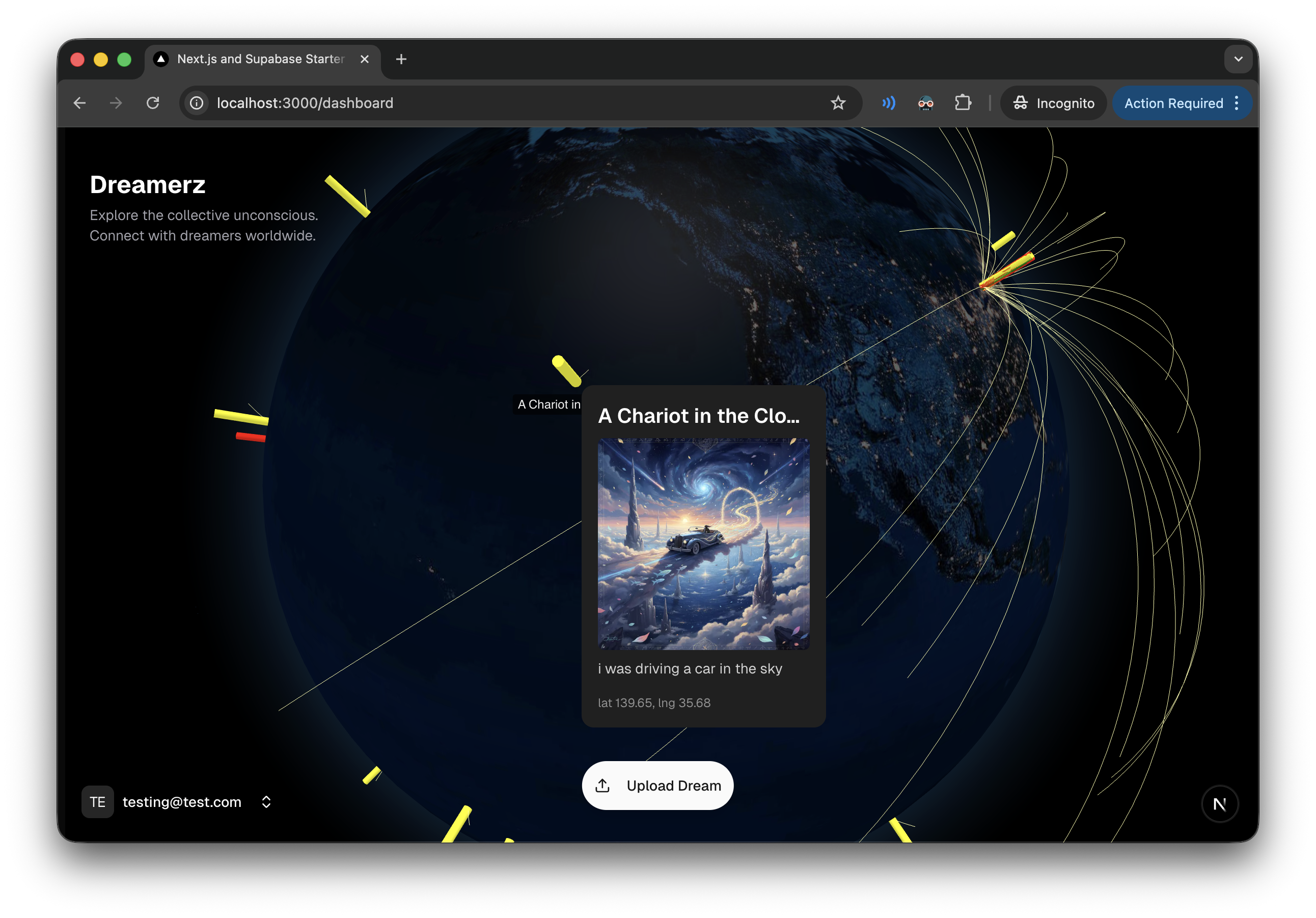
- Visualized on a 3D interactive globe
- Matched with other dreamers who experienced similar themes
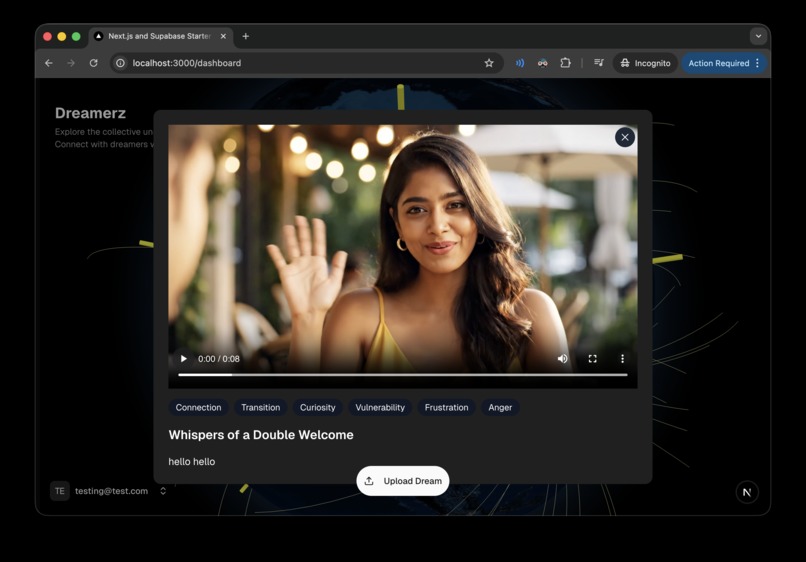
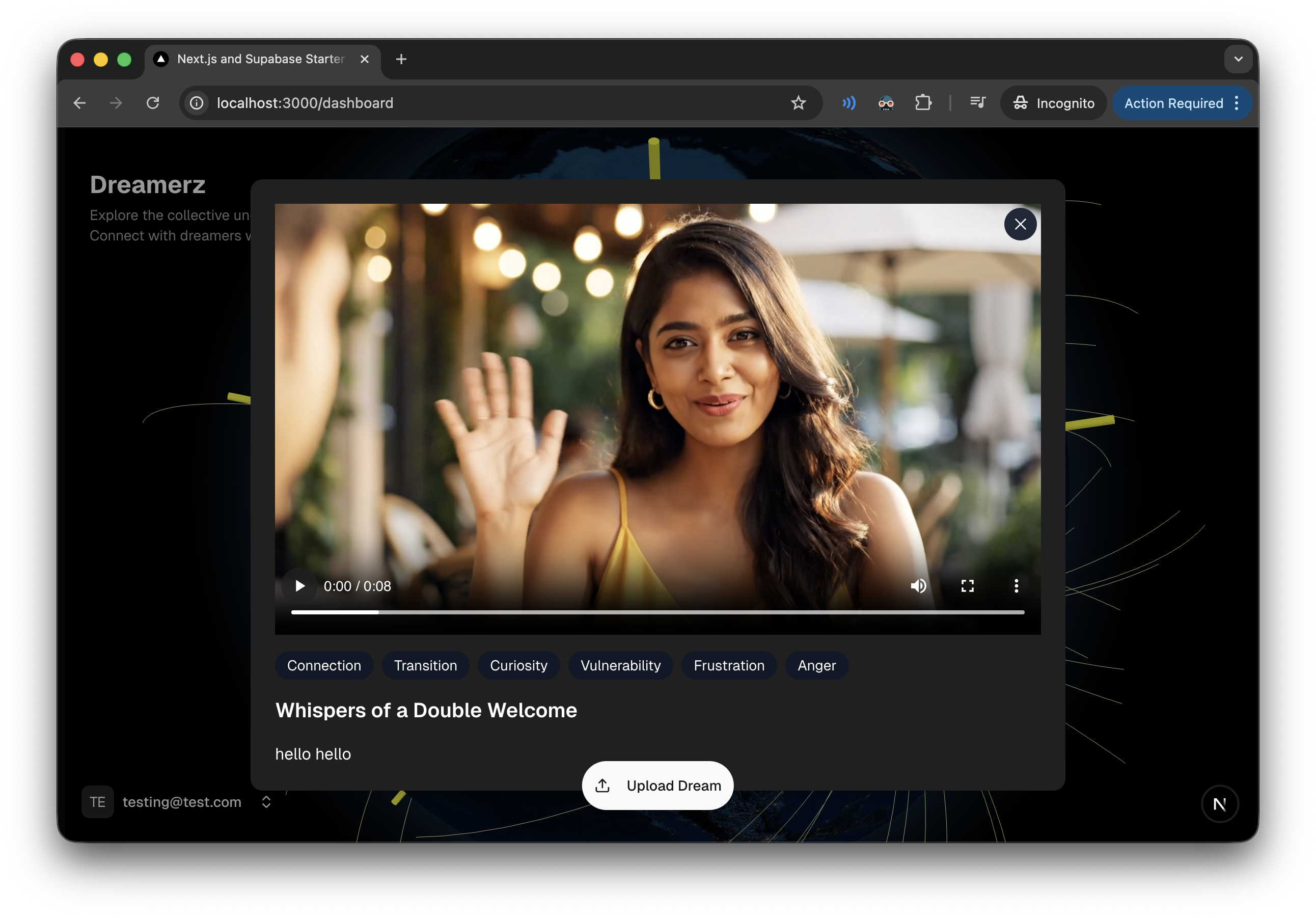
- Transformed into generative images or videos based on the dream’s narrative
Dreamerz turns ephemeral, nebulous thoughts into concrete patterns, helping users reflect on their subconscious and see how their experiences connect with others worldwide.
How it works
Just record your dream (text or voice) and Dreamerz handles the rest. Within moments, users receive:
- A structured breakdown of their dream
- Emotional and thematic tags
- A plotted point on an interactive 3D globe
- Connections to people with similar dream themes
- AI-generated images and videos inspired by the dream narrative
We also include a color-coded matching system:
- 🟢 Green: Your dreams
- 🟡 Yellow: Dreams with shared themes
- 🔴 Red: Unrelated dreams
Who is this meant for? Who can use it?
Everyday Dreamers: Anyone curious about their dreams can use Dreamerz to record, analyze, and reflect on emotional patterns over time. It’s a way to document your inner world and see how it evolves.
Psychology & Wellness Enthusiasts: People interested in introspection, emotional health, and personal insight can use Dreamerz to track long-term subconscious patterns.
Creatives & Storytellers: Writers, artists, and filmmakers often draw inspiration from dreams. Dreamerz provides generative images, structured themes, and emotional context that can spark creative ideas.
Researchers & Students: Dreamerz provides structured, anonymized dream data — useful for studying collective human themes, sentiment, and cultural patterns.
How we built it
We built Dreamerz using a full-stack setup centered around stability, visualization, and structured AI output:
- Frontend: Next.js, React, Tailwind CSS, Framer Motion, shadCN
- 3D Visualization: react-globe.gl (powered by Three.js)
- Backend & Auth: Supabase for user management, storage, and database services
- AI Processing with Google Gemini (gemini-2.5-flash) for semantic analysis, sentiment, naming, and JSON-mode structured output
- Generative models like Gemini and Nano Banana Pro to create images + videos
- Media Storage: Cloudinary
- Icons: Lucide React
A core architectural focus was to treat prompts as code: structured, deterministic, and validated against database schemas.
Challenges we ran into
Preventing AI Hallucinations: Gemini initially invented new dream tags outside our database schema. We solved this by implementing a strict prompt system that injects a fixed vocabulary, forcing the model to choose only valid, predefined keywords.
Fragile Output Parsing: Raw text output led to parsing issues and edge cases. Switching to Gemini’s JSON mode guaranteed consistent structure and dramatically improved system stability.
Handling Real-Time 3D Visualization: Rendering global dream activity in real-time on a 3D globe required performance tuning and efficient data streaming.
Voice Input + Multimodal Data: Integrating speech-to-text smoothly and making sure it played nicely with our analysis pipeline took refinement.
Accomplishments we’re proud of
- Building a fully functional system that converts free-form dream narratives into structured emotional data
- Achieving deterministic, hallucination-free AI analysis
- Creating a real-time 3D visualization that feels alive and global
- Integrating voice input, generative media, and semantic matching into one cohesive experience
- Designing an interface that feels imaginative, introspective, and cinematic
What we learned
We learned the importance of:
- Treating prompts like code, strict, repeatable, and versioned
- Enforcing type safety in AI-driven applications
- Balancing latency vs. accuracy when doing semantic analysis
- Combining multimodal inputs (text, audio) with structured processing
- Building with scalability in mind as data volume grows
Most importantly, we learned how to design with emotion in mind, building a tool that feels meaningful, personal, and universally human.
What’s next for Dreamerz
We see Dreamerz evolving far beyond dream logging. Future additions may include:
- A dedicated social feed for dream sharing
- Deeper emotion tracking and long-term subconscious trend analysis
- Ability to interpret images or sketch-based dream inputs
- Shareable dream profiles and private friend groups
- Advanced generative “dreamscape sequences”
- Improved UI/UX for smoother, more immersive interaction
- Dream journaling streaks, tags history, and archive views
Our long-term goal is to build the world’s largest map of the collective unconscious.
Test users:
- [email protected],123456
- [email protected],123456
- [email protected],123456


Log in or sign up for Devpost to join the conversation.