-
-
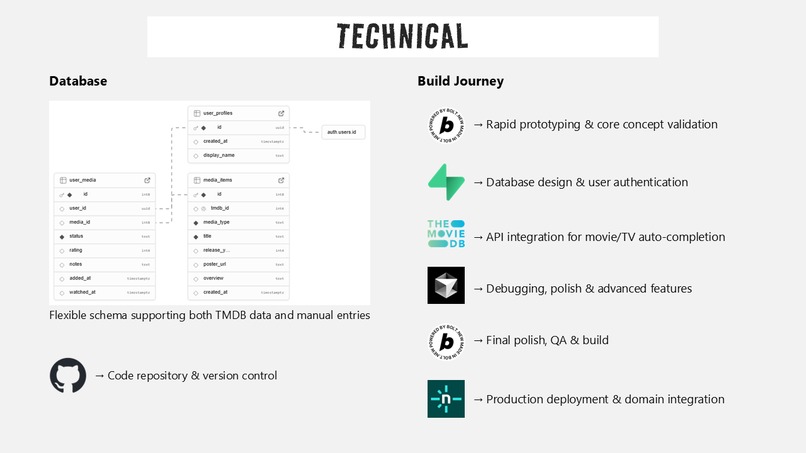
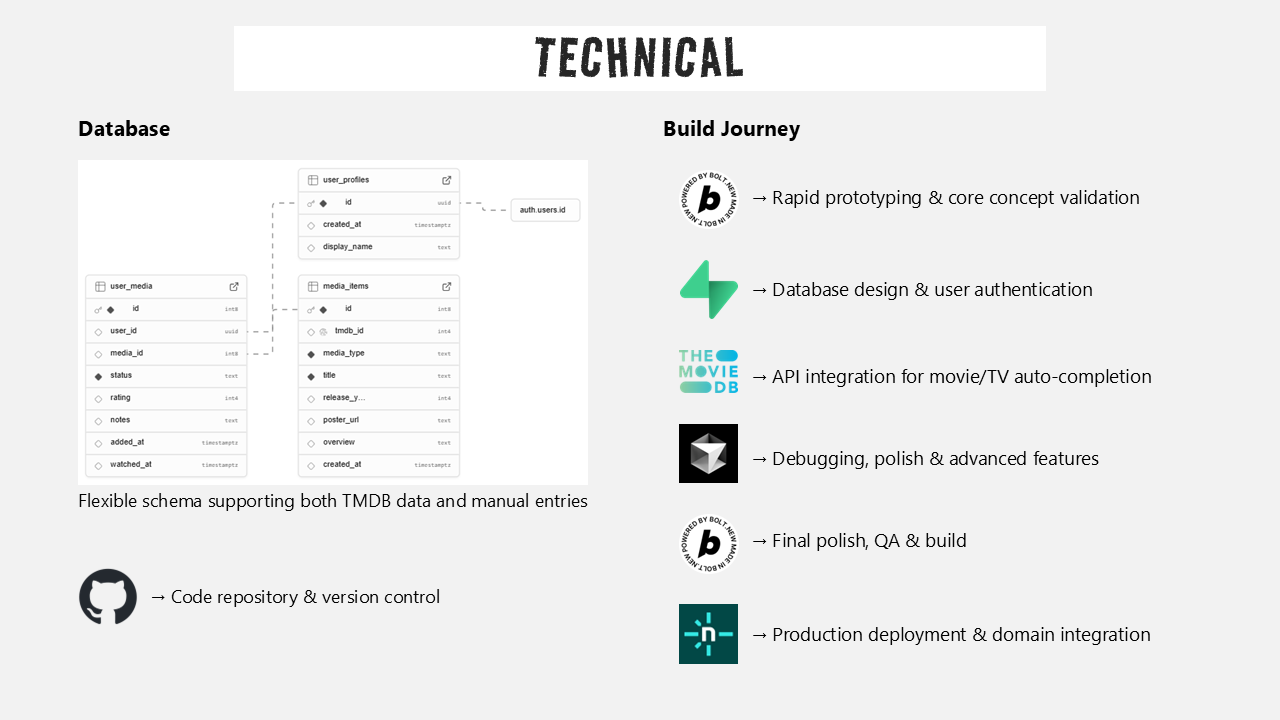
Technical Details of Dreamember - DB, Build Journey, DB, and more
-
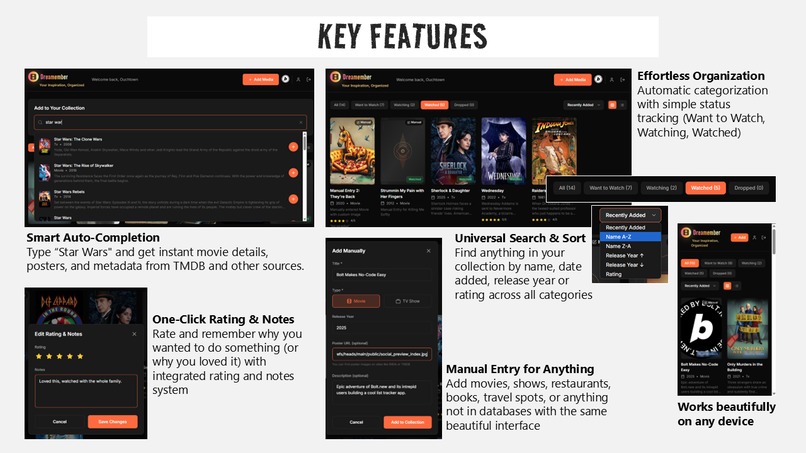
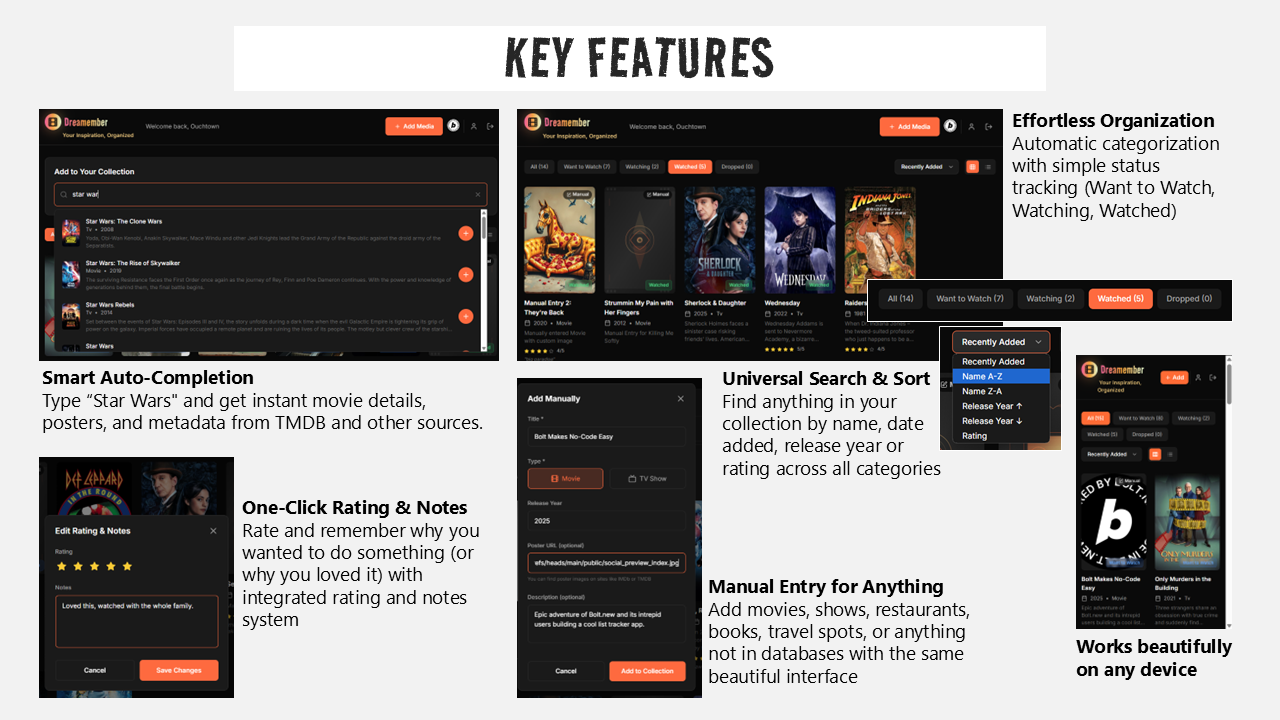
Key Features of Dreamember
-
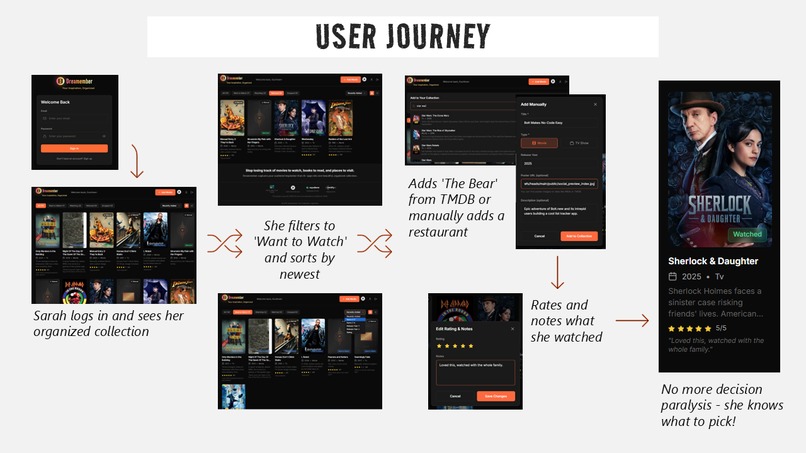
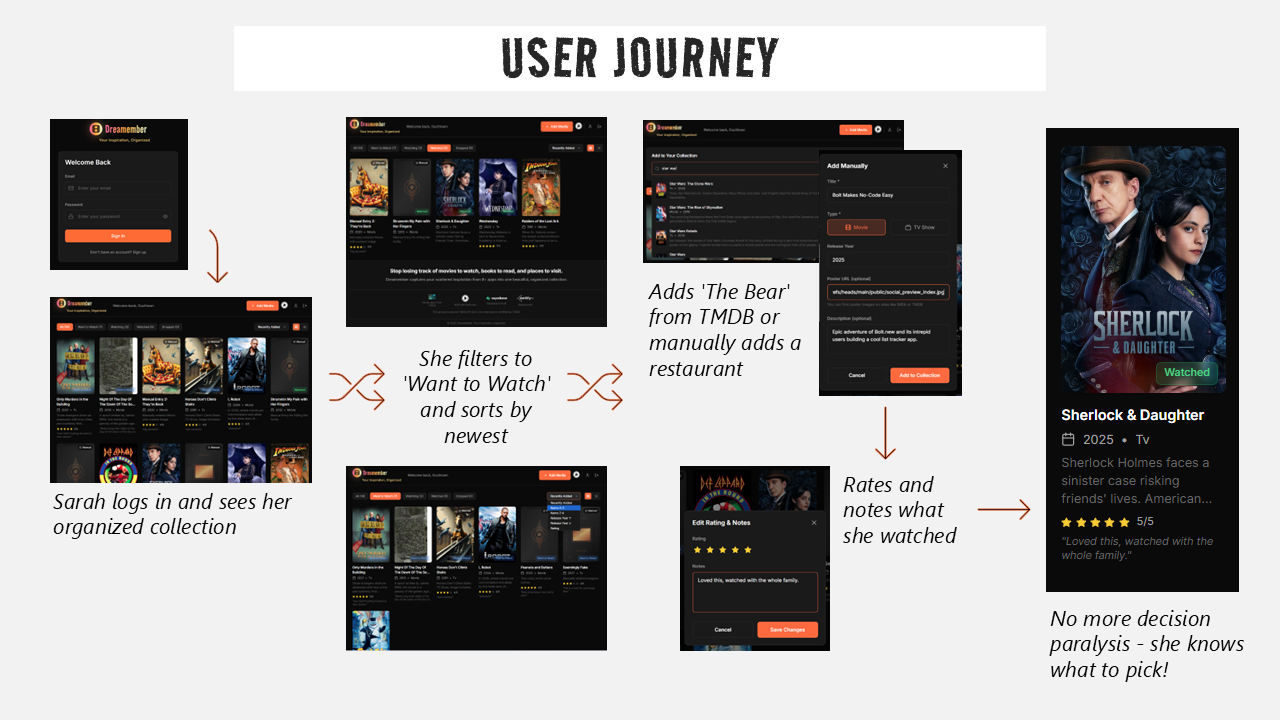
User Journey / Workflow
-
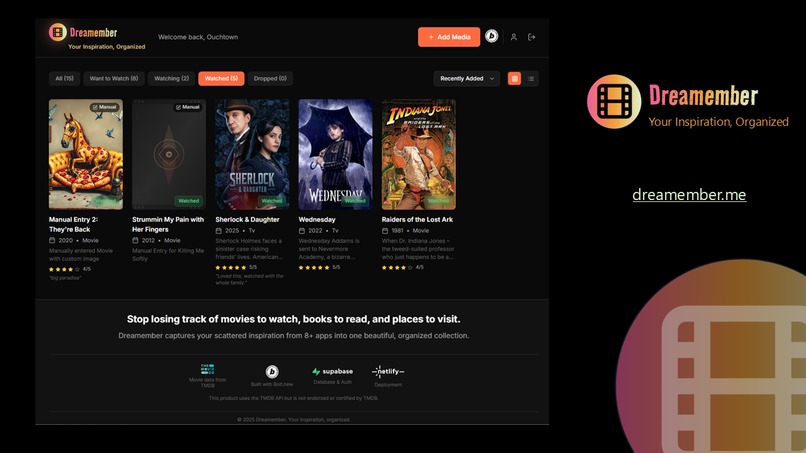
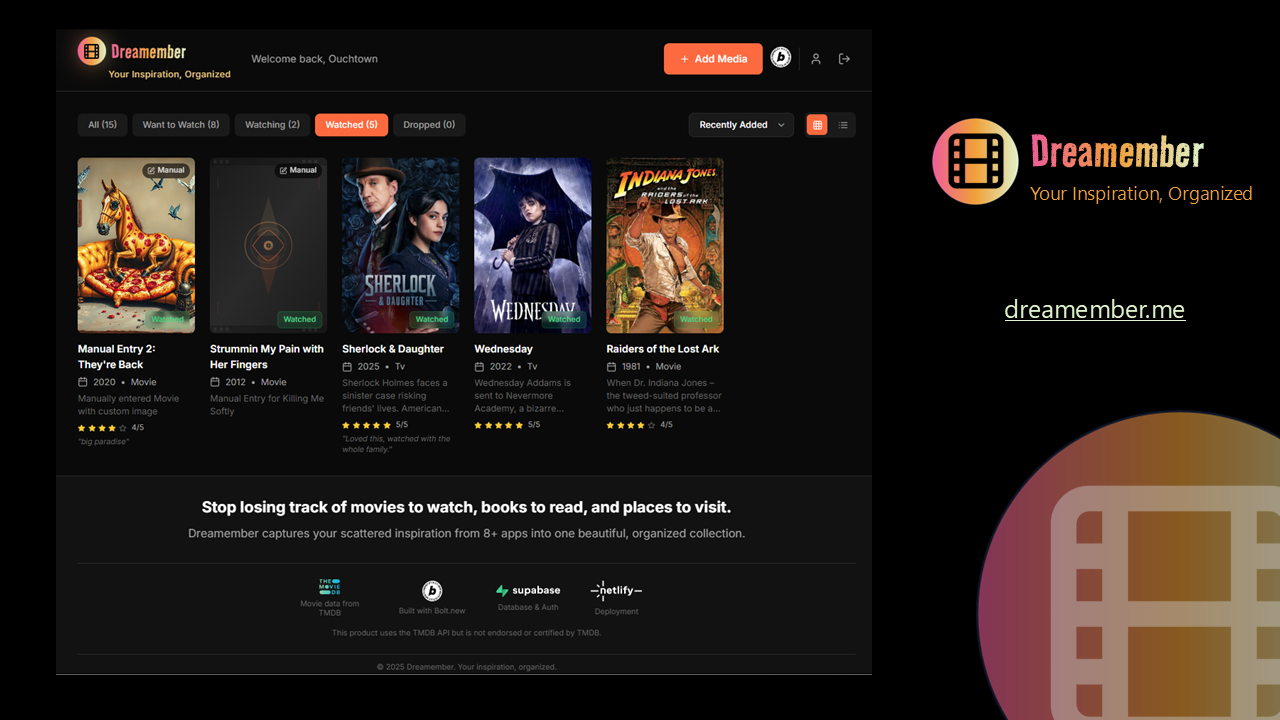
Check out Dreamember at dreamember.me
-
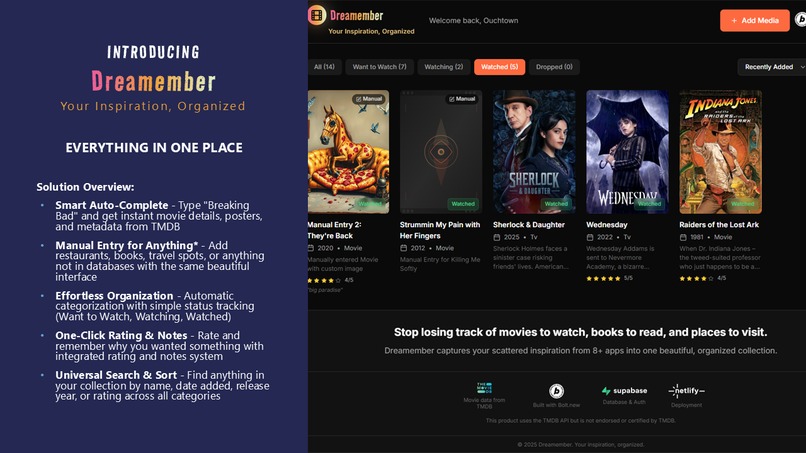
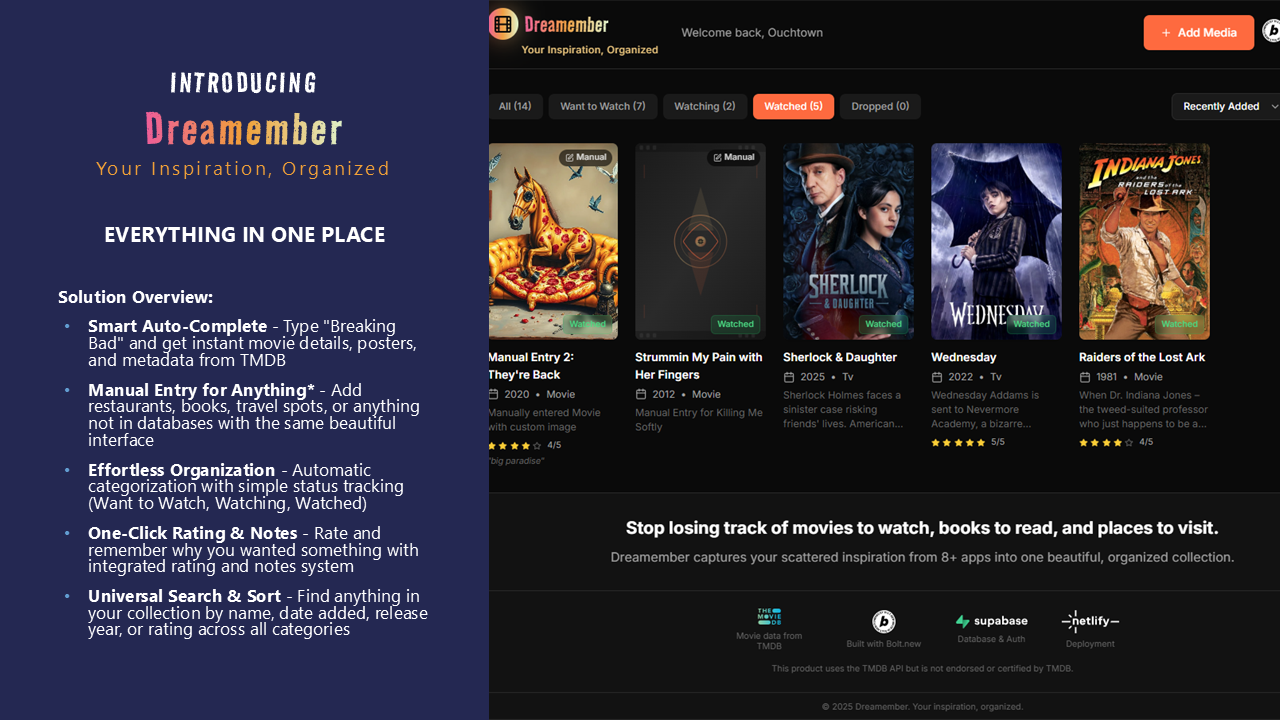
Solution Overview
-
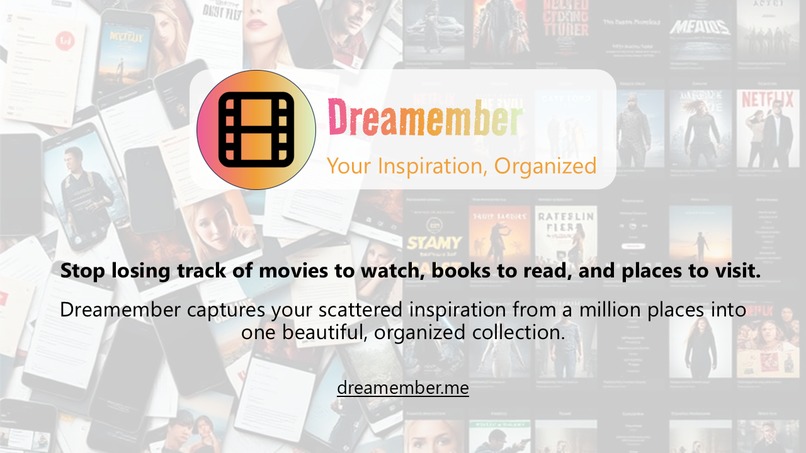
Dreamember: Stop losing track of things you want to do
-
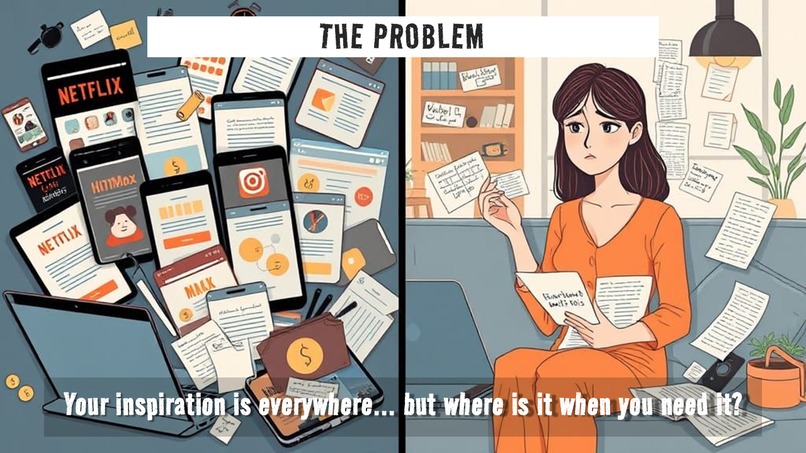
Problem Statement
About Dreamember
🎯 What Inspired This Project
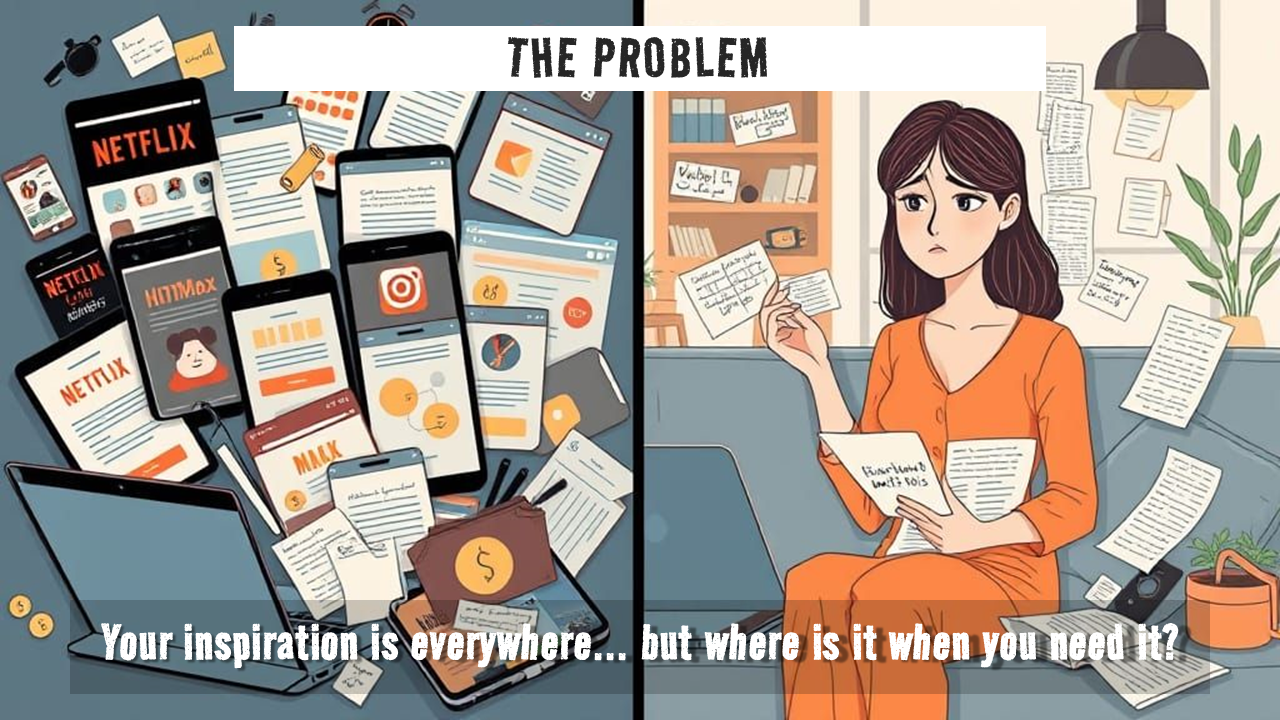
We've all been there: you hear about an amazing movie on a podcast, screenshot a restaurant from Instagram, bookmark a travel article, and save a recipe to Pinterest. Fast forward to Friday night, and you're asking "what should I watch? read? eat?" while your inspiration sits scattered across apps, notes, bookmarks, saves, pins, lists, browser tabs. So you end up doing "meh" because it's too hard to find your ideas.
I built Dreamember for Sarah - the content curator who values experiences but drowns in digital chaos. She represents millions of people who capture inspiration everywhere but can never find it when they need it.
Personal Context: As a Product Manager with no development background, I've always understood user problems but never had the technical skills to build solutions. This hackathon was my first experience with no-code development, proving that modern tools like Bolt.new can empower anyone to turn product ideas into reality.
🛠 How I Built It
Tech Stack:
- Frontend: Next.js 14 + TypeScript + Tailwind CSS + shadcn/ui components
- Backend: Supabase (PostgreSQL + Auth + RLS)
- APIs: TMDB for movie/TV auto-completion
- Development: Bolt.new for rapid prototyping, Cursor for debugging and some polishing, back to Bolt.new for final polish and to drive deployment to Netlify.
- Deployment: Netlify
Development Journey:
- Week 1: Started with Bolt.new to rapidly prototype the core concept
- Database Design: Created a flexible schema supporting both TMDB data and manual entries
- TMDB Integration: Built smart auto-completion that enriches manual text entry
- Polish Phase: Switched to Cursor for fine-tuned debugging and UX improvements
- Production: Deployed to dreamember.me with full user authentication and responsive design
🧠 What I Learned
No-Code Development Insights:
- Bolt.new is powerful: Rapidly translated product requirements into working code
- Environment Variables: Learned Vite requires
VITE_prefix for client-side env vars - Database Design: Row Level Security (RLS) is crucial for multi-tenant applications
- API Integration: Balancing automated data enrichment with manual entry flexibility
- Git Workflows: Managing code between Bolt, Cursor and GitHub required understanding version control
Product Management Applied:
- User Research: Building personas (like Sarah) dramatically focused feature decisions. Claude.ai really helped here.
- MVP Scope: "Valuable but not special" is exactly where an MVP should be
- Polish Matters: Small UX improvements (hover tooltips, consistent card heights) make huge differences
- Requirements Translation: PM skills helped communicate precise requirements to AI tools
🎬 Fun Fact
Using the following real movie title helped massively to identify UI spacing, tooltip and other issues during testing: "Night of the Day of the Dawn of the Son of the Bride of the Return of the Revenge of the Terror of the Attack of the Evil, Mutant, Hellbound, Flesh-Eating Subhumanoid Zombified Living Dead, Part 2: In Shocking 2-D"
🚧 Challenges I Faced
1. Learning Development Concepts
- Problem: No prior coding experience, had to learn concepts like environment variables, database schemas, API integration
- Solution: Leveraged PM skills to break down problems systematically and research solutions
2. Database Schema Mismatch
- Problem: Bolt created frontend code assuming different table names than my database
- Solution: Switched to Cursor for precise debugging and manual environment setup
3. Tool Coordination
- Problem: Managing changes between Bolt.new and Cursor while maintaining version control
- Solution: Learned proper Git workflows and backup strategies
4. Production Deployment
- Problem: Getting from localhost to live site with proper authentication and domain setup
- Solution: Configured Supabase for production, set up custom domain, and tested multi-user scenarios
🚀 What's Next
Dreamember proves the universal tracking concept works for movies/TV. The same pattern applies to:
- Restaurants (name → location/cuisine auto-completion)
- Books (title → Goodreads/OpenLibrary data)
- Travel (place → photos/info from travel APIs)
- Recipes (name → ingredient/time data)
- Future (where is that show? is it free on one of my services? where can I buy the book?)
The vision: One beautiful place for all your inspiration, organized automatically.
💡 Key Innovation
While apps like Notion are too complex and single-purpose apps (Trakt, Goodreads) create silos, Dreamember hits the sweet spot: effortless capture with intelligent organization. It's the missing piece between discovery and decision-making.
Most importantly: This project demonstrates that modern no-code tools have democratized software development. Product Managers, designers, and domain experts can now build their own solutions without traditional coding barriers.
For Product Management: This experience revealed the incredible value of no-code tools for rapid prototyping and proof-of-concept development. Instead of creating wireframes or writing lengthy specs, I learned how I could build a fully functional prototype in days. This allows Product Managers to:
- Validate concepts with real users before involving engineering teams
- Communicate product vision through working demos rather than static mockups
- Test assumptions with actual user interactions and data
- Iterate quickly on user feedback without development bottlenecks
- De-risk product decisions by proving viability before major resource allocation
The ability to go from "product idea" to "working prototype with real users" in a single week fundamentally changes how product development can work.
Built With
- bolt.new
- cursor
- github
- netlify
- next.js
- postgresql
- shadcn/ui
- supabase
- tailwind-css
- tmdb-api
- typescript


Log in or sign up for Devpost to join the conversation.