-
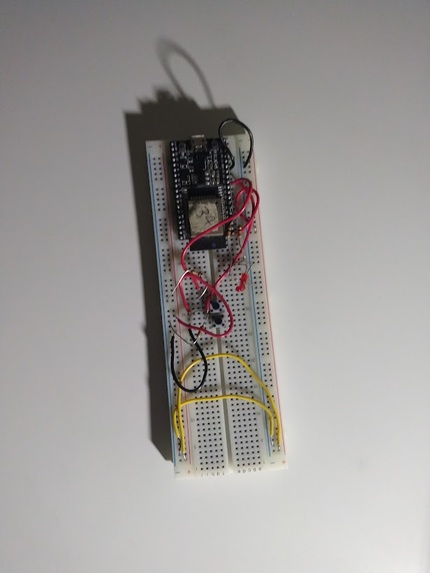
Hardware prototype 1
-
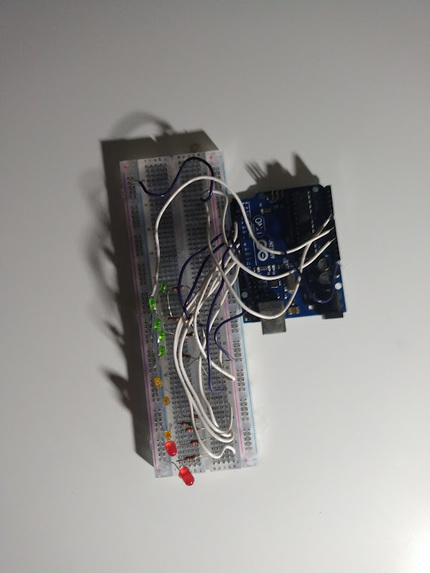
Hardware prototype 2
-
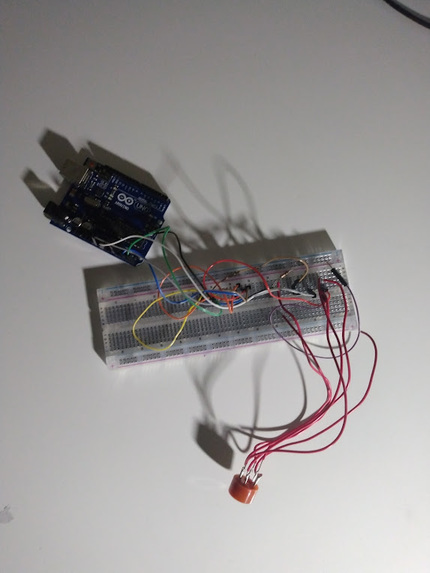
Hardware prototype 3


Team Name
Conjurors of Code
Inspiration
Systematically in history, first Nations have been among the most affected demographics, when it comes to many social issues. The oppression of our indegenous communities, mixed with the lack of resources provided to those on reserves, is an alarming cause for concern. We were inspired by this research paper, of a study done on the sleep health of indegenous communities in Canada:
Numerous studies like this one show that sleep health among first Nations people is one of the worst among any demographic.
The paper examines the prevalence and risk factors for sleep deprivation in two First Nation communities in Saskatchewan, Canada, which was said to be at an all time high.
However, lack of sleep is not a still standing issue. According to a publication by Harvard Health, sleep and mental health have a direct correlation.
According to researchers at Harvard, Adults who sleep less than 6 h a night have a 48% greater chance of developing heart disease and a 15% chance of greater chance of having a stroke, so there are physical health risks to lack of sleep as well.
The negligence of our indegenous communities, along with the turmoil they face, especially when it comes to sleep health prompted us to come up with a solution to create positive change: Dreamcatcher.
What it does
Dreamcatcher is a mobile application, especially made for indegenous communities. The aim of it is to track sleep health using a comprehensive Arduino system.
The hardware system can be integrated into a pillow as shown, which will then track movements in sleep, calculate sleep metrics, and give u an approximate sleep score, giving users a comprehensive graph of data, on how well they slept in the night and steps to improve it.
A major obstacle of indegenous communities, is given the lack of resources some have, especially those on reserves. This can make Telehealth and telemedicine nearly impossible to access, and in a lot of cases users will feel they need to seek out additional medical support to discuss their sleep results. Fortunately, the Dreamcatcher mobile app deploys a the VR Dreamcatcher doctor, which has the ability to discuss the user's sleep results from the previous night, as well as further steps taken to improve sleep health moving forward. This results in users being able to achieve an element of social interaction when discussing their health, much like a real doctor. this promotes sustainable community building within indegenous communities, especially those on reserves as it will be able to remove the stigma around sleep and mental health for these demographics .
How we built it
- Flutter to create app
- Hardware Arduino
- Twilio API
- Firebase for secure sign in
Challenges we ran into
Although this is a pretty generic response for hackathons, our challenge was truly time constraints. When we initially planned out our idea, we tried to include as many featured as possible, but due to time constraints, we had to limit this to the core features. Working as a team of two resulted in the delegation of more work among each of us, however we are extremely proud of what we have come up with, as well as the potential it could hold for indegenous communities.
Accomplishments that we're proud of
We were able to successfully create a functioning mobile app, implement the VR doctor with a voice API, instant notifications with the Twilio API, and create a meaningful product with significance behind each strand of it.
What we learned
This hackathon taught us many things, about both technical and social concepts. Exploring a marginalized group in society allowed us to gain insight on what we could do as more privilege people, and learned about the issues indegenous people's face, and how to use the tool of user research and product management to understand the user's, and mitigate obstacles surrounding sleep health for indegenous peoples.
We also learned about the integration of front end and back end services, especially when building a mobile app with flutter. Creating an AI powered virtual doctor in unity was also something new, as we had never integrated voice servives inti VR. This was also our first time incorporating Twilio into a VR basec project.
What's next for Dreamcatcher
In the future, we hope to give users a choice from multiple VR doctors, so they may discuss results with one they like best. In addition, we hope to simplify the Arduino sleep sensor so if may be a smaller chip which will be more tangible for distribution, and more comfortable when sleeping.


Log in or sign up for Devpost to join the conversation.