Inspiration
We are surrounded by AI systems that generate text, images, music, and video but one sense remains untouched: smell. The idea came from a simple “what if”: What if I could type a dream or memory and instantly experience it as a fragrance? That curiosity led to Dream-to-Scent, a project that turns imagination into olfactory recipes, making storytelling, meditation, VR, and therapy immersive in ways never seen before.
What it does
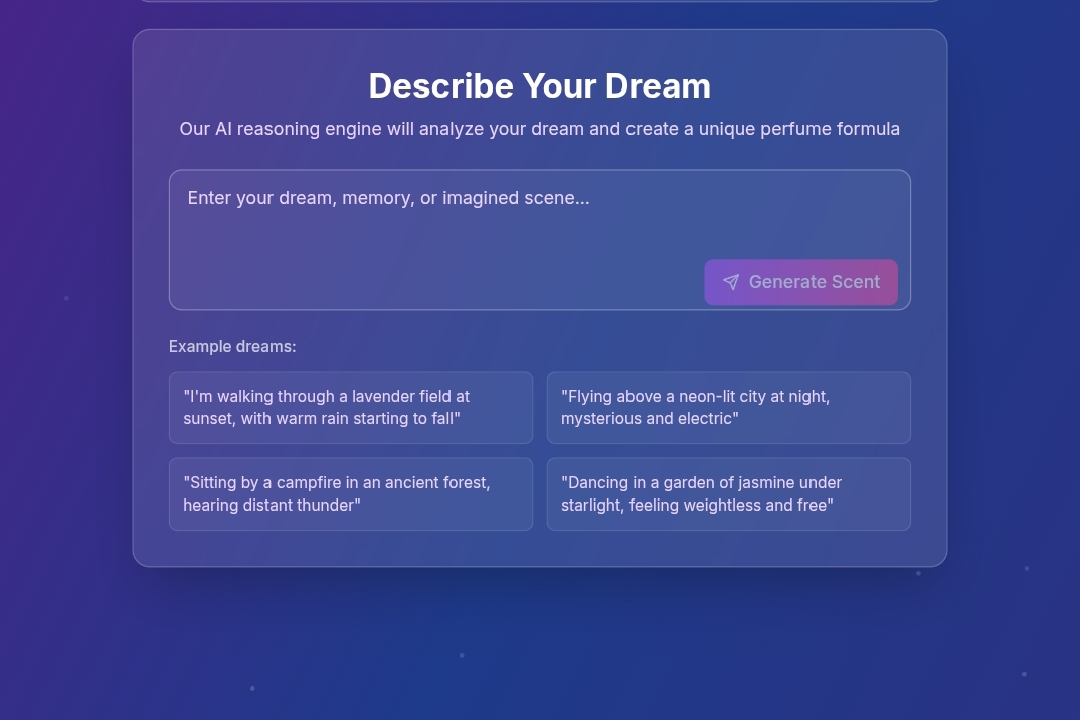
Users type in a description like: “A forest after rain with a hint of vanilla breeze.” 🌲💧🍦
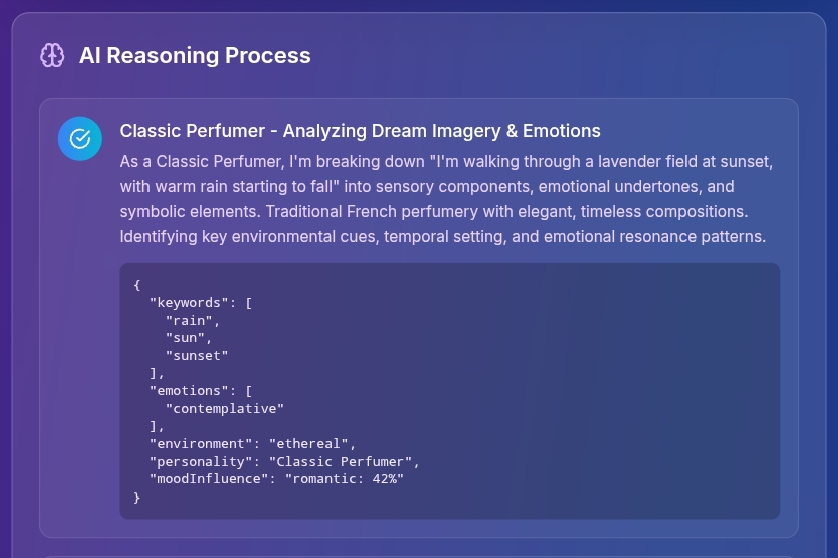
The AI (powered by GPT-OSS) maps text → olfactory space.
It outputs a fragrance recipe made of essential oils or aroma molecules (e.g., 40% cedarwood, 30% vanilla, 10% ozone, 20% lavender).
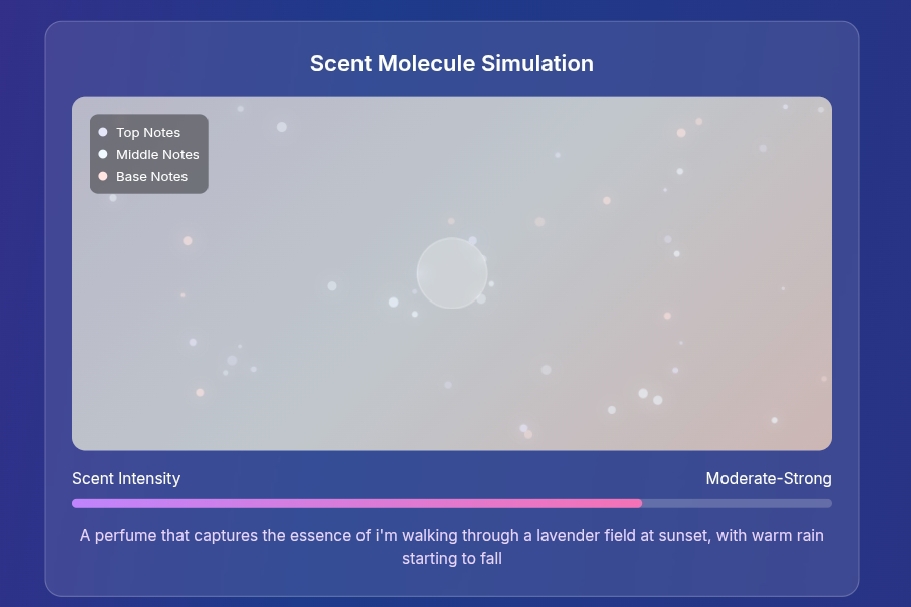
The web interface displays this blend in real-time.
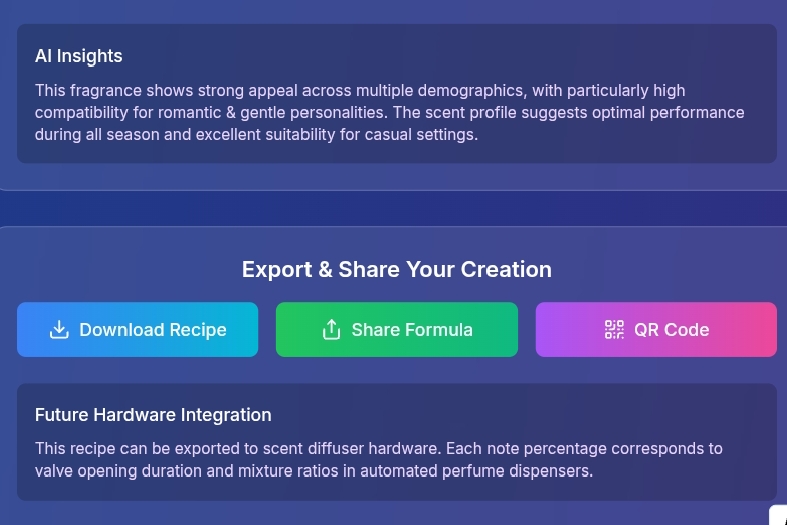
In future versions, this recipe could be connected to a scent diffuser that releases the fragrance physically.
How we built it
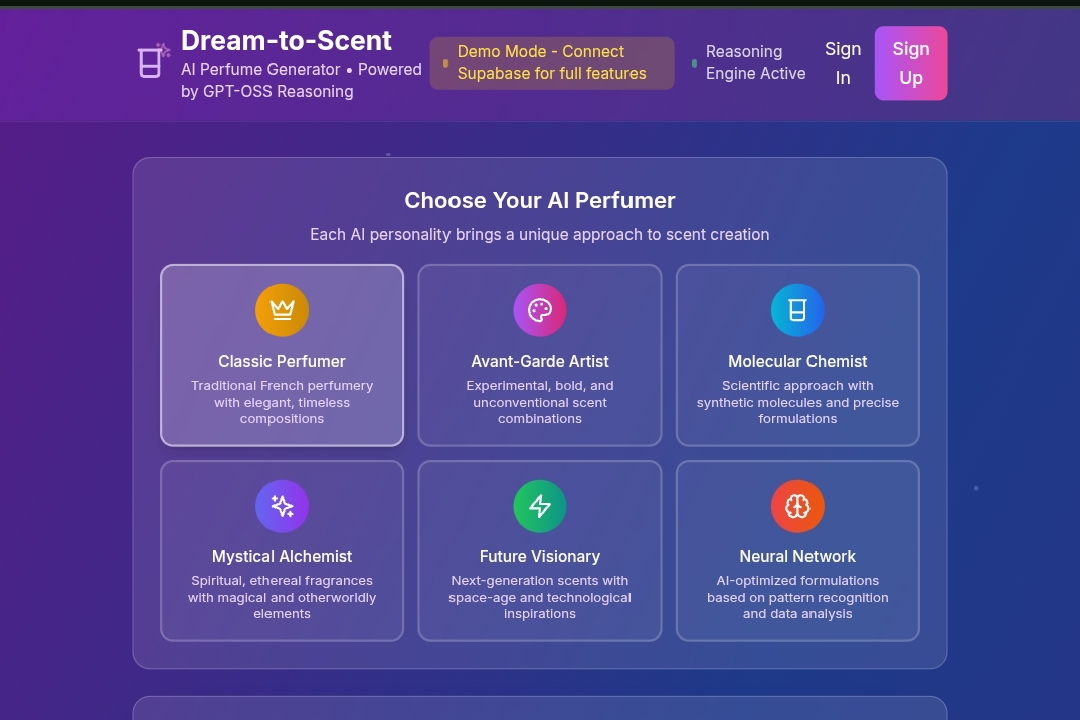
AI Brain → GPT-OSS models map words like “fresh,” “warm,” “woody” to fragrance families.
Fragrance Library → Created a small base of 10–15 essential oils (vanilla, citrus, lavender, sandalwood, musk, pine, etc.).
Recipe Generator → Structured GPT prompt that outputs weighted blends of oils.
Web App → Simple frontend where users type dreams → backend returns fragrance recipe.
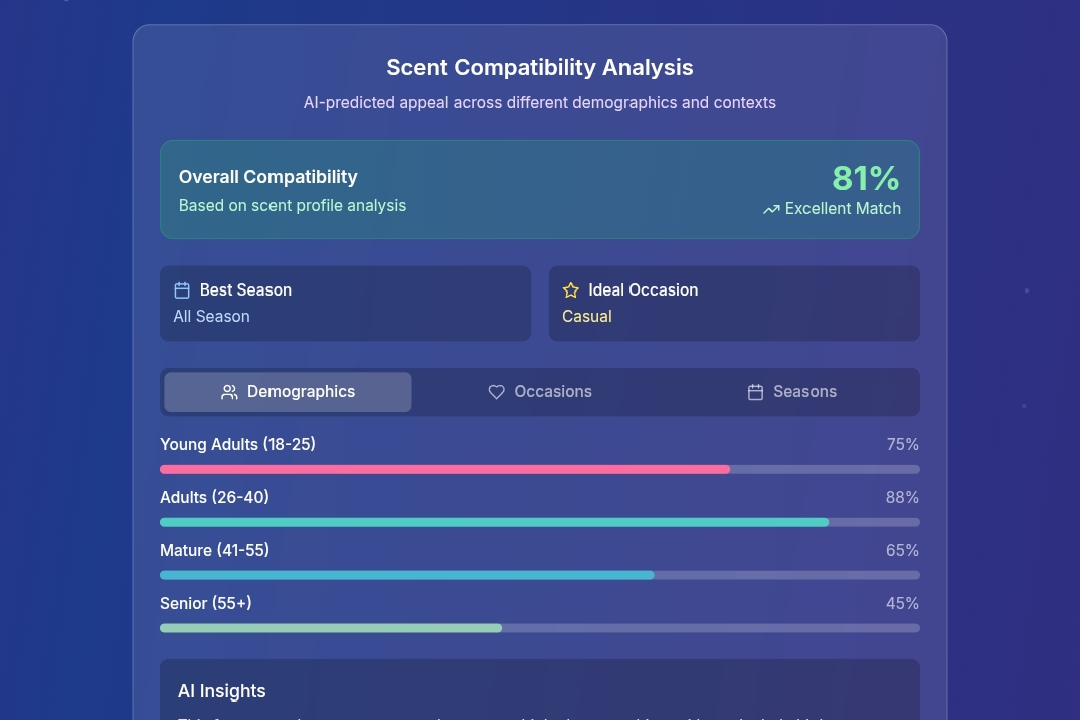
Demo Simulation → Instead of hardware, we display recipes visually (like a “perfume card”).
Challenges we ran into
No Dataset → Unlike images or music, there is no large dataset linking text to fragrances. We had to manually design mappings.
Hardware Gap → Without a diffuser device, we simulated the hardware layer with recipe output.
Subjectivity of Smell → People perceive “fresh” or “sweet” differently; encoding this into formulas was tricky.
Time Constraints → Building even a basic AI → fragrance pipeline during a hackathon was a challenge.
Accomplishments that we're proud of
Built one of the first-ever AI systems that generates fragrance recipes from natural language.
Created a working demo prototype that maps dreams → structured scent formulas.
Designed a multi-sensory AI concept that feels like science fiction made real.
Inspired new use cases for AI in therapy, VR, and wellness.
What we learned
How to map abstract human language into structured outputs (olfactory weights).
The power of multimodal AI — expanding beyond text and visuals into new senses.
How to think creatively with limited datasets and no hardware, yet still produce a demo.
That even futuristic ideas can be prototyped if broken into small steps.
What's next for Dream-to-Scent
🚀 Build the hardware diffuser using Arduino/Raspberry Pi with valves/pumps.
Expand fragrance base library to 30+ essential oils/molecules.
Fine-tune a model for text → olfactory embeddings.
Integrate with VR/AR for immersive storytelling and therapy.
Explore healthcare applications (stress reduction, PTSD therapy).
🌹🌺 Smell Your Imagination🌺🌹
Built With
- .env
- a
- and
- apis
- connected
- custom
- eslint
- git
- javascript
- node.js
- postgresql
- react-+-typescript-web-app-built-with-vite
- styled-using-tailwind-css
- supabase
- to


Log in or sign up for Devpost to join the conversation.