-
-
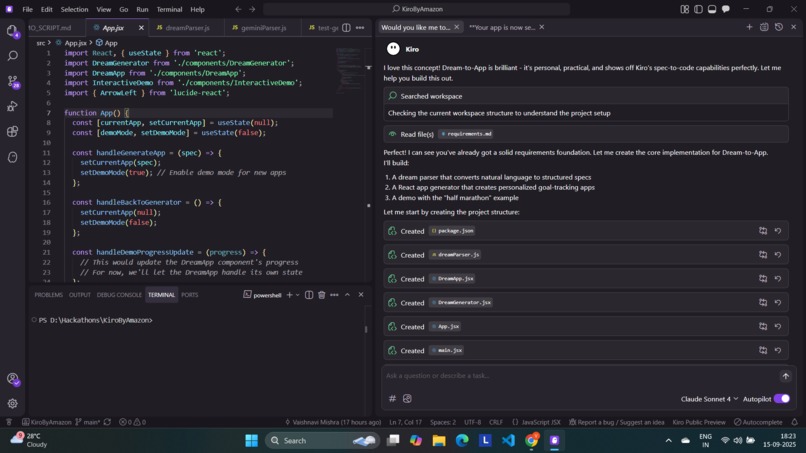
Kiro Workspace
-
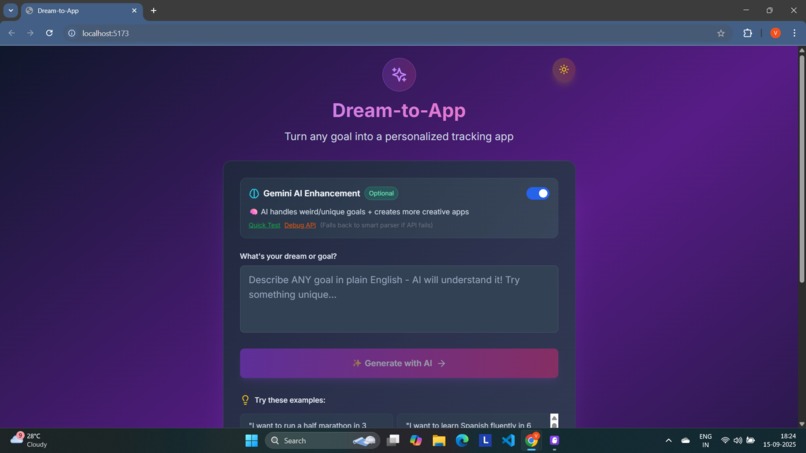
Working Protoype #1
-
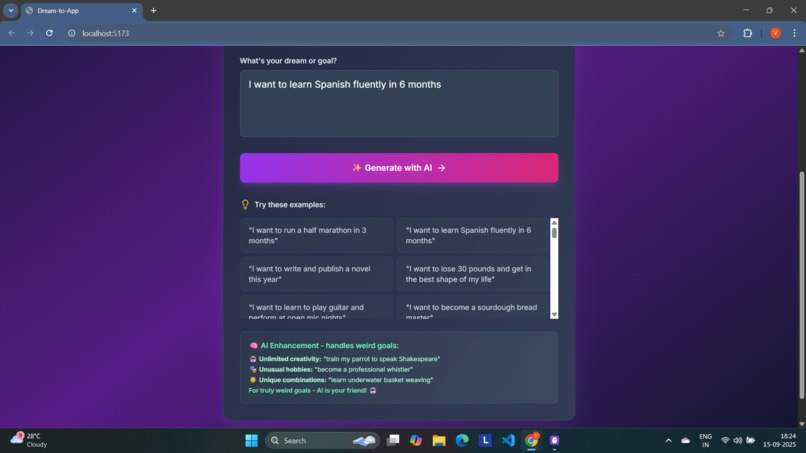
Working Protoype #2
-
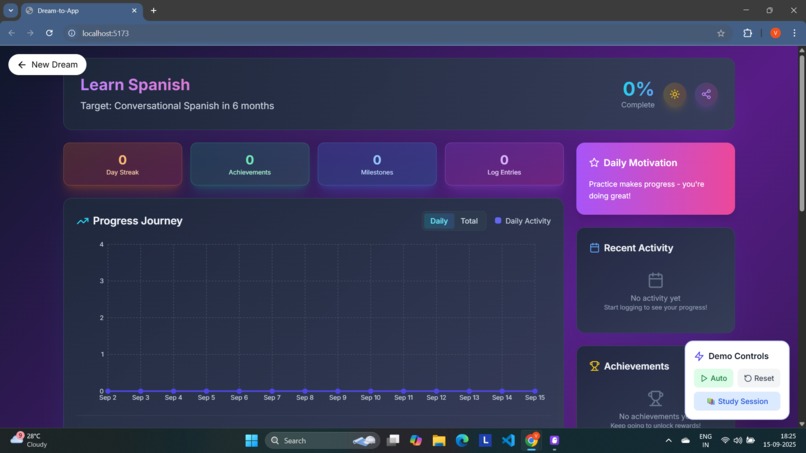
Working Protoype #3
🚀 About the Project: Dream-to-App
Dream-to-App is an AI-powered goal companion that helps people transform their dreams into achievable steps — and stay on track while working toward them. The idea came from a simple observation: everyone has goals, but most of us struggle to stay consistent. Whether it’s fitness, learning, mindfulness, or personal growth, our dreams often fade because they lack structure, visibility, and motivation. We wanted to build something that doesn’t just remind you of your goals, but actively brings them to life in an interactive way.
✨ How It Works
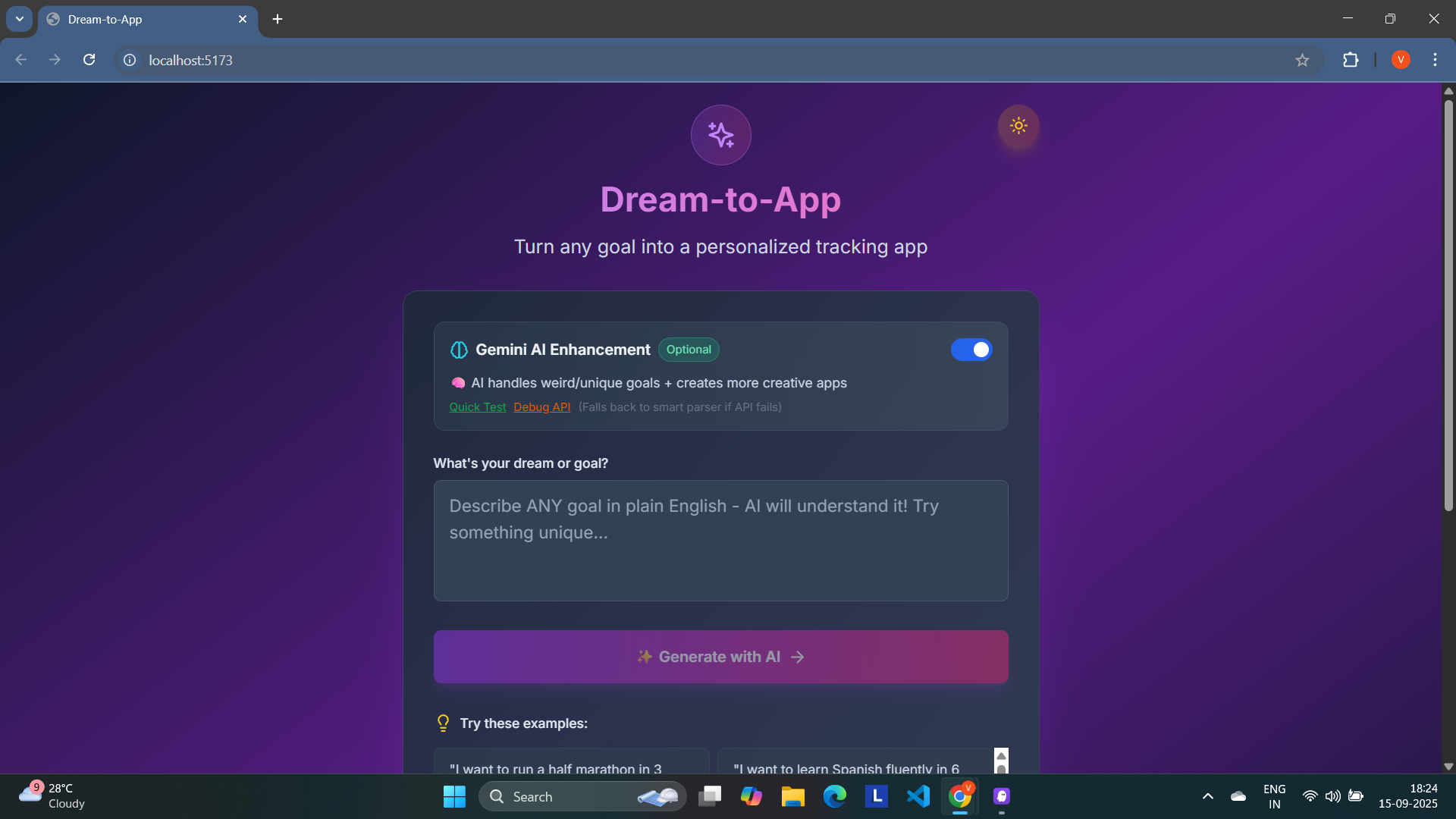
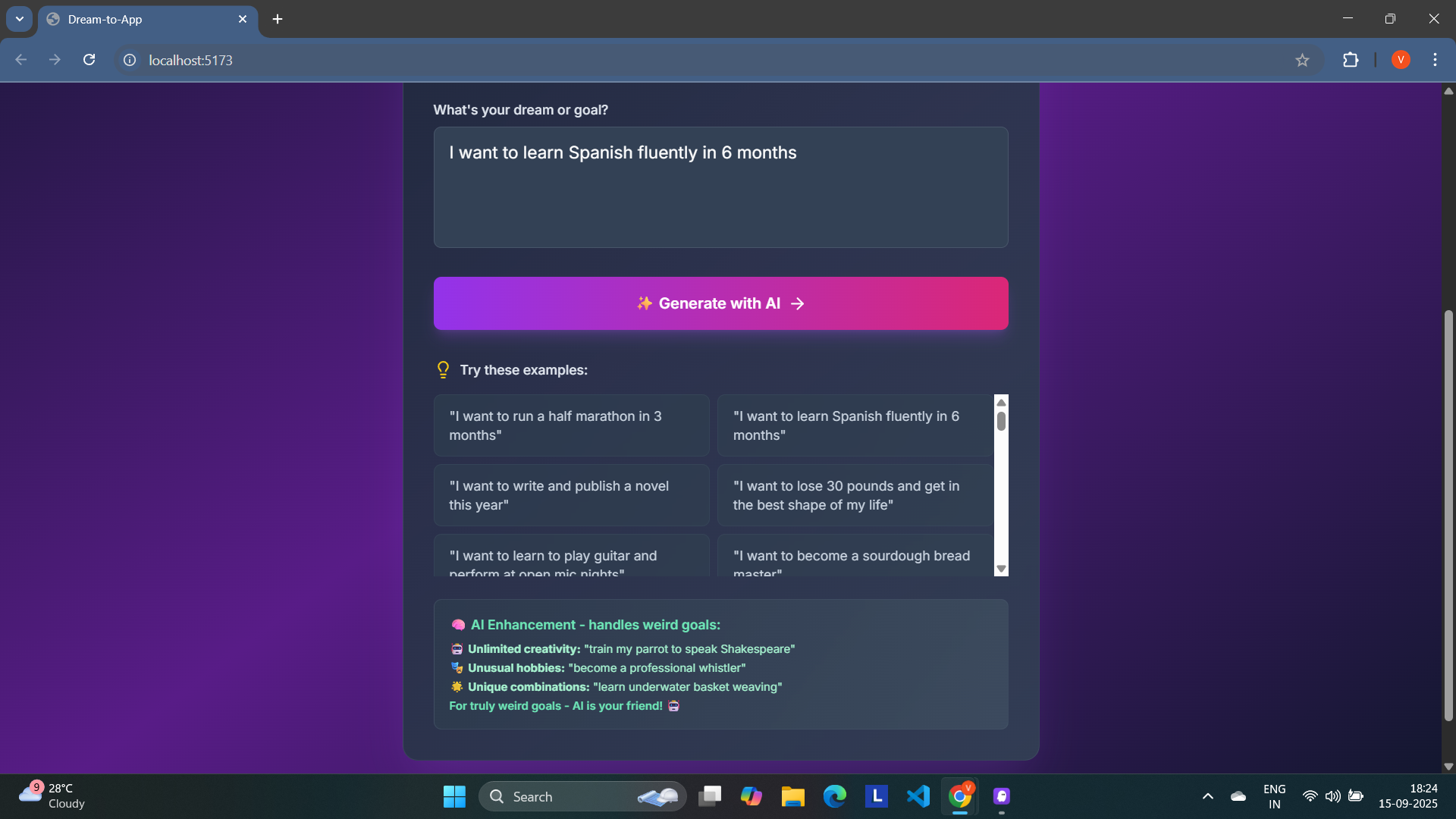
- Dream Input – Users describe any dream, idea, or goal in natural language (e.g., “I want a budgeting app that gives me motivational quotes when I save money”).
- AI Dream Parsing – Google’s Gemini AI transforms this free text into structured app specifications.
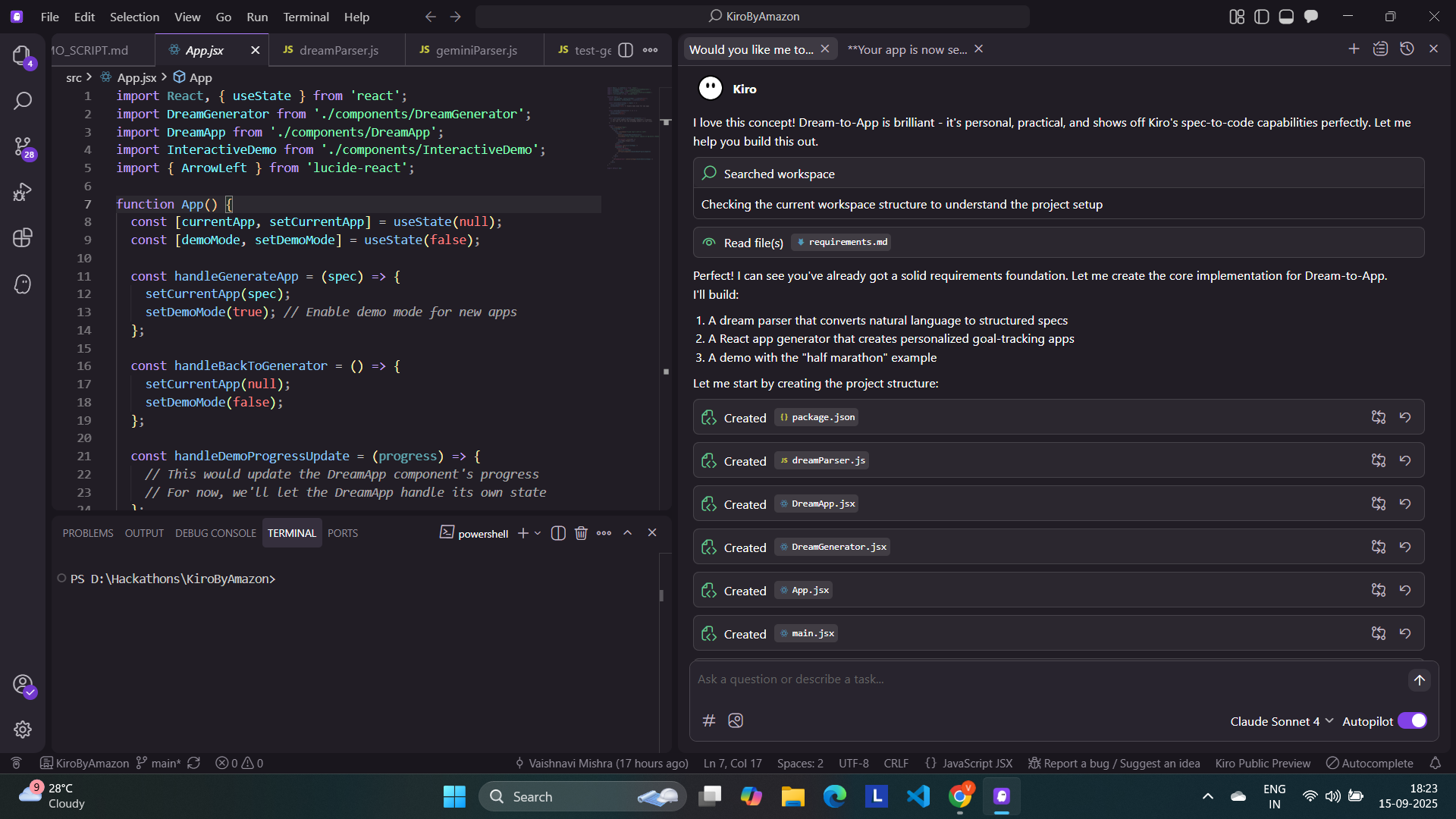
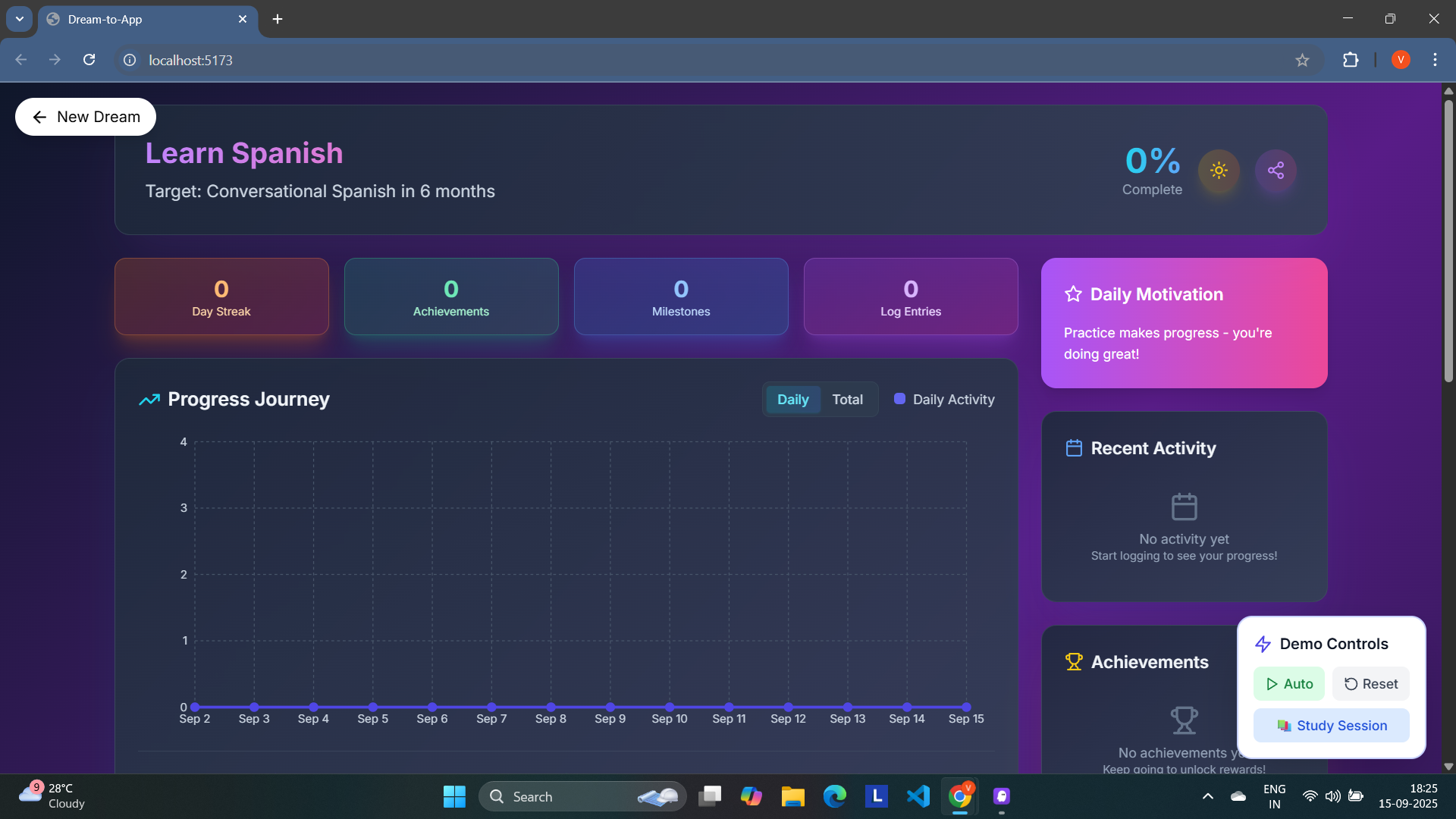
- Prototyping Engine – Our React + Tailwind frontend generates interactive components, bringing the dream to life instantly.
- Interactive Demo Mode – Users can click through and test their dream app right away.
🛠️ Building the Project
We built Dream-to-App with Vite, React, Tailwind, and Gemini AI. Vercel was chosen for quick deployment, allowing us to focus more on experimenting with AI-driven workflows rather than infrastructure. To keep the project hackathon-ready but still realistic, we added security layers like input sanitization, safe logging, and rate limiting. We also made sure to document that while we connected Gemini directly from the client for speed, a production system would use secure backend APIs.
⚡ Challenges We Faced
Gemini API quirks: Early on, we struggled with parsing raw text into structured JSON reliably. Sometimes the AI would hallucinate or ignore formatting — we solved this with custom prompt engineering and filtering. Deployment errors: We ran into the dreaded exit code 126 on Vercel builds. Debugging taught us a lot about Linux permissions, Node versions, and how different environments behave compared to local builds. Balance of scope: In a hackathon, it’s tempting to keep adding features. We had to decide what was core (dream parsing + interactive demo) vs. nice-to-have (advanced editing, persistent storage).
🌍 Why It Matters Most of us have goals, dreams, or habits we want to build — but we often lose momentum because our goals feel abstract, overwhelming, or hard to measure. Dream-to-App bridges that gap by transforming those goals into tangible, interactive trackers that help you stay motivated and accountable. Instead of writing “I want to get healthier” on a sticky note and forgetting about it, you can turn it into a personalized interface that nudges you daily, tracks your milestones, and gives you visual progress. By making goals interactive and visible, the project makes achievement feel less like a chore and more like a game you’re actively winning.
💡 What’s Next
- More sophisticated dream parsing (handling emotions, metaphors, multi-step logic).
- Exporting generated apps as usable code or shareable prototypes.
- Integrating persistence so users can save and revisit their dream apps.
- Exploring collaborative dreaming: multiple users co-creating apps together in real time.
Built With
- gemini-api
- kiro
- lucide-react
- react
- tailwind

Log in or sign up for Devpost to join the conversation.