One-line positioning
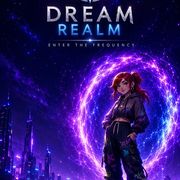
Dream Realm is an AI-native playable creator world where humans and AI agents can participate together in gameplay and creation.
Inspiration and product idea
Most agent integrations sit beside an experience: they explain a game, fill a form, or automate a separate dashboard. Dream Realm explores a more interesting possibility. A human and an AI agent share one living creator world, see the same mission state, and contribute to the same result.
The broader Dream Realm concept includes Dance, Music, and Fashion creator rooms. This challenge submission deliberately focuses on one reliable end-to-end Dance loop so judges can experience the complete human-agent relationship rather than a wide but fragile demo.
Dream Realm itself is pre-existing work. Its IP, Naya, HUB, creator-world concept, playable browser foundation, original missions, performance renderer, human video export, Tower response, and return flow were not created during this challenge. The challenge work is the meaningful WebMCP extension that lets an agent participate in that existing live world through structured, validated actions.
Why Dream Realm is a strong WebMCP use case
Dream Realm combines real-time game state, sequential mission rules, creative choices, visible consequences, and a human-controlled media export. Those are difficult for a general agent to operate reliably by guessing at buttons or interpreting screenshots. WebMCP gives the live site a small, explicit vocabulary for collaboration: read the current state, start a route, restore a Dance signal, resolve Murk's doubt, compose Naya's performance, prepare the output, update Trending Tower, and return to the HUB.
The tools do not create a parallel simulation. They operate the same state and controller used by the visible mouse/touch interface, so every agent action is immediately visible to the person and every human action changes what the agent reads next.
How WebMCP improves the player experience
The player keeps agency over the parts that should feel personal and consent-driven. They activate the portal, can play every interaction normally, and retain visible control of recording and downloading the final WebM video. An agent can help interpret the current mission, submit structured signal choices, preserve a chosen creative combination, and move the shared experience forward without brittle UI automation.
This creates a cooperative rhythm:
- A person enters Dream Realm and chooses a Gateway Mission or Direct Creator route.
- The agent reads the live state and valid next actions.
- Human and agent repair Noiz corruption and resolve Murk's doubt in the same mission.
- They choose Naya's outfit, scene, movement, and effect together.
- The agent prepares the exact performance while the person explicitly records/downloads the video.
- The shared output updates Trending Tower and changes the HUB.
What people and agents can now do together
Before WebMCP, an agent would have to infer screen state, locate transient controls, and imitate clicks. That is slow, fragile, and disconnected from the game's meaning. With WebMCP, the agent understands named game actions and validated transitions while the player watches the same world react.
The result is not “AI plays the game for you.” It is a mixed-initiative creator loop: the agent can assist with stateful gameplay and composition, while the human keeps control of entry, interpretation, media recording, download, and final creative judgment.
How WebMCP was implemented
The pre-existing browser slice was meaningfully extended during the challenge with a thin shared controller, window.DreamRealmChallenge, over the existing application state and functions. Eight tools are registered with document.modelContext.registerTool():
get_dream_realm_statestart_dream_realm_routesubmit_dance_signalresolve_murk_doubtset_creator_choicesprepare_performancesend_output_to_towerreturn_to_hub
Each tool has a narrow JSON schema and validates both input and current game state. The read tool never mutates. Mutating tools reject invalid transitions with explicit error codes. The adapter uses feature detection, so browsers without WebMCP continue to run the ordinary mouse, touch, and keyboard experience. No tool fakes DOM clicks, and no second game state is maintained.
The final Naya performance is rendered from the selected outfit, background, movement, mission result, and outcome effect. Recording and download remain a visible human action using MediaRecorder. Sending the finished output to Trending Tower is blocked until that human-controlled recording exists.
Pre-existing versus challenge-added
PRE-EXISTING: Dream Realm IP and visual identity; Naya and the other original characters; the Option C HUB; the playable creator/game concept; private-access entrance; Gateway and Direct Creator routes; Dance gameplay; Murk/Noiz logic; creator selections; Naya performance rendering; human MediaRecorder export; Tower response; unlock; HUB return; and the original mouse/touch/keyboard browser foundation.
BUILT / MEANINGFULLY EXTENDED DURING THE WEBMCP CHALLENGE: the shared DreamRealmChallenge controller over the existing state; eight document.modelContext.registerTool() registrations; JSON schemas; structured agent actions; read-only and mutating-tool boundaries; input and transition validation; explicit error codes; agent participation across Gateway, Creator, Naya performance preparation, Tower, and HUB; preservation of the human recording/download boundary; the minimal public challenge build and deployment; public WebMCP testing; debugging and challenge-specific stability fixes; and provenance/licensing/test documentation.
Where existing Dream Realm code was changed, those changes were made only to expose and stabilize the shared controller and WebMCP flow; they do not represent the underlying Dream Realm product as newly created. BASELINE.md records pre-August-25 source timestamps and checksums, while the dated Git history begins with the untouched baseline and then separates controller, tools, tests, fixes, and release documentation.
Broader Dream Realm context
The submitted experience is intentionally one complete browser vertical slice: Gateway Mission → creator choices → Naya performance → Tower response → HUB. It demonstrates a shared human-agent world architecture, not the full scope of Dream Realm.
PRE-EXISTING DREAM REALM: Dance, Music, and Fashion are the first creator-world spaces explored in Dream Realm. This challenge demo uses Dance as the complete WebMCP vertical slice. The broader world is designed to expand into additional interactive spaces such as puzzles, shops and commerce, sports, story missions, and social experiences. Dream Realm also has a separate Unreal Engine 5 immersive proof exploring the world beyond the browser.
CHALLENGE-ADDED WEBMCP WORK: This submission proves the human-agent interaction model inside the browser. WebMCP operates the same live state and visible experience used by the player. WebMCP is not currently implemented natively inside the Unreal proof.
FUTURE PRODUCT VISION: Future Unreal and 3D experiences may extend this interaction philosophy to richer character, NPC, and world interactions. This is future direction, not functionality claimed or demonstrated in the current submission.
Built with
HTML, CSS, JavaScript, Canvas, MediaRecorder, Web Audio, and WebMCP Site tools.
Built With
- canvas
- css3
- github
- html5
- javascript
- mediarecorder
- netlify
- web-audio
- webmcp
Log in or sign up for Devpost to join the conversation.