Inspiration
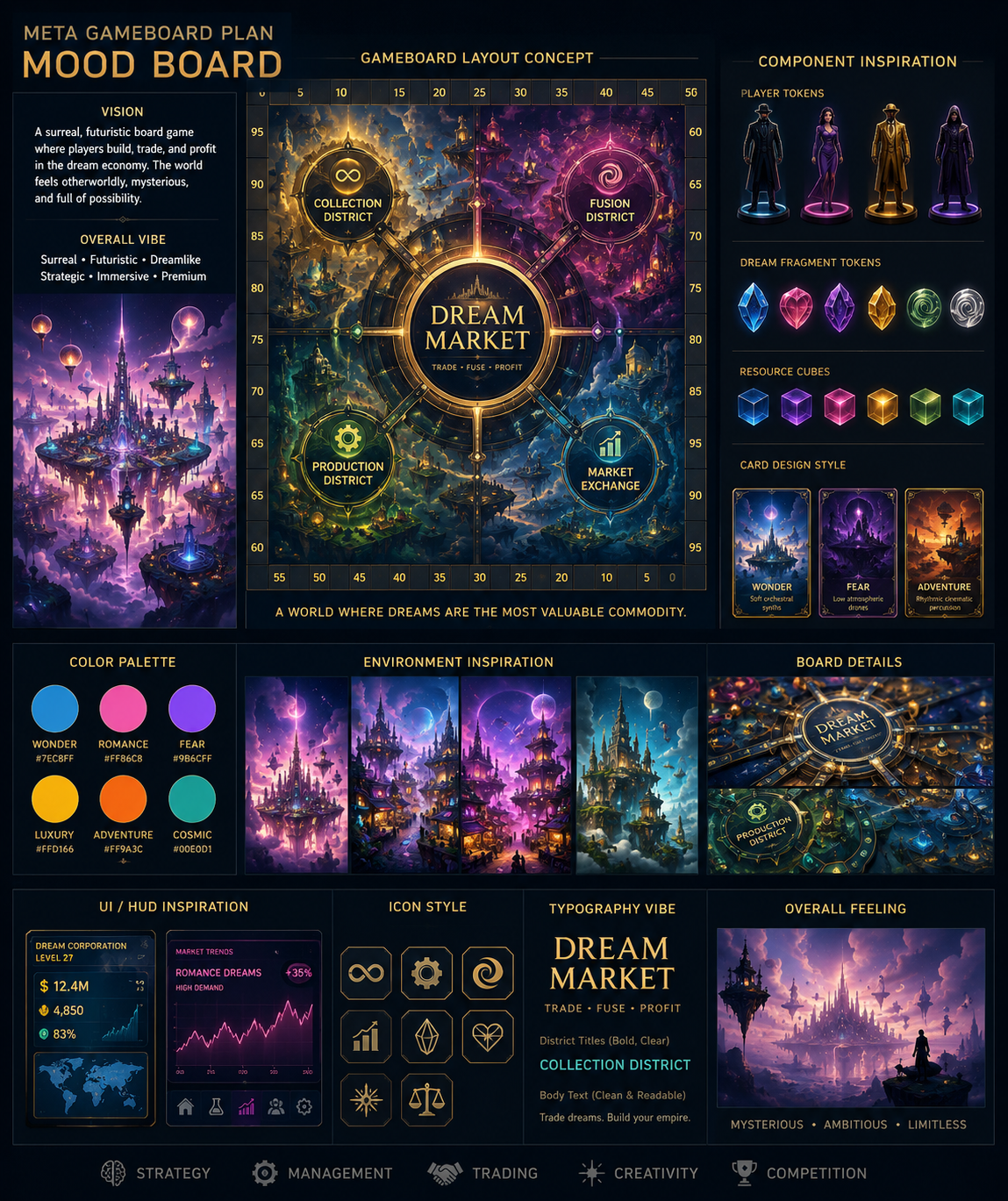
Every night, citizens generate dreams. Players collect, refine, combine, and sell dream experiences to customers across society. Dreams become a valuable commodity. The player begins as a small dream broker and eventually builds a global dream economy worth billions. The challenge is balancing profit, public happiness, dream quality, and market stability.
What it does
Core Fantasy - The fantasy is: “What if dreams could be harvested, manufactured, and sold like products?” Players become: • Dream Traders • Market Manipulators • Creative Curators • Corporate Visionaries The game combines creativity, strategy, economics, and social simulation.
Players combine dream traits to create new products. Examples: • Romance + Space = Cosmic Love • Horror + Luxury = Haunted Mansion • Adventure + Nostalgia = Childhood Quest Every combination generates unique market opportunities. Dynamic Dream Economy Customer demand constantly changes. Popular dream genres rise and fall through trends. Social Consequences Mass-produced dreams influence society. Too much horror creates anxiety. Too much luxury creates greed. Too much nostalgia reduces innovation. Players must balance the emotional ecosys
How we built it
Meta, Mobile IOS, Meta’s training guides, Openai and Gemini inspiration.
Challenges we ran into
Not a very skilled game builder, always learning and trying to do better. Lack of knowledge limits timing and testing properly.
Accomplishments that I’m proud of
Building Dream Market challenged us to combine creativity, systems design, economics, and player psychology into a single cohesive experience. Some of the achievements I’m most proud of include:
🌙 Creating a Unique Core Concept
I transformed a simple question - “What if dreams could be harvested, manufactured, and sold?” - into a fully realized game economy where imagination becomes a tradable resource. The concept blends simulation, strategy, and world-building in a way that feels both original and engaging.
✨ Designing the Dream Fusion System
One of the biggest accomplishments was developing the Dream Fusion mechanic. Players can combine emotions, memories, fears, and fantasies to create entirely new dream products, resulting in hundreds of possible discoveries and encouraging experimentation and creativity.
📈 Building a Living Dream Economy
I designed a dynamic market system where dream values fluctuate based on trends, seasons, and global events. This creates meaningful decision-making and ensures that every play session feels different.
🏙️ Creating a Surreal Yet Cohesive World
From floating cities and neon dream markets to impossible architecture and celestial landscapes, I established a distinctive visual identity that supports the game’s fantasy while remaining approachable and easy to navigate.
⚖️ Integrating Social Impact Into Gameplay
Rather than focusing solely on profit, Dream Market challenges players to consider the consequences of their actions. Overproducing certain dream types can influence society, adding an additional strategic layer rarely seen in management simulations.
🔄 Designing for Long-Term Engagement
Through progression systems, research trees, rare dream discoveries, live events, and prestige mechanics, I created multiple paths for players to grow and continually uncover new content over time.
🎮 Maintaining Fair Monetization
I intentionally designed Dream Market around ethical monetization principles. All gameplay content is accessible without spending money, while optional cosmetic upgrades allow players to personalize their experience without creating pay-to-win advantages.
🚀 Delivering a Competition-Ready Vision
Beyond the game concept itself, I developed a complete game design document, gameplay loop, progression framework, economy systems, visual direction, and production roadmap - creating a polished foundation capable of supporting future prototyping and development.
Dream Market isn’t just about building a business - it’s about shaping humanity’s collective imagination, one dream at a time. 🌌💭✨
What we learned
Developing Dream Market taught me that great game design is about much more than creating mechanics - it’s about creating meaningful player choices and a world that feels alive.
One of my biggest lessons was learning how to balance creativity with strategy. While the idea of harvesting and selling dreams sparked countless imaginative possibilities, I quickly realized that every dream type, fusion recipe, and market trend needed to contribute to a larger gameplay ecosystem. Designing systems that were both fun and interconnected became a key focus throughout development.
I also gained valuable experience in building a dynamic economy. Creating fluctuating demand, market trends, and world events showed us how player decisions can feel more impactful when the game world reacts to them. This reinforced the importance of balancing risk, reward, and long-term progression.
Another major takeaway was the importance of player motivation. Features such as dream discovery, research progression, facility upgrades, and prestige systems were designed to encourage curiosity and provide players with meaningful goals at every stage of the experience.
From a design perspective, I learned how visual identity can strengthen gameplay. Establishing a surreal neo-noir dreamscape helped us create a memorable world while also supporting intuitive visual cues for dream categories and resources.
Most importantly, I learned how to take an ambitious concept and turn it into a structured, development-ready vision. Through documenting gameplay systems, progression loops, economy mechanics, visual direction, and production planning, I gained a deeper appreciation for the iterative process required to transform a creative idea into a compelling game experience.
Building Dream Market reminded me that innovation often comes from asking unusual questions - and then thoughtfully designing systems that bring those ideas to life. 🌙✨🎮
What's next for Dream Market
Votes and Further Development!
Built With
- adobe
- meta
- typescript
- word


Log in or sign up for Devpost to join the conversation.