🌌 About the Project — Dream Leak
💡 Inspiration
Dream Leak was inspired by the idea that our most honest thoughts are often unfinished, irrational, or fleeting—like dreams that slip away moments after waking. In hackathons, most projects aim to solve problems or optimize systems, but I wanted to explore the opposite: building something emotionally resonant and intentionally unnecessary. The goal was to create a space where raw thoughts could exist without judgment, transformed into something poetic and visual, like watching the subconscious leak into the digital world.
🛠️ How I Built It
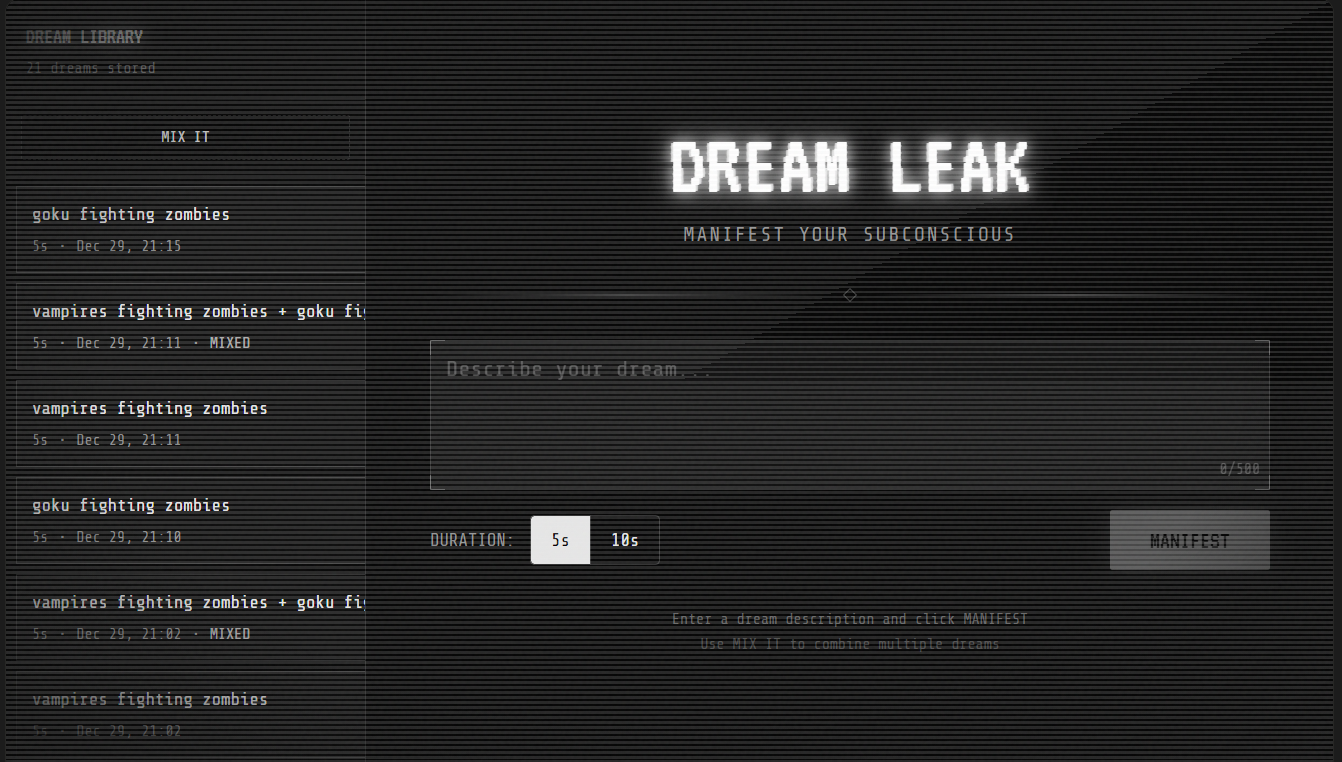
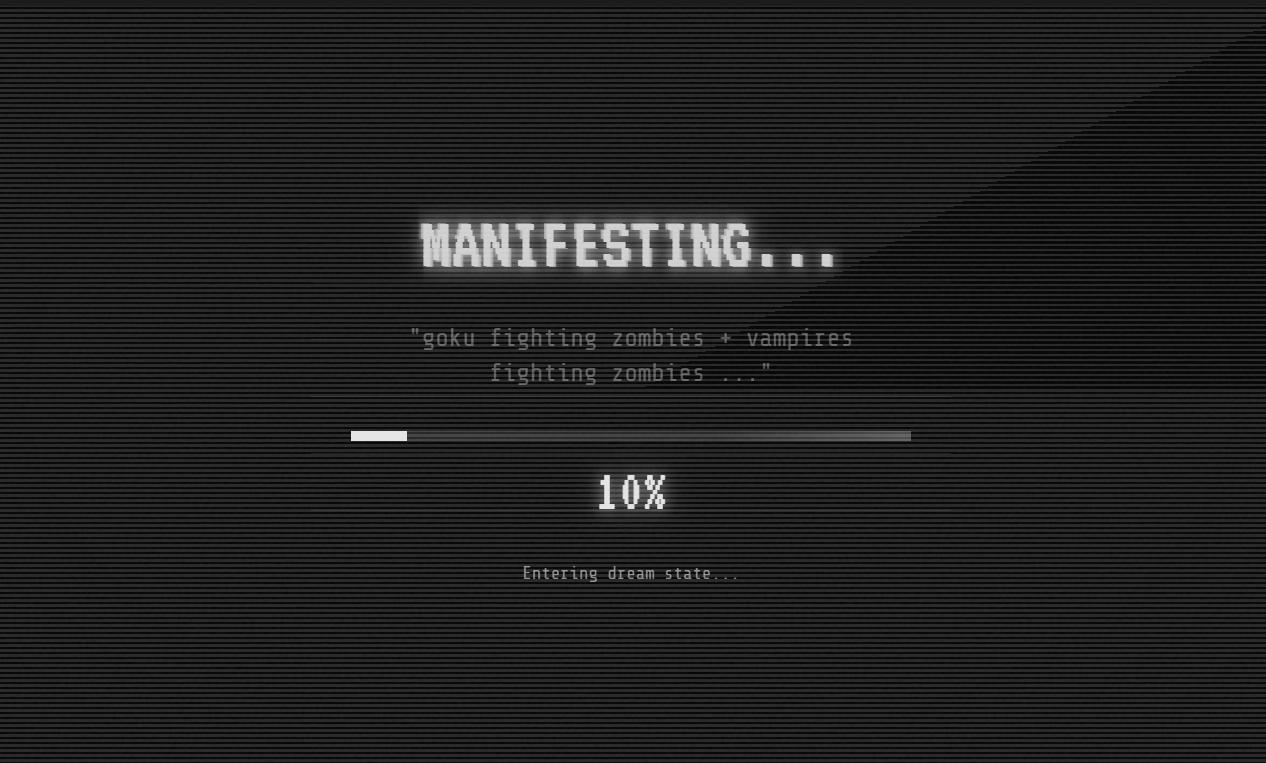
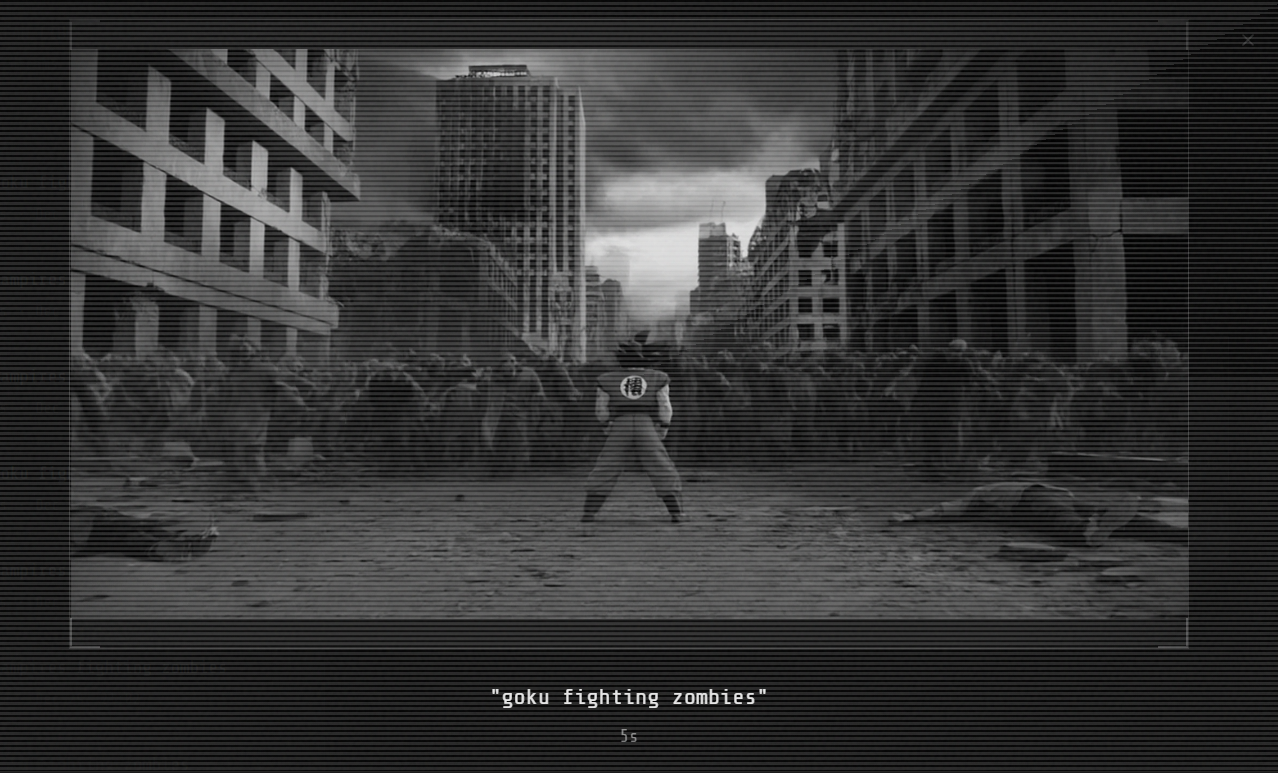
Dream Leak was built as a single-page web experience using a vibe-coding approach. The core interaction is simple: the user types a short phrase, which is sent to an AI model with a carefully designed prompt that rewrites the input into a surreal, dream-like fragment (limited to 15 words). This output is then visualized in real time using animated text fragments, abstract shapes, and subtle glitch effects on a dark, minimalist canvas. The entire project was designed to prioritize mood, motion, and feeling over traditional UI complexity.
📚 What I Learned
Through this project, I learned how powerful prompt design can be when working with generative AI—small constraints can dramatically improve consistency and artistic quality. I also learned that simplicity is a strength: a single interaction loop, when paired with strong aesthetics, can feel deeper than feature-heavy applications. Most importantly, I learned how to think of software not just as a tool, but as an experience or artifact.
⚠️ Challenges Faced
One major challenge was resisting overengineering. It was tempting to add features like authentication, sharing, or analytics, but doing so diluted the emotional core of the project. Another challenge was balancing randomness and control in the visuals—too much chaos felt noisy, while too little felt static. Finding that balance was key to maintaining the “dream-like” quality of the experience.
✨ Reflection
Dream Leak is not meant to be efficient or productive. It exists as a mirror—brief, personal, and slightly uncomfortable. It’s an experiment in turning inner noise into something visible, ephemeral, and human.
Built With
- deno-edge-functions
- lovable-cloud
- postgresql
- react
- react-router
- replicate
- shadcn/ui
- tailwind-css
- tanstack-query
- typescript
- vite

Log in or sign up for Devpost to join the conversation.