-
-
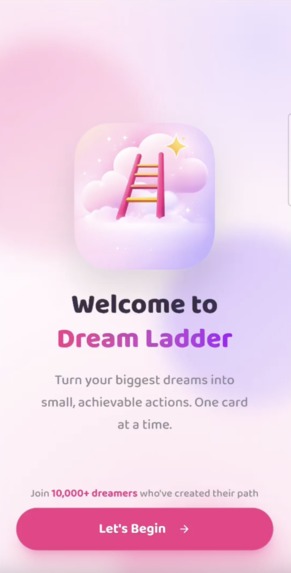
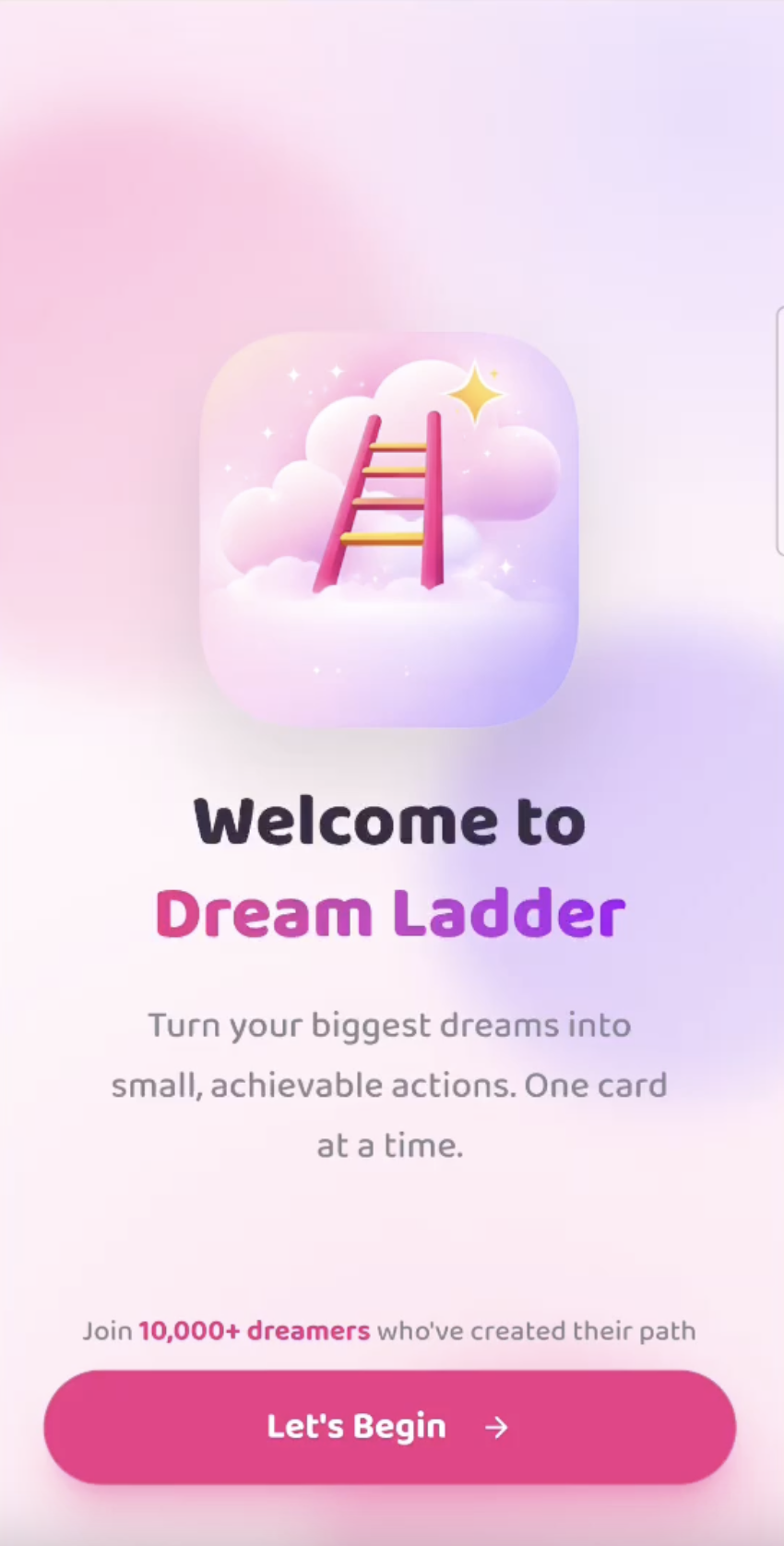
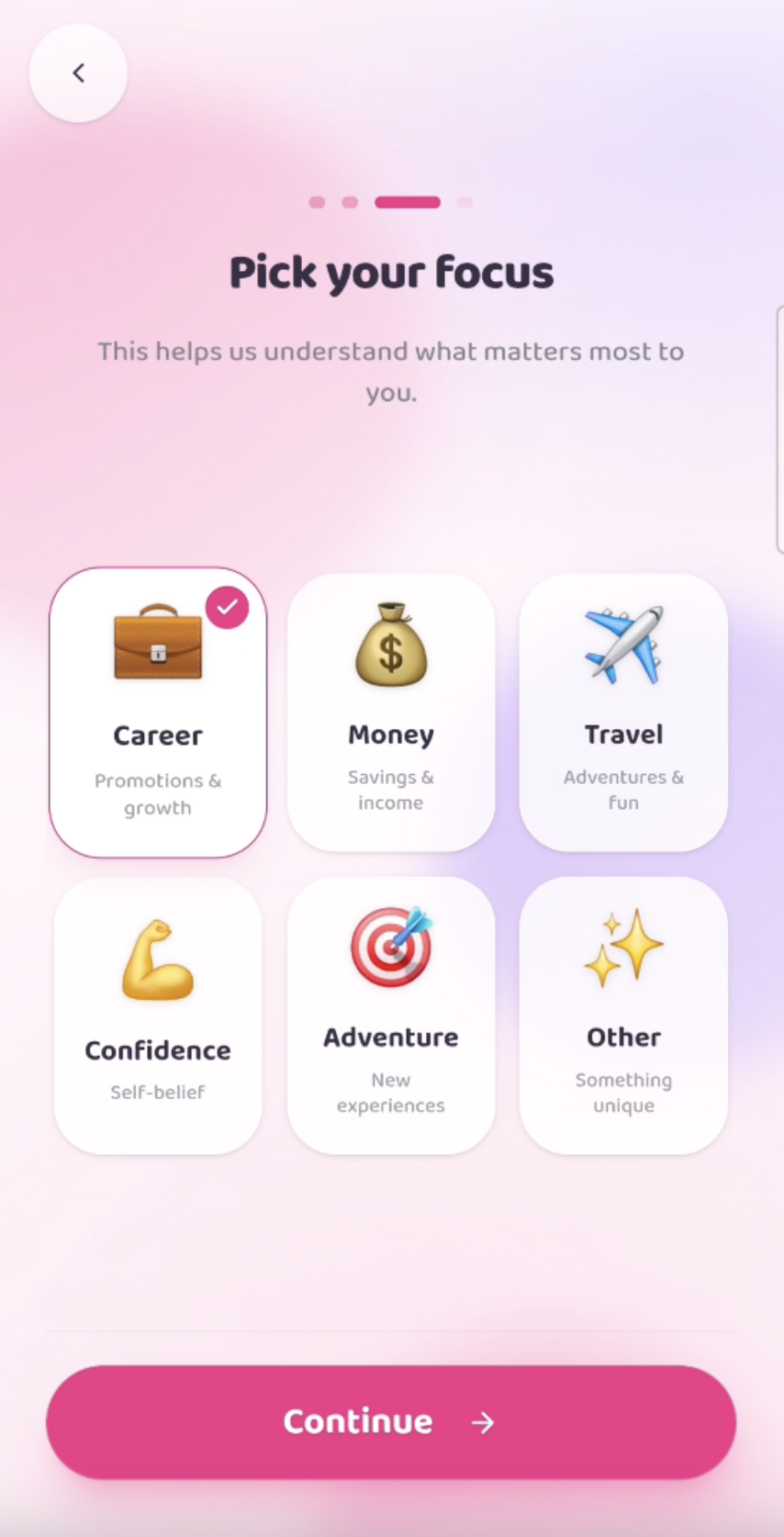
Onboarding
-
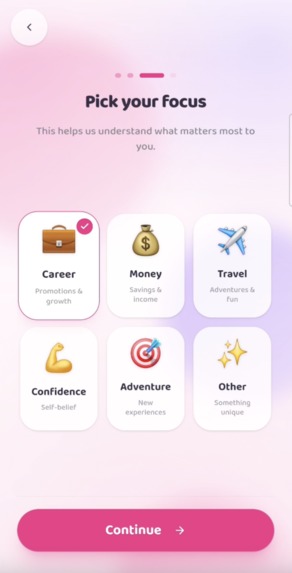
Pace selection
-
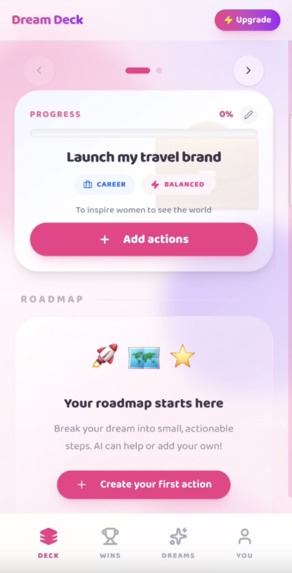
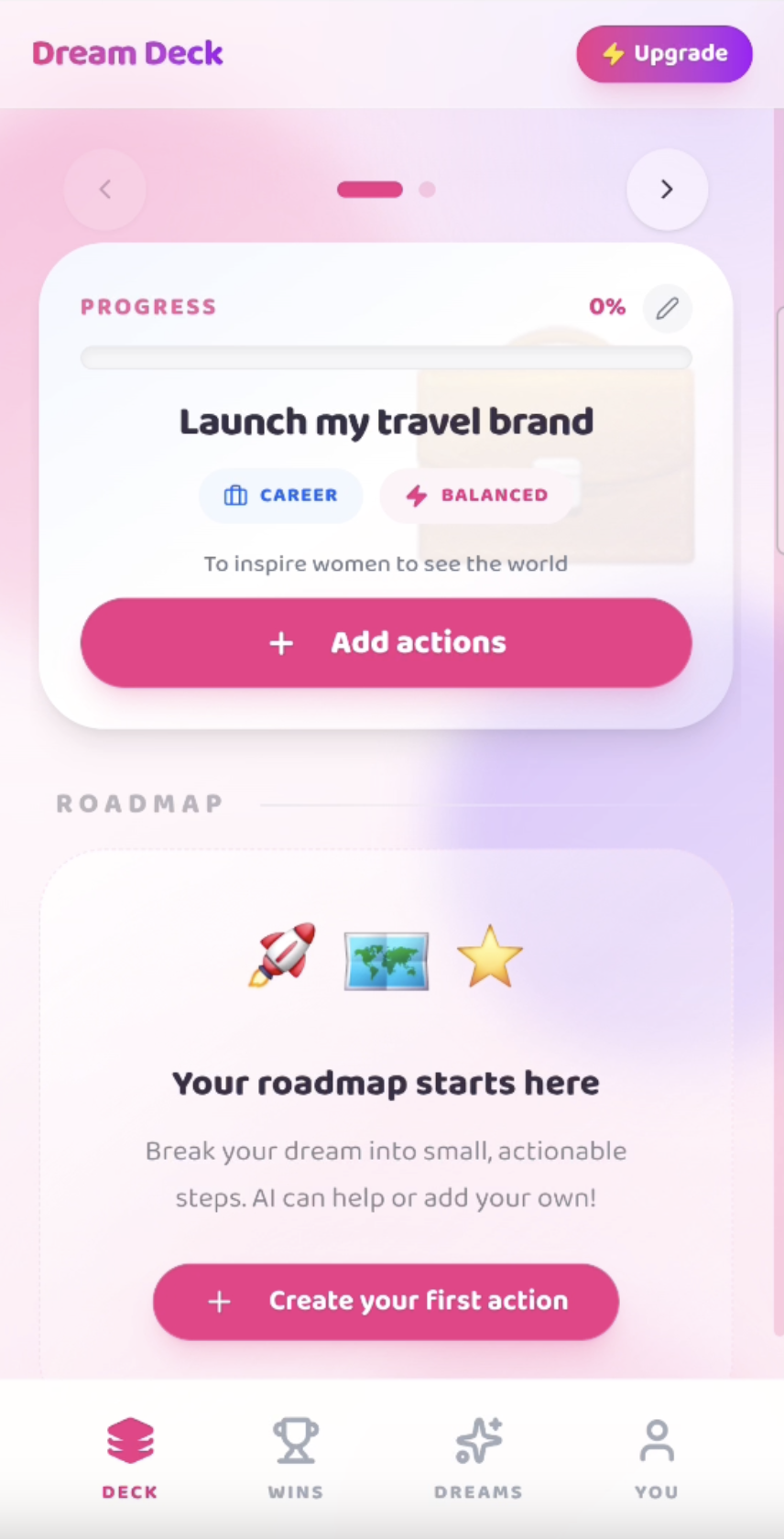
Welcome to deck home
-
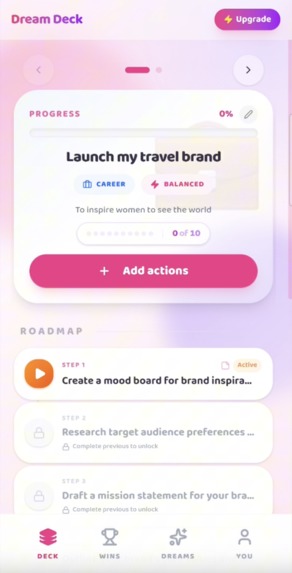
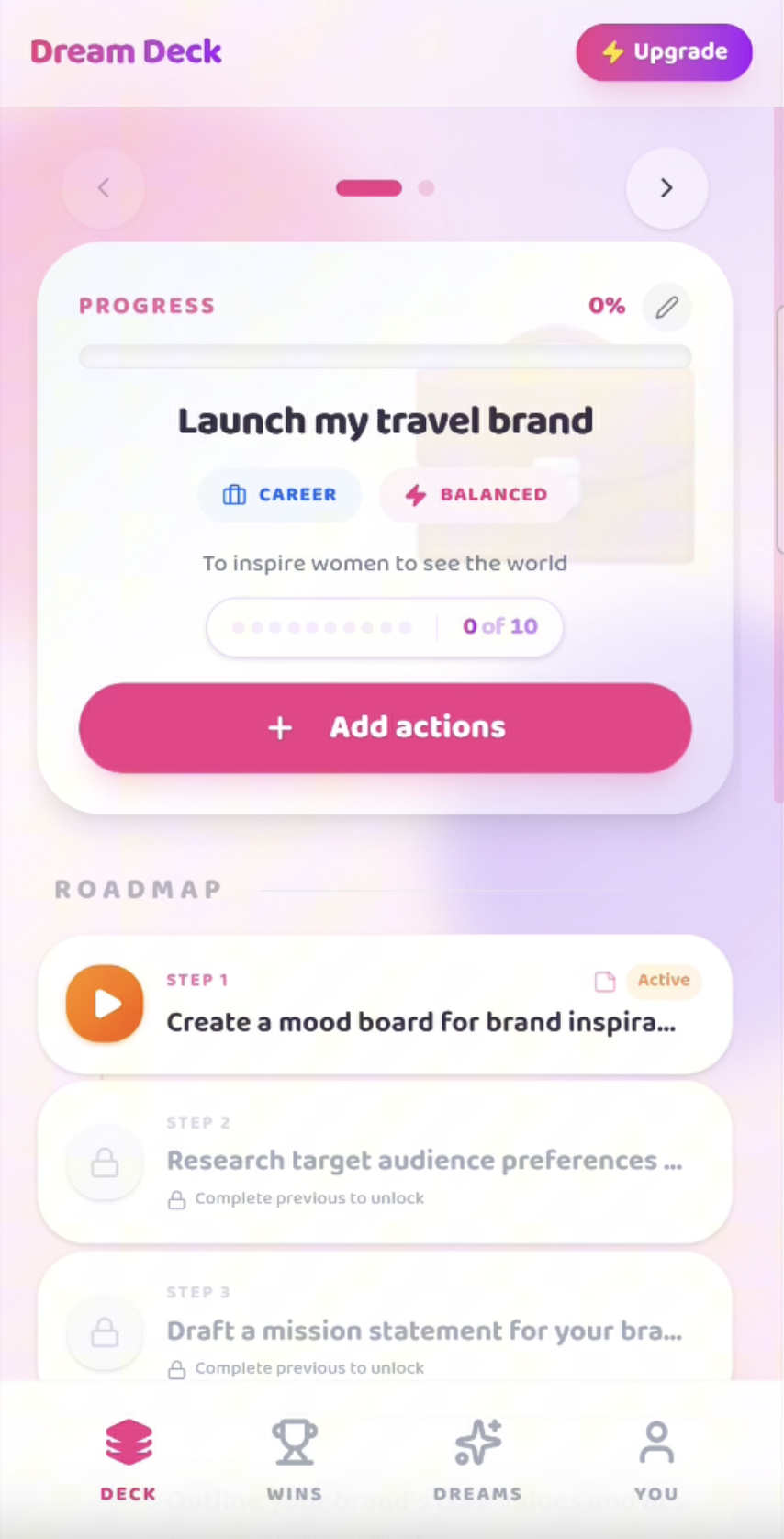
Action list
-
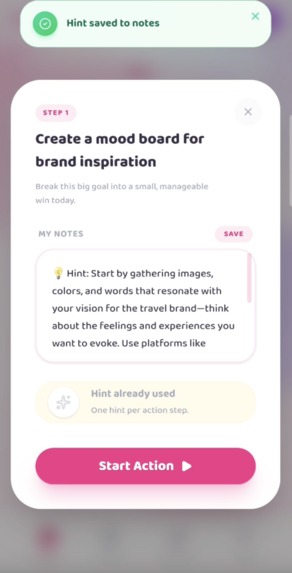
AI Hint helper
-
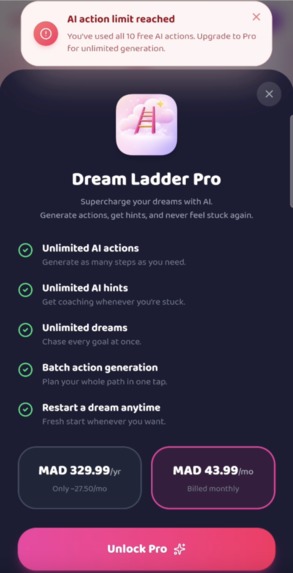
Paywall subscription
-
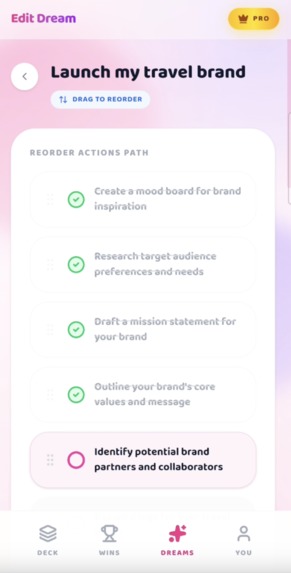
Reorder action
-
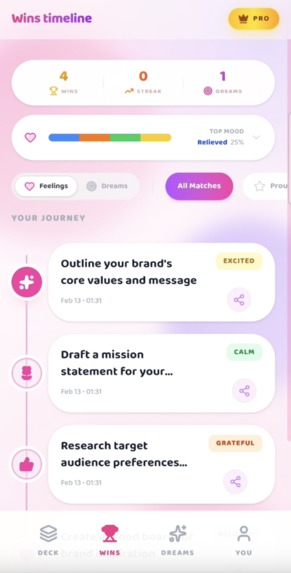
Wins timeline
About Dream Ladder
Inspiration
I was inspired by Gabby Beckford (PaxLight) and her mission to help ambitious women close the gap between inspiration and action. Too often, big dreams—like launching a business, traveling solo, or achieving financial freedom—feel overwhelming. The "paralysis of analysis" sets in, and we get stuck waiting for permission or confidence.
I wanted to build a tool that acts as a bridge. What if we could take a massive, scary goal and instantly break it down into a deck of non-threatening, micro-actions? What if an app could hold your hand, celebrate your small wins, and gently nudge you forward? That was the spark for Dream Ladder Pro.
What it does
Dream Ladder takes your abstract dreams and structures them into actionable steps:
- Dream Definition: You define a dream and your "why".
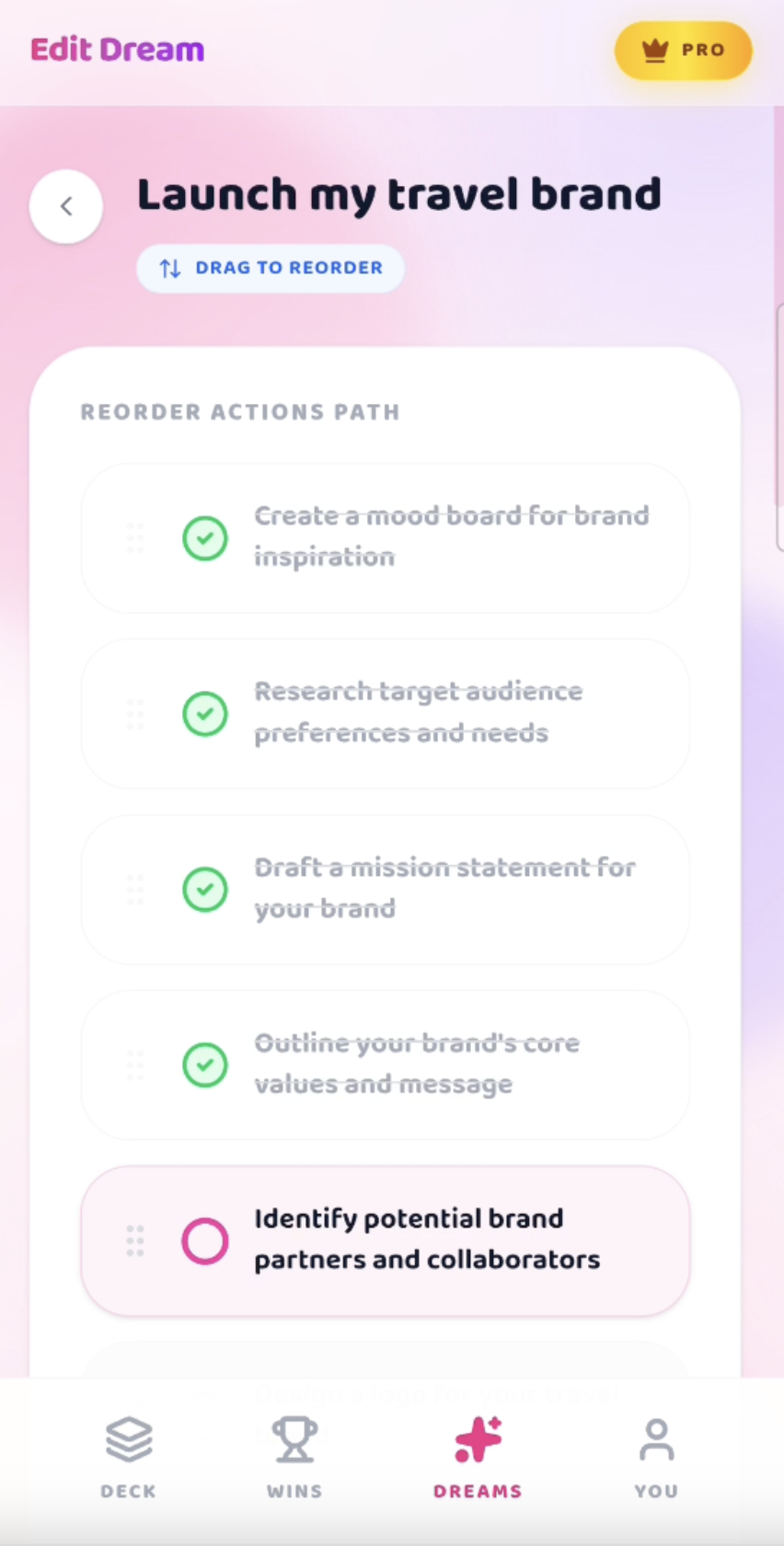
- Deck Generation: The app instantly generates a "Deck" of relevant micro-actions (either manually or via AI).
- Gamified Action: You can only see one unlocked card at a time. This prevents overwhelm.
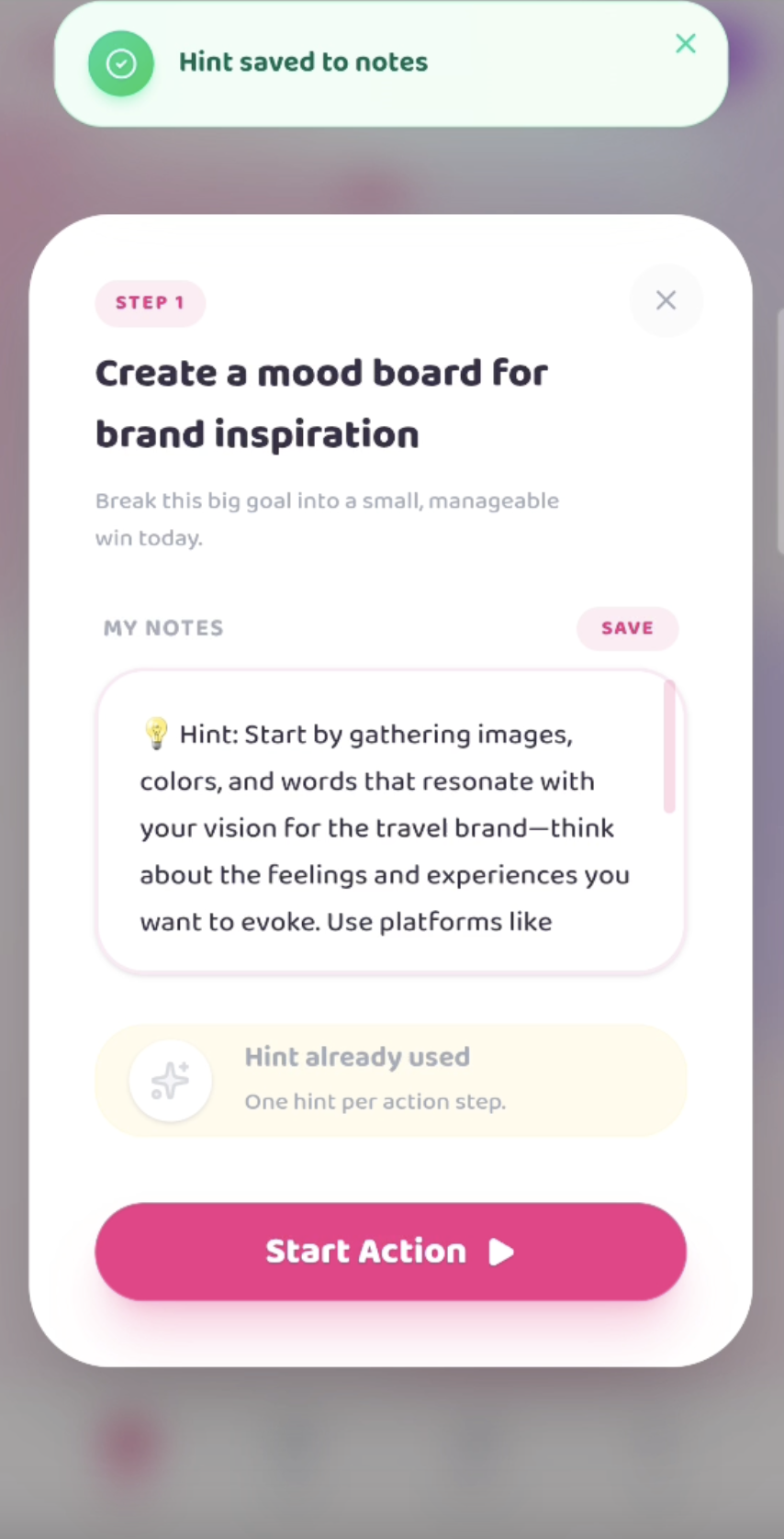
- AI Coaching: Stuck on a step? The built-in AI coach provides instant, bite-sized hints to help you move forward.
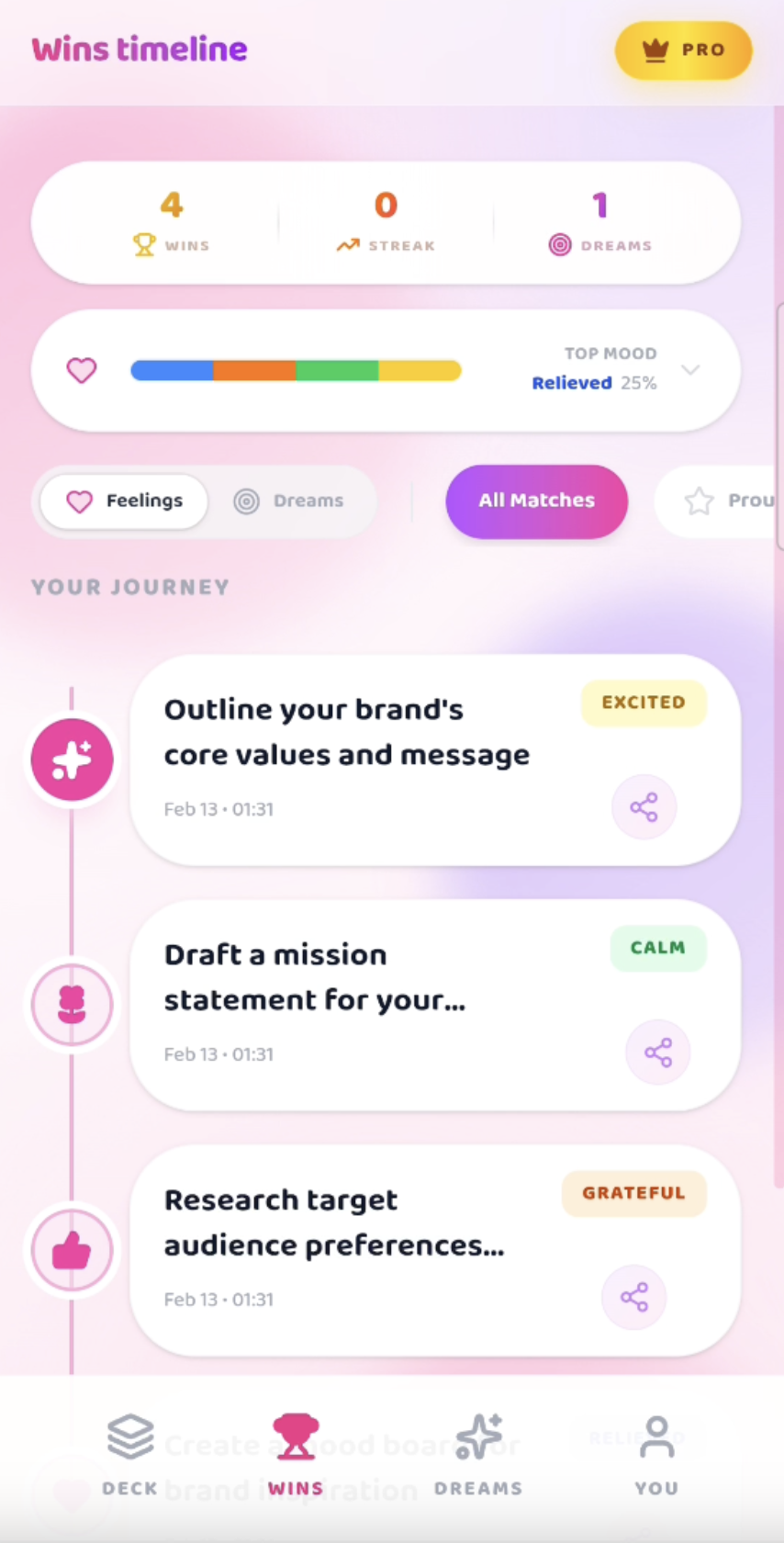
- Celebration: Completing actions rewards you with confetti and tracks your progress on a visual timeline of Wins.
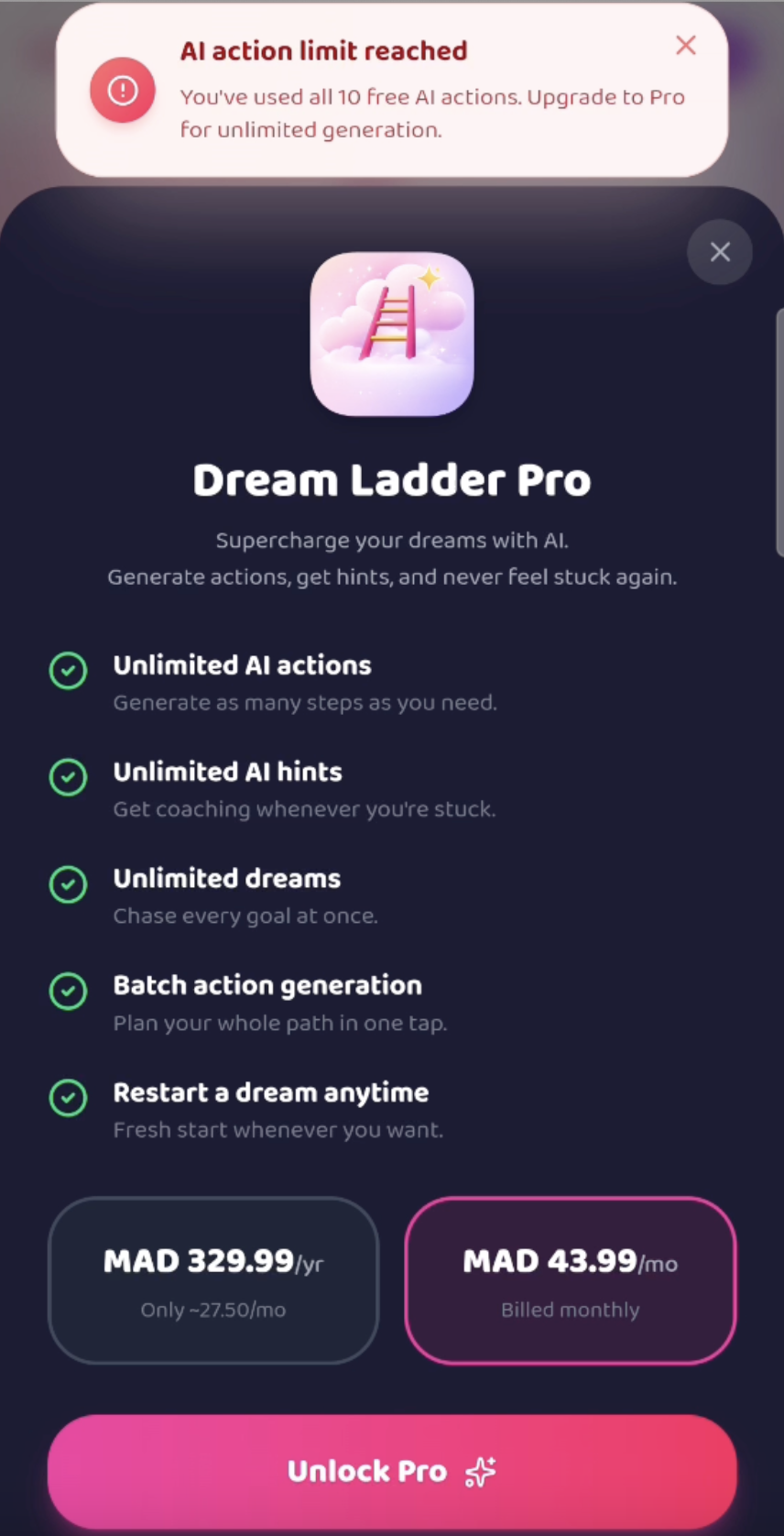
- Pro Features: Unlocks unlimited AI generation, batch planning, and multi-dream management.
How we built it
Dream Ladder Pro is a React Native-like experience built with Capacitor and React.
- Frontend: React, TypeScript, TailwindCSS for styling, and Framer Motion for the fluid, deck-swiping animations.
- Backend/AI: An Express server integrating with OpenAI to generate custom, context-aware action plans based on the user's specific "Dream" and "Why".
- Mobile Native: Wrapped with Capacitor to access native features like:
- Haptics: For satisfying feedback when completing actions.
- Native Sharing: To share wins directly to Instagram/socials.
- In-App Purchases: Integrated with RevenueCat to manage Pro subscriptions seamlessly on Android.
- Data: Local-first architecture for snappy performance, with seamless syncing.
Challenges we ran into
- Native vs. Web Context: One of the biggest hurdles was ensuring the app felt "native" while being built with web technologies. We had to carefully manage safe areas, touch targets, and specific native APIs (like the share sheet) that behave differently in a browser versus an Android APK.
- RevenueCat Integration: Setting up the subscription infrastructure was tricky. Debugging the native SDK initialization and ensuring the "Pro" status synced instantly across the app required deep dives into the Capacitor plugin documentation and rigorous testing on actual devices.
- AI Latency: Making the AI generation feel "magical" rather than slow. We added engaging loading states ("Building your deck...") and optimized the prompts to return structured JSON data that we could immediately render into cards, rather than waiting for raw text to parse.
Accomplishments that we're proud of
- The "Deck" UI: The card-swiping interface feels incredibly tactile and fun. It turns a "to-do list" into a game.
- The Confetti Moment: It sounds simple, but perfecting the "Win" animation was crucial. It gives the user a genuine dopamine hit for finishing a task.
- Seamless Pro Upgrade: Successfully implementing a working paywall and subscription model that unlocks real value (unlimited AI) feels like a major technical milestone.
What we learned
- Local-First is Powerful: Building with a local-first mindset made the app feel incredibly fast and responsive, which is critical for a productivity tool.
- The Importance of "Native Feel": Small details like haptics, swipe gestures, and system bar integration make a huge difference in perceived quality. A web app wrapped in a container isn't enough; it needs to feel like it belongs on the device.
- Subscription Complexity: Managing app store subscriptions is complex! Tools like RevenueCat are invaluable, but understanding the lifecycle of a purchase (pending, active, restored) was a significant learning curve.
What's next for Dream Ladder
- Community Features: Allowing users to share their "Decks" with others (e.g., "Gabby's Guide to Solo Travel").
- Widget Support: A home screen widget that shows just one card—your next micro-action.
- Voice Mode: Talking to the AI coach for a pep talk when you're feeling down.
Built With
- capacitor
- express.js
- framer-motion
- openai
- react
- revenuecat
- tailwindcss
- typescript

Log in or sign up for Devpost to join the conversation.