InspirationDream It — Empowering Student Daily Life
None of us actually forgot an assignment because we didn't care about it. We forgot because it was buried in a to-do app, while the actual deadline was in a syllabus PDF, and the notes we needed to finish it were scattered across three other tools we'd half-abandoned.
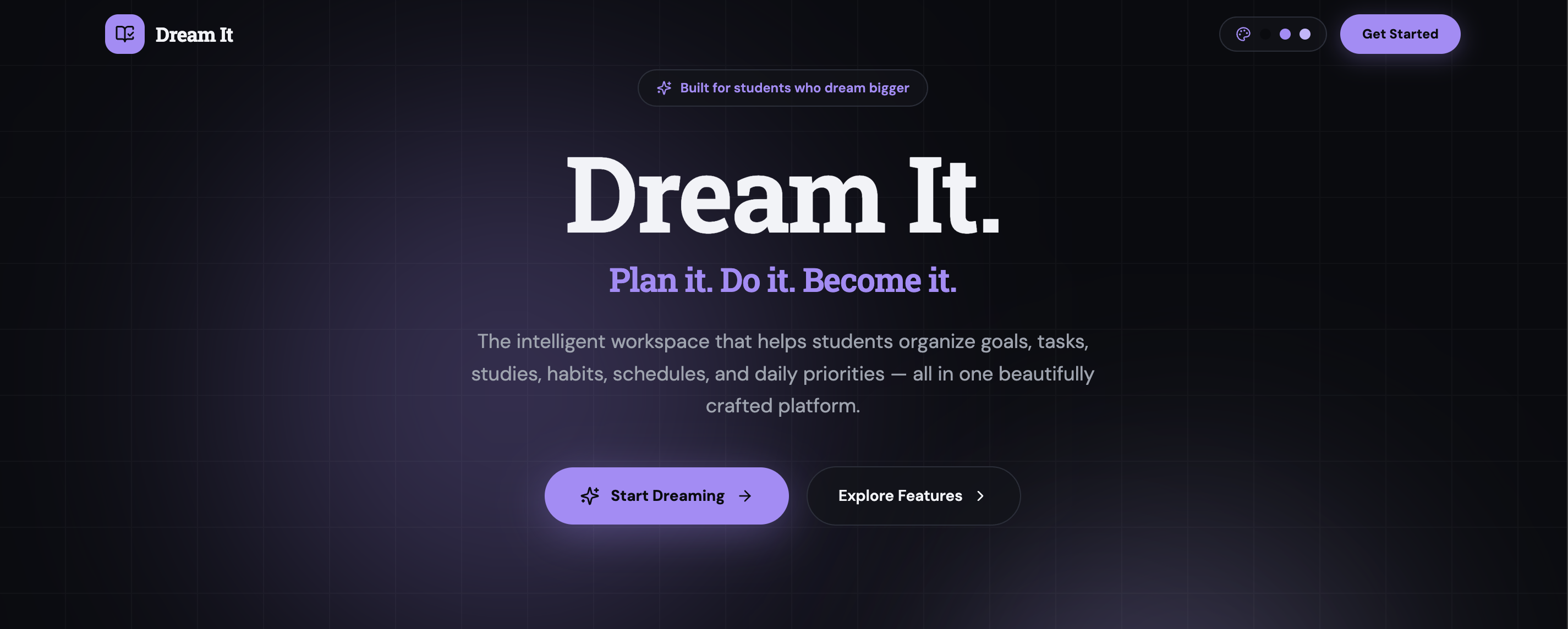
That's basically the story of student life right now — not a lack of effort, just a lack of one place to put everything. So we set out to build that place: a single workspace built around how a student's day actually moves, not fifteen separate ones stitched together with copy-paste.
That became Dream It.
What it does
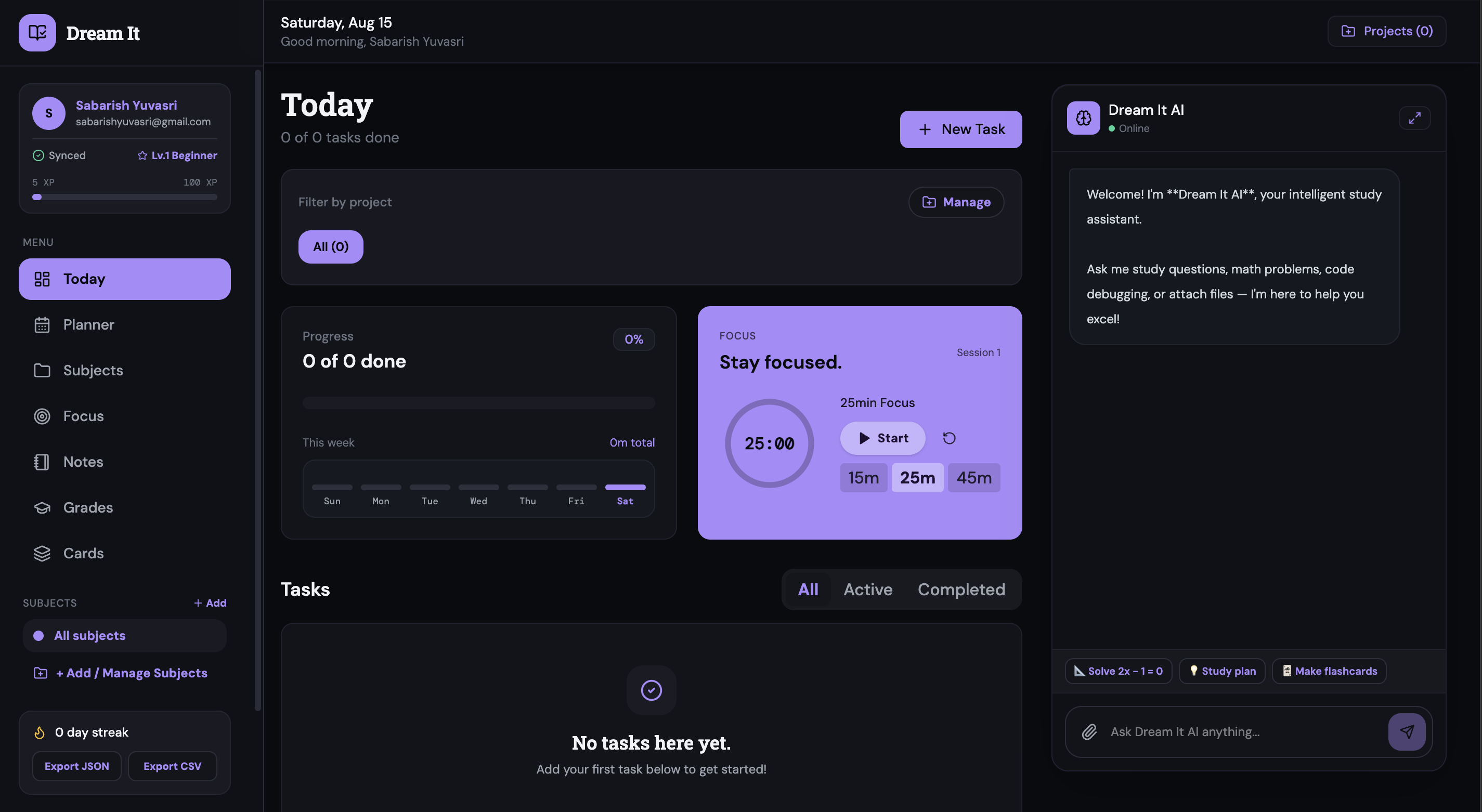
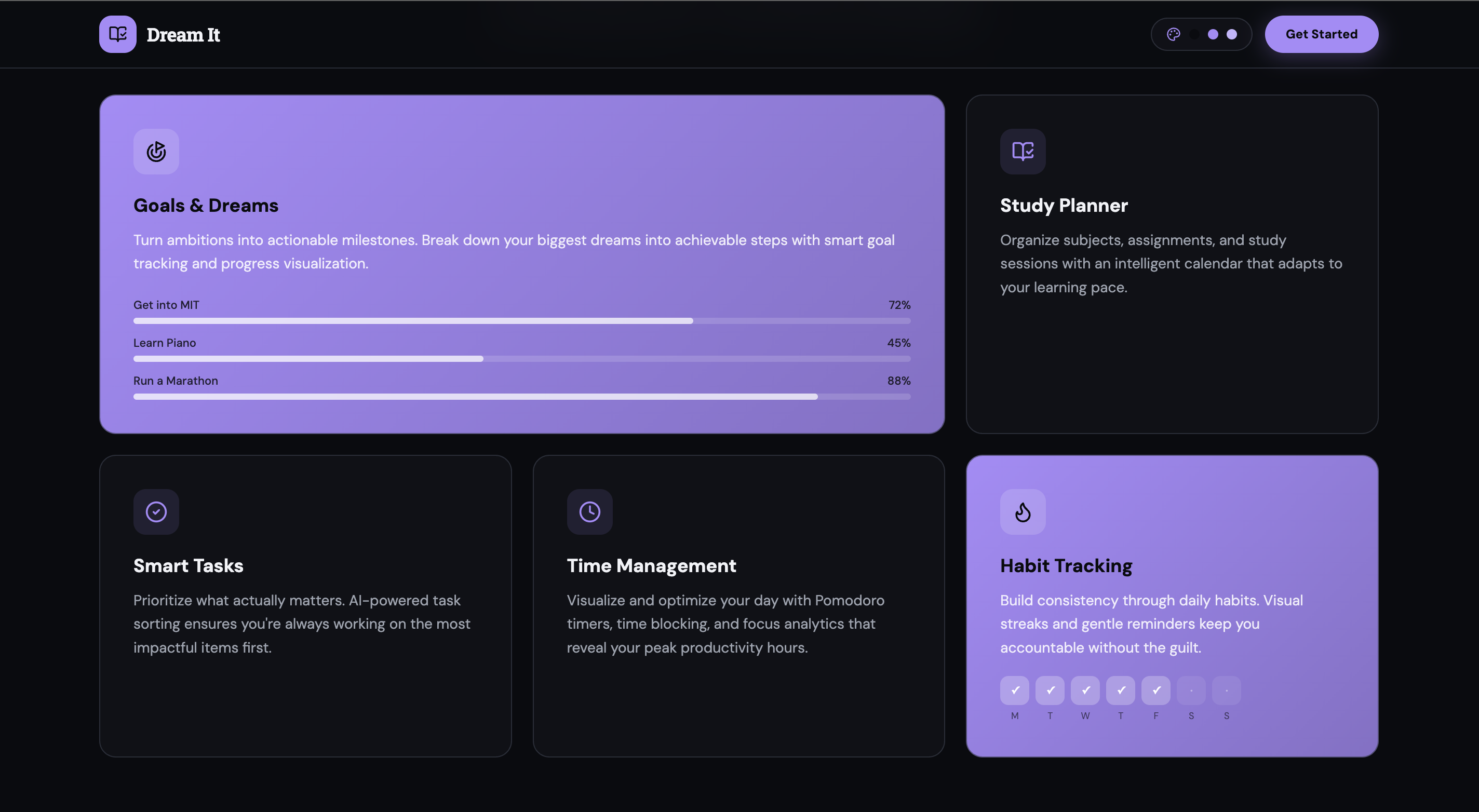
Dream It pulls the pieces of student life that usually live in different apps into one workspace:
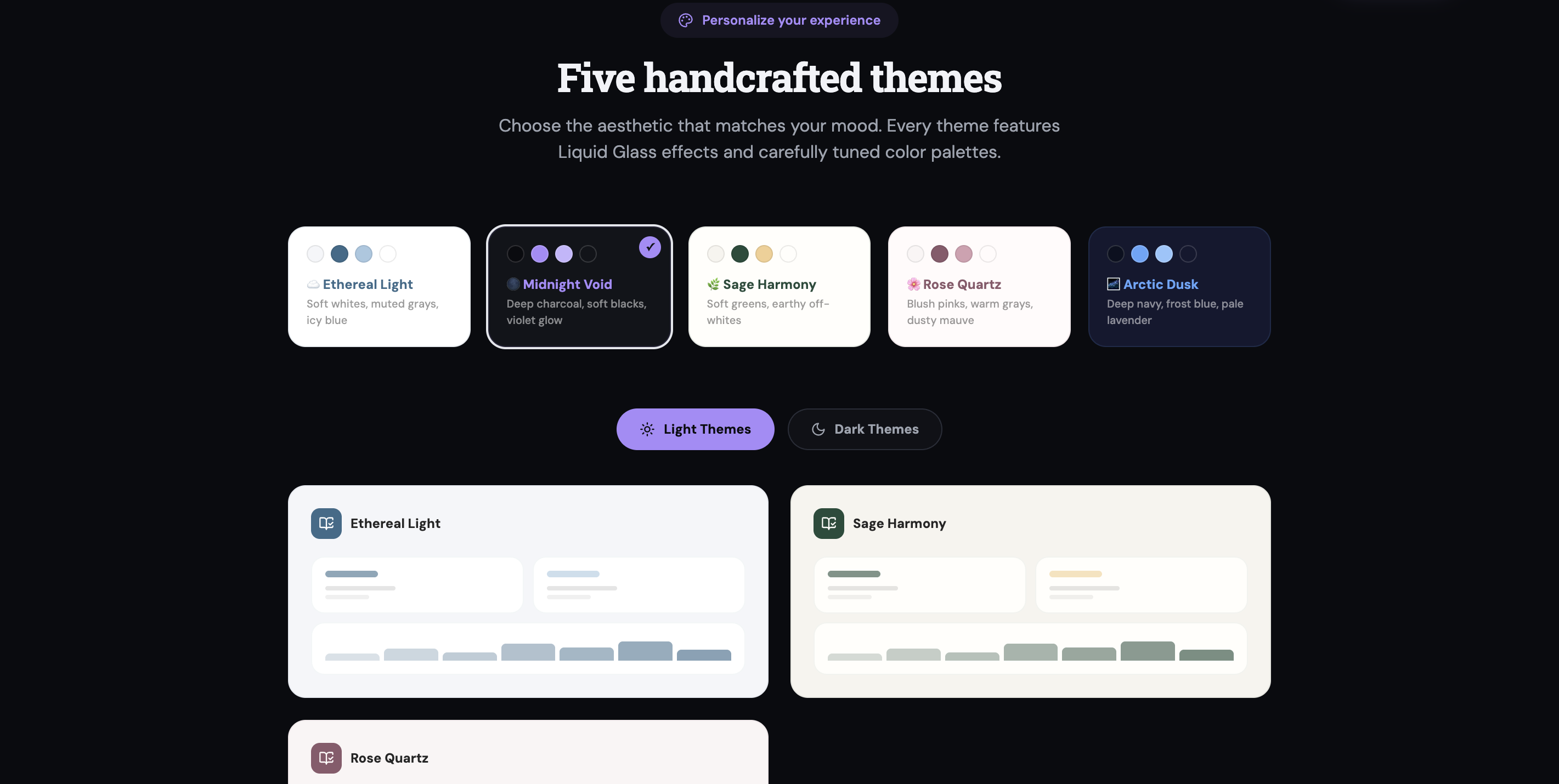
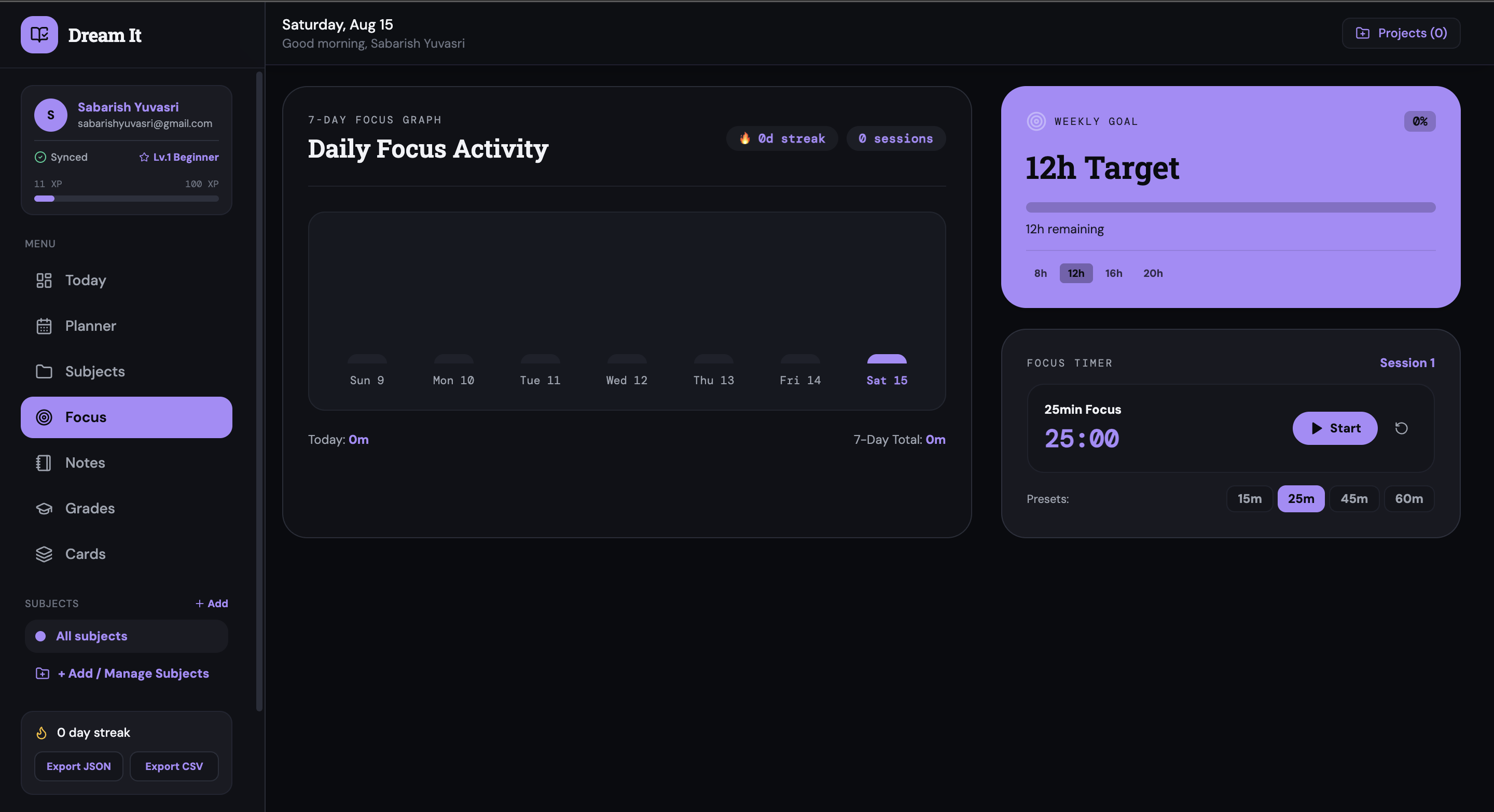
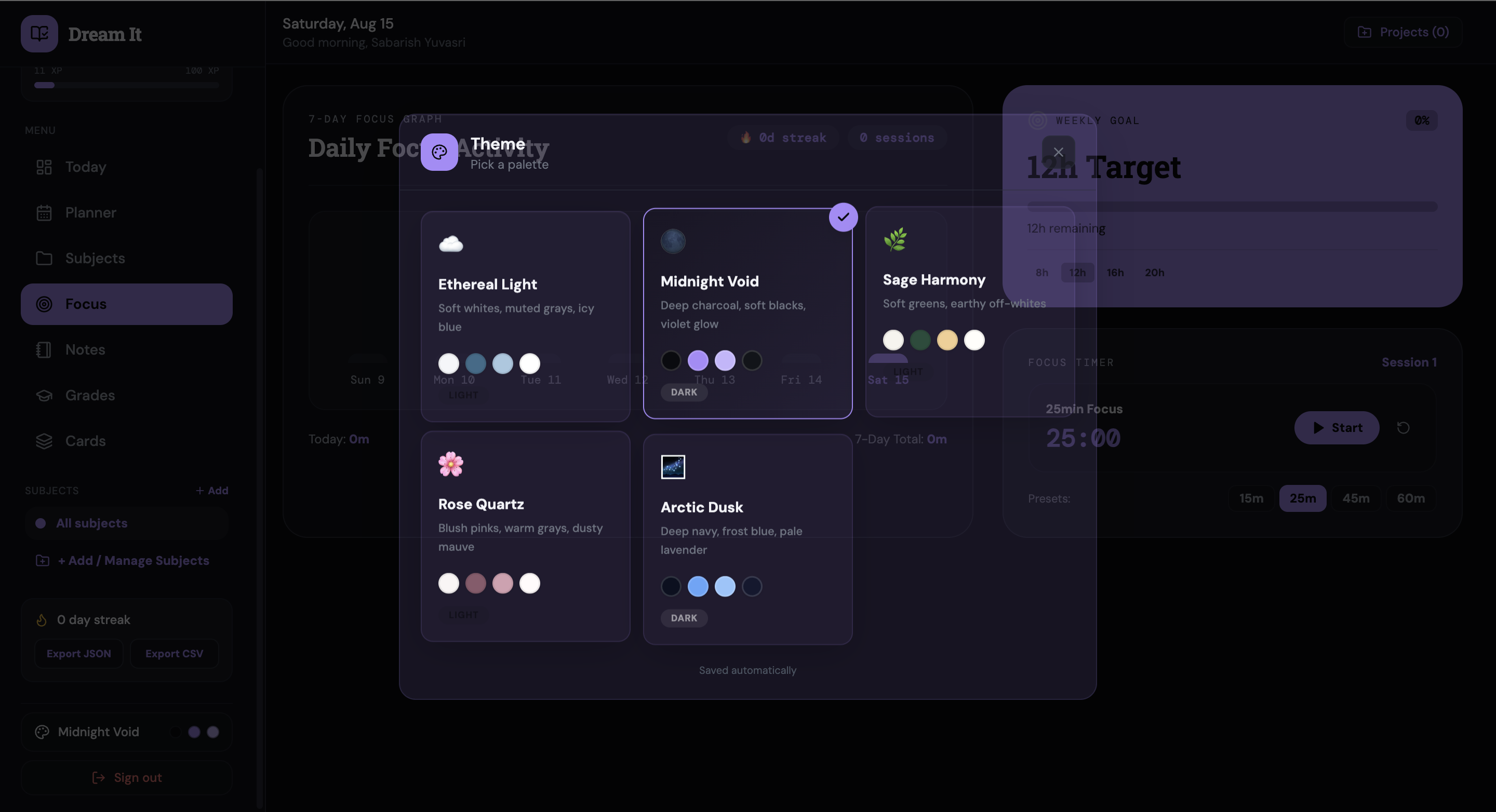
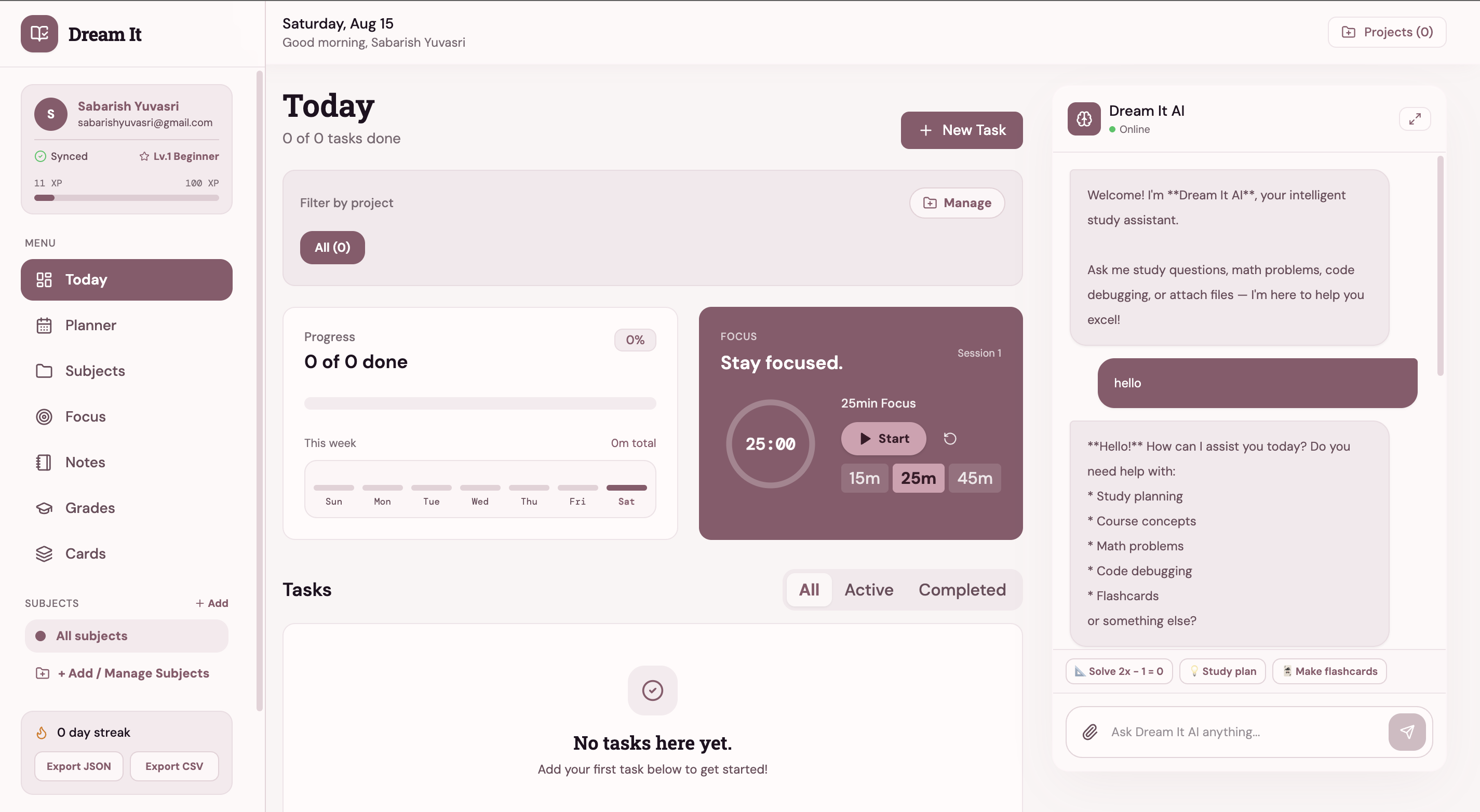
Today Dashboard — a quick look at what actually needs attention right now Tasks & Deadlines — add, prioritize, finish, and track what's due Planner — lay out daily schedules and study time Projects — keep bigger academic work in one place instead of scattered notes Focus Mode — a Pomodoro-style timer for actually sitting down and working Notes — Markdown-supported notes that don't live in five different note apps Dream It AI — a study assistant that can answer questions, help with math and code, work off uploaded files, and summarize notes Grades — track marks and see how you're actually doing Flashcards — build and study your own decks Progress & Gamification — XP, streaks, levels, a record of what you've actually gotten done File Attachments — keep the PDFs and resources you need attached to the work itself Themes & Personalization — make it feel like yours
The point isn't to add more tools. It's to stop making students juggle the ones they already have.
How we built it
We built Dream It as a React + TypeScript app using Vite and Tailwind, with a set of reusable UI components we leaned on heavily to keep things consistent as the feature list grew.
For data, we went with Supabase, so a student's workspace persists and syncs instead of disappearing the moment they close a browser tab.
Dream It AI runs through a backend study-coach flow — it can handle study questions, work through math and coding problems, read uploaded files, and turn notes into summaries.
Under the hood, we treated everything — tasks, planner, notes, grades, flashcards, focus sessions, streaks, XP — as parts of one connected system rather than bolted-on features.
We also built the entire thing at zero cost. No paid infrastructure, no premium plans, no shortcuts bought with a credit card — just free tiers, open-source tools, and a lot of our own time instead of money.
Challenges we ran into
The hard part was never adding a feature. It was making features talk to each other without turning the whole thing into a mess.
Finishing a task should move your XP. Finishing a focus session should show up in your stats. Your grades need to sit next to your day-to-day work, not off in a separate corner of the app. Every one of those connections is a small design decision, and there were a lot of them.
On top of that, we were juggling data persistence, auth, file handling, AI integration, and responsive design — all while trying to keep the experience feeling like one product instead of a pile of features.
If there's one thing this project hammered home, it's that shipping a useful product is less about how many features you can cram in and more about how invisible the seams between them are.
None of that came fast, either. A huge chunk of our time went into plain debugging — chasing down state bugs, fixing things that broke the moment two features touched each other, re-testing after every new addition. We didn't have a budget to throw at the problem, so we threw hours at it instead, going feature by feature until things actually held together.
Accomplishments we're proud of
Somewhere along the way, Dream It stopped being "a to-do list with extra steps" and turned into something closer to a full student productivity ecosystem — and we're genuinely proud of that shift.
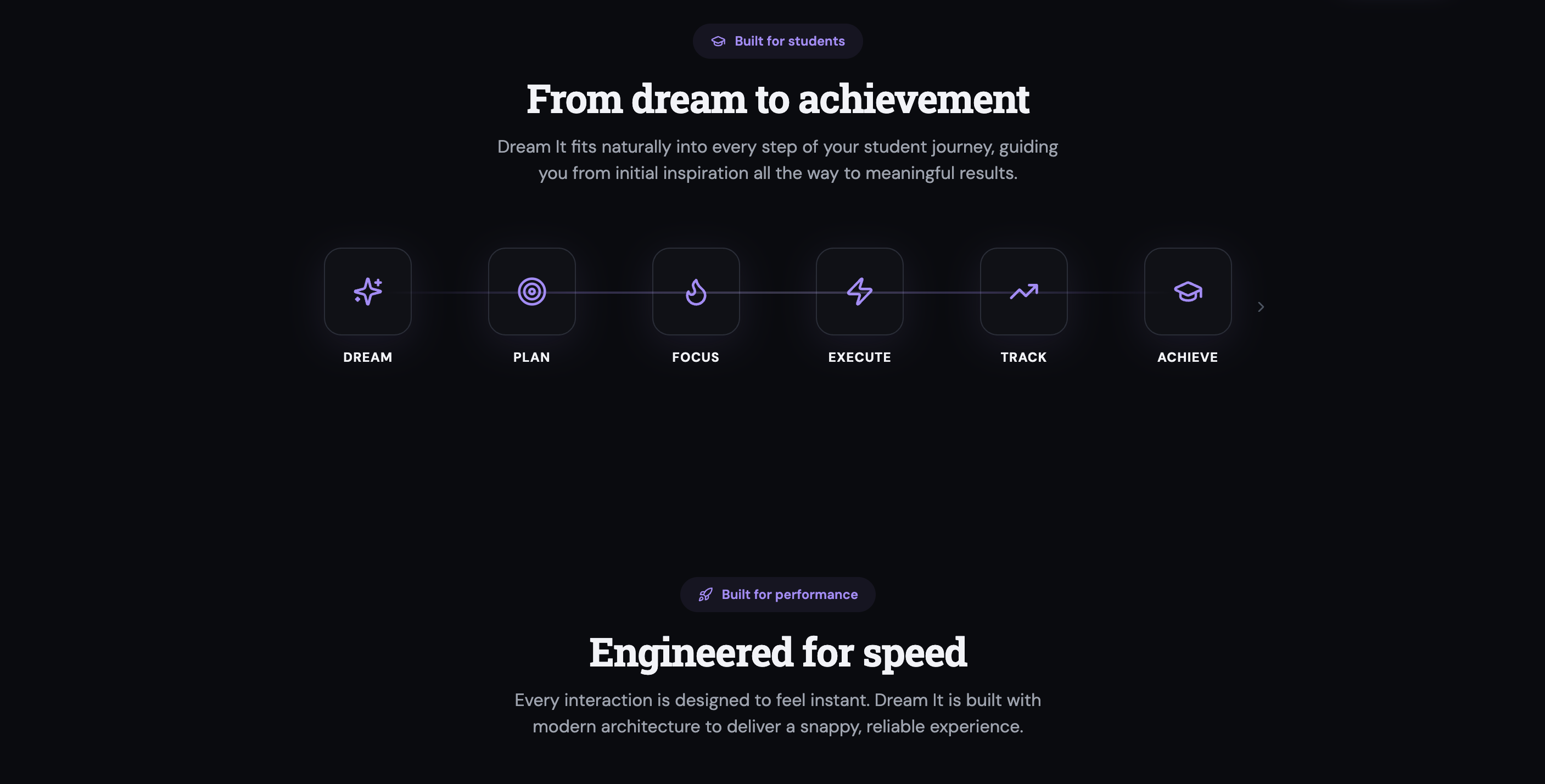
You can start your day checking tasks, block out your schedule, work on a project, drop into a focus session, ask Dream It AI a question you're stuck on, jot down notes, quiz yourself with flashcards, and log a grade — all without opening a second app.
Mixing productivity, learning, AI, and a bit of gamification into one place is what makes this feel different to us, not just another planner clone.
We're also proud that we got here without spending a dollar. Every part of Dream It was built on free-tier tools and a lot of late nights, which meant every feature had to earn its place through actual time and effort rather than money.
The idea we kept coming back to:
A student's productivity system should support their entire journey, not just their to-do list.
What we learned
Mostly, we learned that turning a big, fuzzy idea into something people can actually use is a lot harder than it sounds on day one.
Along the way we got a lot deeper into React state management, TypeScript, component architecture, Supabase, AI integration, file handling, and responsive UI work.
But the bigger lesson was a product one: simplicity takes more work than complexity. Piling on features is easy. Making a pile of features feel like one simple, coherent thing — that's the actual job.
What's next for Dream It
This is the starting point, not the finished product.
We want Dream It to get smarter about a student's actual workload — helping them figure out what to study, when to study it, and how to stay consistent without burning out.
That likely means smarter schedule generation, more personalized study plans, deeper insight into performance over time, stronger AI-powered learning support, calendar integrations, better collaboration features, and eventually something closer to a real productivity coach.
The long-term goal hasn't changed: we want Dream It to become the operating system for student life — the thing that helps students plan better, learn smarter, stay focused, and actually turn their goals into something real.
Built With
- antigravity
- clerkapi
- framermotion
- git
- groqapi
- javascript
- llama3.370b
- markdown
- node.js
- postgresql
- react
- shadcn/ui
- tailwindcss
- typescript
- vercel
- vite

Log in or sign up for Devpost to join the conversation.