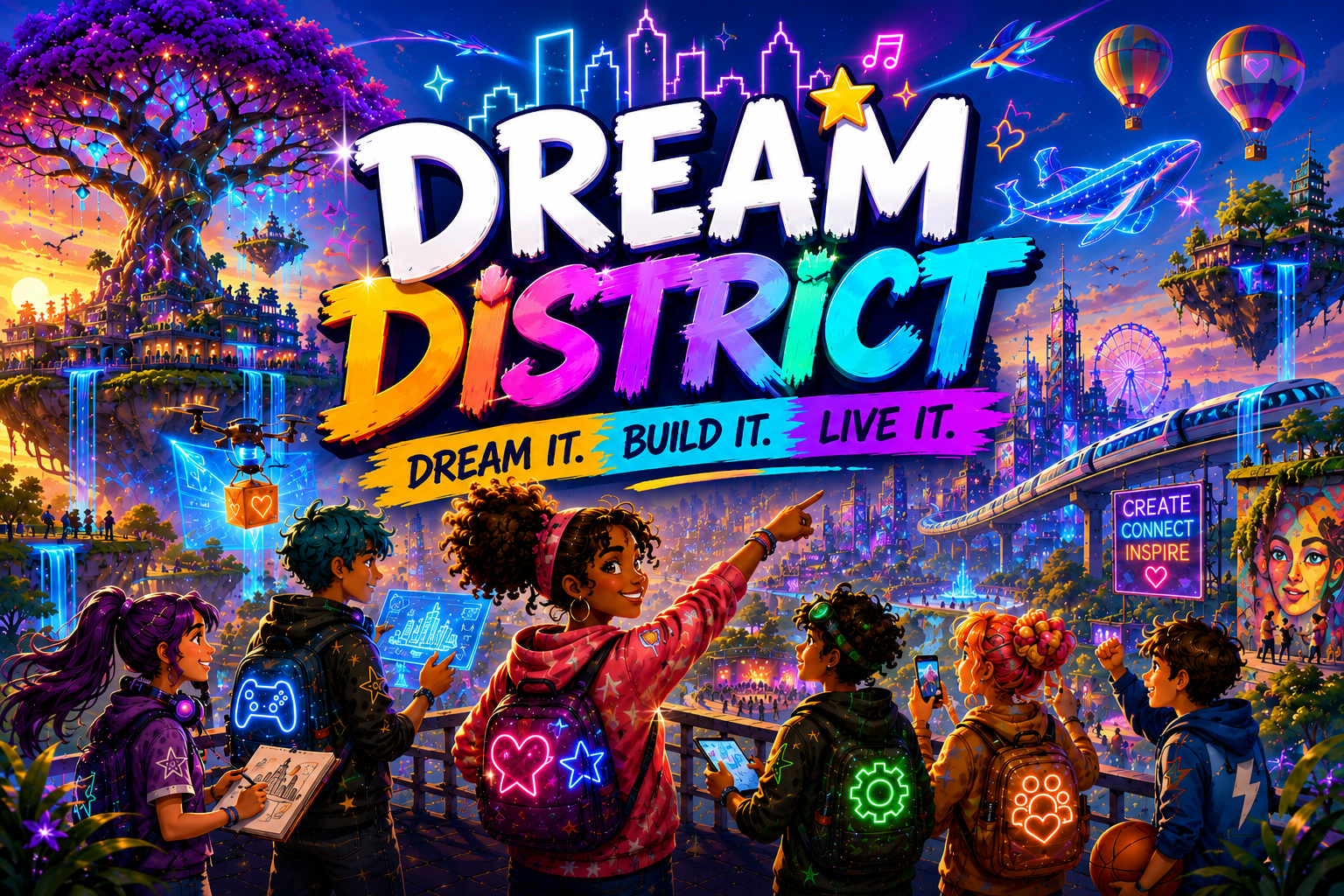
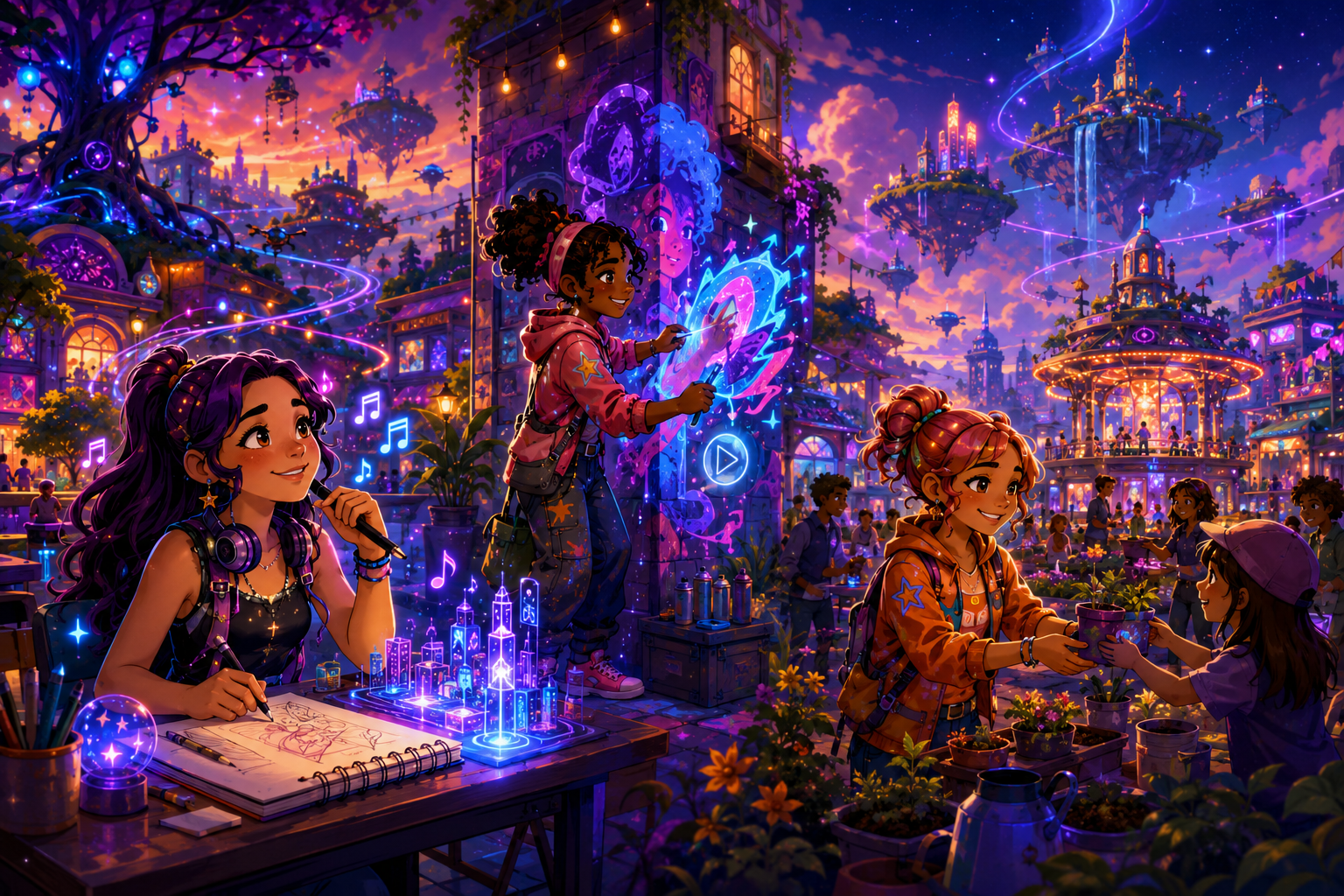
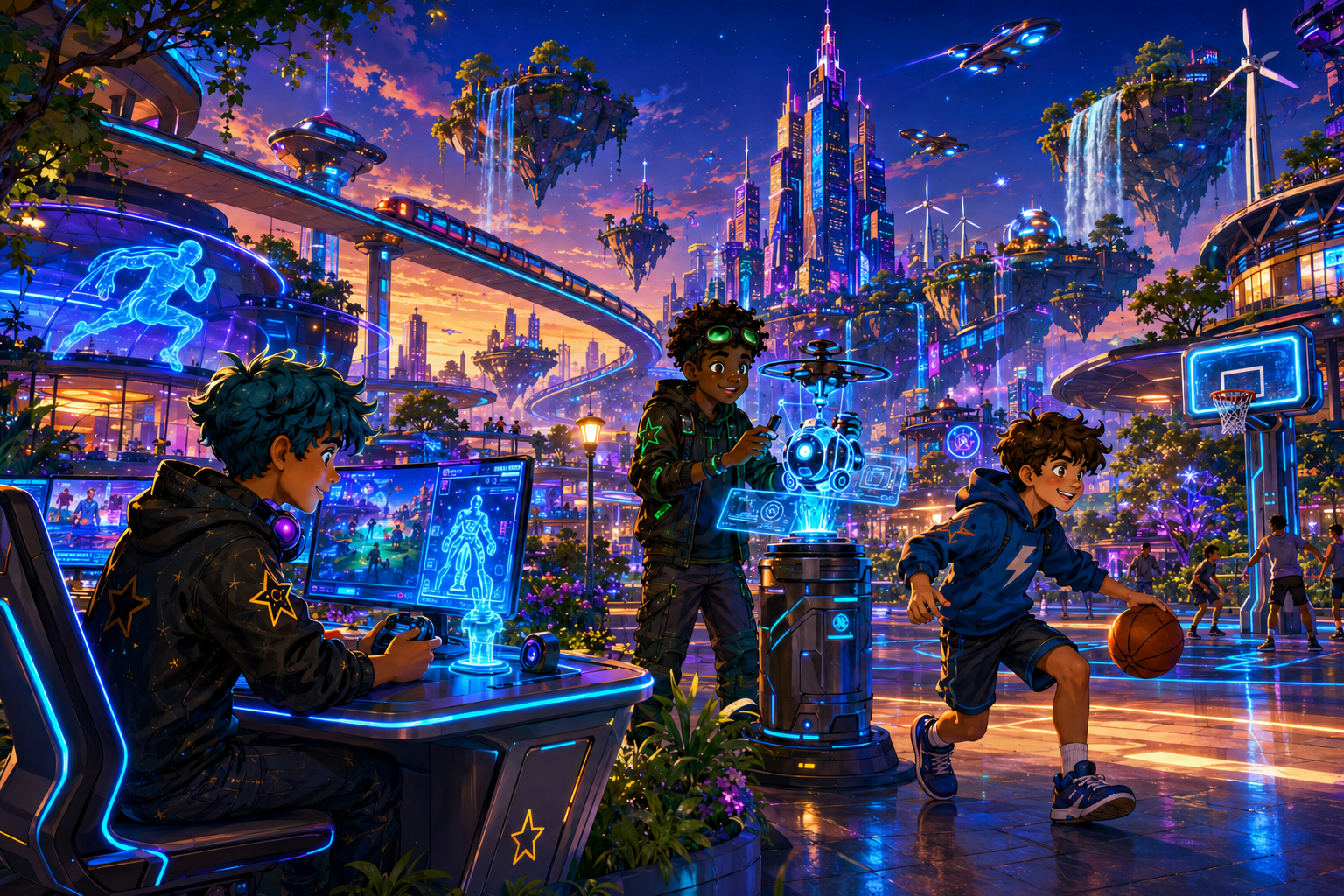
Inspiration
Dream District was inspired by the idea that a city should be measured not only by buildings, roads, or expansion, but by the people who live there and the futures they are trying to create.
I wanted to design a Simulation & Management game that felt hopeful, emotional, and strategic. Instead of making the player a traditional mayor focused only on infrastructure, Dream District makes the player a Dream Director who helps citizens pursue their aspirations and shape the future of their community.
The core question behind the project became:
What if a city grew because people were becoming who they dreamed of being?
What It Is
Dream District is a mobile-first Simulation & Management game where players grow a city by supporting citizen dreams. As players help citizens pursue opportunity, belonging, creativity, and community growth, the city evolves visually and emotionally.
The game combines cozy city-building, character attachment, and expressive world transformation, but shifts the focus from infrastructure-first optimization to aspiration-driven growth.
How I Built The Concept
I developed Dream District as a complete game design package made up of four connected artifacts: a Game Design Document, Player Journey Map, Visual Concept Package, and Production Plan.
Together, these documents define the game’s core fantasy, player journey, visual direction, MVP scope, production approach, and future expansion path. The goal was to make every artifact feel like part of one cohesive game concept.
Challenges
The biggest challenge was balancing a large creative vision with a focused, buildable first version. Dream District has a rich world and many possibilities, so I had to separate the core experience from future expansion ideas.
Another challenge was making sure the emotional theme had real gameplay behind it. Dreams could not only be story flavor; they needed to connect to strategy, progression, player choice, and visible transformation.
Accomplishments That I'm Proud Of
I am proud that Dream District evolved from a simple question into a complete, coherent game design package.
I am especially proud of how the concept balances emotional storytelling with strategic decision-making. Players are not just decorating a city; they are shaping opportunity, community identity, and the future direction of the world.
Most of all, I am proud that the final package communicates a hopeful game about community, belonging, and possibility.
What I Learned
Designing Dream District taught me how important it is to separate a big vision from a buildable MVP. I learned that a strong game concept needs more than a good idea; it needs a clear player role, readable systems, a strong visual identity, and a realistic production path.
I also learned that emotional design and systems design can support each other. A game can feel meaningful while still asking players to make strategic choices.
Built With
- game-design-documentation
- meta-horizon-mobile
- mobile-ui-mockups
- mobile-ui-wireframing
- pdf-based-design-artifacts
- player-journey-mapping
- production-planning
- visual-concept-design
- visual-concept-generation


Log in or sign up for Devpost to join the conversation.