Why I wanted to build this platform
I often have dreams, and some of them leave a strong impression on me. I have always wanted a place to keep them.
At the same time, I often wonder whether someone, somewhere in the world, has had similar thoughts, feelings, or dreams. Even though we may not know each other, finding this kind of connection could be meaningful.
That is how DreamCloud was born.
What DreamCloud does
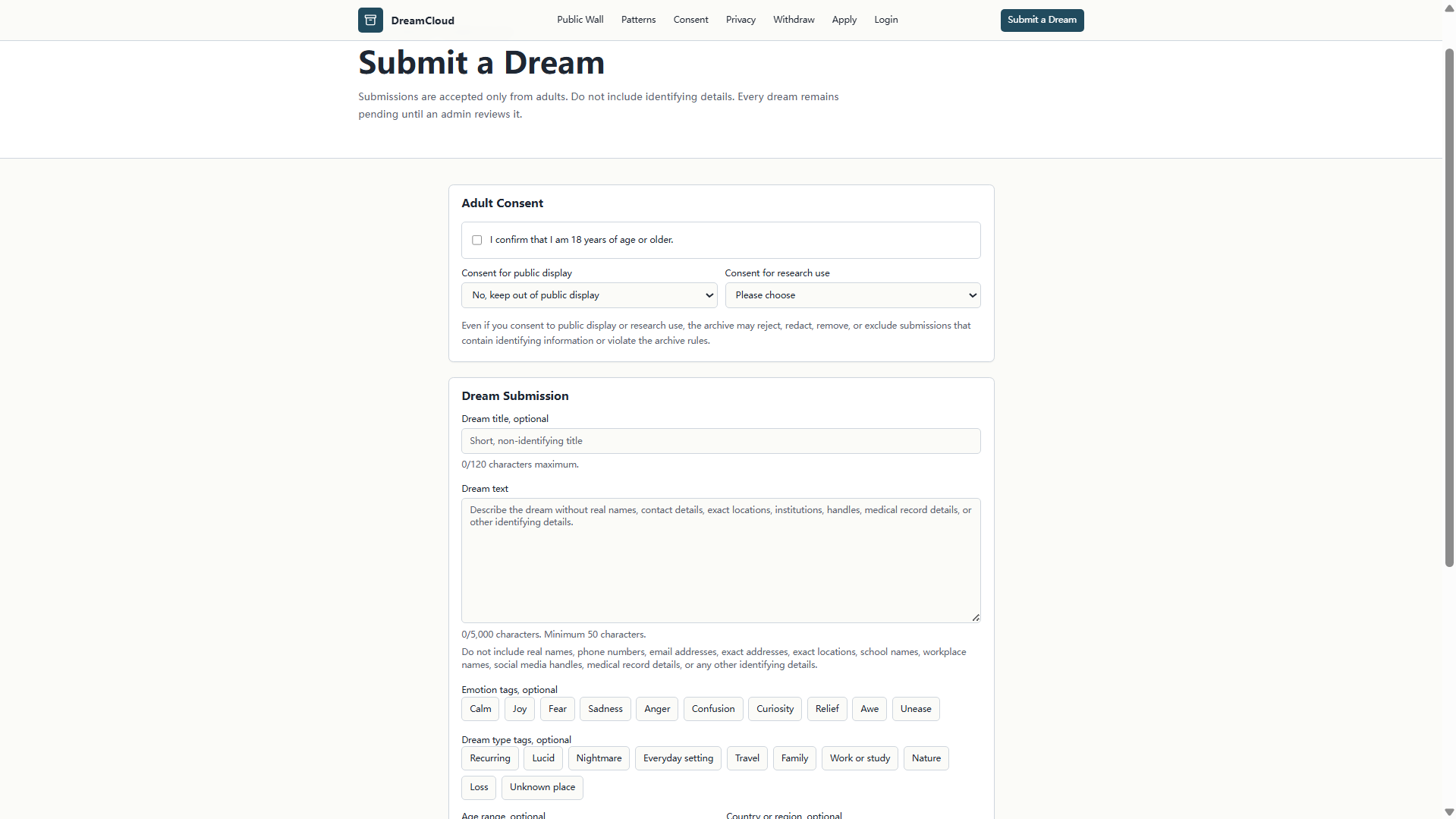
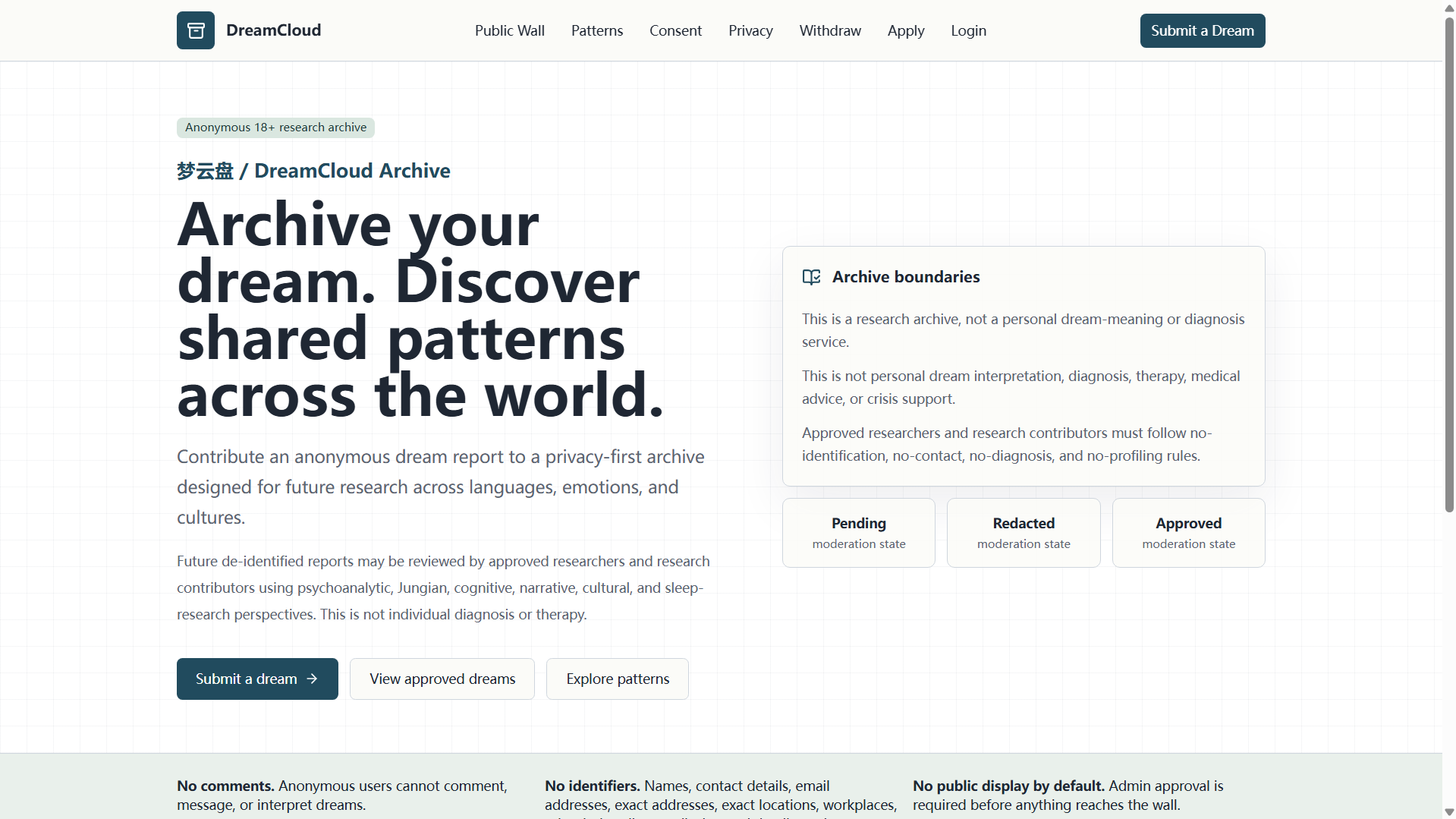
DreamCloud Archive is an anonymous, privacy-first dream archive designed for adults.
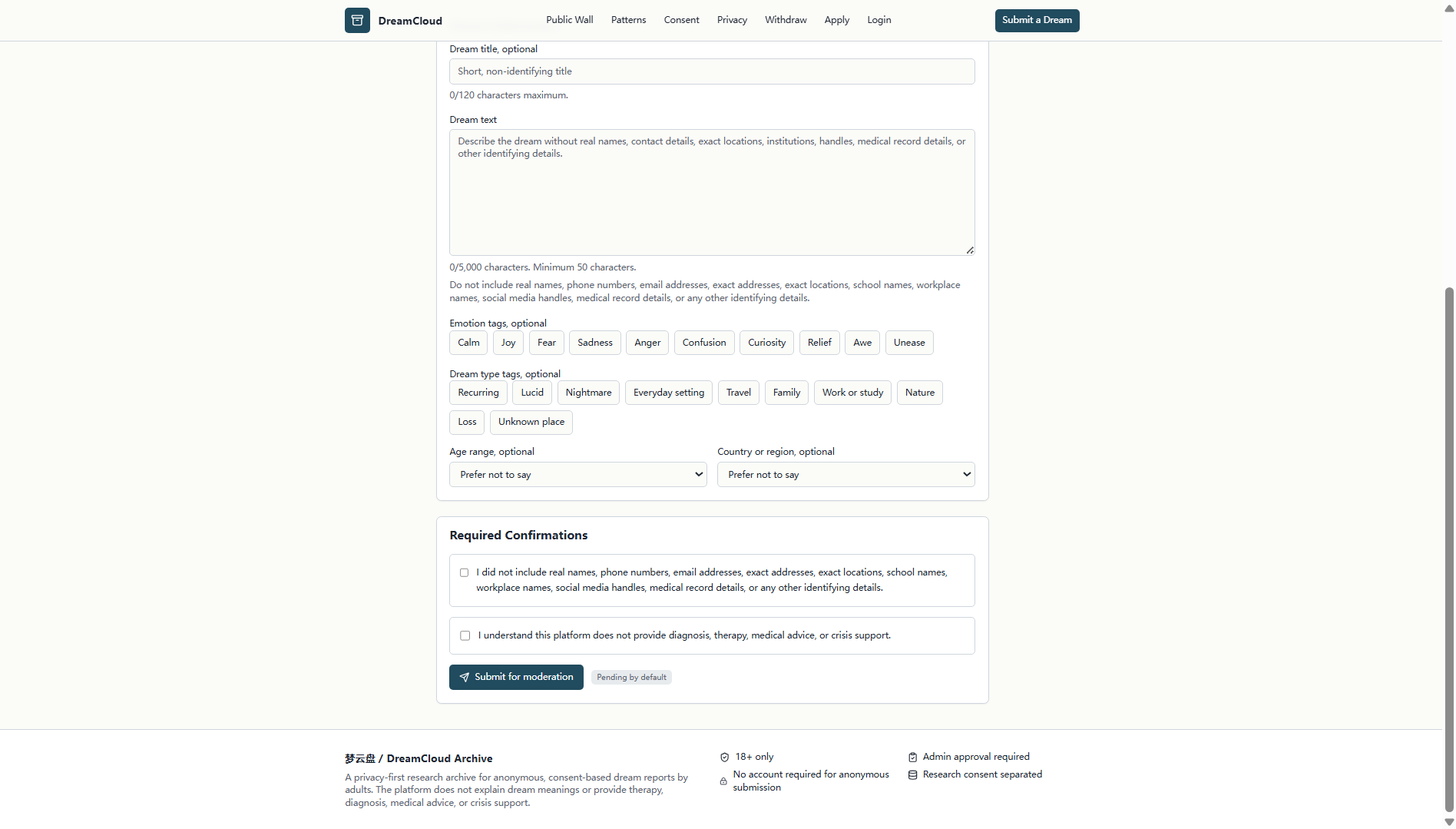
People do not need to create an account. They can submit their dreams and choose whether they are willing to share them publicly or allow them to be used for future research.
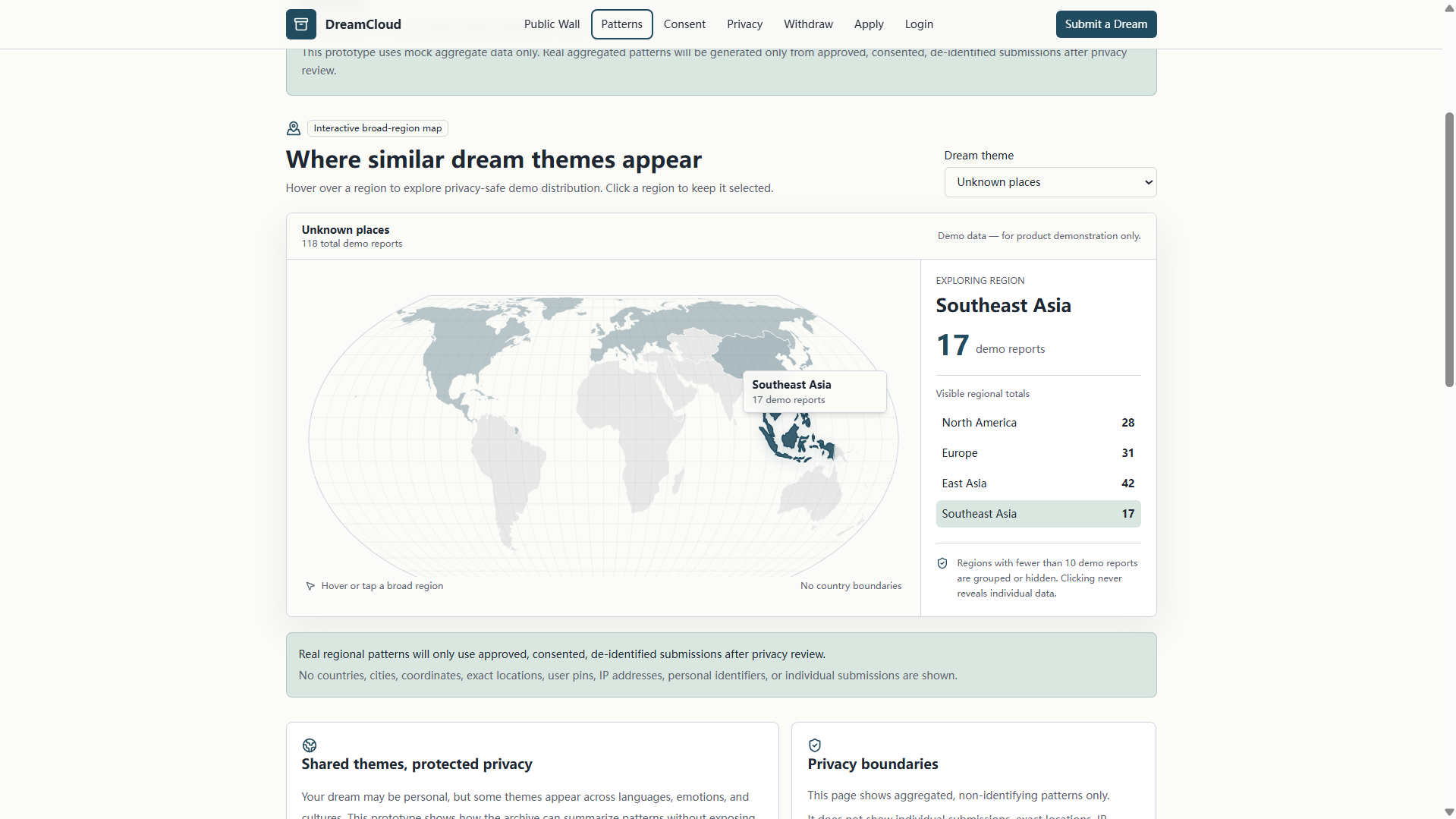
People can also explore whether others around the world have experienced similar dream themes and find a sense of connection with them.
This platform is not designed for mystical dream interpretation or mental health diagnosis. It is mainly a place for preserving dreams, discovering shared patterns, and supporting possible future research.
The current public version is a demo. It demonstrates the submission process, but it does not store users’ dreams yet.
How I built it
I shared my ideas and thoughts with GPT-5.6 and discussed possible functions, rules, privacy issues, and product boundaries with it.
After many rounds of discussion, GPT-5.6 helped me turn my abstract ideas into clearer requirements and structured prompts.
I then gave these prompts and requirements to Codex and worked with it to build the platform. I repeatedly tested the website, found problems, and asked Codex to revise and improve them.
After many rounds of testing and revision, DreamCloud became a working prototype.
Challenges and what I learned
The biggest challenge was learning how to turn an abstract idea into something detailed and real. In other words, I had to learn how to make an unclear idea become clear.
I also learned that I needed to be careful with privacy and sensitive information.
At first, I simply wanted to create a platform where people could collect and share dreams. However, when I started turning this idea into a real product, I realised that I also needed to consider other people’s choices.
For example, some people may want to save their dreams but may not want to share them publicly. Some may agree to research use but not public display. Therefore, these choices should be separated and clearly explained.
I am not a computer scientist. I am a psychology student. With the help of GPT-5.6 and Codex, I was able to use vibe coding to turn an idea in my mind into a working product.
This experience also taught me that AI does not make every decision for me. I still needed to decide what the platform should do, test the results, identify problems, and judge whether the design was clear and responsible.
What's next
My next step is to connect DreamCloud to a real database, so that dream submission, moderation, withdrawal, and deletion can work properly.
I also hope to add multilingual support so that people from different countries can use the platform.
In the future, if possible, I would like to work with qualified researchers or academic institutions. With users’ consent, de-identified dream reports may be able to support responsible cross-cultural dream research.
Built With
- codex
- gpt-5.6
- level
- next.js
- react
- row
- supabase
- typescript
- vercel

Log in or sign up for Devpost to join the conversation.