-
-
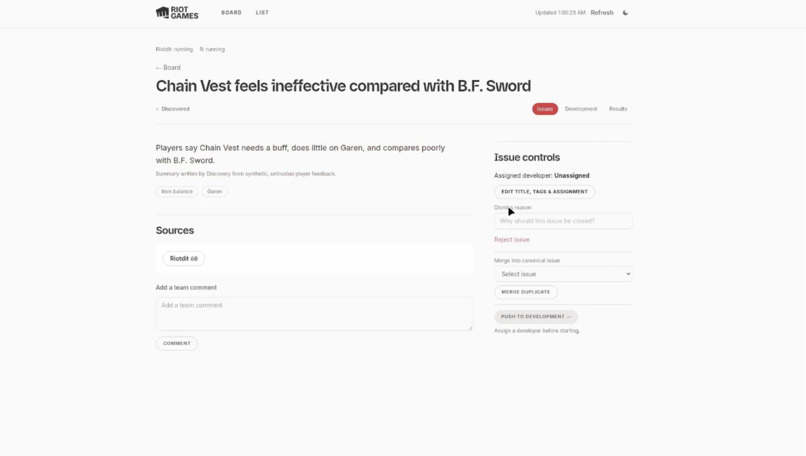
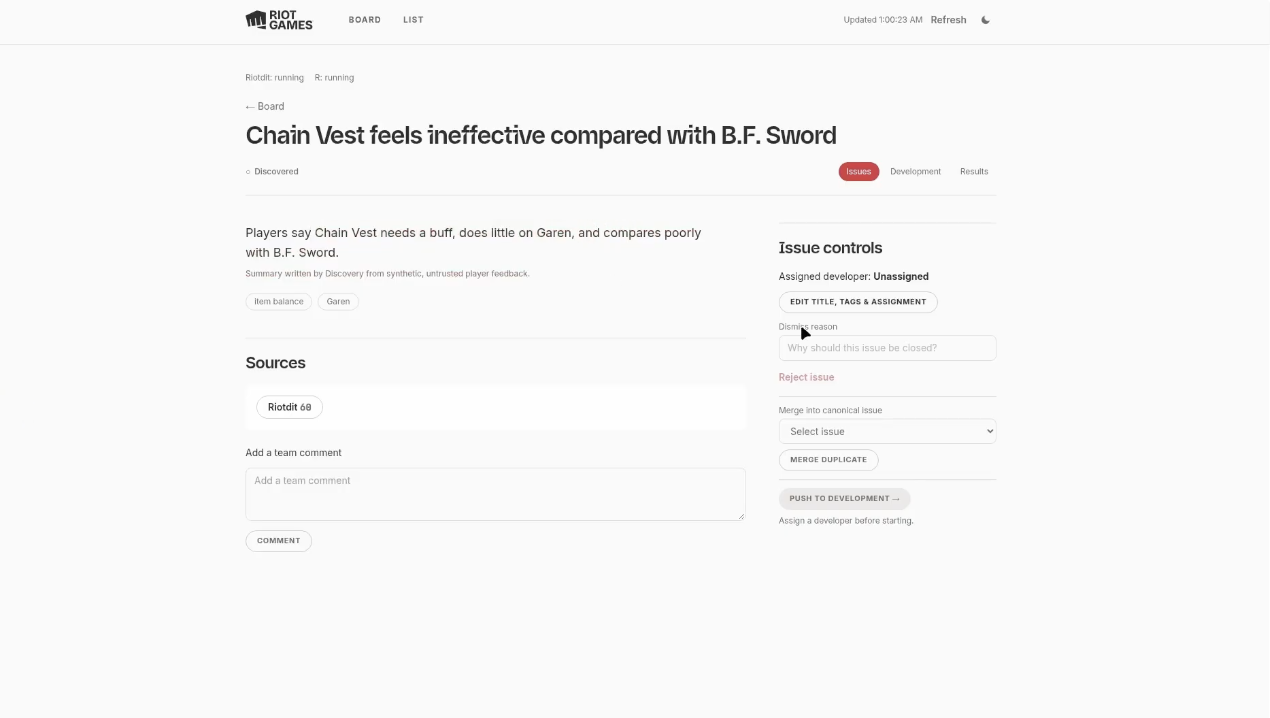
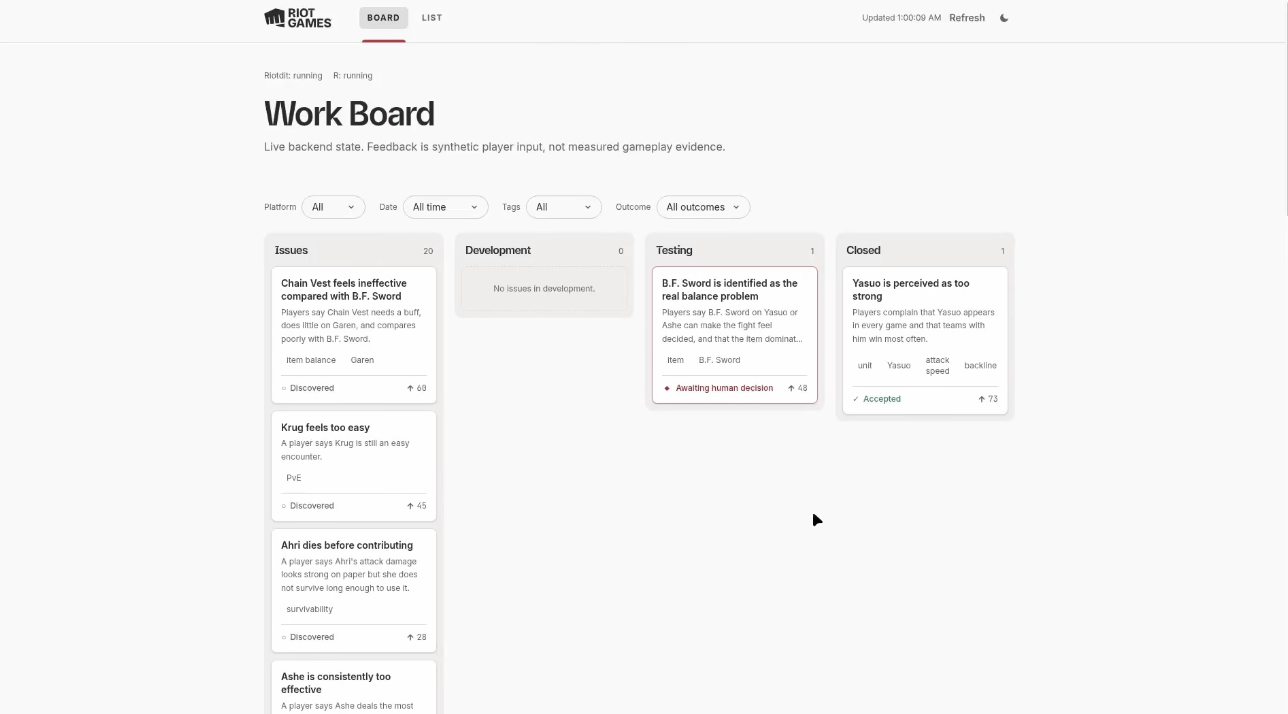
The initial issue screen
-
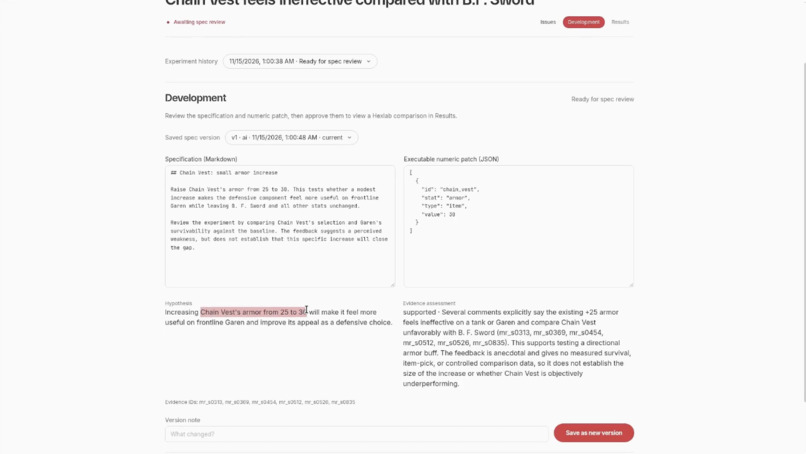
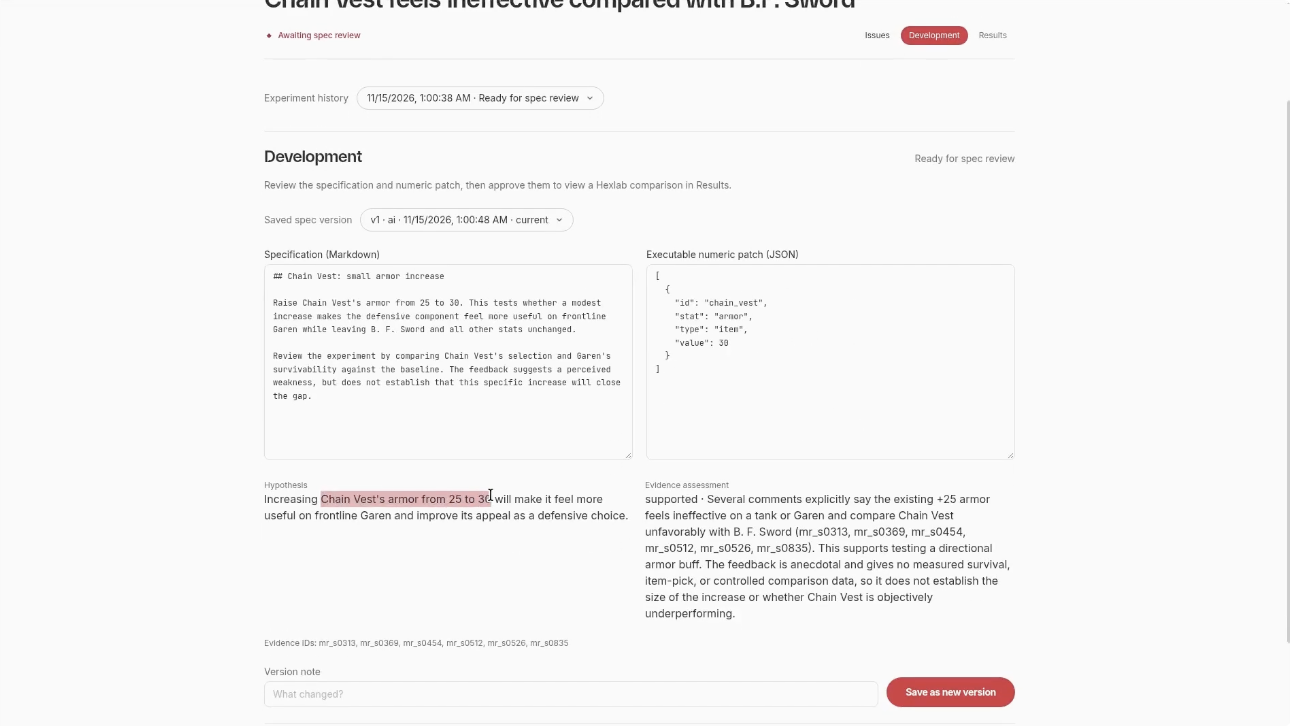
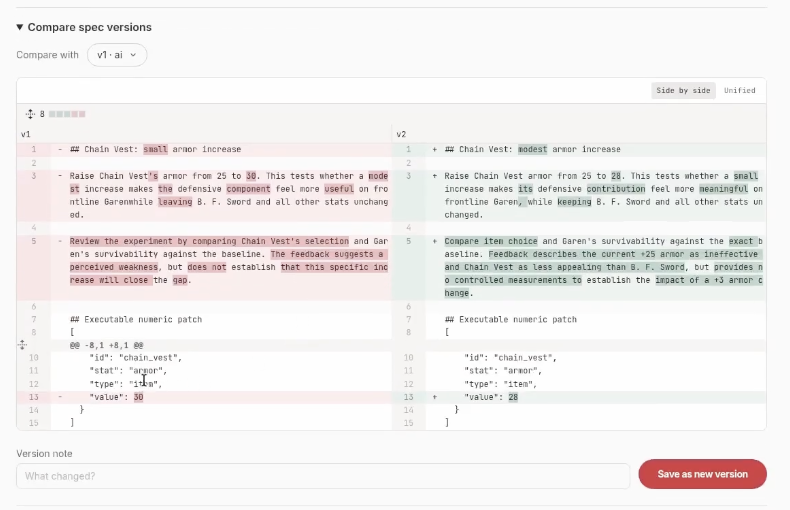
Specs can be edited with our built in agent or by hand in the text window
-
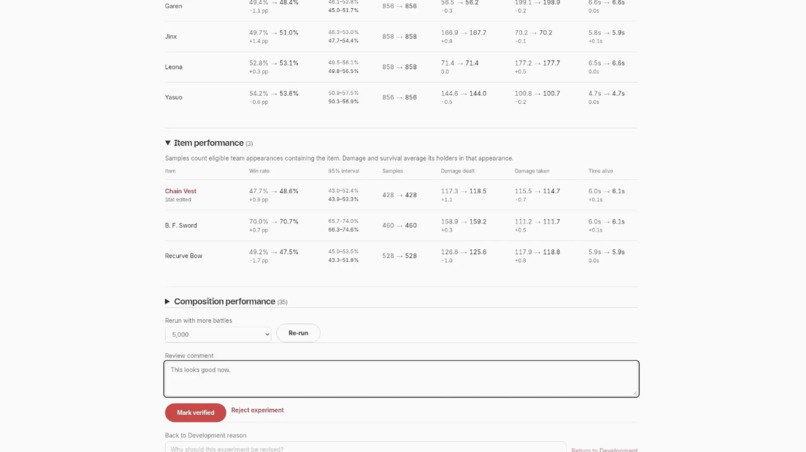
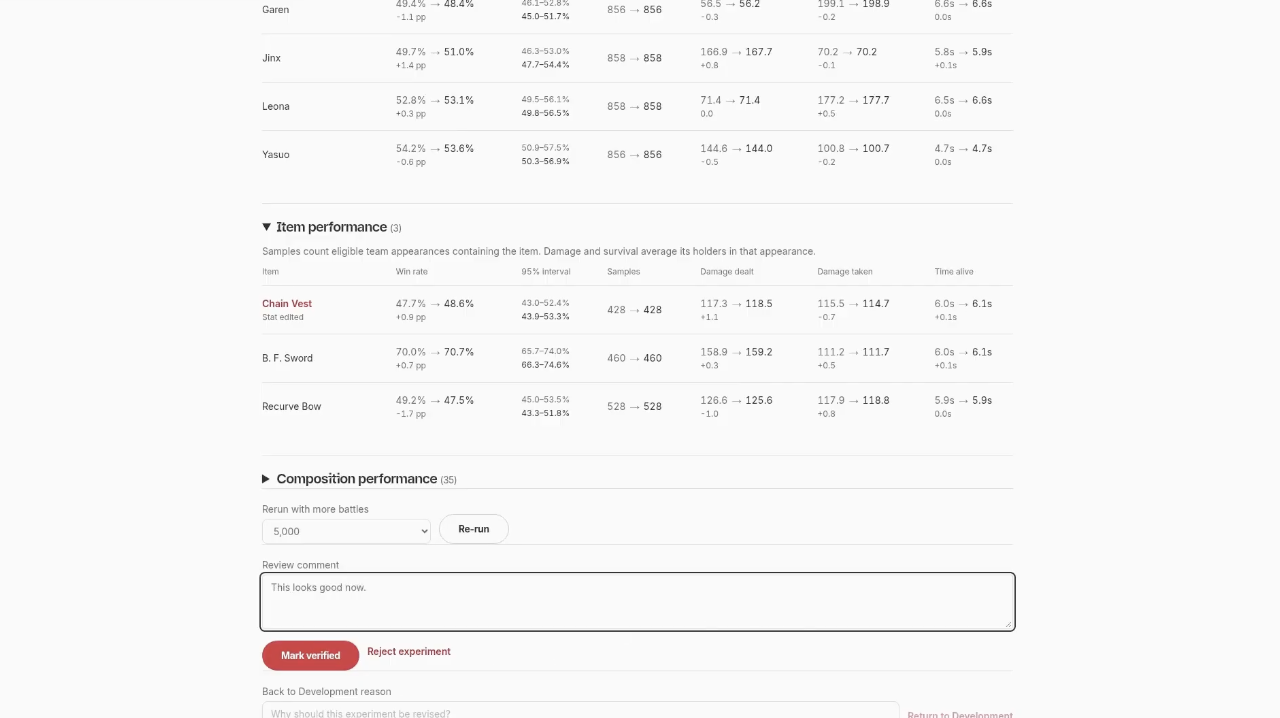
Tested item data
-
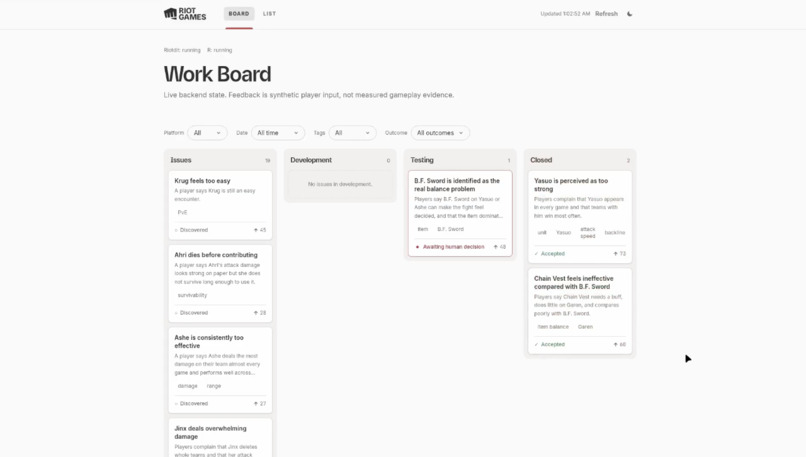
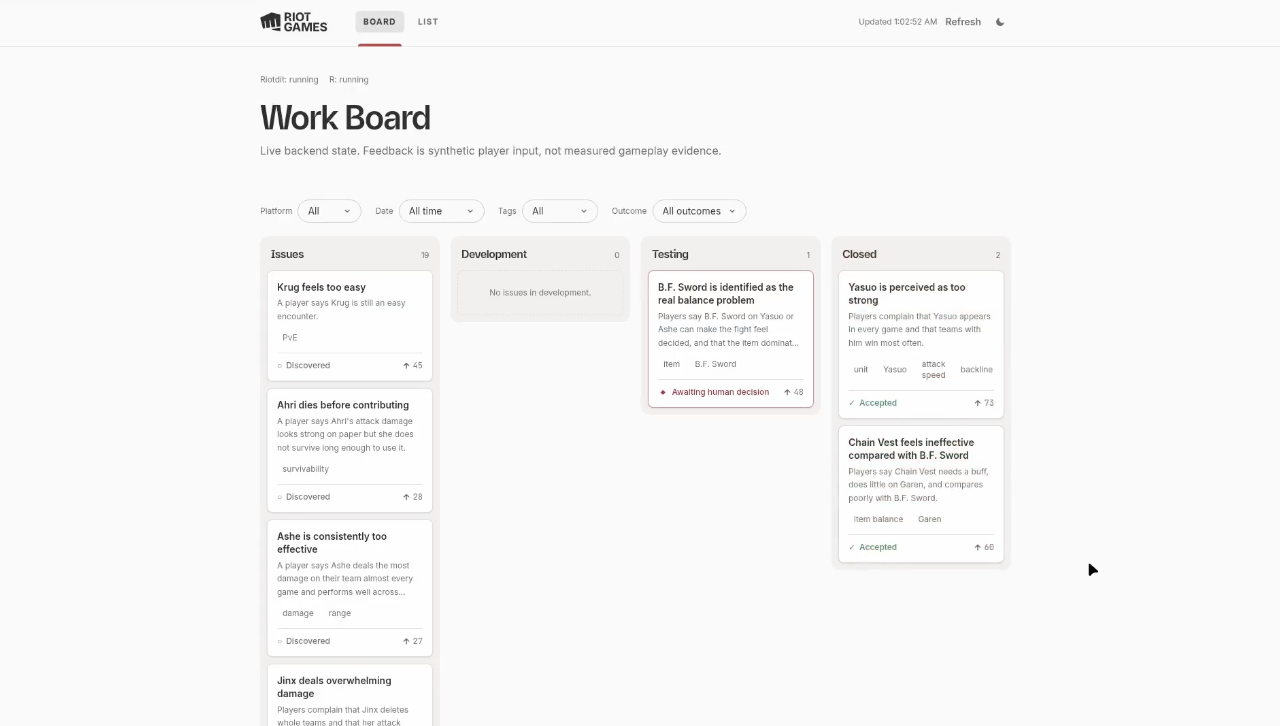
Our work board (post-fix)
-
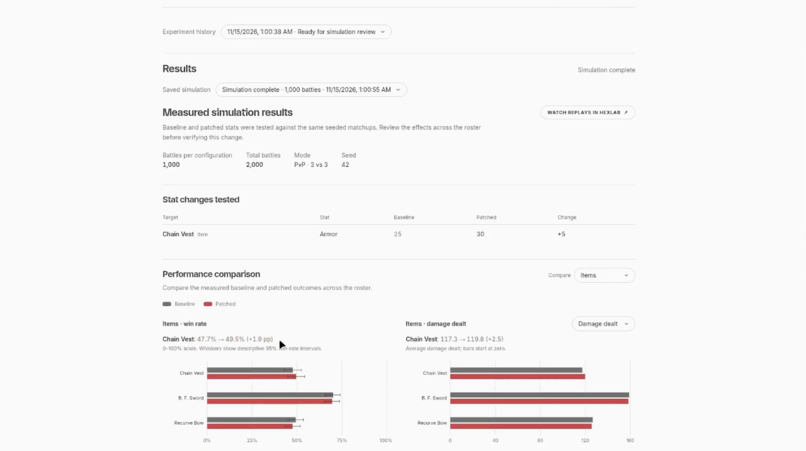
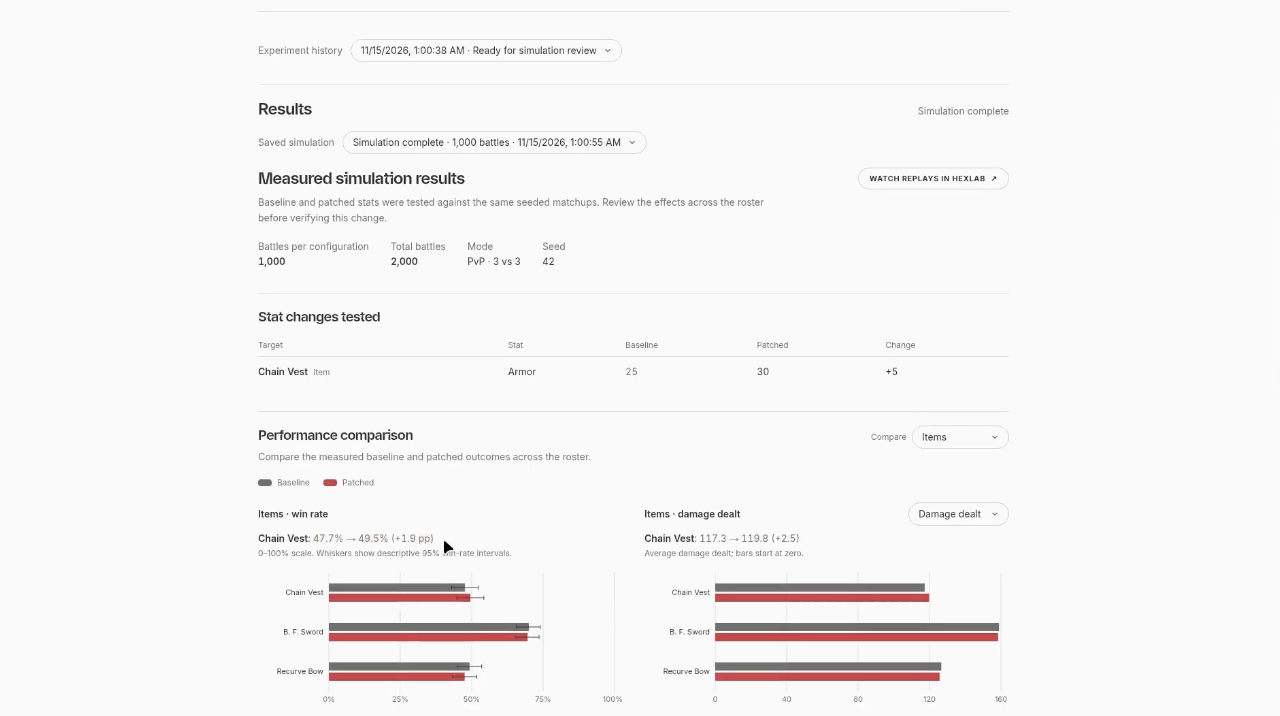
Real data from our simulated game running thousands of times with the exact change written in spec development
-
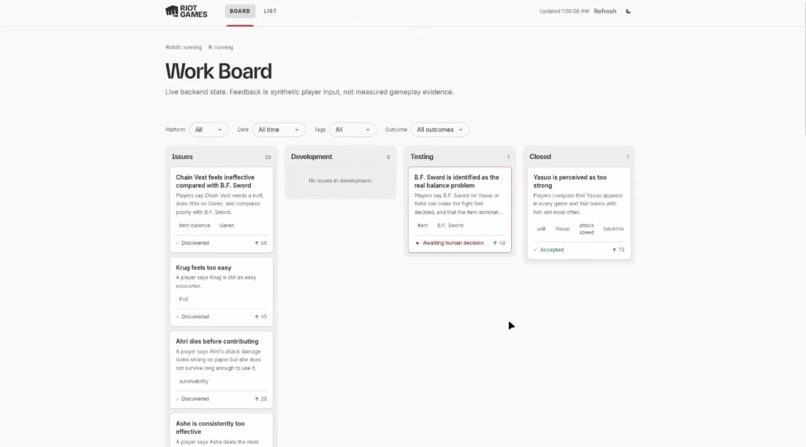
Our work board (pre-fix)
-
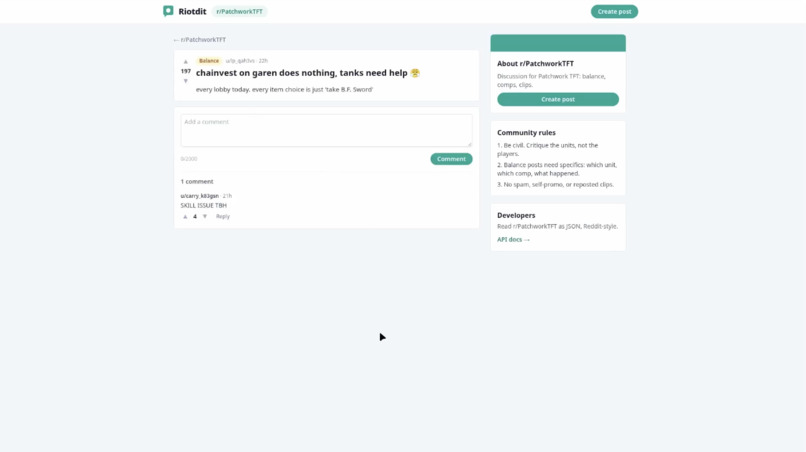
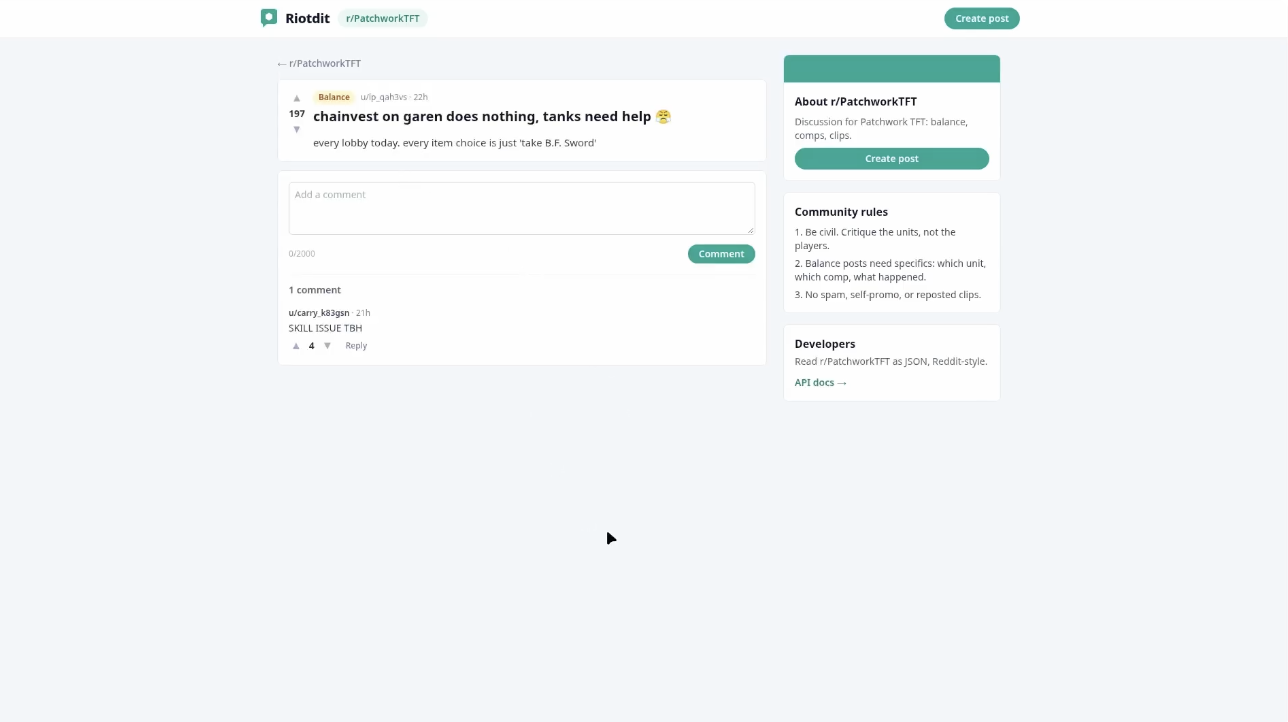
A reddit-inspired mock data site we made for our issue bot to scrape from
-
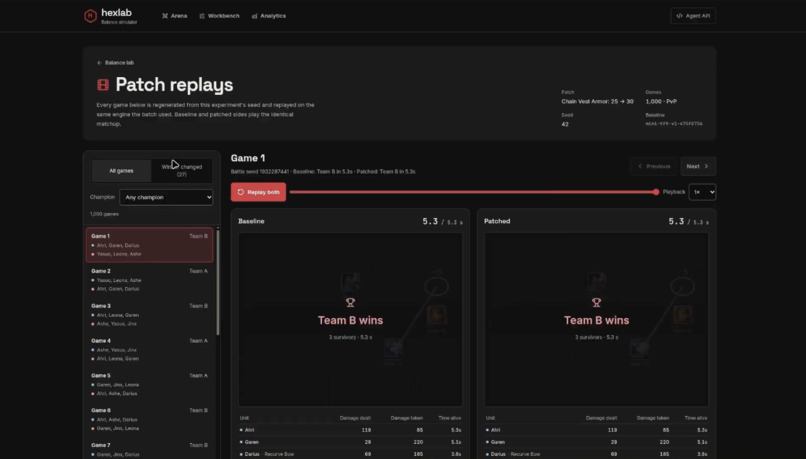
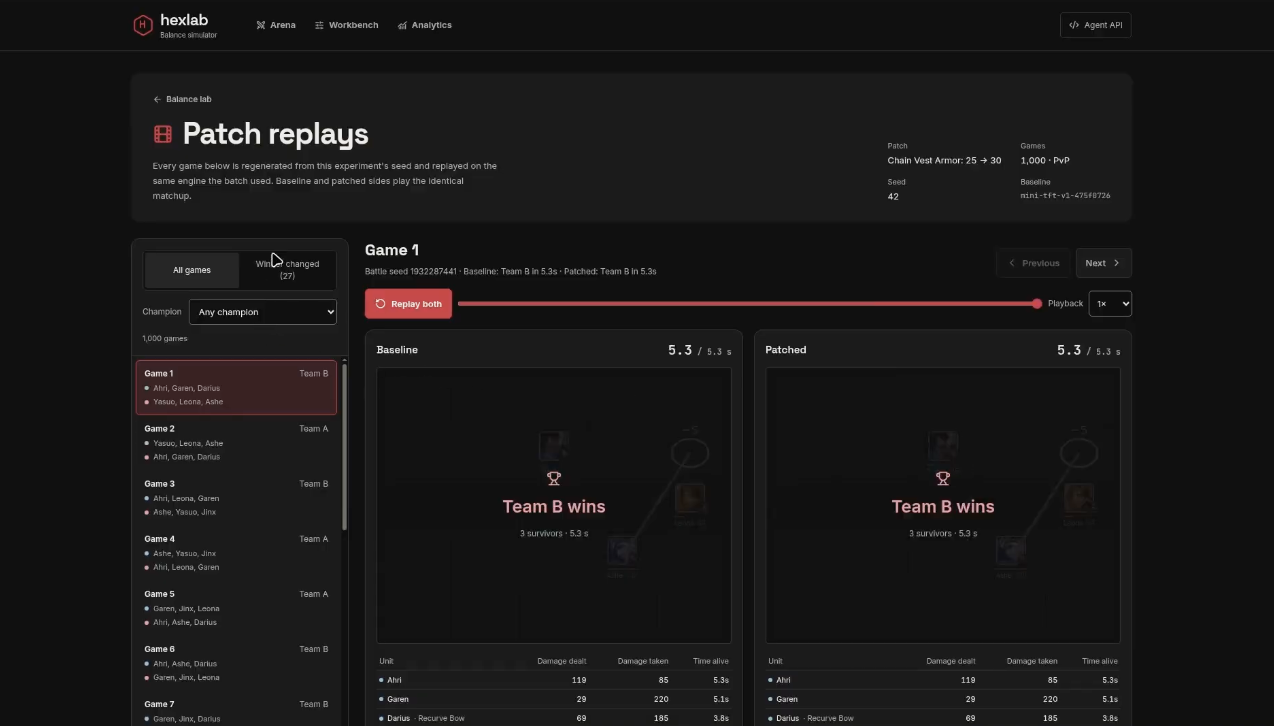
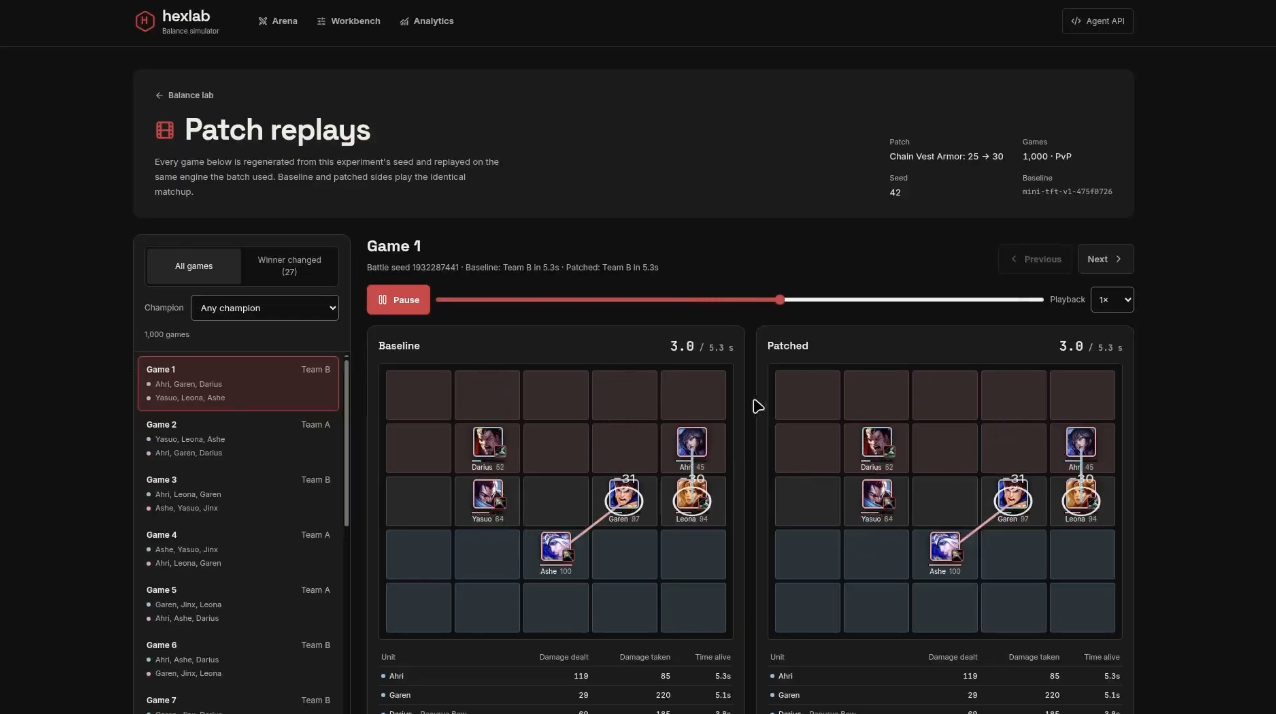
Can show a full game, from start to win, in steps
-
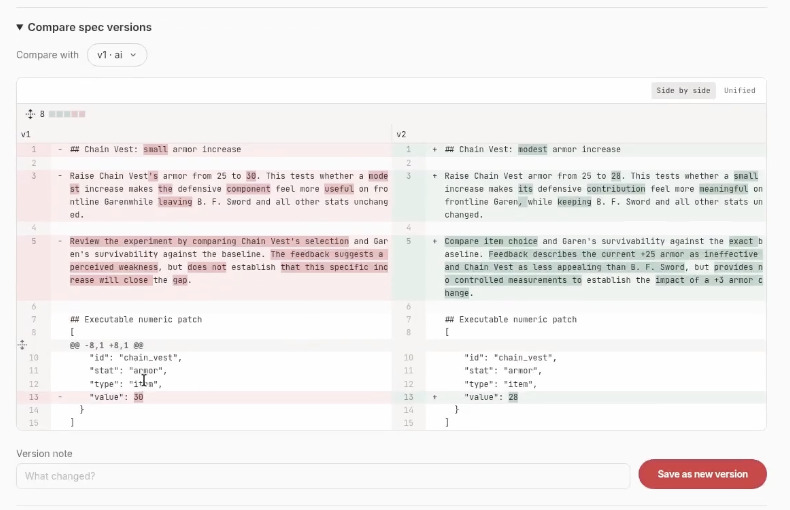
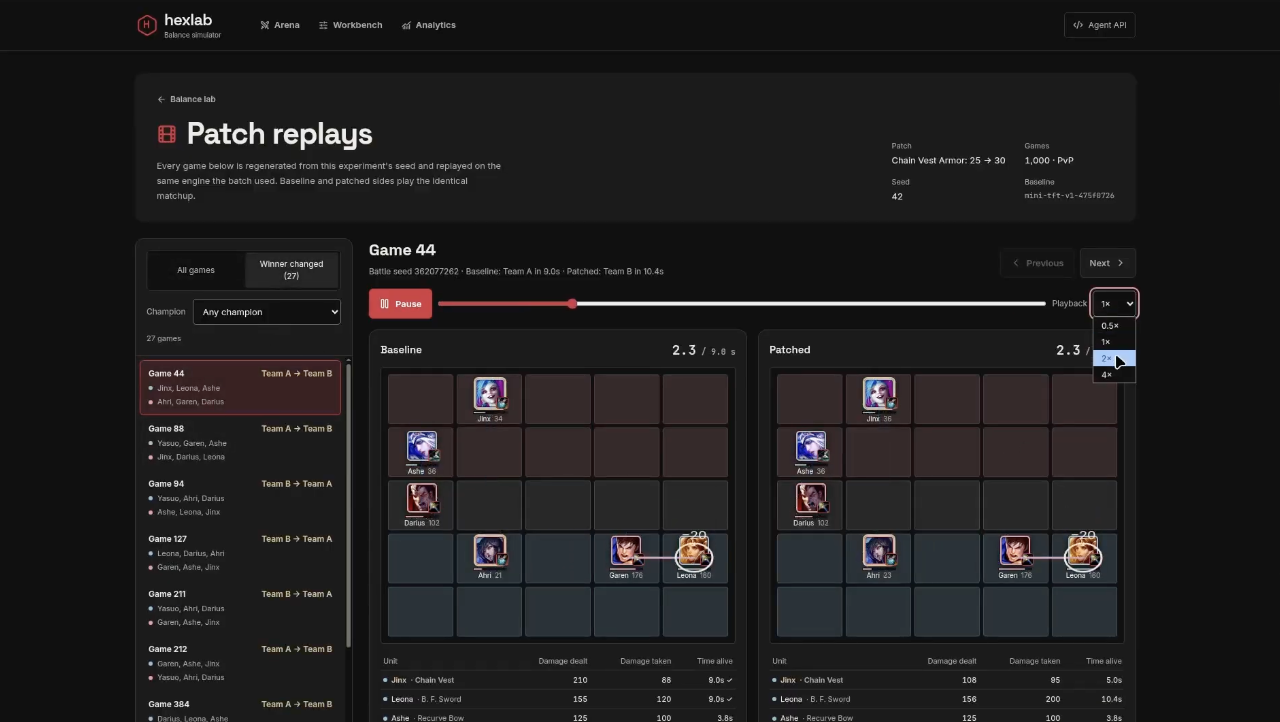
Side-by-side spec version comparisons
-
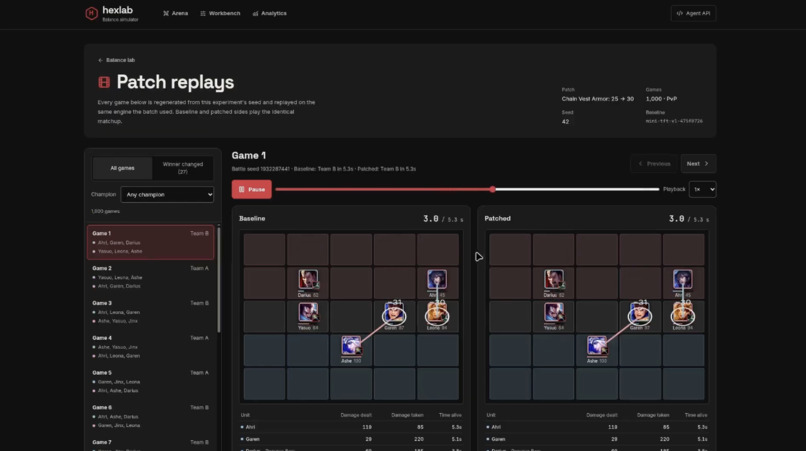
Hexlab, our light-weight TFT simulator
-
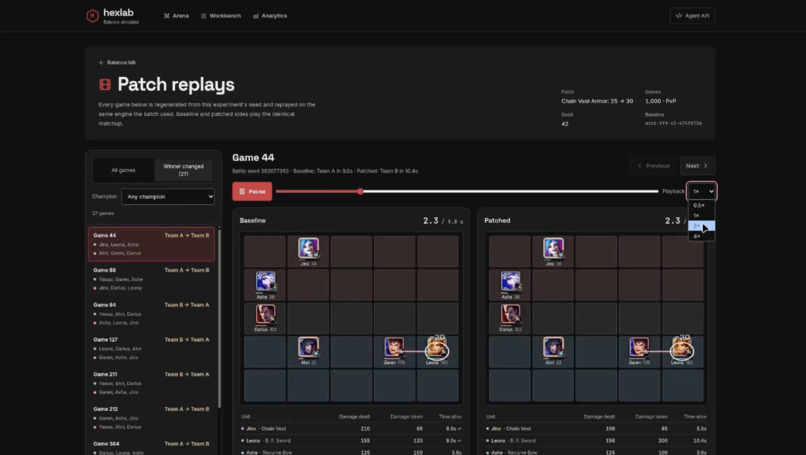
Selectable play-back speeds
Inspiration
Every League player knows the joke: "X is too strong, so let's nerf Y." It sticks because players rarely see how their feedback turns into changes, and Riot faces an impossible flood of posts across Reddit and X. It's hard for them to find out what changes are relevant and wanted by a majority of the community. Additionally, our notes on the SWE panel from Wednesday noted that even once found, patches can be hard to implement or keep track of while developing. We wanted to build something that listens to players and proves the changes are right before a patch is pushed.
What it does
Player Signals turns public community feedback into balance changes backed by evidence:
- Collects posts and comments from two community sites (a subreddit-style forum and an X-style feed) through their public APIs.
- Triages thousands of messages into clear issues ("Yasuo too strong," "BF Sword mandatory"), and quarantines prompt-injection attempts before they reach any agent.
- Checks perception against reality: each complaint is tested against simulated match data. Supported issues move forward. Loud but unsupported ones (Jinx sits at a 50% win rate) are labeled as perception or clarity problems instead of being nerfed.
- Proposes and verifies fixes: one agent writes a machine-checkable spec, and another proposes stat changes within strict limits. A verifier the agents can't modify then runs thousands of bot matches on hidden seeds to confirm the fix worked without breaking other champions.
- Shows its work: a live dashboard traces every change from the original posts to the verified patch, and compares the pipeline against a naive version that trusts the agent's word.
How we built it
- Game: Hexlab, our TFT-style auto-battler in TypeScript. It has 7 champions, items, a PvE monster, deterministic seeded combat, and a batch simulator that reports win rates with confidence intervals through an Express API.
- Community sites: two React + Vite apps, Riotdit and R. Each has its own Express API shaped like Reddit's
.jsonendpoints and X's v2 API (with bearer tokens), seeded with about 1,000 realistic posts each, built from the simulator's real baseline data. - Backend: Supabase Postgres with Row Level Security on every table, holdout seeds in a private schema,
security definerfunctions as the only write paths, and Realtime to stream pipeline progress to the dashboard. - Pipeline: a Node worker that claims runs from the database and moves them through each stage: collector → perception gate → spec writer → implementer → verifier. LLM outputs are validated against strict schemas, and agents never get database access.
- Frontend: a React dashboard showing the issues, the gate's verdicts, each patch attempt with its verifier checks, and before/after win-rate charts.
Challenges
- Where the pipeline runs: playtests take minutes, which is too long for serverless functions, so we moved the heavy work into a dedicated worker.
- Keeping the agents honest: we designed the system so agents only propose patches, never write files, and never see the holdout seeds. Then we had to make sure no feedback message accidentally leaked holdout results back to them.
- Realistic test data: generating thousands of posts with natural overlap, slang, sarcasm and injection attempts, while still keeping a ground-truth answer key for evaluating the collector.
Accomplishments
- A simulated version of TFT: used to derive in-depth statistics comparing pre-patch and post-patch changes live.
- A verifier the agents can't game: scoped patches, hidden holdout seeds, and checks for side effects on the rest of the roster.
- A UI tailored for Riot Games: fonts, hex codes, and ui design schema were all made to match their pre-existing software to ensure cohesion across platforms for their employees.
- Security built in from the first migration: RLS everywhere, a single public write path, a private schema for secrets, and prompt-injection filtering.
- Two convincing community sites with their own public APIs, so the agents pull from them the same way they would from a real platform.
- A labeled dataset of about 4,500 posts and comments that lets us measure how well the collector groups feedback and catches attacks.
What we learned
- Player feedback is great at spotting problems but often wrong about causes. The most useful thing an agent can do is check claims, not just summarize them.
- Verification has to sit outside the agent. An agent grading its own work will find ways to pass.
- Treating all user-generated text as untrusted data, never as instructions, has to be designed in from the start, not added at the end.
- Agreeing on shared data contracts early saves hours of integration pain.
What's next for Player Signals
- Connect to real sources (Reddit, X, Discord) and handle multiple languages.
- Support richer game mechanics, such as traits, abilities and more champions, and model player skill tiers so feedback can be weighted by rank.
- Add a designer approval step, so verified changes become reviewable patch proposals rather than automatic edits.
- Publish a player-facing "you said, we did" page that links community complaints to the patches they led to.
- Generalize the verifier into a reusable harness for any agent that edits game data.
Built With
- agent
- api
- css
- javascript
- plpqsql
- react
- sql
- supabase
- typescript
- vite
