-
-
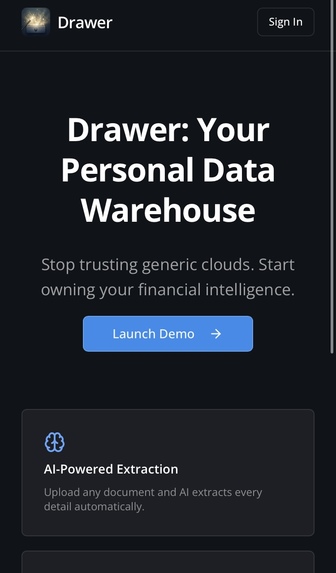
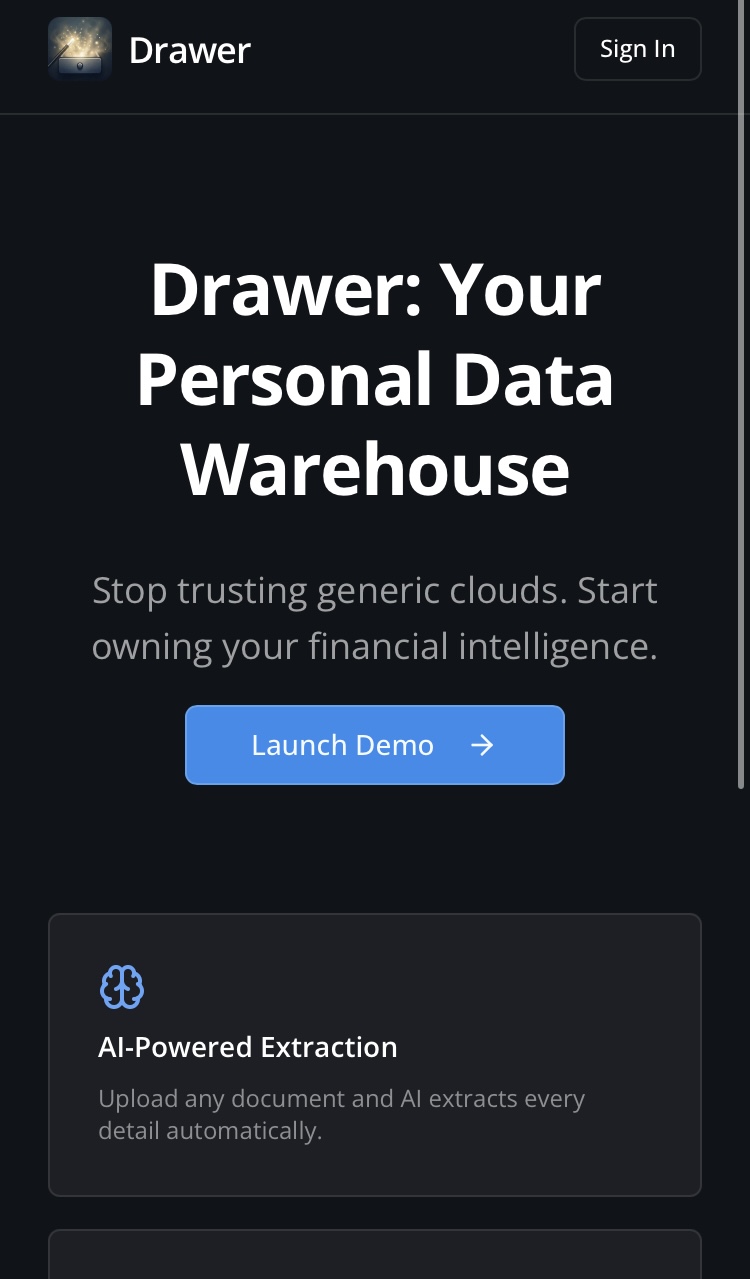
Landing Page.
-
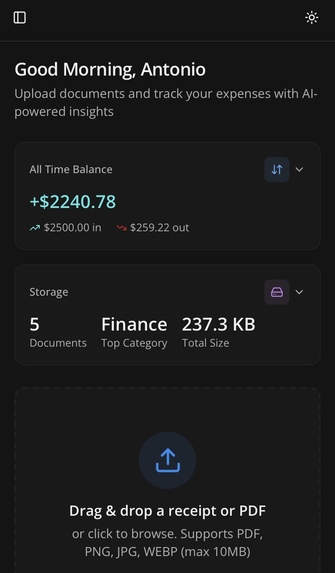
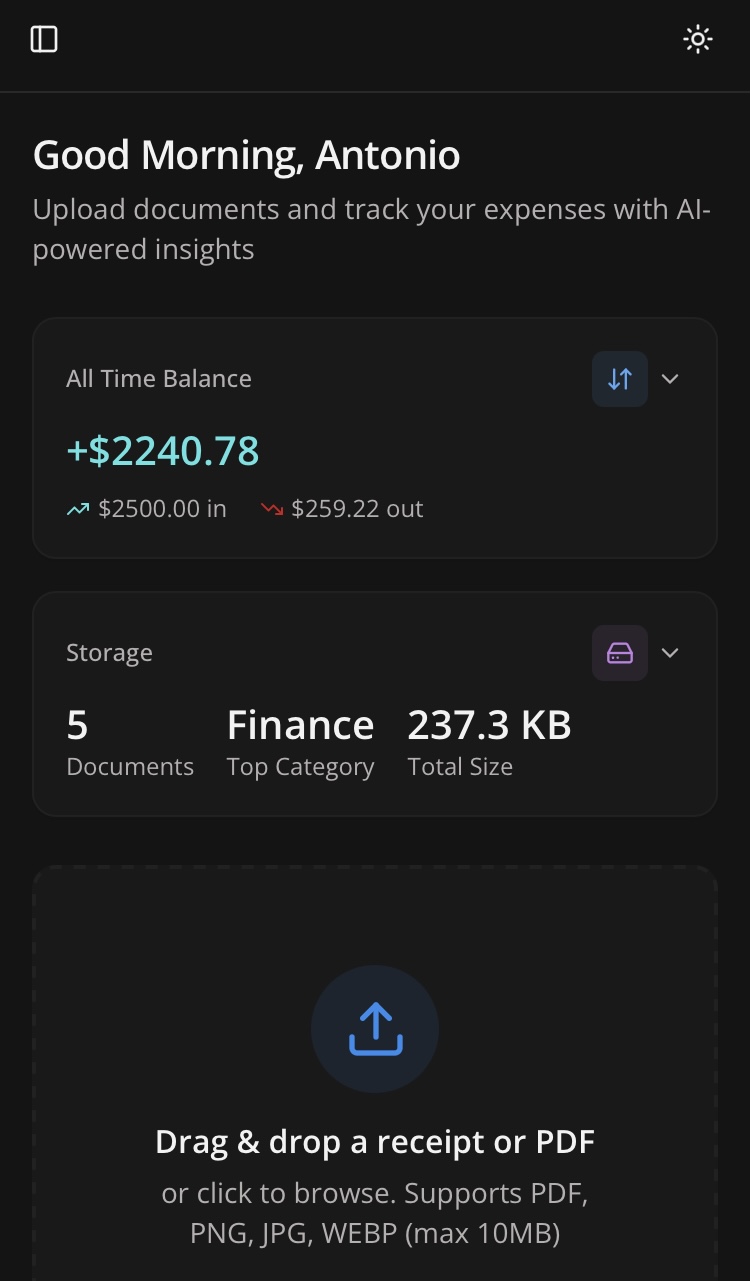
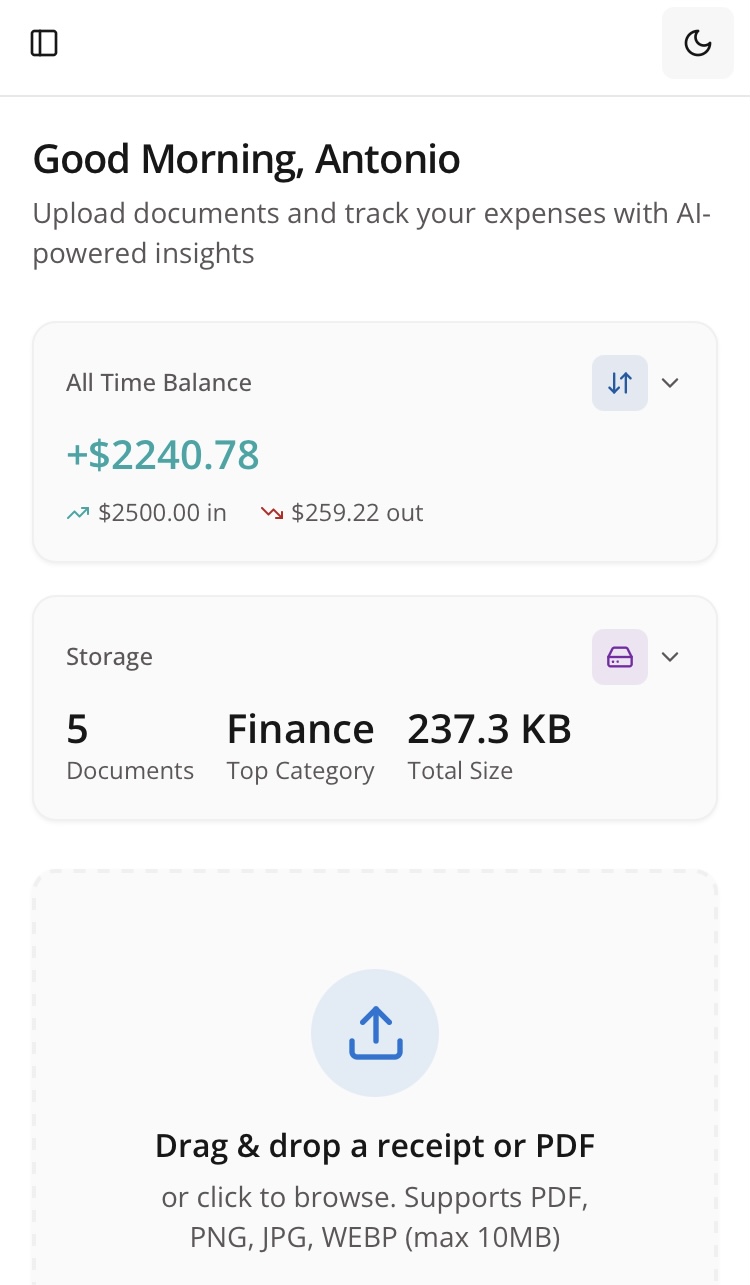
Main Dashboard: Real-Time Analystics and Secure Vault.
-
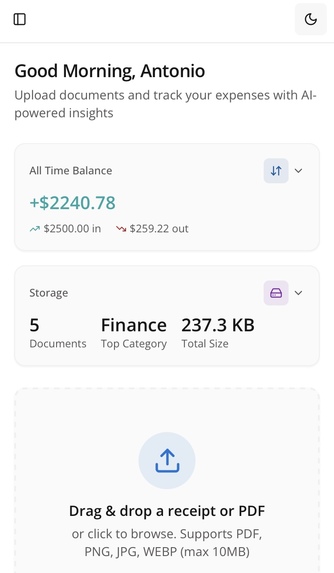
Light Mode: Adaptive UI for any environment.
-
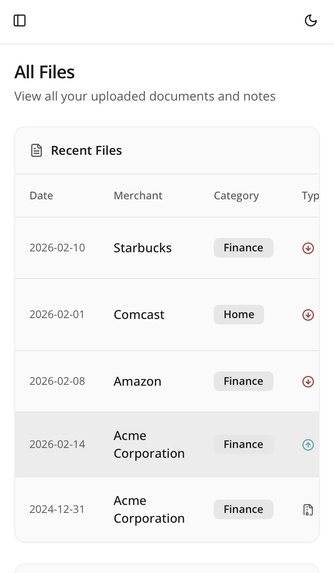
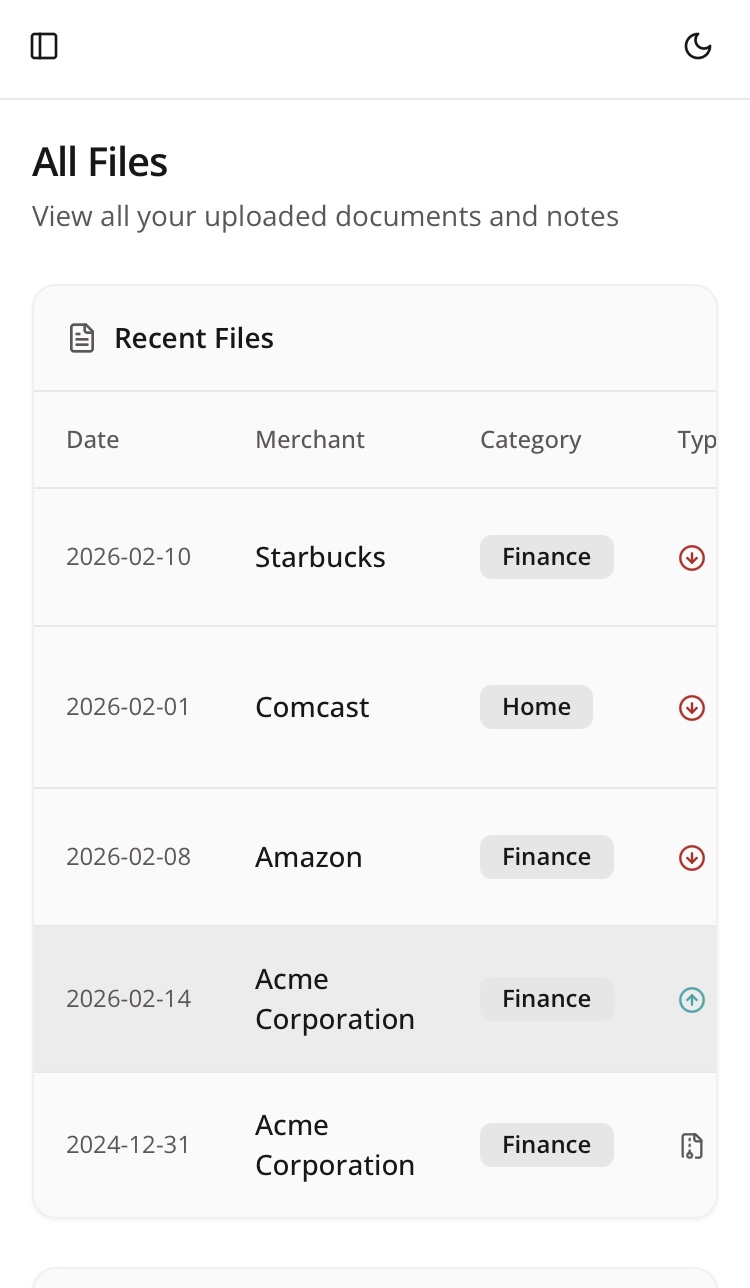
The Vault: Organized and secure document storage.
-
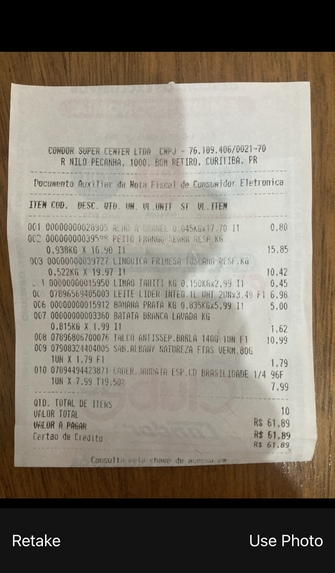
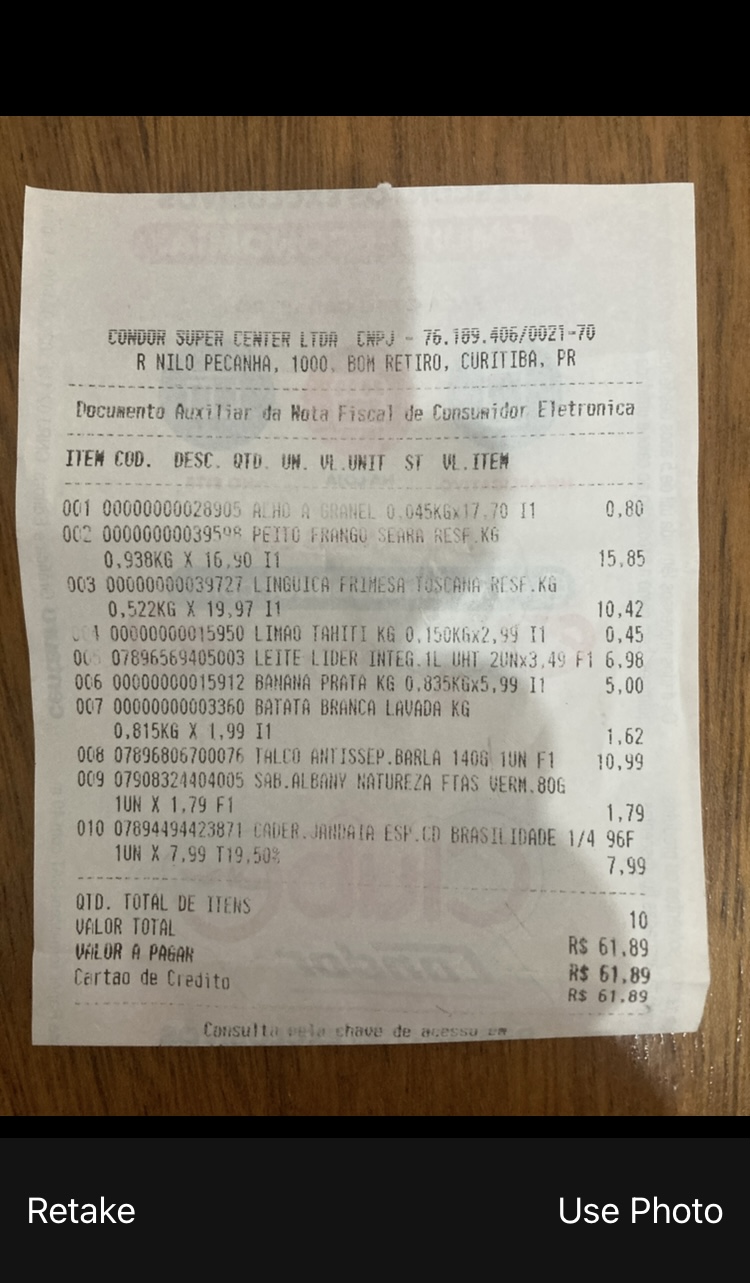
ETL Ingestion: Capturing real-world physical documents.
-
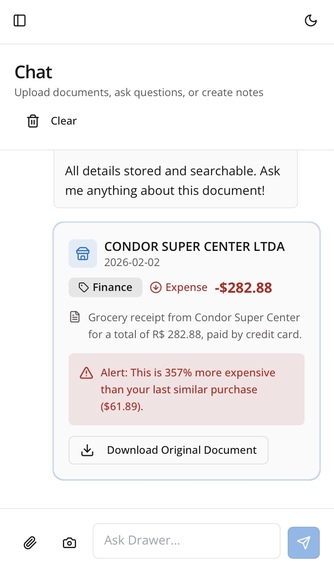
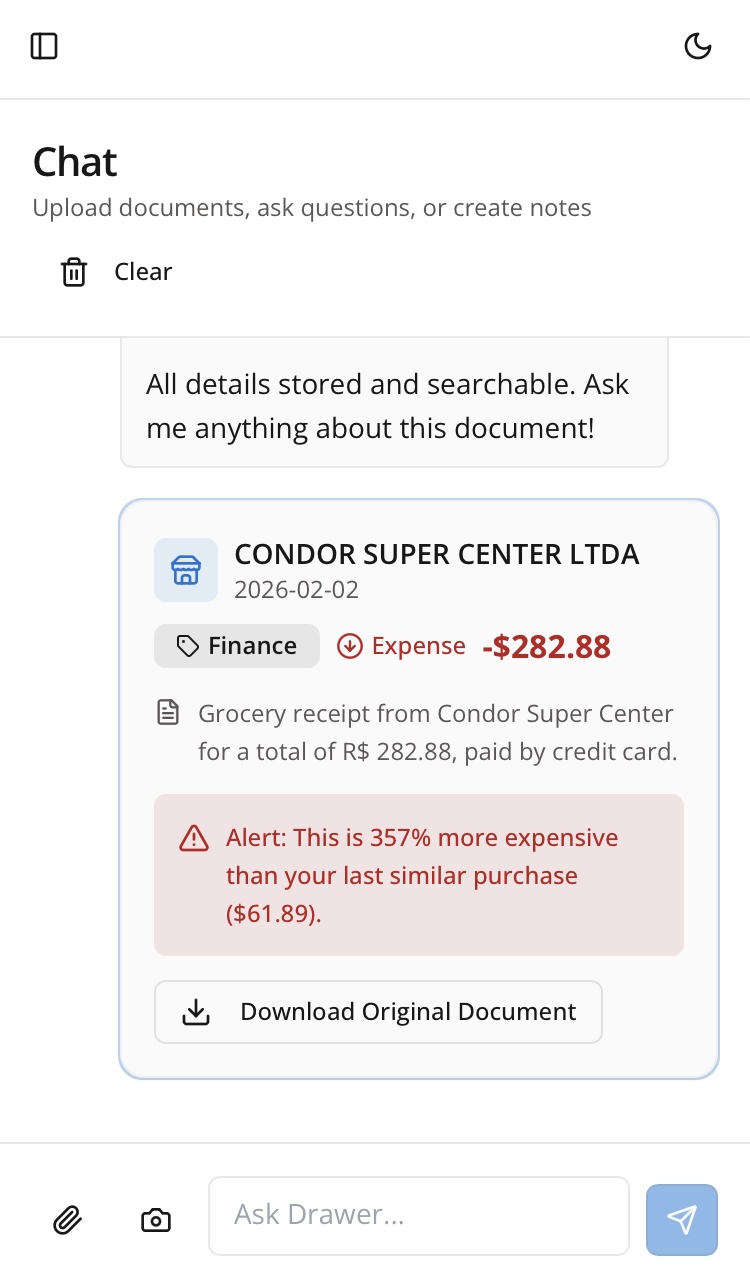
Alert: AI detects a % expending hike instantly.
-
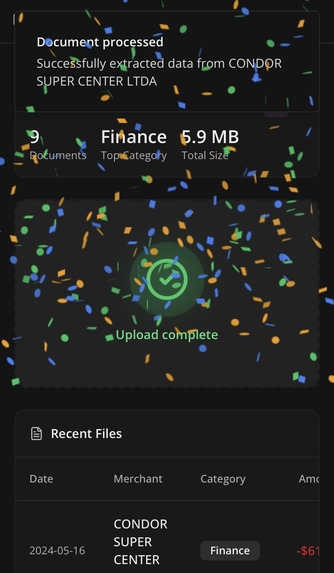
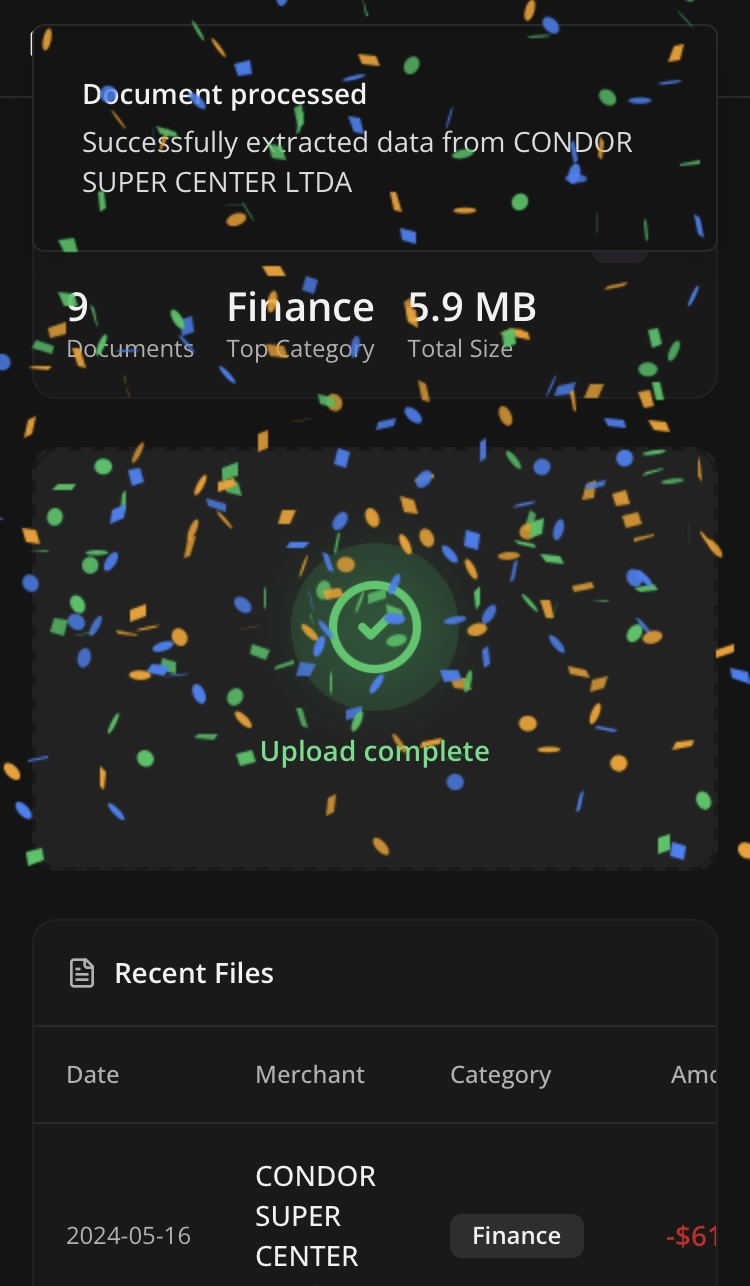
Gamified Experience: Confetti rewards for uploading documents.
-
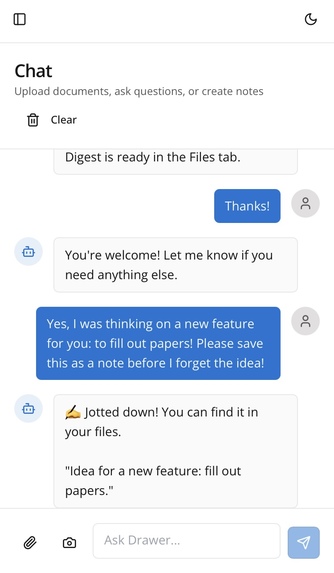
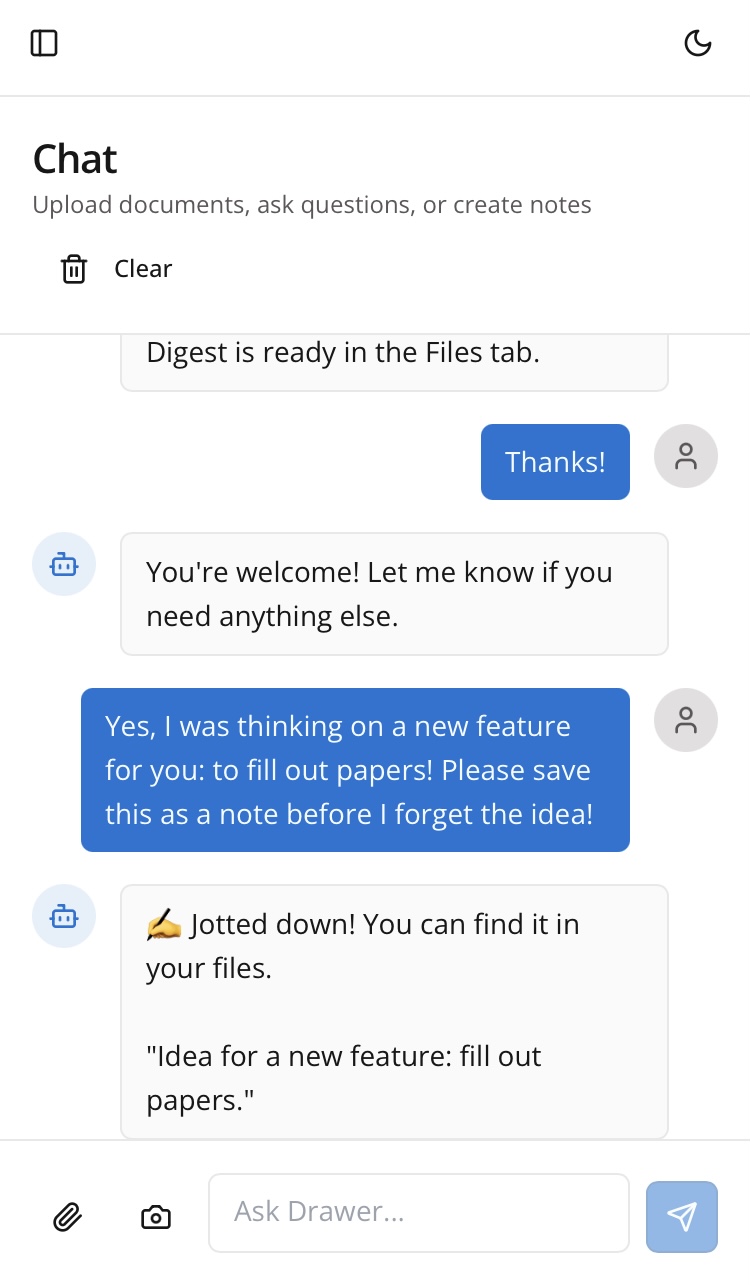
AI can save notes instantly.
-
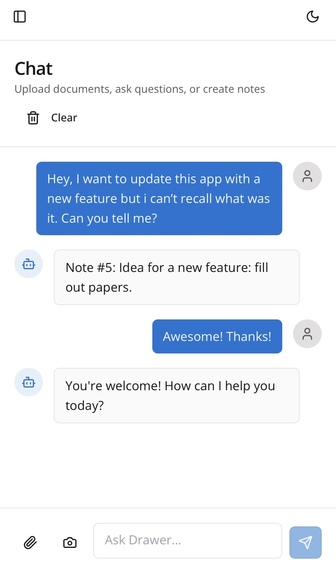
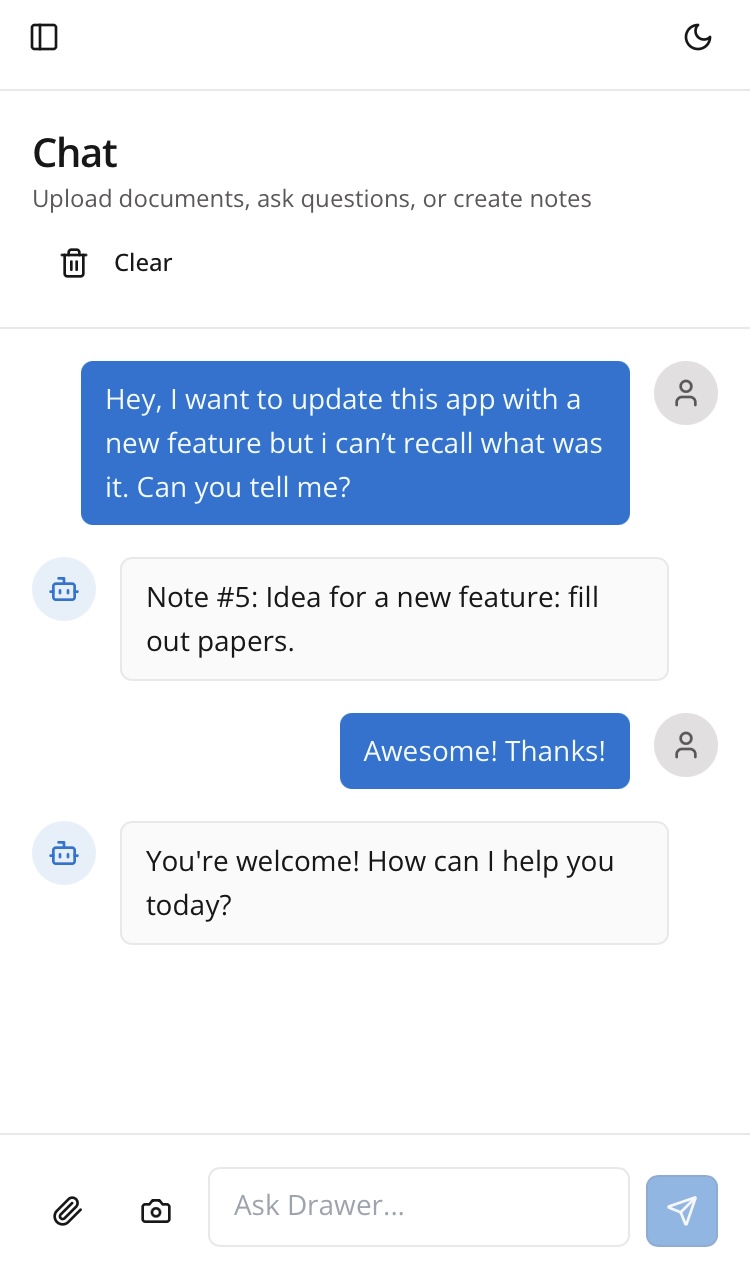
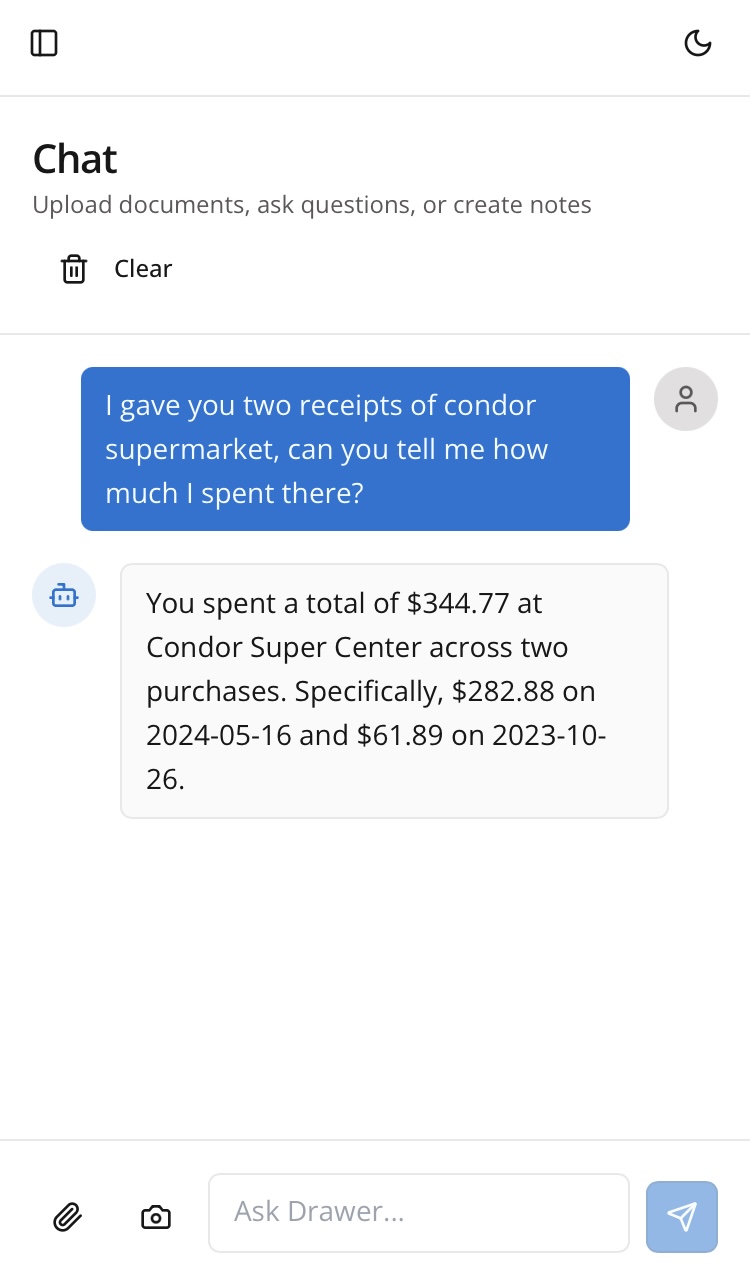
You can ask for an specific detail in a note and AI answers accurately.
-
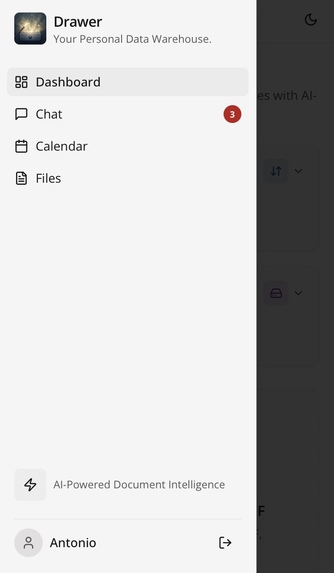
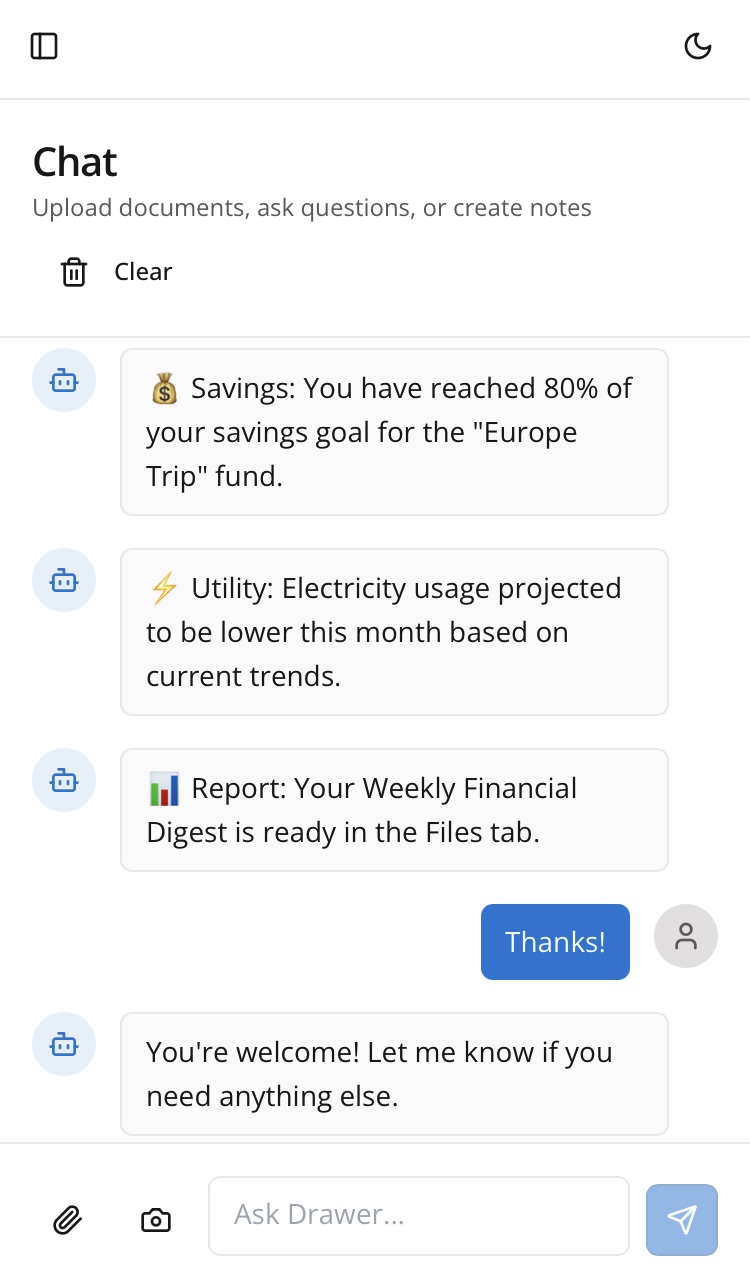
Simulation: AI sent messages (notifications)
-
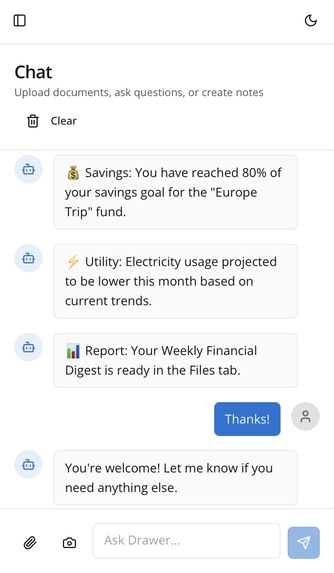
Simulation: AI sent notifications as messages inside the chat.
-
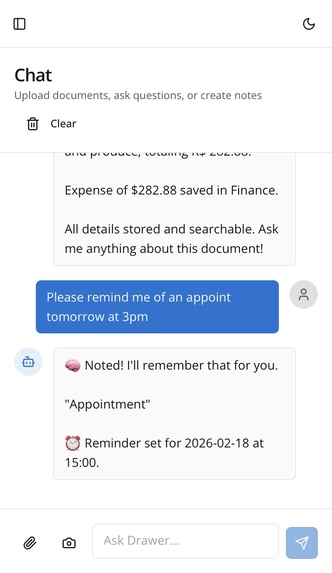
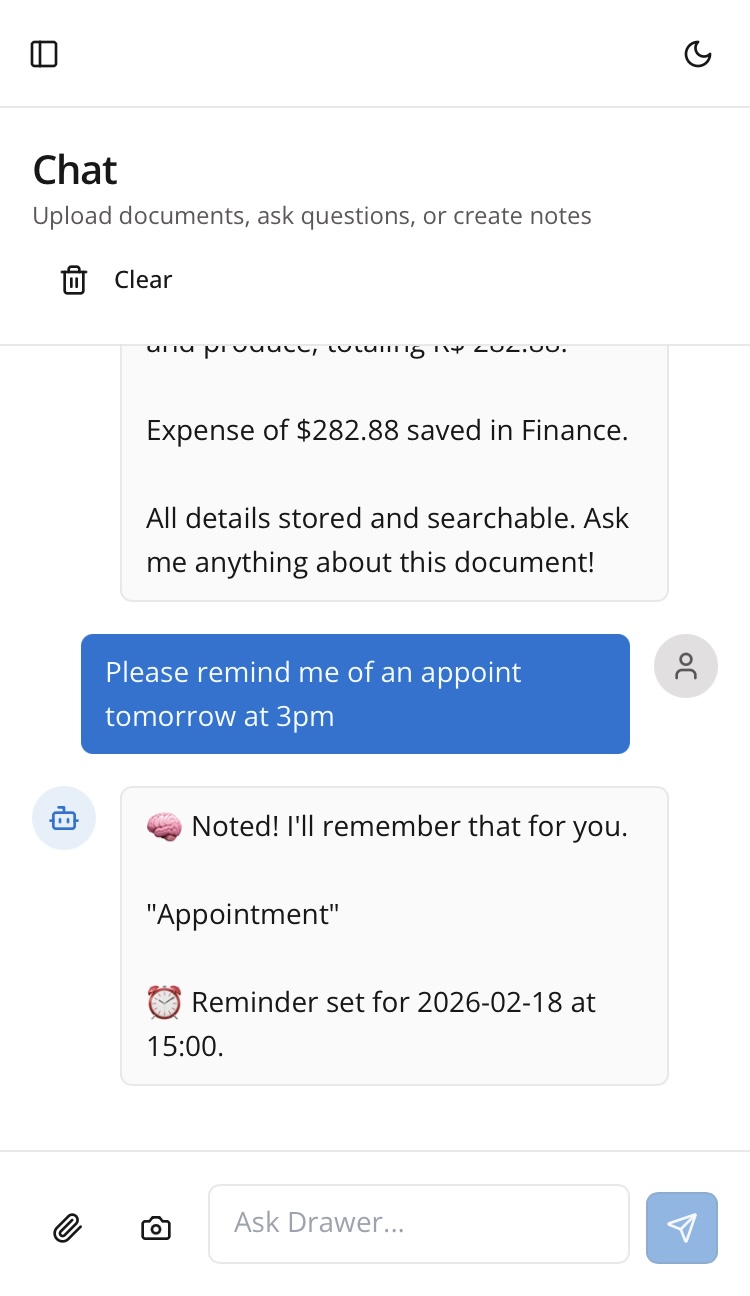
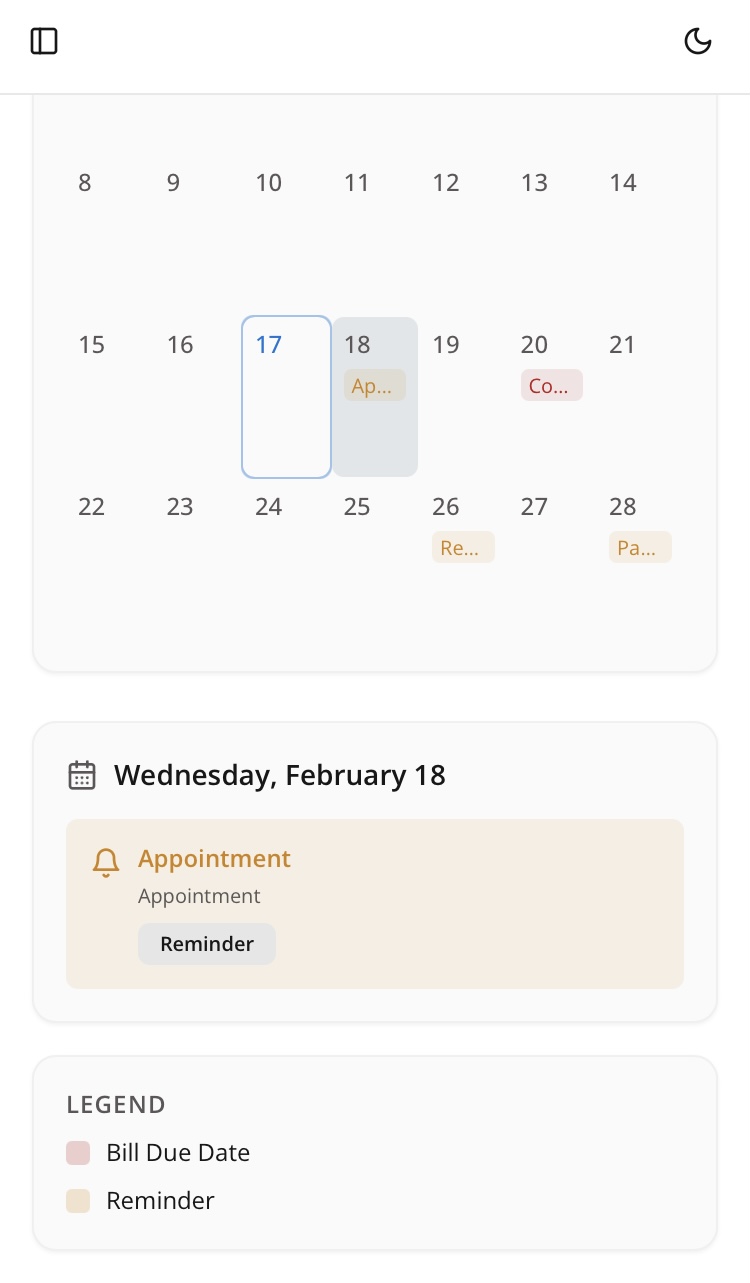
Proactive Agent: Calendar integration and smart reminders.
-
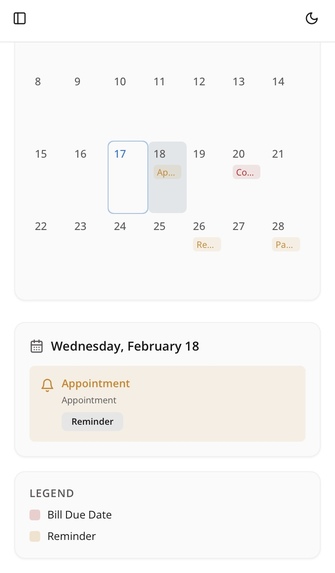
All remainders are saved automatically in the calendar.
-
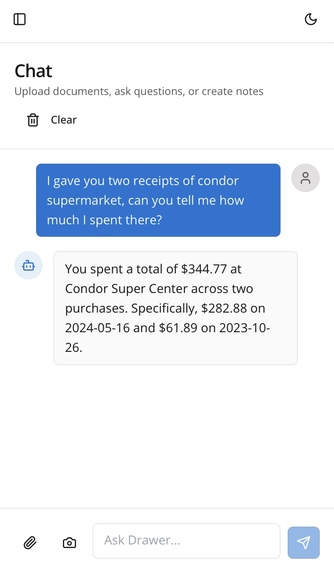
RAG Engine: Ask complex questions, get instant answers.
Inspiration
We all have that one drawer. It’s full of tax reports, 1099 forms, medical letters, and fading thermal receipts. Finding a single document takes hours. Losing one can cost you a residency application, a tax deduction, or a warranty claim.
We realized that existing mobile tools are just passive "scanners", they take a picture, but they don't understand the context, they don't organize the data, and they certainly don't act on it. We wanted to build a true Personal Data Warehouse. A secure Digital Vault that allows users to retrieve any original document instantly, analyze their historical data, and ultimately, beat the bureaucracy that slows down modern life.
What it does
Drawer AI is not just a storage app; it is an intelligent agent that transforms physical chaos into digital order. Technically, it functions as a personal ETL pipeline combined with a RAG system:
$$Drawer = ETL + SQL + RAG$$
- Ingest (ETL): Users upload photos of physical papers or digital PDFs (W4, invoices, medical records). The system extracts unstructured data (merchants, amounts, dates) and transforms it into structured financial insights.
- Analyze (SQL): It tracks your "All Time Balance", analyzing historical costs across years (e.g., comparing a 2014 paystub vs. a 2026 bill) without losing context. It proactively flags anomalies, such as a 20% price hike in a utility bill (Inflation Alert).
- Retrieve (RAG): Users can chat with their archive using natural language. You can ask: "Show me the ConEdison bill from June 2023." Drawer won't just tell you the amount—it will deliver the original PDF for download in milliseconds.
How we built it
We built Drawer AI entirely on Replit, leveraging its full-stack capabilities to move fast:
- Frontend: We used React, TypeScript, and Tailwind CSS. To make the experience rewarding (gamification), we implemented
framer-motionfor smooth transitions andcanvas-confettito celebrate every successful upload—turning a boring audit task into a satisfying action. - Backend: We built a robust Node.js and Express server.
- Storage Architecture: We implemented a custom Multer configuration to handle persistent file storage. This ensures that the physical file is saved to a local
uploads/directory and linked to the database, enabling the "Digital Vault" retrieval feature. - Database: We used PostgreSQL with Drizzle ORM to map relational data to the stored file paths.
- AI Integration: We utilized Large Language Models (LLMs) to power the RAG pipeline, allowing the app to understand temporal context and specific user queries.
Challenges we ran into
One major challenge was moving beyond simple text extraction to full File Retrieval. Initially, the AI could tell you about the document, but couldn't give you the document. We had to re-architect the backend to ensure a persistent link between the semantic search results (RAG) and the static file system. Implementing the "Download Original" feature required precise coordination between the database schema and the server's static file serving logic.
Another challenge was UX: Finance and bureaucracy are boring. We spent time polishing the interface ("Juicy" design) with visual feedback—green glowing checks and confetti explosions—to keep the user engaged and reduce the friction of organizing their life.
Accomplishments that we're proud of
- The Digital Vault: We successfully built a system that ingests a file, understands its content, and allows the user to download the original PDF on command.
- Lifetime Analytics: The app correctly handles temporal data, allowing users to upload documents from 2014 and 2026 simultaneously, updating the "All Time Balance" without breaking the logic.
- Proactive Alerts: The system successfully identifies price changes (e.g., inflation alerts) by comparing new uploads against historical data.
What we learned
We learned that the true value of AI in Fintech/Productivity isn't just in generating text, but in orchestrating actions. We also learned the power of emotional design; adding visual feedback (like our confetti animations) completely changed the "feel" of the app from a dry accounting tool to a modern, engaging consumer product.
What's next for Drawer AI
Drawer is currently a passive auditor, but we are evolving it into a Proactive Agent.
- Phase 2: Calendar Integration. The app will actively remind you of appointments found in your documents (e.g., "Your residency interview is tomorrow at 4 PM, bring these 3 documents").
- Phase 3: Form Automation. Using the stored data (Names, Address, Income), Drawer will automatically fill out new bureaucratic forms, making the "physical office drawer" obsolete.
- Phase 4: Dedicated Vault Email. Every user gets a unique
@drawer.aiaddress to give directly to employers, clinics, or government offices. Critical documents bypass the personal inbox entirely, landing straight into the organized vault. A strict sender-whitelist ensures zero spam and absolute security.
Built With
- express.js
- google-gemini
- node.js
- postgresql
- react
- replit
- typescript


Log in or sign up for Devpost to join the conversation.