-
-
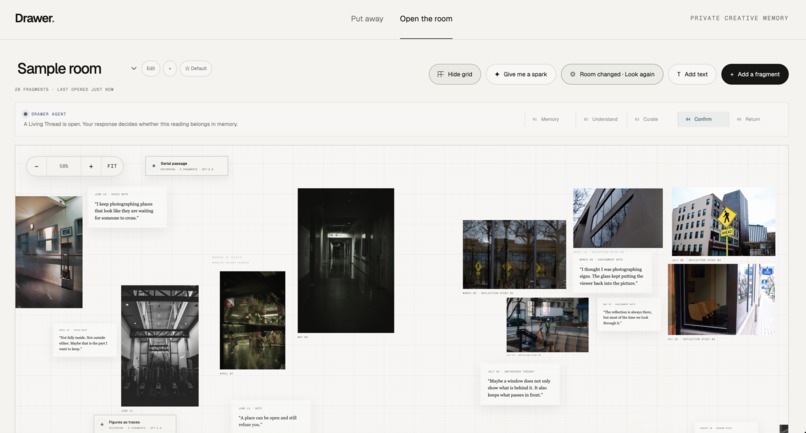
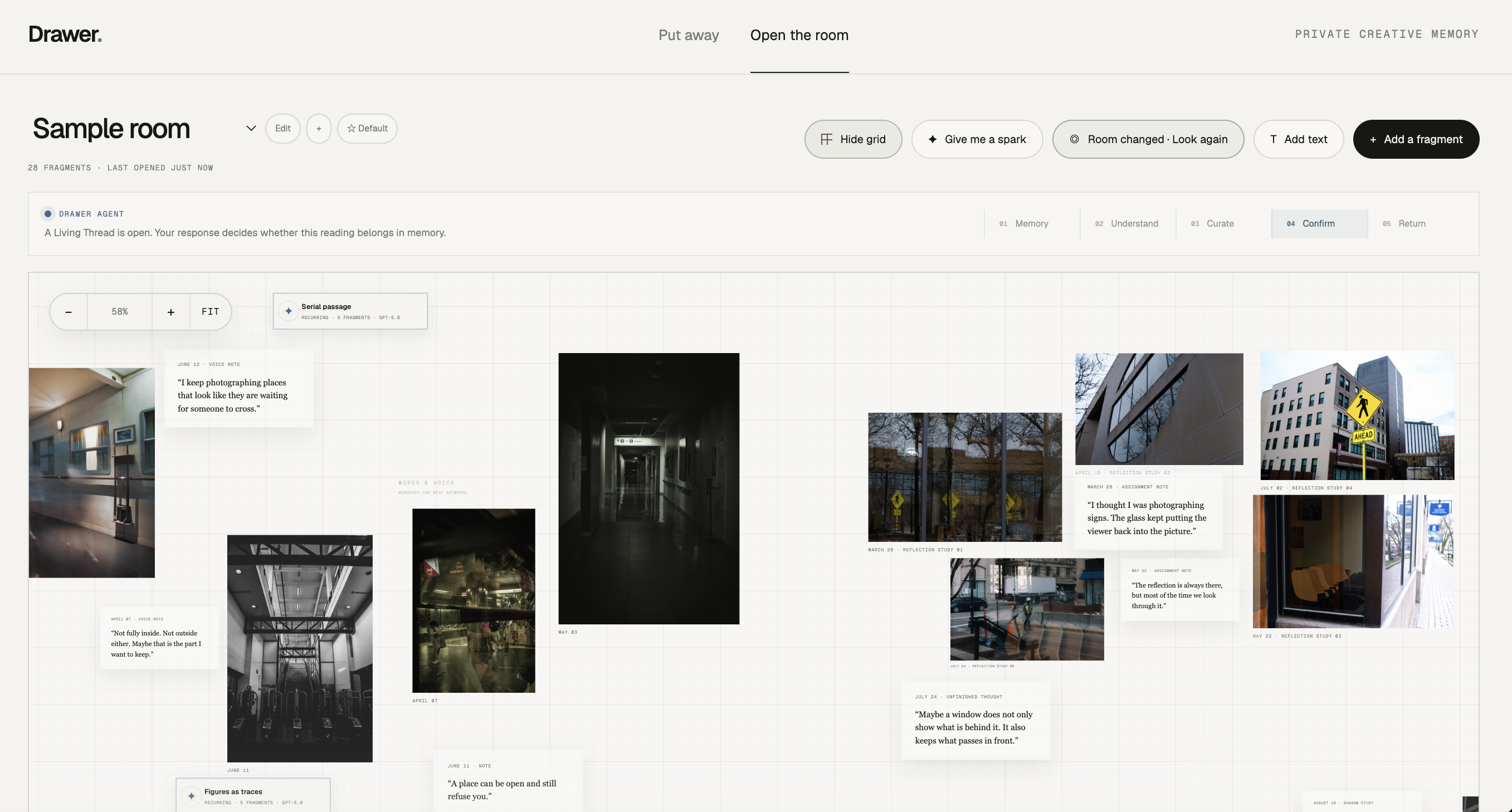
The Sample Room: 28 images, voice notes, and unfinished thoughts preserved across time in an editable creative archive.
-
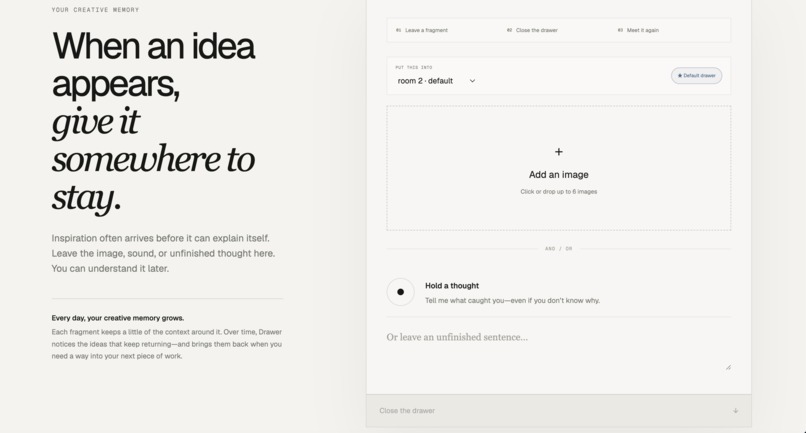
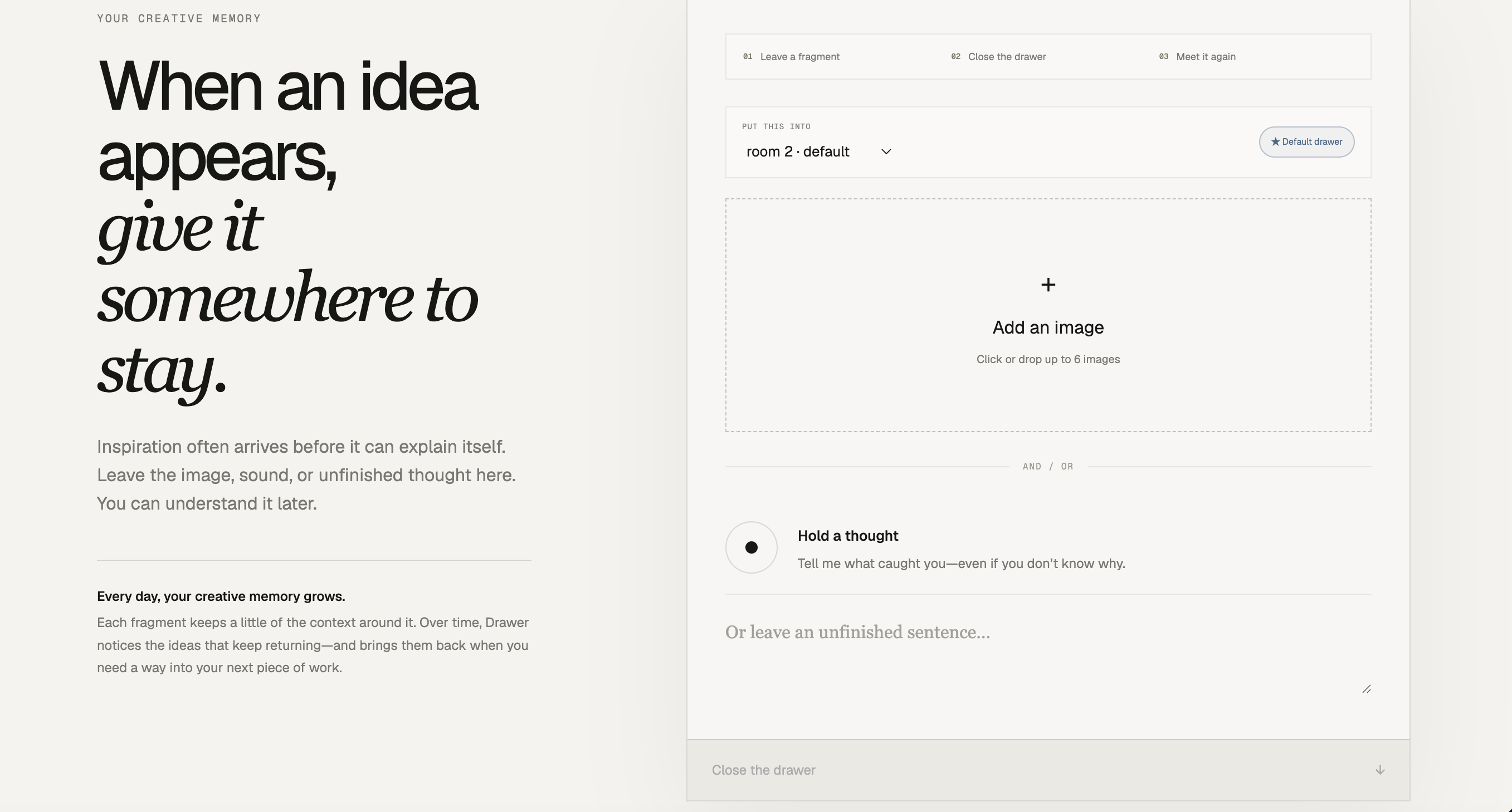
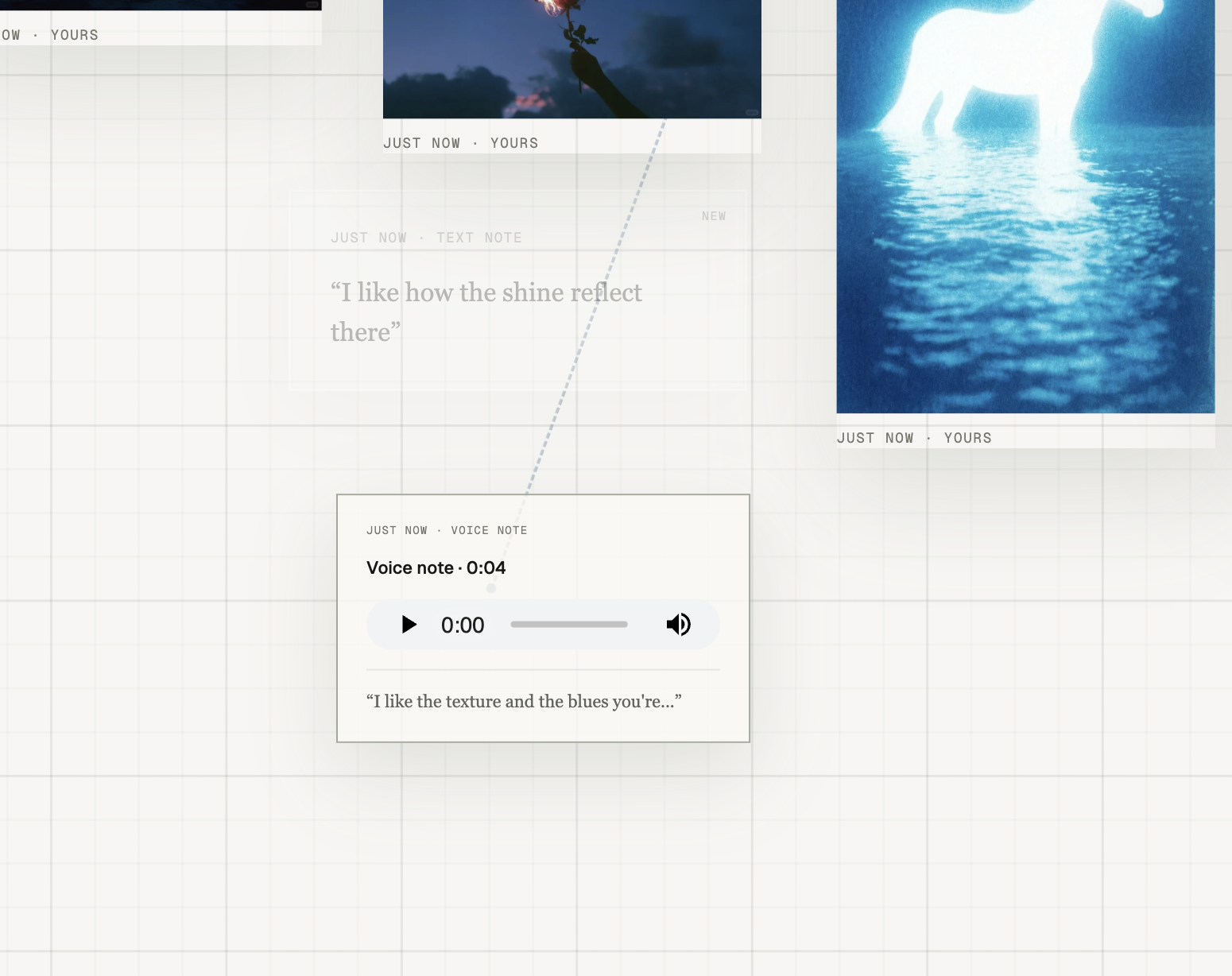
Capture an image, voice note, sound, or unfinished sentence in a chosen Room—without organizing or tagging it first.
-
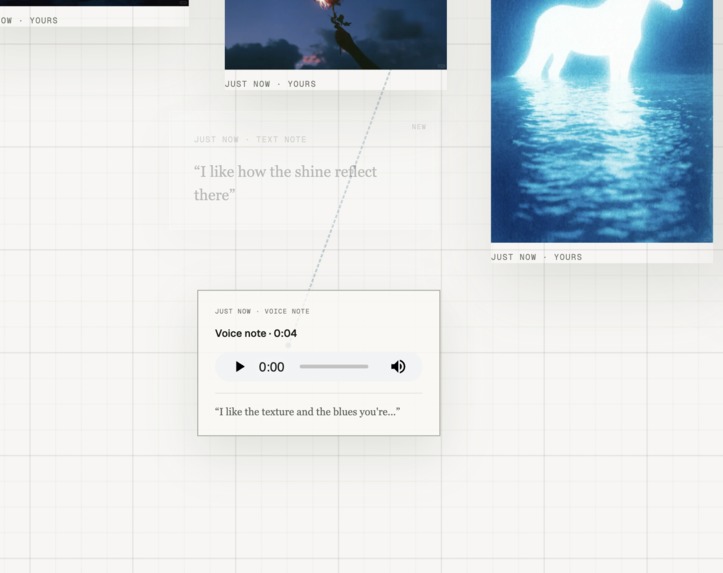
Drawer keeps both the searchable transcript and the original recording, preserving the words, pauses, and texture of the moment.
-
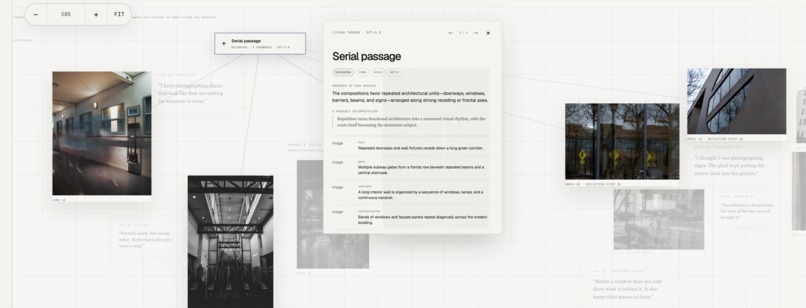
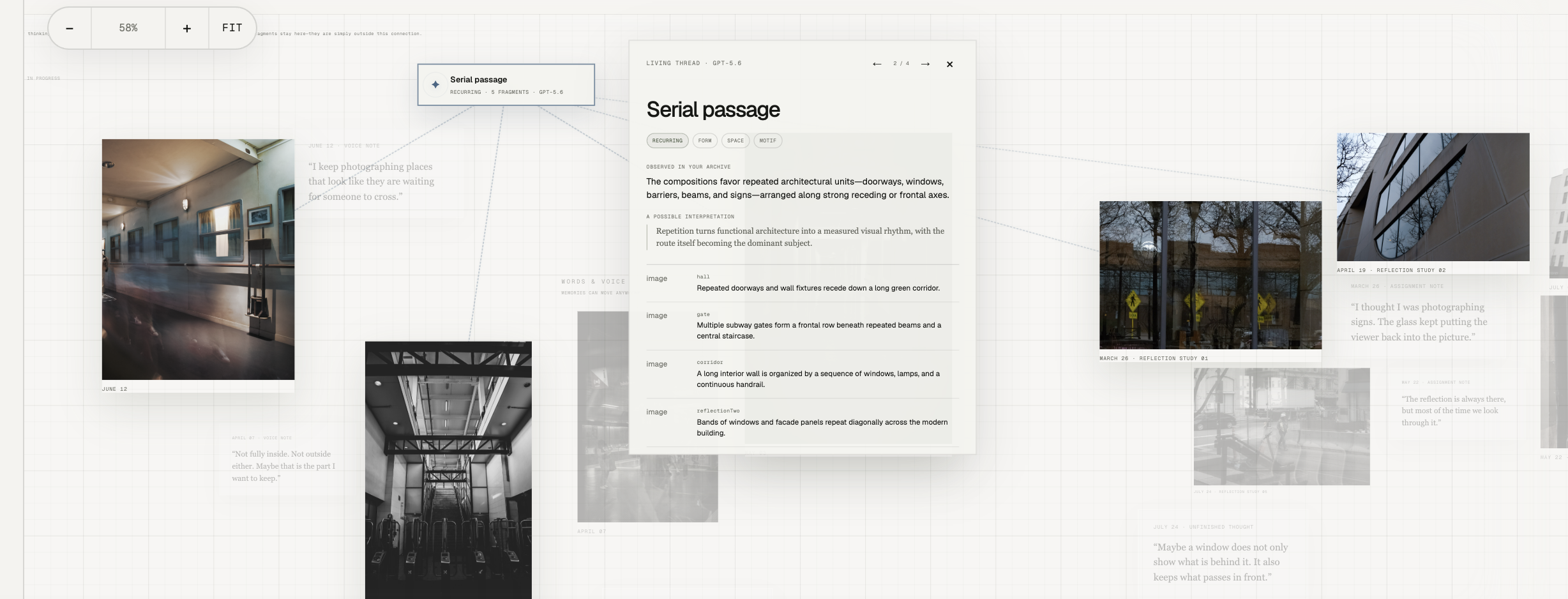
GPT-5.6 proposes a Living Thread across fragments the creator never manually tagged as related.
-
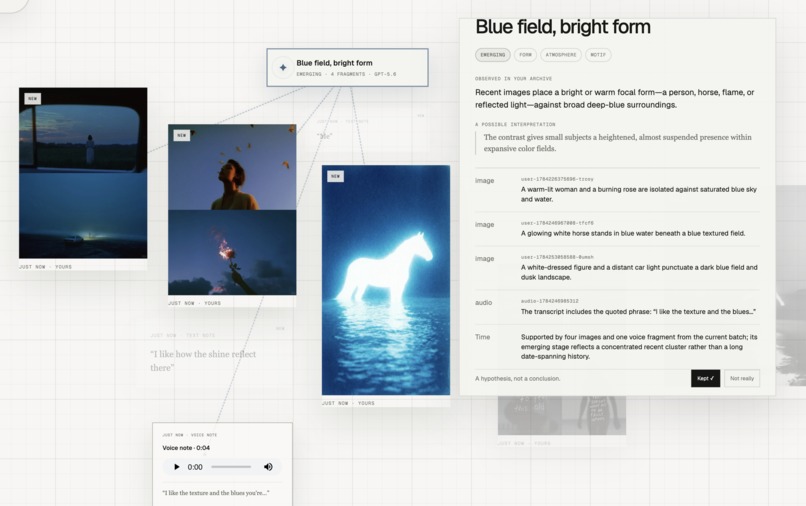
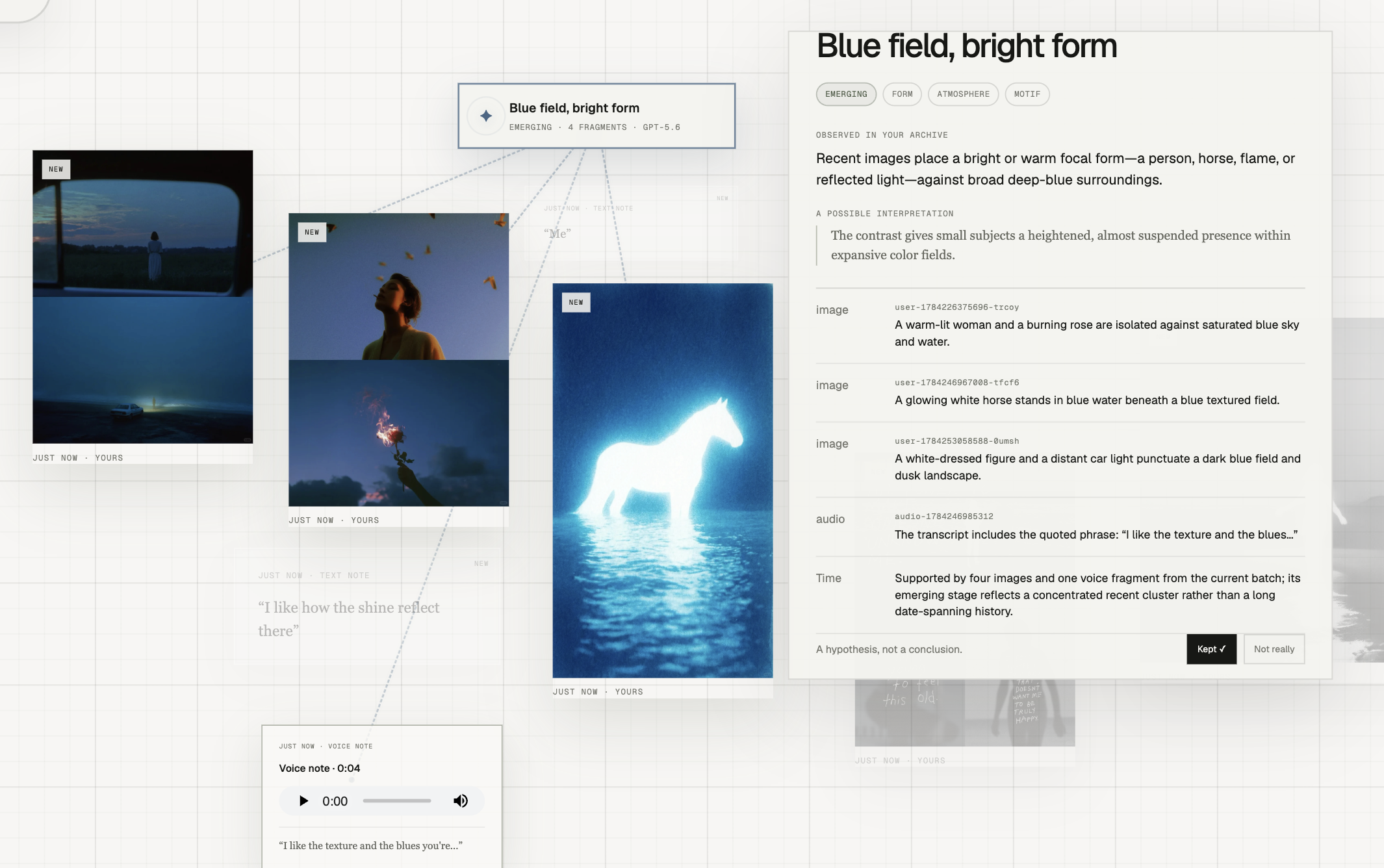
Every Thread is supported by visual, linguistic, and temporal evidence—and remains a hypothesis the creator can keep or reject.
-
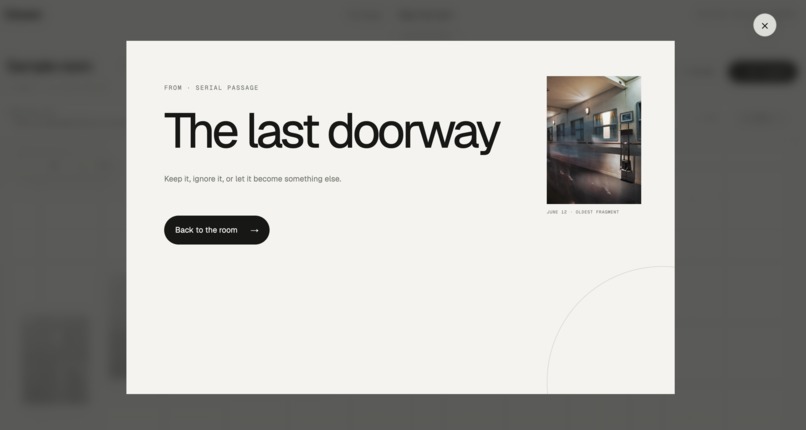
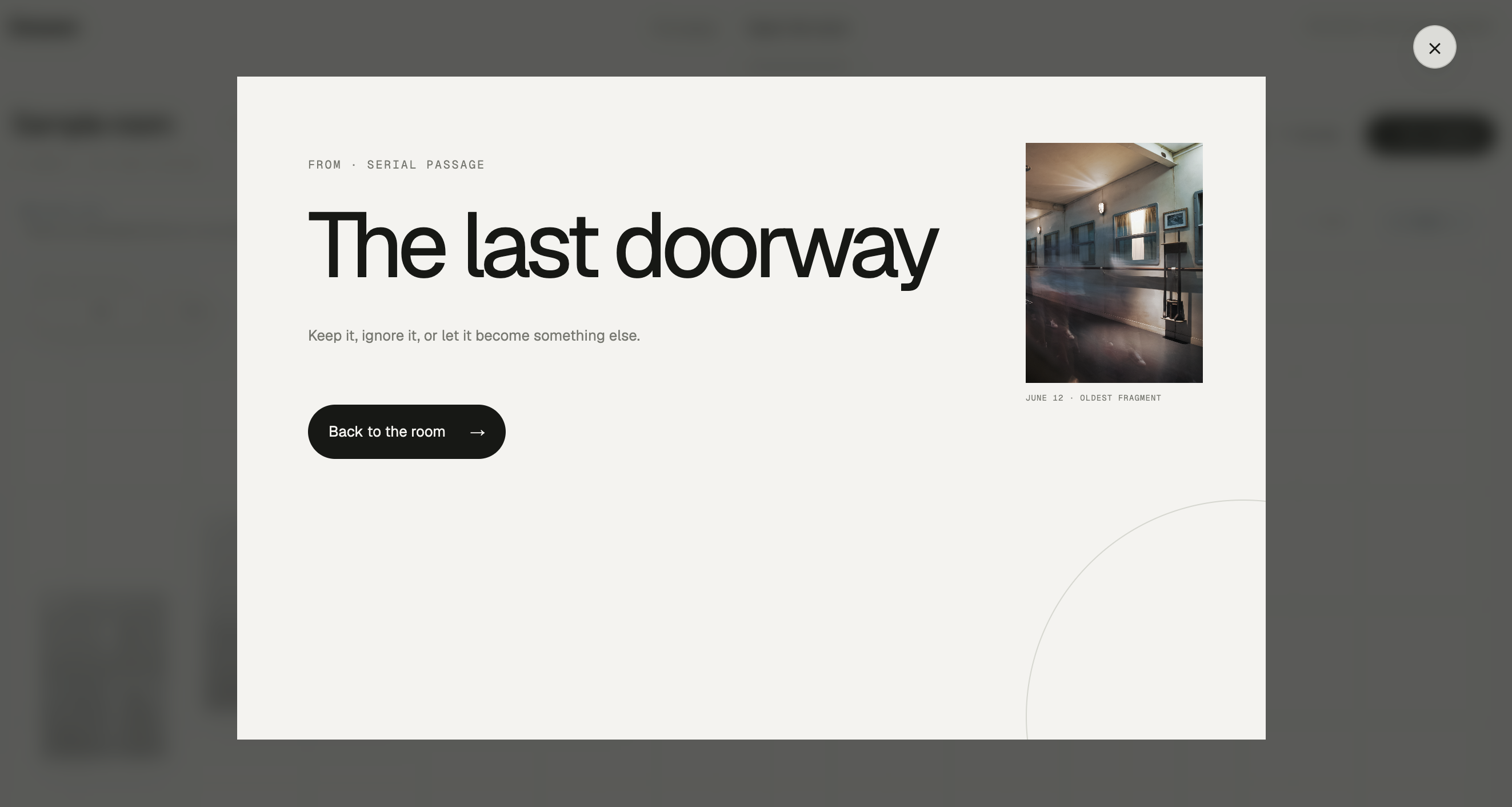
From a Thread the creator keeps, Drawer returns one small Spark grounded in their own archive—not a finished artwork.
Inspiration
As a psychology and art student, I collect visual references constantly: photographs, colors, surfaces, fragments of language, and sounds that may later become part of a project.
Images stay in photo libraries. Thoughts disappear into notes. Voice recordings lose the context that made them meaningful.
Months later, the image is still there—but the reason it mattered is gone.
I built Drawer around a simple question:
What if AI remembered creative context before trying to generate the next idea?
Drawer is a Creative Memory Agent for visual creatives. It preserves images together with the voices, sounds, and passing thoughts behind them, discovers evidence-backed relationships across time, and helps creators return to ideas that were already beginning to take shape.
What it does
A creator can quickly capture an image, sentence, voice note, or ambient sound without first adding titles, tags, or categories. Every fragment enters a selected Room, where its original content, recording, time, context, and spatial arrangement are preserved.
When invited, Drawer reads across the Room and proposes Living Threads: overlapping patterns supported by visual, linguistic, and temporal evidence.
A repeated object might become one Thread, while the same photograph may also belong to another based on color, composition, material, space, style, or narrative. Creative memory is not a set of mutually exclusive folders, so one fragment can participate in several possible relationships.
These connections are presented as hypotheses rather than conclusions. Creators can inspect the evidence, accept or reject a Thread, hide it, restore it, or rearrange the material themselves. The creator always owns the meaning.
From a Thread the creator chooses to keep, Drawer can return a very short Spark—a word or small creative opening grounded in the creator’s own archive.
It does not generate the artwork. It helps the creator hear an unfinished idea again.
How I built it
Drawer was developed as one Agent with several clear stages:
Capture → Remember → Understand → Curate → Calibrate → Return → Learn
The application was built with React, TypeScript, Next.js, Vinext, Vite, and Cloudflare tooling.
Voice recordings are stored in their original form and transcribed through a server-side OpenAI API route, making their language searchable without replacing the pauses, tone, and texture of the original recording.
GPT-5.6 performs multimodal reasoning across images, transcripts, written notes, and time. It returns structured Living Threads containing the relevant fragments and specific visual, linguistic, and temporal evidence.
I deliberately separated AI interpretation from visual execution.
GPT-5.6 decides which fragments may be meaningfully related and why, while a deterministic gallery engine handles coordinates, spacing, collision avoidance, and exhibition-style layout. This makes the Room stable and editable instead of allowing the model to improvise unreliable canvas positions.
Rooms, uploaded assets, layouts, analysis snapshots, and creator feedback are persisted, so reopening a Room preserves its state instead of repeating the same multimodal analysis unnecessarily.
Codex acted as an engineering partner throughout the project. It helped translate my product and design decisions into a working system—from architecture, persistent memory, and Agent orchestration to browser testing, debugging, deployment, and repeated interaction refinements.
Codex proposed technical approaches and implementation alternatives, while I retained control over the product meaning, visual language, interaction decisions, and boundaries of the Agent.
Challenges
One major challenge was making multimodal analysis feel specific rather than generic.
Early results sometimes focused too heavily on a single color or produced broad artistic interpretations. I refined the structured prompt so Drawer could recognize different kinds of relationships—including recurring objects, motifs, forms, spaces, materials, styles, gestures, and narratives—and allow one fragment to support multiple Threads.
Another challenge was combining an open canvas with a reliable exhibition layout. AI-generated coordinates created overlap and unstable results, especially when text cards and connection lines were added.
Separating semantic grouping from deterministic placement made the Room more consistent while preserving the creator’s ability to move and resize everything afterward.
It was also important to keep AI from becoming an authority over the artist. Features such as evidence inspection and explicit creator feedback (It does / Not really) became essential parts of the Agent rather than secondary interface controls.
Drawer can propose that a relationship may exist, but it cannot decide what that relationship means for the creator.
What I learned
I learned that an agent does not need to look like a chatbot or operate through one enormous prompt.
Drawer behaves as an Agent through memory, ordered stages, tool use, persistent state, and a feedback loop. GPT-5.6 handles flexible interpretation, deterministic code handles reliable execution, and the creator provides the final judgment.
I also learned that generative AI can support creativity without generating the finished creative work.
In Drawer, AI is most useful when it remembers, notices, proposes, and then becomes quiet enough for the creator to respond.
What’s next
The next step is a lightweight long-term memory layer that can summarize earlier observations over time and learn from which Threads a creator accepts, rejects, moves, hides, or revisits.
I also want to explore mobile capture, private synchronization across devices, richer sound fragments, and integrations with the creative tools people already use.
Over time, Drawer could become a personal creative memory layer that grows alongside the creator—not by defining their style, but by helping them notice how it is already forming.
Before AI generates your next idea, maybe it should remember your last unfinished one.
Built With
- agents
- ai
- api
- cloudflare
- codex
- css
- drizzle
- gpt-5.6
- multimodal
- next.js
- openai
- react
- speech-to-text
- tailwind
- typescript
- vite

Log in or sign up for Devpost to join the conversation.