
Inspiration
Running a business means coordinating development, marketing, content, scheduling, and finances across disconnected tools. Adding AI agents creates another coordination problem: where do you give instructions, follow progress, and find the results?
I built Drako to connect an AI team through Discord, backed by a visual command center and shared memory. The idea is simple: communicate where you already work, inspect what happened, and keep useful context for the next task.
What it does
Drako combines Discord communication channels, Mission Control, and a shared Vault.
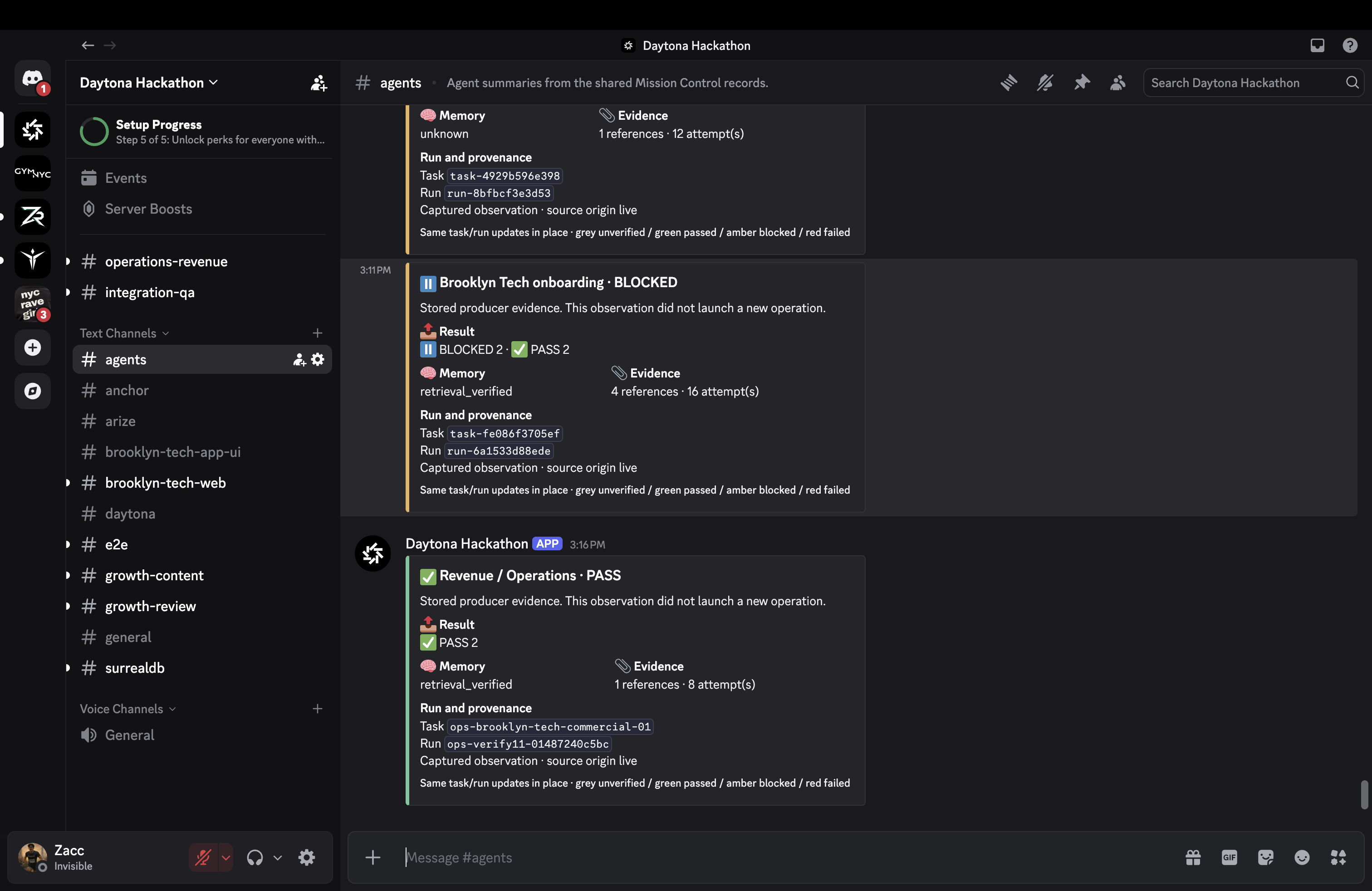
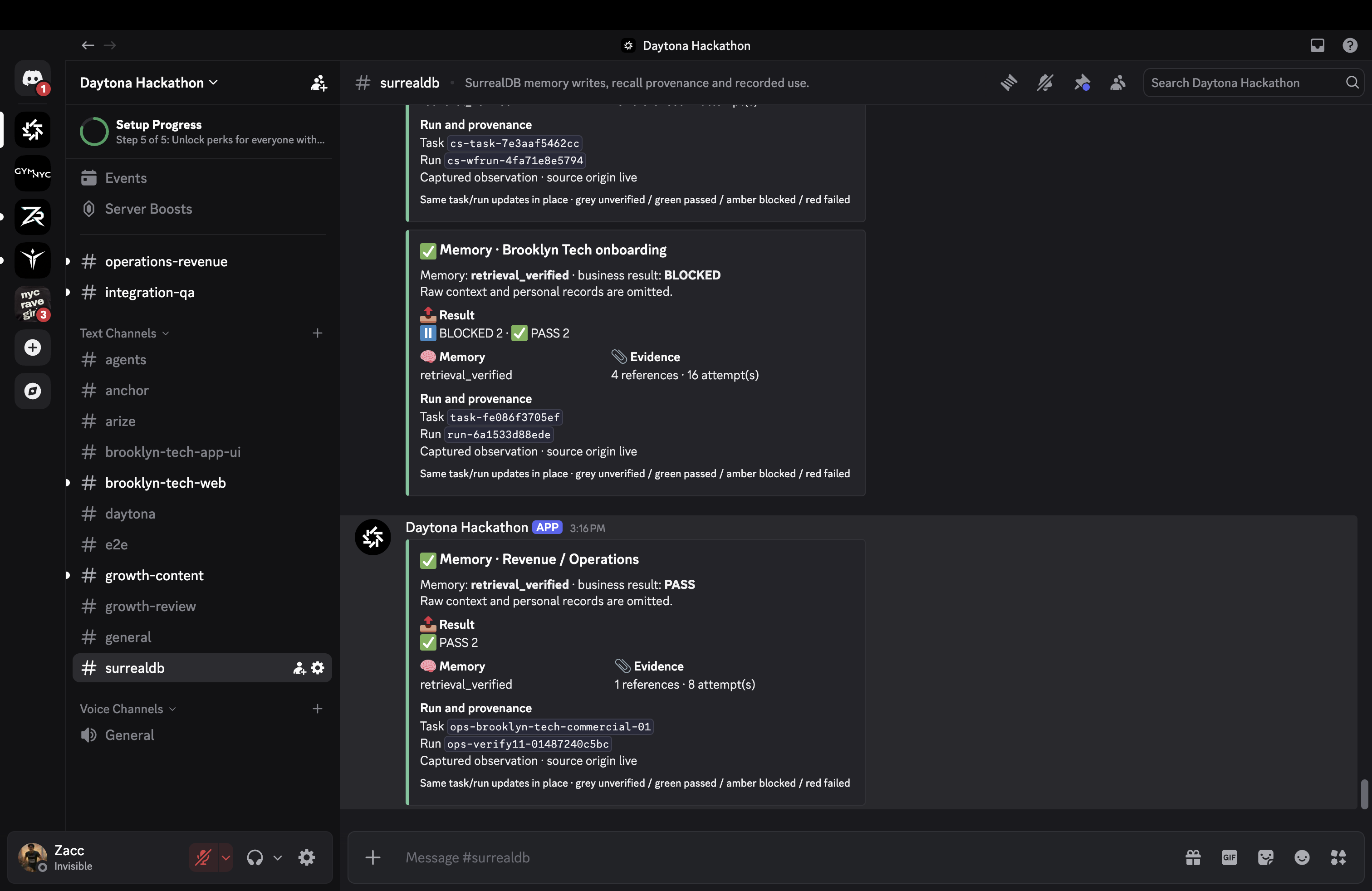
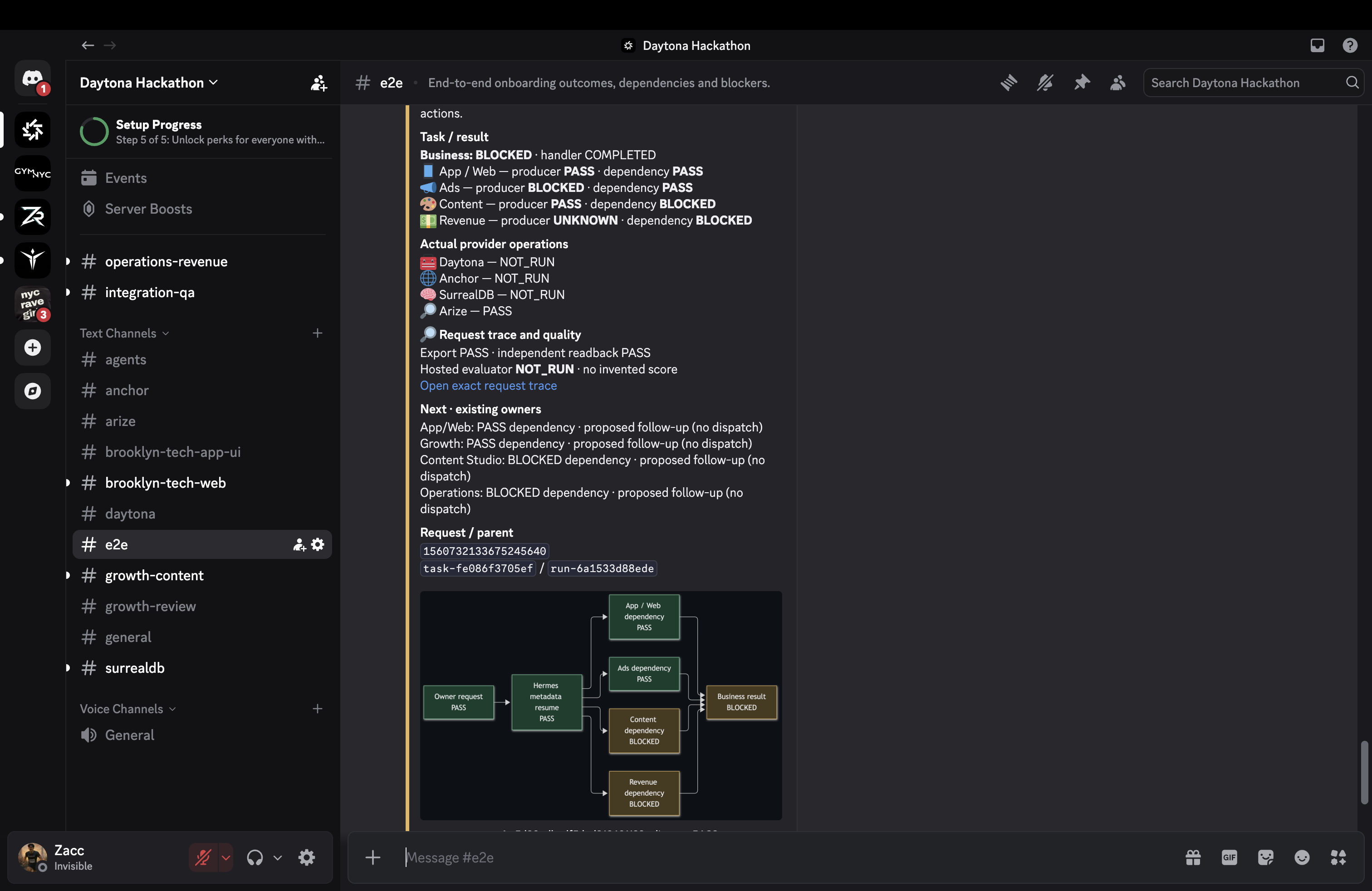
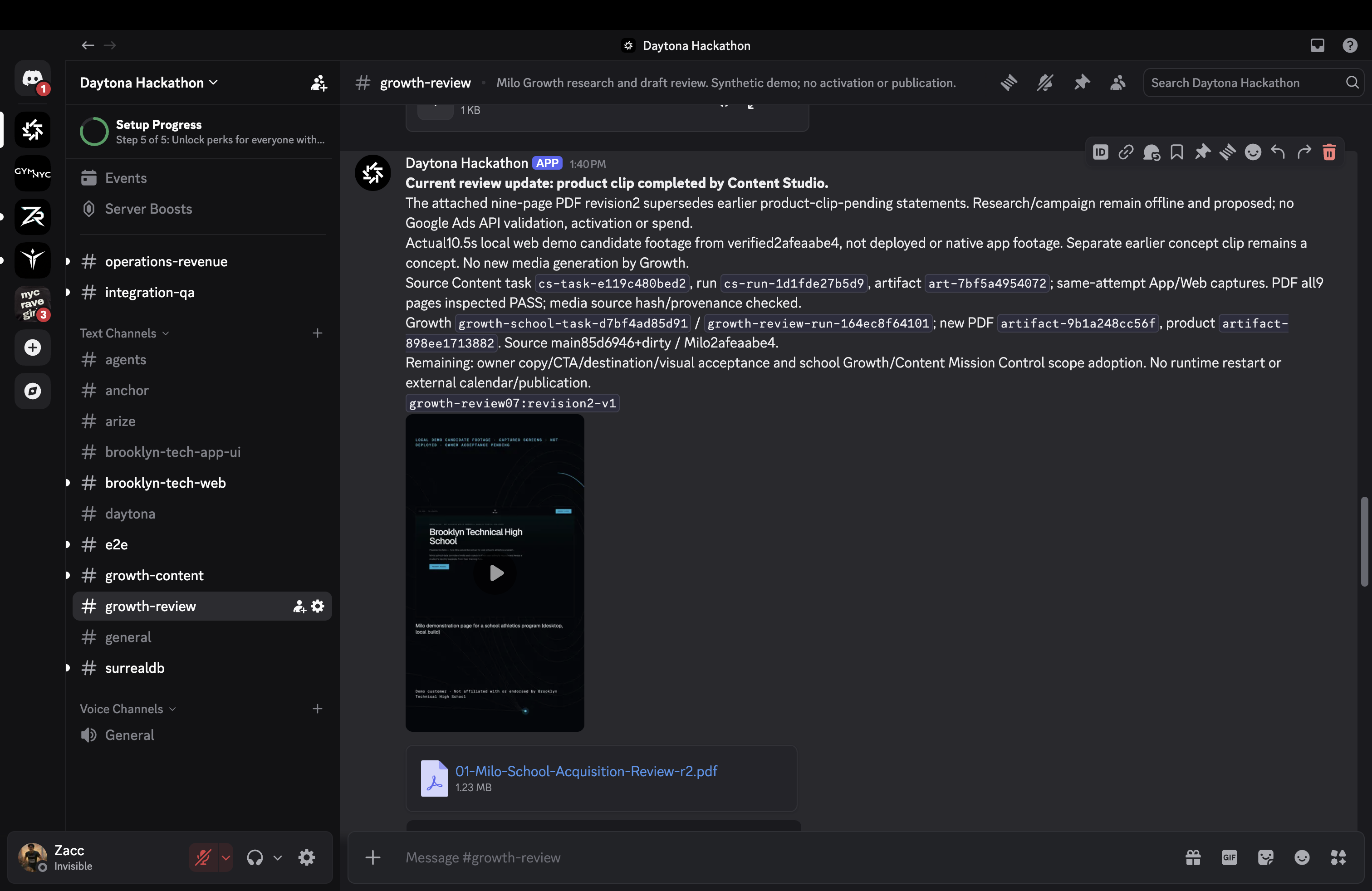
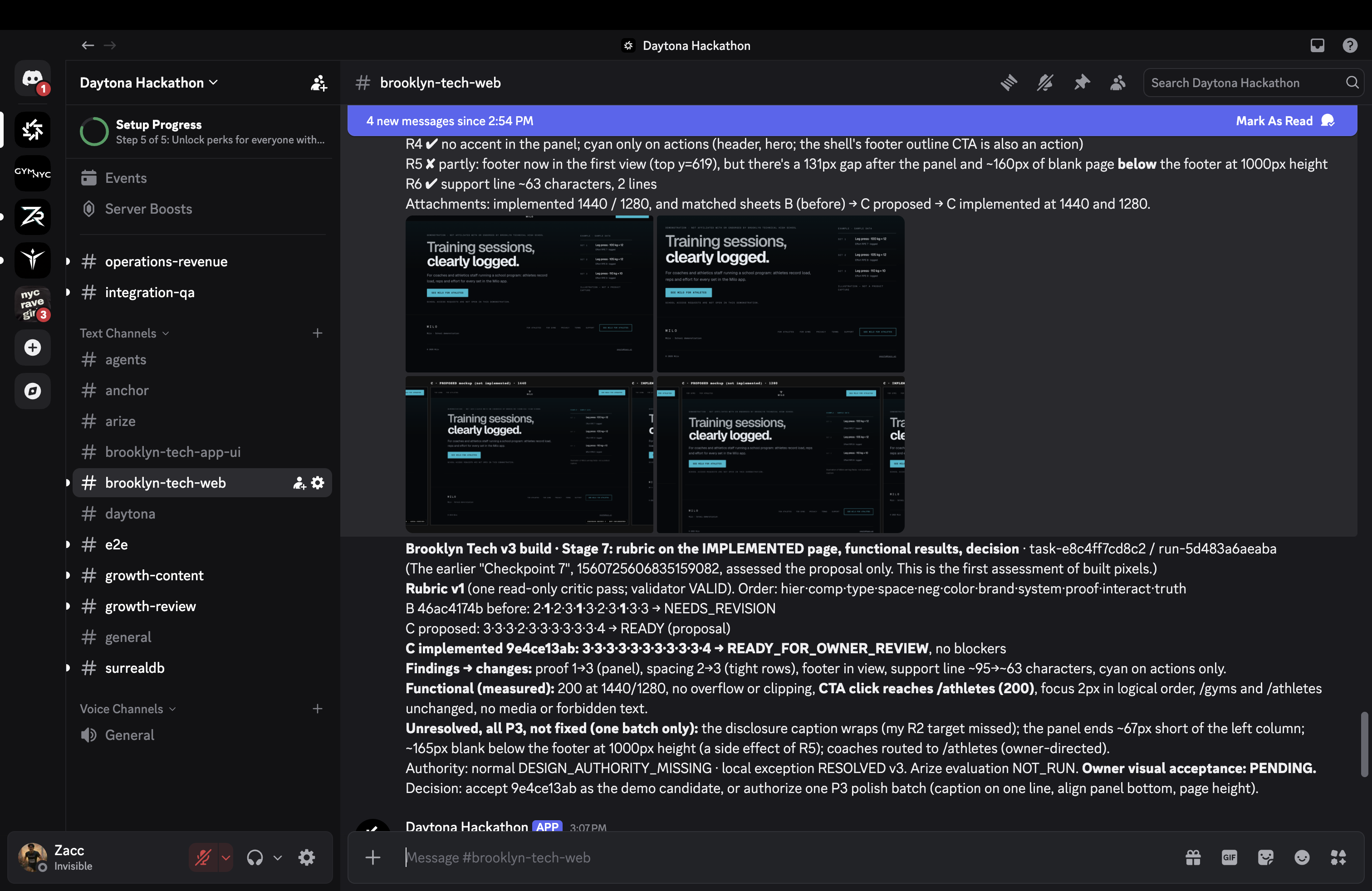
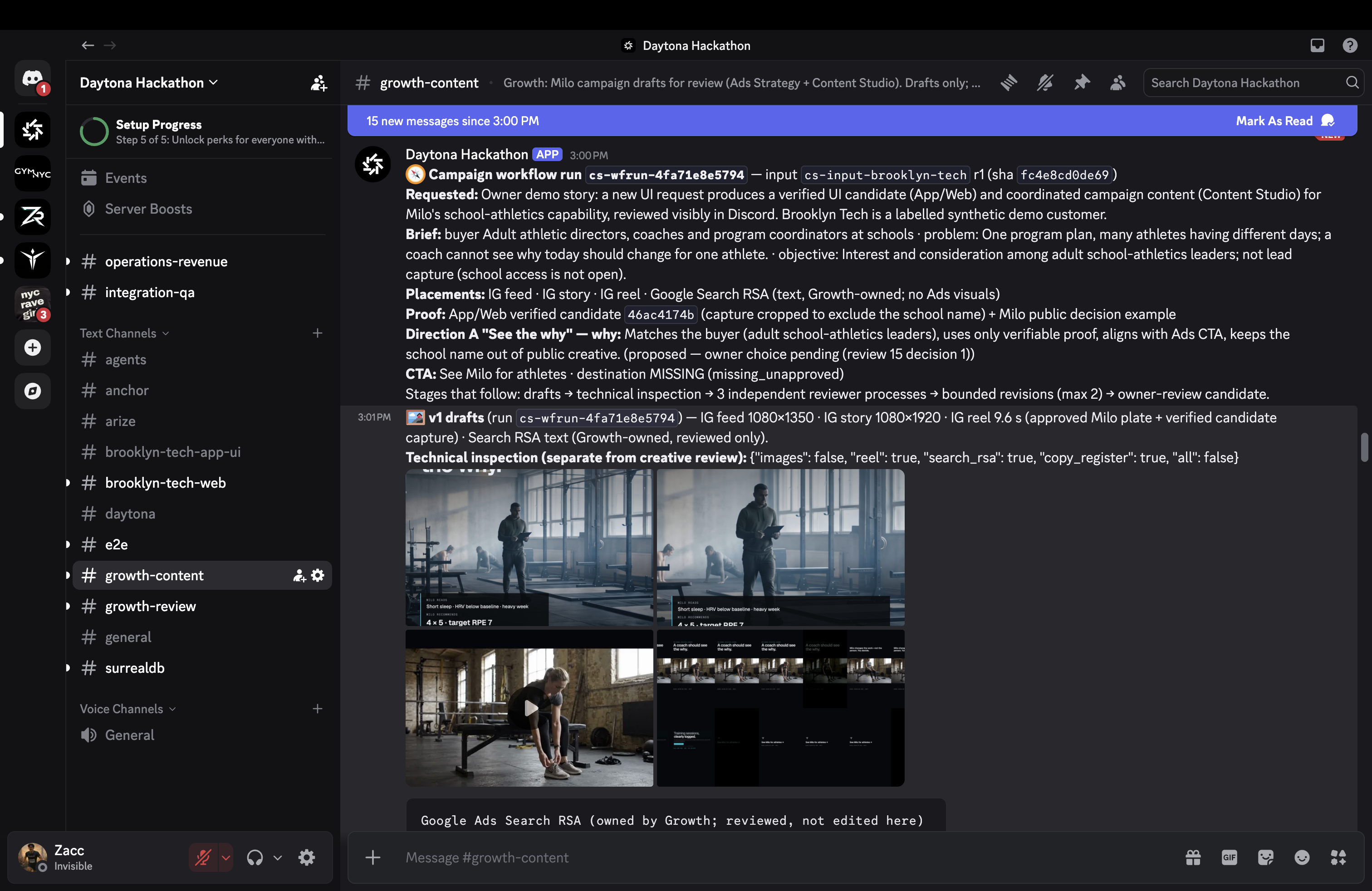
Discord is the team's communication layer. A command channel accepts supported owner requests, an agent channel surfaces coordination updates, and dedicated Daytona, Arize, SurrealDB, and Anchor channels organize provider evidence. An end-to-end channel brings the workflow results together.
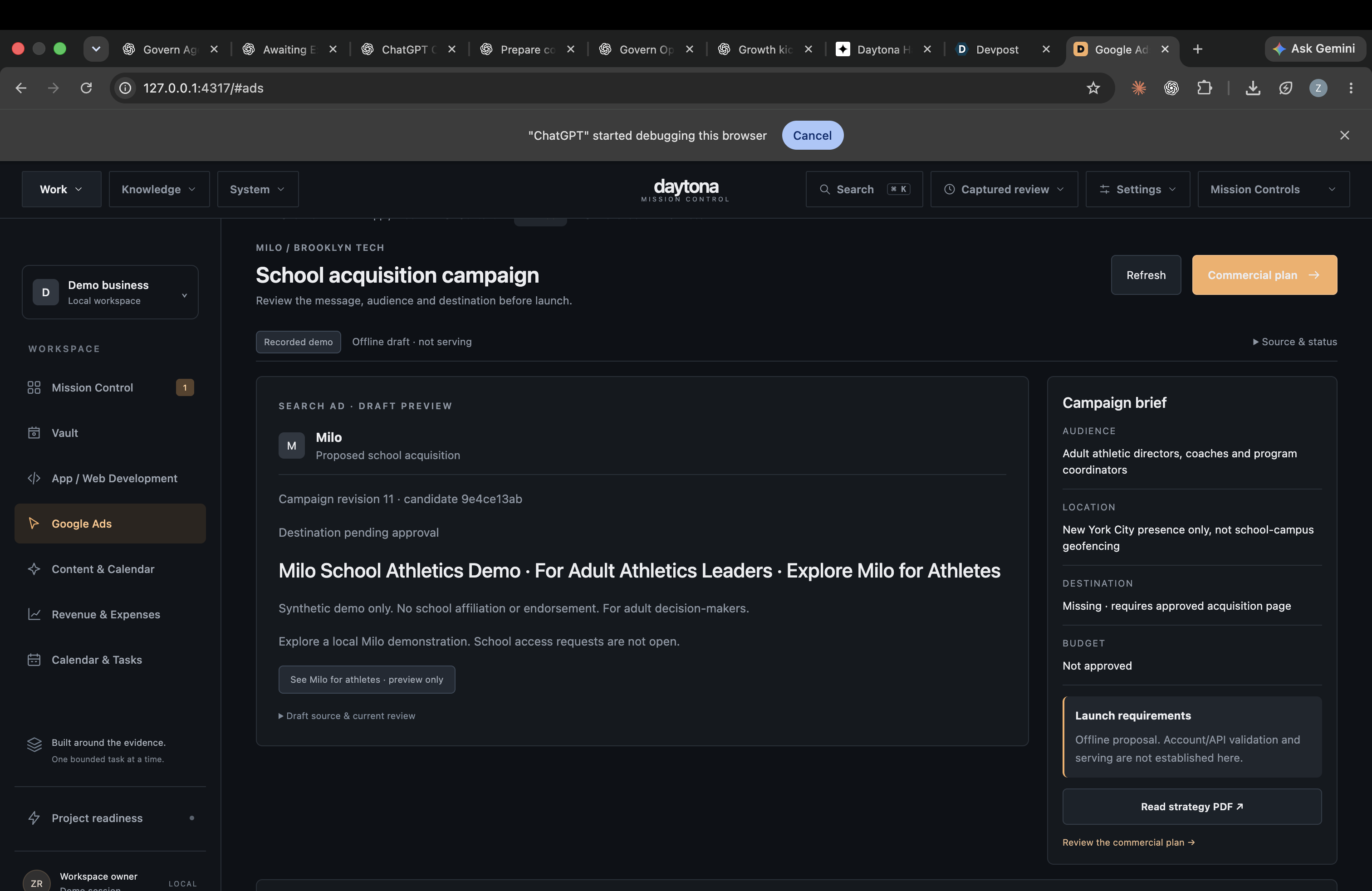
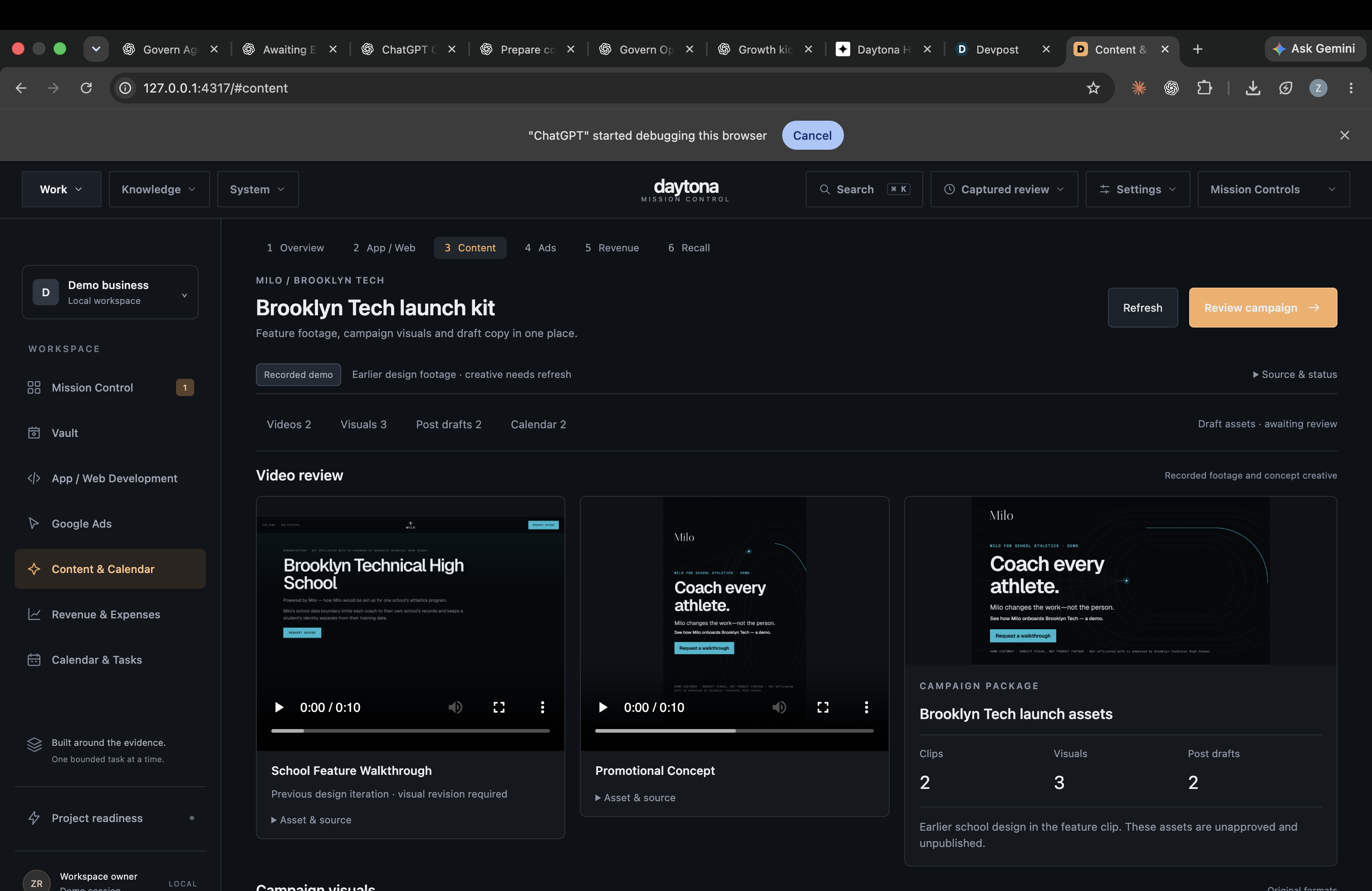
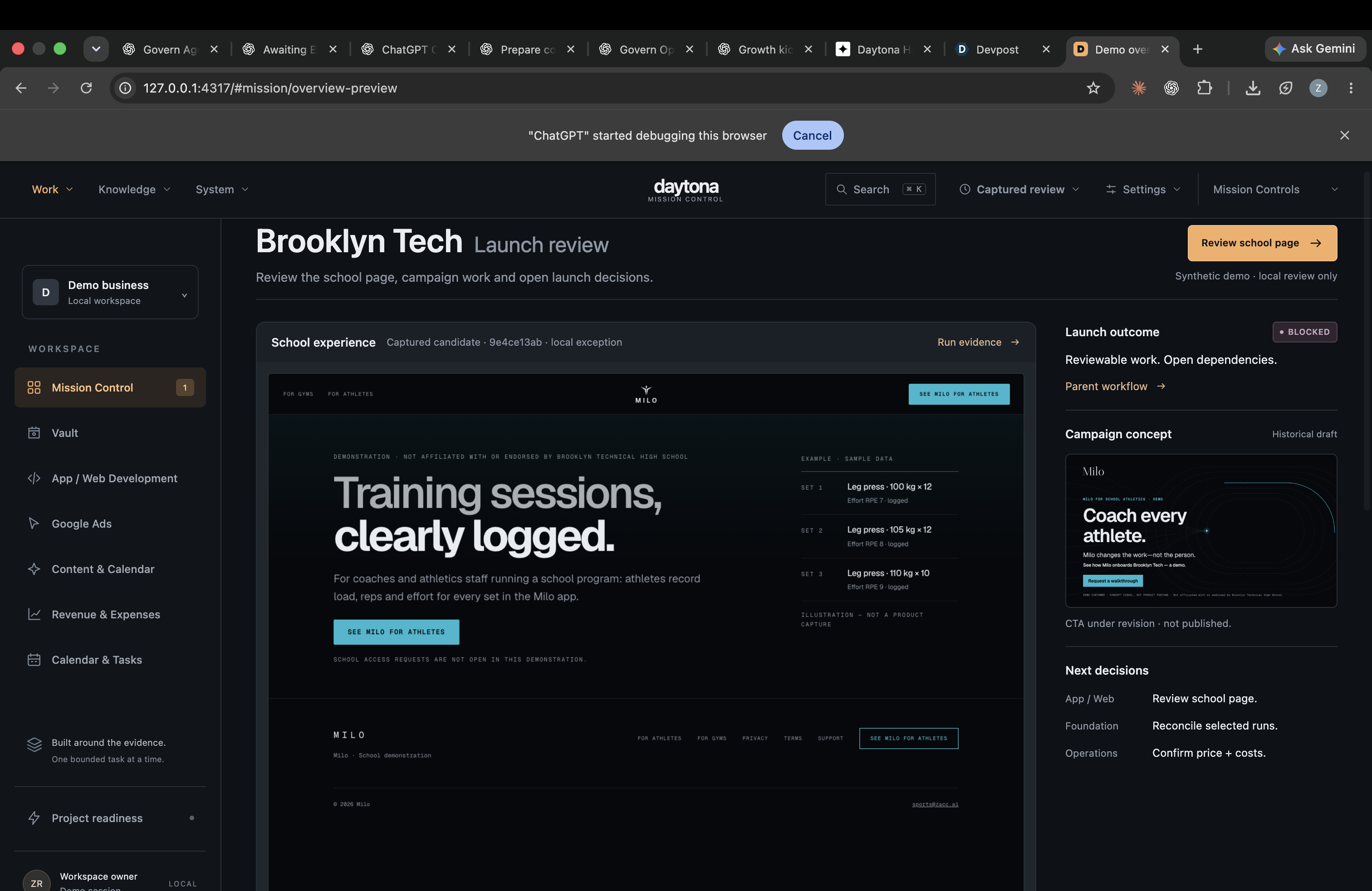
Mission Control provides the deeper view: tasks, runs, artifacts, checks, blockers, and decisions. The Vault retains instructions, research, and findings across tasks.
Our demo follows Milo preparing to onboard Brooklyn Tech as a clearly labeled demonstration customer. It connects a school-specific web experience, marketing drafts, content, and a draft invoice with financial projections using synthetic records.
The owner can request work through Discord, follow updates in the relevant channels, and inspect supporting evidence in the cockpit.
How I built it
Hermes coordinates the workflow and connects registered producer results to Discord and Mission Control.
Four providers support the architecture:
- Daytona: isolated sandboxes for bounded execution and verification.
- SurrealDB Agent Memory: shared context, saved findings, and retrieval across tasks.
- Anchor: browser interaction and inspection.
- Arize AI: traces for inspecting instrumented agent runs. Hosted evaluations remain a next step.
A shared task format links context, attempts, checks, artifacts, and traces. Discord reports draw from those records, giving messages a connection to inspectable evidence.
The channels organize communication by purpose: owner commands, agent coordination, provider activity, and overall workflow results.
Challenges I ran into
The biggest challenge was keeping status messages accurate across multiple tools and agents.
A delivered Discord message proves communication worked; it does not prove the underlying business task succeeded. Drako keeps those outcomes separate and reports unresolved dependencies as blockers.
Another challenge was defining success. In one controlled test, a command exited successfully and printed the expected output, but its result file was missing. We added independent artifact checks, saved the finding, and demonstrated a later run retrieving it to select additional checks.
Keeping outputs aligned was also difficult. A changed web candidate can leave campaign copy or content referring to an older version. Those mismatches need to remain visible across both the cockpit and communication channels.
Accomplishments that I'm proud of
I connected Discord commands and evidence feeds with a shared workflow record, making agent work easier to follow across channels.
The foundation demonstrated real Daytona execution, persistent memory with later recall, and Arize trace ingestion.
I’m particularly proud of the learning loop: encounter a failure, preserve the evidence, save the finding, and use it in a separate run to improve verification.
What I learned
Communication is part of the product. Owners need updates that explain what happened, what is blocked, and what decision comes next.
Dedicated channels make activity easier to follow, while shared records keep those updates connected to their sources.
I also learned that successful execution, message delivery, memory persistence, and verified business outcomes are separate milestones. Making those distinctions visible helps an owner judge the work.
What's next for Drako
The next milestone is completing the school-onboarding journey across the web experience, growth assets, and commercial records. That integrated workflow still has blockers.
I also want to make Discord updates more actionable, improve links between messages and exact task evidence, and add hosted Arize evaluations.
The goal is an AI business team you can direct through conversation, follow through organized channels, and verify through evidence—with control over consequential actions.
