-
-
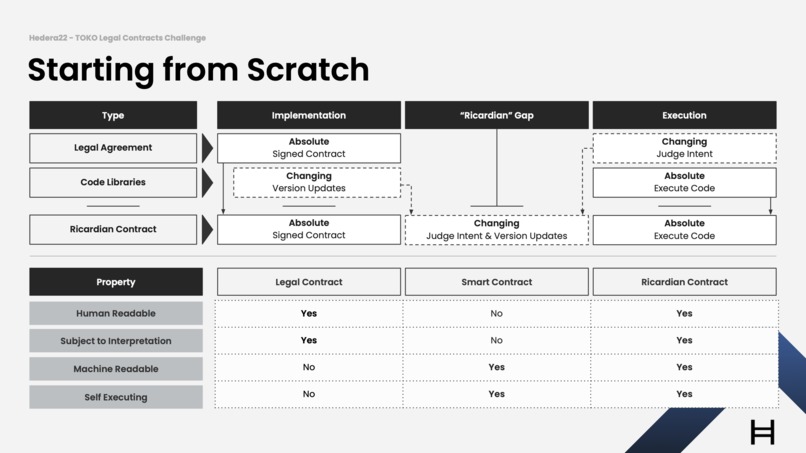
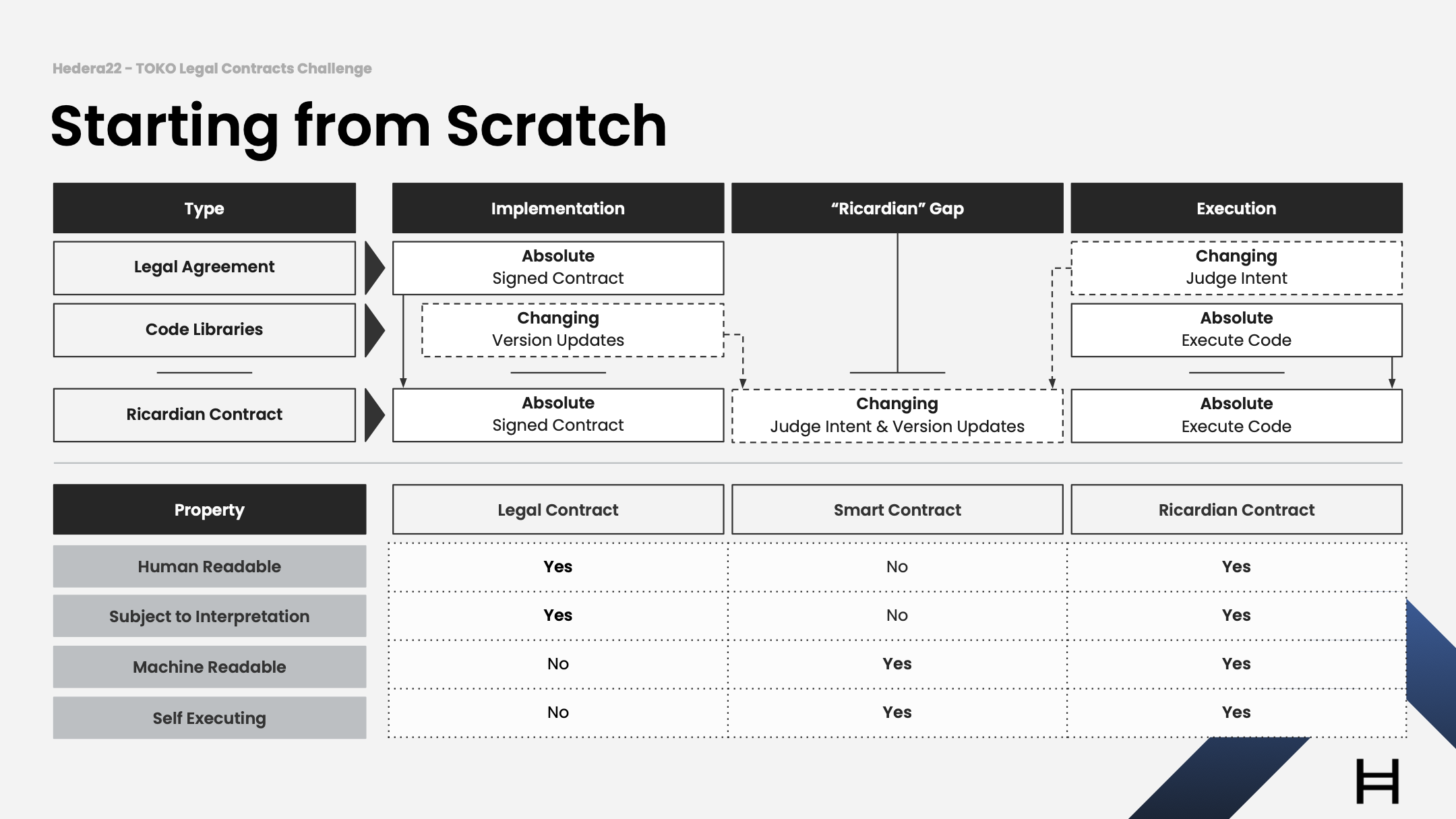
Starting from Scratch
-
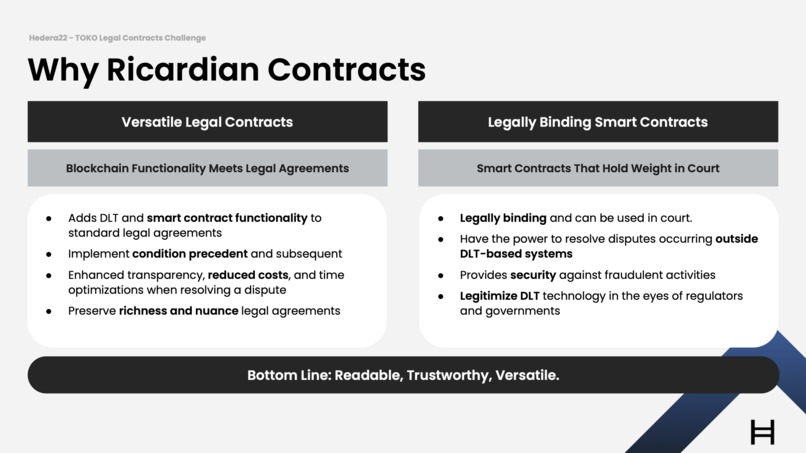
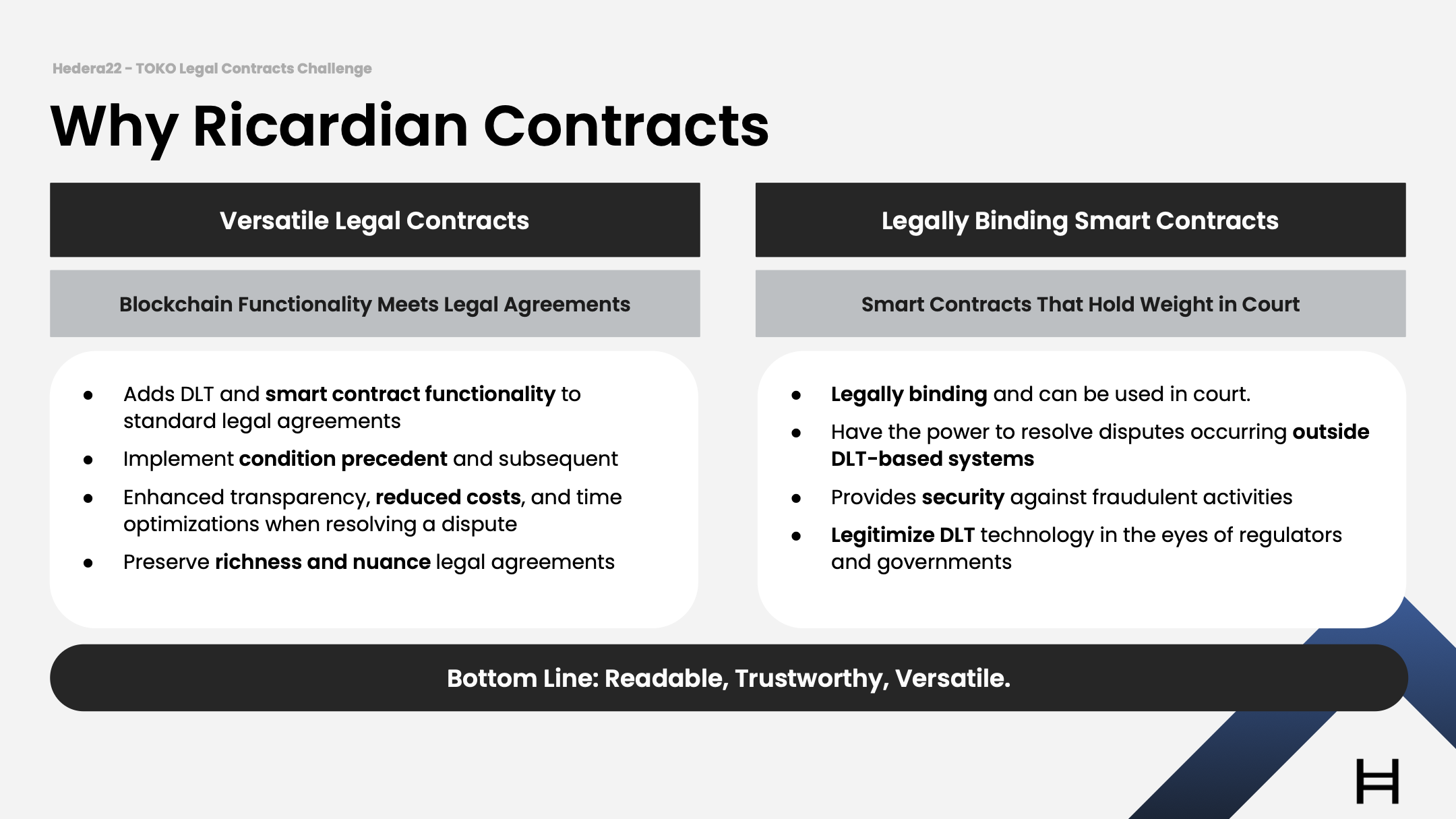
Why Ricardian Contracts
-
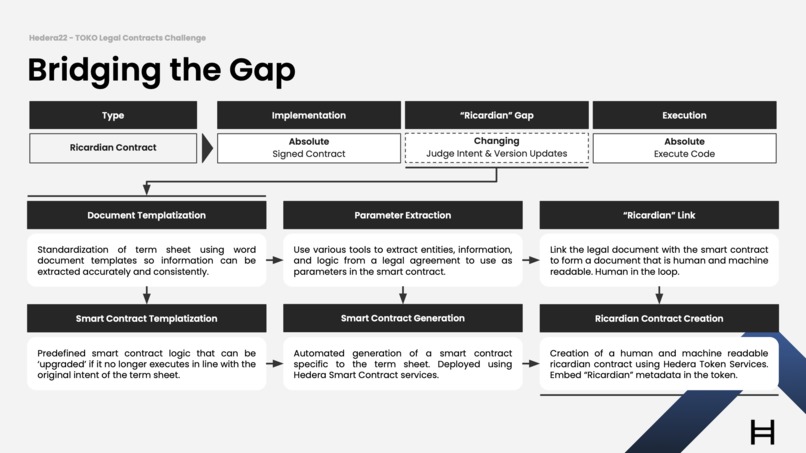
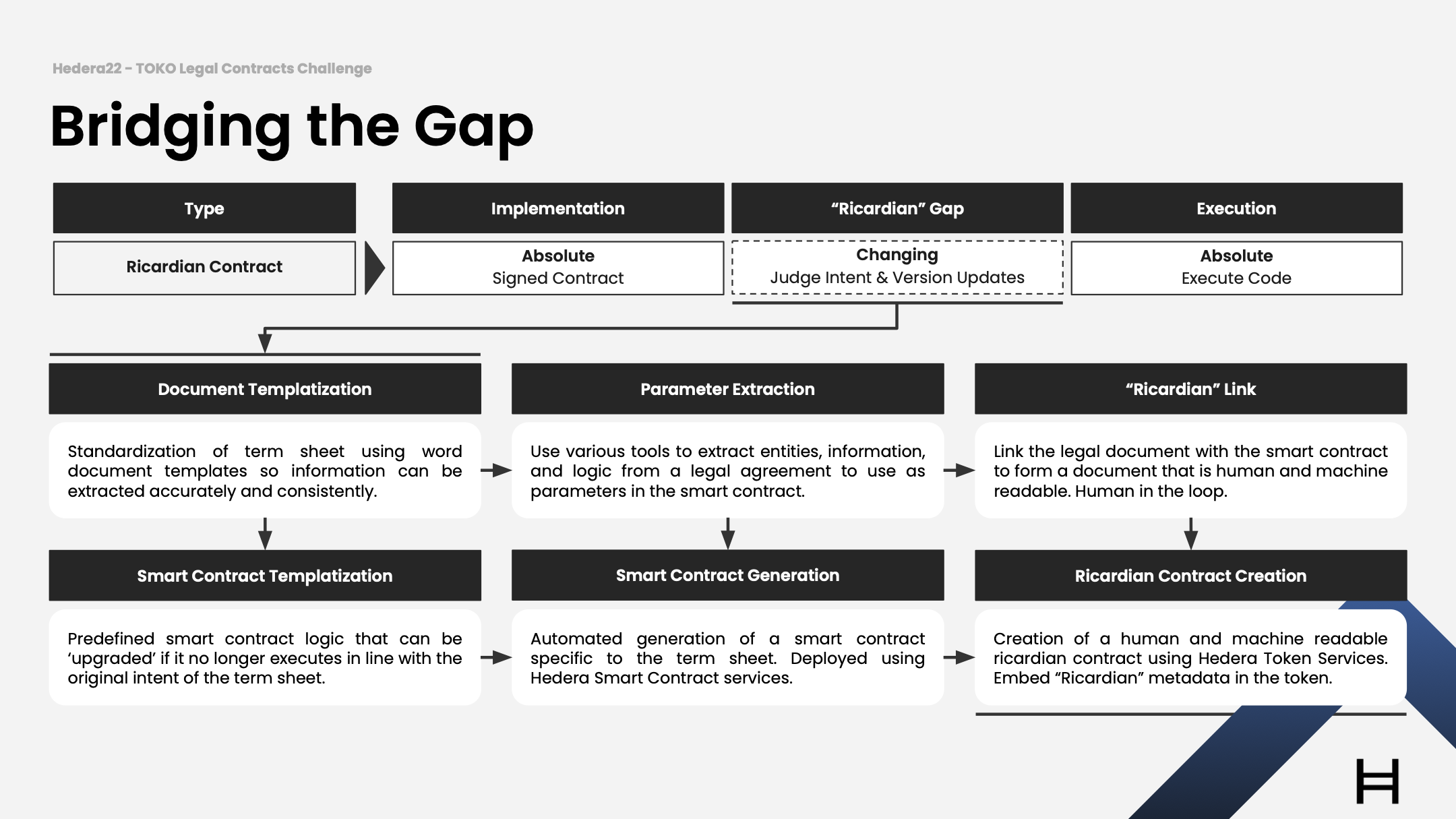
Bridging the "Ricardian" Gap
-
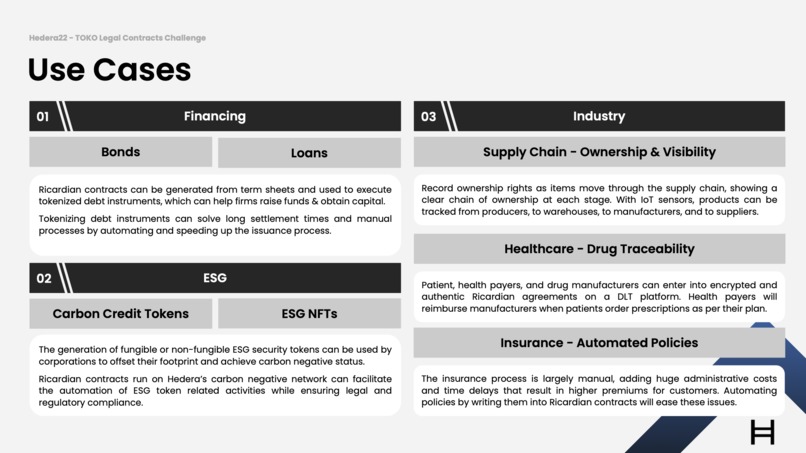
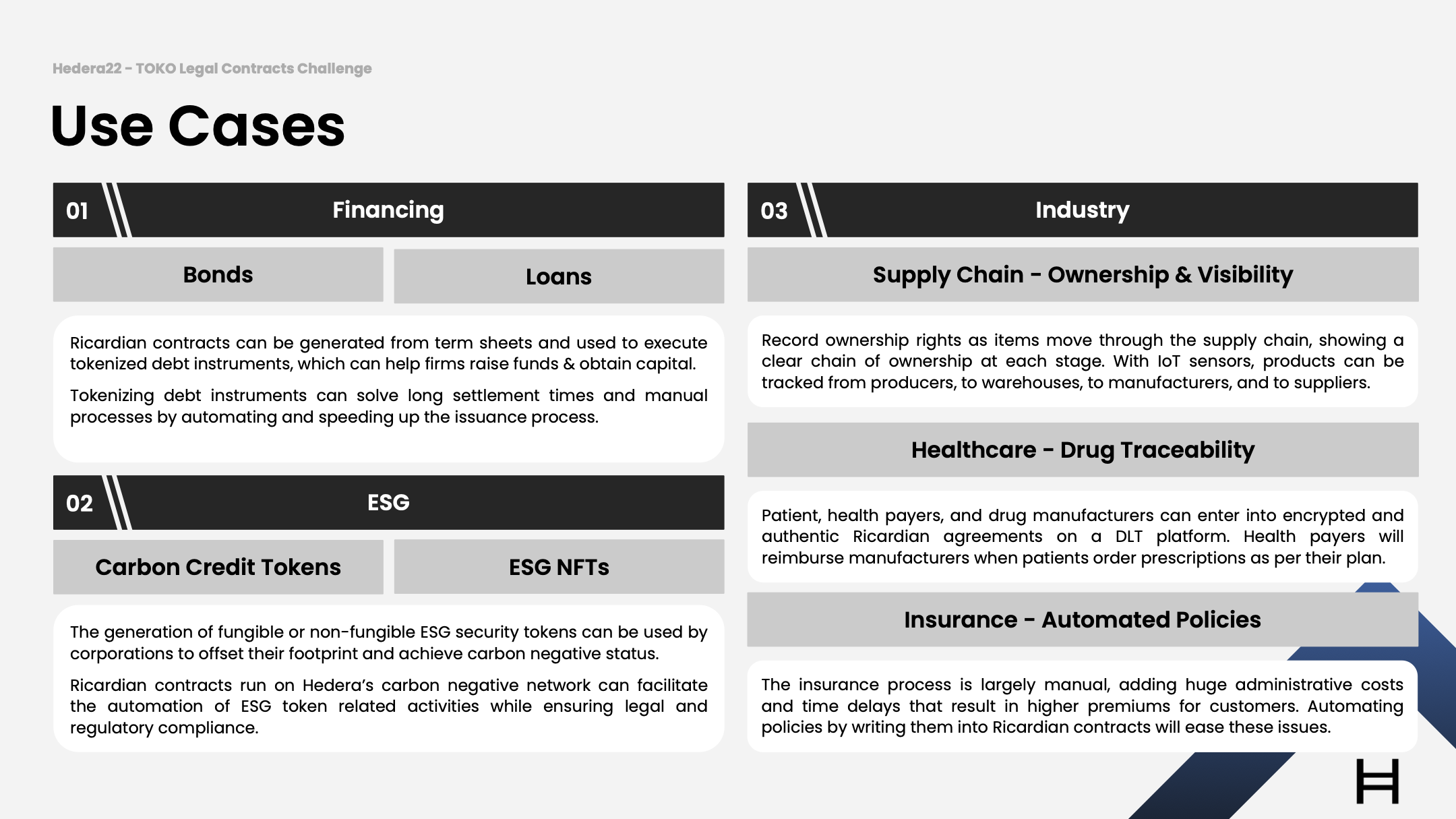
Use Cases
-
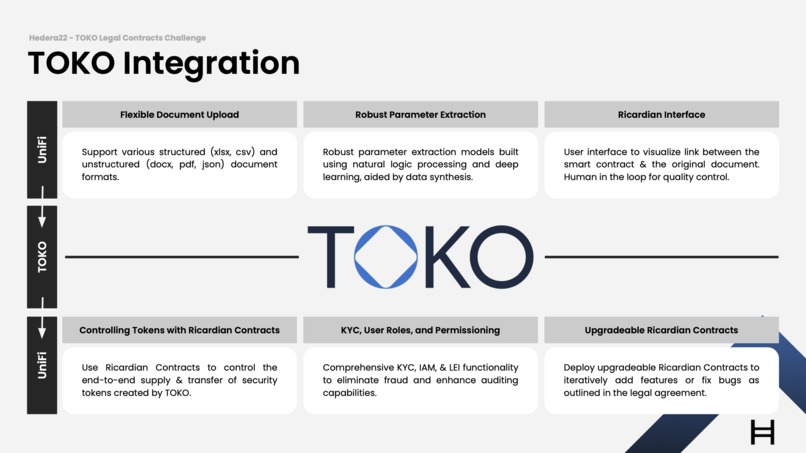
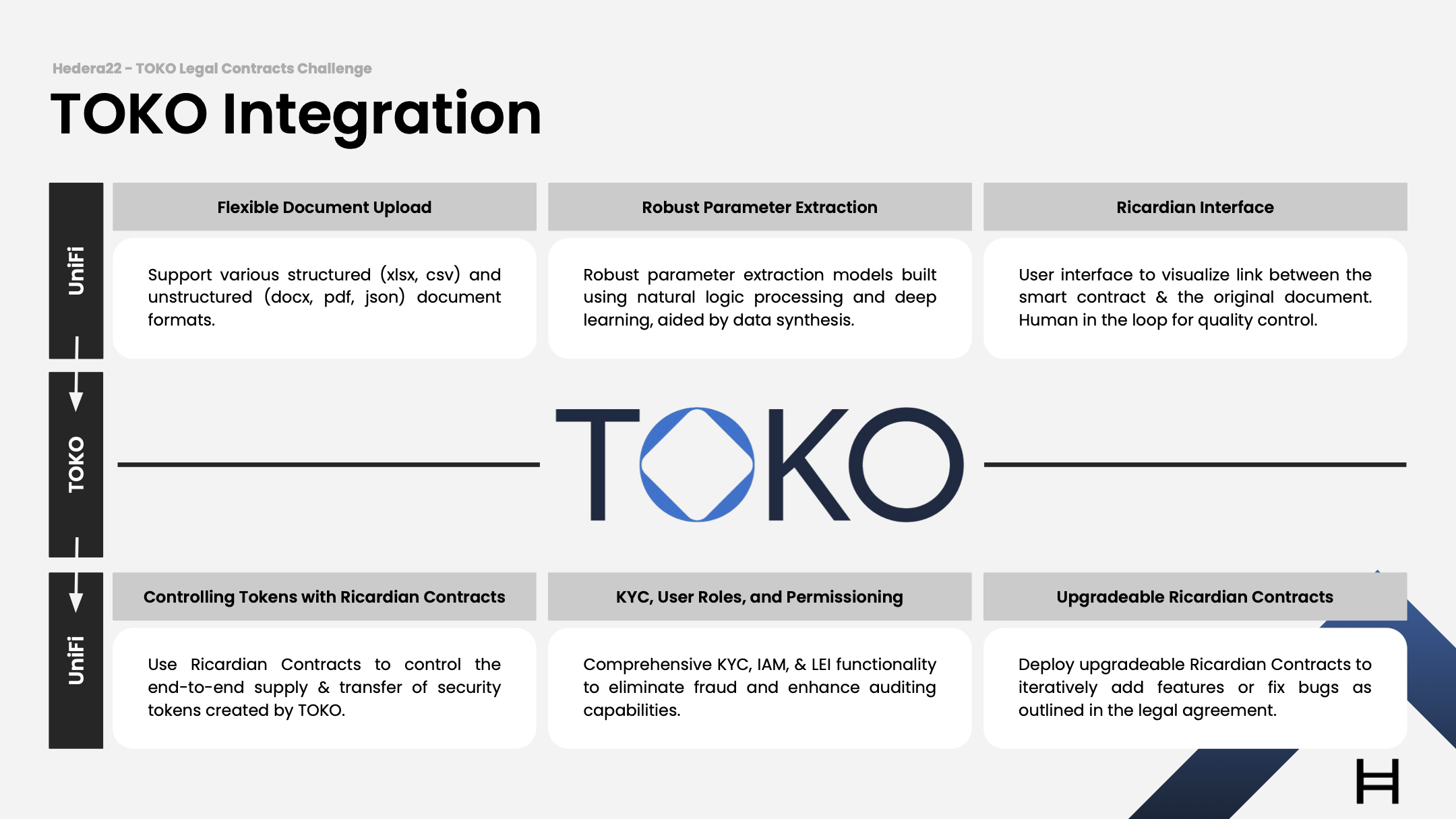
TOKO Integration
Inspiration
First inspired by the Legal Contracts Challenge Sponsored by TOKO, and later by the Google Enterprise DeFi challenge.
What it does
A proof of concept end-to-end implementation of a Ricardian Contract, creating a machine and human readable version of a legal agreement housed on the IPFS that also self-executes on Hedera.
How we built it
Scripts were written in Python, with a range of algorithms and machine learning libraries used for the parameter extraction engine. The Hedera SDK (python wrapper) was used to integrate the Hedera Token Service & Smart Contract Service. Smart contracts were written in Solidity.
Challenges we ran into
Solving this interdisciplinary problem required a range of expertise from the legal and finance space, to data science/machine learning and smart contract development. Solving this problem required expertise from lawyers, bankers, developers, data scientists, and consultants.
Accomplishments that we're proud of
Leveraging the expertise and knowledge of lawyers, bankers, blockchain developers, and consultants to create a proof of concept technical implementation of a Ricardian Contract - starting from a simple term sheet, to building a parameter extraction, and deploying on Hedera.
What we learned
Beyond the technical implementation and increasing our familiarity with Hedera, we learned the different key factors to building an Enterprise-Grade solutions that bridges the legal, finance, and DLT worlds.
What's next for UniFi
Extend functionality to more sophisticated use cases and explore how UniFi can bolster TOKO's value proposition and usability. To build a deeper and more robust parameter extraction engine, UniFi can migrate onto GCP to do the heavy lifting in running deep learning/neural networks.
Built With
- deep-learning
- hedera-sdk
- ipfs
- natural-language-processing
- openai-gpt3
- python
- solidity

Log in or sign up for Devpost to join the conversation.