-
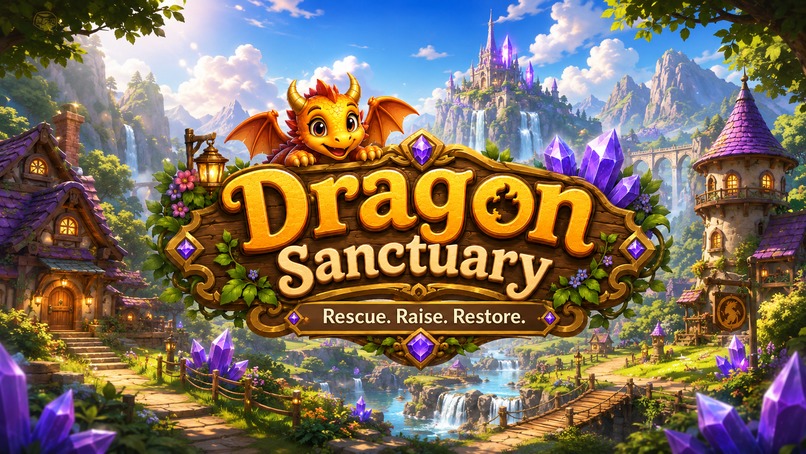
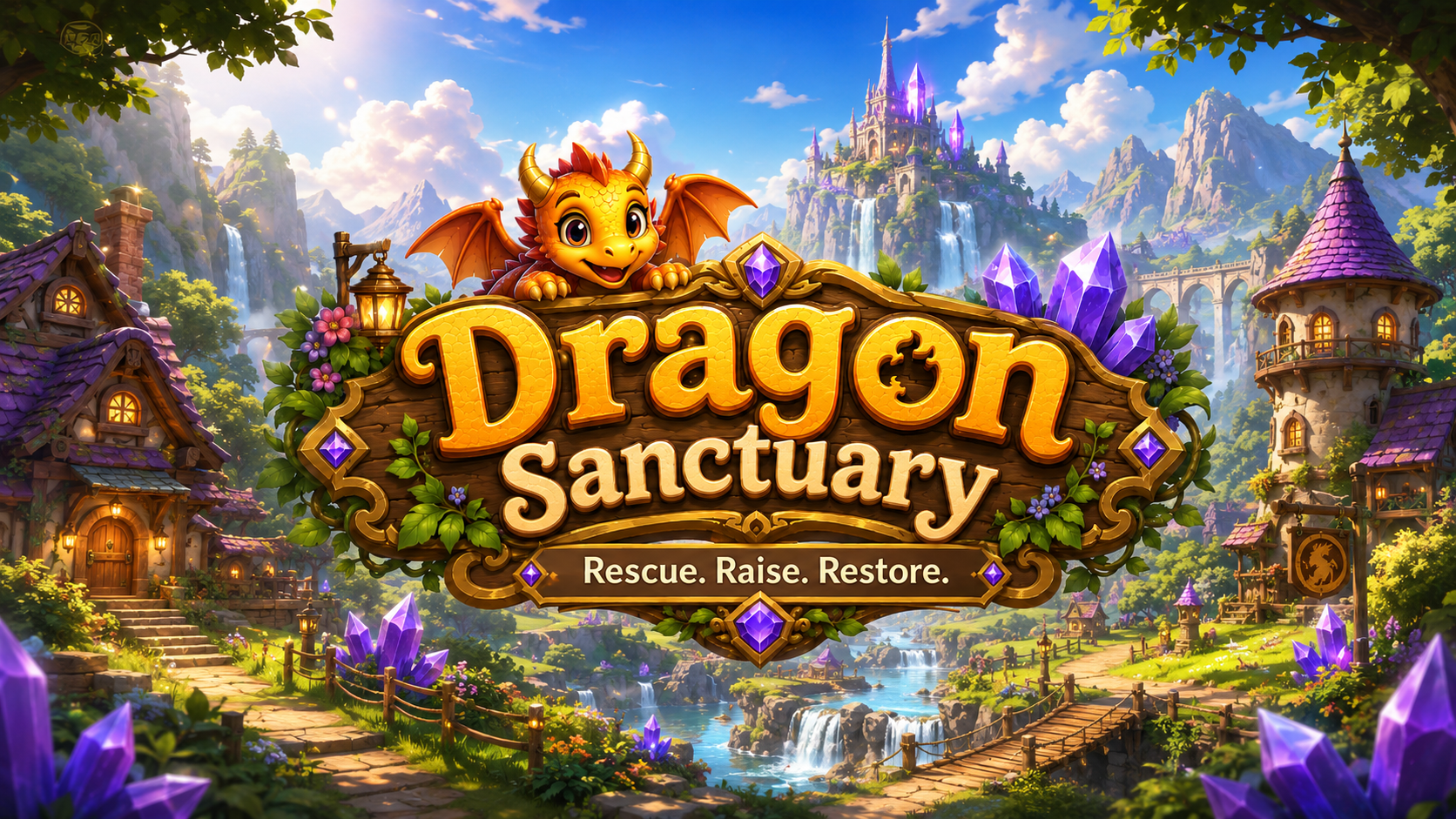
Cover Screen
-
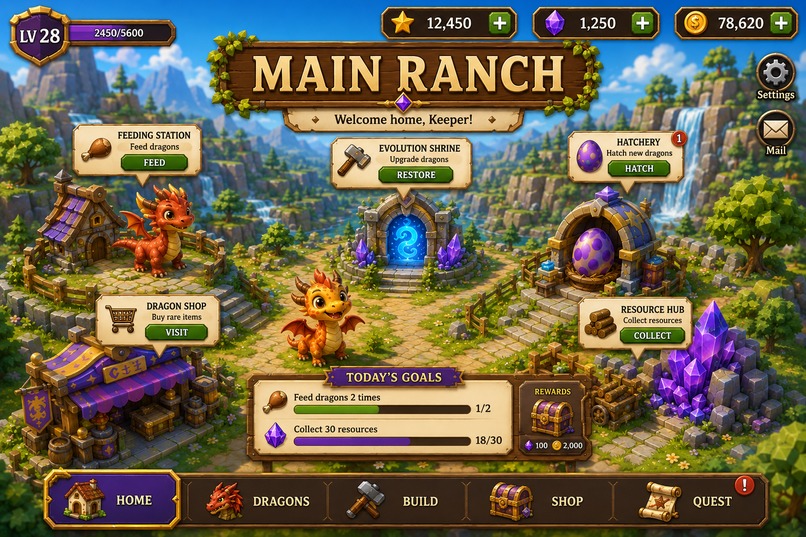
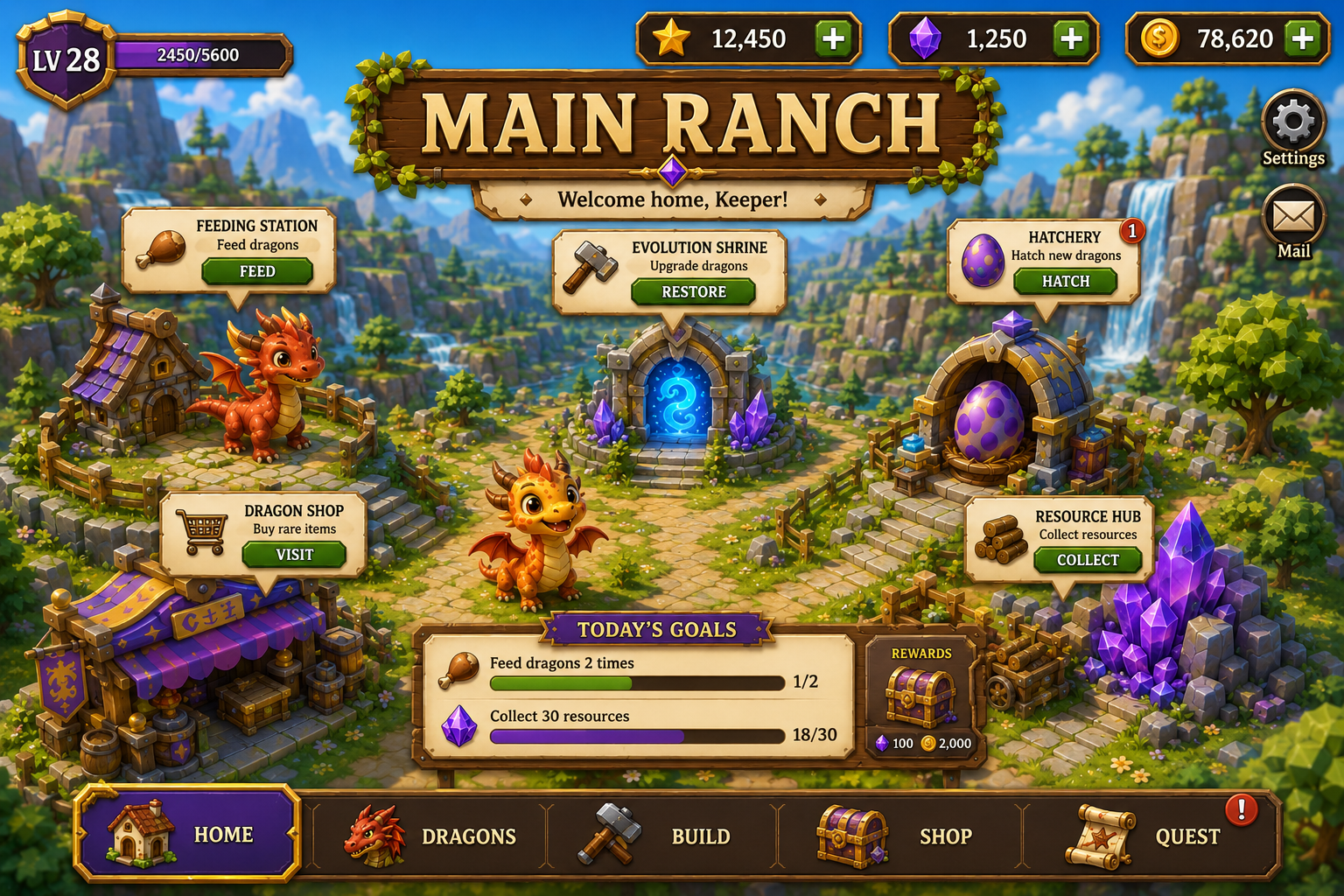
Home Page
-
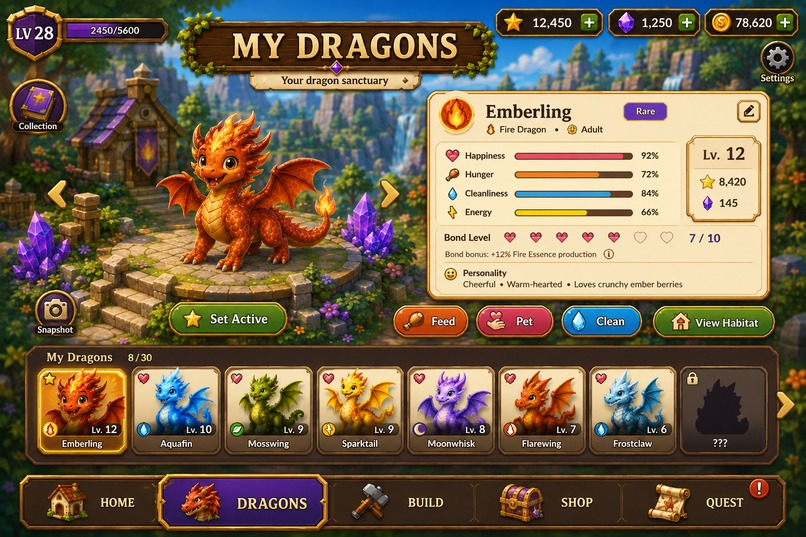
Dragon Page
-
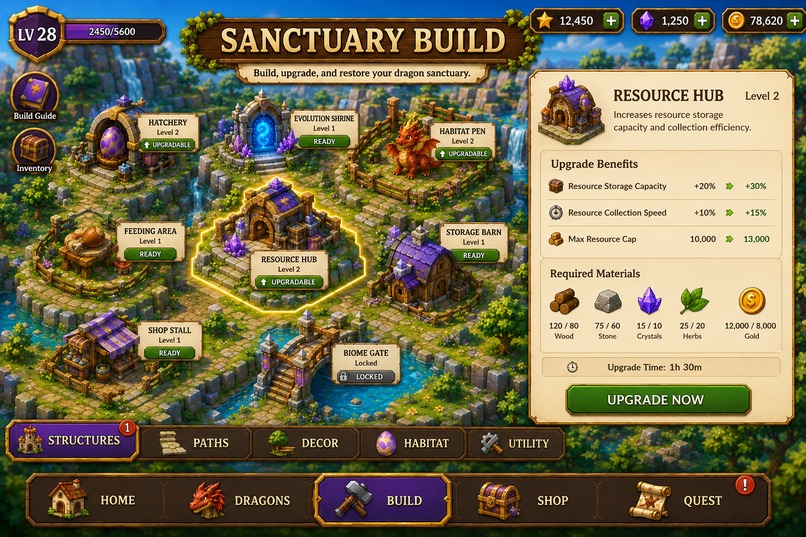
Build Page
-
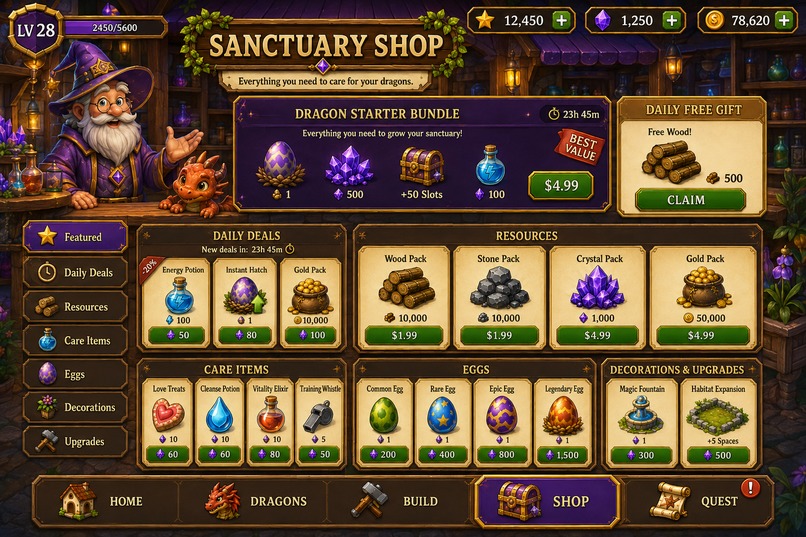
Shop Page
-
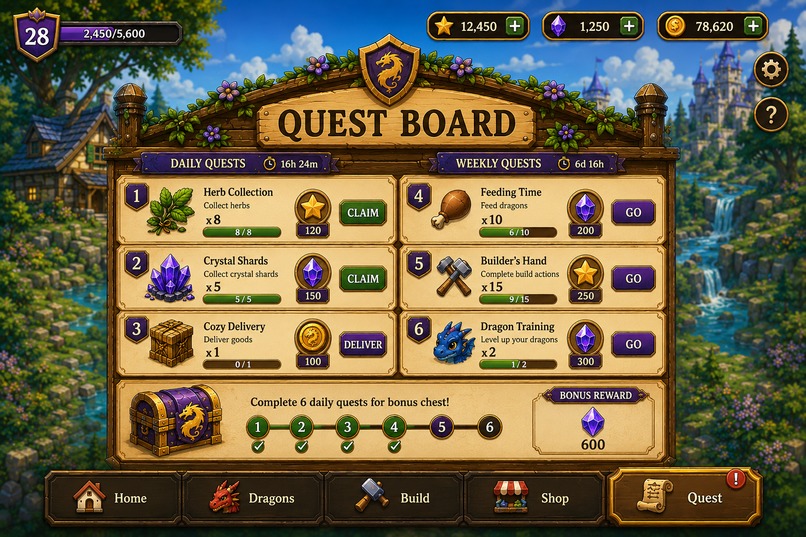
Quest Page
Inspiration
Dragon Sanctuary was inspired by my love for cozy creature collecting games, tycoon style management games, and fantasy worlds that feel warm, magical, and inviting. I wanted to design a game where dragons are not just powerful creatures, but companions that players rescue, raise, care for, and emotionally connect with.
The core inspiration came from the idea of combining the comfort of a cozy ranch game with the wonder of dragon collecting. Instead of focusing on combat, I wanted the main fantasy to be about healing, nurturing, restoring, and building a home for magical creatures.
The guiding phrase for the project became:
Rescue. Raise. Restore.
That line shaped the entire concept. Players rescue rare dragons, raise them through different life stages, and restore a forgotten sanctuary into a beautiful home filled with life.
What it does
Dragon Sanctuary is a mobile simulation and management game where players care for dragons and grow a magical sanctuary.
Players hatch dragon eggs, feed and clean their dragons, collect resources, complete quests, unlock habitats, upgrade sanctuary buildings, and help dragons evolve from baby forms into powerful adult and evolved forms.
The main gameplay loop is:
Care for dragons Collect resources Complete simple quests Upgrade the sanctuary Hatch and evolve more dragons Return later to continue growing the world
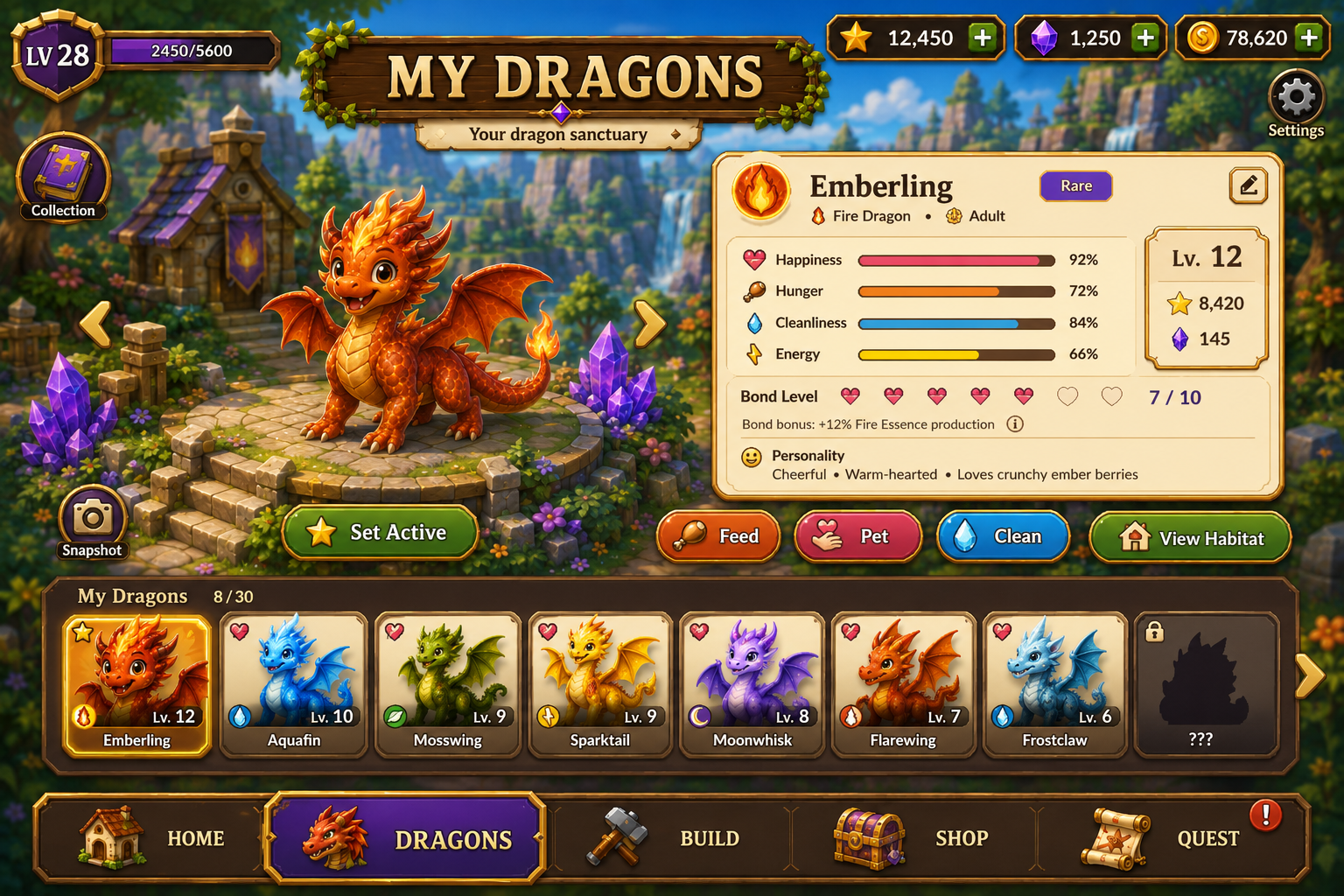
Each dragon has its own element, personality, and visual identity. For example, Emberling is a fire dragon, Aquafin is water-based, Mosswing is nature-themed, Sparktail is electric, and Moonwhisk is celestial/moon themed.
The goal is to create a relaxing game players can check in on throughout the day. Every action should feel rewarding, whether the player is collecting crystals, feeding a dragon, unlocking a new habitat, or watching their sanctuary become more beautiful.
How we built it
This project was built as a full pre production design package for a mobile game concept. I focused on creating the foundation needed to make the game feel production ready before building the full playable version.
The process included designing the core loop, defining the player's journey, planning the sanctuary systems, creating the dragon progression stages, and developing a consistent visual direction.
The visual direction started as a polished fantasy style, but I later shifted it toward a cute 2D storybook illustration style because it felt more charming, more original, and easier to read on mobile portrait mode. Since the game is designed for a 9:16 vertical mobile format, I also focused on making screens feel touch-friendly, readable, and clear.
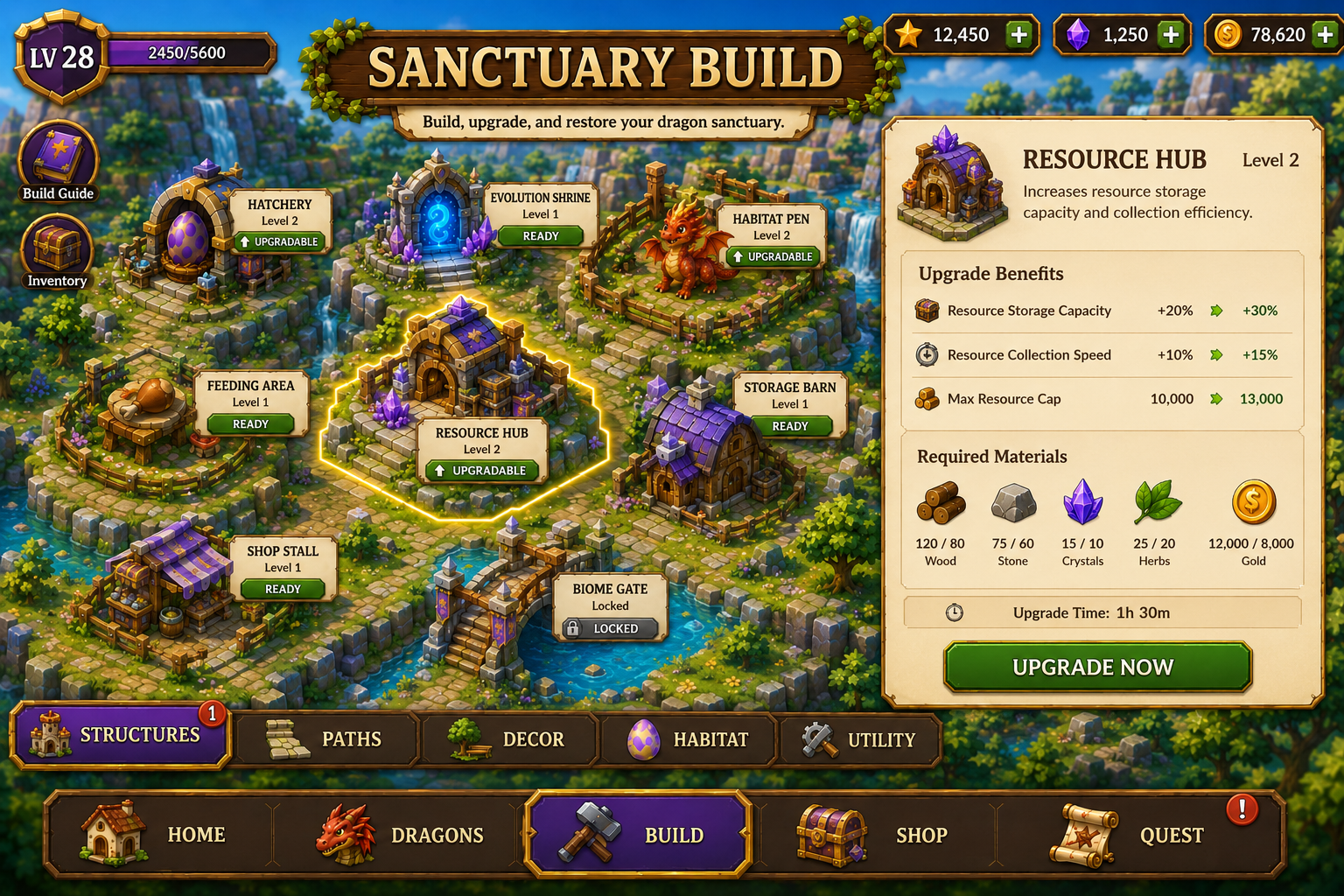
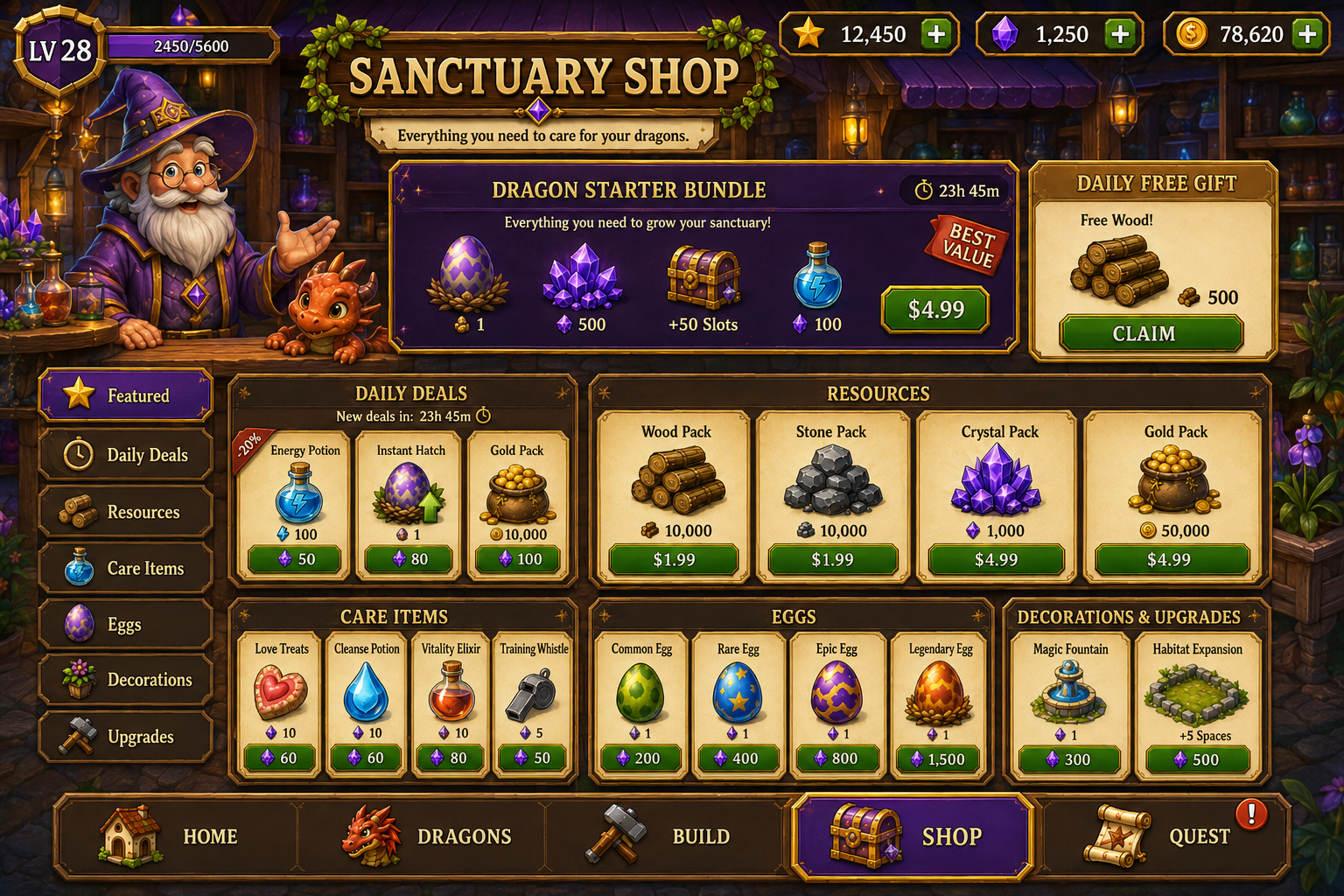
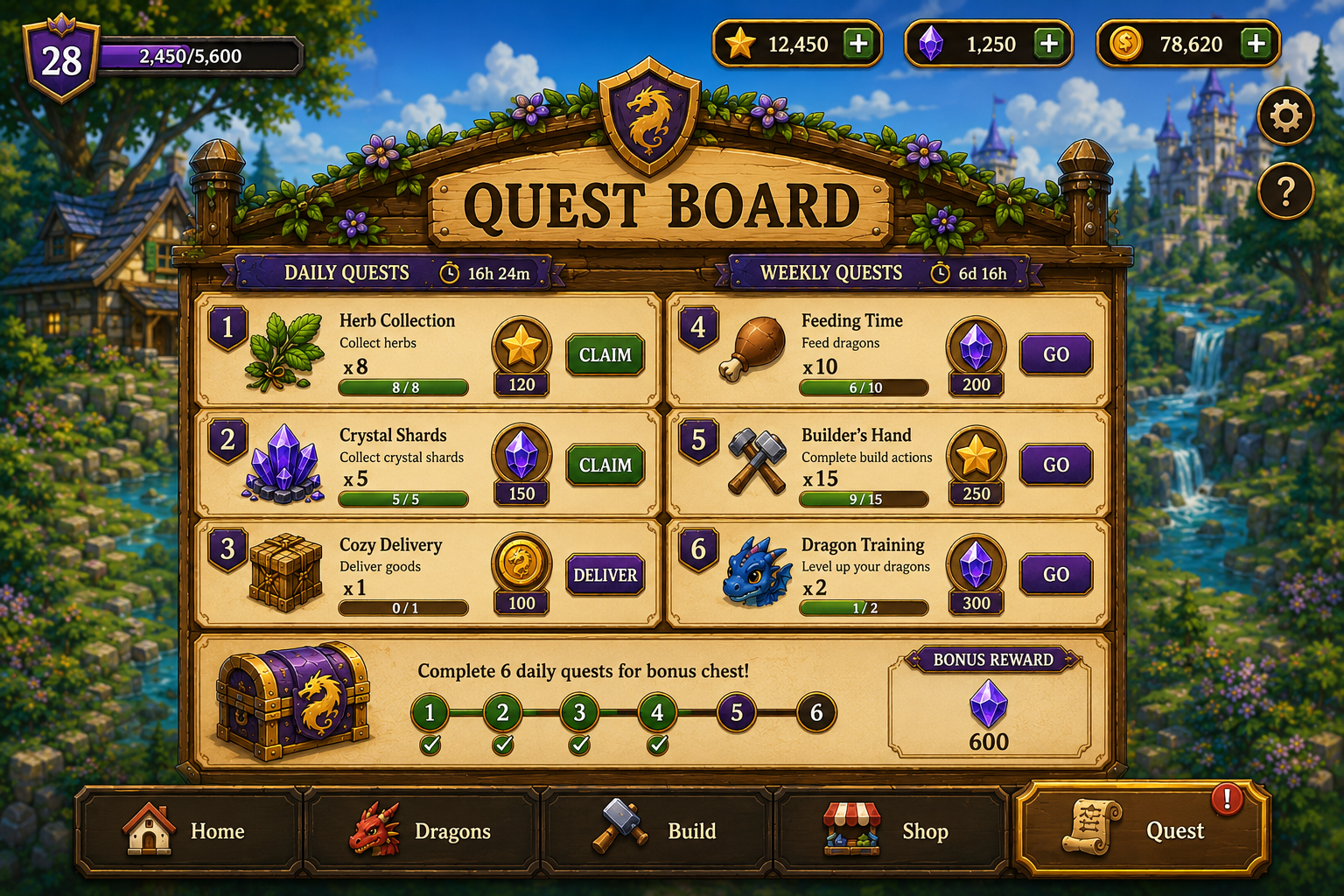
I created concept visuals for key areas such as the main ranch, hatchery, incubation room, feeding area, brushing and cleaning zone, resource collection area, shop, world map, quest board, magical altar, evolution shrine, and elemental biome backgrounds.
For the dragon designs, I created different life stages and poses, including egg forms, baby forms, juvenile forms, adult forms, hero poses, and sleepy poses. This helped show how the dragons could grow over time and how players could form attachments to them.
Challenges we ran into
The biggest challenge was balancing beautiful visuals with mobile readability. Some early images looked impressive, but they leaned too much toward a glossy 3D fantasy style. That was not the right fit for the game. I wanted the game to feel more like a cute illustrated storybook, so I had to refine the style until it felt softer, warmer, and more playable.
Another challenge was UI clarity. Screens like the quest board and resource collection area originally used too much text. I realized that mobile players should understand the screen quickly through icons, symbols, and clear visual buttons. I redesigned those screens to rely more on large images, obvious tap targets, and simple page titles.
The final major challenge was keeping the entire visual package cohesive. The game includes many screens, dragons, props, UI elements, and environments, so I had to make sure they all felt like they belonged to the same magical sanctuary world.
Accomplishments that we're proud of
I am proud of how clearly the project’s identity came together. Dragon Sanctuary now has a strong emotional hook, a clear gameplay loop, and a visual style that feels cozy, magical, and mobile-friendly.
I am especially proud of the dragon designs. Each dragon has its own theme and personality, but they still feel like part of the same game world. Emberling feels fiery and cheerful, Aquafin feels playful and aquatic, Mosswing feels natural and leafy, Sparktail feels energetic and electric, and Moonwhisk feels soft, celestial, and magical.
I am also proud of the mobile UI direction. The world map, quest board, resource collection screen, shop, and care areas were designed to be easy to understand at a glance. The goal was to make each screen feel like something the player would immediately want to tap and explore.
Another accomplishment is the consistency of the sanctuary world. The repeated use of warm wood, purple-and-gold banners, crystals, rounded UI panels, flowers, lanterns, and magical symbols helped create a strong visual language for the game.
What we learned
This project taught me that a good mobile game concept needs more than a fun idea. It needs clear systems, readable screens, strong visual communication, and a reason for players to keep coming back.
I learned that UI should not fight the art. The art should support the player’s decisions. If the player cannot tell what a button does, what they need to collect, or where they should go next, then the screen is not doing its job.
I also learned that simplicity can make a game stronger. The more the design leaned into clear icons, soft shapes, readable layouts, and emotional dragon care, the better the game became.
Most importantly, I learned that the fantasy of the game should be visible in every system. Feeding a dragon, collecting a resource, upgrading a building, or unlocking a new area should all support the same feeling: the player is restoring a magical home for dragons.
What's next for Dragon Sanctuary
The next step for Dragon Sanctuary would be turning the pre-production design into a playable MVP.
The first version would focus on the core loop:
Hatch one starter dragon Feed, clean, and care for the dragon Collect basic resources Complete simple quests Upgrade one sanctuary area Unlock a second dragon Save player progress
After the core loop is tested, the next features would include more dragon species, evolution stages, additional habitats, daily rewards, achievements, resource upgrades, shop items, and more sanctuary restoration goals.
Long-term, I would like Dragon Sanctuary to become a relaxing mobile-first game where players feel emotionally connected to their dragons and proud of the sanctuary they build over time.
The goal is simple: create a cozy fantasy world players want to return to because it feels alive, comforting, and worth caring for.
Built With
- adobe
- canva
- claude
- word


Log in or sign up for Devpost to join the conversation.