Inspiration
Riding a dragon is one of gaming’s oldest fantasies, and VR should be where it finally feels real. Most dragon experiences put you on rails or hand you a thumbstick, which breaks the illusion the moment you touch it. We wanted you to grab the reins with your own hands and feel like you’re guiding a living creature.
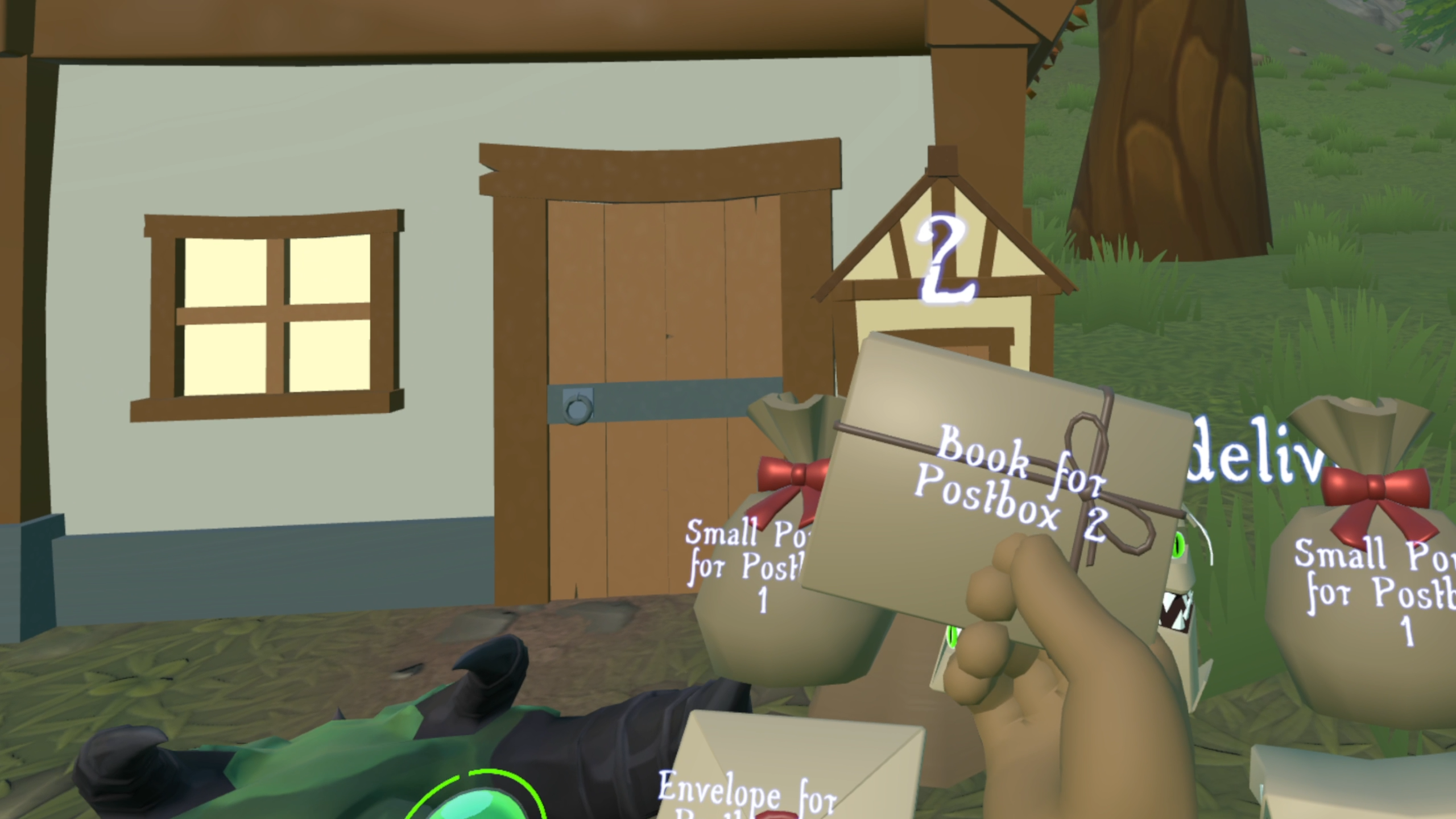
Far Far West was a big influence: a simple loop, a warm tone, and always a reason to head back out. We wondered what that would feel like with wings and a companion that grows alongside you. Delivery missions gave us the structure. Every flight has a purpose and a route, plus a natural excuse to explore, fight, and collect along the way.
Dragon riding also turned out to be a perfect fit for seated, hands-first VR. You’re in a saddle, so you’re meant to sit, and all the action happens within arm’s reach.
How we built it
Dragon Drop is built in Unity 6.3 with the Meta XR SDK v207, using the Interaction SDK for hand tracking, grabbables, and pose detection.
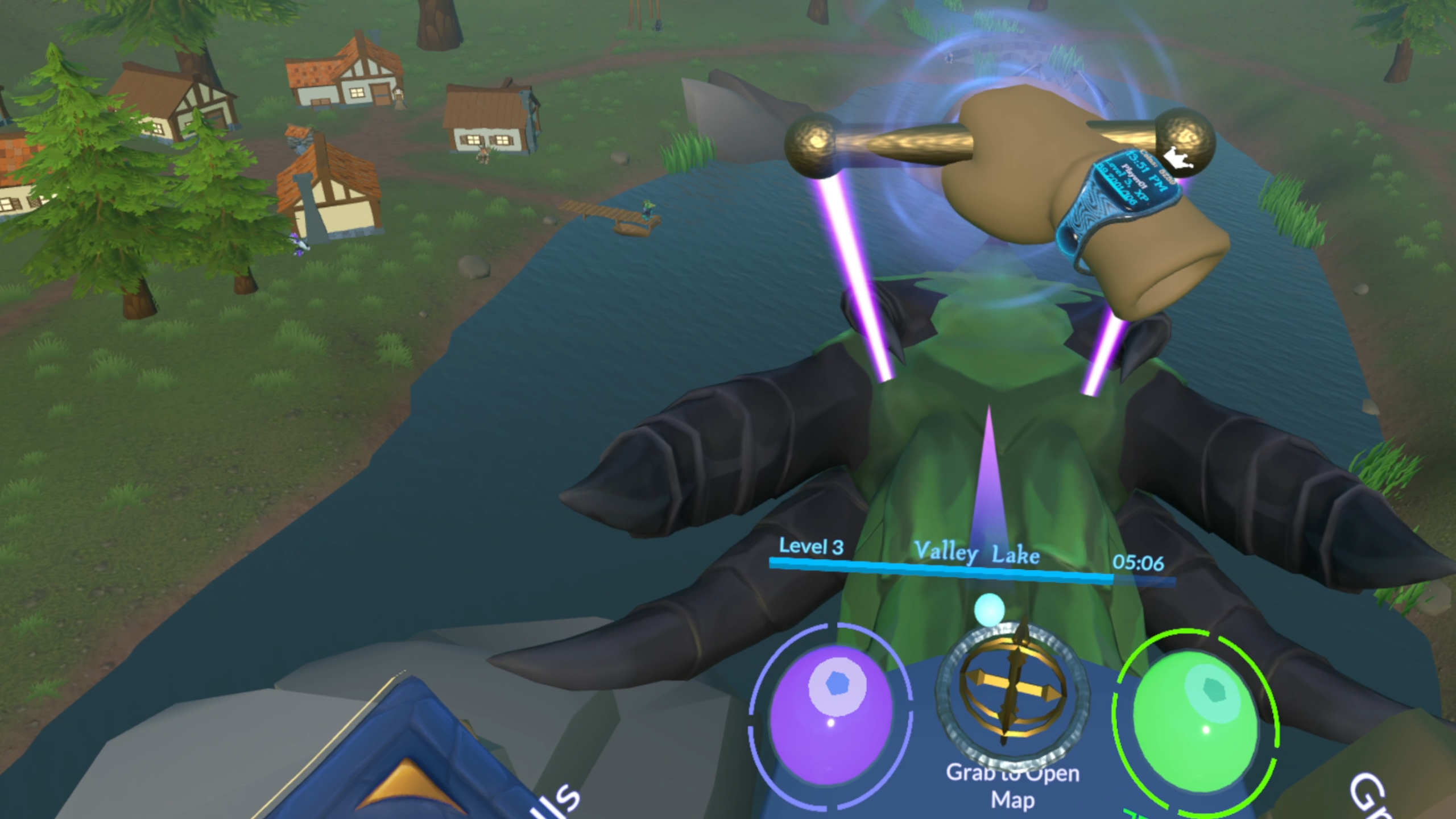
The reins are the heart of the game. Grab the reins with one hand, then pull up or push down to climb and dive, push forward to speed up, and tilt your hand to steer. Every input is smoothed and tuned so a relaxed hand flies straight and small movements feel responsive without being twitchy.
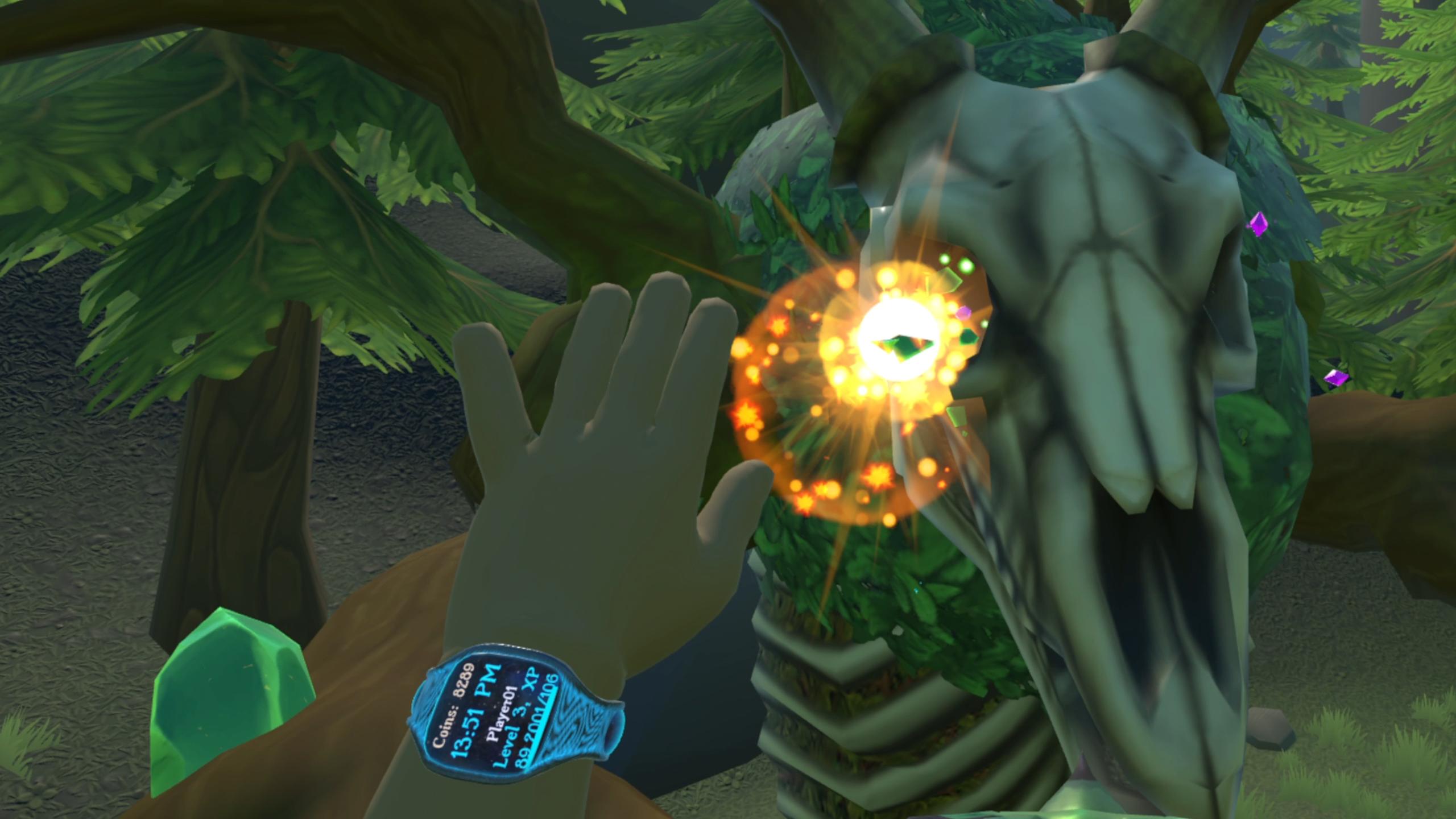
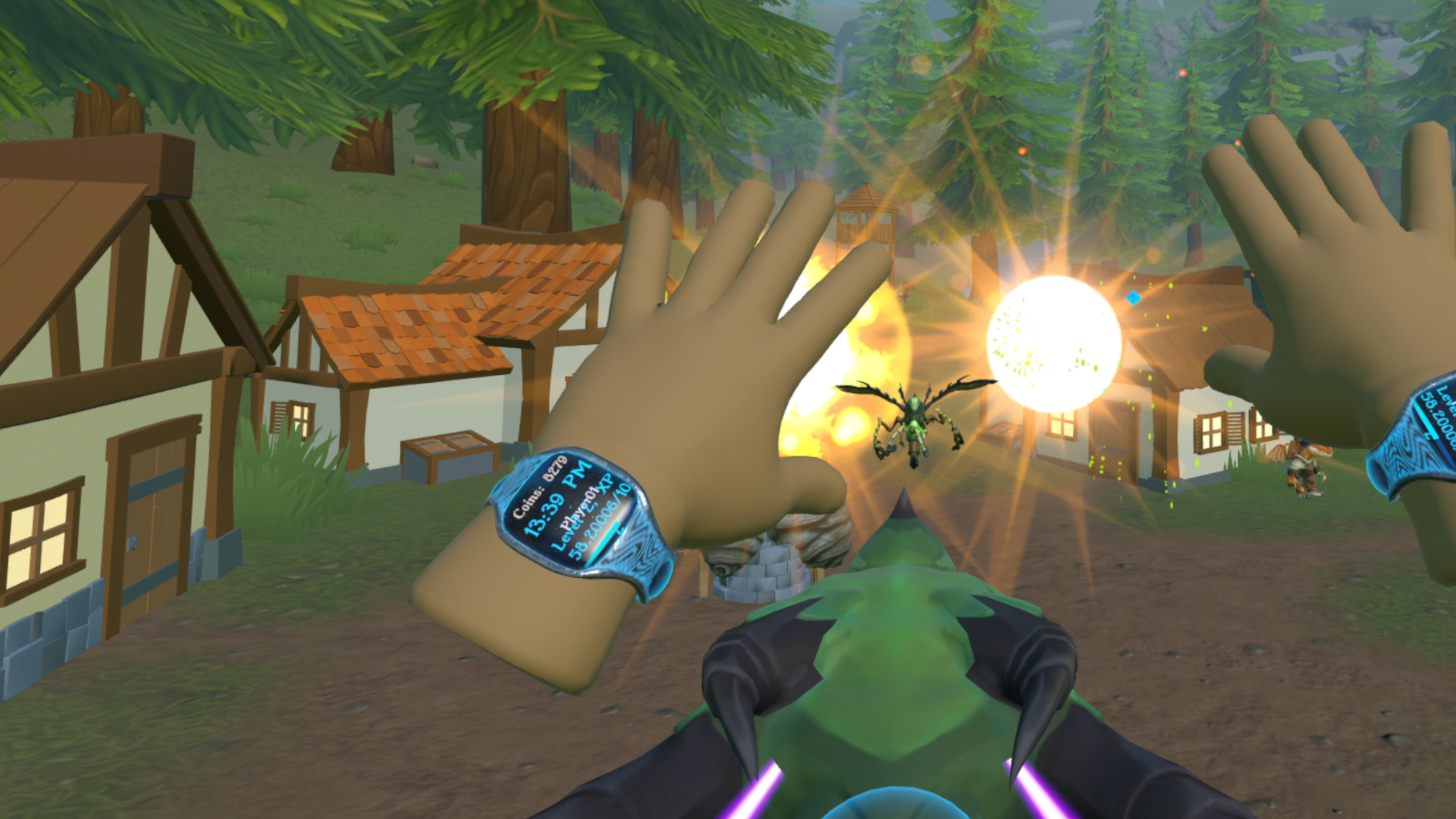
Combat is split between rider and dragon. With one hand on the reins, your dragon automatically breathes fire at the closest enemy roughly ahead of it, while your free hand casts spells using hand gestures.
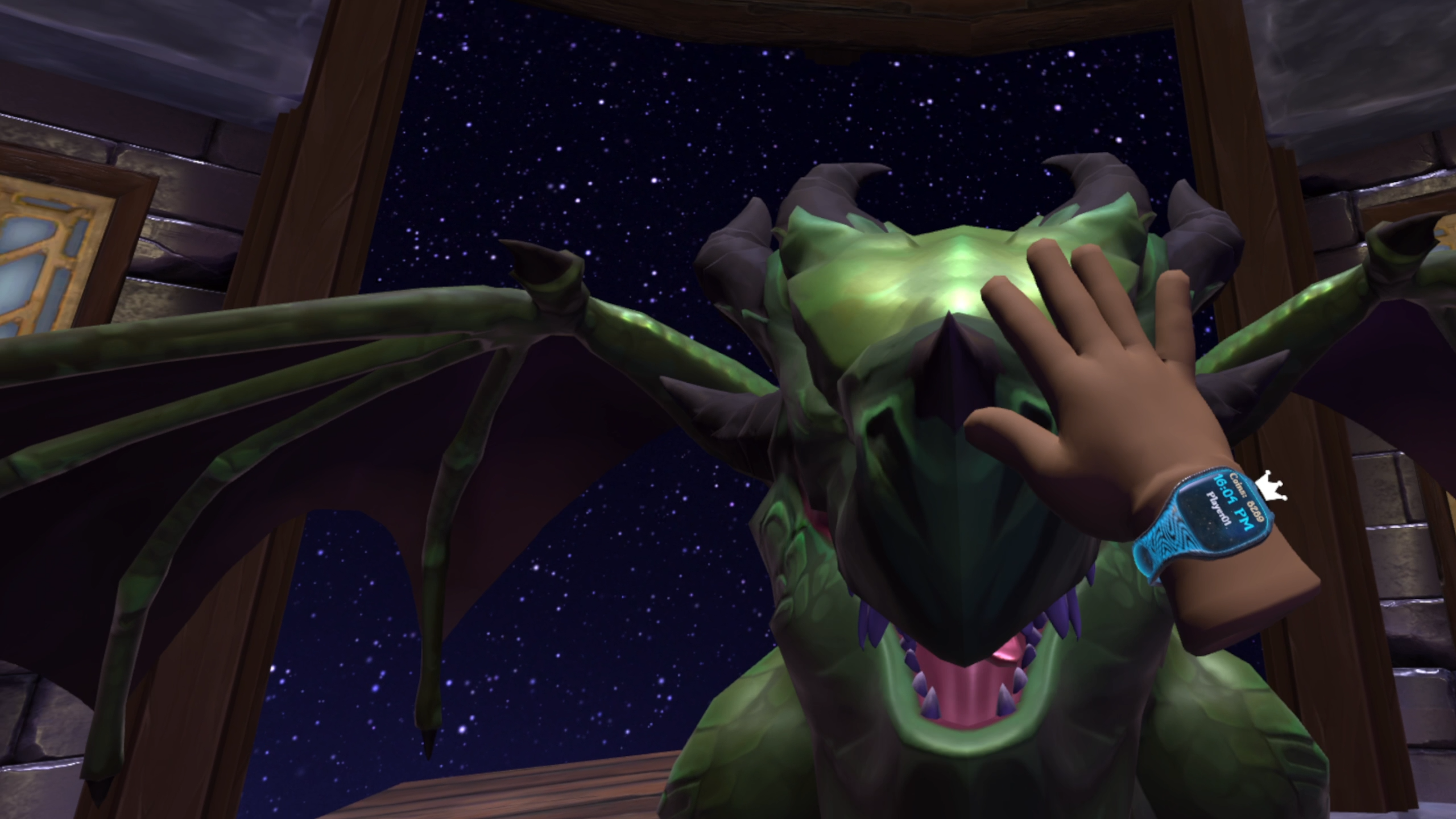
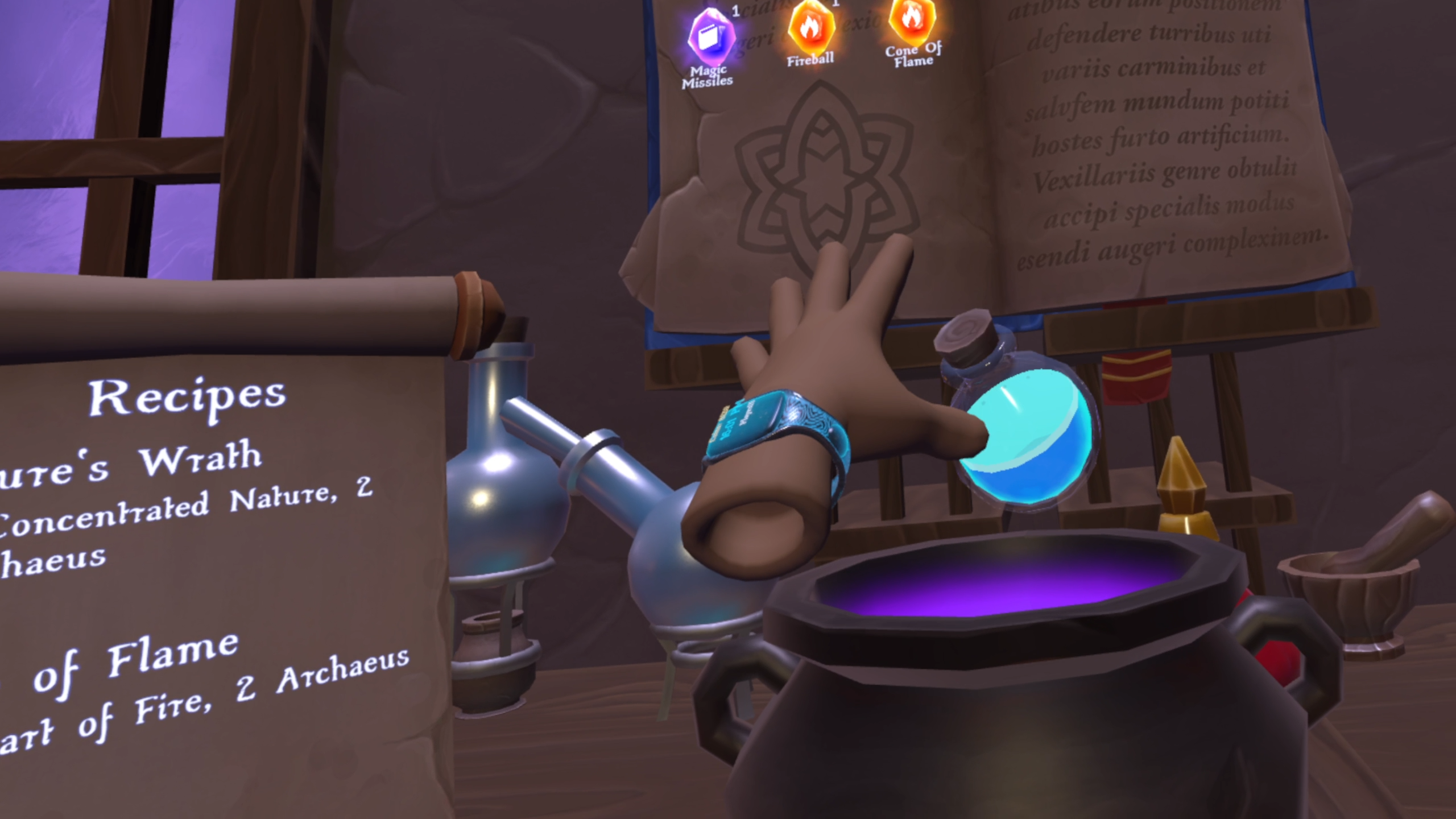
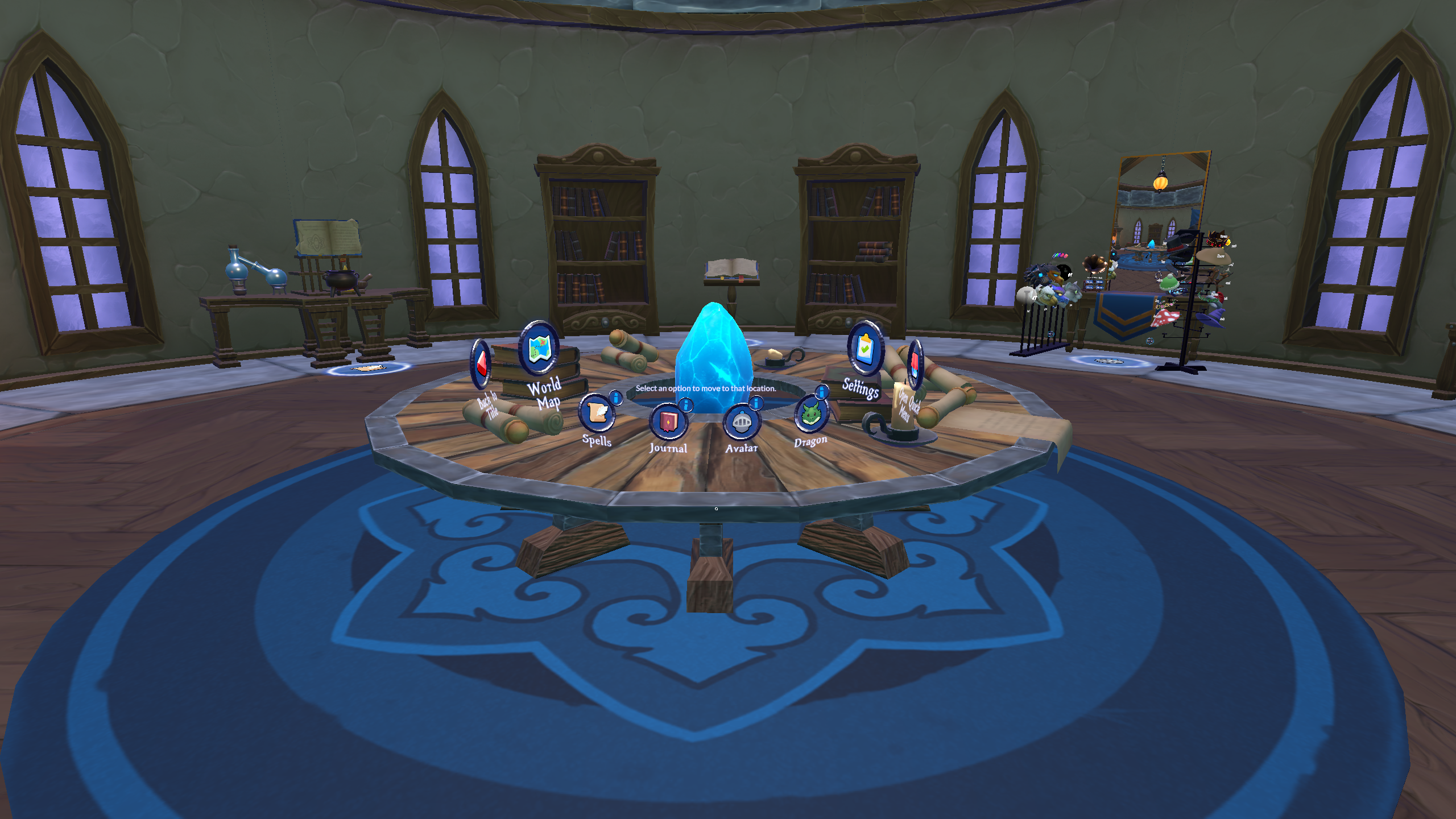
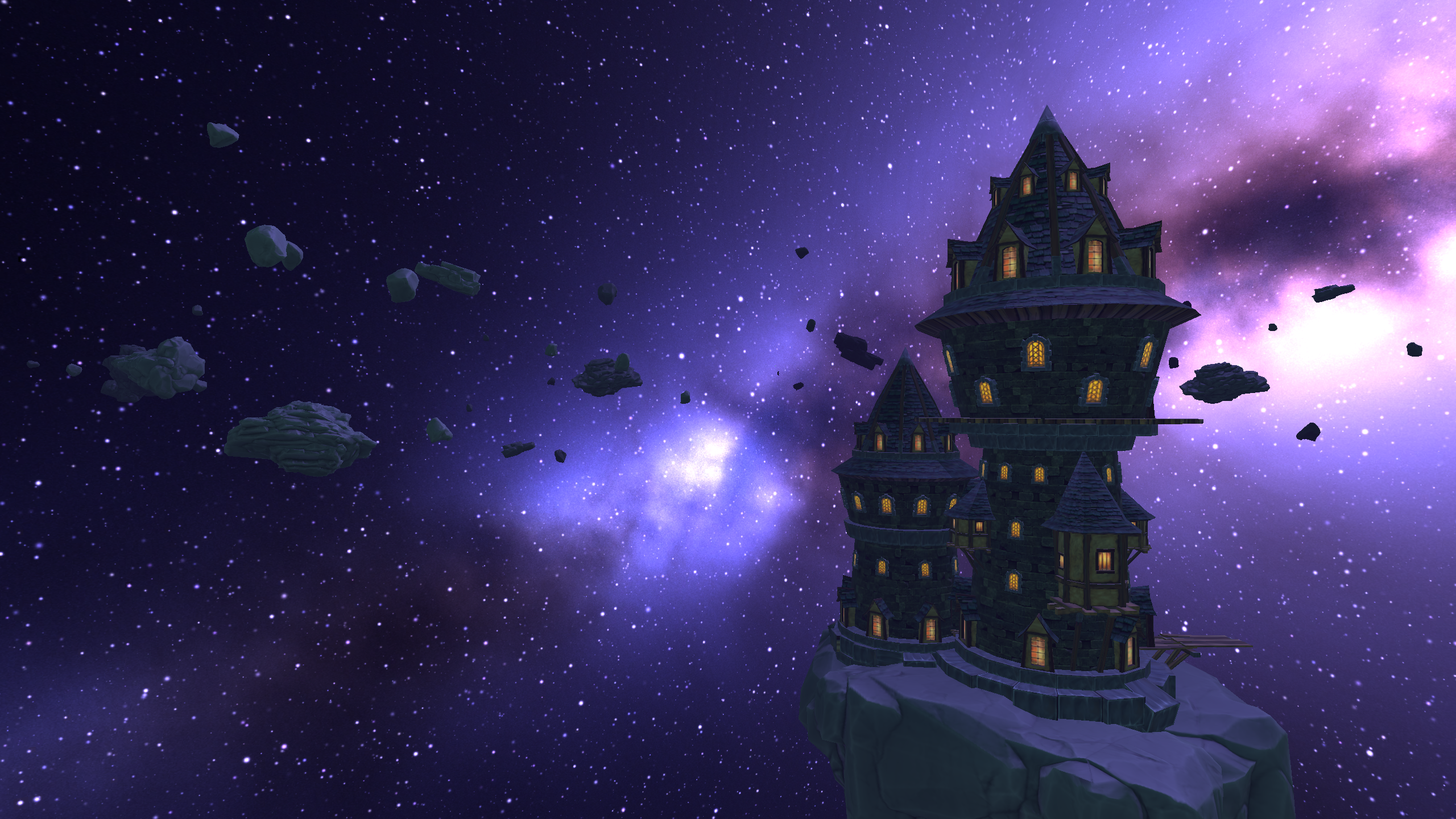
The Mage Tower is your home base. Materials from each island are turned into components in the workshop and used to upgrade spells and your dragon. Spells, recipes, and dragon stats are all data driven, so we could tune balance without touching code.
Challenges
Hand tracking at speed - Leaning into a dive can push your hands out of tracking range or cause them to overlap. We added grab tolerance so a brief tracking dropout doesn’t drop the reins.
Comfort - Flying is a quick way to make someone sick in VR. The dragon banks visually while the player’s view stays close to level, a subtle vignette softens sharp turns, and the dragon’s head stays in view as a stable reference point.
Performance - Open landscapes, particles, spells, and enemies all compete for a standalone GPU budget. We use all the standard tricks, LODs, minimal lighting, material control, plus additional Meta optimizations, like foveated rendering.
What we learned
Input design is game design. Once the reins felt good, everything else fell into place. Hands want forgiveness. Players prefer a system that’s a little generous over one that’s precise but drops their grip.
Playtest early with fresh hands. We’ve been in multiple playtests, and one surprising aspect we found was the preference for controllers. The game remains hand tracking first, and always will be, but for accessibility and comfort, we’ve also included controllers as an option.
What’s next
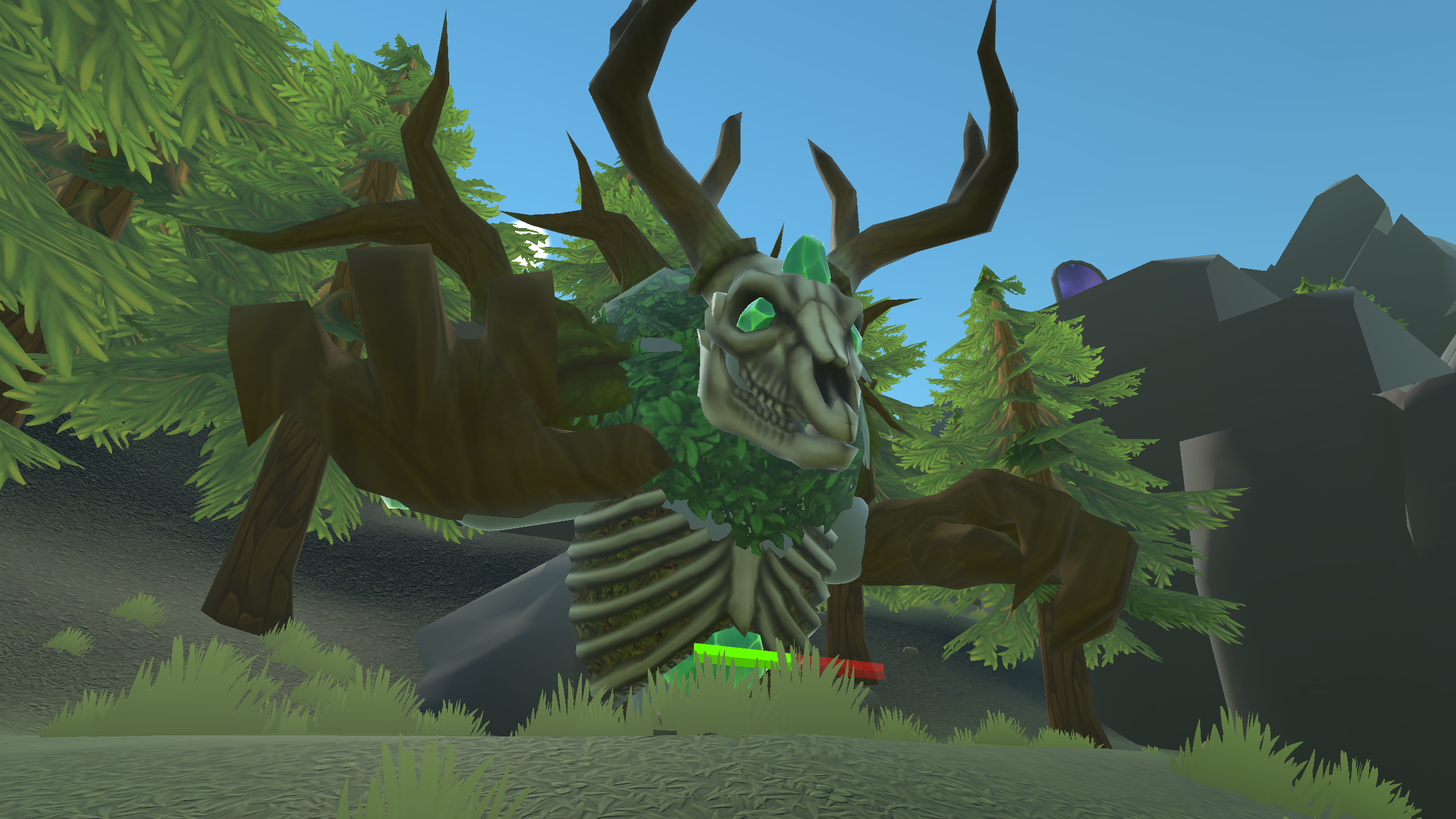
More islands, more elemental dragons, boss fights, and a deeper Dragon Bond system that makes your dragon feel more and more like yours over time. Co-op is also on the roadmap, designed for squadrons of up to four riders, where friends with different elemental dragons plan loadouts together, split up to cover a route, and team up against bosses.
The Living World
We’re developing a living game world where player actions become part of its history. Our work connects character memory, personality, and behavior with a broader vision of natural dialogue and movement, dynamic environments, interactive objects, and audio that reflects what has happened.
The first step is a character who remembers a meaningful player event, and an environment that carries its consequences forward. Characters interpret events through their own values and what they witnessed or heard. Those memories shape future conversations, trust, behavior, and available interactions. The game defines the facts and consequences, while AI gives each character a natural, individual response.
Imagine returning to a village after your dragon damaged someone’s home. The owner remembers the loss. A witness may defend your intentions. Helping repair the damage could gradually rebuild trust, while the environment reflects that progress. The next encounter develops from the history you created.
That creates replayability through meaningful variation. Different choices, relationships, and approaches can lead to different experiences within the same setting. Players have reasons to return to see how relationships evolve and consequences unfold, and reasons to start again to explore another path. Familiar characters and places gain new possibilities because the world carries the player’s choices forward.


