-
-
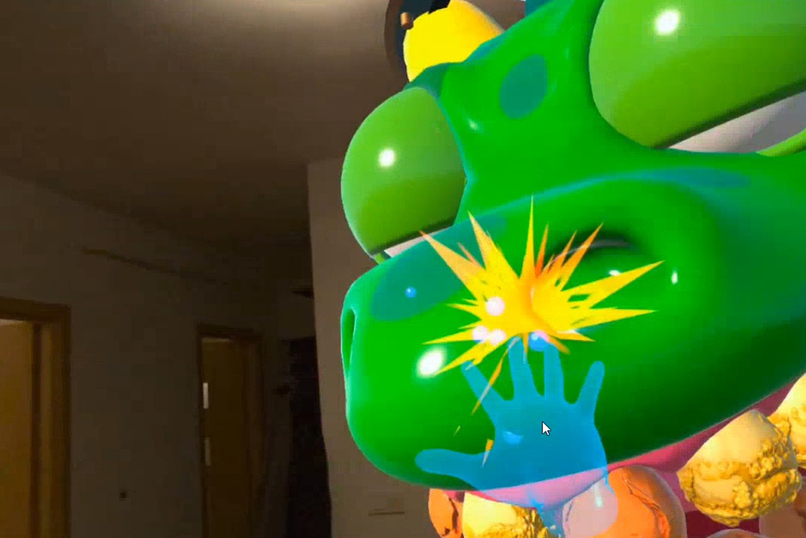
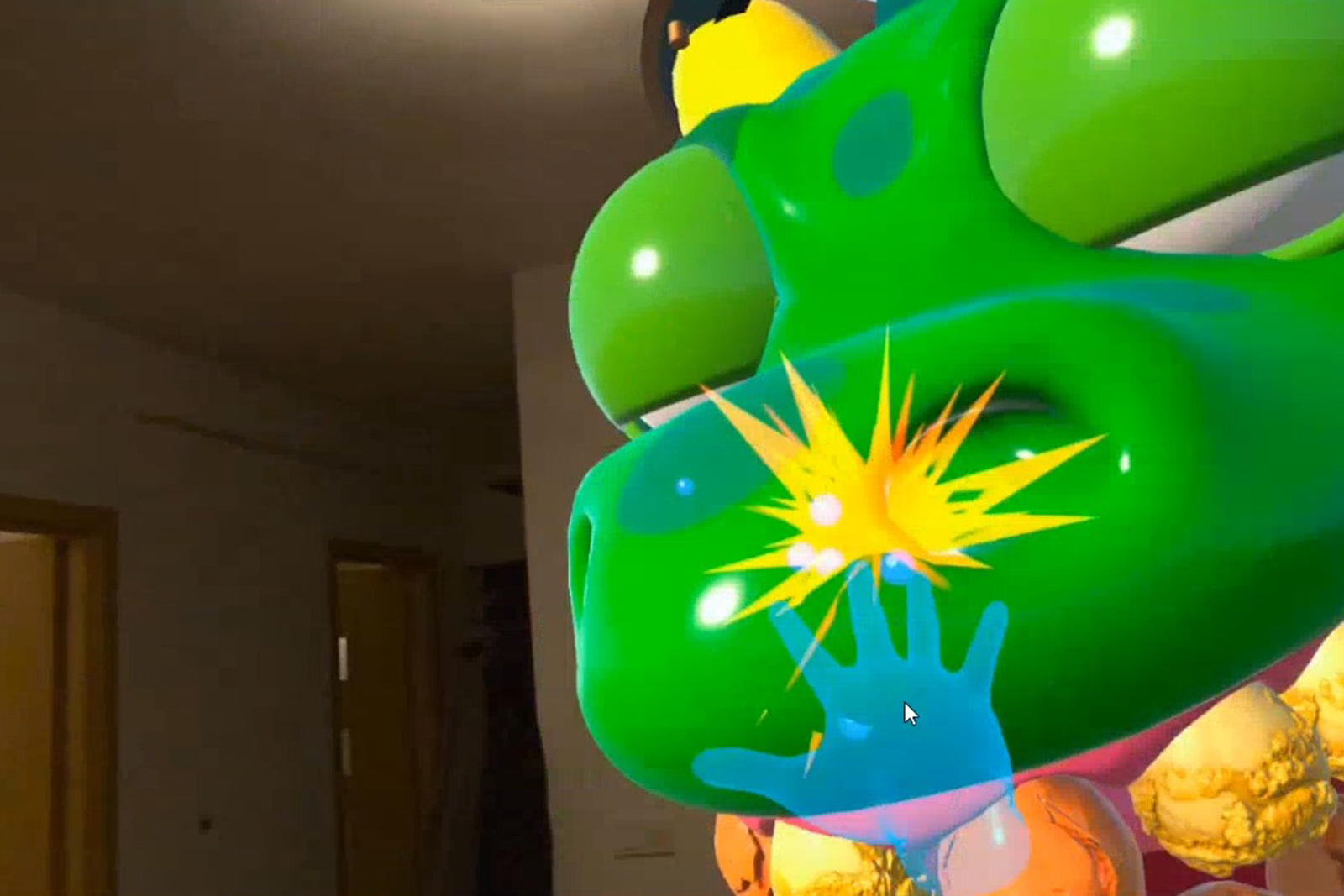
Slap to awake.
-
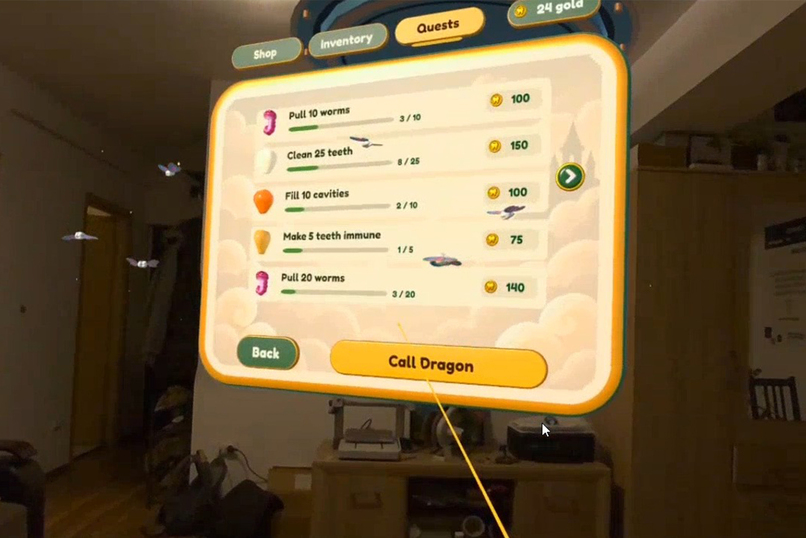
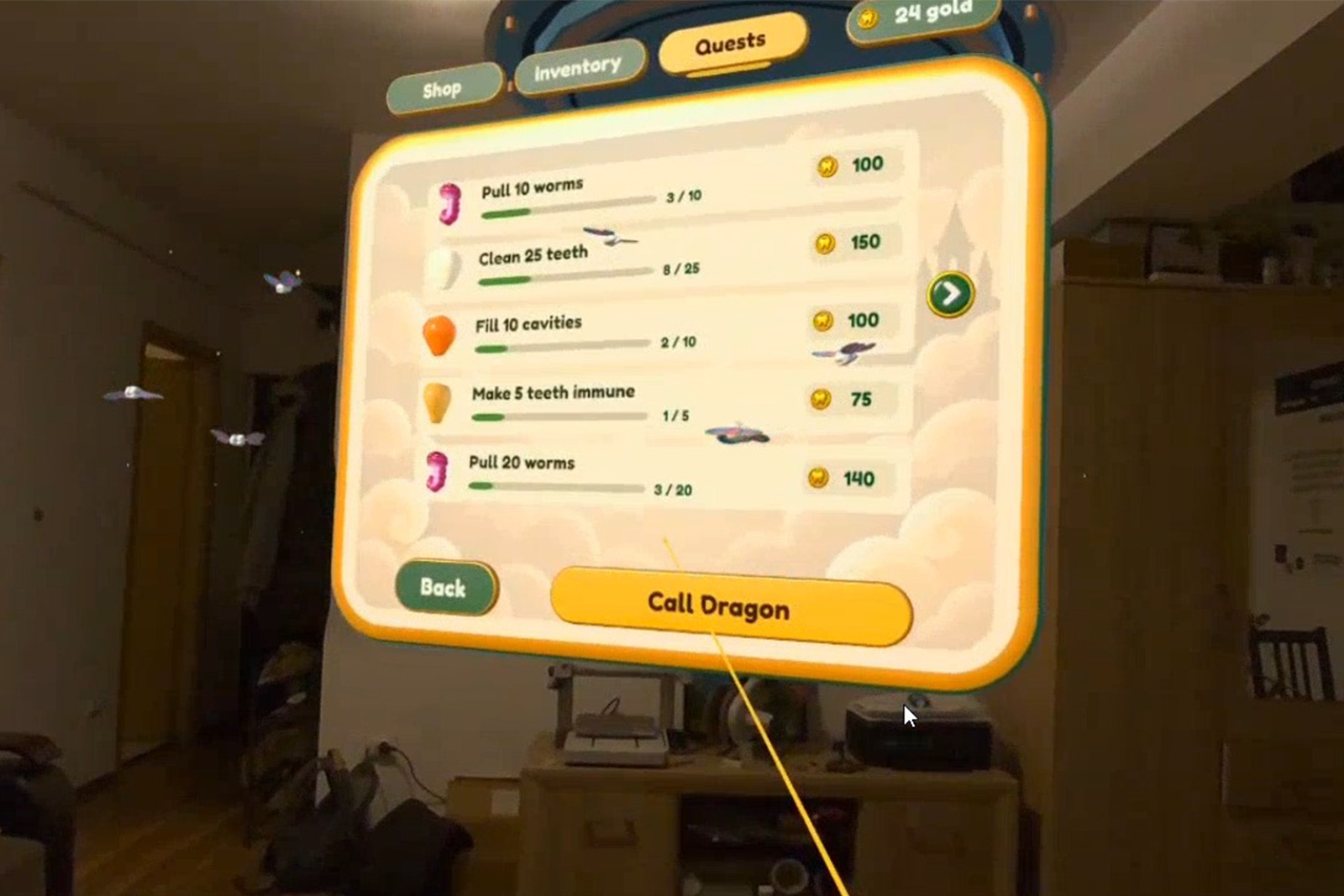
Solve quests.
-
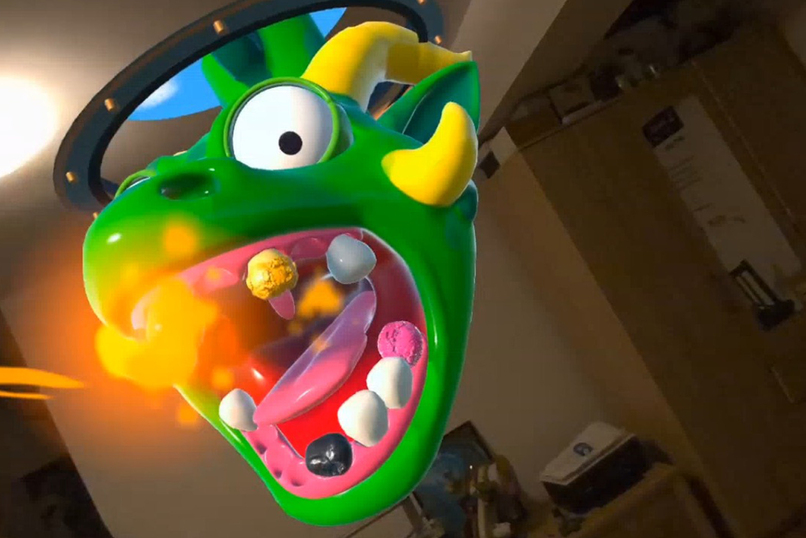
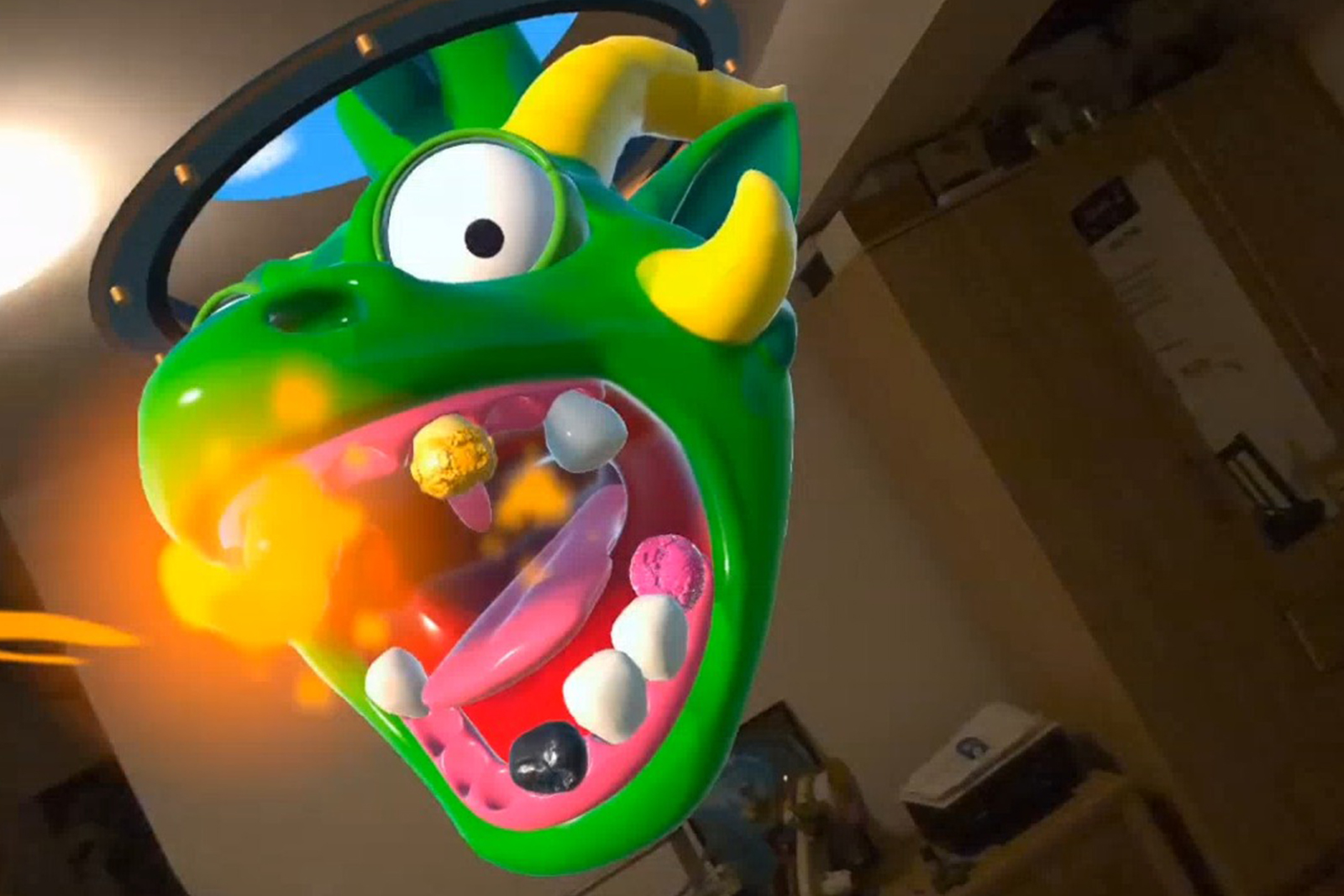
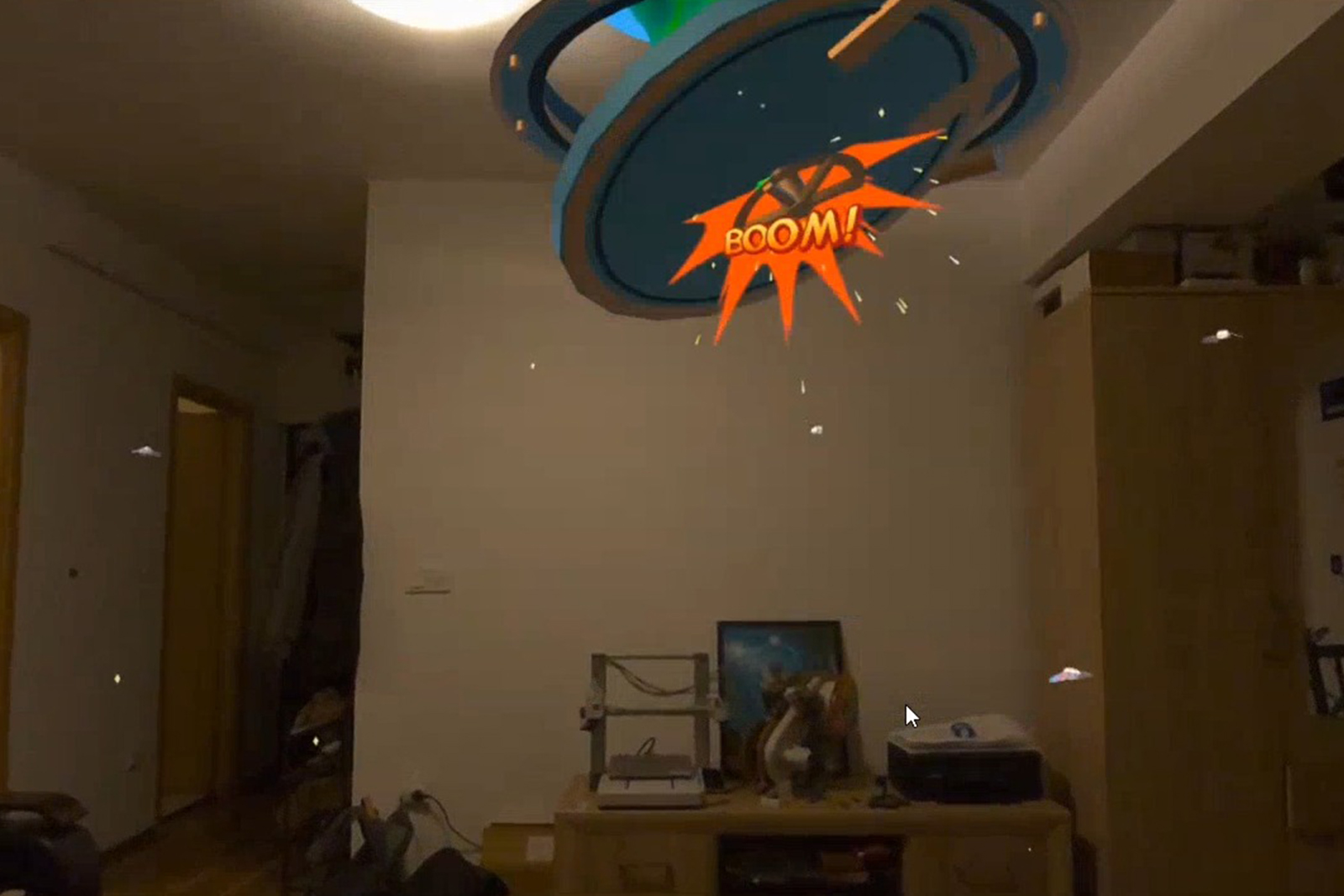
Fireball!
-
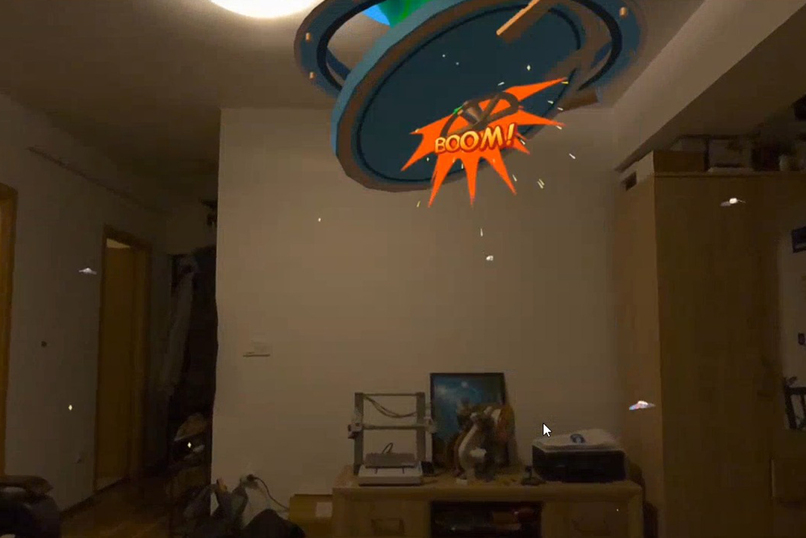
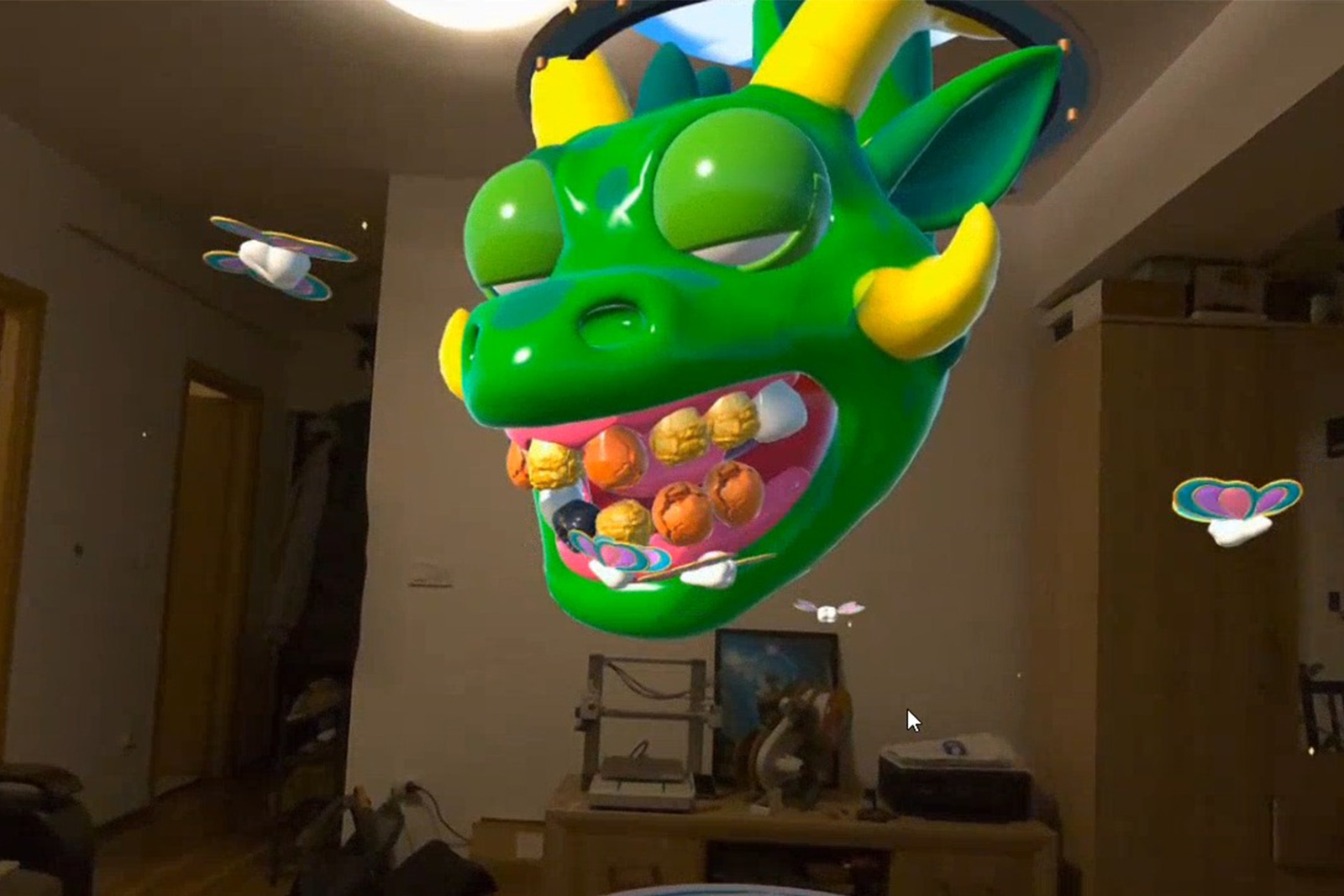
Enter the Dragon
-
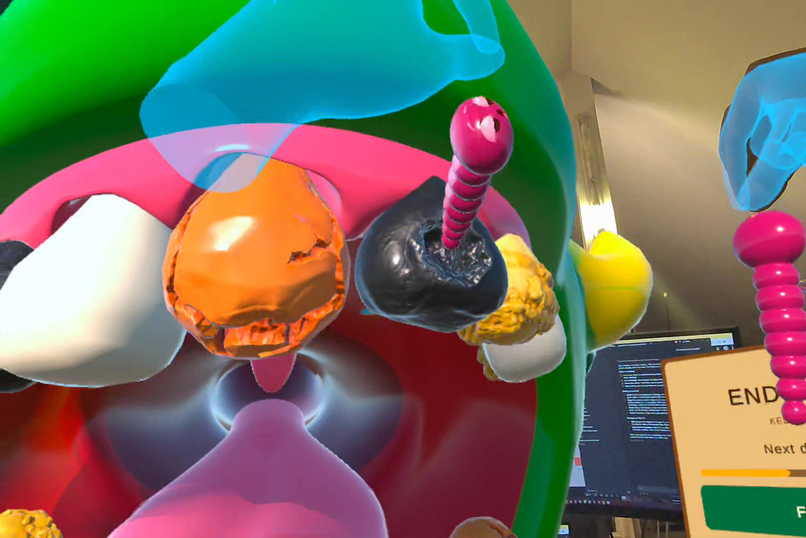
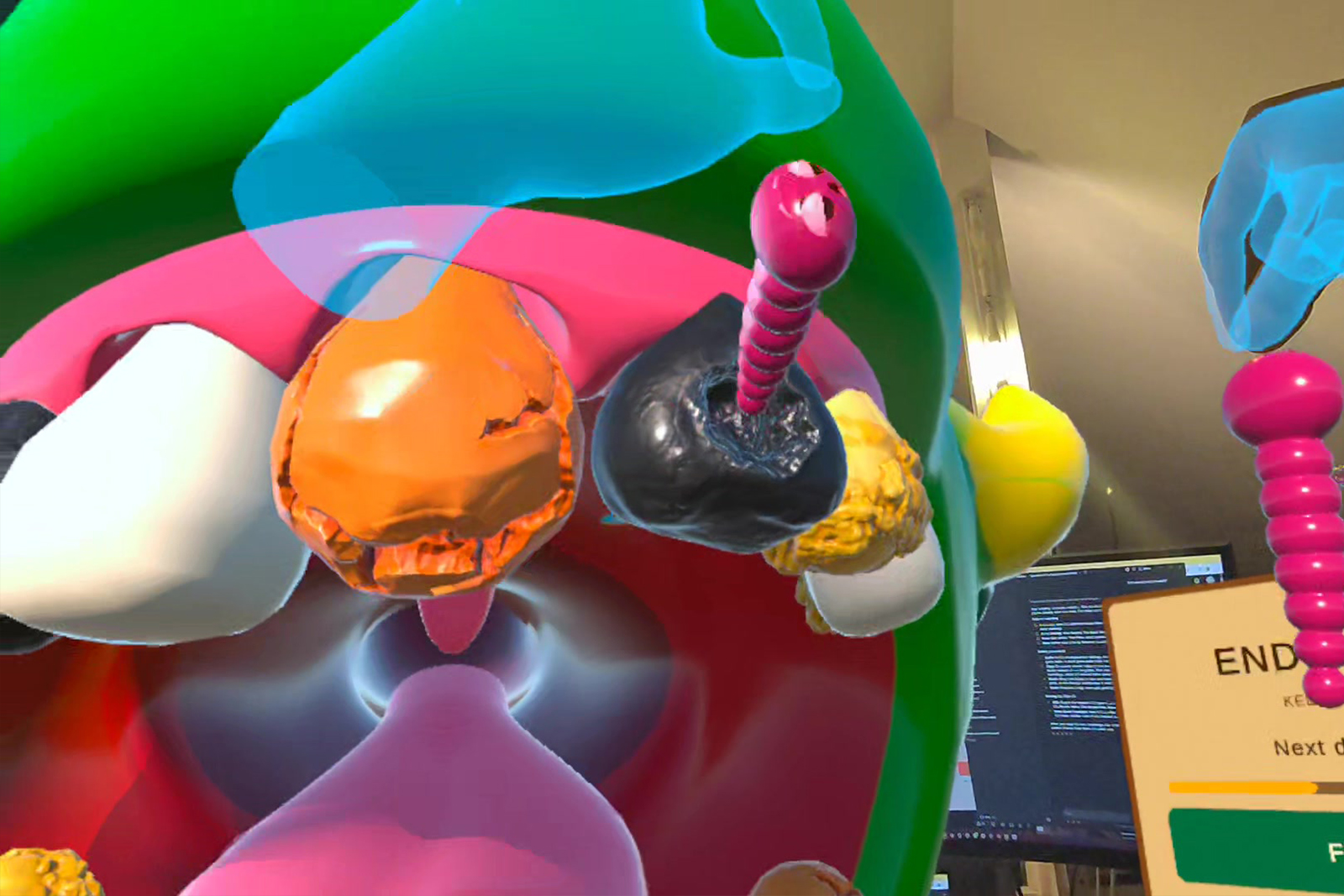
Scoop out worms.
-
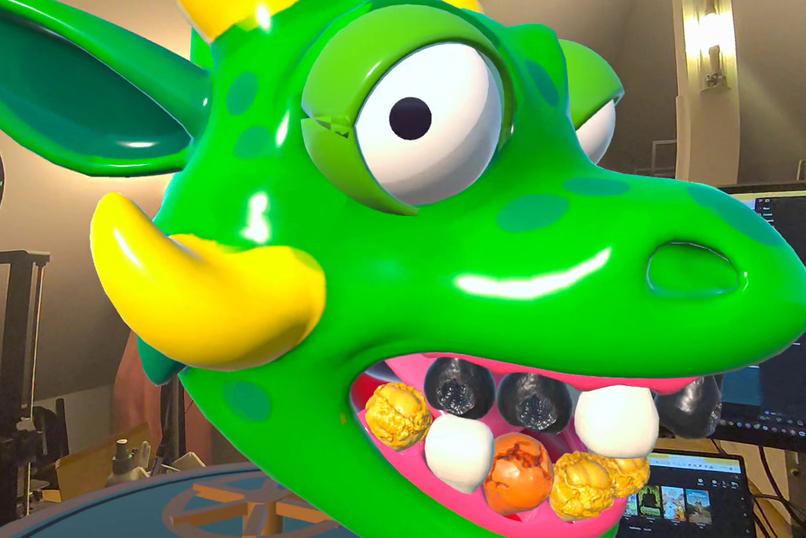
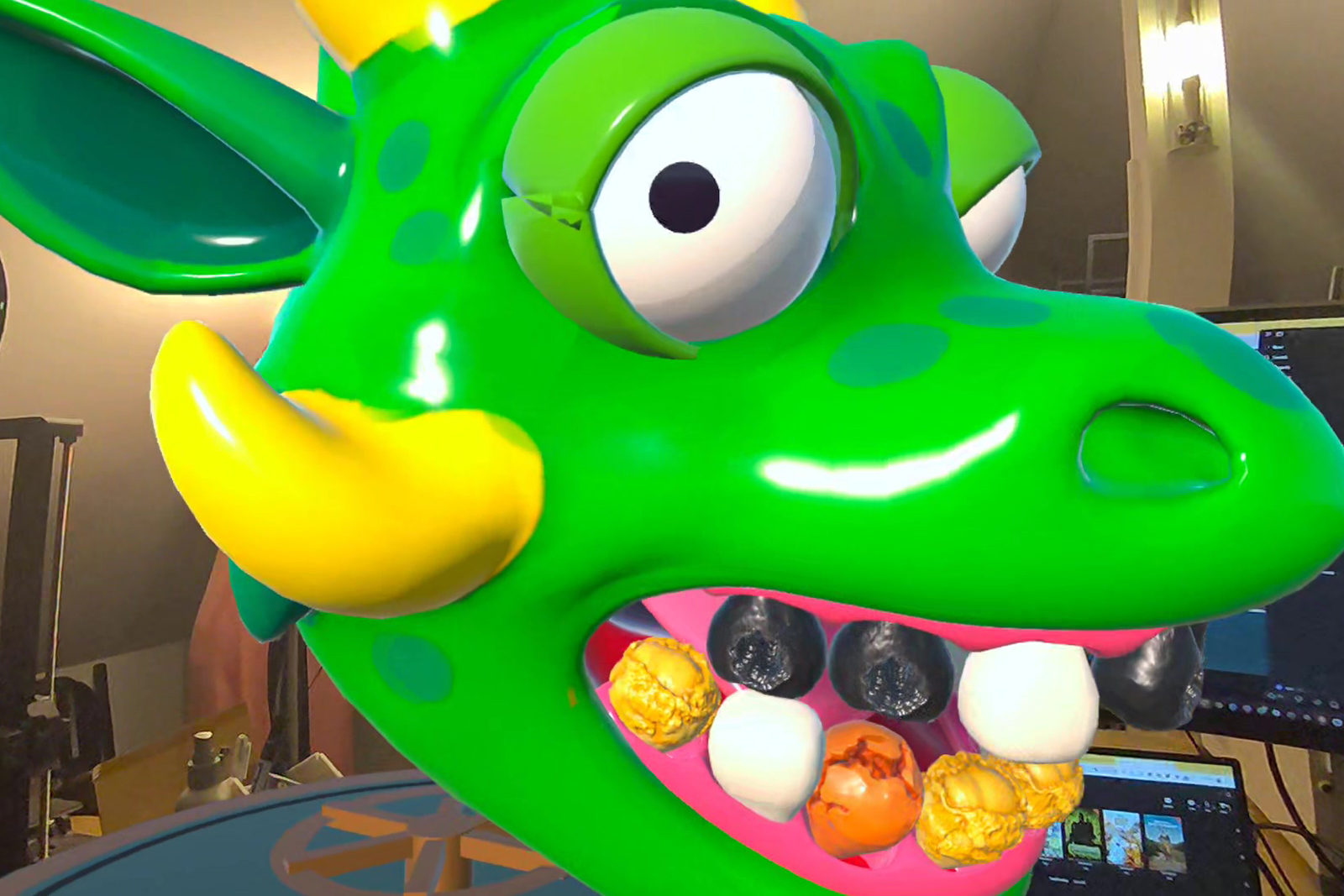
Pretty dragon!
-
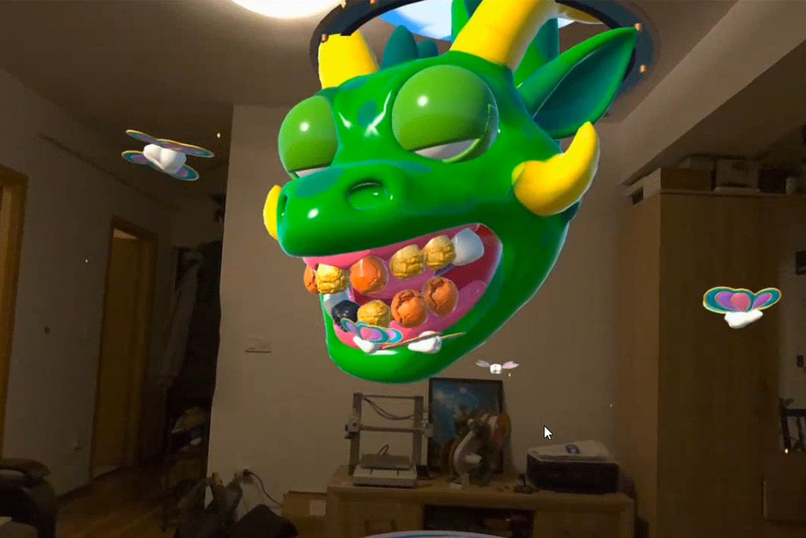
Sleeping dragon.
-
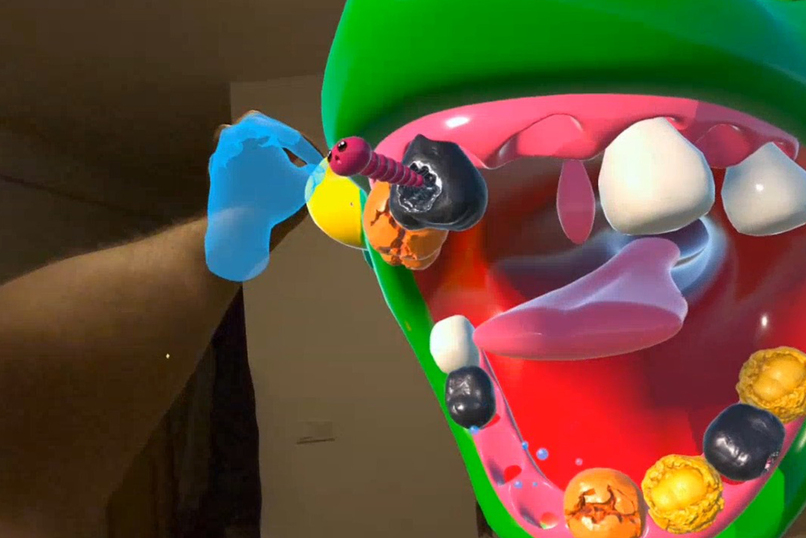
Scoop out worms.
-
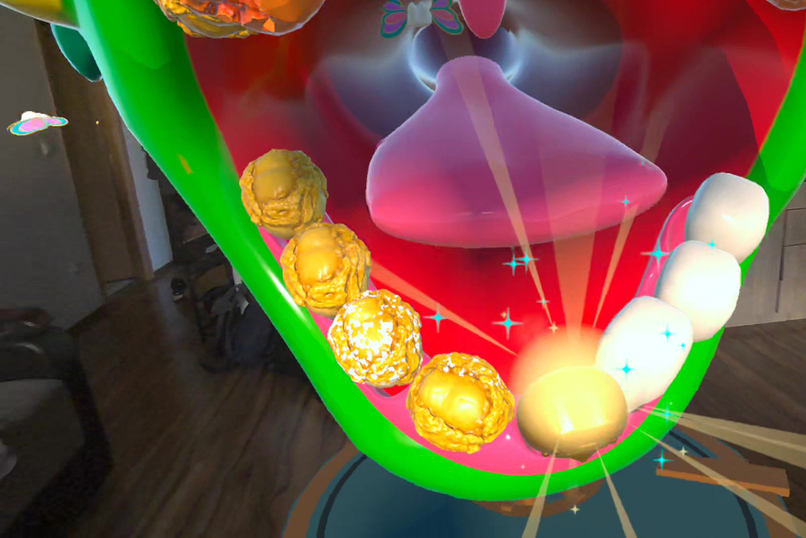
Protect teeth.
-
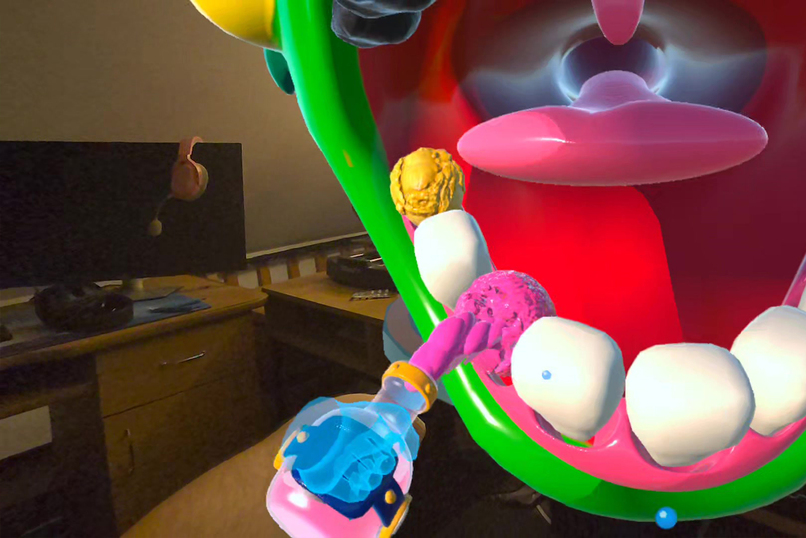
Scoop out worms.
-
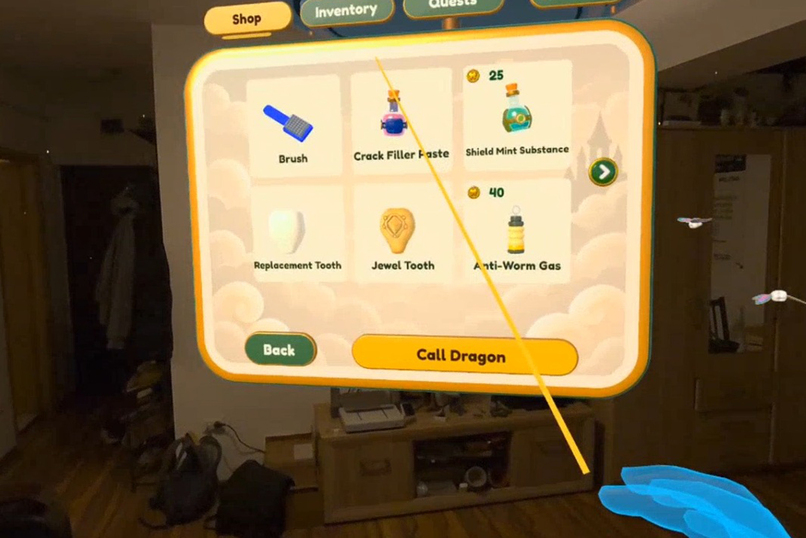
Buy items.
-
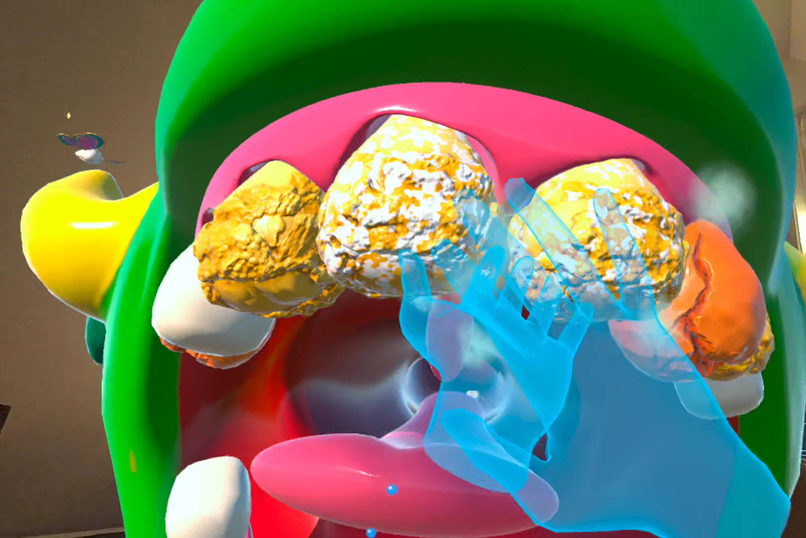
Scrub the teeth!
-
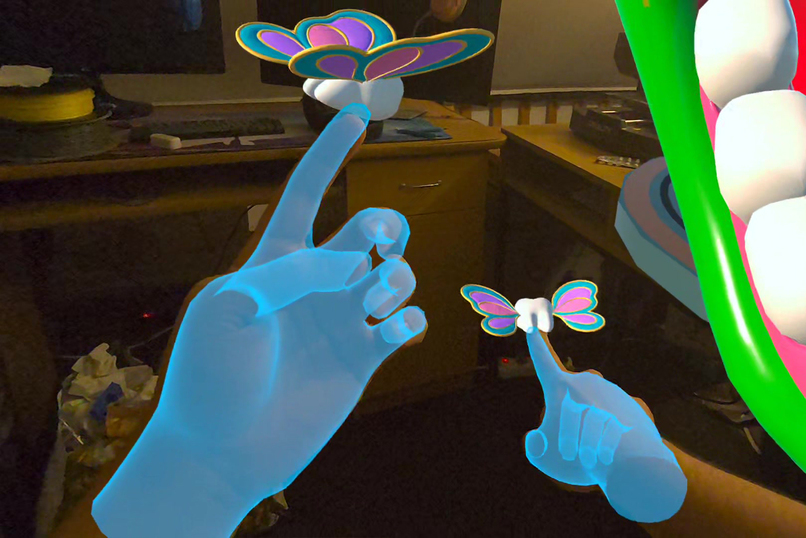
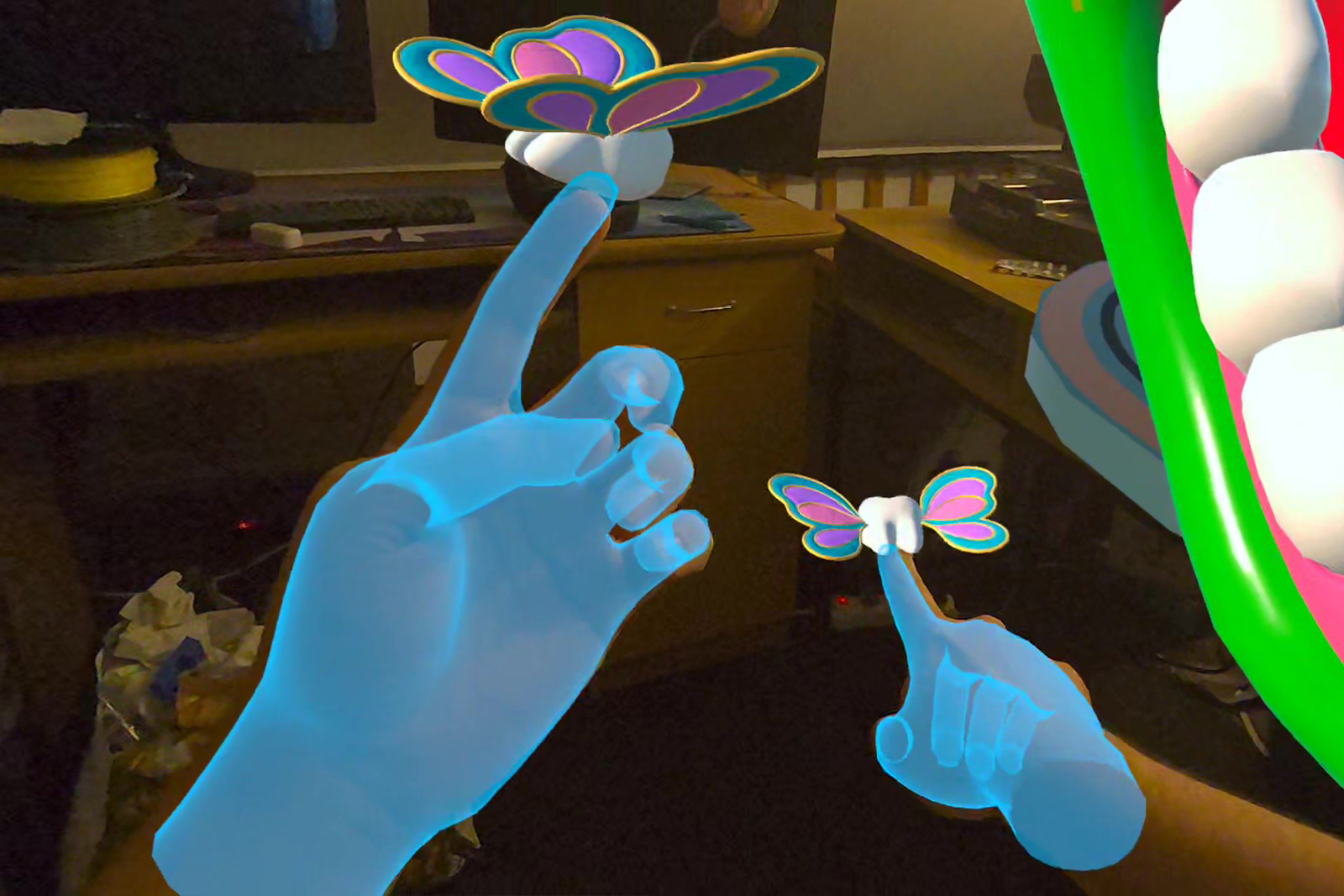
Play with butterflies.

Inspiration
We started with a simple question: What can you reliably and comfortably do with your hands in mixed reality?
We wanted to build an experience that feels natural when played sitting down, with everything within arm's reach. Our goal was to create an open-ended interaction system that could keep growing without making the game more complicated.
The solution was a hand-based inventory: players carry six tools at all times, three on each hand. This allows us to introduce new tools and mechanics without changing how the game feels to play. Many tools also share familiar gestures, making new interactions easy to pick up.
The theme came later, after several iterations.
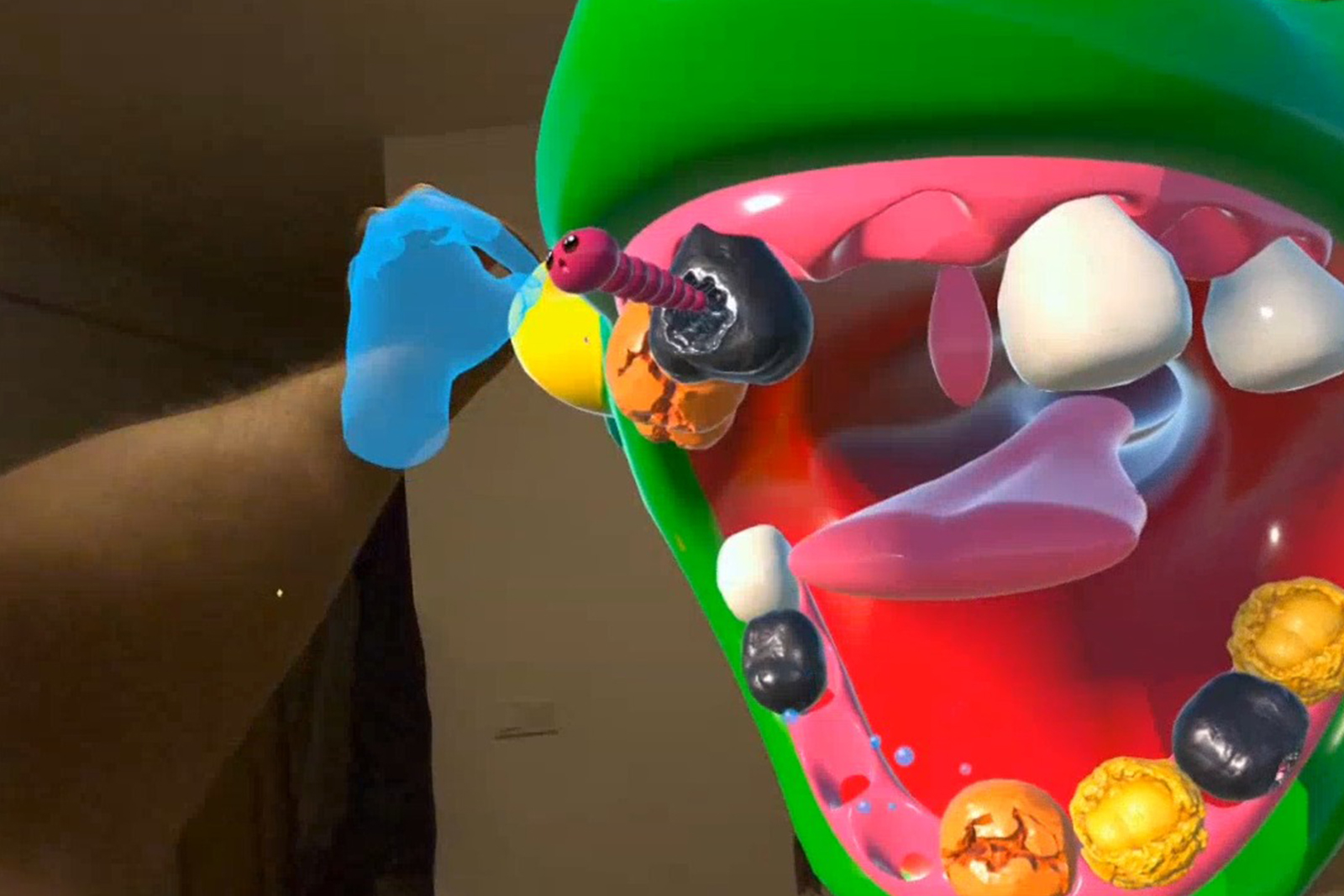
We realized that a dragon's enormous teeth would be the perfect playground for these interactions. Players could brush, grab, pull, repair, and experiment, all while a giant dragon sticks its head into their real room through passthrough.
Our original concept was more ambitious: a dragon that would return from battles with damaged teeth, relying on the player to patch it up before its next adventure.
Given the limited development time, we focused on turning the core idea into a polished, playable vertical slice.
What it does
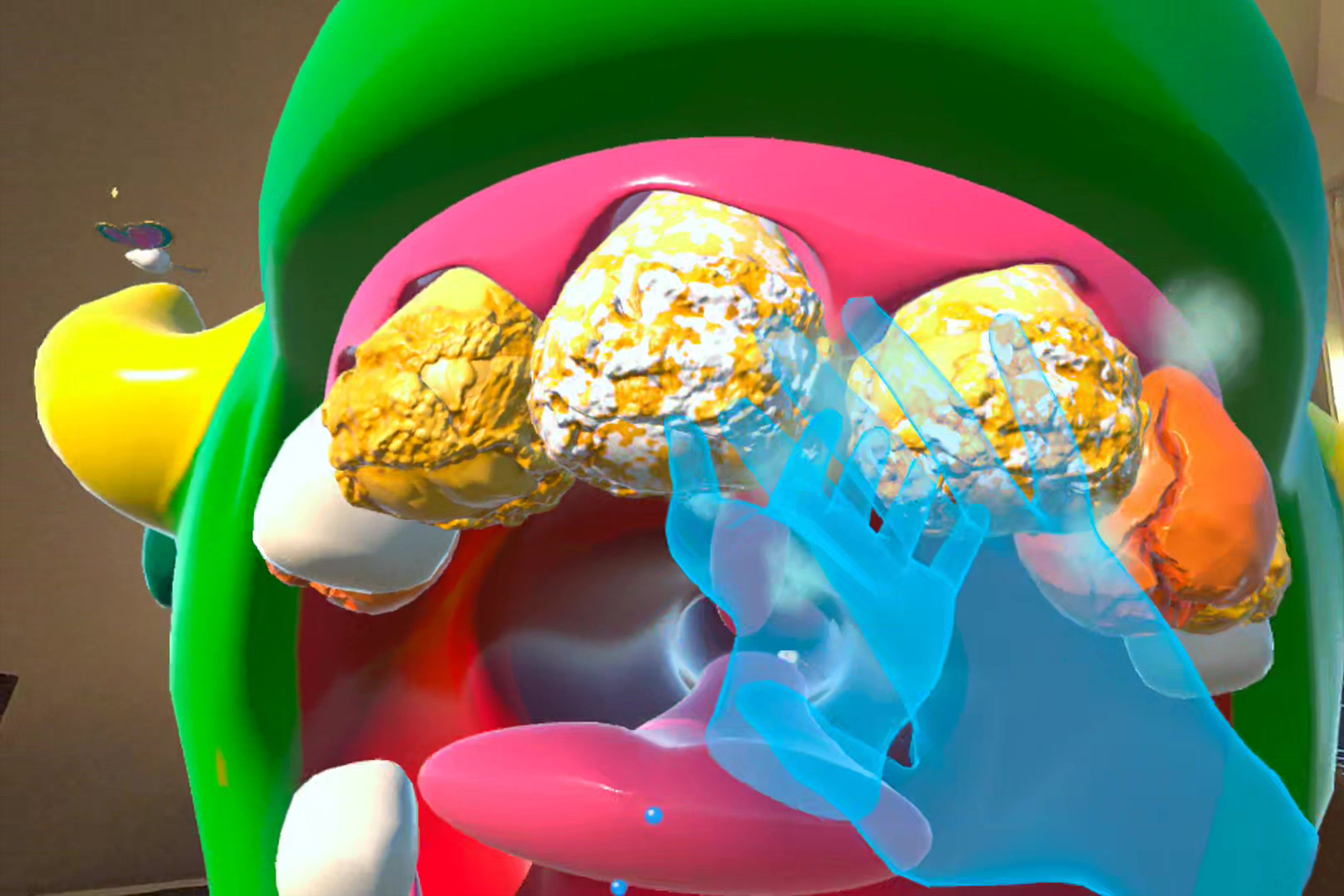
Brush dirty teeth, fix cracks, pull out worms, replace missing teeth, and upgrade them with temporary or permanent immunity.
Experiment with different tools while adapting to random events, such as the dragon sneezing and losing teeth, burping fire, or falling asleep.
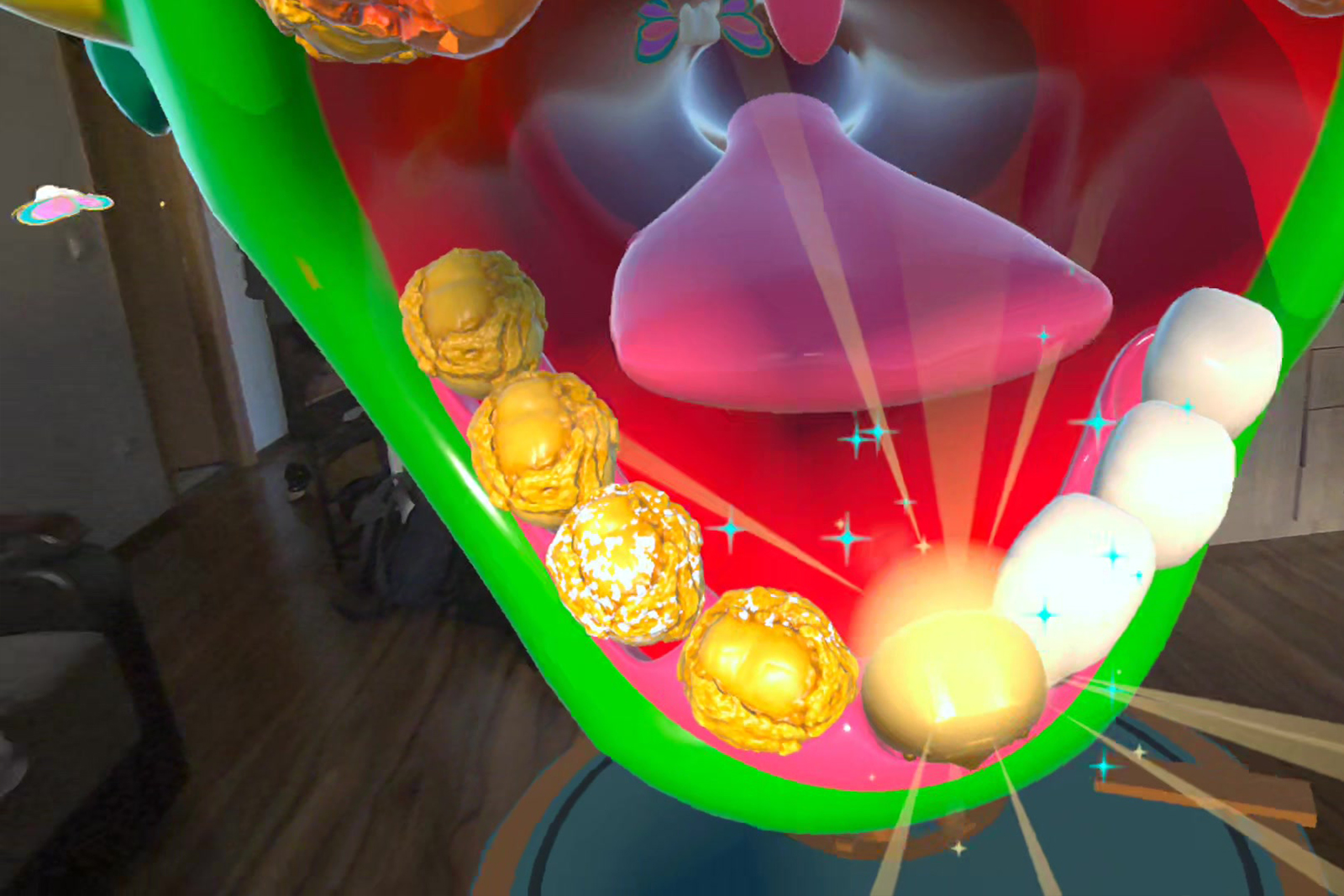
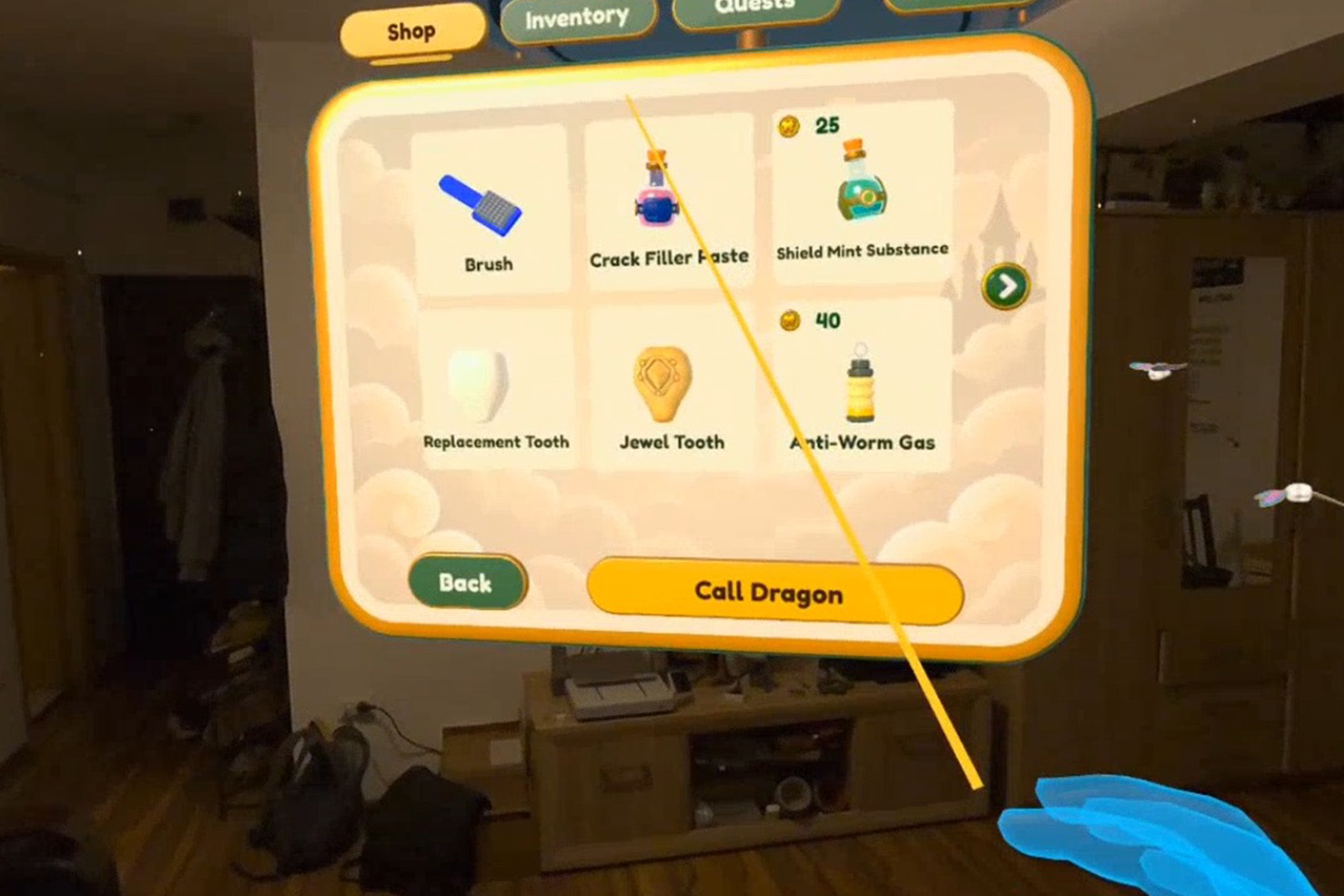
Complete quests, earn coins, unlock new items from the shop, and work toward the ultimate goal: turning all the dragon's teeth into pure gold!
How we built it
We're a team of two, and we both worked hard on the 3D models, interactions, and gameplay mechanics.
We built the game in Unity for Meta Quest, focusing on mixed reality and hand tracking, leveraging XR Interaction Toolkit alongside custom hand interactions.
Because of the short development time, we relied on AI-assisted development to rapidly prototype actions and interactions, but also to generate some 3D assets.
This allowed us to iterate through multiple gameplay versions and quickly identify assumptions that sounded great on paper but didn't work in practice.
Challenges we ran into
The biggest challenges we got were probably:
- The hand palm menu. Making a quick selection menu proved difficult, especially as hands are used in a lot of ways all over the game. The reveal palm menu, angle selection, and grab action are, in the end, a nice user experience, but come with a lot of challenges, especially if confused with other gestures.
- The dragon rig. Positioning and animating a giant dragon isn't straightforward when both the player's position and the room's ceiling height can change.
- Teeth readability. We went through several visual iterations before the different tooth conditions became easy enough to recognize at a glance.
- Gameplay balancing. Finding the right balance between challenge, progression, rewards, and chaos was harder than expected.
Accomplishments that we're proud of
- The game premise! 🐉🦷
- The hand palm menu, again 😁. We are pretty proud of this user experience solution.
- Game atmosphere. The expressive dragon, colorful visuals, and unpredictable events make the experience feel alive.
- Prototyping speed. It was a big challenge, and also an accomplishment. As we knew from past projects, working with hand tracking and passthrough, and other cutting-edge technologies can be tricky, especially for testing and debugging, as it has to be done on device. Integrating AI workflows can be a life-saver for hackathon timelines.
What we learned
- Fast prototyping changes how we design interactions. Finding good hand-tracking UX used to be limited by implementation time. With current AI-assisted workflows, we can now experiment with several interaction ideas in a single day, test them on-device, and quickly discard the ones that only sounded good in our imagination. -XR is still full of opportunities for simple, fun mechanics. Natural hand interactions can make even familiar activities feel fresh, intuitive, and entertaining for players of different ages.
- Game design is hard! Balancing difficulty, pacing, progression, and the right amount of chaos turned out to be just as challenging as the technical implementation.
What's next for Dragon Dentist VR
We plan to run proper user testing immediately after the hackathon, using the feedback to refine interactions, gameplay balancing, and progression.
We also want to expand the selection of tools, items, and random events.
Our goal is to turn this prototype into a polished game and, if feedback is positive, release the first version on the Meta Horizon Store by March 2027.


