-
-
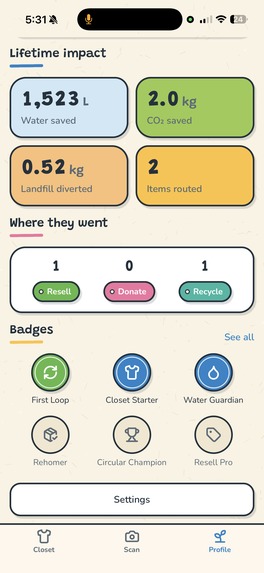
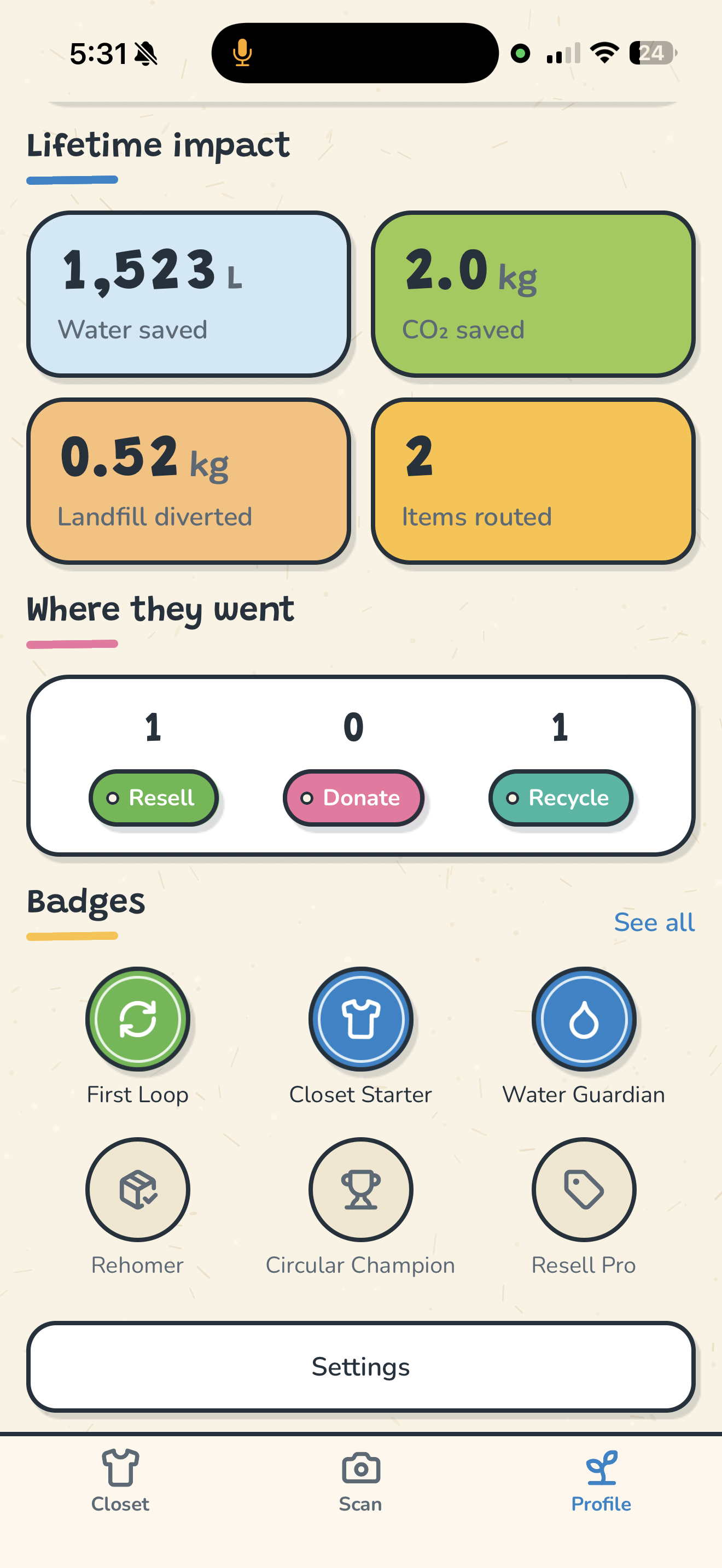
Badges / Achievement Screen
-
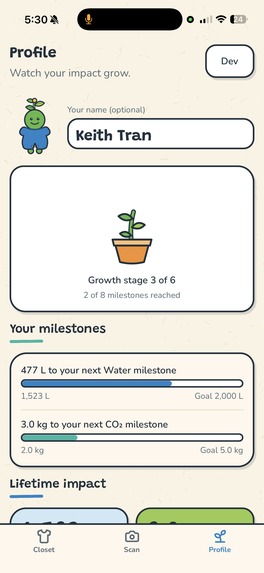
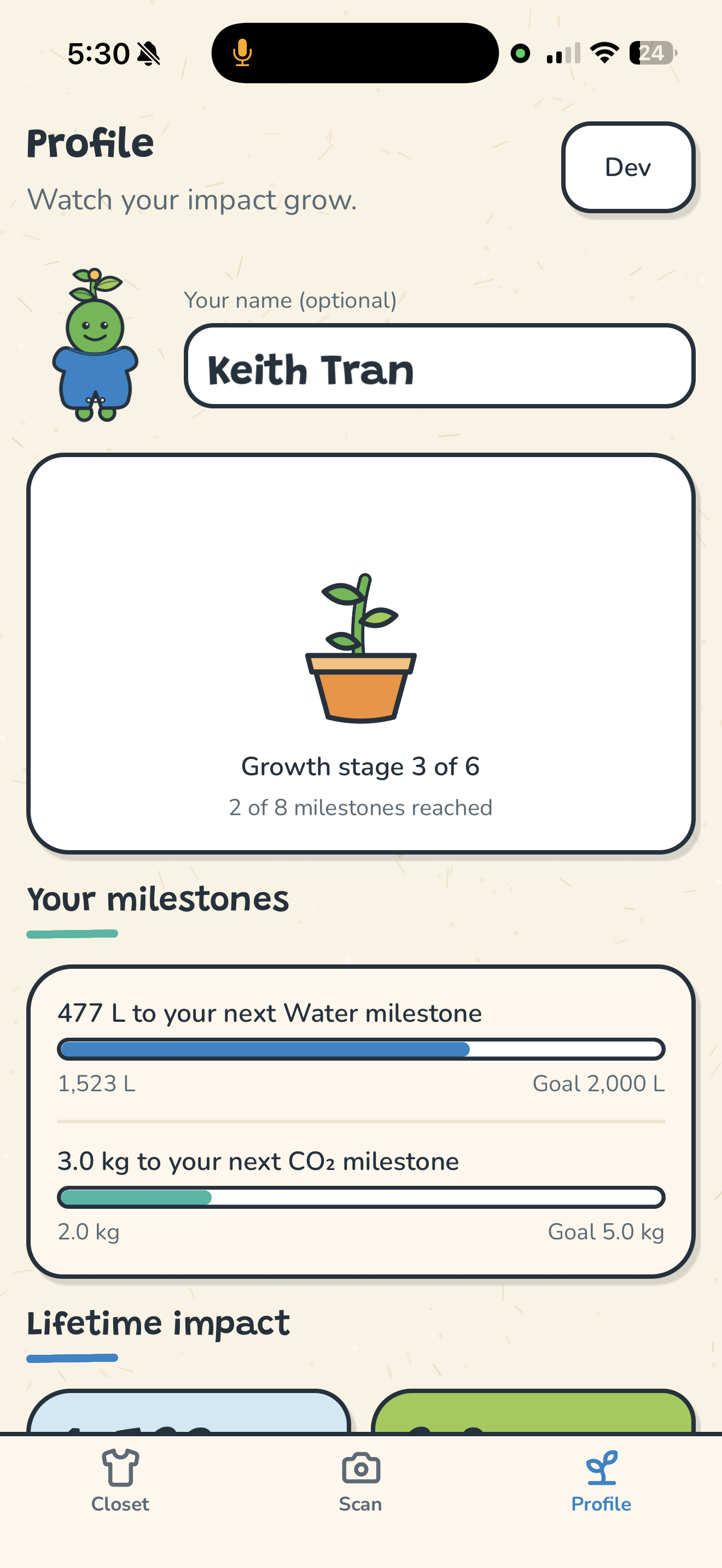
Profile Screen
-
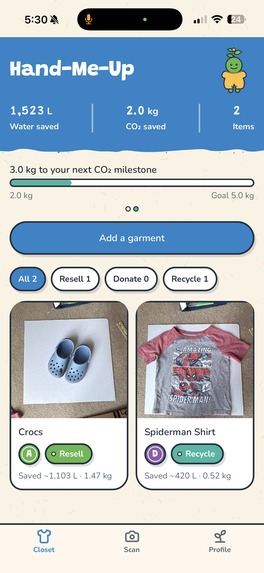
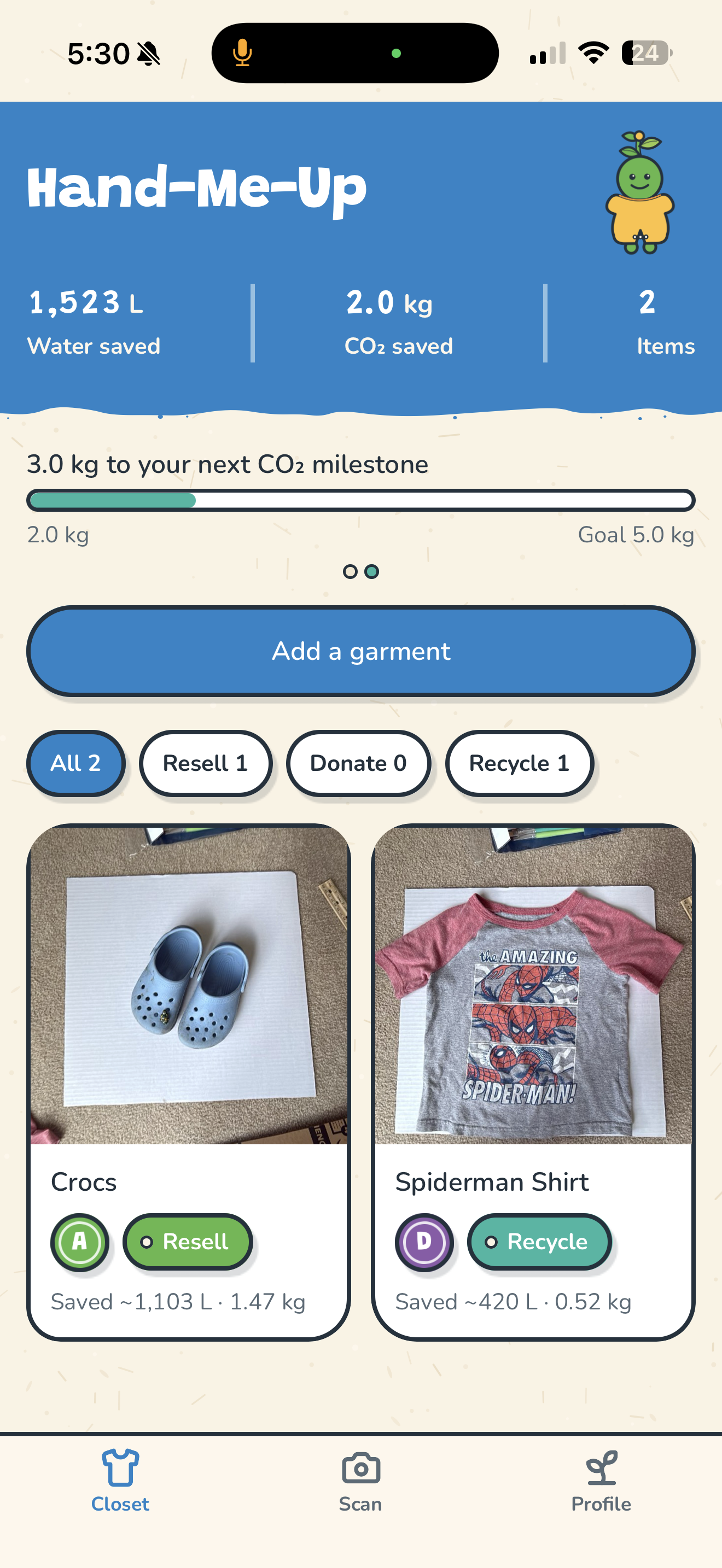
Main Closet Screen
-
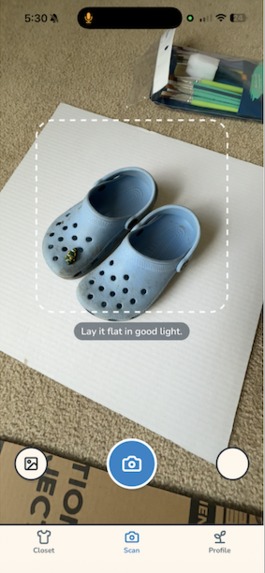
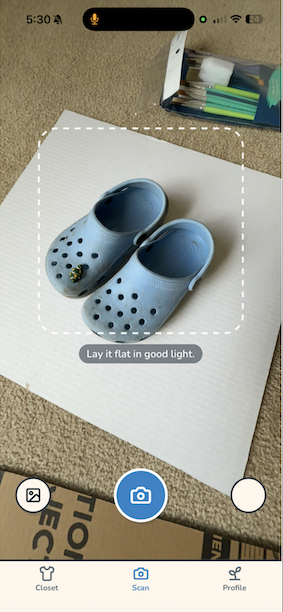
Garment Scanning Screen
Inspiration
Every parent deals with the same thing. Their kid grows out of a pile of clothes every few months and most of it ends up in the trash even though it's still totally fine. We found out 64% of discarded baby clothes are still in good condition, and that felt like a problem worth solving.
What it does
Hand-Me-Up lets a parent snap a photo of an outgrown garment, and it grades the condition and tells them the best thing to do with it, whether that's resell, donate, or recycle. As you go it tracks the water and CO2 you've saved so you can actually see your impact add up instead of it being invisible.
How we built it
The app is built in React Native with Expo and TypeScript, with all the impact math in a tested domain layer and Claude's vision API doing the garment grading. We also built a physical sorter demo on a Raspberry Pi 5 that runs a YOLO classification model we trained on Roboflow, and lights up an LED strip based on what kind of clothing it sees.
Challenges we ran into
The environment fought us hard, from OneDrive corrupting node_modules to Node version issues and memory crashes that ate a lot of time before we figured out the real fixes. On the hardware side, getting the model to run on the Pi without Ultralytics, fixing the class order so the LEDs mapped to the right garment, and chasing down a switch that kept randomly firing took a lot of trial and error.
Accomplishments that we're proud of
We're proud that the impact engine is fully unit-tested, so the numbers we show are honest and never contradict each other across screens. And we built a real working hardware demo, not just an app, so flicking a switch and watching the box actually recognize a garment and light up is the part that makes it feel real.
What we learned
We learned a ton about shipping a real React Native app end to end, from the design system all the way down to local persistence and a swappable CV grading layer. On the hardware side we got hands-on with training and exporting a model, running ONNX on a Pi, and wiring up GPIO and LEDs, and we learned that testing one piece at a time saves you hours of debugging.
What's next for Hand-Me-Up
Next we want to swap the controlled demo grading for fully on-device CV so it works anywhere without a connection, and add real marketplace integrations so reselling is one tap. Longer term, the same grading engine could power donation centers and thrift stores to speed up their sorting, which is the actual bottleneck keeping good clothes out of kids' hands.
Built With
- anthropic
- cv
- expo.io
- gpio
- javascript
- led
- onnx
- raspberry-pi
- switch
- typescript
- yolo


Log in or sign up for Devpost to join the conversation.