Inspiration
Many times when developers have an idea of a product they want to build, they end up wasting hours, even days, building the backend, setting up critical auth and payments integrations and spinning up infrastructure.
TurboBackend does all of this in minutes with as a little as single prompt fom your IDE.
What it does
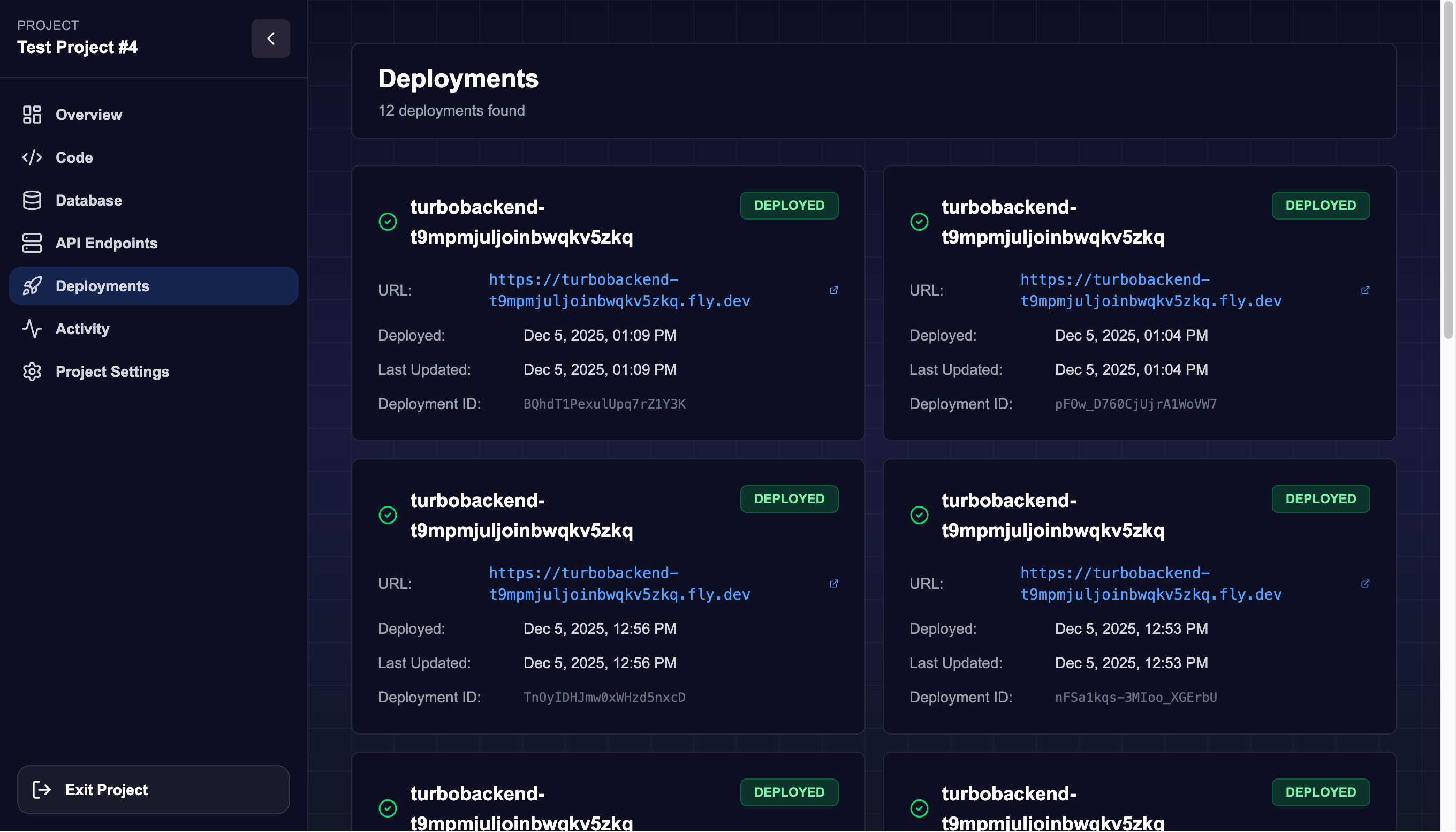
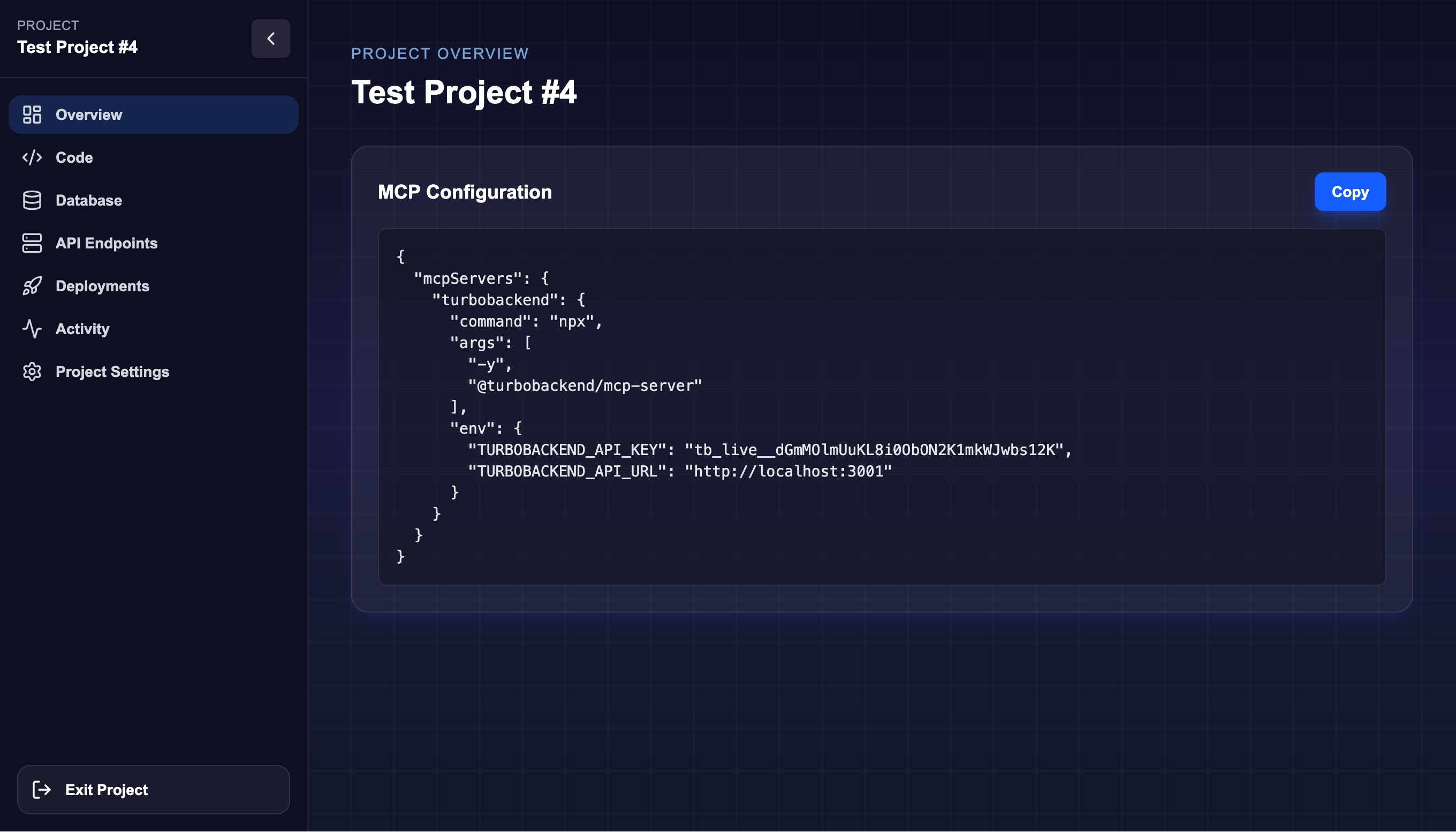
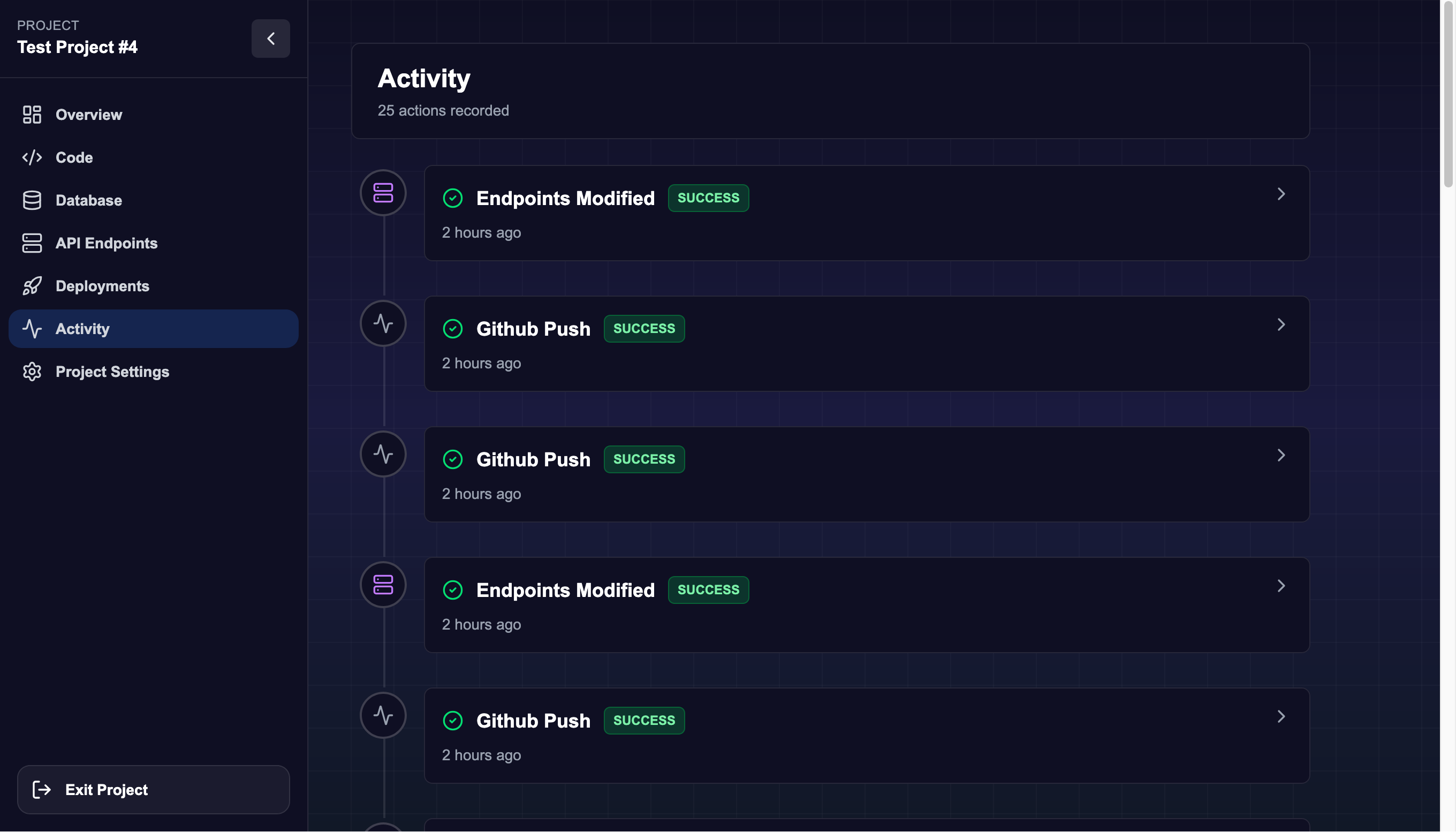
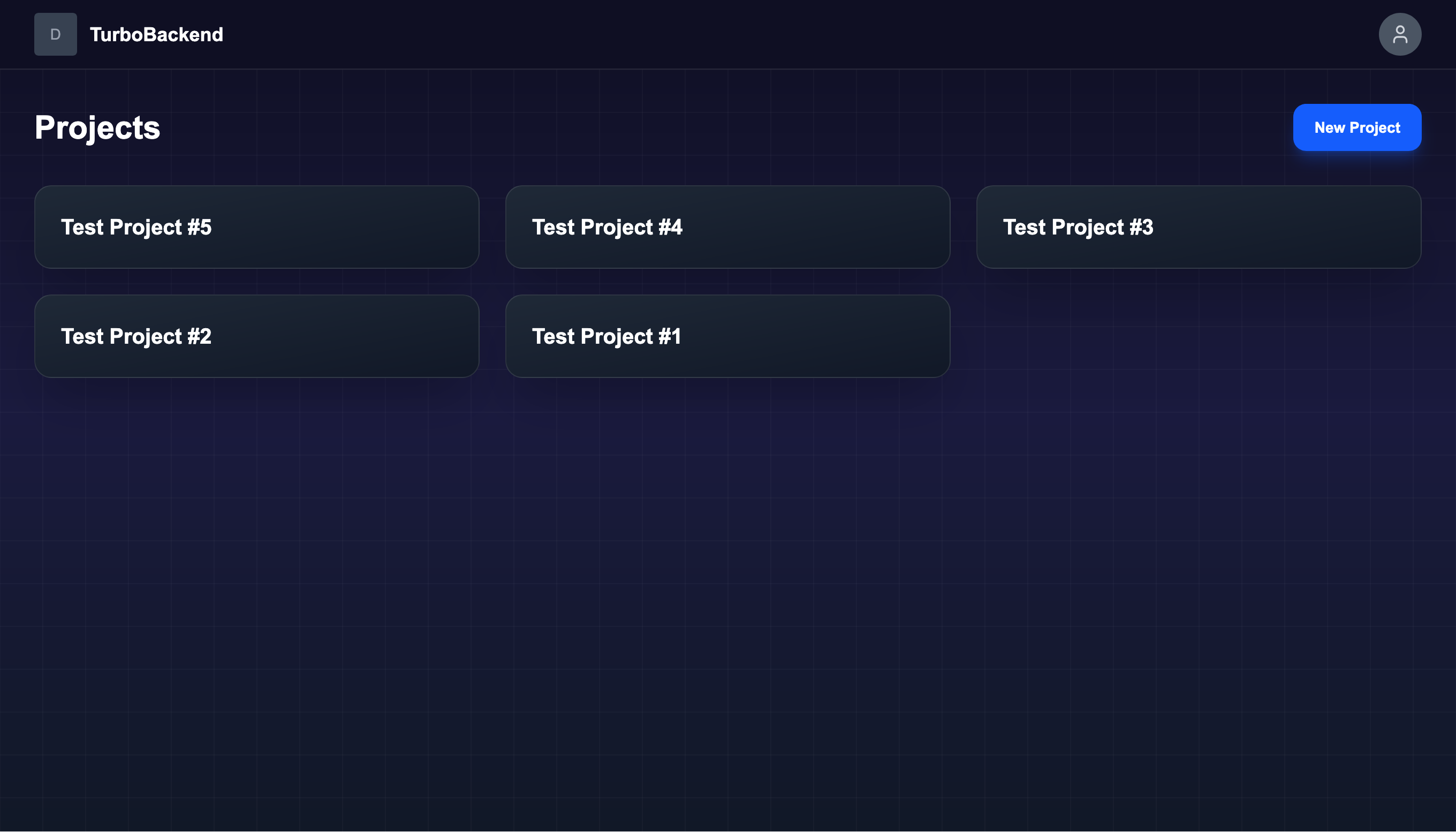
TurboBackend is a web-based application that provides MCP tools to create and deploy a backend application with integrations for your frontend. It's as simple as logging into TurboBackend, creating a new project, putting the MCP configuration for that project in your IDE and then prompting the AI to build a backend for your application.
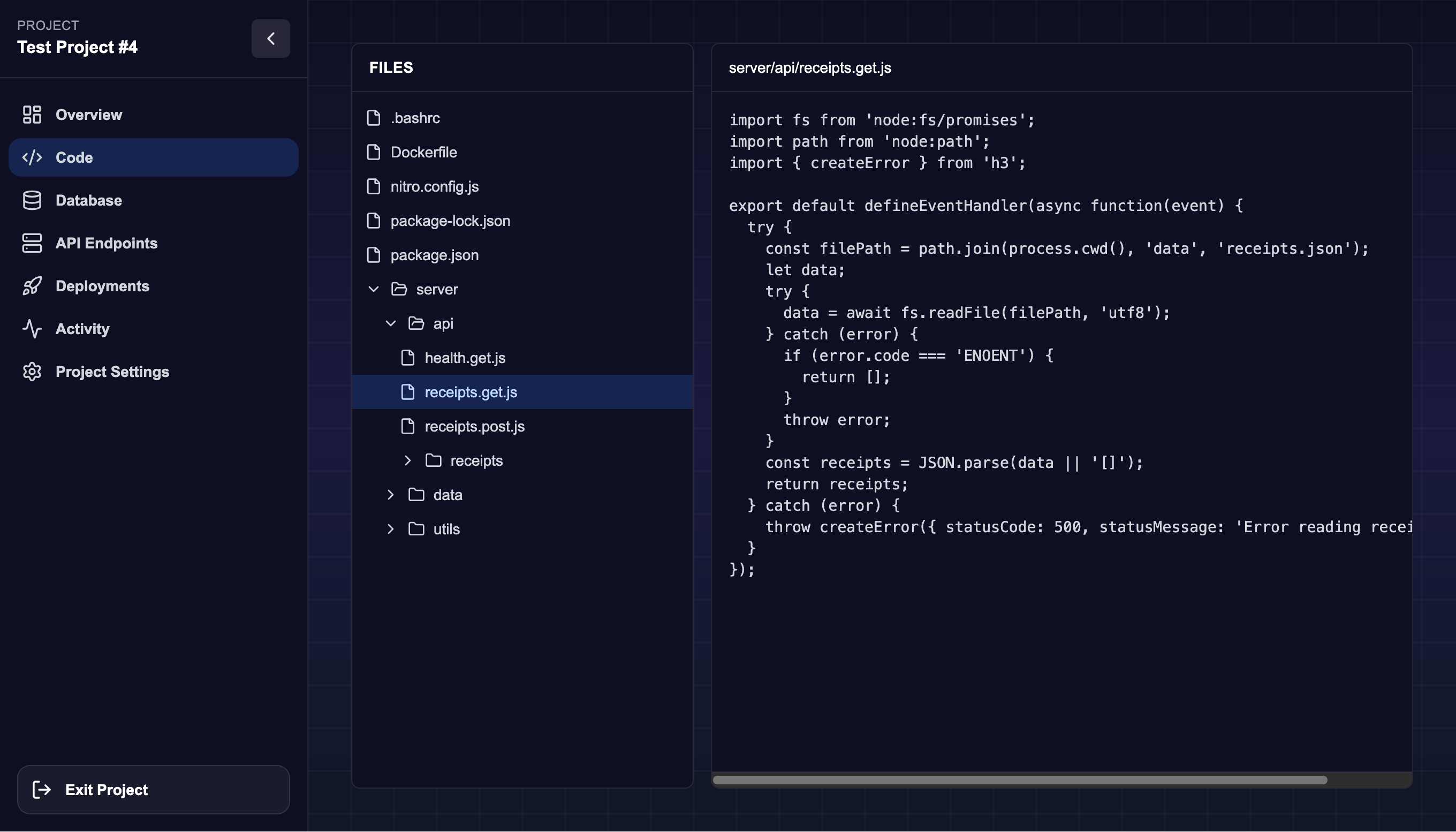
TurboBackend does all the heavy lifting of spinning up a Nitro.js-based backend application, creating necessary infrastructure, such as a database, implementing auth and/or payments and putting it on a live server. Once complete, the MCP returns an API blueprint to the AI as well as a live link to the application so the frontend can connect to the backend of the application.
How I built it
I built TurboBackend as a distributed system with 4 interconnected applications:
Architecture:
- Nitro.js backend- Handles MCP protocol requests via JSON-RPC and manages user projects
- Next.js frontend - User dashboard for project management
- Node.js worker - The true MVP and star of the show - Handles all of the AI code generation, infrastructure setup and orchestration
- MCP client - MCP client intermediate that handles the communication between the IDE and my backend
Additional tech Stack:
- AI/LLM: xAI
- Job Processing: BullMQ + Redis for long-running process queuing and pub/sub communication between the worker and backend
- Storage: AWS S3 to store the project files
- Daytona sandboxes to orchestrate the project in
- GitHub for the remote repo storage
- Fly.io for the application hosting
Challenges we ran into
A challenge I ran into was getting Kiro to add the tools to the MCP client in correct format for the IDE to interpret. It seems that the documentation for this was not up to date so Kiro had a bit of trouble getting it right. But it eventually prevailed.
Accomplishments that we're proud of
The biggest accomplishment I'm proud of is getting the AI to communicate solely with the sandbox, write code, run commands and implement code with minimal errors each time. Kiro was able to understand how I wanted this feature implemented and did it the first time with no errors. I was truly shocked! This is really the bread and butter of the project.
Another one was building such a massive application for my first hackathon!
What we learned
- I learned that instead of writing one long prompt for the AI, in this case Kiro, to implement, it's better to create a technical spec and then chat with Kiro to brainstorm and modify the technical spec. It really makes things much more organized than having to scroll up and down in the chat to remember what the plans were.
- I also learned how to create an MCP server for the first time
What's next for TurboBackend
- I am planning on adding a feature that allows users to deploy their backend to their own cloud accounts such as AWS or Digital Ocean.
- I'd like to add more backend infrastructure for users to request such as functions, workers and non-relational databases
- I will also be adding payment integration as I am also planning on turning this into an actual startup/product.
Built With
- github
- nextjs
- nitro
- node.js
- postgresql
- redis
- s3

Log in or sign up for Devpost to join the conversation.