-
-
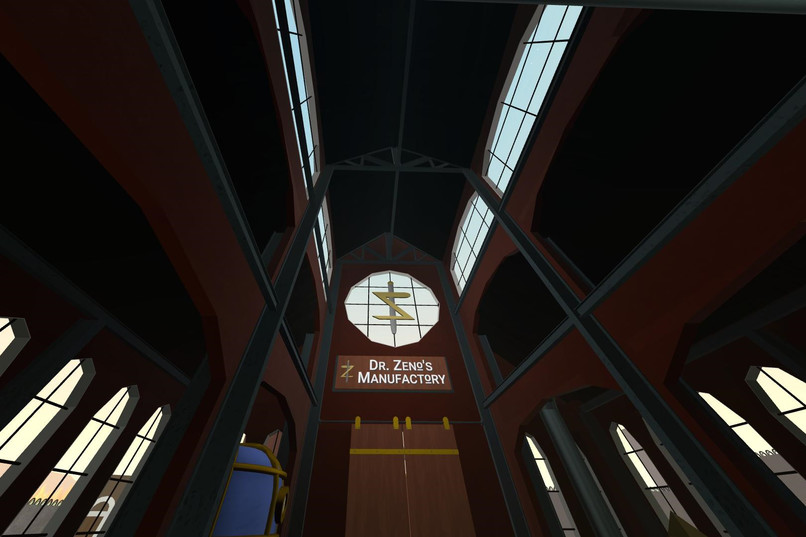
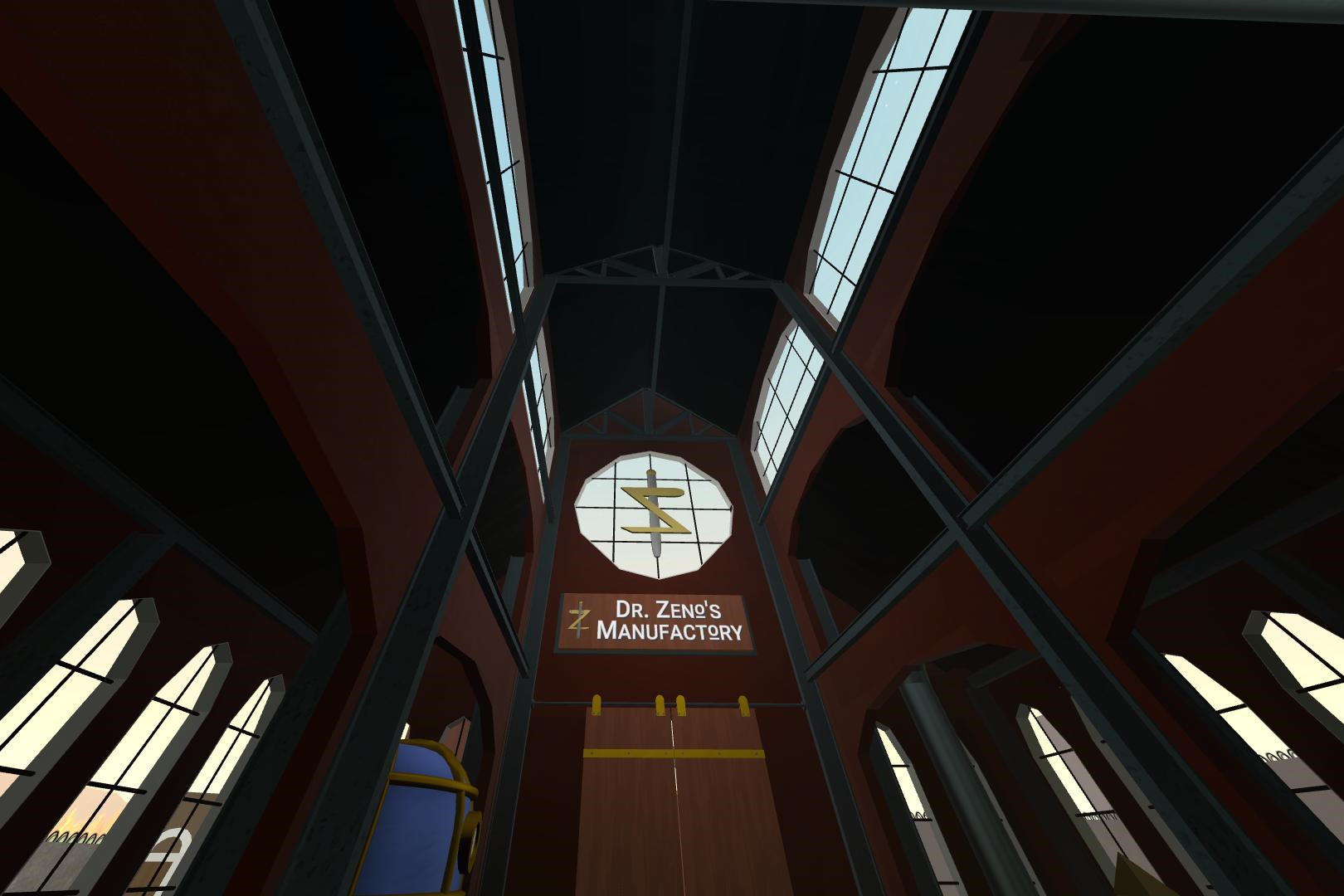
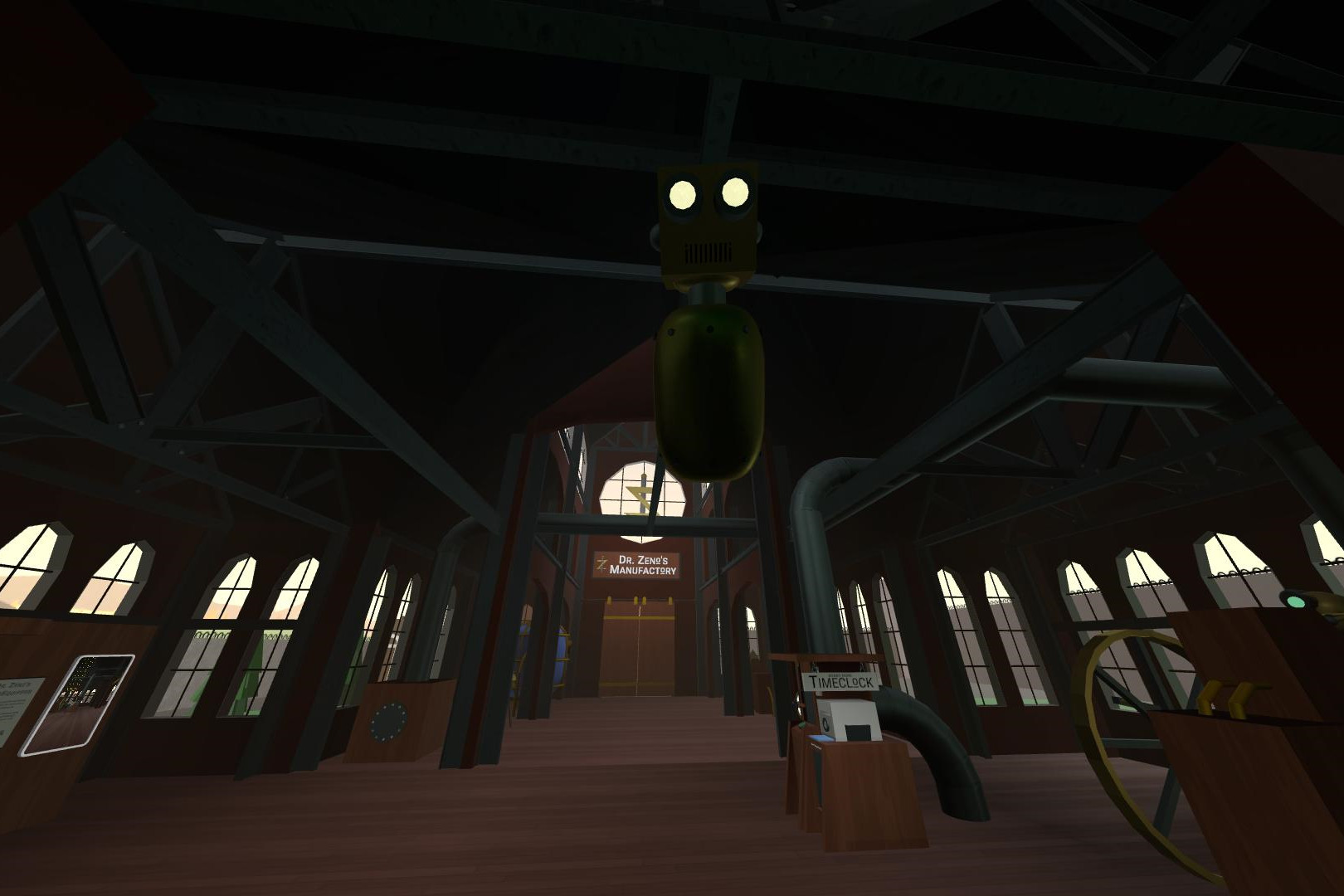
A Cathedral to Industry
-
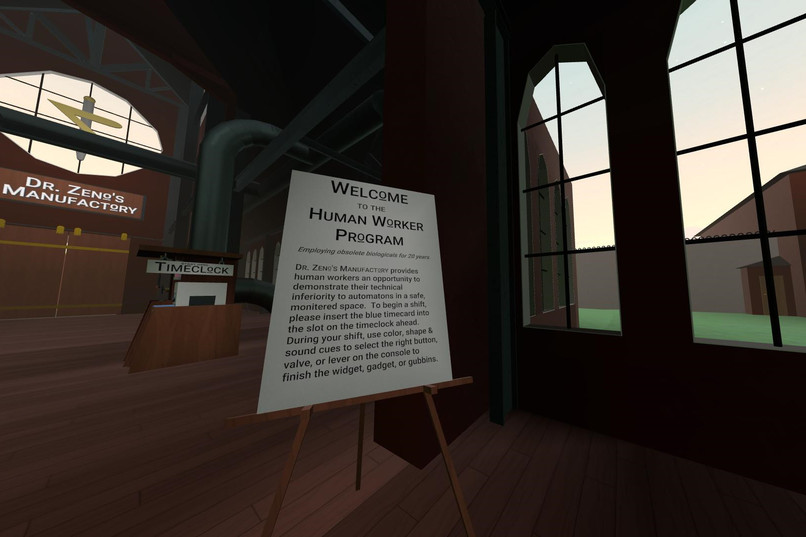
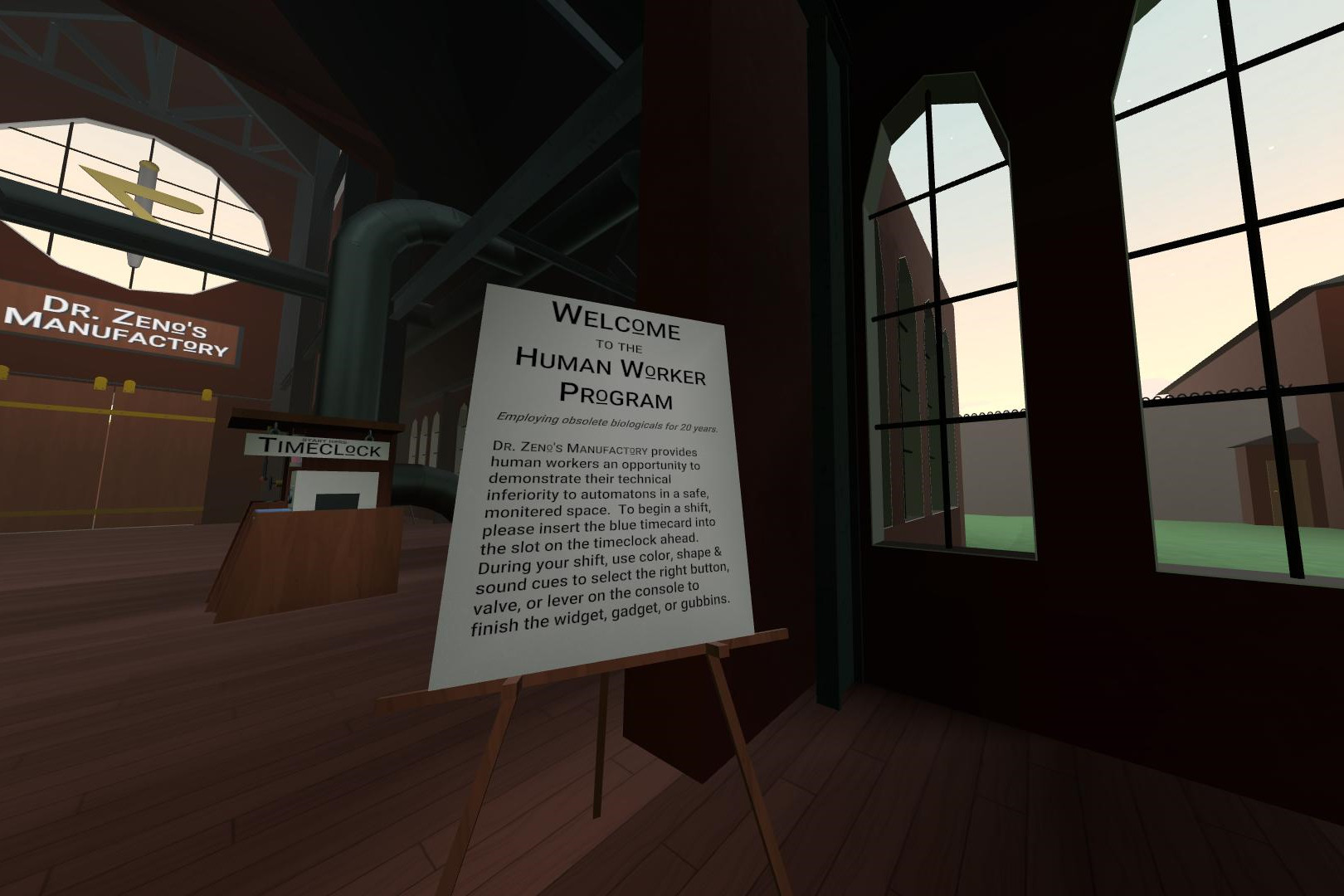
Welcome to the Human Worker Program
-
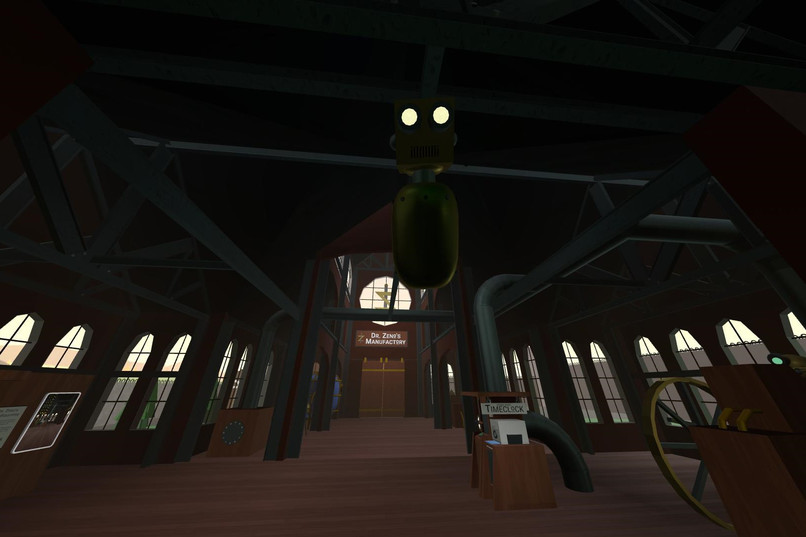
The Overseer in the Great Hall
-
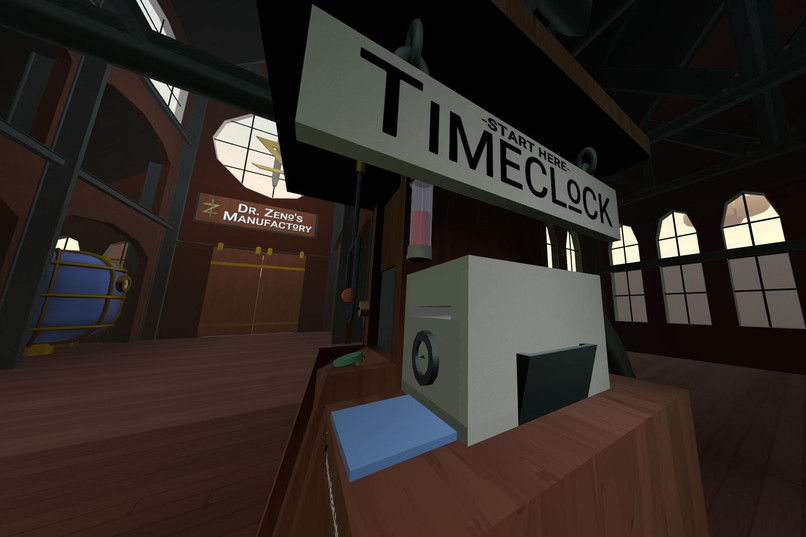
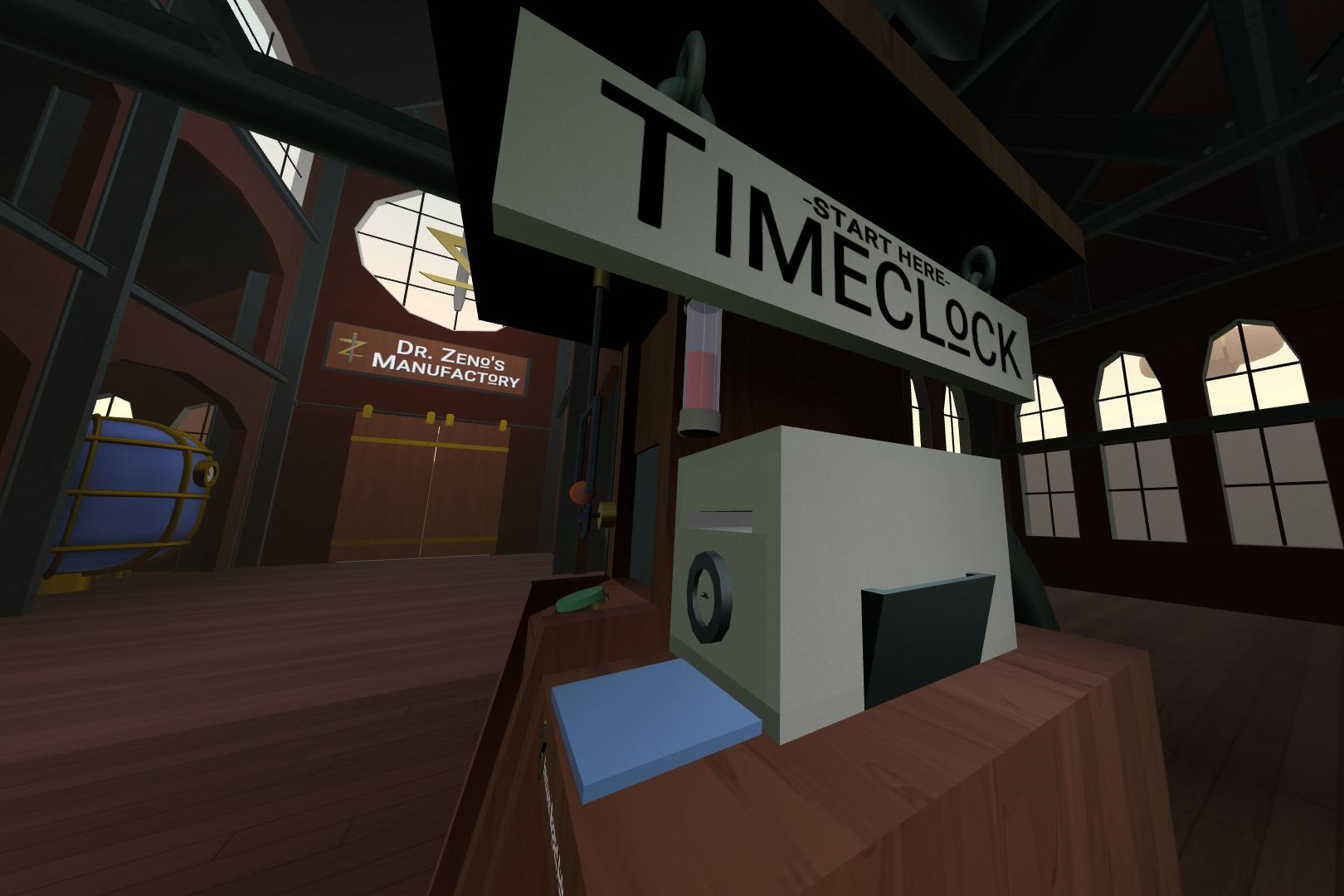
The Timeclock: Start Here
-
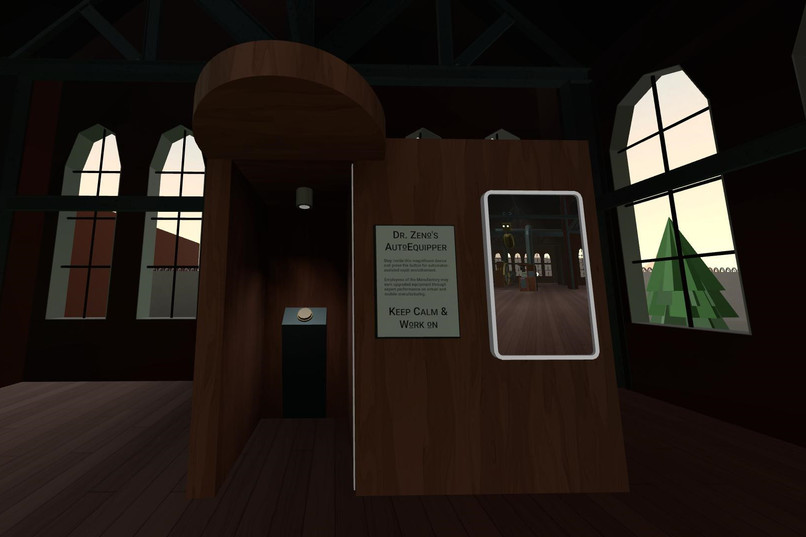
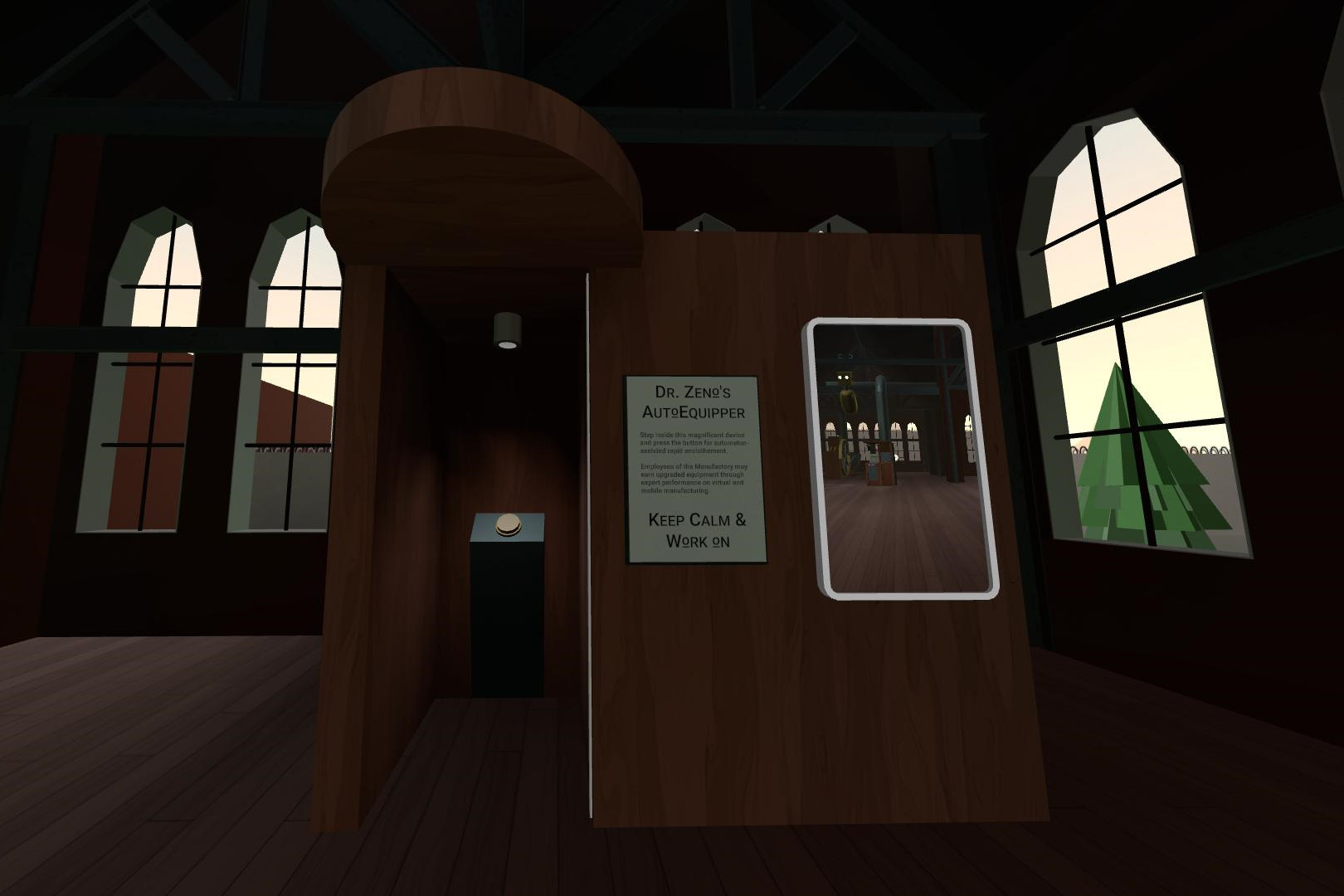
Dr. Zeno's Autoequipper
-
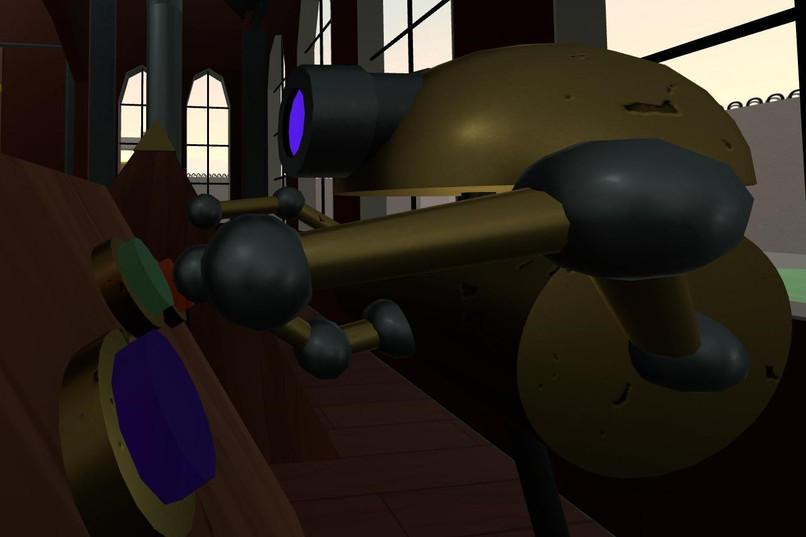
A Friendly Neighborhood Automaton
Inspiration
During a spring break volunteer trip in 2000 I was introduced to a handheld game unlike any I'd seen before when one of my fellow university students pulled out Bop-It. The simple-to-learn, but difficult to master game challenged a player to perform one of three simple actions at an ever increasing pace. Within the week, the group that started out as mostly strangers had formed tight bonds, in no small part due to the socialization that took place around that little game. Dr. Zeno's Manufactory seeks to bottle that energy and place it in an engaging steampunk environment.
What it does
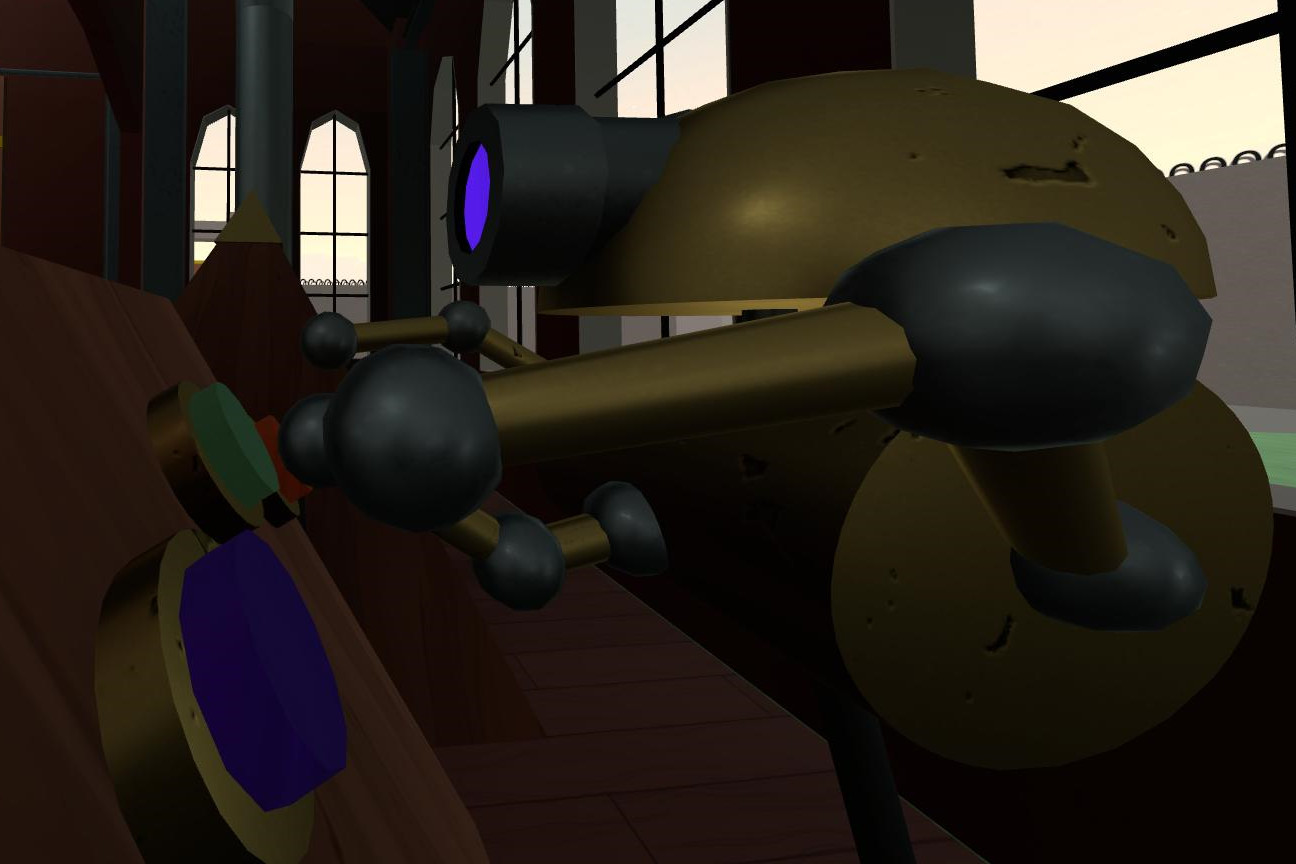
Dr. Zeno's Manufactory puts you in the shoes of a human given a chance to try their hand at work in an age of human obsolescence. Overseen by a cynical automaton, you are tasked with quickly and correctly hitting the valve, lever, or button that will send the next widget on its way. Color, shape, and audio cues point the player in the right direction, while a constantly quickening tempo keeps them on their toes. The game features mobile-friendly controls using Focused Interaction and a tight game loop that makes for engaging short-session play. Leaderboards and missions encourage repeated engagement with the experience. In addition to the core mechanic, the game features an engaging space and the opportunity to earn themed wearables to increase its use as a social meeting point.
How I built it
The game was constructed using Horizon Worlds' publicly available primitive shapes. The core game and virtual building were built in parallel to try and ensure object budgets were utilized in a balanced way. Then additional functions were added to deepen the experience while keeping it performant. The initial build and programming of the core mechanism were done in headset, with a late-in-development jump to a mix of desktop and headset development to allow for use of the advanced features for mobile unlocked by TypeScript.
Challenges I ran into
The two biggest challenges of this build were controlling the objects budget, and navigating the unfamiliar but incredibly useful tools available through TypeScript. The vision going in was for the Manufactory to be a cross between a Victorian warehouse and Gothic cathedral. Balancing detail and stylization to create a performant but engaging space required a lot of iteration, adding and removing details to reallocate resources. The TypeScript documentation still feels like a work in progress, and the tight timeline of the competition encouraged piecemeal exploration rather than a chance to work through available examples in their entirety. There were several attempts to bridge the divide between TypeScript and CodeBlocks that resulted in non-functional dead ends, but a deep dive into the tutorial world eventually allowed for a breakthrough.
Accomplishments that I'm proud of
As my day job is stay-at-home dad, I'm most proud to have created something my children find engaging. Seeing in them a spark of the same joy I experienced on first encountering Bop-It feels like a win. The fact that my three-year-old can play the game on mobile also gives me hope that I've managed to create an accessible interface for a variety of users. The constraints of the platform are a wonderful inspiration for creativity. After learning that a trimesh logo could not be added without making the jump to a fully trimesh world, I was looking to figure a workaround for the lack of retro fonts on platform. Creation of a stylized "o" using rich text tags allowed for a cohesive look across textual features in the world, while giving it the feel of a unique font.
What I learned
This challenge was a great motivation for diving into the world of TypeScript. The tools available to control camera views and harness the power of touch screen interactions open up a world of possibility for mobile and desktop development and creative ways for cross-platform engagement. The iterative refinement needed to bring the project close to the scope of my original vision also lets me walk away with a toolbox full of strategies for squeezing the most out of the object budget.
What's next for Dr. Zeno's Manufactory
There are a few directions for expanding the Manufactory experience moving ahead. Expanding on multiplayer play is likely the first direction to look as a means of making the most of the platform's social potential. Expanding quest opportunities and creating seasonal decorations to make the world more dynamic also feel like low-hanging fruit. Finally, exploring opportunities to bring in collaborators to improve on weaker areas (like voice acting) also feels like a productive avenue to explore.
Built With
- cameraapi
- codeblocks
- focusedinteraction
- typescript

Log in or sign up for Devpost to join the conversation.